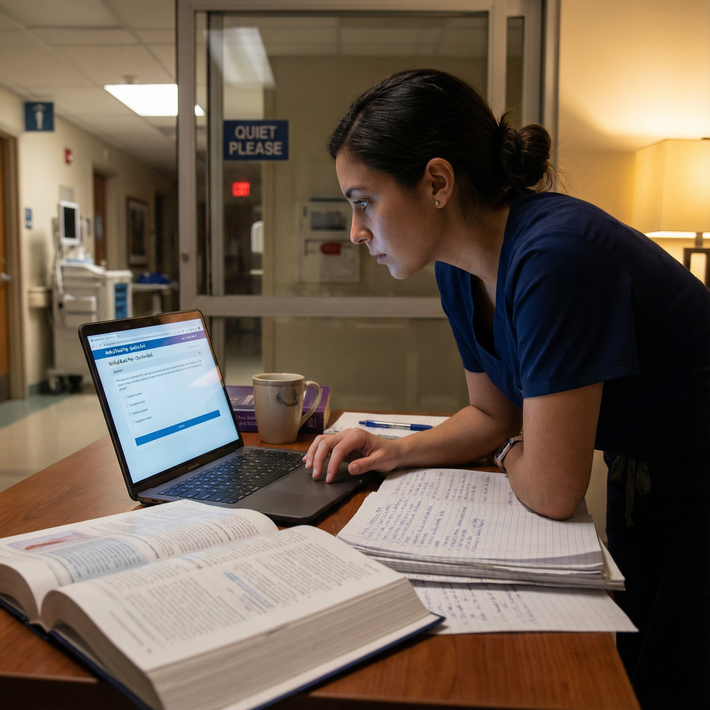
It's 1:47 AM. You're staring at Reddit. Someone just posted their Step 2 CK score - 262 - from a big-name academic program. You go to a community-based med school. Your stomach drops. Are you already behind? Is your school going to sink you before you even get to apply?
I've been there. That cold sweat panic. The tab open to your score report you haven't even gotten yet, and you're already convinced it's not enough.
(See also: Board Pass Data: Quantitative Thresholds That Indicate Program Risk for more.)
Let's talk about what's real and what's just fear talking.
The Midnight Panic: Are You Doomed by Your School Type?
You know the myth, right? Two versions of the same nightmare.
(See also: What If My Co-Residents Are Way Ahead in Board Preparation? for more.)
Version one: Community programs don't really prepare you. They don't have the fancy question bank subscriptions, the protected research months, the attendings who wrote the textbook. You're on your own.
Version two: Academic programs only look good because they admitted the gunners in the first place. Of course they score higher. They were 99th percentile MCAT kids to begin with.
Both feel true at 2 AM. Both feel like you're screwed no matter where you are.
Here's the thing I had to learn the hard way: residency programs aren't ranking your school. They're trying to figure out if you can survive July intern year without killing someone or yourself. That has almost nothing to do with whether your lecture hall had ivy on the walls.
So let's ditch the horror stories for a second and look at what the numbers actually say. Not what that guy on SDN says. The real data.

Deconstructing the Numbers: What Do Board Pass Rates Actually Look Like?
Okay, deep breath. This is the part where my anxiety brain wants to catastrophize, but the data is... weirdly boring. In a good way.
For Step 1, now that it's Pass/Fail, first-time pass rates are 92-96% across the board for U.S. MD schools. Academic, community, doesn't matter. Almost everyone passes.
Step 2 CK is where people spiral. Yes, on average, Academic Medical Centers report a slightly higher mean. We're talking 246 vs 243. That's it. Three points. That's literally one or two questions. Not a 20-point chasm.
See that? That's not a wall. That's a speed bump.
And here's what no one tells you: survivor bias. The community schools that are sending people into the Match are sending their strongest. They have robust support systems now, dedicated Step coaches, UWorld group discounts, peer tutoring that actually works because your classmates aren't trying to sabotage you.
Failure rates? Both sides sit around 5-10%. Different reasons, though. Academic kids burn out from the pressure to publish and score 270. Community kids sometimes get less protected study time because they're actually needed in clinic. I saw this in my own class, we were doing real procedures on day three of surgery, but we were also charting until 8 PM with no dedicated study block.
That three-point difference? Program directors know it means nothing.
The Hidden Curriculum: How Training Environments Shape Your Journey
This is where it gets interesting. And where I started to feel a little less doomed.
Academic centers give you stuff money can buy: research labs, big-name letter writers who know big-name PDs, two months of dedicated Step prep where you don't have to pretend to care about clinic.
Community programs give you stuff you can't buy: volume. Autonomy. The ER that sees 200 patients a day and you're actually doing the paracentesis. Not watching. Doing.
I remember my friend at a top-10 school, she didn't place a central line until intern year. I placed four in my third year. Guess who felt less terrified on ICU call during interviews? Interviewers loved that story. They don't want a walking question bank. They want someone who won't freeze when a patient crashes.
And the imposter syndrome? It's vicious everywhere. Just different flavors.
Academic kids think: I should get a 260. If I don't, I'm the dumb one in my genius class. Community kids think: Of course I'll score lower, we weren't prepared. Both thoughts are lies that make you study worse. I've watched both groups sabotage themselves. Don't.
Residency Directors Don't Care About Your Title (Here's Why)
I emailed a PD once, full panic mode, asking if my community school would hurt me. He replied with one line: "Can you do the work?"
That's it.
Since Step 1 went Pass/Fail, Step 2 CK became the great equalizer. Everyone is judged on the same score now. Harvard kid, community kid, DO kid, same test, same curve. That's actually fairer for you. Your 248 means the same as their 248.
Holistic review is not just buzzwords. I promise. Programs are desperate for reliable interns. Reliability comes from your clinical evaluations, not your school crest. A letter that says "This student stayed late to follow up on labs, calmed a crashing patient, I would trust them with my family", that beats a generic "Top 10% at Prestigious University" letter every single time.
I know a girl, community program, zero home research, first-gen, who matched academic IM at a huge university hospital. How? She had three killer letters from her community preceptors who actually knew her, and a Step 2 that showed steady improvement. She told her volume story in interviews and PDs ate it up.

Strategies to Neutralize the Disadvantage (If You Feel One Exists)
Okay, so you're still worried. Valid. Let's turn that worry into a plan. Because worry without action is just torture.
If you're at a community site like me:
Don't wait for research to come to you. Email. Cold-email everyone. That case report you saw on rounds? Ask to write it up. Do ONE away rotation at an academic center, not five. You just need that one letter that says "She can hang with our residents." And live on UWorld. Seriously. Simulate academic rigor yourself, timed blocks, 40 questions every morning before clinic. No excuses.
If you're at an academic center and feeling like a clone:
You need to stand out from 200 other 252s. Go volunteer at the free clinic where you actually touch patients. Take that weird elective in addiction medicine. Programs are so bored of perfect scores with no soul. Show them you're not a robot.
For everyone: build a prep schedule that accounts for YOUR life. Community kid working 12-hour floor days? Your schedule can't be the same as the kid with 8 weeks off. Block 90 minutes every night, protect it like a patient. Phone off. No negotiation.
There is no magic. Just consistent, boring work. But it works regardless of your logo.
<chart-data-api config='{"type":"bar","title":"Key Differentiators for Residency Applications","labels":["LORs","Clinical Grades","Step 2 CK Score","Research","School Prestige"],"values":[9,8,8,5,3],"yAxisLabel":"Importance (1-10)"}>
See how low school prestige is? That's not me being nice. That's PDs telling you directly what they weight.
You Are Enough: Finding Peace in the Process
Look, I'll be anxious right up until Match Day. That's who we are. Worried Applicants. We check our email 400 times a day.
But here's what I know now: your school type does not decide your fate. Your habits do. Your kindness on call does. Your ability to keep going when you're exhausted does.
Thousands, literally thousands, of community grads match derm, ortho, ENT, their dream IM program, every single year. You're not the exception. You're the rule, if you do the work.
Control what you can. Your study block today. Your patient presentation tomorrow. Your sleep. Your mental health, please, talk to someone if this is eating you alive. I did. It helped more than an extra 10 UWorld questions ever did.
Your anxiety doesn't reflect your potential. It just reflects how much you care. And caring? That's what will make you a good doctor. Wherever you trained.
You got this. Really.