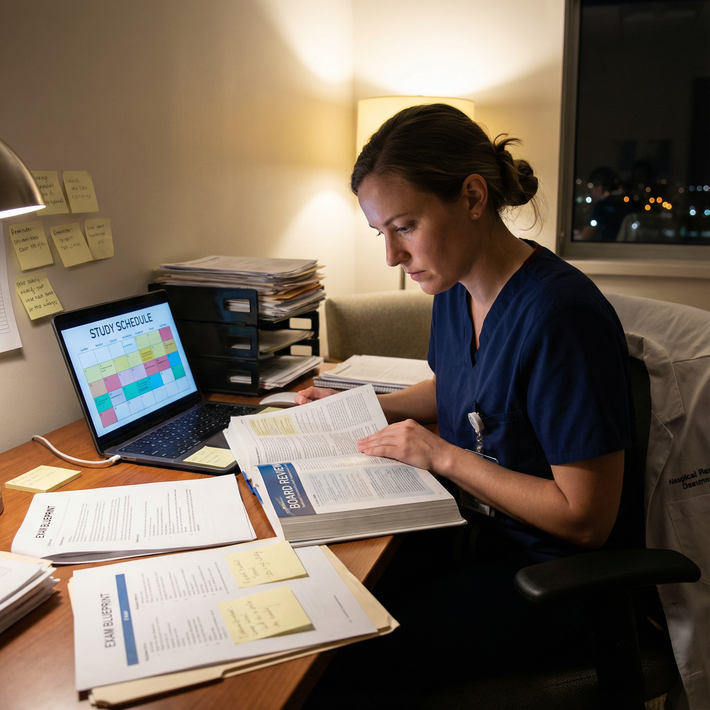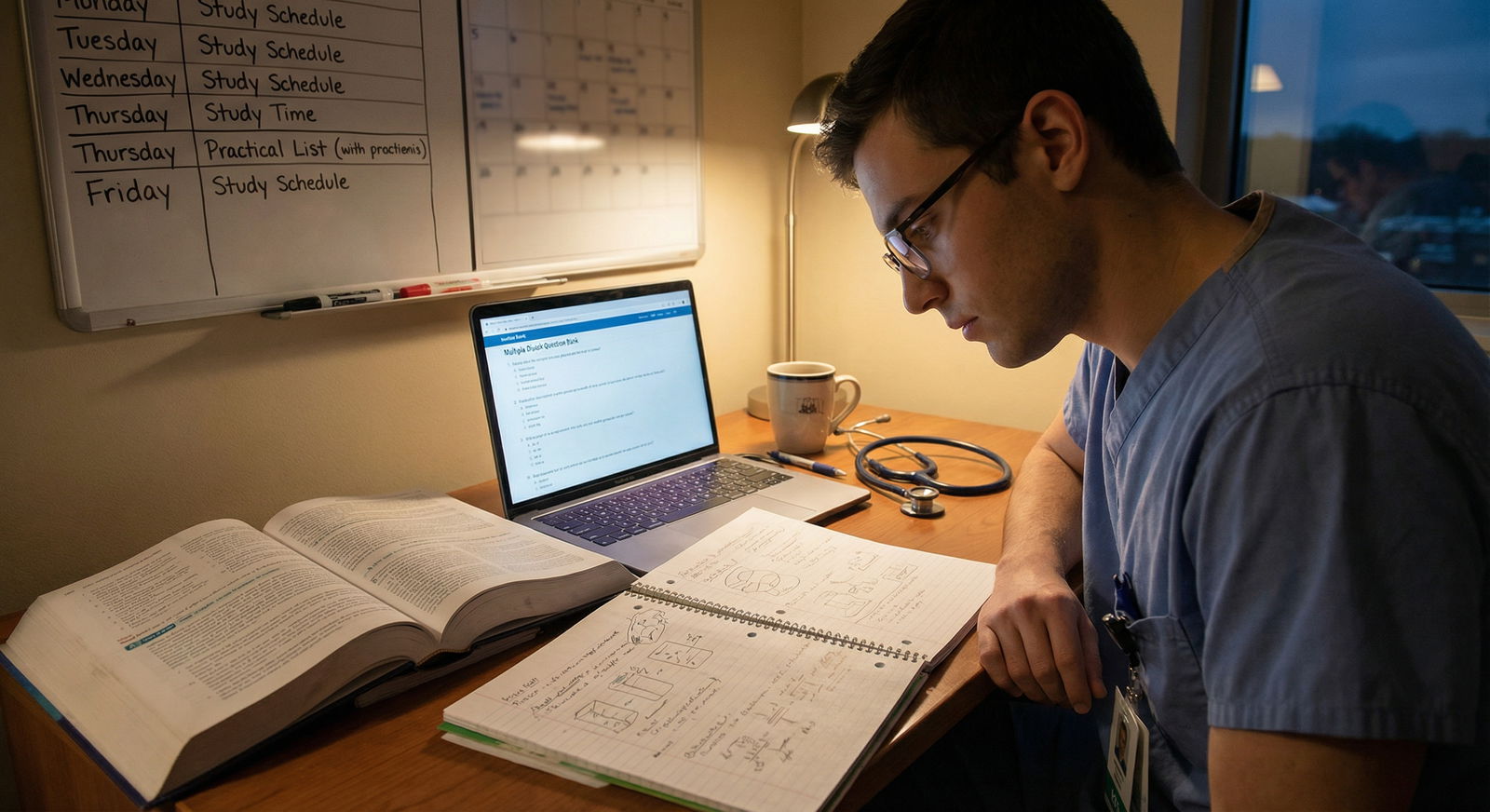
Introduction: Why Residency Board Exam Preparation Matters
Residency board exams are a defining milestone in your journey from trainee to independent physician. Whether you are facing the USMLE Step 3, COMLEX Level 3, or specialty-specific in-training and certifying exams, these tests do more than assess rote knowledge. They evaluate your ability to apply core medical principles to real-world clinical scenarios, make safe decisions, and prioritize patient care under pressure.
The results of your Residency Board Exams can influence fellowship opportunities, job prospects, and, in some specialties, even which hospitals or practices will consider you. For international medical graduates (IMGs) and those in highly competitive fields, strong scores can help offset other application weaknesses.
This guide offers a structured, practical roadmap to mastering exam preparation during residency. You will learn:
- How these exams are organized and what they truly assess
- Evidence-based study techniques that work with a resident’s schedule
- How to choose and use high-yield Board Exam Resources
- Test-taking strategies that boost performance on exam day
- What to do after the exam—regardless of the outcome
The goal is not only to help you pass, but to integrate exam preparation into your everyday Medical Education so it reinforces your clinical growth, not competes with it.
Understanding Residency Board Exams: Structure, Purpose, and Impact
Major Exam Pathways: USMLE, COMLEX, and Specialty Boards
In the United States, physicians generally follow one of two licensing pathways:
- USMLE (United States Medical Licensing Examination) – Primarily for MD graduates
- COMLEX-USA (Comprehensive Osteopathic Medical Licensing Examination) – Primarily for DO graduates
These exams are typically divided into three stages:
- Step 1 / Level 1 – Foundational medical sciences (typically pre-residency)
- Step 2 CK / Level 2 CE – Clinical knowledge and application
- Step 3 / Level 3 – Independent, unsupervised patient care; emphasis on management and systems-based practice
During residency, the exam most relevant to you is:
- USMLE Step 3 or COMLEX Level 3 for full licensure
- And, depending on your field, specialty in-training exams (ITEs) and later board certification exams (e.g., ABIM, ABFM, ABS, ABEM, ABOG, etc.).
Each exam shares core features:
- Heavy emphasis on clinical vignettes
- Requirement to prioritize next best step in diagnosis or management
- Testing of medical decision-making, not just recall
Why Performance on Board Exams Matters
Your performance on residency board exams can affect:
- Licensure – Step 3/Level 3 are required for unrestricted practice in most states.
- Fellowship and job applications – Competitive fellowships (e.g., cardiology, GI, critical care, derm, ortho fellowships) may ask for in-training exam scores or board performance.
- Perception of clinical competence – Program directors may interpret poor performance as a sign of knowledge gaps, even if you are clinically strong.
- Visa and credentialing issues – For IMGs, delays in passing exams can complicate visas and future credentialing.
That said, exam scores are one piece of the puzzle, not the whole picture. Many excellent physicians have taken non-linear paths through licensing exams. The key is to approach exam preparation strategically, with the same professionalism you bring to patient care.
Planning Your Exam Preparation: Building a Realistic, Residency-Friendly Study Plan
Step 1: Assess Your Baseline Knowledge and Constraints
Before you start, take an honest inventory:
- Recent performance: How did you do on Step 2/Level 2 or prior in-training exams?
- Clinical strengths and weaknesses: Are you solid in cardiology but weak in endocrine? Comfortable with OB but shaky on pediatrics?
- Schedule reality: What rotation are you on? ICU or nights will look different than elective or clinic months.
Actionable approach:
- Take a diagnostic self-assessment (e.g., a retired NBME, NBOME practice test, or a smaller block of mixed questions from a trusted QBank).
- Review your rotation schedule for the next 4–6 months and highlight heavy vs. lighter months.
- Identify non-negotiables (clinic, call, family commitments, rest days).
This initial assessment lets you design a plan that is ambitious but realistic, which is key to avoiding burnout and last-minute cramming.
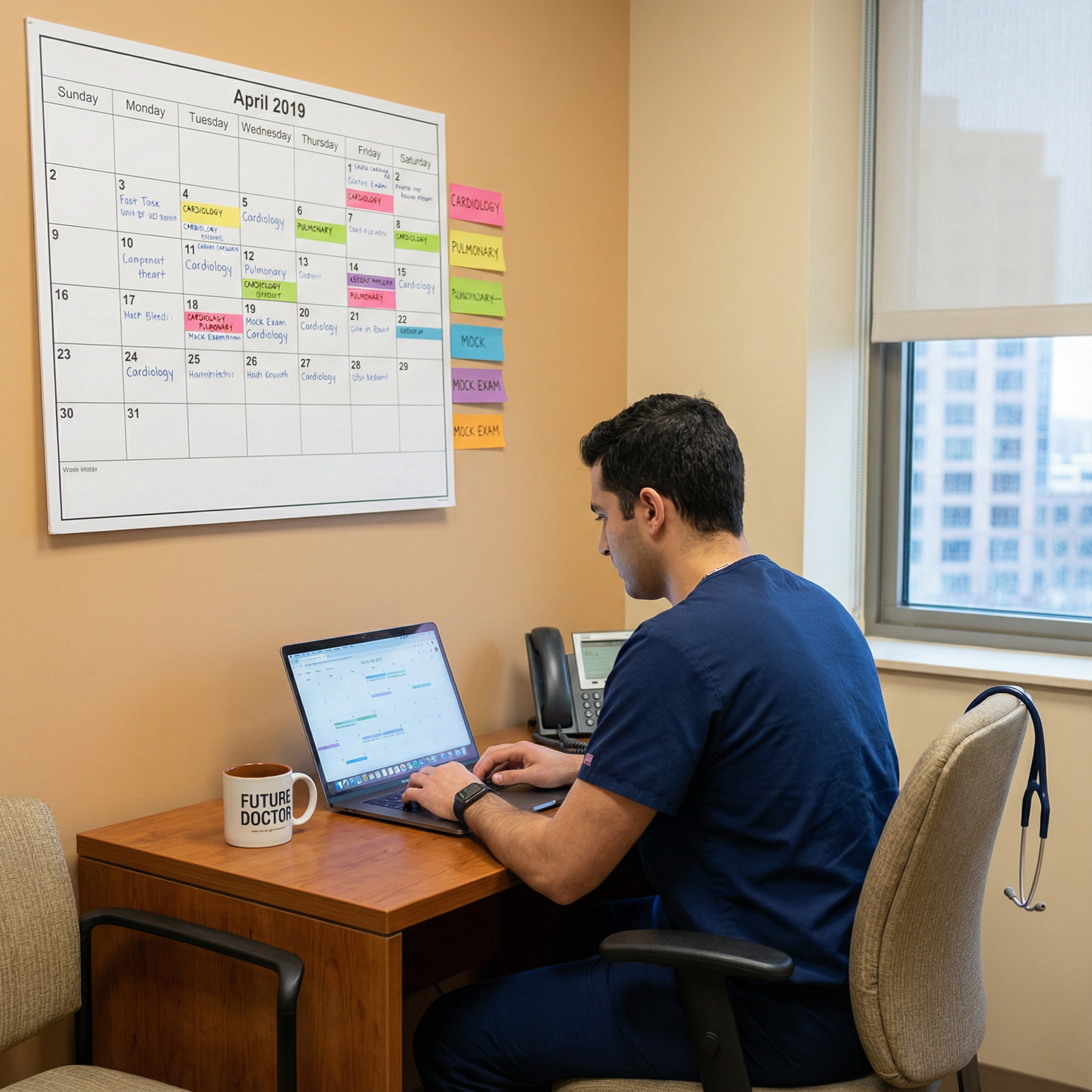
Step 2: Create a Structured but Flexible Study Schedule
A successful residency board exam study plan typically includes:
Long-term timeline (3–6+ months)
- Set an exam date or target month.
- Allocate broad blocks: content review, heavy question work, and dedicated review.
Weekly goals
- Example: “Complete 120–150 QBank questions and review explanations; cover cardiology and pulmonary topics.”
Daily study blocks
- On busy rotations: 30–60 minutes per day + 2–3 hours on one weekend day
- On lighter rotations: 1–2 hours per day + 4–6 hours across the weekend
Built-in review and catch-up days
- At least one “light” day per week to consolidate, review marked questions, or simply rest.
Practical example for a PGY-1 on wards preparing for Step 3 in 5 months:
- Months 1–2:
- 10–15 questions/day on weekdays
- 40–60 questions/weekend
- Focus on core medicine (cardio, pulm, ID, renal, endocrine)
- Months 3–4:
- 20–30 questions/day
- One half-day per week for deeper review (videos, notes, guidelines)
- Focus on OB/GYN, peds, psych, emergency, ethics, biostats
- Month 5 (dedicated push):
- Full-length practice tests every 1–2 weeks
- Simulate exam timing and environment
- Targeted review of weak areas based on practice test performance
Step 3: Balance Clinical Duties and Exam Preparation
You are not a full-time test-taker—you are a working physician in training. To make exam preparation sustainable:
- Use micro-study blocks: 10–15 minutes before sign-out, after rounds, or during downtime to do 5–10 questions.
- Sync studying with your current rotation:
- On a cardiology month, emphasize cardiology questions and echo interpretation.
- On OB, focus on pregnancy complications, fetal monitoring, and postpartum care.
- Protect at least one rest period each week:
- Sleep is a high-yield exam resource; chronic sleep deprivation directly impairs memory and reasoning.
Consistency beats intensity. A steady 40–80 high-quality questions per week for several months often outperforms a frantic last-minute cram.
High-Yield Study Techniques for Residency Board Exams
Active Learning: Move Beyond Passive Reading
The volume of information is enormous. To retain it, prioritize active learning strategies:
Spaced repetition
- Use tools like Anki or other flashcard systems for key formulas, diagnostic criteria, and must-know facts.
- Review small decks daily (10–20 minutes), not all at once.
Active recall
- Close your notes and try to explain, from memory, the differential for chest pain or management of DKA.
- Teach a co-resident, student, or even “teach to the wall” to consolidate understanding.
Question-based learning
- Treat your question bank as your primary textbook, not an afterthought.
- Read every explanation—especially the ones you got right for the wrong reasons.
Maximizing Question Banks as Board Exam Resources
Question banks are the backbone of effective Exam Preparation:
- Choose one primary QBank (e.g., UWorld, AMBOSS) and optionally a secondary one for extra practice.
- Start with tutor mode for learning phases, then move to timed blocks as you approach the exam.
- Do mixed blocks (multi-system) as the exam nears to mimic real test conditions.
When reviewing each question:
- Ask why each incorrect option is wrong.
- Write brief takeaway notes:
- “AAA screening: men 65–75 who have ever smoked.”
- “First-line for acute COPD exacerbation: bronchodilators + steroids + antibiotics if sputum change.”
- Tag topics (e.g., “renal,” “OB,” “biostats”) to identify patterns in your weaknesses.
Group Study and Collaborative Learning
Thoughtful group study can reinforce learning:
- Small groups (2–4 people) work best.
- Set a focused agenda: “We’re reviewing sepsis, shock, and antibiotic stewardship for 60 minutes.”
- Use a case-based approach: one person presents a vignette, the group discusses the differential and next best step.
- Avoid group sessions that devolve into venting or unfocused chatting—protect your time.
If in-person groups are difficult, consider:
- Virtual sessions with co-residents
- Online forums or case discussions (while protecting patient privacy and following all institutional rules)
Multimedia and Modern Medical Education Tools
Diverse learning modalities can help you better understand complex concepts:
- Video lectures (Board review courses, YouTube, specialty society modules)
- Podcasts for commutes (e.g., internal medicine, EM, pediatrics, critical care podcasts)
- Interactive cases from professional organizations or board review platforms
Use multimedia strategically:
- For concepts you find hard to visualize (e.g., cardiac murmurs, imaging findings).
- As a brain-friendly alternative when you are too tired to read but still able to listen or watch.
Essential Board Exam Resources: What to Use and How to Use Them
Core Texts and Review Books
You do not need to read full textbooks cover-to-cover, but a few concise resources can anchor your studying:
USMLE Step 3:
- Step 3-specific review books or concise internal medicine manuals
- Updated guidelines (ACC/AHA, IDSA, ADA, USPSTF) for high-yield topics
COMLEX Level 3:
- Osteopathic-focused review texts with OMT coverage
- Dedicated COMLEX question banks
For specialty in-training and board exams (e.g., ABIM, ABFM, ABS):
- Use board-focused review books endorsed by your specialty society.
- Ask senior residents and recent graduates which resources matched the exam best.
Online Courses, Webinars, and Structured Review Programs
If you prefer more guided structure:
- Consider live or on-demand board review courses offered by major organizations, such as:
- ACP, AAFP, ACEP, ABS, etc., depending on your specialty
- Attend webinars on exam strategy, especially for complex sections like:
- CCS (Clinical Case Simulations) for Step 3
- OMT integration for COMLEX
- Procedure-based questions for surgical boards
Before investing significant money, clarify:
- Does this course match your specific exam (Step 3 vs. specialty boards)?
- Will you realistically have time to complete it?
- Are there testimonials from residents in your program or specialty?
Study Groups, Mentors, and Institutional Resources
Your training program itself is a major Board Exam Resource:
- Program-led review sessions or journal clubs
- Faculty mentors who recently served on board exam committees or question-writing groups
- Wellness and test support services through GME
Ask your program director or chief residents:
- What are the typical pass rates and recommended resources for your program?
- Are there funds or discounts for exam prep courses?
- Is there protected time for board review, especially near exam dates?
Test-Taking Strategies: Performing at Your Best on Exam Day
Know the Exam Format Inside and Out
Before test day, you should be able to describe:
- Number of blocks and questions per block
- Total exam time and break time available
- Types of questions:
- Single best answer multiple choice
- Case simulations (CCS for Step 3)
- OMT-focused or procedural questions for specialty exams
Use official tutorials and practice cases from:
- USMLE/COMLEX websites
- Your specialty board’s official portal
This removes avoidable anxiety about logistics and lets you focus purely on content and reasoning.
Time Management and Pacing
Effective exam performance is as much about strategy as content:
- Aim for a consistent pace:
- For a 40-question block in 60 minutes: ~1.5 minutes per question
- Use a two-pass approach:
- Answer questions you can do confidently in your first pass.
- Mark and skip those that are:
- Extremely long,
- Computational (biostats), or
- Particularly confusing.
- Use remaining time for marked questions.
Do not let a single question consume more than 90–120 seconds on the first pass. Your goal is to maximize total correct answers, not achieve perfection on each question.
Strategies for Difficult Questions
When you encounter a tough question:
- Re-read the last two lines – What is the question actually asking? Diagnosis? Next step? Best test? Most likely mechanism?
- Summarize the case in your head in one sentence.
- Use pattern recognition plus pathophysiology:
- “Elderly + acute confusion + sodium 120 + seizures = severe hyponatremia → hypertonic saline.”
- Apply process of elimination:
- Cross out clearly wrong or unsafe options first.
- Often you can narrow down to 2 choices; then ask which is:
- More directly addresses the question
- More evidence-based or guideline-consistent
- More specific to the key finding in the stem
If you truly don’t know, make your best educated guess and move on. There is no penalty for guessing on most board exams, but unanswered questions are always wrong.
Managing Stress and Maintaining Focus
High-stakes exams naturally provoke anxiety. To perform your best:
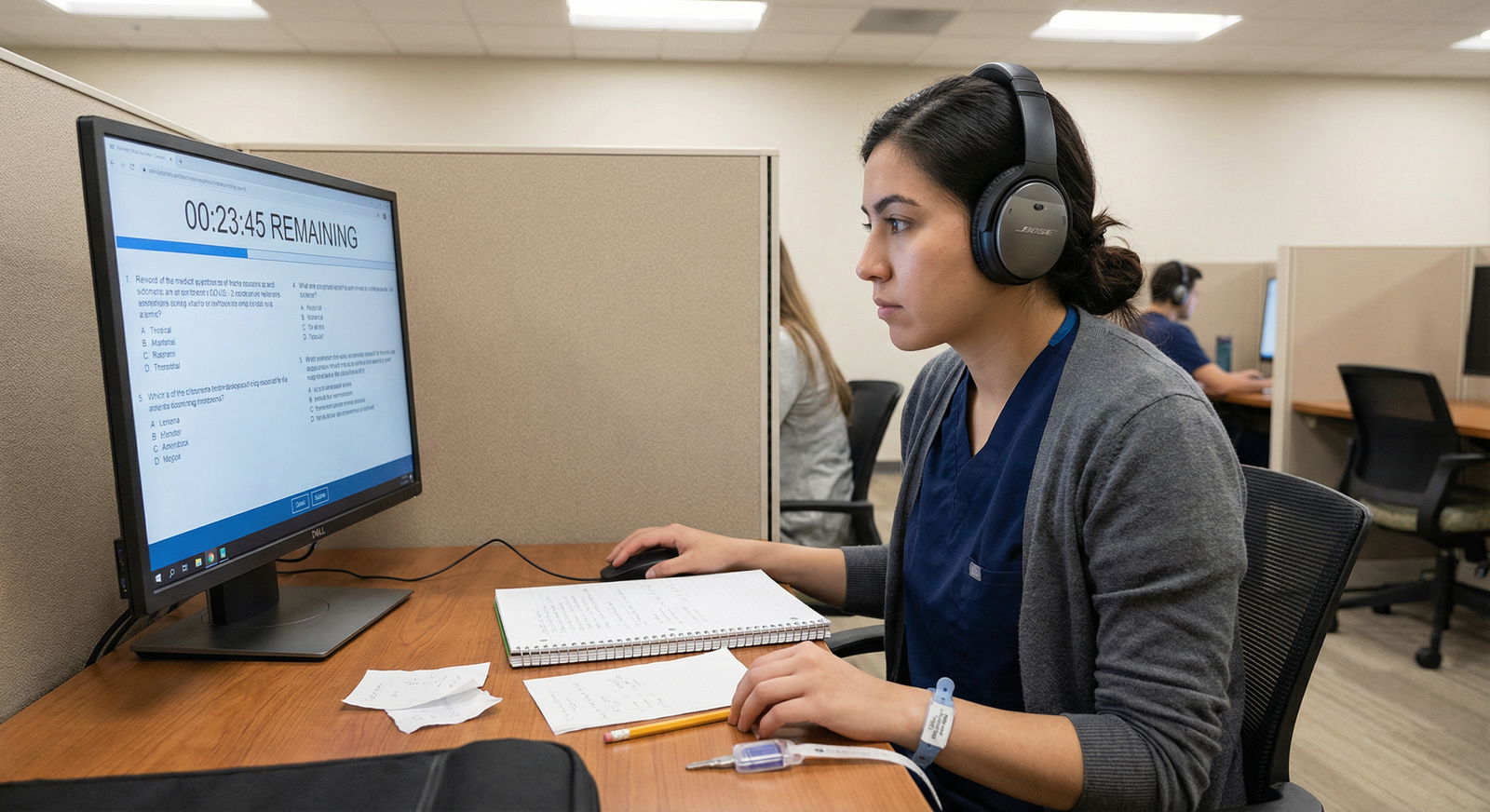
- Simulate exam conditions with at least one full-length practice test:
- Same timing
- Minimal distractions
- Scheduled breaks
- Learn quick centering techniques:
- 4–7–8 breathing (inhale for 4 seconds, hold for 7, exhale for 8).
- Brief muscle relaxation between blocks.
- Control what you can on exam day:
- Comfortable, layered clothing
- Known, non-experimental meals and hydration
- Arrival at the test center early
Remember, your goal is not to feel zero anxiety (which is unrealistic), but to function effectively despite some stress—just like on a busy call night.
After the Exam: Reflection, Next Steps, and Long-Term Growth
Immediate Post-Exam Period
Once the exam is over:
- Give yourself at least 24–48 hours truly off from studying.
- Avoid obsessively reconstructing questions—you can’t change the outcome, and it fuels anxiety.
- Re-engage fully with patient care, hobbies, and sleep.
When Results Arrive
If you pass with the score you hoped for:
- Celebrate appropriately.
- Reflect briefly on what worked well in your preparation to replicate those habits for future specialty boards.
- Consider how to translate exam knowledge into bedside teaching for students and junior residents.
If your score is lower than hoped—or you do not pass:
- Allow yourself to feel disappointment; it is valid.
- Meet with:
- Your program director or advisor
- Possibly a learning specialist if available
- Analyze your performance:
- Content areas of weakness (e.g., OB, biostats, ethics)
- Timing issues
- Anxiety or sleep disruption
- Build a revised, more targeted plan:
- Narrower set of resources
- More structured question review
- Earlier diagnostic self-tests
Many excellent physicians have repeated an exam and gone on to thrive in highly demanding specialties. What matters most is how you adapt and grow from the experience.
FAQs: Residency Board Exams, Study Techniques, and Resources
1. When should I start preparing for residency board exams?
Ideally, begin 3–6 months before your planned exam date, depending on:
- How busy your rotations are
- Your baseline performance on earlier exams (Step 2/Level 2, prior ITEs)
- Personal and family commitments
For IMGs or those who struggled with earlier exams, starting 6–9 months ahead with a low, steady weekly workload is often best. The key is consistency and early identification of weak areas.
2. Are question banks alone enough for exam preparation?
Question banks are essential, but typically not sufficient on their own. They should be:
- Your primary learning tool,
- Supplemented with:
- Concise review texts for weaker topics
- High-yield guidelines (e.g., USPSTF, ACC/AHA, IDSA)
- Occasional videos or podcasts for complex or visual topics
If you repeatedly miss questions in a specific domain (e.g., OB, psych, derm), you likely need a short, focused content review in addition to questions.
3. How can I study effectively while on demanding rotations like ICU or night float?
On intense rotations:
- Lower your expectations for daily volume, but maintain the habit:
- Even 5–10 questions per day keeps you engaged with exam content.
- Use micro-blocks during:
- Pre-round downtime
- Early evening hours when possible
- Shift more of your heavy studying to lighter rotations and off days.
- Protect sleep—chronic fatigue undermines both patient care and exam performance.
Consistency over months will beat a short, all-out push that leads to burnout.
4. What should I do if I feel extremely anxious about failing?
First, recognize that anxiety about Residency Board Exams is very common. Helpful steps include:
- Normalize it by talking with co-residents, mentors, or faculty who have been through the process.
- Use evidence-based stress management:
- Regular exercise (even 10–20 minutes on most days)
- Brief daily mindfulness or breathing practices
- Sleep hygiene strategies
- Consider a practice test to ground your fears in data—sometimes anxiety is worse than reality.
- If anxiety is impairing your functioning, seek support from:
- Your institution’s employee assistance program
- A mental health professional familiar with medical trainees
Addressing anxiety is not a weakness; it’s a professional step to protect your health and performance.
5. How do I choose between different board exam resources and courses?
Ask yourself:
- What learning style works best for you (reading, questions, videos, group discussion)?
- How much time can you realistically dedicate each week?
- What do graduating residents and fellows from your program recommend specifically for your exam?
In general:
- Prioritize a high-quality QBank.
- Add one concise review resource (book or course) that aligns with your exam.
- Avoid over-collecting resources; depth with a few tools is more effective than skimming many.
With thoughtful planning, evidence-based study techniques, and strategic use of Board Exam Resources, you can integrate exam preparation into your residency life without sacrificing your well-being. The habits you build now—structured learning, reflective practice, and resilience under pressure—will serve you far beyond any test day, shaping you into a more confident, capable, and compassionate physician.