It's exactly six months before your boards. You just finished a brutal admitting shift, your inbox is full of “please complete this module” emails, and your co-resident just casually mentioned they’re already on their third pass of UWorld. You haven’t even picked a question bank.
Here’s what you’re up against: you don’t have infinite time, your brain is already overloaded from residency, and board prep is not your program’s top priority no matter what they say in conference. So the only way this ends well is if you hit specific milestones, in order, on a very tight clock.
Let’s go month by month, then zoom into weeks and days where it matters.
Month -6: Commit and Build the Skeleton
At this point you should stop “thinking about” boards and actually lock in a plan.
Critical decisions to make this month
By the end of Month -6, you must have:
- Picked your primary Qbank
- Chosen your main review resource(s)
- Set a realistic weekly question target
- Blocked protected board time on your calendar
If you finish Month -6 without those, you’re already behind.
| Path | Qbank (Primary) | Text/Video | Extras (Optional) |
|---|---|---|---|
| Minimalist | Single major Qbank | Single concise text | 1 NBME-style self-assessment |
| Standard | Single major Qbank | Text + selected videos | 2–3 self-assessments |
| Aggressive | 2 qbanks (staggered) | Text + videos | 3–4 self-assessments |
I’ll be blunt: more resources is not better. More resources just means more half-finished content and more guilt. You want 1–2 anchors, not six.
Week-by-week for Month -6
Week 1: Brutal self-assessment and scheduling
At this point you should:
- Pull your in-training exam score, last few rotation evals, and any prior standardized test history
- Identify your weak themes (e.g., for IM: rheum, ID, heme/onc; for surgery: trauma, critical care, vascular)
- Look honestly at your schedule: nights, ICU blocks, vacations, jeopardy
Then sit down with your actual calendar and:
- Block 3–5 dedicated board hours/week on lighter rotations
- Block 1–2 hours/week on heavy rotations or ICU
- Choose your exam week and mark it in bold. Then refuse to move it unless your PD personally tells you to.
Week 2: Resource selection and setup
At this point you should:
Buy/activate:
- Your primary Qbank
- 1–2 self-assessment exams (don’t schedule them yet, just have them available)
- Your main review text or digital equivalent
Decide your format:
- Timed vs tutor mode early on? (I prefer tutor mode for the first 2–3 weeks to re-learn content, then timed.)
- Mixed vs subject-specific blocks? (Start with subject-specific for confidence, transition to mixed by Month -4.)
Week 3: Baseline test and first question blocks
This is when most residents procrastinate because they’re afraid of a low score. Do it anyway.
At this point you should:
- Take a baseline self-assessment (NBME-style or your Qbank’s “form 1”)
- Accept that the number will probably hurt. That’s the point.
- Use that score to:
- Prioritize 2–3 weak systems for the next month
- Set a target score you want to hit by Month -2
Then start:
- 10–15 questions/day, 4–5 days/week (or equivalent in larger blocks on days off)
- Immediate post-block review with notes (max 1–2 sentences per concept, not essays)
Week 4: Build your system
By end of Month -6, at this point you should have:
A note system:
- Either: annotated master text
- Or: tagged flashcards (Anki or similar)
- Or: tightly organized digital notes (OneNote/Notion/Google Docs)
A review rhythm:
- X question blocks on these days
- Y time for reading or videos
- Z time for flashcards or quick review
If it feels chaotic at the end of Month -6, you’re not ready. Fix the system now before volumes ramp up.
Months -5 and -4: Volume and Discipline
These two months are your build phase. No fancy tricks. Just volume, repetition, and tightening your weak areas.
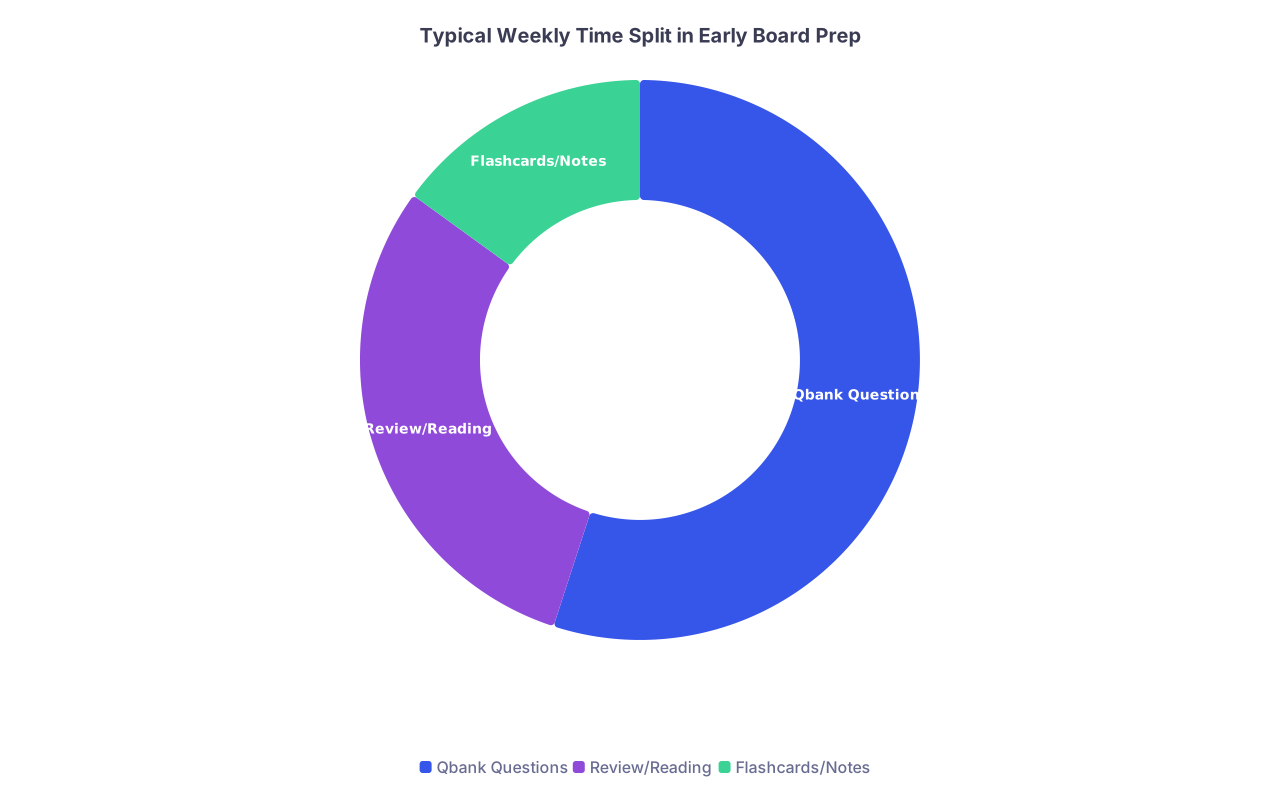
| Category | Value |
|---|---|
| Qbank Questions | 55 |
| Review/Reading | 30 |
| Flashcards/Notes | 15 |
Month -5: Get to cruising speed
Target by end of Month -5: ~25–40% of Qbank completed
Adjust the actual numbers to your specialty and Qbank size, but the ratio stands.
At this point you should:
Aim for:
- Light week: 80–100 questions
- Average week: 120–160 questions
- Heavy/ICU week: 40–60 questions (yes, it will feel like nothing; that’s fine)
Keep blocks mostly subject-based, especially:
- On lighter rotations: hit your weak areas
- On harder rotations: hit your current rotation topics (e.g., ICU → pulm/critical care/infectious)
Start timed blocks:
- 50–75% of your blocks should be timed by end of Month -5
- Still ok to review in detail with references
Month -4: Flip into exam-style mode
By the end of Month -4, question volume needs to be a habit, not an event.
Target by end of Month -4: ~55–65% of Qbank completed
At this point you should:
Shift toward more mixed blocks:
- Aim for at least half of your blocks to be mixed
- Use subject-specific only for “salvage” of clear weak topics
Take your second self-assessment:
- Schedule it near the end of Month -4 on a day off
- Simulate test conditions: timed, minimal breaks
- Compare with baseline:
- If you improved: good, stay the course
- If you stagnated: you either aren’t doing enough questions, or your review is too superficial
Start tightening your review strategy:
- No more reading whole chapters after every missed question
- Focus on:
- Why you missed the question (knowledge gap vs misread vs test logic)
- One specific corrected takeaway per miss
Month -3: Full Simulation and Second Pass Strategy
This month is the pivot from “learning” to “proving you can perform under test conditions.”
At this point you should have at least half your Qbank done and two self-assessments total (baseline + one follow-up).
Strategic goals for Month -3
By end of Month -3, you should:
- Be at 70–80% Qbank completion
- Have taken 2–3 self-assessments total
- Know clearly:
- Your core weak content areas
- Your test-taking weaknesses (rushing, overthinking, changing right answers, etc.)
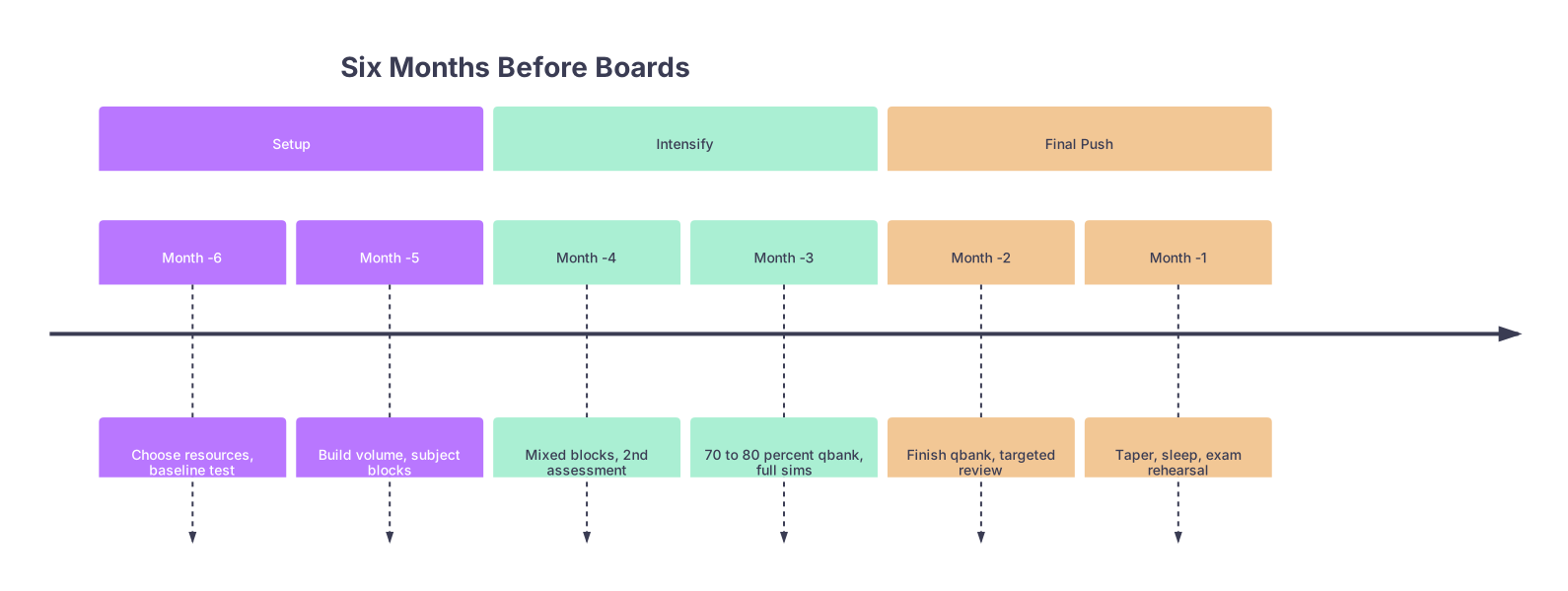
| Period | Event |
|---|---|
| Setup - Month -6 | Choose resources, baseline test |
| Setup - Month -5 | Build volume, subject blocks |
| Intensify - Month -4 | Mixed blocks, 2nd assessment |
| Intensify - Month -3 | 70 to 80 percent qbank, full sims |
| Final Push - Month -2 | Finish qbank, targeted review |
| Final Push - Month -1 | Taper, sleep, exam rehearsal |
How to use Month -3 week by week
Week 1–2: Near-full exam practice
At this point you should:
Do at least one full-exam-length day (or close):
- For example: 4–6 blocks back-to-back with short breaks
- Same start time as your scheduled exam if possible
Debrief that day:
- When did your focus crash? Block 3? 5?
- Did you rush last 10 questions of each block?
- Any particular system where your accuracy nosedived when you were tired?
Use that to shape:
- Your exam-day stamina plan
- When to schedule breaks on real exam day
Week 3–4: Second-pass strategy
If you’re around 70–80% Qbank completion:
At this point you should:
Decide what your “second pass” actually means:
- Re-do all questions? Usually a bad idea; you’ll remember answers, not learn reasoning
- Re-do only missed/flagged questions? Reasonable, but prioritize by topic
- Or: Move to different Qbank for fresh questions in weak areas
Start hyper-targeted blocks:
- 10–20 question “drill” blocks in:
- Your worst 2–3 systems
- High-yield chronic weak themes (e.g., statistics, ethics, dermatology, pediatric milestones, EKGs)
- 10–20 question “drill” blocks in:
By the end of Month -3, your board prep should feel like a serious second job, not a hobby.
Month -2: Finish Content, Shift to Polishing
Month -2 is where residents either lock in their trajectory or start panicking and buying new resources they don’t have time to use. Don’t be that person ordering another 800-page book now.
At this point you should be finishing content, not adding content.
Non-negotiable targets for Month -2
By the end of Month -2, you must:
- Have completed your primary Qbank (100%)
- Have taken 3–4 total self-assessments with at least 1 in the last two weeks of this month
- Know your probable score range (not fantasy, reality)
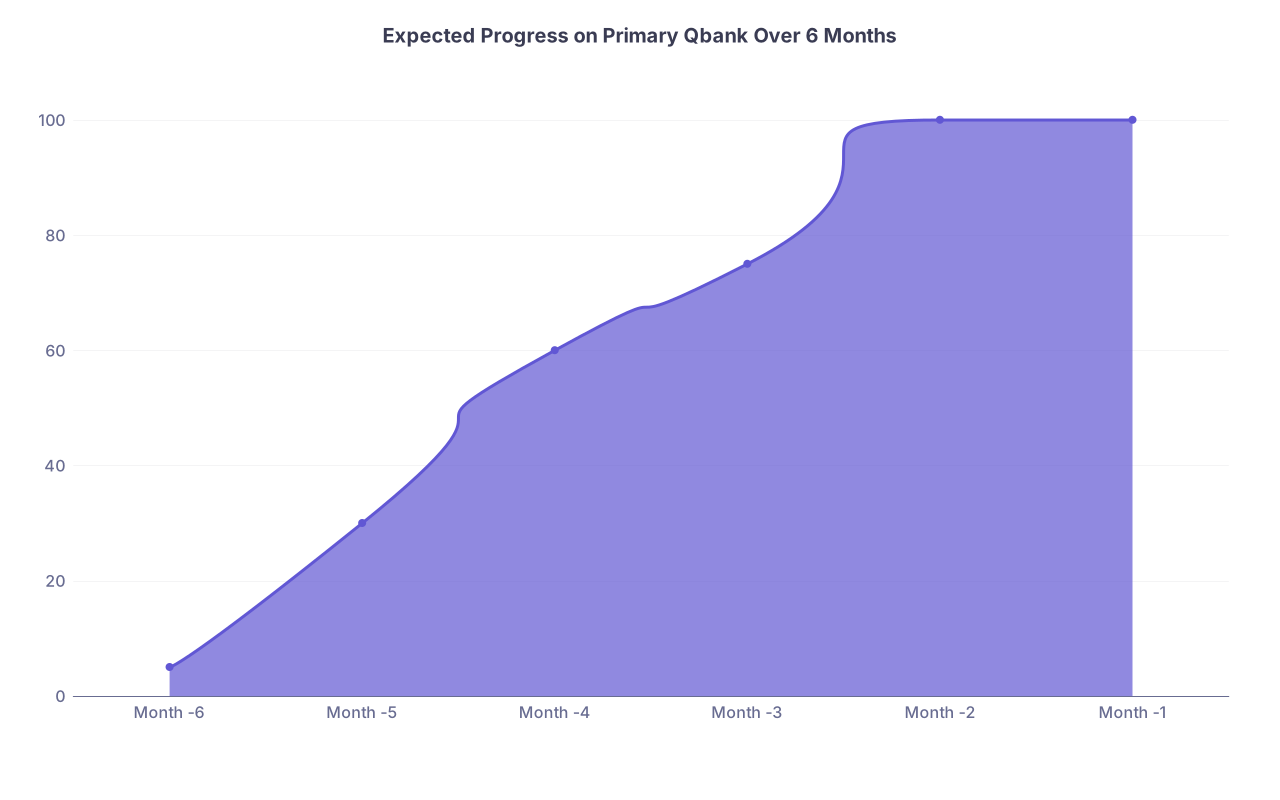
| Category | Value |
|---|---|
| Month -6 | 5 |
| Month -5 | 30 |
| Month -4 | 60 |
| Month -3 | 75 |
| Month -2 | 100 |
| Month -1 | 100 |
Week-by-week for Month -2
Week 1: Complete the last 15–20%
At this point you should:
Push to finish the Qbank, even if:
- You have to reduce some review depth on easy/obvious topics
- You cluster some systems (e.g., do all remaining endocrine/pulm in 2–3 days)
Do one self-assessment at the end of Week 1:
- If this score is near or above your target → stay on course
- If it’s significantly below:
- Check if it was fatigue, bad sleep, bad day, or real knowledge deficit
- Increase frequency of shorter blocks and targeted reviews
Week 2–3: Pattern analysis and focused repair
At this point you should move from “more questions” to “smarter questions.”
Build a pattern list from:
- Recurrent mistakes (e.g., misreading “except”, missing age cutoffs, mixed up staging criteria)
- Systems where your accuracy is persistently <60–65%
Create micro-review blocks:
- 20–25 questions on single topics:
- For IM: acid-base, chest pain, CKD, arrhythmias, transfusion
- For surgery: trauma resuscitation, postop complications, hernias, vascular, GI bleeds
- For peds: vaccines, developmental milestones, congenital heart, rashes
- 20–25 questions on single topics:
Cap reading:
- No new giant chapters
- Short, targeted reading or video on missed clusters only
Week 4: Last hard self-assessment
At this point you should:
- Take what will likely be your last “max effort” self-assessment
- Simulate exam conditions fully:
- Same start time
- Same break structure
- Same snack/coffee plan
Use this score brutally:
- If in or above your target range:
- Confidence is allowed. Don’t get greedy and wreck your sleep to chase an extra few points.
- If well below:
- You don’t need “hope.” You need:
- Tighter focus (top 3 weak areas only)
- Consistent daily blocks
- Controlled work hours if possible (talk to PD if you’re drowning in service)
- You don’t need “hope.” You need:
Month -1: Taper Without Getting Sloppy
This is where residents sabotage themselves. They either burn out by doubling their volume, or they under-prepare because the score finally feels “good enough.”
At this point you should be maintaining sharpness, not trying to rebuild anything.
Big rules for the final month
By the time you hit Month -1:
- No new primary resources
- No more than 1 additional self-assessment, if any
- Sleep, nutrition, and mental bandwidth become performance tools, not afterthoughts
Week 1–2: Maintain tempo, light polish
At this point you should:
- Do 40–80 questions on most days off, 20–40 on workdays
- Focus on:
- Mixed blocks, timed
- Reviewing only what’s necessary to fix your logic
- Keep short daily review:
- 20–30 minutes of flashcards or weak-topic notes
Avoid:
- Giant “cram marathons” after night shifts
- Completely stopping questions for 4–5 days at a time
Week 3: Rehearse the exam day
Pick a day early this week and treat it as a dress rehearsal.
At this point you should:
- Wake up at exam-day time
- Eat exactly what you plan for exam day
- Do:
- 3–4 timed blocks with scheduled breaks
- Short review only
Then adjust:
- If you crashed early → you’re probably sleep-deprived and overstimulated by constant screens
- If you peaked late → consider your caffeine timing and pre-exam warmup
Week 4 (Final 7–10 days): Taper hard
This last stretch matters more than residents think.
At this point you should:
Last 3–5 days before exam:
- 20–40 questions/day max
- Light review of summary sheets (not entire textbooks)
- Sleep locked in (same bedtime and wake time as exam day)
Day before exam:
- No heavy question blocks
- Optional: 10–20 gentle “confidence” questions in the morning
- Short walk, real meals, early night
If you’re doing full timed blocks at 9 PM the night before the exam, you’re not “dedicated,” you’re unstrategic.
Micro-Daily Checklist (Once You’re in Full Prep Mode)
On any normal prep day (Months -4 to -1), your day should hit:
- 1–3 blocks of questions (20–40 each), timed
- Immediate review of:
- All misses
- Any “lucky guesses”
- 20–30 minutes of:
- Flashcards
- Or summary notes of your consistent weak topics
- 5–10 minutes to:
- Mark what you’ll attack tomorrow (so you don’t waste time deciding when you’re exhausted)
Two Things Residents Consistently Get Wrong
They treat “I’m busy on service” as an absolute barrier.
No. It just changes the numbers. Heavy block? Fine, do 10–20 questions a day and 60–80 on your one day off. But going a whole ICU month without a single block? That’s how you slide backward.They chase comfort instead of competence.
Watching more videos always feels nicer than facing timed blocks that expose your weaknesses. But the exam is timed questions, not narrated lectures. If your ratio is more than 50% passive learning in the last 3 months, you’re doing it wrong.