It’s 6:30 p.m. the night before your board exam.
Your shift is finally over. Your brain is buzzing with random facts, half-remembered guidelines, and that one weird question from UWorld that has now become your entire personality. You’re staring at your stack of notes, trying to decide: do you keep grinding, or do you shut it down?
This is the point where people either lock in a smart plan… or sabotage months of work in 24 hours.
Let’s not do the second thing.
We’ll walk this chronologically:
- 1 week out
- 48 hours out
- 24 hours out
- Morning of the exam
- During the exam day itself
At each time point: what you should do, what you should not do, and what absolutely does not matter as much as you think.
One Week Out: Systems, Not Heroics
You’re about 7 days from your exam date. At this point you should be done with new content. If you’re still trying to “learn cardiology from scratch,” that’s not a plan; that’s denial.
At this point you should…
1. Lock in your final week structure (no improvising).
Make a written plan for each remaining day. Not in your head. On paper or in your calendar.
- Pick 2–3 “high-yield” domains you will touch every day (e.g., cardiology, ID, biostats for IM boards; trauma, OB, peds for EM; etc.).
- Decide how many questions per day (realistic: 40–120 depending on where you are and how fried you feel).
- Decide your final full-length practice test day (if you’re doing one).
| Day Out | Question Blocks | Focus Area |
|---|---|---|
| 7 days | 2 x 40 timed | Mixed |
| 6 days | 2 x 40 timed | Mixed |
| 5 days | 1 x 40 + review | Weak areas |
| 4 days | Full-length | Sim exam |
| 3 days | 2 x 40 untimed | Targeted |
| 2 days | 1 x 40 light | Confidence |
| 1 day | 0–20 max | Warm-up |
If you need a full-length, 4 days out is about as close as I’d go. Three days is pushing it. Two days is dumb.
2. Shift from “gain knowledge” to “protect performance.”
The exam is now partly a medical knowledge test and partly an endurance and decision-making test.
This week, emphasize:
- Timed blocks in exam-like conditions
- Immediate review with tight notes (no 30-minute tangents on UpToDate)
- Repetition of known high-yield topics, not random obscure zebras
If you’ve got a question bank with custom blocks:
- Build 50–70% mixed blocks to simulate reality
- Keep 30–50% targeted to your consistent weak spots
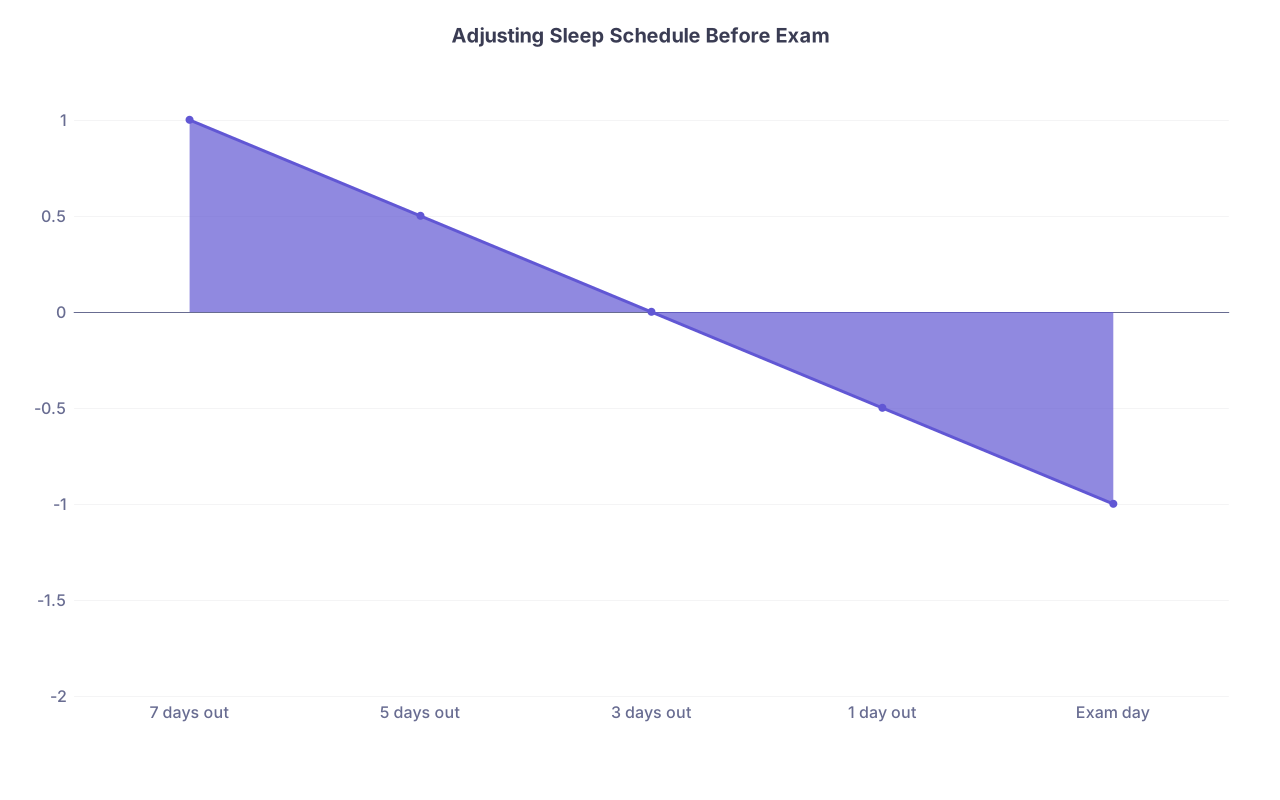
3. Fix your sleep schedule now, not the night before.
If your exam starts at 8 a.m. and you normally go to bed at 1 a.m. after night float, you have a problem.
Starting 5–7 days out:
- Move bedtime and wake-up earlier by ~30–45 minutes each day
- Anchor wake-up with light, caffeine, and movement (short walk, light stretch)
- No “I’ll just stay up late and cram” during this week. That destroys the adaptation.
| Category | Value |
|---|---|
| 7 days out | 1 |
| 5 days out | 0.5 |
| 3 days out | 0 |
| 1 day out | -0.5 |
| Exam day | -1 |
(Values = hours shifted relative to your usual schedule.)
This is where I’ve seen smart people bleed points because they walked into the testing center half-panicked.
By 7 days out, you should have:
- Checked your exam date, time, and location twice
- Tested travel time during similar traffic hours
- Printed or at least located your required ID, confirmation email, etc.
- Chosen your exam-day clothes (layers, no loud logos, comfortable shoes)
- Bought or prepped exam snacks and drinks (more on this later)
5. Decide your “last 3 days” content priorities.
Write this on a single sheet or in a note:
- Top 5 weak topics you will touch 2–3 more times (e.g., arrhythmia management, vasculitis, pediatric rashes)
- Top 10 formulas/algorithms you must have instant recall for (e.g., anion gap, NNT, biostats calculations, ventilator tweaks)
- Mini-reference items you’ll skim day before (short lists only, not textbooks)
This avoids the last-minute “what should I study? everything??” spiral.
48 Hours Out: Taper and Tighten
Now you’re 2 days from the exam. This is the transition from training to taper.
You’re no longer trying to PR your knowledge. You’re trying to arrive with a rested brain and a stable routine.
At this point you should…
1. Run a “dress rehearsal” morning.
Two days out is ideal to practice your exam morning almost exactly:
- Wake at your planned exam-day time
- Eat the same type of breakfast you intend for test day
- Start a 60–75 minute timed block at the same clock time your exam will start
- Sit at a desk. Phone in another room. No interruptions.
This is not cute “study aesthetic.” It’s literally brain and body rehearsal.
If something feels off—GI upset from your breakfast, too jittery from your usual coffee, crashing mid-block—you adjust now, not on the real day.
2. Keep question volume moderate and focused.
48 hours out, what I like:
- 1 or 2 timed blocks of 20–40 questions
- Strong review of those blocks
- A short (~30–45 minute) targeted session on weak area(s)
What I don’t like:
- Full-length exams
- Starting an entirely new resource
- Flailing through random high-yield PDFs you never used before
3. Final logistics check and packing.
Treat this like you’re leaving for an early flight tomorrow, not like “eh, I’ll throw things together in the morning.”
Pack your exam bag 48 hours out, not the night before:
- Valid government ID
- Exam confirmation / permit (printed or accessible offline)
- Earplugs (if allowed), glasses, contact lens supplies
- Layers: sweatshirt/zip-up, socks
- Simple snacks:
- salty (pretzels, crackers, nuts)
- slightly sweet (granola bar, fruit leather)
- water, maybe something with a bit of caffeine
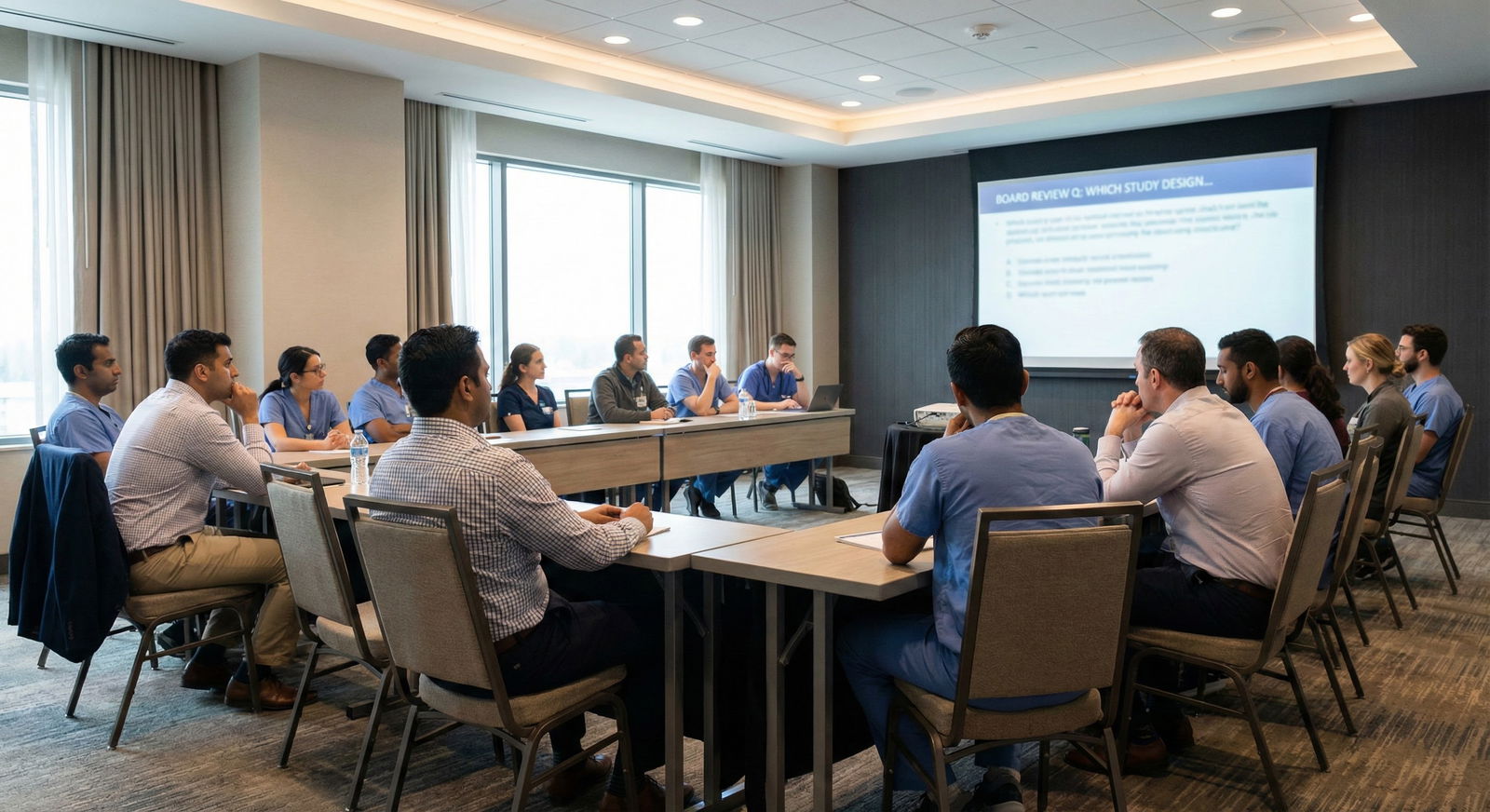
Put the bag near the door. You want zero scavenger hunts the morning of.
4. Set boundaries with work and people.
If you’re on a rotation, this is where you’ve already negotiated lighter duties or a post-call day. If you didn’t, do what you can now:
- Speak to your senior: “My boards are in 2 days; I need to leave on time and I won’t be checking Epic from home.”
- Tell friends and family: “Minimal texting for the next 48 hours. I’ll talk to you after the exam.”
You are not available for drama, extra shifts, or “quick favors” right now.
5. Start gentle mental deceleration in the evening.
Two nights before the exam:
- Cut caffeine after ~3–4 p.m.
- No intense, new high-stress studying past 9–10 p.m.
- Aim for 7–8 hours of sleep, even if it’s not perfect, to give yourself a buffer
This is your “last real night of sleep.” The night before the exam might be more restless. That’s fine. That’s expected. You’re banking rest now.
24 Hours Out: Protect the Brain
Now it’s the day before your exam.
You will see people online brag about doing “600 questions the day before” or reading “three question banks twice.” That’s fantasy or stupidity. Sometimes both.
Your job 24 hours out is simple: show up tomorrow with all the capacity you already built, not half of it burned by panic.
Morning (24–18 hours out)
At this point you should…
1. Do a light warm-up, not a full workout.
Morning plan:
- 10–20 easy questions (maybe 2–3 “review” questions you’ve gotten wrong before)
- 30–45 minutes of targeted flashcards or review sheets
- Brief skim of those top 10 formulas/algorithms
Then stop trying to “measure” yourself. No more self-worth-as-percent-correct today.
2. Confirm all logistics once, then stop checking.
- Re-check exam time and location once
- Check travel route and parking options once
- Put gas in your car or add money to transit card if needed
Then close those tabs. Obsessive re-checking is just anxiety looking for a hobby.
Midday to Afternoon (18–8 hours out)
3. Move your body, but don’t wreck it.
You’re aiming for light movement:
- 20–30 minute walk
- Light stretching or yoga
- Nothing that risks injury or leaves you sore
Your body will be stuck in a chair for many hours tomorrow. Loosen it up now.
4. If you must study, make it structured and finite.
Set a hard ceiling: 1–2 more hours total, broken into chunks:
- 30 minutes: one weak topic (e.g., arrhythmias)
- 30 minutes: another weak topic or biostats
- 20–30 minutes: quick high-yield pass (your own notes, not someone else’s last-minute cram PDF)
No new question bank. No “oh, this 80-page rapid review document I’ve never opened before looks amazing…”
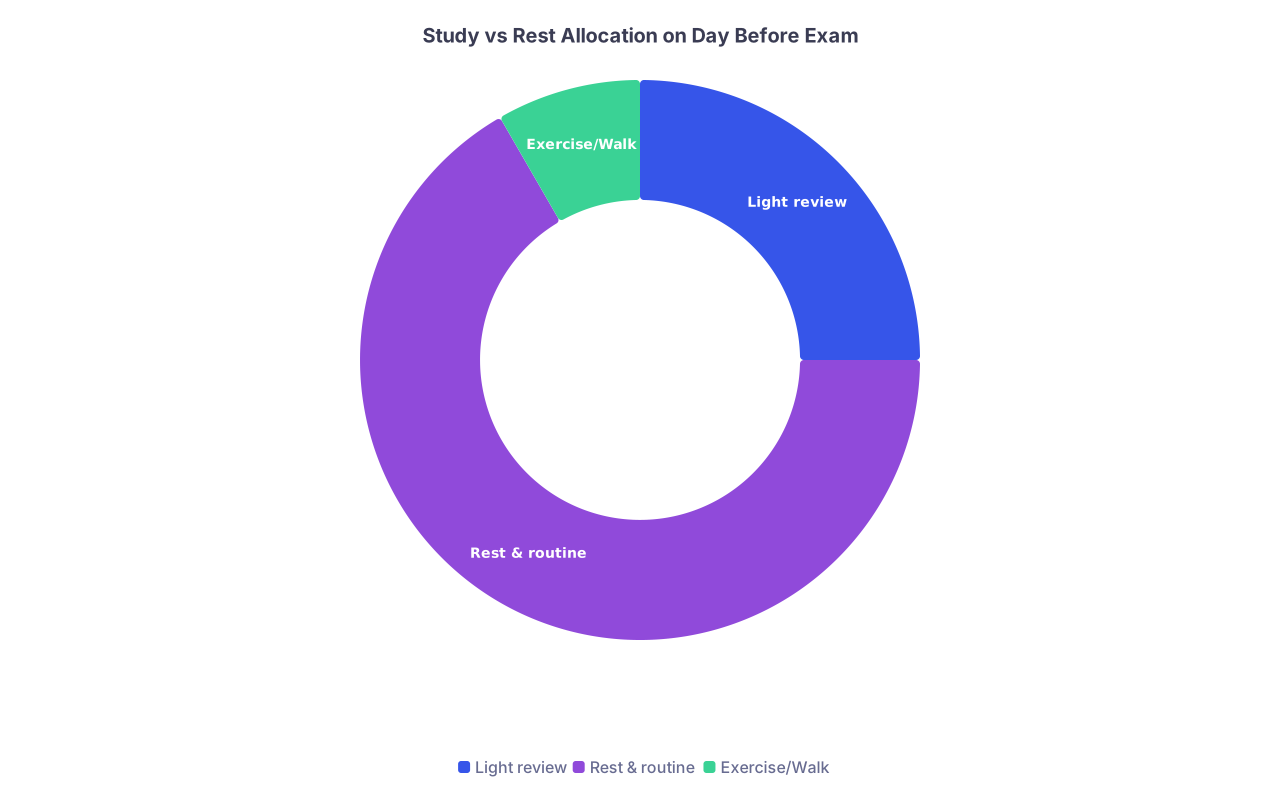
| Category | Value |
|---|---|
| Light review | 90 |
| Rest & routine | 240 |
| Exercise/Walk | 30 |
(Values in minutes – adjust for your day, but the proportions are the point.)
5. Lock in your exam breakfast and timing.
Decide:
- What you will eat (something you’ve eaten before without GI rebellion)
- When you’ll eat (usually 60–90 minutes before exam start time)
- Caffeine dose (same or slightly less than your usual morning, not more)
This is not the day to try intermittent fasting, random energy drinks, or double espresso if you’re a half-cup-per-day person.
Evening (8–0 hours out)
6. Shut down the study machine.
Ideal: shut it down around 7–8 p.m.
If you’re flipping through cards at 11:45 p.m., you’re paying for fragile marginal gains with your sleep and anxiety. That trade is rarely worth it.
What you can do:
- Lay out clothes, keys, wallet, ID, mask if required
- Put snacks and water in your exam bag (if not already done)
- Set 2 alarms (phone + old-school alarm, or phone + smart speaker)
7. Pre-commit to your “if I can’t sleep” plan.
You may not sleep well. That’s fine. The worst thing you can do is grab your phone and restart intense studying at 2 a.m.
Decide now:
- If I’m awake in bed, I’ll listen to:
- a calm podcast,
- an audiobook,
- or white noise
- I will not:
- open my question bank,
- scroll social media,
- consume other people’s anxiety online
You don’t need 8 perfect hours. You need a reasonably calm body and some non-zero amount of rest.
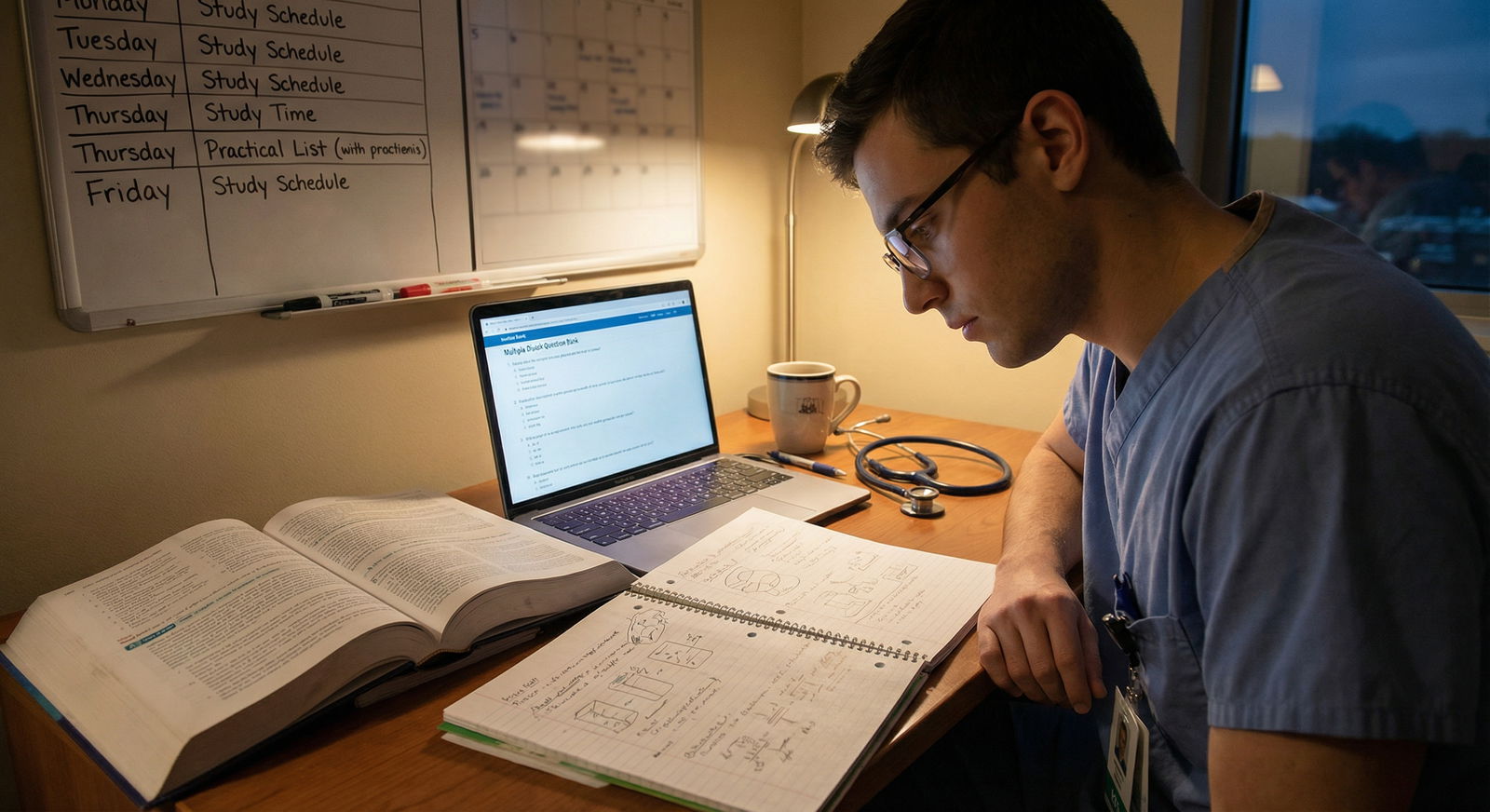
Morning of the Exam: Execute the Script
Alarm goes off. This is not the time to “see how I feel and decide.” The decisions should already be made.
2–3 hours before exam start
At this point you should…
1. Get up on the first or second alarm.
No snooze marathons. You want plenty of buffer for:
- Showering or at least washing up
- Breakfast
- Travel + unexpected nonsense (traffic, parking)
If you slept terribly but still got out of bed on time: you’re fine. I’ve seen people absolutely crush Step/boards on 3 hours of junk sleep. Adrenaline is real.
2. Eat your planned breakfast, drink your planned caffeine.
Stick to the script:
- No new, heavy, greasy foods (this is not the morning for a novelty breakfast burrito)
- Hydrate, but don’t chug a liter of water right before leaving
3. Do a 5–10 minute brain warm-up – max.
This is not “more studying.” It’s flipping on the mental lights.
Good options:
- 5–10 very easy questions you’re confident in
- Quick skim of 1-page formulas/algorithms/mini-lists you made
- Short mental recall exercise: list 5 causes of x, 5 steps in y algorithm, etc.
Once that’s done: close it. The goal is confidence, not self-doubt.
60–90 minutes before exam start
4. Leave with more time than you think necessary.
Arrive at the test center parking lot 30–45 minutes before your check-in time:
- If you’re early, you can sit in your car, breathe, listen to something calming
- If you hit traffic or get lost, you have a buffer
What kills people’s focus is sprinting in 2 minutes before start, heart rate at 150, brain still outside the building.
5. Final bathroom, gear check, and mental reset.
As you walk in:
- Last bathroom stop before check-in
- Confirm ID and snacks are in your bag
- Tell yourself (out loud if you need to):
- “Today is execution, not evaluation.”
- “I have already done the work; I’m just showing it.”
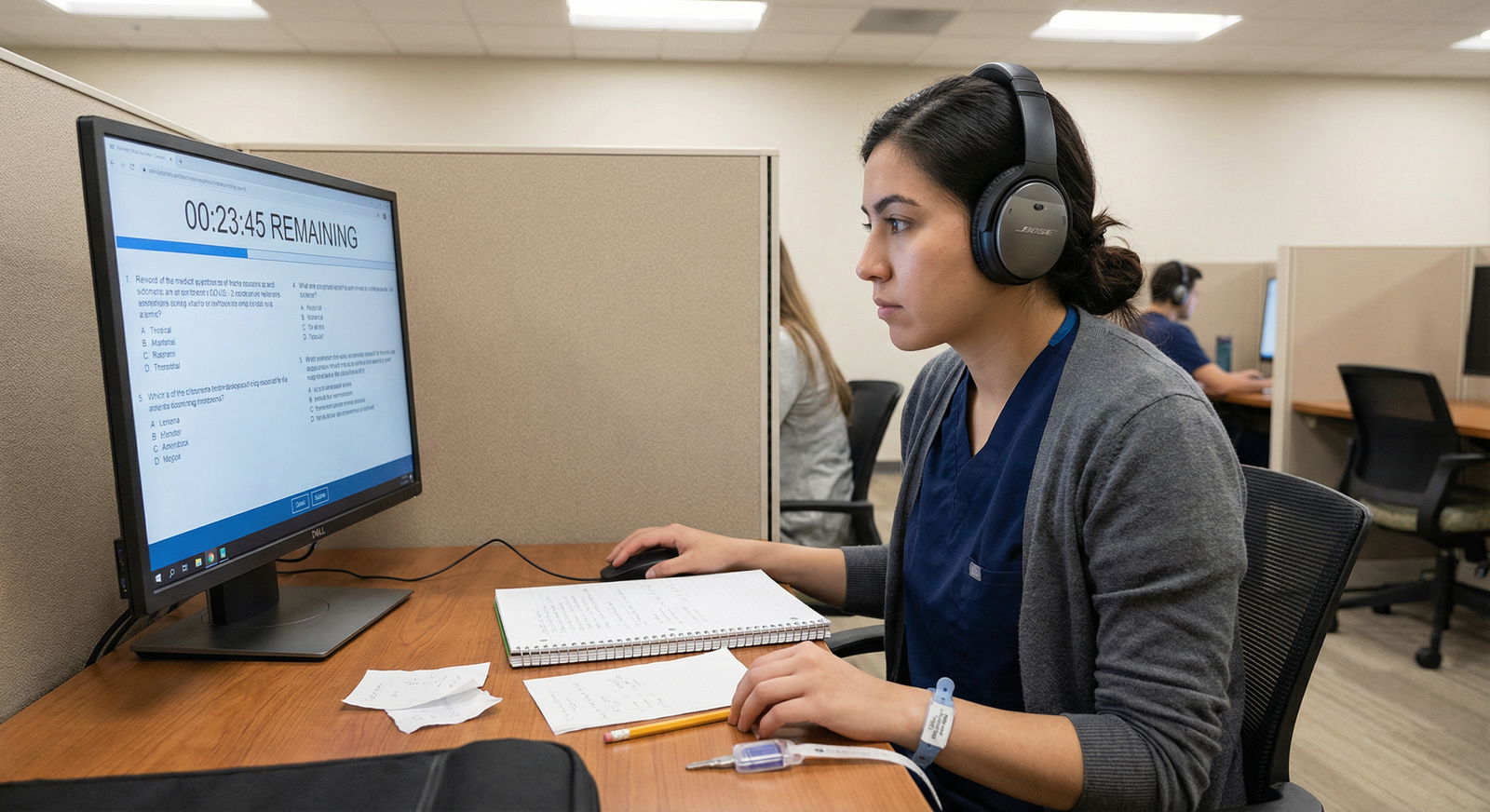
During the Exam Day: Survive, Then Optimize
Once you’re checked in, the main job is simple: manage your time, your breaks, and your physiology.
At this point you should…
1. Have a rough pacing plan.
Know your numbers:
- Total number of questions
- Questions per block
- Time per block
Then mentally compute:
- Target minutes per block
- Target questions per 10–15 minutes
For example, internal medicine boards: 60 questions / 120 minutes:
- ~2 minutes per question
- Checkpoint: 30 questions done by ~60 minutes
You are not doing algebra mid-exam.
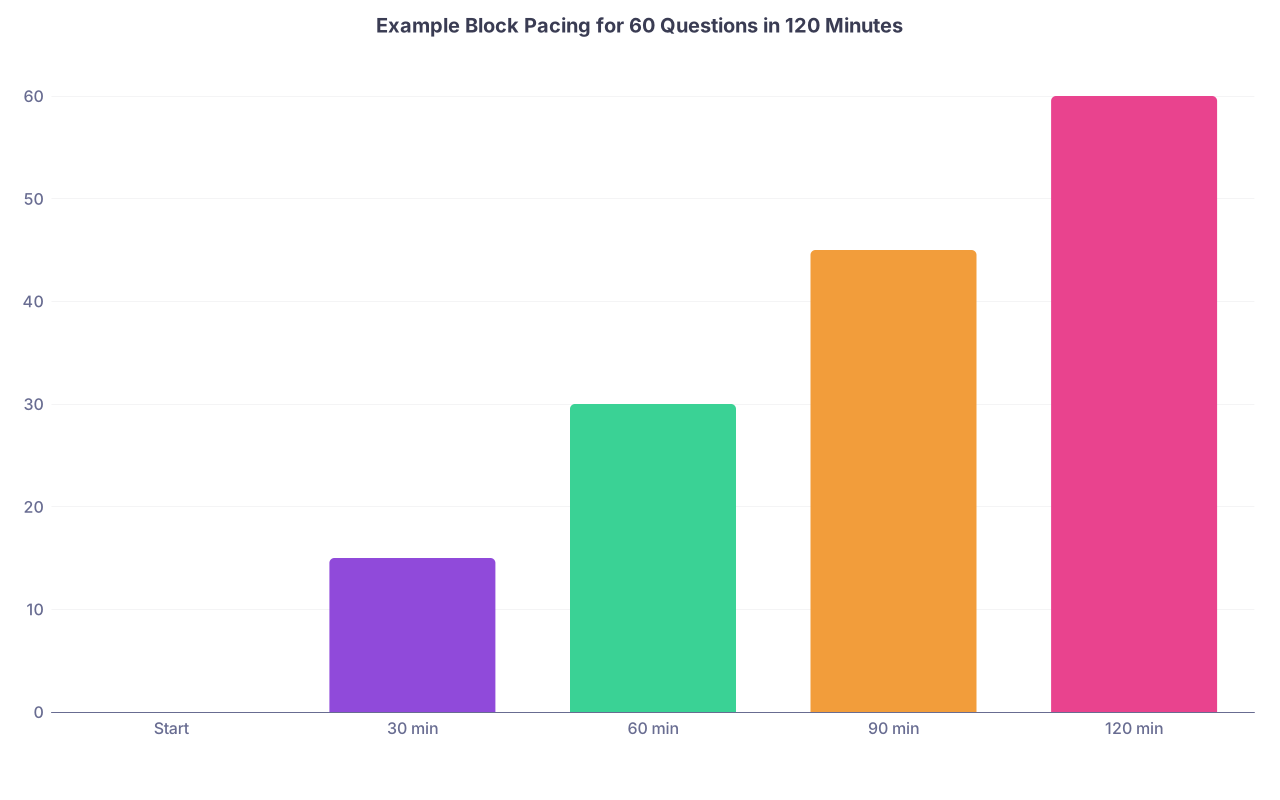
| Category | Value |
|---|---|
| Start | 0 |
| 30 min | 15 |
| 60 min | 30 |
| 90 min | 45 |
| 120 min | 60 |
2. Use the first 5–10 questions to settle in.
These are your “tax.” You’re just getting used to:
- Screen brightness
- Question style
- Click tempo
Read a bit slower. Double-check answers. Then shift up to full pace after that first mini-run.
3. Do not over-mark and under-decide.
You’re allowed to mark questions, but:
- Make your best guess before marking.
- Don’t mark half the block to “decide later.” You won’t suddenly become a new person 40 minutes from now.
If you truly have no idea:
- Eliminate obvious wrong answers
- Pick a consistent “guess” letter
- Move on
Staring longer at a 5% question drains time from a 70% question.
4. Treat breaks like pit stops, not vacations.
On breaks:
- Bathroom
- A few sips of water
- One light snack if hungry
- A few deep breaths
Avoid:
- Checking your phone or emails
- Rehashing questions out loud (or in your head)
- Chugging caffeine you’re not used to
You want to step out, reset, step back in. Not spin mental fan fiction about how the first block went.
5. Re-center after a bad block.
You will have a block that feels like a punch to the face. Everyone does.
Your script when that happens:
- “That block is over. I can’t change it.”
- “The exam is graded across the whole test, not one block.”
- On the next block, focus extra on reading questions carefully rather than chasing time.
Rattling yourself for the next 3 blocks because of one rough one? That’s how good knowledge gets wasted.
After the Exam: The Only Checklist That Matters
When you walk out, you do not immediately need to know how you did.
You need:
- Food
- Hydration
- Sleep
- Human conversation that is not about question #37
No r/Residency exam debrief threads, no obsessive Googling stems, no “I definitely failed” spiral. Not that day.
Quick Recap: Your Non-Negotiables
If you remember nothing else:
- One week out: stop chasing new content. Start protecting performance. Fix your sleep, lock logistics, and practice like the real thing.
- 48–24 hours out: taper. Light, focused review only. Pack, plan, and pre-commit to how you’ll handle nerves and bad sleep.
- Day of: run the script you already wrote. Pacing, breaks, and emotional control will save more points than panicked last-minute knowledge.
You did the hard months already. The last week isn’t about proving you’re smart; it’s about not getting in your own way.