The worst way to handle boards is to “wait until it feels right.”
You need a calendar, not vibes.
Below is a practical, time‑anchored guide: when to register, when to schedule, when to pay, and what to do each month so you do not blow thousands of dollars or scramble for a test date during night float.
I’ll talk in general “PGY‑1 / PGY‑2 / PGY‑3+” language and then get specific about boards timing by specialty stage (USMLE/COMLEX, in‑training exams, written boards, oral/OSCE‑style). Adjust the years if you’re in a 4‑ or 5‑year program.
Big Picture Timeline: What Happens When
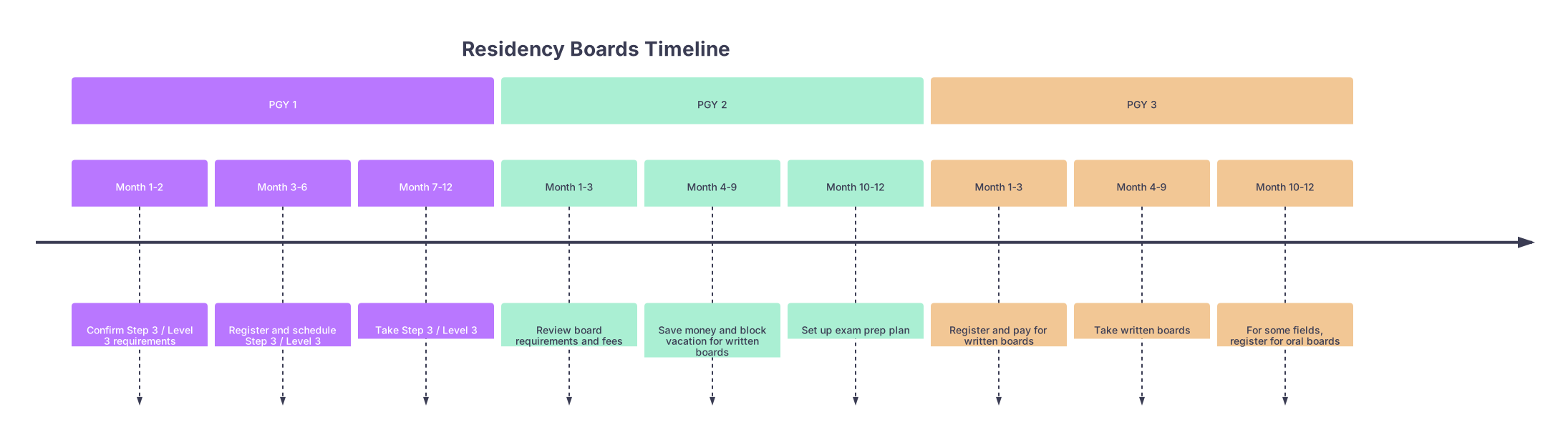
At this point, you need a mental map. Here’s the rough arc for a typical 3‑year core residency (IM, peds, FM, etc.):
| Period | Event |
|---|---|
| PGY 1 - Month 1-2 | Confirm Step 3 / Level 3 requirements |
| PGY 1 - Month 3-6 | Register and schedule Step 3 / Level 3 |
| PGY 1 - Month 7-12 | Take Step 3 / Level 3 |
| PGY 2 - Month 1-3 | Review board requirements and fees |
| PGY 2 - Month 4-9 | Save money and block vacation for written boards |
| PGY 2 - Month 10-12 | Set up exam prep plan |
| PGY 3 - Month 1-3 | Register and pay for written boards |
| PGY 3 - Month 4-9 | Take written boards |
| PGY 3 - Month 10-12 | For some fields, register for oral boards |
Key buckets you’ll deal with:
- Remaining licensing exam (USMLE Step 3 / COMLEX Level 3)
- Annual in‑training exam (no fee, but affects fellowship/boards confidence)
- Written certifying exam (ABIM, ABFM, ABEM, ABS, ABOG, etc.)
- Oral/OSCE/clinical exams (surgery, EM, OB/GYN, psych subspecialties, etc.)
You do not want these overlapping with:
- ICU months
- Night float blocks
- Major life events (wedding, baby, fellowship move)
Step 3 / COMLEX Level 3: PGY‑1–PGY‑2
Most programs want this done early. The residents I’ve watched struggle the most were the ones who pushed Step 3 to late PGY‑2 or even PGY‑3 and then got crushed by boards + job hunt at the same time.
Month 1–2 of PGY‑1: Confirm Rules and Deadlines
At this point you should:
- Ask your program coordinator explicitly:
- “By when do you expect us to have Step 3 / Level 3 done?”
- “Does the program pay the fee or reimburse?”
- “Do we get dedicated days off for the exam?”
- Check:
- USMLE Step 3 (NBME/FSMB)
- COMLEX Level 3 (NBOME)
Look for:
- Eligibility window (usually 3–6 months)
- Required training level (often after some months of residency)
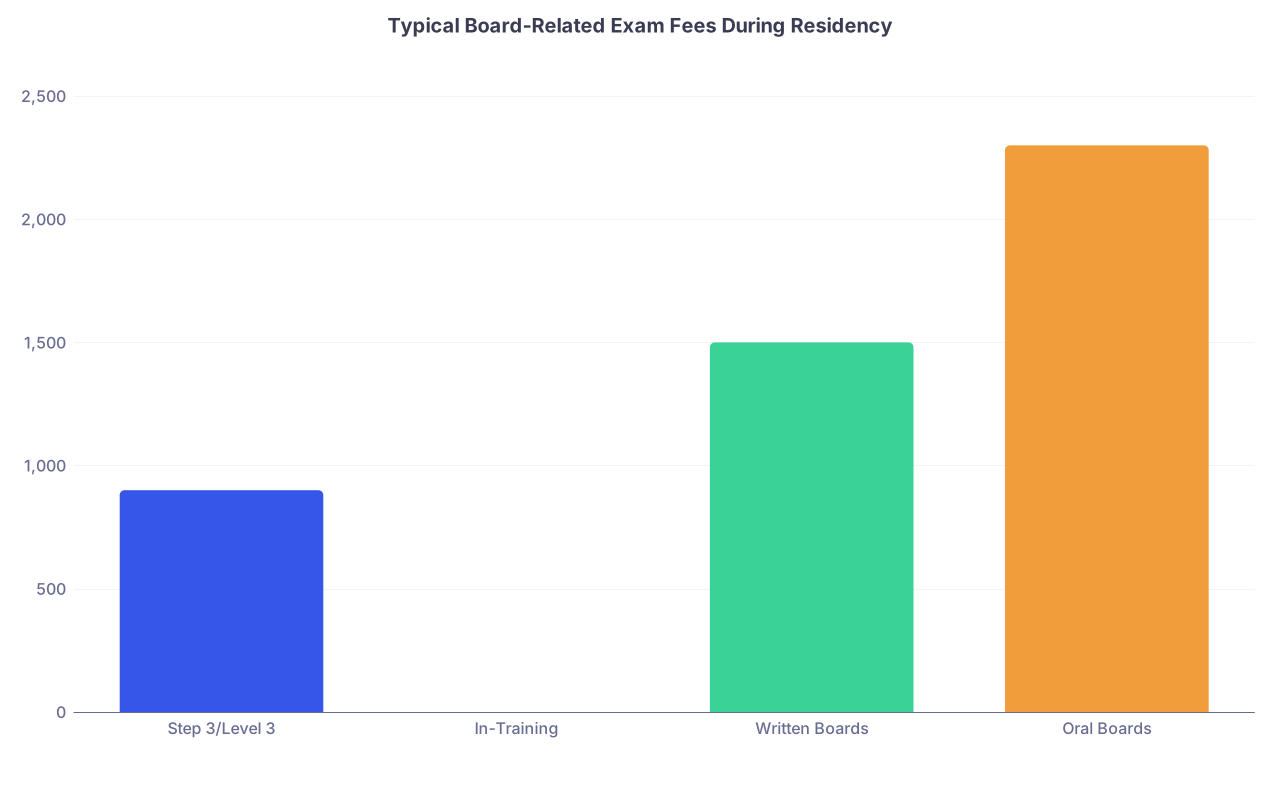
- Typical cost (hundreds of dollars, going up every few years)
| Category | Value |
|---|---|
| Step 3/Level 3 | 900 |
| In-Training | 0 |
| Written Boards | 1500 |
| Oral Boards | 2300 |
Month 3–4 of PGY‑1: Register and Pick Your 3‑Month Window
At this point you should:
- Register for Step 3 / Level 3 as soon as your program allows:
- Choose a test window that:
- Avoids ICU/nights
- Lines up with a lighter rotation or elective
- Choose a test window that:
- Put in formal time‑off requests based on that window.
Do this early. I’ve watched residents try to book Step 3 only to find every local testing center packed for months with LSAT/GMAT/IT cert kids.
Practical rule:
- Register 3–4 months before you want to sit for the exam.
- Get the exam completed by:
- End of PGY‑1 if possible, or
- First half of PGY‑2 at the latest.
Month 6–12 of PGY‑1: Take the Exam
By now you should:
- Have a specific test date locked.
- Have arranged:
- 2 days off for Step 3 (it’s 2 days long)
- 1–2 days off for Level 3 (depends on format, but plan separation from call)
The “I’m too busy to study” crowd ends up even busier as seniors, when you’re running teams and interviewing for fellowship. Get this out of your life as early as your program and your sanity allow.
In‑Training Exams: Yearly Reality Check
These are usually free but important. They’re predictive for your written boards. They also influence how closely your program will “watch” you.
Every PGY Year: 2–3 Months Before the ITE
At this point you should:
- Know when your specialty ITE usually occurs:
- IM, Peds, FM: often early winter or summer
- EM: usually fall
- Surgery: late winter/early spring
- Back‑calculate a 6–8 week focused ramp‑up:
- 20–40 questions/day on a major Qbank
- Short weekly review with a co‑resident or mentor
You don’t pay for ITE, but it shapes:
- Whether your PD pushes you to delay board registration
- How much remediation you’ll do on electives
- How confident you’ll feel dropping $1–2k on actual boards
Specialty Written Boards: Your Main Financial Hit
This is where the big money and strict deadlines show up. Let’s talk like you’re in a 3‑year program, then I’ll give a quick comparative table.
PGY‑2: The Planning Year
By the middle of PGY‑2, if you want a calm PGY‑3, you should already be thinking about your certifying board timeline.
Month 6–9 of PGY‑2: Learn the Rules and Build a Savings Cushion
At this point you should:
- Go to your specialty board site:
- ABIM, ABFM, ABP, ABEM, ABS, ABOG, ABPN, etc.
- Look for:
- “Initial Certification” page
- Application window and late deadlines
- Required status (e.g., “must have completed residency by X date”)
- Cost and late fees
- Start setting aside money:
- Aim to save the full exam fee by early PGY‑3.
- Do not count on “I’ll just put it on a credit card.” You will need that card for moving, job, and fellowship expenses.
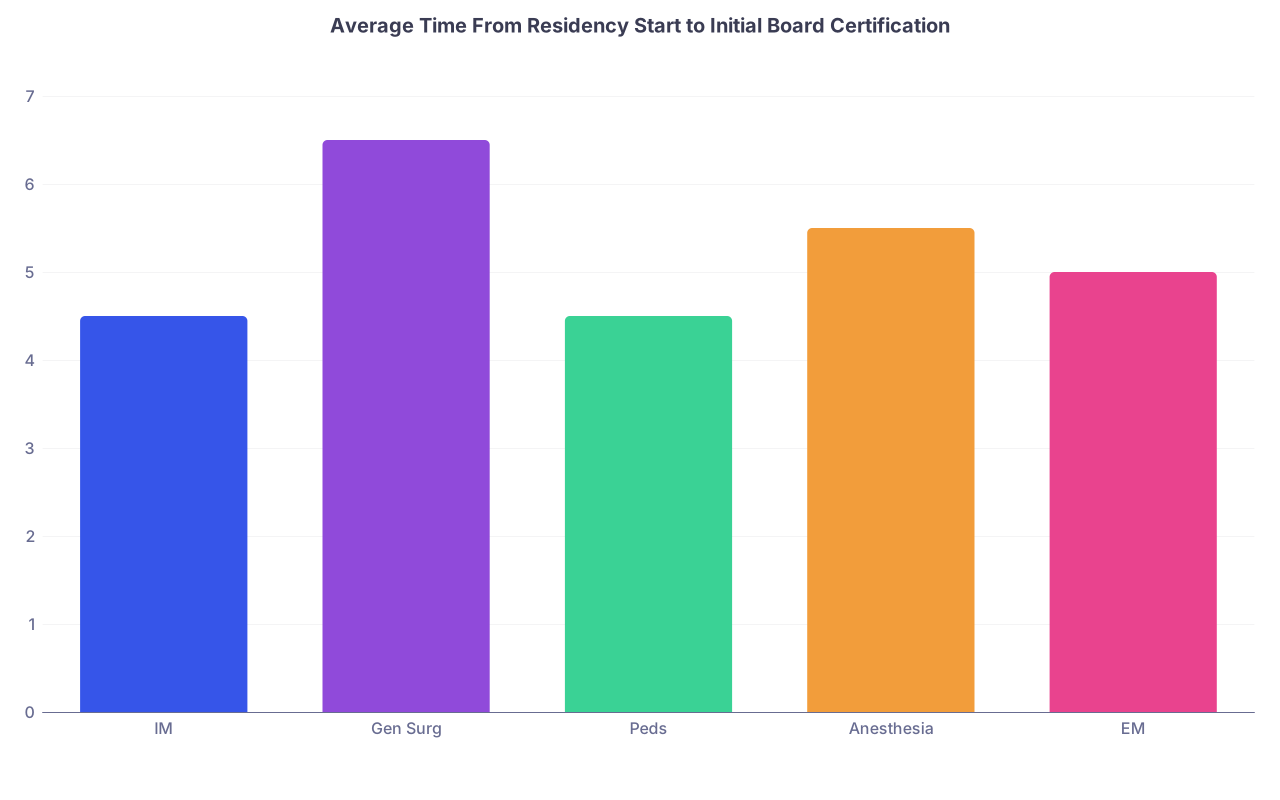
| Board (example) | Typical Residency Length | Registration Opens | Late Deadline Window | Usual Test Season |
|---|---|---|---|---|
| ABIM (IM) | 3 years | Jan PGY-3 | Spring PGY-3 | Aug-Nov PGY-3 |
| ABFM (FM) | 3 years | Late PGY-2 | Mid PGY-3 | Apr-Nov PGY-3 |
| ABP (Peds) | 3 years | Winter PGY-3 | Spring PGY-3 | Oct-Nov PGY-3 |
| ABEM (EM) | 3-4 years | Late PGY-3 | Early PGY-4 | Fall PGY-4 |
| ABS (Gen Surg) | 5 years | Final year | With late fee | Summer after PGY-5 |
Do not guess. Every board has slightly different rules.
Month 9–12 of PGY‑2: Lock Future Time Off
At this point you should:
- Talk to your chief residents/PD:
- “I plan to take boards in October next year. Can we protect that month from ICU/night float?”
- Put on the schedule request:
- 3–5 days off around your likely exam date (1–2 days before, exam day, maybe day after)
- If you’re doing fellowship:
- Check if fellowship schedule blocks your preferred exam date.
- Some people end up taking boards during their first fellowship year because they never checked this. It’s miserable.
PGY‑3 (or Final Year): Register, Pay, and Schedule
This is where people either execute cleanly or set up a pretty painful year.
Month 1–3 of PGY‑3: Register and Pay
At this point you should:
- Submit your application for initial certification as soon as the portal opens:
- Pay the base exam fee.
- Avoid late fees by staying in the first registration window.
- Confirm:
- Your residency completion date in the board portal.
- Program director attestation timeline.
Boards don’t care that you “thought” your PD would click something. Remind your coordinator and PD:
- 1 month after your application
- Again 1–2 months before exam season
Concrete example:
- ABIM opens registration in January, main deadline often around March–April, late registration with penalty maybe May–June. You don’t want that penalty.
Month 3–6 of PGY‑3: Select Your Test Date and Center
Once your application is processed, at this point you should:
- Log in the day scheduling opens (or the first week):
- Choose:
- A date that avoids call/ICU.
- A center within reasonable travel distance.
- Choose:
- If you’re in a busy metro area (NYC, LA, Chicago), early scheduling is non‑negotiable. Centers fill fast.
You want your boards falling on:
- A lighter rotation (clinic, elective)
- Or a short vacation block if your program allows it
Not:
- The end of a 28‑day ICU stretch
- The middle of nights when your circadian rhythm is wrecked
| Category | Value |
|---|---|
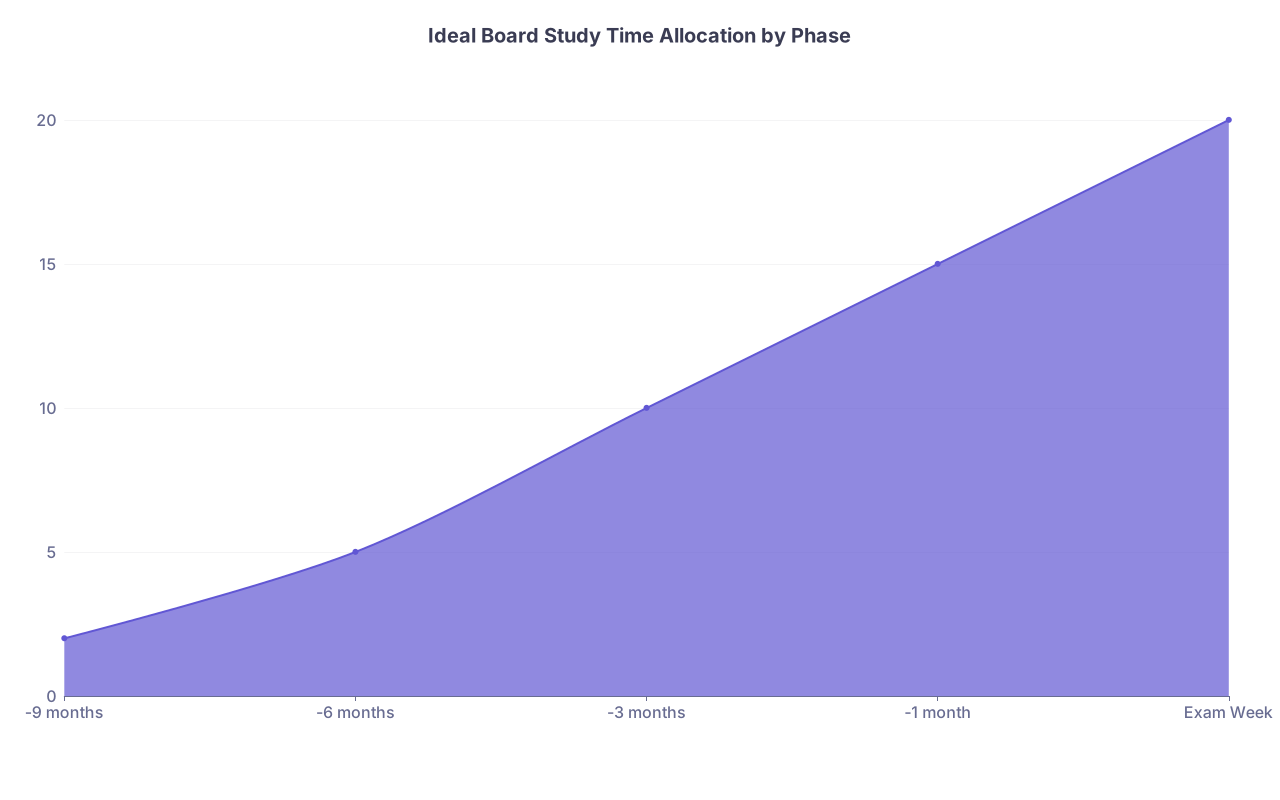
| -9 months | 2 |
| -6 months | 5 |
| -3 months | 10 |
| -1 month | 15 |
| Exam Week | 20 |
(Think of those numbers as approximate hours per week devoted to focused board prep.)
Month 6–9 of PGY‑3: Sit for the Written Boards
By now, your priority is execution:
- You’ve already paid.
- You’ve already scheduled.
- You’re now in pure prep + protection mode.
At this point you should:
- Reconfirm:
- Test center address
- Start time
- Required IDs
- Re‑request coverage for:
- The 1–2 days before exam if your schedule “drifted”
- The post‑exam day if you have call
Every year someone:
- Confuses AM/PM exam times
- Forgets to bring acceptable ID
- Shows up post‑night shift thinking coffee will save them
Do not be that person.
Oral / OSCE / Clinical Exams: Surgery, EM, OB/GYN, Others
These hit you a bit later, often post‑residency, but you start paying and scheduling near the end of residency or early attending life.
Final Residency Year: Know If You Have Oral Boards Coming
At this point you should:
- Ask your seniors:
“When did you register for oral boards? How soon after residency did you sit?” - Check your board site for:
- Typical timing (e.g., 1–2 years after written)
- Application window
- Fees (which are often painful)
Examples:
- ABS oral boards for surgery
- ABEM oral boards for EM
- ABOG oral exam
- Some subspecialty boards in psych, anesthesia, etc.
You don’t have to finish them in residency, but you should:
- Know when you’ll be on the hook for:
- $2–3k oral exam fee
- Travel/hotel if not remote
- Plan early attending budget around that.
PGY‑3/PGY‑5: Set a Post‑Residency Oral Board Timeline
At this point you should:
- Pencil in a target:
- 1 year after finishing for many oral exams (gives you clinical maturity but not too much rust).
- Confirm state license timeline:
- Some boards require active license at time of exam.
This is more about financial and time planning than specific residency days off, but if you’re going straight into fellowship, you want to:
- Make sure your fellowship PD knows your oral boards timeline.
- Avoid major fellowship milestones (first ICU month as a fellow, key procedural rotations) colliding with exam dates.
Money and Deadlines: Avoiding Late Fees and Panic
Let me be blunt: the boards will happily take extra money from you if you procrastinate.
Year‑by‑Year Financial Checklist
At this point you should treat exam costs like mandatory bills, not surprises.
PGY‑1
- Save for:
- Step 3 / Level 3 fee (if not fully covered by program)
- Action:
- Put a small autopay transfer into savings monthly.
PGY‑2
- Save for:
- Written board exam fee
- Action:
- Aim to have 75–100% of that fee in a separate account by the start of PGY‑3.
PGY‑3+
- Save for:
- Oral/clinical exam
- State license fees (often parallel timing)
- Action:
- Continue a set monthly transfer; your future self will not regret walking into attending life without needing to finance $5k of professional fees on a 24% APR card.
Specialty Variations: When Things Shift
Quick reality check by category:
IM / Peds / FM / Psych / Neuro
- 3–4 year residencies
- Step 3/Level 3: PGY‑1/early PGY‑2
- Written boards: PGY‑3/4 (most sit in last months of residency or first months after)
- No major oral exam for base certification (subspecialties may have them).
EM
- Step 3/Level 3 similar timing
- Written boards often post‑residency but registration may open in final year
- Oral boards about a year after.
Gen Surg / OB‑GYN / Ortho / Other Surgical
- Longer residency (5+ years)
- Written boards at the tail end or just after training
- Oral boards later, with significant extra cost and travel.
The pattern is the same:
Plan registration and payment 6–12 months before you want the exam.
Plan study 3–9 months before.
Block time 1–2 months before.
Putting It All Together: A Tight, Realistic Timeline
Here’s a compact example for a 3‑year IM resident:
PGY‑1
- July–Aug: Confirm Step 3 policy and funding.
- Sept–Oct: Register for Step 3, pick Feb–Apr window.
- Feb–Apr: Take Step 3 during elective; done.
PGY‑2
- Jan: ITE – see where you stand.
- Mar–Jun: Check ABIM site for initial cert deadlines next year; start saving.
- Jul–Dec: Keep savings auto‑funding; ask chiefs to protect a fall PGY‑3 exam month.
PGY‑3
- Jan: ABIM registration opens – apply and pay base fee.
- Feb–Apr: Schedule exam day the minute scheduling opens; choose light‑rotation week.
- Aug–Oct: Sit for ABIM during outpatient/clinic month with 2–3 days off blocked.
No drama. No 2 a.m. call about a septic patient before your 8 a.m. boards.
Final Takeaways
- Decide early: Step 3/Level 3 by end of PGY‑1 or early PGY‑2, specialty boards targeted in your final year, oral exams within 1–2 years after.
- Register and pay 6–12 months before each major exam, and schedule test dates the week scheduling opens so you control the calendar, not the other way around.
- Align exams with light rotations and steady savings; do not let ICU months, night float, or credit‑card debt dictate when you face the most expensive multiple‑choice questions of your life.
That’s the playbook. Put the dates in your calendar now, while you still have a choice.