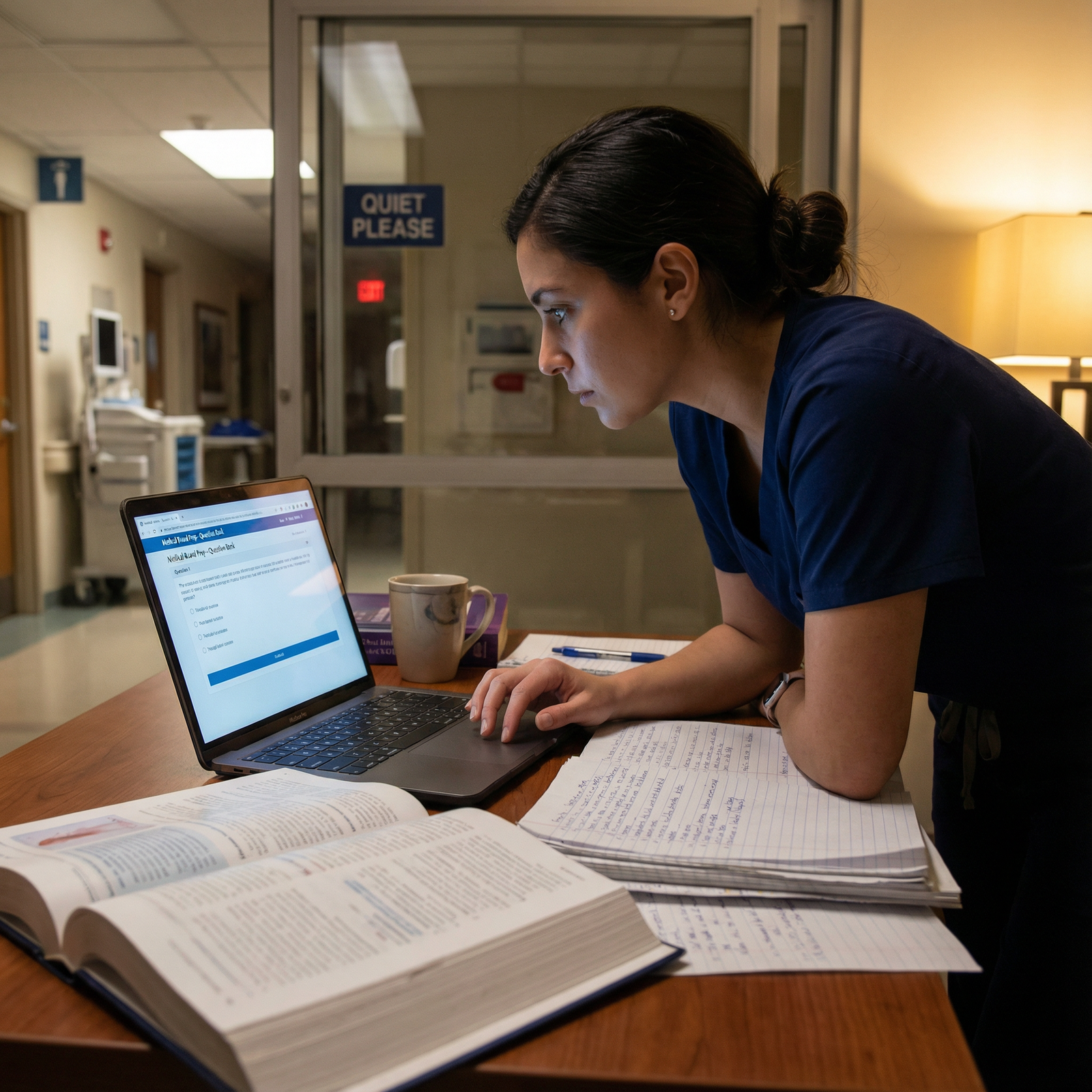
Introduction: Building a Smart Strategy for Board Exam Preparation
Board exams are one of the defining milestones of your medical residency. Between long clinical shifts, overnight calls, and growing responsibilities, carving out time and energy for Board Exam Preparation can feel overwhelming. Yet, with a focused strategy and the right study resources, success is not only achievable—it can be done without sacrificing your health and well-being.
This guide expands on the core tools and techniques every resident should know, highlighting high-yield Medical Education resources, practical study strategies, and Wellness for Residents during this demanding phase. Whether you are in your first year of Medical Residency planning early or in your final year with the exam approaching, you’ll find concrete, actionable steps to build an efficient, sustainable, and effective study plan.
Understanding the Role of Board Exams in Your Career
Board exams are more than a gateway test—they shape how you practice and how you’re perceived in the profession.
Why Board Exams Matter in Medical Residency
Assessment of Comprehensive Knowledge
Board exams integrate everything from pathophysiology and pharmacology to clinical reasoning, guidelines, and patient safety. They don’t simply test memorization; they test whether you can synthesize information and apply it to real-world clinical scenarios.Career Trajectory and Marketability
- Strong board performance can improve your competitiveness for fellowships and academic positions.
- Many employers, group practices, and hospital systems consider board certification a minimum requirement—and some use scores as a comparative metric.
- Some subspecialties and competitive geographic regions place particular emphasis on first-time pass rates.
Clinical Confidence and Professional Identity
Thorough preparation often translates into:- Faster, more confident clinical decision-making
- Better recall of guidelines and evidence-based practice
- Greater comfort supervising juniors or working independently after graduation
Why Thoughtful Preparation Is Essential
Effective Board Exam Preparation is not just “studying more”—it’s about studying strategically:
- Efficiency under time pressure: With a full clinical schedule, you need targeted resources that maximize yield per minute.
- Retention over months: Spaced repetition and ongoing question practice beat last-minute cramming.
- Well-being and sustainability: Burnout, sleep deprivation, and unmanaged stress can erode performance—even if you’ve covered the content.
The rest of this article will walk through the top resource categories every resident should incorporate, with specific recommendations and ways to adapt them to your specialty, schedule, and learning style.
Core Content Resources: Books and Digital Libraries
Well-chosen core resources give structure to your studying and anchor everything else (questions, videos, apps) in a solid conceptual framework.
1. High-Yield Comprehensive Review Books
Review books remain a central pillar of Board Exam Preparation—even in the digital age. The key is to choose few, high-quality texts tailored to your specialty and exam.
Examples of Foundational Resources
First Aid for the USMLE (Step 1 & Step 2)
While designed for USMLE, these books remain useful for residents who:- Want to reinforce basic science and clinical foundations
- Prefer concise, bullet-point style summaries
- Use them as quick-reference guides or for revisiting weaker systems (cardio, renal, neuro, etc.)
Step-Up to Medicine
- Particularly helpful for internal medicine residents or any specialty with heavy general medicine content (e.g., EM, FM).
- Clear structure: pathophysiology, clinical presentation, diagnosis, and management.
- Great for bridging shelf exam style learning and residency-level thinking.
Case Files Series (Internal Medicine, Surgery, Pediatrics, etc.)
- Presents realistic patient cases followed by discussion, questions, and teaching points.
- Useful for connecting guidelines and facts to actual scenarios you’ll see on exam day and in clinic.
- Can be used during commutes or pre-call downtime for “case of the day” learning.
Specialty-Specific Review Texts
Each specialty has its own “gold standard” review text for boards (e.g., MKSAP for Internal Medicine, Blueprints or Case Files for OB/GYN, PREP for Pediatrics, EMBlueprints or Rosh Review resources for EM).
Ask recent graduates or chief residents:
“If you could only use one book for the boards in our specialty, which would it be?”
Then structure your reading around that core book, using others as supplemental references rather than trying to read everything.
2. Institutional and Online Clinical References
Don’t overlook the resources your hospital or training program already provides:
AccessMedicine, UpToDate, ClinicalKey, DynaMed
- Use them to verify current guidelines, management algorithms, and doses.
- Create brief “one-page summaries” of high-yield topics (e.g., sepsis, ACS, DKA, stroke) based on these references, then review repeatedly before the exam.
Society Guidelines (e.g., ACC/AHA, IDSA, ACOG, ATS, NCCN)
- Boards often test standardized, guideline-based care.
- Instead of reading full documents, focus on executive summaries, tables, and algorithms.
These tools help align your Board Exam Preparation with the evolving standard of care you use daily in Medical Residency.
Question Banks and Practice Exams: The Engine of Board Success
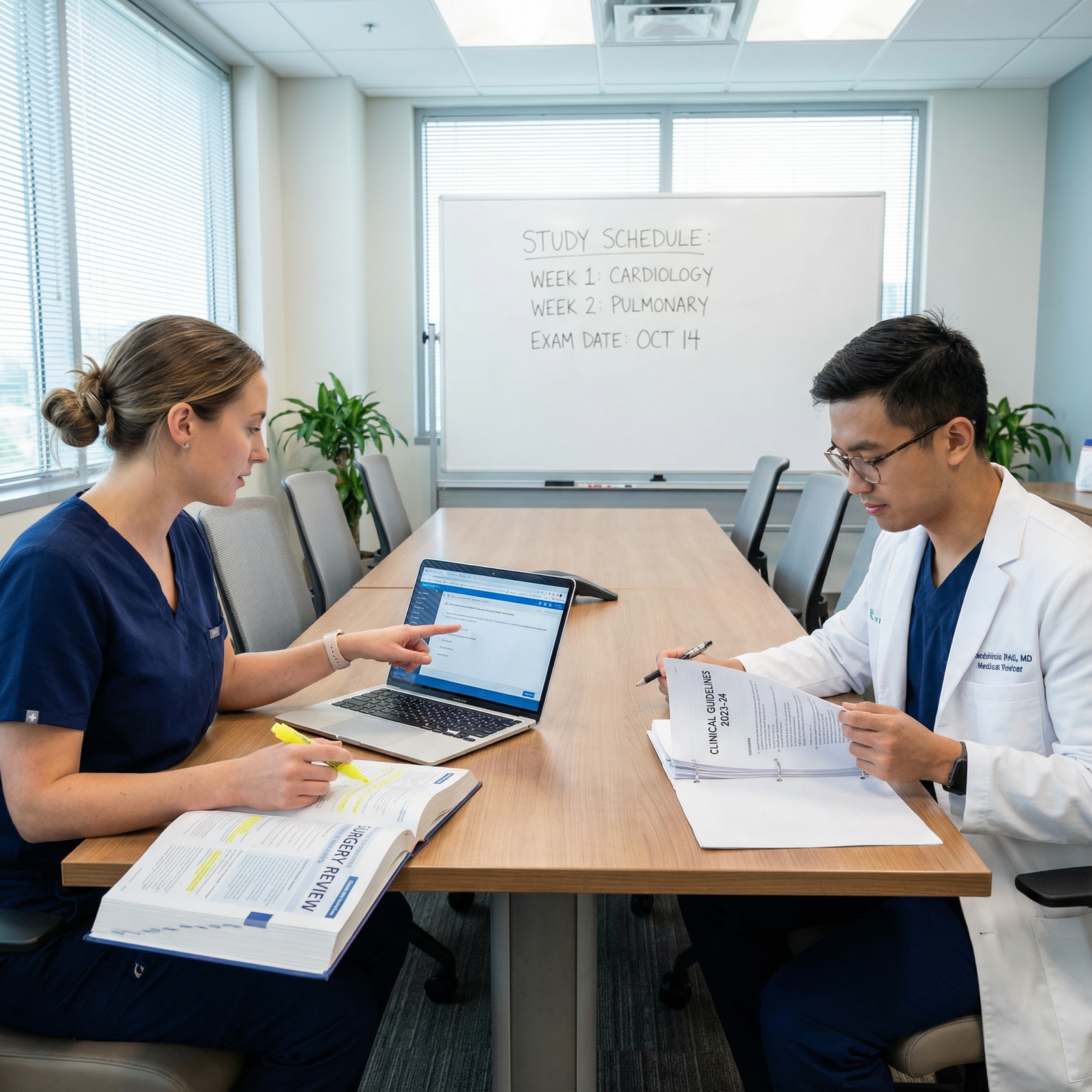
If review books are the map, question banks are the road. For most residents, the single most powerful predictor of board success is consistent, thoughtful question practice.
3. High-Quality Online Question Banks
UWorld
- Widely considered the gold standard for board-style questions:
- Exam-level difficulty and style
- Detailed explanations with diagrams and teaching points
- Customizable blocks by subject, system, or difficulty
- How to use it effectively:
- Start early (6–12 months out if possible).
- Do timed, mixed blocks once you’ve covered core material.
- Read every explanation—even questions you got correct.
- Build an “error log” or notebook of key concepts you frequently miss.
Kaplan Qbank
- Strong supplement, especially if:
- You finish UWorld and want additional practice
- You want more content exposure in weaker areas
- Often includes associated video or text explanations that can reinforce concepts in a different style.
AMBOSS
- Integrates a question bank with a powerful reference library:
- “Highlight” and “attending tip” features help focus on crucial parts of explanations.
- Great for just-in-time learning on the wards and for reinforcing board concepts at the bedside.
- Also offers “difficulty level” tags and performance analytics that help target weak systems.
4. Practice Exams and Self-Assessments
Practice exams simulate exam conditions and calibrate your expectations:
NBME / specialty board self-assessments
- Take one at baseline to identify your starting point and knowledge gaps.
- Repeat every 1–2 months as you approach the exam to track improvement.
- Use scores and sub-scores to adjust your study plan (e.g., if your endocrine or heme-onc score remains weak, prioritize those systems).
In-Training Exams (ITEs)
- Treat them as formal checkpoints, not just a residency requirement.
- After receiving score reports, sit down with a mentor or program director to discuss:
- Relative strengths/weaknesses
- Expected performance on boards
- Adjustments to your study strategy
Digital Tools, Apps, and Video Lectures for Busy Residents
Residency often means fragmented days: short gaps between pages, procedures, and notes. Digital resources help you convert those small pockets of time into meaningful study.
5. Mobile Apps for On-the-Go Learning
Spaced Repetition Apps: Anki and Zanki Decks
- Anki uses spaced repetition algorithms to optimize long-term retention:
- Pre-made decks (e.g., Zanki, Lightyear, specialty-specific decks) cover high-yield concepts and board-style facts.
- Make your own cards from UWorld explanations, key guideline updates, and mentor pearls.
- Aim for 10–30 minutes per day:
- During commute (if not driving)
- Between patient encounters
- Right before sign-out or at the end of the day
Medscape and Similar Clinical Apps
- Up-to-date drug information, clinical reference, and medical news.
- Helpful for:
- Quick checks of contraindications and interactions (reinforces pharmacology)
- Staying updated on guideline changes—these frequently show up on exams over time.
Other High-Yield Apps
- Doctor’s Secret (and similar USMLE/high-yield fact apps)
- Short, visual, and designed for quick review of memorization-heavy content.
- Specialty board review apps (e.g., EMRA apps, AAP PREP, ABIM/ABS prep apps), depending on your field.
6. Video Lectures and Online Courses
Video resources can clarify concepts that feel opaque in text and help visual or auditory learners.
Online MedEd
- Organized by systems and clinical topics.
- Focuses heavily on:
- Pathophysiology distilled into exam-relevant frameworks
- Diagnostic reasoning and management pathways
- Strategy:
- Watch at 1.25–1.5x speed with active note-taking.
- Integrate with question banks: watch a video, then do 10–15 related questions.
SketchyMedical (Micro, Pharm, Path)
- Uses story-based mnemonics and vivid imagery to lock in:
- Microbiology organisms and their key features
- Pharmacology mechanisms and side effects
- Certain pathology topics
- Best used repeatedly over time; the more you revisit the stories, the more durable the memory.
High-Yield YouTube Channels
- Armando Hasudungan, Ninja Nerd, and other reputable medical channels:
- Simplify complex topics with annotated drawings and thorough explanations.
- Great for topics like cardiac physiology, acid-base disorders, pulmonary function, or neuroanatomy.
Collaborative Learning, Clinical Practice, and Simulation
While board exams are written, they test real-life clinical reasoning. Your daily practice and collaborative learning play a huge role in success.
7. Study Groups and Peer Accountability
Forming an Effective Study Group
Look for 3–6 colleagues who:
- Have similar exam timelines and goals
- Are reliable and punctual
- Are willing to prepare before sessions, not just show up
Structure your sessions:
- Case-based discussions using Case Files, institutional cases, or practice questions.
- Rapid-fire review: each person brings 5–10 high-yield points or questions.
- Teaching rounds: each member prepares a 10-minute mini-lecture on a weak topic.
Using Online Communities Wisely
- Reddit (e.g., r/medicalschool, specialty-specific subs), Facebook groups, and Discord servers can provide:
- Resource reviews and recommendations
- Moral support and wellness tips
- Advice from residents who just passed boards
- Be cautious about:
- Score comparisons that increase anxiety
- Overwhelming yourself with too many recommended resources
8. Clinical Practice and Simulation Labs
The more you integrate exam content into your real patient care, the better you’ll perform.
Simulation Centers and OSCE Practice
- Participate in:
- Simulation scenarios (codes, sepsis, airway management, obstetric emergencies)
- OSCE-style encounters with standardized patients
- Focus on:
- Systematic approach (ABC, initial stabilization, diagnosis, management)
- Clear communication, handoffs, and documentation
- Ask for written and verbal feedback after simulations to identify persistent gaps.
Using Everyday Clinical Work as Exam Prep
- For each new admission or consult:
- Write down 1–2 board-level learning points (diagnostic criteria, staging system, first-line treatment, major contraindications).
- Look up one guideline or review article related to their main diagnosis.
- Before or after rounds:
- Briefly quiz yourself or a co-resident on the top 3 board questions that could come from each patient’s case.
This approach merges “service” and “education” and keeps Board Exam Preparation closely tied to patient care.
Mentorship, Feedback, and Wellness for Residents
Passing your boards isn’t just about knowledge—it’s about support, sustainability, and resilience.
9. Feedback, Mentorship, and Program Support
Find a Board-Savvy Mentor
Look for:
- A faculty member or senior resident who:
- Has recently taken and passed the boards
- Is willing to meet periodically to review your progress
- Bring:
- Your self-assessment scores
- Current study schedule
- Questions about weak topics or resources
A good mentor can help you:
- Prioritize high-yield topics
- Decide when to ramp up or taper down certain resources
- Build a realistic timeline leading up to exam day
Use Program-Level Resources
Many residency programs offer:
- Dedicated board review sessions or curricula
- Access to question banks or institutional subscriptions
- Protected time in the months before boards
If these exist, use them fully. If they don’t, speak with chiefs or program leadership about how they might better support board preparation (e.g., a weekly 30-minute board review during noon conference).
10. Wellness for Residents: Protecting Your Health During Exam Prep
Sustainable success depends on intentionally protecting your physical and mental health.
Managing Stress and Burnout
- Mindfulness and Meditation Apps: Headspace, Calm, Insight Timer
- Short (5–10 minute) guided sessions can lower anxiety and improve concentration.
- Cognitive strategies:
- Reframe practice test scores as feedback, not judgment.
- Avoid perfectionism; focus on steady improvement rather than flawless performance.
Sleep, Exercise, and Nutrition
- Sleep:
- Prioritize consistent sleep on non-call nights.
- Avoid sacrificing multiple nights of sleep “to study more”—sleep is essential for memory consolidation.
- Exercise:
- Short, consistent routines (15–20 minutes of walking, stretching, or bodyweight exercises) beat sporadic intense workouts you can’t maintain.
- Nutrition:
- Prep simple, healthy meals or snacks to avoid living on vending machines and hospital food.
- Hydration and stable blood sugar help maintain focus during long study blocks.
Peer and Institutional Wellness Resources
- Resident assistance programs, counseling services, and peer support groups are increasingly available.
- Don’t wait until you’re in crisis—early engagement can:
- Reduce burnout
- Improve sleep and anxiety
- Help you maintain balance leading up to the exam
Real-World Application: A Sample Board Prep Blueprint
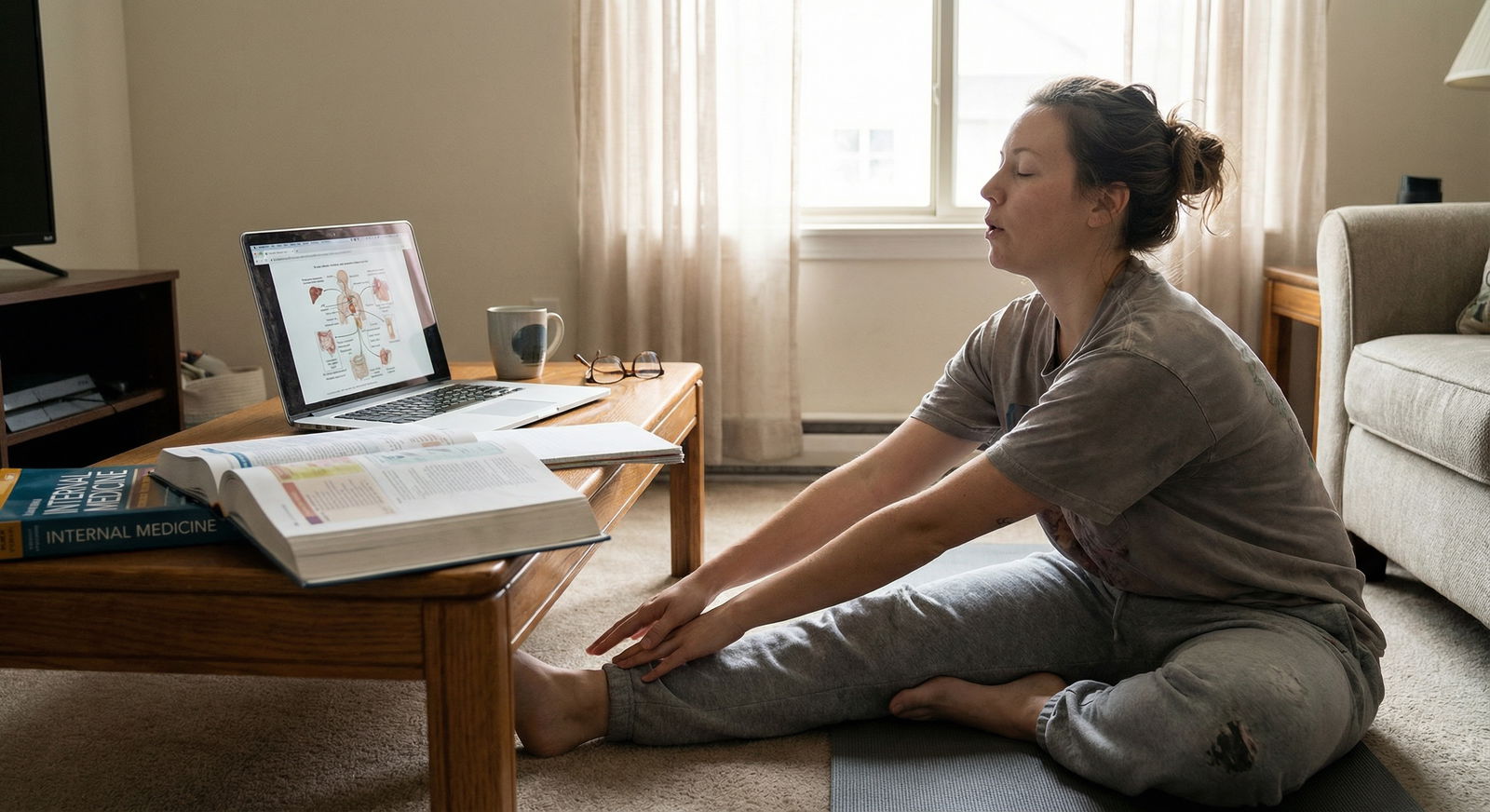
Consider Dr. Sarah, a third-year internal medicine resident preparing for her boards.
How She Structured Her Preparation
12–9 Months Before the Exam
- Chose MKSAP + Step-Up to Medicine as her primary content sources.
- Watched Online MedEd videos for systems she felt weaker in.
- Joined a small study group that met twice a month for case discussions.
9–6 Months Before
- Started UWorld with 10–20 questions per day in tutor mode, system-based at first.
- Took an NBME self-assessment to identify weak areas (endocrine and rheumatology).
- Built Anki cards from missed questions and MKSAP explanations.
6–3 Months Before
- Switched UWorld to timed, mixed blocks to mimic exam conditions.
- Began a second resource (AMBOSS) for targeted practice in weaker systems.
- Attended weekly residency board review sessions and presented one topic herself.
3–1 Months Before
- Took 2–3 more self-assessment exams to gauge readiness.
- Focused on high-yield topics and notes from her error log.
- Protected her sleep schedule and used mindfulness apps to manage mounting anxiety.
Final 2 Weeks
- Avoided starting new resources.
- Reviewed summaries, incorrect questions, and key guideline tables.
- Tapered question volume slightly in the final 2–3 days to avoid burnout.
She passed on her first attempt with a strong score and reported feeling confident and calm on exam day—not because she knew everything, but because she had a realistic, disciplined, and wellness-oriented plan.
FAQs: Board Exam Preparation for Residents
Q1: When should I start serious board exam preparation during residency?
Most residents benefit from starting light, structured prep 9–12 months before their exam, especially with question banks and core reading. Intensive, exam-focused studying typically ramps up in the 3–6 months leading up to the test. Starting earlier allows you to integrate studying with clinical work and avoid last-minute panic.
Q2: How many hours per day should I study while in Medical Residency?
On average, residents target 1–3 focused hours on busy days and 4–6 hours on lighter or off days. Quality matters more than raw hours. Use:
- Timed question blocks
- Active review (teaching, flashcards, summarizing)
- Short, frequent sessions instead of unstructured marathon study days when you’re exhausted from call.
Q3: What’s the best way to balance Board Exam Preparation with residency duties and personal life?
- Create a realistic weekly schedule that accounts for call, clinic, and personal obligations.
- Use commutes, brief downtime, and pre-bedtime windows for flashcards or short videos.
- Protect at least one block of time each week for rest and non-medical activities.
- Communicate with loved ones and co-residents about your exam timeline so they understand your priorities.
Q4: How many question banks should I use for my boards?
For most residents, one primary Qbank (often UWorld) done thoroughly is essential. After that:
- Add a second Qbank (Kaplan, AMBOSS, or specialty-specific) if you have time and feel you need more exposure.
- It’s usually better to fully complete and carefully review one bank than to partially use several.
Q5: What should I do if my practice exam scores are lower than expected?
- Avoid panic; use scores as diagnostic tools.
- Review detailed performance breakdowns by system and topic.
- Adjust your plan:
- Increase question volume in weak areas.
- Re-watch focused videos or re-read key textbook chapters.
- Discuss your strategy and scores with a mentor or program director.
- If scores remain low close to the exam date, consider:
- Short-term schedule adjustments or brief study leave (if available).
- Intensified focus on core, highest-yield topics rather than fringe material.
By combining targeted study resources, consistent question practice, supportive mentorship, and deliberate Wellness for Residents, you can navigate Board Exam Preparation as an integrated part of your Medical Residency—setting yourself up for both exam success and a sustainable, satisfying career in medicine.