The fantasy that you’ll “study a few hours every day” on busy rotations is a lie that burns residents every single year.
If you want to pass your in‑training exam and boards while actually surviving call, you have to build a plan from post‑call to post‑call, not Monday to Sunday.
You live on a rotation clock now. Not a calendar one. So your study plan has to follow the same rhythm.
Let’s build this out, step by step, like an actual call schedule.
Step 1: Map Your Next 3 Months by Rotation, Not by Month
At this point you should stop thinking “January, February, March” and start thinking “ICU, wards, elective.”
Take 10 minutes and write out the next 12 weeks as they really are:
- Which rotation each week
- Call schedule pattern (q4, night float, home call, no call)
- Average shift length
- How wrecked you are post‑call (be honest, not aspirational)
You’re building a rotation profile for each block.
| Rotation | Call Pattern | Daily Hours | Post-call Recovery | Study Feasibility |
|---|---|---|---|---|
| ICU | q4 in-house | 12–14 | 1 day wiped | Very low |
| Wards | q4 in-house | 10–12 | 0.5–1 day tired | Low-moderate |
| Night Float | 6 nights/wk | 11–12 | Daytime sleep | Moderate (pre-shift) |
| Clinic | No call | 8–9 | Normal | High |
| Elective | Home call | 6–8 | Minimal | Very high |
Now you assign each month to a “study intensity tier”:
- Tier 1 – Survival months (ICU, heavy wards, ED nights): goal = maintenance only
- Tier 2 – Steady months (wards with lighter call, some nights): goal = gradual progress
- Tier 3 – Build months (clinic, elective, consults, research): goal = major content gains
You’ll stop beating yourself up for not doing 50 questions a day in the ICU once you see—on paper—that those weeks are Tier 1. That’s by design, not failure.
Step 2: Build a “Call Cycle” Study Template (Instead of a Weekly One)
Your real unit of time is not a week. It’s a call cycle.
For a q4 call month, the cycle is:
- Pre‑call day
- Call day
- Post‑call day
- Post‑post‑call day
Repeat.
For night float, the cycle is:
- First night
- Middle nights
- Last night
- Recovery day
At this point you should create one template per pattern you actually work. That’s usually 2–3 patterns total.
Example: q4 Wards Month – 4‑Day Study Cycle
Day 1 – Pre‑call
- You’re semi-alive, not destroyed yet.
- Target: moderate work
Suggested plan:
- 20–30 board-style questions (timed blocks of 10–15)
- 20–30 minutes review of missed questions
- Light reading on 1–2 patients you admitted
Day 2 – Call
- You’re slammed, brain bandwidth is for patient care.
- Target: zero guilt, no formal studying
Allowable “study”:
- Quick review of relevant UpToDate/topic while on shift
- If there’s a quiet 10 minutes: 5 flashcards or 3–5 quick questions
- That’s bonus, not required
Day 3 – Post‑call
- You will not “study in the afternoon” after “just a nap.” Stop lying to yourself.
- Target: recovery
Rule:
- Sleep, shower, laundry, food, something human.
- If you’re awake in the evening and don’t feel like a zombie, max:
- 5–10 flashcards or 1 short video while eating
Day 4 – Post‑post‑call
- This is your highest-yield day this cycle.
- Target: heavier work
Suggested:
- 30–40 board-style questions
- 30–40 minutes of targeted review of the weakest system (from recent blocks)
- Optional: 15 minutes flashcards before bed
That 4‑day pattern repeats 7–8 times in a month. You’ve now built a realistic q4 study loop that accounts for energy, not fantasy discipline.
Step 3: Plan “From Post‑Call to Post‑Call” for Each Rotation Pattern
Now we formalize it for different patterns you’ll actually see.
A. Heavy ICU Month (Post‑call to Post‑call Survival Plan)
ICU is Tier 1. Your goal this month is not to fall apart and not to lose ground, not to crush question banks.
Call pattern (typical):
- 6 days/week
- q4 call or long shifts
- Post‑call days are written off
At this point you should set a minimum viable dose of studying:
- 10–15 questions on non-call days
- 0 questions on call and post‑call days
- 10–15 minutes flashcards on good days only
A sample 4‑day ICU cycle:
- Day 1 (pre‑call, “good” day):
- 15 questions, focus on ICU topics already seeing (shock, ARDS, sepsis)
- Skim explanations only for missed questions
- Day 2 (call):
- Nothing planned
- Any micro-learning on shift = extra
- Day 3 (post‑call):
- Sleep + survival only
- Day 4 (pre‑call again):
- 10–15 flashcards, no new questions
If you walk out of an ICU month having done 150–200 decent-quality questions, that’s a win. Stop comparing yourself to someone on clinic logging “50 questions/day” on Twitter.
B. Wards Month (Standard q4 – Steady Progress)
You already saw the 4‑day cycle. Now put numbers on it.
For an average q4 wards month with 7 cycles:
- Pre‑call days: 7
- Call days: 7
- Post‑call days: 7
- Post‑post‑call days: 7
Reasonable totals:
- 20 questions on each pre‑call day → ~140
- 35 questions on each post‑post‑call day → ~245
- Light extras on “good” days → maybe +50–60
By the end of the month: 350–450 questions, without melting down.
C. Night Float Block – Anchor Your Day by “Pre‑Shift”
Night float is weird, but actually excellent for boards if you respect your sleep.
At this point you should define:
- Fixed sleep window
- Fixed “study block” before leaving for shift
Example pattern (7p–7a):
- Sleep: 8:30a–3p
- Personal life / gym / food: 3–5p
- Study block: 5–6p
- Get ready + commute: 6–7p
Night float study plan:
- 20–30 questions each day before shift
- 10–15 minutes flashcards on arrival home if your brain isn’t mush
- One “light” day mid‑block with only 10 questions
Over 6 nights:
- 5 nights x 25 questions = 125
- 1 light night x 10 questions = 10
- Total: ~135 questions/week, on a brutal schedule, without touching your precious sleep.
D. Clinic / Elective Month – Use It as a Build Phase, Not “Vacation”
This is where people either pull away or fall behind.
Clinic days:
- 8–5ish, less chaos, no post‑call
At this point you should run a true weekly plan, because your days are finally predictable.
Sample weekly target on clinic:
- Weekday plan (Mon–Fri):
- 20–30 questions / day
- 20 minutes review
- 10 minutes flashcards
- Weekend anchor:
- Saturday: 40–60 questions + 30–45 minutes review
- Sunday: 1–2 focused videos or text chapters (weakest system) + review flashcards
This yields:
- Weekdays: 5 x 25 = ~125 questions
- Weekend: 50 questions
- Total: ~175 questions/week
Do this for 4 solid clinic/elective weeks and you’re near 700 questions. This is where you “bank” progress to offset bad ICU months.
Step 4: Layer in the Bigger Timeline – 6–12 Months to Boards
Now zoom out.
You need a macro timeline that respects rotations but still gets you to the exam ready.
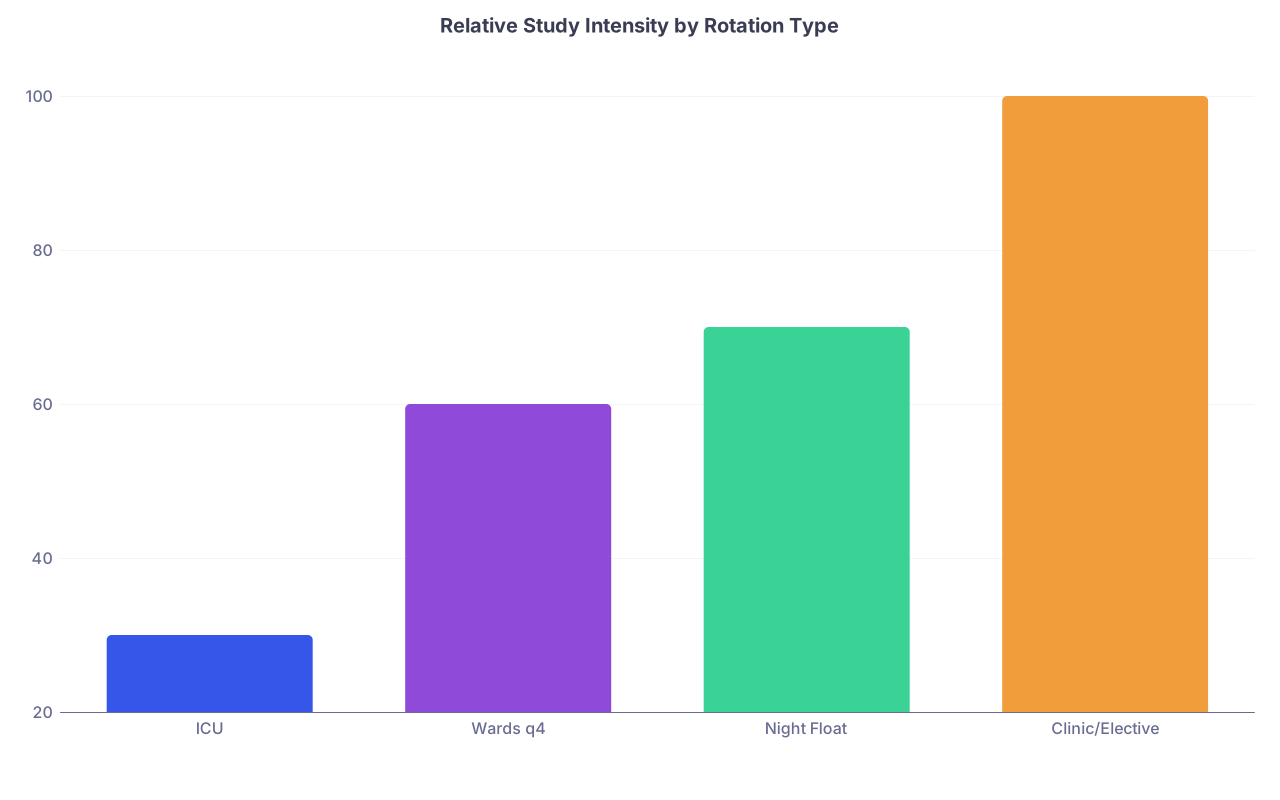
| Category | Value |
|---|---|
| ICU | 30 |
| Wards q4 | 60 |
| Night Float | 70 |
| Clinic/Elective | 100 |
Assume:
- 9–12 months before boards
- Goal question count (as an example):
- Internal Medicine boards: 4,000–6,000 questions
- Pediatrics: 3,000–5,000
- Surgery: 2,500–4,000 (plus case/operative review)
You reverse-engineer from your rotation schedule.
Month-by-Month Macro Plan (Example IM Resident, 9 Months Out)
9–7 months out (3 months)
Rotations: 1 ICU, 1 wards, 1 clinic
At this point you should:
- Survive ICU with ~200 questions
- Do 400 on wards
- Do 600+ on clinic
Cumulative goal by end of this phase: 1,000–1,300 questions + identify weak systems.
6–4 months out (3 months)
Rotations: 1 wards, 1 night float, 1 elective
Targets:
- Wards: 350–450 questions
- Night float: ~400 questions over month
- Elective: 600–800 questions
Cumulative by end: 2,500–3,000 questions
This is usually where I see residents go one of two directions: they either stay consistent and sail into boards confident, or they skid, do nothing for 6 weeks, and start panicking.
3–1 month out (final 3 months)
Rotations: mixed, often some lighter blocks by design
Now your focus changes:
- 60–70%: targeted review of weak systems (from performance data)
- 30–40%: new questions
You schedule:
- 1 full-length practice exam per month (on a lighter weekend)
- Dedicated 2-week “tightening” period before boards if your schedule allows
By the final 4 weeks your job is:
- No giant new resources
- No random topic hopping
- Just: question blocks + review + focused patching of holes
Step 5: Build a Rotation-Specific Weekly Schedule Template
You don’t want to reinvent your plan every Sunday. You want templates.
Create 3–4 base templates you can reuse:
- “ICU template”
- “Wards q4 template”
- “Night float template”
- “Clinic/elective template”
Here’s what an ICU week template might actually look like:
| Day | Call Status | Study Target |
|---|---|---|
| Monday | Pre-call | 15 Qs + 10 min review |
| Tuesday | Call | 0 planned |
| Wednesday | Post-call | 0 planned |
| Thursday | Pre-call | 10 Qs or 10 flashcards |
| Friday | Call | 0 planned |
| Saturday | Post-call | 0 planned |
| Sunday | Pre-call | 15 Qs + 10 min review |
You copy this into your calendar at the start of the month. That’s your default. Then tweak slightly for random golden weekends, conferences, etc.
Do the same for a clinic week:
| Day | Schedule | Study Target |
|---|---|---|
| Monday | Clinic 8–5 | 20 Qs + 20 min review |
| Tuesday | Clinic 8–5 | 20 Qs + 10 min flashcards |
| Wednesday | Clinic 8–5 | 25 Qs + 20 min review |
| Thursday | Clinic 8–5 | 20 Qs + 10 min flashcards |
| Friday | Clinic 8–5 | 25 Qs + 20 min review |
| Saturday | Off | 40–50 Qs + 30–40 min review |
| Sunday | Off | 1–2 videos + flashcards only |
Now you’re not guessing. The schedule drives the study, not mood.
Step 6: Use “Micro‑Wins” on Shift Without Lying to Yourself
You will have random slow times.
But here’s what I’ve actually seen work, and what’s delusional:
Realistic micro‑study:
- While admitting DKA:
- Glance at a 1‑page cheat on DKA management
- On hold with radiology for 7 minutes:
- 1–2 flashcards on the app
- Waiting for sign-out:
- Review 2–3 missed questions from yesterday, not new ones
Delusional:
- “I’ll knock out a 40‑question block between codes.”
- “I’ll watch a 45‑minute lecture on night float at 3 a.m.”
On shift, your brain is for patient care. Any board work is bonus, and it should be short, low-friction, and relevant to what you’re seeing.
Step 7: Protect Your Sleep Like It’s a Study Resource (Because It Is)
Residents love to sacrifice sleep “to get ahead” and then wonder why their question bank percentages crater.
Here’s the blunt rule I give:
If cutting sleep below 6 hours is the only way you can hit your study target that day, the target is wrong. Adjust the plan, not the sleep.
You’re doing pattern recognition all day. That’s what sleep consolidates.
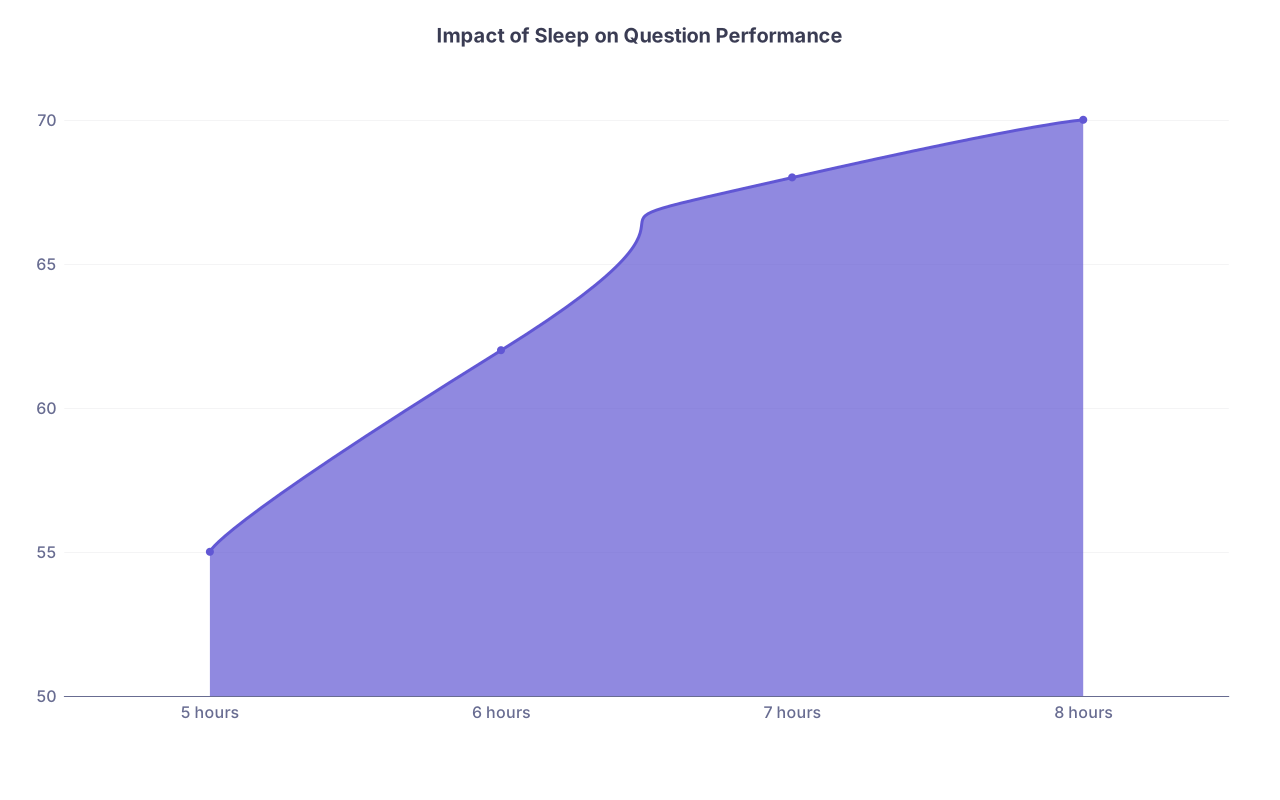
| Category | Value |
|---|---|
| 5 hours | 55 |
| 6 hours | 62 |
| 7 hours | 68 |
| 8 hours | 70 |
A tired resident doing 40 questions with 50% retention is worse than a rested resident doing 20 questions with 80% retention. The math is not complicated.
So, from a timeline standpoint:
- Post‑call to next pre‑call: Priority = sleep back to baseline.
- Night float blocks: Fixed, religious sleep window.
- Final month before boards: No heroic all‑nighters before long clinic days. Honestly the worst trade you can make.
Step 8: 4–6 Weeks Before Boards – Shift From Rotations-Based to Exam-Based
As exam day approaches, you still have rotations, but the balance changes.
At this point you should:
- Pull data from:
- Question bank performance by system
- In-training exam printout (if available)
- Rank systems from weakest to strongest.
- Map the remaining weeks like this:
Week structure (on a moderate rotation):
- Week 1: Focus on weakest system (e.g., rheum)
- Daily: 15–20 mixed questions + 10–15 questions specifically from weak system
- Week 2: Second-weakest (e.g., endocrine)
- Week 3: Third-weakest + start global mixed review
- Week 4: Almost all mixed Qs, simulate exam blocks
On a brutal rotation in this window (it happens), your job is to:
- Preserve what you’ve built
- Hit some questions daily or every other day (even just 10–15)
- Use weekends for heavier review if you have them off
You also schedule two full mock exams:

- One 4–6 weeks out (clinic/elective or lighter weekend)
- One 2–3 weeks out
Those should be protected like golden weekends. No added shifts. No social marathons the night before.
Step 9: Daily Flow – A Simple, Reusable Script
Residents overcomplicate this. Here’s a minimal script you can apply to almost any day that’s not post‑call:
Decide your block type in the morning:
- Hard day (ICU weekdays, heavy admissions): 10–15 questions total
- Medium day (normal wards/clinic): 20–25 questions
- Light day (elective/weekend): 40+ questions
Lock the time slot:
- Pre‑work, lunch, or after work. Not “sometime today.”
- If it moves, you physically rebook it in your calendar.
Questions → Review → Micro-review:
- Timed block(s)
- Immediate review of explanations you missed
- Save key screenshots or jot 2–3 takeaways
Before bed:
- 5–10 flashcards, prioritizing:
- Missed questions from last 48 hours
- High-yield facts from weakest topics
- 5–10 flashcards, prioritizing:
That’s it. Same script, different dose, based on rotation.
Step 10: Use a Simple Visual Tracker From Post‑Call to Post‑Call
You do not need a complex spreadsheet with conditional formatting.
What you need is a visual chain you don’t want to break.
Option:
- One line for each day between now and boards.
- Circle the days you’re post‑call (pre-decide: no study required).
- Draw a small checkmark for days you hit your minimum target (even 10 questions).
- Draw a star for days you hit your full target.
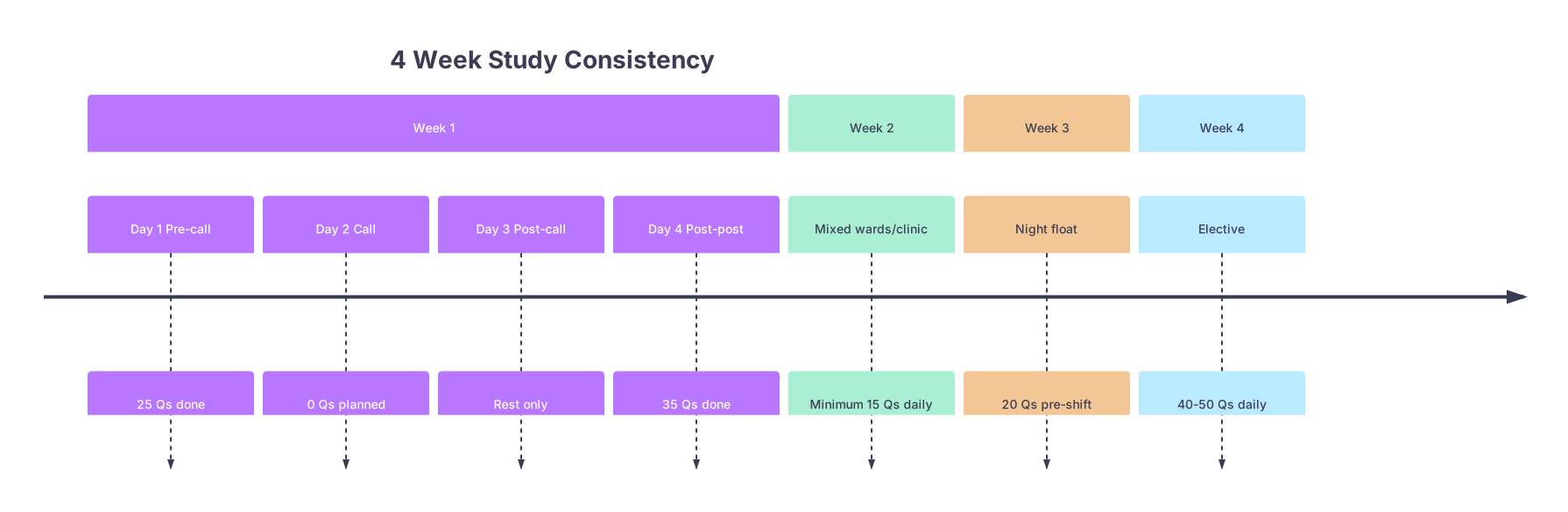
| Period | Event |
|---|---|
| Week 1 - Day 1 Pre-call | 25 Qs done |
| Week 1 - Day 2 Call | 0 Qs planned |
| Week 1 - Day 3 Post-call | Rest only |
| Week 1 - Day 4 Post-post | 35 Qs done |
| Week 2 - Mixed wards/clinic | Minimum 15 Qs daily |
| Week 3 - Night float | 20 Qs pre-shift |
| Week 4 - Elective | 40-50 Qs daily |
The rule is simple:
- Never break the chain twice in a row on non–post‑call days.
Miss one day? Fine. Next day, even 5 questions counts as saving the chain.
Step 11: Adjust Monthly Based on Reality, Not Guilt
Your rotations will change. So your study plan must update too.
Once per month (usually on a post‑call day when your brain’s useless for heavy learning) you:
- Look at:
- Rotation schedule for the coming month
- How many questions you actually did last month vs plan
- Ask:
- “Was last month’s plan brutally unrealistic? Or did I just ignore it?”
- Adjust:
- Question targets per day
- Which rotations you’re treating as “build vs maintain”
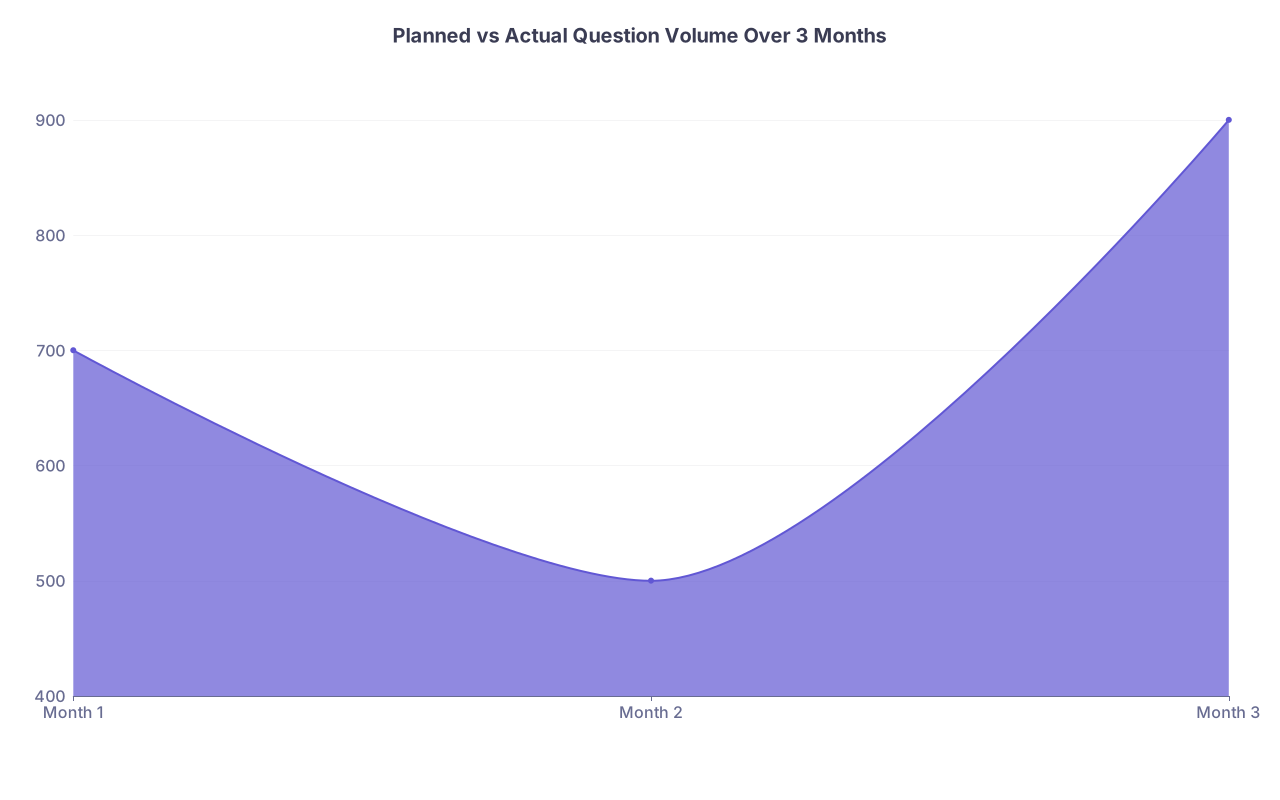
| Category | Value |
|---|---|
| Month 1 | 700 |
| Month 2 | 500 |
| Month 3 | 900 |
Residents who pass comfortably are not the ones who follow one perfect schedule. They’re the ones who replan every month without shame and keep grinding from post‑call to post‑call.
Final Thoughts – What Actually Matters
Three points to walk away with:
- Plan by rotation and call cycle, not by idealized week. Your real unit of time is “pre‑call / call / post‑call / post‑post‑call,” so your study plan has to follow that rhythm.
- Use heavy months for maintenance and lighter months to build. ICU and brutal wards blocks are about not losing ground; clinic and electives are where you rack up serious question volume.
- Small, consistent doses beat heroic, inconsistent cram sessions. Ten questions on a bad day and forty on a good day, done for months, will carry you to boards. The fantasy of perfect daily study won’t.