Quick question, and your honest answer could decide whether you match this cycle: what exact day will your Step 2 CK score post to ERAS?
Not whether you'll pass. The day.
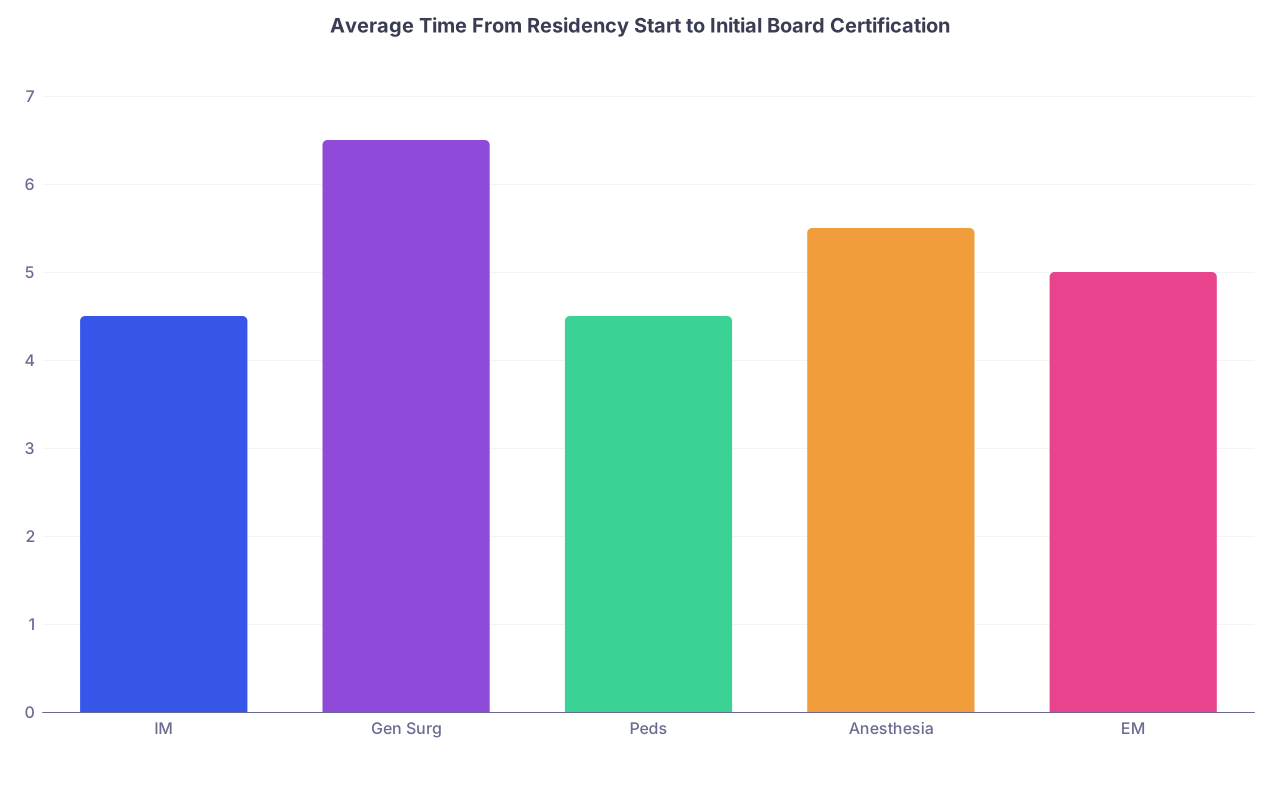
(See also: time-to-certification statistics for more.)
If you don't know, or if your answer is "sometime in September," keep reading. Because here's what doesn't make it into the orientation slides: programs don't just see that you passed. They see when. And they read that date like a personality test.
I've watched strong applicants, honors on the wards, glowing letters, scores above the mean, get filtered out before a single human read their personal statement. Not because of what they scored. Because of when the score showed up.
Understanding the actual timeline for board certification can help you plan more strategically. (See also: time-to-certification statistics for more.)
Let's make sure that isn't you.
Why Your Board Exam Date Is Your Secret Weapon (or Your Biggest Mistake)
Once Step 1 went pass/fail, everyone fixated on Step 2 CK as "the number." Understandable. But attendings and program directors know something students keep missing: the pass/fail label is the smallest piece of information your exam record broadcasts.
Your USMLE transcript shows test dates. Your ERAS file shows whether a score is in, pending, or merely scheduled. Combine those, and a program director can reconstruct your entire fourth year in about four seconds.
So ask yourself the question that should genuinely keep you up at night: if a program has to cut 3,000 applications down to 300 interview slots in a weekend, what does your file say about you before anyone opens it?
What attendings wish every applicant understood early:
- A pass in June reads as "prepared." A pass in October reads as "explain yourself."
- Timing is a proxy. Programs use it to guess at your organization, your planning skills, and whether you're hiding a failed first attempt.
- Nobody warns you because it feels impolite. Advisors talk about scores. Almost nobody talks about the calendar. That silence is the mistake this article exists to prevent.
The Hidden Timeline That Programs Actually See
The mistake underneath all the other mistakes is believing ERAS deadlines have anything to do with your exam schedule. They don't. The machine moves on its own calendar, and it does not wait for your score.
Here's the season from the program side:
- Early summer: ERAS opens for applicants. The smart ones are already done testing.
- Early September: applications go in. Programs begin reviewing within days.
- Late September into October: MSPEs land, and the first, biggest, wave of interview invitations goes out.
- November through January: interviews. If your score posted in mid-October, you missed the opening waves at a lot of programs.
Now the part students get wrong. On your application, "scheduled" and "passed" are not neighbors. They're different species. A program running a filter for "Step 2 CK: passed" makes scheduled applicants invisible. Not penalized, invisible. You don't get a yellow flag. You get skipped.
And never forget the release lag. USMLE scores typically post about three to four weeks after your test date, sometimes longer. A September 5 exam isn't a September score, it's an October score, arriving after many programs have already built their interview shortlists.
Look at that last bar. Negative cushion. That's the applicant who "passed just fine" and never figured out why the interviews didn't come.
Why Programs Filter by Date (And What They Assume About You)
This is where applicants get burned without ever knowing it happened.
Program directors aren't cruel. They're busy. When one person is triaging hundreds of files, the brain grabs shortcuts, and your pass date is a fat, juicy shortcut. Here's the internal monologue a late date triggers:
- "September test date? Probably disorganized." Fair? No. Common? Extremely.
- "Late score... I wonder if there's a failed attempt behind it." Retakes cluster in late summer and fall. Your innocent scheduling conflict now wears the same costume as a red flag.
- "If they couldn't plan an exam, can they manage a patient census?" That's the leap programs make. You never get the chance to correct it.
The core mistake isn't testing late. It's assuming programs will give you the benefit of the doubt. They won't. Screening is not a courtroom; it's a triage tent. Nobody has time to investigate your story.
One more ugly truth: completeness perception bleeds into everything. A file missing a Step 2 score feels unfinished, and unfinished files drift to the bottom of the pile, even at programs that swear they do holistic review. Holistic review happens in November. Screening happens in September. Different processes, different rules.
The 5 Deadliest Timing Mistakes (And How to Dodge Them)
I've seen every one of these end real residency dreams. Learn them cheap, from me, instead of expensively, on Match Monday.
Believing "pass/fail means timing doesn't matter." The big one. Pass/fail didn't remove timing pressure; it moved it. When everyone "passes," the differentiators become when you passed and what you scored. Dodge: treat your test date as part of your application, not a separate errand.
Scheduling a retake during interview season. A retake in November does nothing for the current cycle, programs see the pending retake and the original fail all season long. Dodge: front-load attempt one so a retake, if needed, lands before applications open.
Ignoring the score-release lag. Students count from test date; programs count from posted date. Those are three to four weeks apart, and delays happen. Dodge: plan from your score-post date, never your test date.
Forgetting your school's transcript and MSPE machinery. Your Dean's Office has its own deadlines, and some schools won't certify you as on track until boards are done. A late exam can stall your whole file, not just one line of it. Dodge: ask student affairs in the spring what their hard cutoffs are.
Thinking "I'll just apply later" is a neutral choice. It isn't. Late applications land after the first invitation waves, the biggest ones. You're not applying to the same pool. You're applying to what's left. Dodge: if you can't be complete by September, have an honest conversation about whether this is even your cycle.
Build your plan around the worst-case bar, not the best-case one. Optimism is not a scheduling strategy.
Strategic Timeline: When to Actually Take Your Exam
Now the protective part. Do this, and most of this article becomes someone else's problem.
- MD students: sit no later than July 31. That puts your score in ERAS by late August or early September, before programs start serious review.
- DO students: target June 30. COMLEX Level 2-CE release windows can run longer than USMLE's, and if you're dual-applying to MD programs, you're competing in a pool with rigid expectations. Earlier is safer.
- Build a 4-to-6-week buffer behind your test date. Buffer absorbs score delays, a bad test day, a retake, a life event. A test date with no buffer isn't a plan, it's a hope.
Work backward, never forward:
- Programs review starting late September.
- Subtract four weeks for score release → your score must post by late August.
- Subtract your test date → test by end of July.
- Subtract 8-12 weeks of dedicated study → dedicated begins in May.
That's your 12-month roadmap in one breath: baseline assessment a year out, question bank running by winter, dedicated in late spring, exam by mid-summer, buffer behind you, application complete on day one.

If You're Already Behind: Damage Control Protocols
Maybe you're reading this in August with a September test date and a sinking stomach. Okay. Don't panic, but don't get cute, either.
Your options, honestly ranked:
- Move the date up if any seat exists. Check the scheduling portal daily; cancellations appear constantly. Two weeks earlier can mean the difference between "complete" and "pending."
- If you're stuck, apply, but manage the signal. Your expected score-post date should appear in your personal statement or, better, be carried by your letter writers. A line from your Dean's Office or an EM SLOE author confirming "score expected October X" tells programs your file is incomplete by circumstance, not by character.
- Know when to fold. If your score posts after programs begin reviewing and you're chasing a competitive specialty, the protective move may be a research year and a clean cycle. That stings. It stings less than SOAP Monday.
About letters: SLOEs and LoRs written in September go out while your status still says "scheduled." Brief your writers. Give them your exact test date and expected release date so their letters can vouch for your timeline. Silence is what programs fill with worst-case assumptions.
Your Action Steps for This Week
Enough warnings. Here's the protection plan:
- Find your exact score-post date today. Test date plus four weeks. Write it on your calendar in red.
- If your test date falls after July 31 (MD) or June 30 (DO), try to move it up. Check for seat openings this week, not next month.
- Confirm what your ERAS transcript will say on submission day: passed, pending, or scheduled. If it isn't "passed" with a date, you now know exactly how much risk you're carrying.
- Email your letter writers your timeline. One paragraph. Test date, expected score date, application date.
- If you're already late, run the decision tree above, honestly. The biggest mistake isn't testing late. It's pretending late doesn't matter.
The calendar is the one part of this process you fully control. Control it.