The most dangerous way to repeat a board exam year is to “just study harder.” That vague plan is exactly how people end up failing twice.
You need a structured, time-stamped year: month-by-month, week-by-week, and in the last phase, day-by-day. Not vibes. Not guilt. A plan.
This guide assumes:
- You failed or underperformed on a major board exam (USMLE/COMLEX, specialty boards, ITE → certifying exam, etc.)
- You have roughly 6–12 months until your next attempt
- You’re in residency, with real calls, real patients, and limited brain cells left at 6 p.m.
I’m going to walk you through the year like a runway countdown: 12 months → 6 months → 3 months → final 4 weeks → exam week. At each point: what you should be doing, what you should not be doing, and how to handle residency on top.
Big-Picture Timeline: The Retake Year
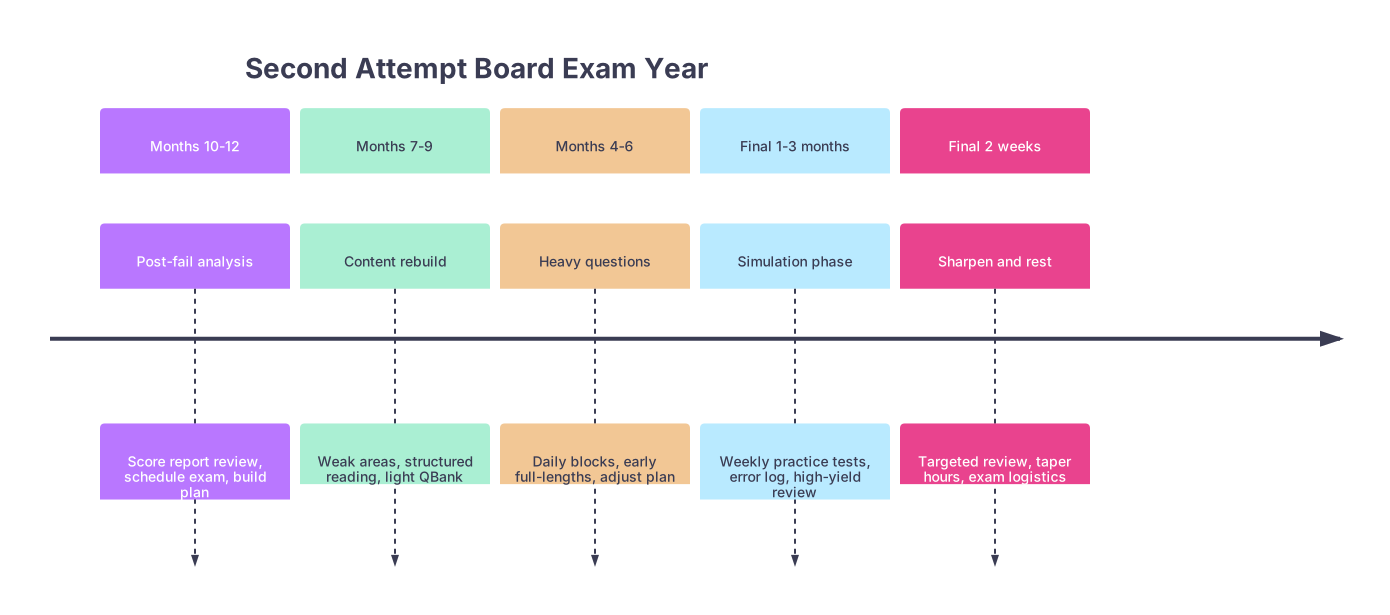
| Period | Event |
|---|---|
| Months 10-12 - Post-fail analysis | Score report review, schedule exam, build plan |
| Months 7-9 - Content rebuild | Weak areas, structured reading, light QBank |
| Months 4-6 - Heavy questions | Daily blocks, early full-lengths, adjust plan |
| Final 1-3 months - Simulation phase | Weekly practice tests, error log, high-yield review |
| Final 2 weeks - Sharpen and rest | Targeted review, taper hours, exam logistics |
At a high level, the year breaks down like this:
| Phase | Time Before Exam | Primary Focus |
|---|---|---|
| Autopsy & Planning | 10–12 months | Analysis, scheduling, setup |
| Content Rebuild | 7–9 months | Targeted content, light Qs |
| Question Engine Phase | 4–6 months | Heavy QBank, spaced review |
| Simulation Phase | 1–3 months | Practice tests, refinement |
| Taper & Execution | Final 2–3 weeks | Review + rest + logistics |
You will tweak this for your exact exam window, but the sequence stays.
Months 10–12 Before Exam: The Autopsy and Setup
At this point you’ve either just failed or just realized your previous score will not cut it (for fellowship, state requirements, whatever).
Week 1–2: Do the Autopsy, Not the Pity Party
You get two weeks max for shock, grief, and complaining about unfair questions. After that, it’s data.
At this point you should:
Dissect your score report
- Break it into:
- Content domains (e.g., cardio, endocrine, heme/onc)
- Competencies (e.g., diagnosis vs. management vs. biostats)
- Compare percentiles, not just “below/above average” shading.
- Write down: 3 catastrophic weaknesses, 3 moderate weaknesses, 2 relative strengths.
- Break it into:
Rebuild your narrative honestly Ask yourself, in writing:
- How many questions/day did you actually average over the last 3 months?
- How many full-length practice tests did you complete?
- How consistently did you review missed questions?
- What killed you:
- Ran out of time?
- Panic and second-guessing?
- Didn’t know content?
- Didn’t read questions carefully?
No lying to yourself here. I’ve seen residents swear they “did 3 blocks/day for months” and then when we check logs it averages 17 questions/day.
Talk to your PD or mentor (early, not later)
- Share:
- Score report
- Your analysis
- Proposed retake timing
- Clarify:
- Deadline to pass for contract renewal / promotion
- Whether you need study time carved out (e.g., elective month, lighter rotation)
- Any institutional resources (tutors, exam-prep funding)
- Share:
If you hide this and wait until 3 months before the exam, everyone is less helpful and more annoyed.
Week 3–4: Lock in the Exam Window and Tools
By the end of the first month, you should have:
Exam date window chosen (or as close as the board allows)
Primary resources selected — not 10, 2–3 max:
- One core text/video series (e.g., MKSAP, UWorld videos, OnlineMedEd, specialty-specific course)
- One main QBank (UWorld, Rosh, TrueLearn, board-specific)
- One secondary / review tool (Anki deck, concise notes compendium, high-yield review book)
QBank and practice test access purchased and start/end dates mapped
Baseline schedule rough draft:
- Workdays: X questions/day
- Days off: 2–3 blocks plus focused content
At this point, no detailed daily plan yet—just your year structure and your tools.
Months 7–9 Before Exam: Rebuild the Foundation
This is the content rebuild phase. You are not trying to hammer 80 questions a day while on nights. You are trying to fix the cracks.
Month 7: Systematic Weak-Area Rehab
At this point you should:
Pick 1–2 systems per week Example schedule:
- Week 1: Cardiology
- Week 2: Pulm
- Week 3: Renal
- Week 4: ID
For each system, your week should look like:
On workdays (5–6 days/week):
- 30–40 minutes: Read / watch structured content for that system
- 10–20 QBank questions from only that system
- 30 minutes: Review / make flashcards from missed questions
On day off:
- 1 full 40-question block from that system, timed
- 1–2 hours of deeper content review, focusing only on questions you missed
Track:
- % correct by system in your QBank
- How many questions you can do before your brain melts
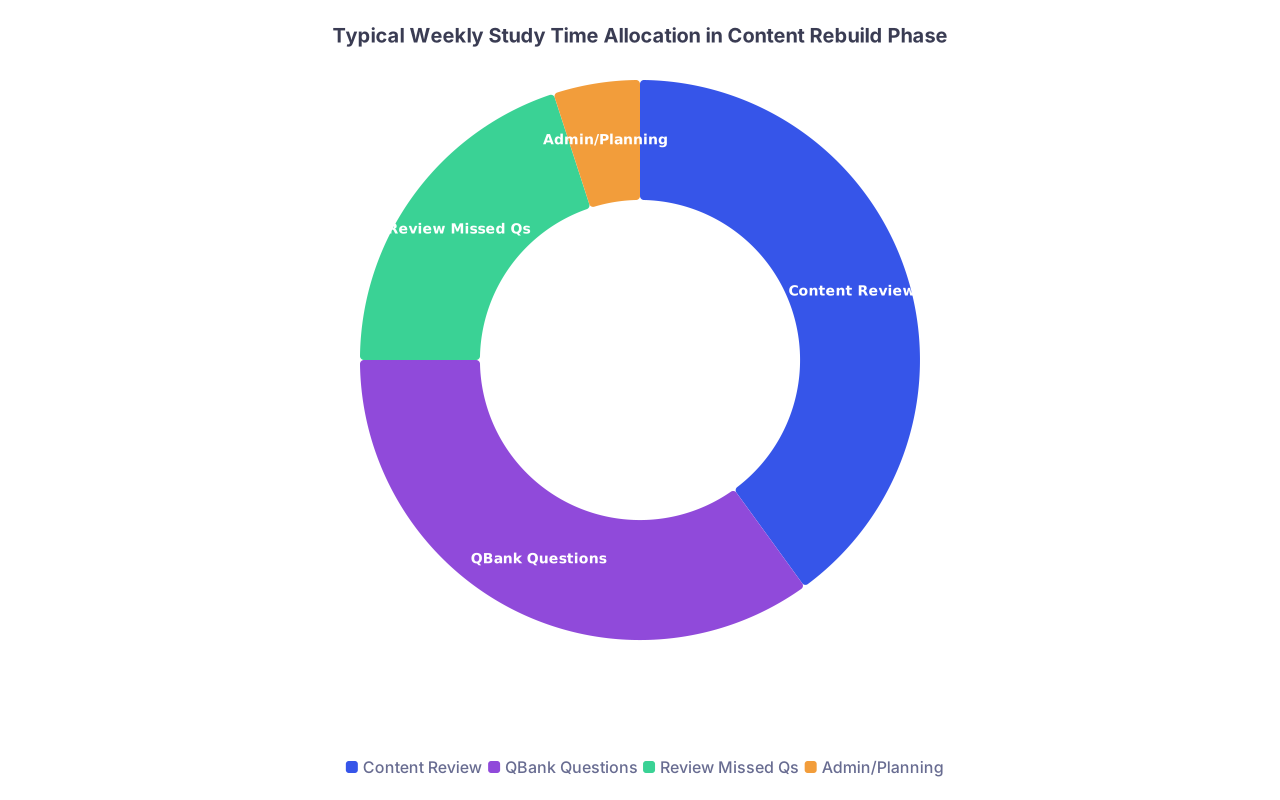
| Category | Value |
|---|---|
| Content Review | 40 |
| QBank Questions | 35 |
| Review Missed Qs | 20 |
| Admin/Planning | 5 |
If your QBank percentage in weak areas isn’t creeping up over the month, something is wrong: too rushed, not enough review, or content source not clicking.
Month 8–9: Integrate Systems + Start Mixed Questions
Now you begin to:
- Move from single-system blocks to mixed blocks
- Continue focused content review for the worst 2–3 systems
- Slowly increase question volume
At this point (end of Month 9), you should have:
- Completed 25–40% of your main QBank
- Covered all catastrophic weaknesses at least once with:
- Primary resource
- System-specific questions
- A notes or flashcard system that’s not chaos
Months 4–6 Before Exam: Question Engine Phase
This is where most second-attempts are won or lost.
You are now building stamina, pattern recognition, speed, and that annoying but necessary “I’ve seen this weird zebra before” familiarity.
Overall Targets for This Phase
By the end of Month 4–6 window, you want:
- 80–100% of QBank completed
- 3–5 full-length practice tests done
- Running average in QBank:
- Not necessarily >70% everywhere, but clear upward trend
- Error log for:
- Recurrent content gaps
- Habit errors (misreading stem, changing right answers to wrong, timing issues)

Month 6: Increase Question Volume
At this point you should aim for:
- Workdays:
- 1 full timed block (30–40 questions) 5 days/week
- 45–60 minutes review per block
- Days off:
- 2 blocks (ideally 1 in AM, 1 in PM)
- 2–3 hours total review + brief content fill-in
Do not skip review. Questions without review are just self-harm.
End of Month 6 checkpoint:
- You’ve completed ~60–70% of your QBank
- You’ve done at least 1 full-length practice test
- Your first practice test score sets the baseline; write it down with your conditions:
- Sleep quality, call schedule surrounding test, breaks, etc.
Month 5–4: Heavy Simulation + Refinement
Now the study week tightens up.
Typical week template:
- One full-length practice exam every 2–3 weeks
- Same start time as real exam
- Same break pattern
- On non-exam weeks:
- 6 days with 1–2 blocks/day
- Mixed blocks only
- System tagging for review (e.g., marking every endocrine question wrong → endocrine bootcamp next Sunday)
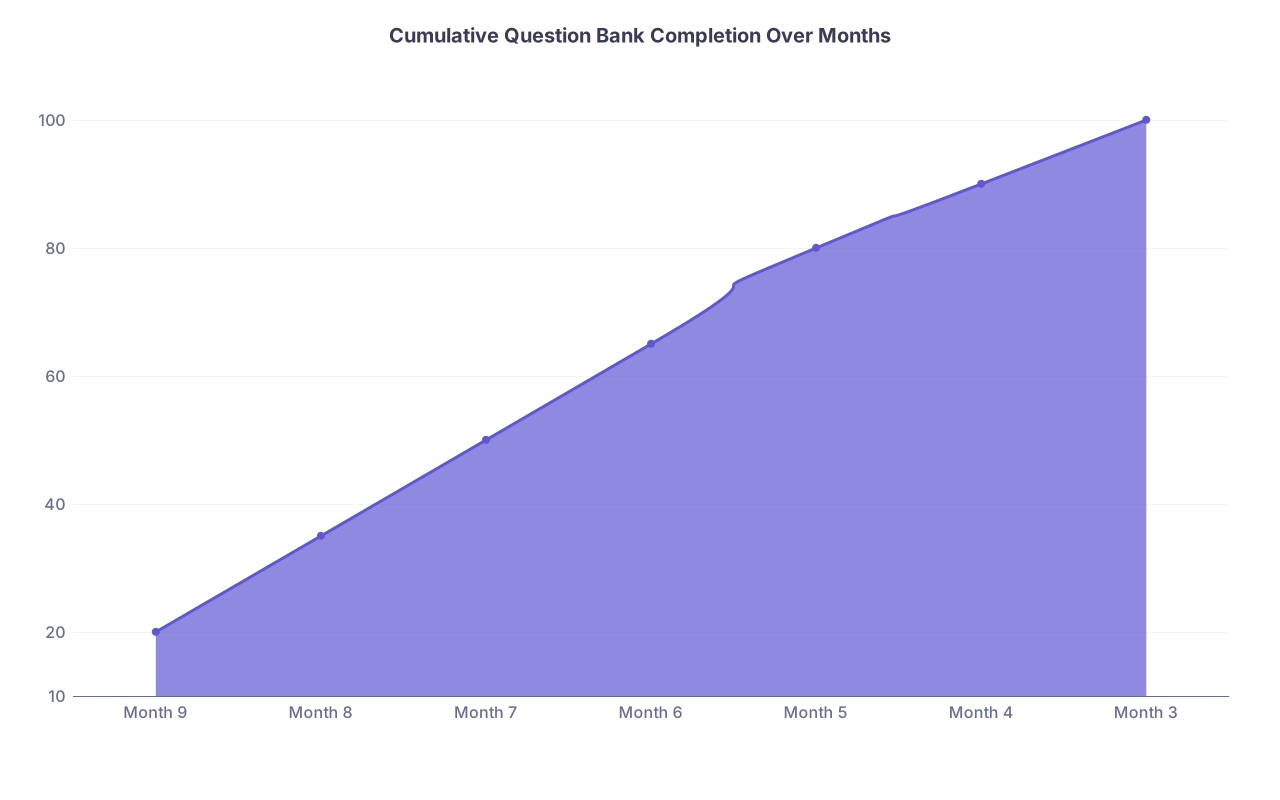
| Category | Value |
|---|---|
| Month 9 | 20 |
| Month 8 | 35 |
| Month 7 | 50 |
| Month 6 | 65 |
| Month 5 | 80 |
| Month 4 | 90 |
| Month 3 | 100 |
If your full-length scores are not drifting upward over these months, you re-run an autopsy:
- Are you reviewing every test in detail?
- Are you converting errors into flashcards or summary notes?
- Are you adjusting your time allocation based on weak domains?
Final 1–3 Months: Simulation and Sharpening
You’re now inside the danger zone where many people panic and throw out their plan. Don’t.
Month 3: Weekly Rhythms
At this point you should be:
- Completing the last 20–30% of your main QBank
- Starting second passes on critical incorrects
- Taking a full-length exam every 1–2 weeks, depending on stamina
Your week might look like:
- 1 day: Full-length practice exam
- 2 days: Deep review of that exam (yes, two days)
- 3–4 days: Mixed blocks, focused review on patterns found in the exam
Example patterns to target:
- Constantly miss hyponatremia management?
- Always blow questions that combine physiology + risk scores?
- Panic on long multi-step heme cases?
Those get their own mini-bootcamps.
Month 2: Progressive Taper of Volume, Increase of Precision
Question count may actually decrease slightly here, but your quality goes up.
At this point you should:
- Finish full QBank if not already done
- Focus on:
- Re-doing missed or marked questions
- Rapid-fire review of high-yield topics
- Tightening test-day routine
Your study blocks become shorter, more frequent:
- 20–25 question blocks
- 30-minute targeted content sprints
- 15–20 minute flashcard sessions throughout the day
This is where a lot of residents burn out. They try to maintain 80-question days while working 70+ hours. It just turns into screen-staring.
Final 2–3 Weeks: Taper, Logistics, and Mental Game
This is where the second-attempt people who pass look very different from the ones who repeat.
2–3 Weeks Out: Lock Down Logistics
At this point you should:
- Confirm:
- Exam date, time, and test center
- Transportation and parking
- Any needed accommodations
- Build a sleep schedule that matches exam day:
- If exam starts at 8 a.m., you’re waking up between 6–7 a.m. every day this last two weeks.
Arrange with your program:
- No nights in the 7 days before the exam
- Avoid brutal rotations if possible (swap if you need to)
- Clarify call responsibilities the week of the exam

10–7 Days Out: High-Yield Only
Daily structure:
- 1–2 short mixed blocks (20–30 questions each)
- Review only concepts that recur:
- Your personal “greatest hits” of wrong answers
- Board favorite topics (depending on exam: vasopressors, arrhythmias, anticoagulation, asthma/COPD, OB triage, etc.)
- No new massive resources. You are not starting a new 500-page review book this week.
You should feel:
- A bit tired, yes
- But not acutely burned out
- Able to finish a 40-question block with focus, not survival
Final 3–4 Days: Sharpening, Not Stuffing
Cut volume by 30–50%. Your brain needs to consolidate, not be drowned.
At this point you should:
- Review:
- Error log summaries
- High-yield one-liners
- Key algorithms (ACS management, sepsis, shock, etc. depending on the exam)
- Do NO more full-length exams
- Do NO late-night cramming
Final 24–48 hours:
- Maybe:
- 1–2 very light blocks (15–20 questions)
- Light flashcard or summary page review
- Definitely:
- Prepare exam-day bag (ID, snacks, water, layers, earplugs if allowed)
- Confirm transport and timing
- Sleep. No heroics.
How to Layer This Onto Residency Life
Here’s the annoying truth: your schedule matters more than your motivation.
Rotations: When to Push, When to Maintain
Rough rule:
- Light rotations (electives, clinic-heavy months):
- Aim higher: 50–80 questions/day on non-call days
- Heavier content review time
- Heavy rotations (ICU, nights, ED):
- Maintenance mode:
- 10–20 questions/day on workdays
- 1 larger study block on post-call or day off if you’re alive
- Focus on:
- Reviewing questions you did earlier
- Micro-learning: flashcards, small content chunks
- Maintenance mode:
You do not have the luxury of a “perfect” 6-hour study day most days. So you use fragments.
Micro-Scheduling the Average Workday
This is realistic for most residents:
-
- Small Anki/flashcard set
- Quick review of 5–10 questions you missed the day before
Midday (lunch if you get it):
- 5–10 questions untimed
- Or review of explanations on missed ones
Evening (60–90 minutes):
- 1 timed block (20–40 questions)
- Focused review of that block
You will feel like it’s not enough. But 20–40 good questions plus review most days of the year beats a 3-week frantic cram.
Sample 8-Week Countdown Plan (Final Stretch)
Here’s how the last 8 weeks might look, condensed:
| Weeks Before | Practice Tests | Qs/Day (avg) | Main Focus |
|---|---|---|---|
| 8–7 | 1 | 40–60 | Finish QBank, ID weak areas |
| 6–5 | 2 | 40–60 | Mixed blocks, start re-dos |
| 4 | 1 | 40–50 | Re-do incorrects, targeted rev |
| 3 | 1 | 30–40 | High-yield systems + errors |
| 2 | 0–1 | 25–35 | Taper, mental rehearsal |
| 1 | 0 | 15–25 | Light review, rest, logistics |
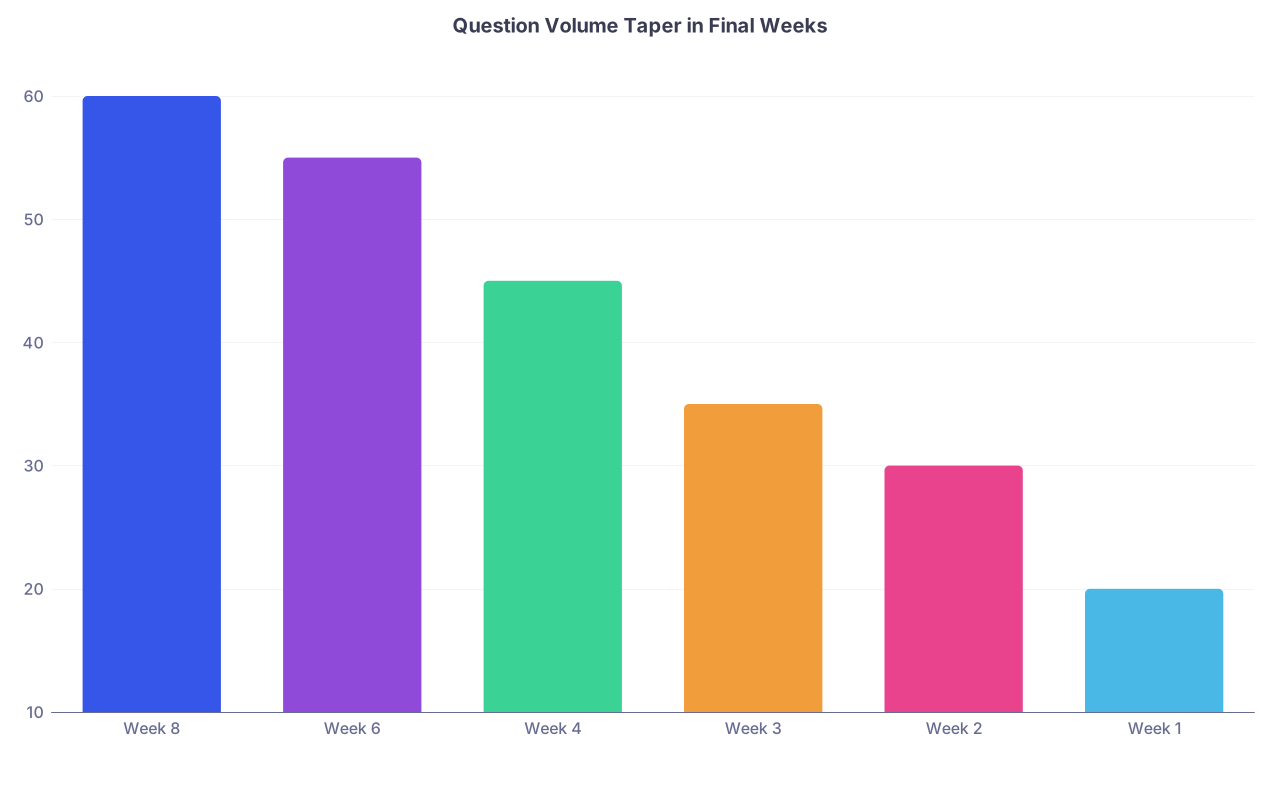
| Category | Value |
|---|---|
| Week 8 | 60 |
| Week 6 | 55 |
| Week 4 | 45 |
| Week 3 | 35 |
| Week 2 | 30 |
| Week 1 | 20 |
Final Reality Check
Let me be blunt: second attempts are passed in the boring months, not in the last two weeks.
If you’ve followed this:
- By 6 months out, you should be regularly doing blocks, not “planning to start.”
- By 3 months out, you should have multiple full-lengths done and reviewed, not searching for which practice test to buy.
- By 2 weeks out, you should be tapering and sleeping, not doubling your question count out of panic.
If you remember nothing else:
- Treat the first month after a fail as a clinical case review. Do the autopsy, decide on the intervention, and commit.
- Build your year around phases: rebuild → question engine → simulation → taper. Don’t mash them all together.
- Protect the final weeks from chaos—no new resources, no all-nighters, no schedule surprises you could have prevented.
That’s how you structure the year between exams so the second attempt is your last attempt.