The Dilemma: Why You're Here
You're staring at the ERAS application and panicking. You want to do a fellowship, but you're torn between Family Medicine (FM) and Internal Medicine (IM). The anxiety is palpable. You're terrified of picking a residency path that slams the door on your future career options before you even start.
Let's look at the cold, hard data. IM has a massive statistical advantage for sub-specialties. If you want Cardiology or Gastroenterology, FM is an uphill battle fought in the mud. Stop romanticizing the underdog story. The system is built on pipelines, and IM is the express lane to sub-specialty fellowships.
Early data analysis isn't just a good idea. It's the only way to mitigate crushing regret later. I've seen FM residents cry over a Cardiology rejection letter because they didn't look at the match rates until PGY-2. Don't be that resident. We are going to break this down chronologically. Follow the timeline. Do the work.
Month 1-3: Data Analysis & Reality Check
Stop guessing. Look at the National Resident Matching Program (NRMP) data. Internal Medicine residents match into competitive sub-specialties at significantly higher rates than Family Medicine residents. For Cardiology, IM hovers around a 60% match rate. FM? Barely scraping 15%. For Gastroenterology, the gap is just as brutal.
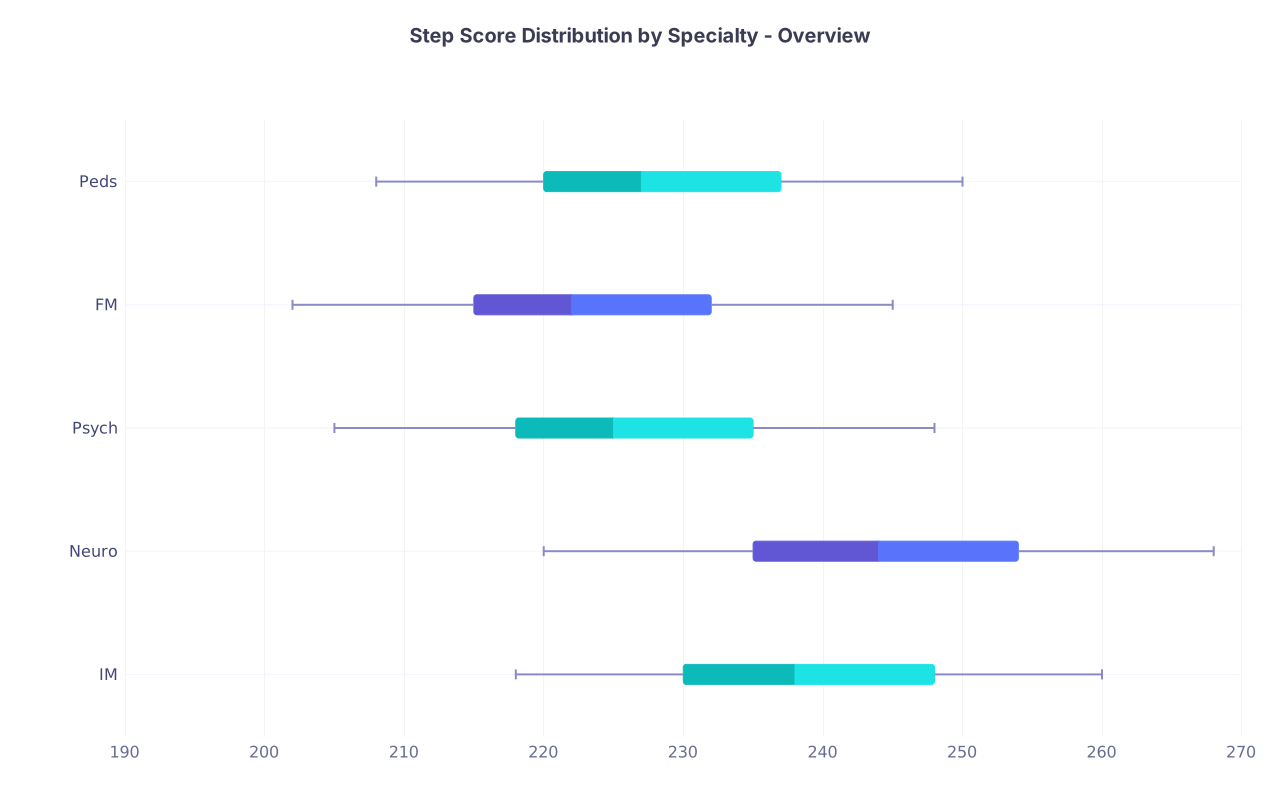
Assess your Step 2 CK score right now. If you're sitting on a 240, forget the highly competitive IM fellowships. You need to know where you stand relative to the competitive thresholds for your desired sub-specialty. If you are an FM resident aiming for a competitive fellowship, you need a stratospheric board score and a mountain of research to even get a look.
At this point, you should create a master spreadsheet. Track the specific match rates for your top three fellowship choices. Break it down by residency type. Add a column for the average Step 2 CK score of matched applicants. Update it monthly.
Your Month 1-3 Checklist:
- Download the latest NRMP Charting Outcomes report.
- Filter the data specifically for your target sub-specialty.
- Compare FM vs. IM match rates side-by-side.
- Calculate the delta between your current board score and the matched average.
- Identify the exact number of research publications matched applicants in your target field possess.
If the data tells you that your FM path to Cardiology is statistically doomed, pivot your career goals now. Or, if you're dead set on it, accept that you will need to work twice as hard as your IM counterparts.
Month 4-6: Strategic Networking & Research
Data tells you the odds. Networking changes them. You need to identify mentors in your target sub-specialty immediately. I don't care what your current residency is. Find the attendings who hold the keys to the fellowship programs you want.
If you are in FM, you have a stigma to overcome. Program directors will assume you just want to be a generalist. You need to aggressively seek out sub-specialty rotations or research projects to prove your clinical competence and dedication. Volunteer for the grunt work in the cardiology clinic. Write case reports. Show up early.
If you are in IM, don't just coast. Focus on electives that highlight your specific interest. If you want Pulm/Crit, spend your elective time in the ICU, not doing an easy outpatient rotation.
At this point, you should schedule coffee chats with program directors and fellowship directors. Do not ask them for a job. Ask them about their career trajectory. Ask them what they look for in a fellow. Ask them how they view FM applicants (if you are FM). Get your name in their heads before the application cycle opens.
Your Month 4-6 Checklist:
- Identify 3 potential mentors in your target sub-specialty.
- Send concise, professional emails requesting a 15-minute coffee chat.
- Secure at least one sub-specialty rotation for your PGY-2 year.
- Submit at least one case report or abstract for a regional conference.
Month 7-9: The LOR Game & ERAS Prep
Letters of Recommendation (LORs) make or break your application. A generic letter from a clinic attending who barely knows your name is worthless. You need three strong, highly specific letters.
Here is the exact formula you need:
- Your Residency Program Director: This letter confirms you are a safe, reliable, and competent resident who won't cause problems in their fellowship program.
- A Sub-specialty Attending: This letter proves you have the clinical chops and the specific interest for the fellowship.
- A Research Mentor: This letter highlights your academic curiosity and ability to see a project through to completion.

Now, draft your Personal Statement. This is where you bridge the gap. If you are an FM resident applying for an IM-heavy fellowship, your statement must explicitly address why you chose FM and how it makes you a better sub-specialist. Talk about the holistic patient care model. Spin your FM background as an asset, not a detour.
At this point, you should have your ERAS application fully uploaded and reviewed for errors. Typos in a fellowship application signal carelessness. Have your mentor read it. Have a non-medical friend read it.
Your Month 7-9 Checklist:
- Confirm all 3 LORs are uploaded and waived.
- Finalize your Personal Statement (max 650 words).
- Upload your medical school transcript, MSPE, and board scores.
- Double-check your publication list for accurate PubMed IDs.
- Submit the ERAS application on day one of the opening window.
Month 10-12: Interviews & The Final Decision
You got the interviews. Now you have to close the deal.
Preparing for fellowship interviews is different from residency interviews. They already know you can be a doctor. They want to know if you can be a colleague. Research the specific program's faculty. Read their recent publications. Understand their patient population. When they ask why you want to join their program, give them a highly specific answer that references their clinical volume or a specific faculty member's research.
Rank your list based on program fit, not just prestige. A prestigious program where you are miserable and unsupported is a waste of three years. Look at the fellow retention rates. Look at the faculty turnover. Talk to the current fellows away from the attendings during the interview dinner.

At this point, you should finalize your rank list and submit it by the deadline. Do not overthink it at the last minute. Trust the data you gathered in Month 1. Trust the relationships you built in Month 4. Trust the application you polished in Month 7.
Your Month 10-12 Checklist:
- Send personalized thank-you emails within 24 hours of each interview.
- Create a pros/cons matrix for each program based on clinical volume, research support, and culture.
- Certify your rank list on the NRMP portal.
- Take a weekend completely off before Match Week.
Key Takeaways & Final Action Steps
Let's strip away the noise. Here is what you need to remember when the stress peaks:
- The Statistical Reality: IM residents generally have a statistically higher conversion rate to competitive sub-specialties than FM residents. The data doesn't lie. Plan accordingly.
- Early Action is Mandatory: Data-driven decision making in Month 1-3 is crucial to setting realistic expectations for the Match. Don't wait until PGY-3 to realize your board score is too low.
- Overcome the Stigma: Strong Letters of Recommendation and aggressive networking are the most effective tools for overcoming the 'residency stigma' in fellowship applications. Prove them wrong with your work ethic.
Your Immediate Action Steps:
- Open a new spreadsheet today. Pull the NRMP data for your top three fellowships.
- Identify one attending in your target sub-specialty and email them this week to set up a 15-minute chat.
- Look at your Step 2 CK score. If it's below the average for your target fellowship, map out a research project to compensate.
Stay calm. Trust your preparation. A residency is just the beginning of your career. Execute the timeline, and you'll get where you need to go.