
The way people talk about “peds neuro” vs “child neurology” is a mess—and a lot of what you hear is flat-out wrong.
Let me be blunt: in the United States, “child neurology” and “peds neuro” are used almost interchangeably in casual conversation, but they do not always mean the same thing in training pathways and practice structures. And that confusion actually affects how students pick programs, how they rank them, and how they get blindsided in residency.
You’ve probably heard some version of:
- “Child neurology is just adult neurology with kids.”
- “Peds neuro is a fellowship after pediatrics.”
- “It’s all the same—you end up doing the same thing.”
No. No. And also no.
Let’s clean this up properly.
The Core Myth: “Child Neurology = Peds Neuro = Same Thing”
Here’s the real answer, not the hallway version.
In day-to-day speech:
- Attendings, residents, and students will casually say “peds neuro” to mean child neurology.
- Job postings and hospital departments will say “Pediatric Neurology” or “Division of Pediatric Neurology.”
- The ABPN (American Board of Psychiatry and Neurology) uses the term “Child Neurology” for the primary specialty certification.
So colloquially, yes, “child neurology” and “peds neuro” often refer to the same physicians—the board‑certified child neurologists taking care of kids with neurologic disease.
But when you get down to training structure and actual career paths, there are distinct categories hiding under that sloppy language:
- Integrated Child Neurology Residency (the main one)
- Child Neurology via Internal Medicine/Adult Neuro (rare, older path)
- Pediatric Neurologist vs Pediatric Epileptologist vs Pediatric Neurophysiologist (fellowship differences)
- General Pediatrician with “neuro interest” (not the same at all)
So when someone says, “I want to do peds neuro,” that can mean:
- “I want a 5-year combined peds + child neurology residency.”
- Or “I think I want to see kids with seizures and headaches and maybe do EEG.”
- Or “I like kids and the brain; I haven’t checked if this is its own match category.”
This is how people end up ranking programs they don’t actually understand.
What the Data and Accreditation Actually Say
Let’s anchor this in how the system is structured, not how people gossip about it.
Board Certification:
- The official certifying body is the ABPN.
- The credential is “Child Neurology”, not “Pediatric Neurology.”
- You are certified in Neurology with Special Qualification in Child Neurology.
Accreditation (ACGME):
- The residency type is a “Child Neurology” program.
- These are categorical or linked programs that include pediatrics + neurology training.
- Not a pediatrics residency with a later “peds neuro fellowship.”
Match Data (NRMP):
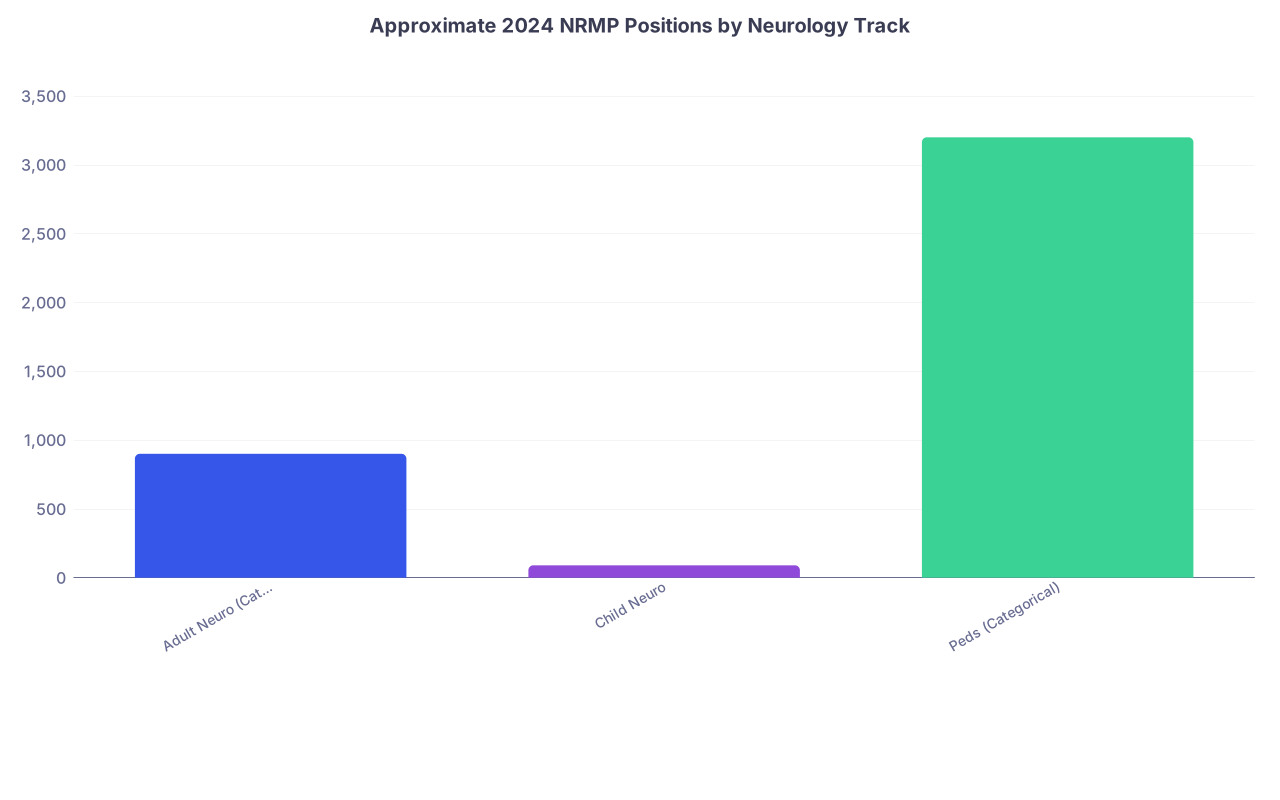
| Category | Value |
|---|---|
| Adult Neuro (Categorical) | 900 |
| Child Neuro | 90 |
| Peds (Categorical) | 3200 |
Child neurology is:
- Tiny compared to general pediatrics.
- Much smaller than adult neurology.
- Still its own, distinct match specialty with separate rank lists.
So structurally: Child Neurology is a primary residency specialty. "Peds neuro" is just the casual term people slap onto it.
Where it gets messy is when people mix this up with:
- Pediatric neurology fellowships (e.g., pediatric epilepsy, neuromuscular, neuroimmunology).
- Pediatricians with extra interest/training in neuro‑heavy fields (developmental, complex care).
- Adult neurologists who “also see older teens” and saying things like, “I kind of do peds neuro too.”
Those are not equivalent.
Training Pathways: What You’re Actually Signing Up For
Let’s strip the jargon and put this in a clean table.
| Pathway | Total Length | Match As | Core Focus |
|---|---|---|---|
| Child Neurology (US) | 5 years | Child Neurology | Peds + Neuro (kids) |
| General Pediatrics | 3 years | Pediatrics | All child health |
| Adult Neurology (categorical) | 4 years | Neurology (adult) | Adult neurologic dz |
The classic modern child neurology pathway in the US:
- 2 years of pediatrics (or 1 year peds + 1 transitional in some older setups, but most are 2 years peds).
- 3 years of neurology with heavy pediatric emphasis (with some adult neuro time, dictated by ACGME and ABPN requirements).
You do not:
- Finish pediatrics.
- Then apply for a “peds neuro fellowship” like you would for pediatric cardiology or GI.
That misconception alone screws up a lot of early planning.
Common Confusion #1: “I’ll just do peds then subspecialize into neuro.”
That’s not how it’s structured in the US.
For most pediatric subspecialties (cards, GI, endocrine), the path is:
- 3-year peds residency
- 3-year peds subspecialty fellowship
For child neurology:
- A 5-year integrated path that is its own NRMP listing.
Yes, some institutions and international systems use the phrase “pediatric neurology fellowship” because outside the US, there are different routes (e.g., neurology → pediatric neuro; pediatrics → pediatric neuro). If you’re reading European or Canadian program pages, the language will differ.
But if you are applying in the US Match, the main reality is:
- Child Neurology = primary residency.
- You don’t “add it on” after pediatrics like a typical subspecialty.
Practice Reality: Who Is Actually Seeing the Kids?
In hospitals and clinics, you’ll see several categories of people that muddy the waters.
Board‑certified Child Neurologists (ABPN)
- These are the “proper” pediatric neurologists in the US system.
- Core training in both pediatrics and neurology.
- Handle everything from neonatal seizures, refractory epilepsy, neuromuscular disease, metabolic disorders, neurogenetics, to complex developmental issues with neurologic components.
General Pediatricians with Neuro-Heavy Practice
- Often in developmental-behavioral pediatrics, complex care, or ADHD/autism clinics.
- They are not neurologists.
- They may manage ADHD, basic headaches, mild tics, some developmental delay, and refer up when it gets serious.
Adult Neurologists “Helping with Teens”
- In places without enough child neurologists, 16–18 year olds may be seen by adult neurologists.
- They are not “peds neuro” even if they say, “I see some kids.”
Subspecialty Child Neurologists
- Pediatric epileptologists (after epilepsy fellowship).
- Pediatric neuromuscular specialists.
- Pediatric neuroimmunology, neurocritical care, etc.
When a hospital signs a contract for a “Pediatric Neurologist,” they’re almost always talking about hiring a child neurologist, often with or without a further fellowship.
So again: In US practice, “peds neuro” almost always = child neurologist. But training and certification titles are precise, even if people’s language isn’t.
How This Affects Your Residency Decision (Beyond Semantics)
This is where the confusion costs you something real.
1. If you love kids but hate adult neurology
You need to look closely at how much adult neurology time each child neurology program requires.
The ACGME and ABPN require:
- A minimum amount of adult neurology exposure.
- That amount and structure vary by program.
Some programs have:
- 6+ months explicitly on adult wards and consults.
- Night float on adult neuro.
- A strong adult inpatient emphasis because their adult department calls the shots.
Others cluster adult neuro exposure early and keep it relatively contained.
Programs will all say some version of “Our training prepares you to treat patients across the life span.” Translation: you’re seeing adults whether you like it or not. The difference is how much and how intense.
2. If you’re torn between general pediatrics and child neurology
These are not just “peds with more brain.” The day-to-day looks very different.
- General peds: bronchiolitis, fever workups, asthma, obesity, newborn care, vaccines, bread-and-butter clinic.
- Child neuro: seizure management, EEG interpretations, genetic workups, cerebral palsy spasticity management, migraine protocols, complex differential for spells.
And the fellowship landscape is different. General peds gives you dozens of subspecialty doors; child neuro puts you squarely on a neuro track with neuro‑adjacent fellowships (epilepsy, neuromuscular, movement, neuroimmunology, neurocritical care, sometimes headache).
3. Lifestyle and call: not what most students think
People love to say, “Peds neuro is chill; it’s just clinic and some migraines.” Bad take.
The actual call and workload vary hugely by:
- Size of NICU and PICU.
- Level 1 trauma vs community children’s hospital.
- Whether your child neuro group covers continuous EEG, stroke alerts, status epilepticus management, neurocritical care.
In a big center with a busy PICU:
- Night call as a child neuro resident can be intense: status seizures, shunt malfunctions, neurotrauma, decompressive crani cases, intractable epilepsy admissions.
In a smaller center:
- You may do more phone consults and fewer emergent middle-of-the-night trips in.
“Peds neuro is just an outpatient specialty” is another myth. In serious programs, inpatient consult and ICU exposure are core.
Why the Terminology Gap Exists (and Why It Won’t Go Away)
The system is partly to blame.
- Board language: “Neurology with special qualification in child neurology” is clunky and sounds like a bad committee compromise.
- Hospital branding: “Pediatric Neurology” reads cleaner on a website and on the building.
- Physician shorthand: Nobody in the workroom has time to deliver a mini-lecture on certification semantics, so they say “peds neuro” and move on.
Students hear:
- “We’re rotating on peds neuro this month.”
- “We’re hiring a peds neuro doc next year.”
- “I did a peds neuro elective at Children’s.”
So they assume:
- It’s a pediatrics pathway.
- It’s a fellowship.
- Or it’s some optional subspecialty add-on after you “pick peds.”
By the time they hit ERAS, they realize “Child Neurology” is its own specialty list and panic‑scroll through program websites to figure it out.
You can avoid that scramble by recognizing this early:
- If you want to be the neurologist for kids, you apply to Child Neurology programs as a primary specialty. Full stop.
A Quick Reality Check: Who Should Actually Consider Child Neurology?
Not based on the marketing. Based on what the work really is.
You’re a good fit for child neurology / peds neuro if:
- You like long, complex, diagnostic problems more than quick throughput.
- Seizures, EEGs, weird genetic syndromes, and neuroimaging excite you rather than terrify you.
- You can tolerate longitudinal relationships with families facing chronic, sometimes devastating disease.
- You’re okay with a specialty where some of the biggest wins are stabilizing, not curing.
You’re probably better off in general pediatrics + another subspecialty if:
- You mainly like developmental/behavioral issues but aren’t that into EEG, imaging, or detailed neuro exams.
- You imagine your clinic full of ADHD, autism, school difficulty, but don’t care for acute neurologic emergencies.
- You don’t want to touch adult neurology at all, even in residency.
That’s the real separation—not whether the sign says “Child Neurology” or “Pediatric Neurology.”
FAQ (Exactly 3 Questions)
1. If I want to do “peds neuro,” do I apply to pediatrics or child neurology in ERAS?
You apply to Child Neurology as its own specialty. Many programs are categorical or linked with pediatrics, so your first years are pediatrics-heavy, but the listing is under Child Neurology, not general pediatrics. You don’t do a full 3-year pediatrics residency and then tack on neurology like a standard peds fellowship.
2. Is there any difference between being called a “Child Neurologist” and a “Pediatric Neurologist” in the US?
Functionally, no. In the US system, both terms almost always refer to someone who completed a child neurology residency and is board-certified by the ABPN. Official documents will use “Child Neurology.” Hospital websites and departments often use “Pediatric Neurology” for readability. The training and certification are the same.
3. Can I become a pediatric neurologist by doing adult neurology then a pediatric fellowship?
In the current US standard, the recognized and common route is the integrated child neurology residency (peds + neuro). There are some historical or rare alternate paths, but if you are a medical student or early resident planning ahead, the practical, supported path to a career seeing children with neurologic disease is to match into Child Neurology as a primary specialty and complete that 5-year track.
Key points to remember:
Child neurology in the US is a primary residency specialty, not a pediatrics fellowship, and “peds neuro” is just sloppy shorthand for that. The work is not “peds with a neuro flavor,” it is neurology—diagnostic, imaging-heavy, often intense—applied to kids. If you want to be the person everyone calls when a child seizes, regresses, or stops meeting milestones, you’re looking for Child Neurology on the match list, whatever people around you choose to call it.