
74% of U.S. neurology residents report managing significant psychiatric symptoms weekly, but fewer than 10% ever receive formal training in behavioral neurology and neuropsychiatry.
That gap is exactly where your decision lives: behavioral neurology vs psychiatry, and how to build a residency roadmap that does not box you in.
Let me break this down the way attendings actually think about it, not the clean marketing version from program websites.
The Core Difference: Which “Brain” Are You Training To Own?
Everyone parrots the same line: neurology = “hardware”, psychiatry = “software.” Cute. Also lazy.
The real divide is this:
- Behavioral neurology: a neurologist who focuses on cognition, behavior, and higher cortical functions, almost always in the context of structural or neurodegenerative disease.
- Psychiatry: a physician whose primary tools are diagnosis and treatment of mental illness using interview, meds, and psychotherapy frameworks, with brain as one factor among many.
Here is how that plays out in an actual clinic day.
You are in a memory clinic.
Behavioral neurologist:
- Patients: early-onset Alzheimer’s, frontotemporal dementia (FTD), posterior cortical atrophy, vascular cognitive impairment, autoimmune encephalitis with cognitive/behavioral changes.
- Questions: “Is this Alzheimer’s vs FTD vs DLB vs something autoimmune?” “What does the MRI, FDG-PET, and neuropsych testing actually show?” “Which cognitive domain is failing and why?”
- Tools: detailed neuro exam, MoCA, full neuropsych testing, structural and functional imaging, CSF biomarkers, genetics panels, EEG, disease-modifying trials.
Psychiatrist:
- Patients: late-life depression vs pseudodementia, bipolar disorder with cognitive complaints, schizophrenia with negative symptoms, anxiety driving functional decline, complicated bereavement.
- Questions: “Is this a primary mood disorder?” “How much of this is depression vs neurodegeneration?” “How will antipsychotics affect cognition and movement?”
- Tools: psychiatric interview, DSM diagnostics, rating scales (PHQ-9, HAM-D, PANSS), psychotropics, psychotherapy, coordination with therapists and social work.
There is overlap. But the question you ask first is different.
Behavioral neurology asks: “Which brain system has failed and how do I localize it?”
Psychiatry asks: “Which mental/behavioral syndrome is present, why now, and what lever—biologic, psychological, social—do I pull first?”
If your brain naturally maps patients into “frontal lobe vs temporal lobe vs network breakdown,” that is neurology. If it maps into “mood, psychosis, anxiety, personality, trauma,” that is psychiatry.
Training Pathways: How You Actually Get To “Behavioral Neurology”
Step 1: The Gatekeeper – Residency Choice
There is no ACGME-accredited “Behavioral Neurology Residency.”
You get there by:
- Neurology residency → Behavioral Neurology & Neuropsychiatry (BNNP) fellowship
- Psychiatry residency → BNNP fellowship
- (Rarely) Double-board in both neurology and psychiatry, then subspecialize further.
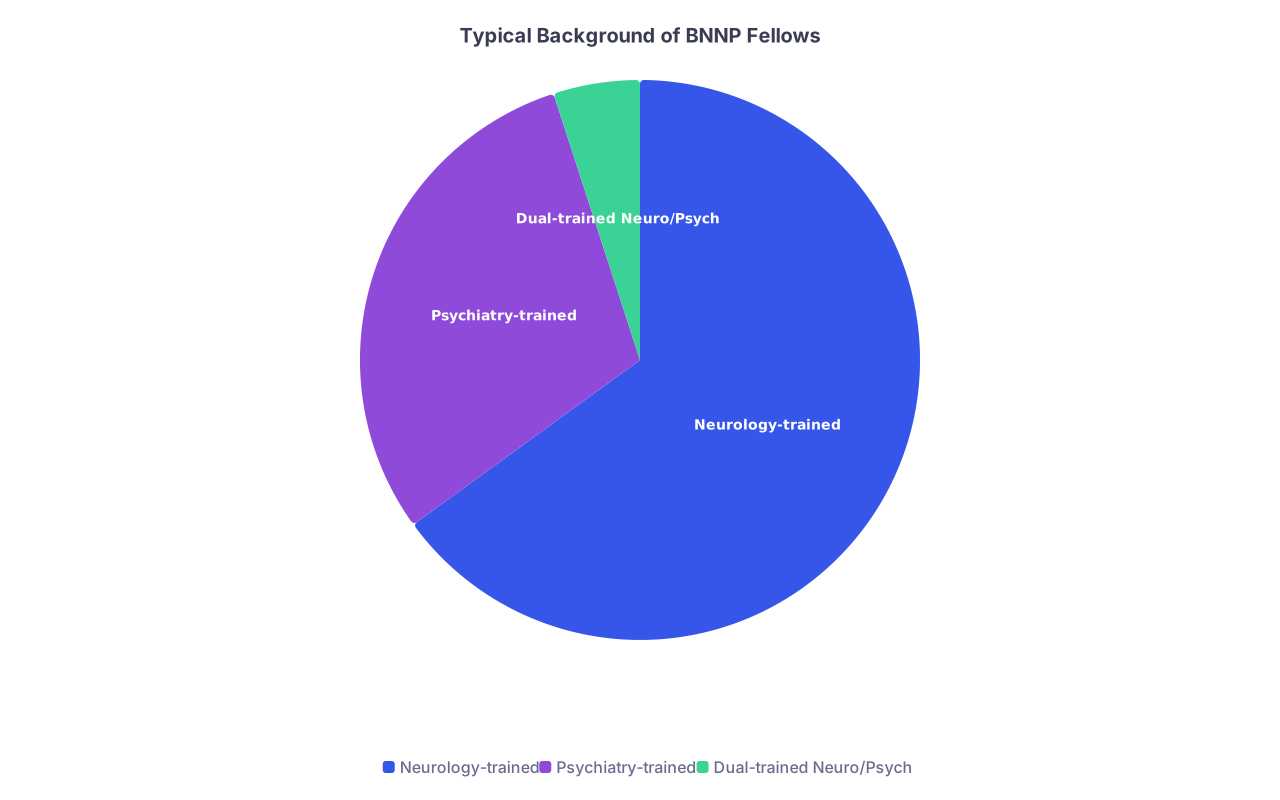
| Category | Value |
|---|---|
| Neurology-trained | 65 |
| Psychiatry-trained | 30 |
| Dual-trained Neuro/Psych | 5 |
If you’re still in med school, the immediate choice is neurology vs psychiatry residency. Everything else is built on that.
Step 2: What Neurology Residency Actually Looks Like
Three key features.
Heavy inpatient time
- Stroke, status epilepticus, Guillain-Barré, myasthenic crisis, acute demyelination, neuro-ICU.
- Behavioral/psychiatric presentations: delirium, post-ictal psychosis, agitation in brain injury, cognitive changes after stroke.
Constant localization and imaging
- You learn to think: “Left MCA? Right PCA? Basal ganglia? Hippocampus?”
- CT, MRI, MRA, CTA, angiography, EEG, EMG/NCS are your daily bread.
Behavioral content (usually underpowered but real)
- You see dementia, movement disorders with cognitive/psychiatric overlay, TBI, autoimmune encephalitis, atypical parkinsonian syndromes.
- But unless you seek it out, your behavioral training is fragmented: memory clinic 1 half-day a week, movement clinic, scattered outpatient.
Neurology residency is 4 years (including prelim year or built-in intern year). The standard path into behavioral neurology is:
- PGY1: Medicine-heavy intern year (ward months, ICU, some neuro)
- PGY2: Acute inpatient neurology, consults, stroke
- PGY3: Mix of inpatient, outpatient, electives (start seeking cognitive/behavioral rotations early)
- PGY4: Chief responsibilities, more subspecialty clinics, research time
Then BNNP fellowship: usually 1–2 years, strongly outpatient, cognitive and behavioral heavy.
Step 3: What Psychiatry Residency Actually Looks Like
Very different texture.
Interview, formulation, longitudinal care
- You live in the DSM, whether you like it or not.
- You practice taking 60–90 minute histories, understanding life narratives, trauma, developmental history.
Bread and butter
- Inpatient: schizophrenia, bipolar, severe depression, substance use, catatonia, suicidal ideation, psychosis.
- Outpatient: depression, anxiety, ADHD, OCD, PTSD, personality disorders.
Neurology-adjacent pieces
- CL psychiatry: delirium, post-stroke mood changes, conversion disorders, PNES, medication side effects (akathisia, TD, NMS).
- Neuropsych testing is nearby, but you are a client of it, not its primary owner.
Psychiatry residency is 4 years:
- PGY1: Mix of psych, medicine, neurology
- PGY2: Heavier inpatient psych, emergency, CL psych
- PGY3: Outpatient clinics (adult, child, subspecialty)
- PGY4: Leadership, electives, research, highly tailorable
Then BNNP fellowship as a psychiatrist: more cognitive, neurologically anchored work, but from a psychiatric lens.
Where They Overlap Clinically (And Where They Do Not)
Let’s look at some actual patient archetypes. This is where people finally “get” the difference.

Case 1: The 58-year-old executive “getting forgetful”
Behavioral neurology frame:
- Is this early-onset Alzheimer’s? FTD? Vascular cognitive impairment? Sleep-related? Autoimmune?
- Ordered: MRI with volumetrics, possibly FDG-PET, sleep study if history suggests, neuropsych testing. CSF biomarkers or amyloid/tau PET if available and appropriate.
- Visit flow: 60–90 minutes neuro exam + cognitive tests, family meeting, prognosis, clinical trial discussion.
Psychiatry frame:
- Is this depression with cognitive overlay? Unrecognized bipolar disorder? Severe anxiety disrupting attention?
- Ordered: Basic labs, maybe CT/MRI if red flags, neuropsych if unclear, collateral from family, depression/mania scales.
- Visit flow: thorough psychiatric interview, medication/psychotherapy plan, follow-up every 4–8 weeks.
Overlap: Both will screen for depression and anxiety, both may order neuropsych testing.
Key divide: Behavioral neurology centers structural and network pathology first. Psychiatry centers syndromic mental illness first.
Case 2: The young adult with new-onset psychosis
This is the classic shared territory.
Neurologist / behavioral neurologist thinks:
- Autoimmune encephalitis? Temporal lobe epilepsy? Wilson disease? Brain tumor? HIV-related CNS disease?
- Orders: MRI with and without contrast, EEG, CSF studies, autoimmune/paraneoplastic panel, sometimes PET.
Psychiatrist thinks:
- First-episode schizophrenia vs schizoaffective vs bipolar with psychotic features. Substance-induced psychosis?
- Orders: toxicology, basic labs, maybe MRI if concerning neuro signs, structured psych interview, family history, psychosocial assessment.
Good programs force collaboration here. Bad programs punt patients back and forth for months.
If you want to be the person who owns these “neuropsychiatric” cases:
- Neurology + BNNP lets you dominate structural / autoimmune / degenerative causes of psychosis and cognitive change.
- Psychiatry + strong CL + BNNP gives you deep skill in psychosis management, plus enough neuro to not miss the zebras.
Case 3: Progressive personality change and disinhibition
Every behavioral neurology board review book has this one. Middle-aged person, now impulsive, rude, hypersexual, losing empathy.
- Behavioral neurology: FTD until proven otherwise.
- Psychiatry: Could be personality disorder, bipolar, substance use, trauma—but if onset is midlife with clear decline from baseline, neurologists are usually the ones who get it right first.
This is where neurology residents who paid attention in behavioral clinics can look extremely smart on rounds. And where psychiatrists with real neuro interest can avoid dangerous misdiagnoses.
Residency Roadmaps: How To Aim For Behavioral Neurology From Each Side
You do not drift into behavioral neurology. You manufacture it.
If You Choose Neurology Residency
Your advantage: hardwired neuroanatomy, imaging, electrophysiology. Your risk: insufficient time in longitudinal behavior/cognition clinics.
Your roadmap looks like this:
PGY1:
- Choose a prelim/intern year with strong neurology-friendly rotations (medicine wards, ICU, geriatrics).
- Seek at least one elective with consult-liaison psychiatry or geriatric psych—see delirium and dementia from the psych side.
PGY2:
- Master inpatient neurology first. Stroke, status, acute encephalopathy. You need this credibility.
- On consults, volunteer to follow delirium and cognitive change cases. Ask attendings to talk through “depression vs dementia vs delirium” with you at the bedside.
PGY3:
- Aggressively schedule:
- Memory clinic
- Movement disorders clinic (Parkinson’s + cognition)
- TBI or concussion clinic if available
- Epilepsy clinic (post-ictal states, cognitive impact, PNES)
- Start or join a cognitive/behavioral research project—enrollment in an Alzheimer’s or FTD trial, or clinical database work.
PGY4:
- Design a behavioral neurology-heavy year:
- 1–2 continuity clinics in dementia/behavior
- Electives in neuroimmunology (autoimmune encephalitis), sleep (cognition/fatigue)
- At least a month shadowing or rotating with psychiatry CL service for delirium/psychosis in medical patients.
- Apply to BNNP fellowships (e.g., UCSF, Mayo, Mass General/Brigham, Columbia, UT Southwestern, etc.).
| Institution | Primary Base | Typical Length | Notable Focus Area |
|---|---|---|---|
| UCSF | Neurology | 2 years | FTD, neurodegeneration |
| Mass General/Brigham | Neurology/Psych | 2 years | Dementia, neuropsychiatry |
| Mayo Clinic | Neurology | 1–2 years | Cognitive disorders |
| Columbia | Neurology | 2 years | Memory, movement overlap |
| UT Southwestern | Neurology | 2 years | Dementia, behavior |
You finish as: a neurologist who can manage all of neurology, but chooses to focus career time on dementia, cognitive and behavioral clinics, and neuropsychiatric syndromes.
If You Choose Psychiatry Residency
Your advantage: interview skills, longitudinal behavioral expertise, psychopharmacology, psychotherapy. Your risk: weaker comfort with neuro exam, imaging, neuroanatomy.
Your roadmap:
PGY1:
- Take your neurology months seriously. Do a real neuro exam. Read your own MRIs with attendings.
- Ask to see consults involving delirium, autoimmune encephalitis, catatonia vs nonconvulsive status, PNES vs epilepsy.
PGY2:
- Seek:
- CL psychiatry rotations where you see medically complex neuro-psych cases.
- Rotations on geriatric psychiatry units with heavy dementia overlap.
- Read one real neurology text cover-to-cover (yes, seriously—Adams & Victor or similar sections on dementia, movement, seizures).
PGY3:
- Build outpatient experiences in:
- Geriatric psych (depression with cognitive complaints, late-onset psychosis).
- Neurodevelopmental or brain injury clinics if your program has them.
- Interdisciplinary memory clinic with neurology and neuropsychology if at all possible.
PGY4:
- Electives in:
- Neuropsychiatry clinic
- Movement disorders psychiatry (tardive dyskinesia, Parkinson’s psychosis)
- Epilepsy center psych clinic (pre- and post-surgical psych assessments)
- Apply to BNNP fellowships that explicitly welcome psychiatry backgrounds.
You finish as: a psychiatrist who is unusually good at cognition and neuropsychiatric presentations, especially at the intersection with neurodegenerative disease and medically complex patients.
Dual Training: Neurology + Psychiatry – Worth It?
There is a small but intense group of physicians who complete combined neurology–psychiatry residencies (usually 5 years) and may follow with BNNP fellowship.
Pros:
- You are legitimately bilingual: you can run a stroke code and manage clozapine titration.
- For academic careers in neuropsychiatry, TBI, autoimmune encephalitis, or complex functional neurologic disorders, this is extremely powerful.
- You can sit for both neurology and psychiatry boards.
Cons:
- Time. 5 years minimum before any fellowship.
- Fewer programs. And they are idiosyncratic—some very neuro-heavy, some psych-heavy.
- You must protect your behavioral focus, or you end up being pulled into every complicated case in the institution.
For most students, neurology or psychiatry alone + targeted fellowship is enough. Dual training makes sense if you already know you want a career primarily in academic neuropsychiatry and are comfortable compromising on speed to independence.
Day-to-Day Practice: Lifestyle and Job Reality
Let’s talk about what your week might look like in each pathway once you are done.
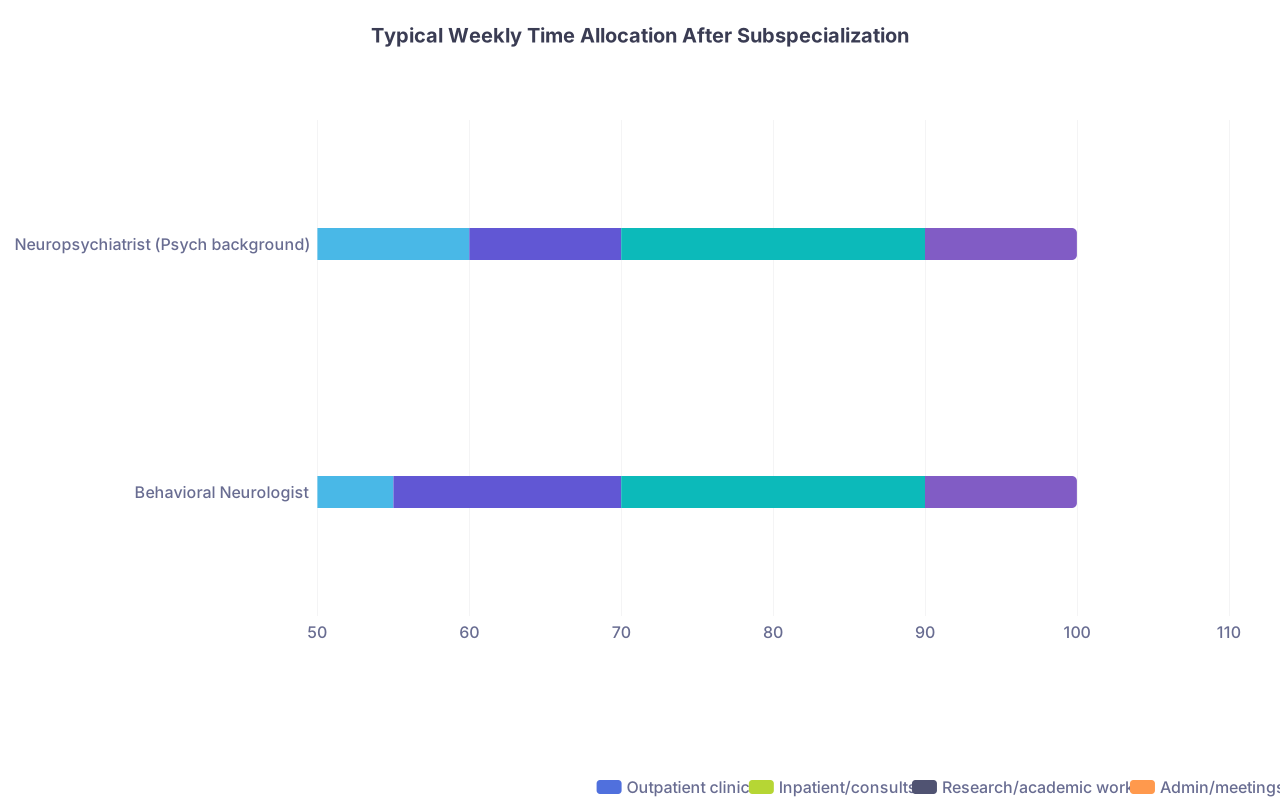
| Category | Outpatient clinic | Inpatient/consults | Research/academic work | Admin/meetings |
|---|---|---|---|---|
| Behavioral Neurologist | 55 | 15 | 20 | 10 |
| Neuropsychiatrist (Psych background) | 60 | 10 | 20 | 10 |
Behavioral Neurologist (Neurology-trained)
Common practice patterns:
- Memory & dementia clinic 2–4 days/week.
- One general neurology or movement clinic half-day.
- Often an academic appointment with some research or teaching.
- Call: often lighter than general inpatient neurology, but still neurology call in many settings.
Patient mix:
- Alzheimer’s disease, MCI
- FTD spectrum
- Dementia with Lewy bodies
- Vascular cognitive impairment
- Cognitive sequelae of MS, epilepsy, TBI
- Autoimmune encephalitis follow-up
Your bread and butter decisions:
- Which biomarker tests to order.
- Which patients to refer to trials.
- Cholinesterase inhibitors vs memantine vs off-label strategies.
- Counseling families about prognosis, driving, capacity, placement.
Neuropsychiatrist (Psych-trained, BNNP)
Common practice patterns:
- Outpatient neuropsychiatry clinic attached to neurology or psychiatry department.
- Co-located with neuropsychology, speech therapy, social work.
- May have dedicated clinics for:
- Psychiatric symptoms in neurologic disease (Parkinson’s psychosis, MS depression, epilepsy mood disorders).
- Functional neurologic symptom disorders (conversion, PNES).
- Cognitive and behavioral disorders that straddle both worlds.
Call: typically psychiatry call structure—ED psych consults, inpatient coverage. Often more lifestyle-friendly than acute neurology.
Your bread and butter decisions:
- Psychotropic selection in the context of neurologic disease and polypharmacy.
- Managing anxiety/depression in dementia while minimizing cognitive side effects.
- Treating psychosis and agitation with strict awareness of movement and cognitive risks.
- Psychotherapy styles tailored to brain-based limitations.
Competitiveness, Fit, and How Programs Actually Judge You
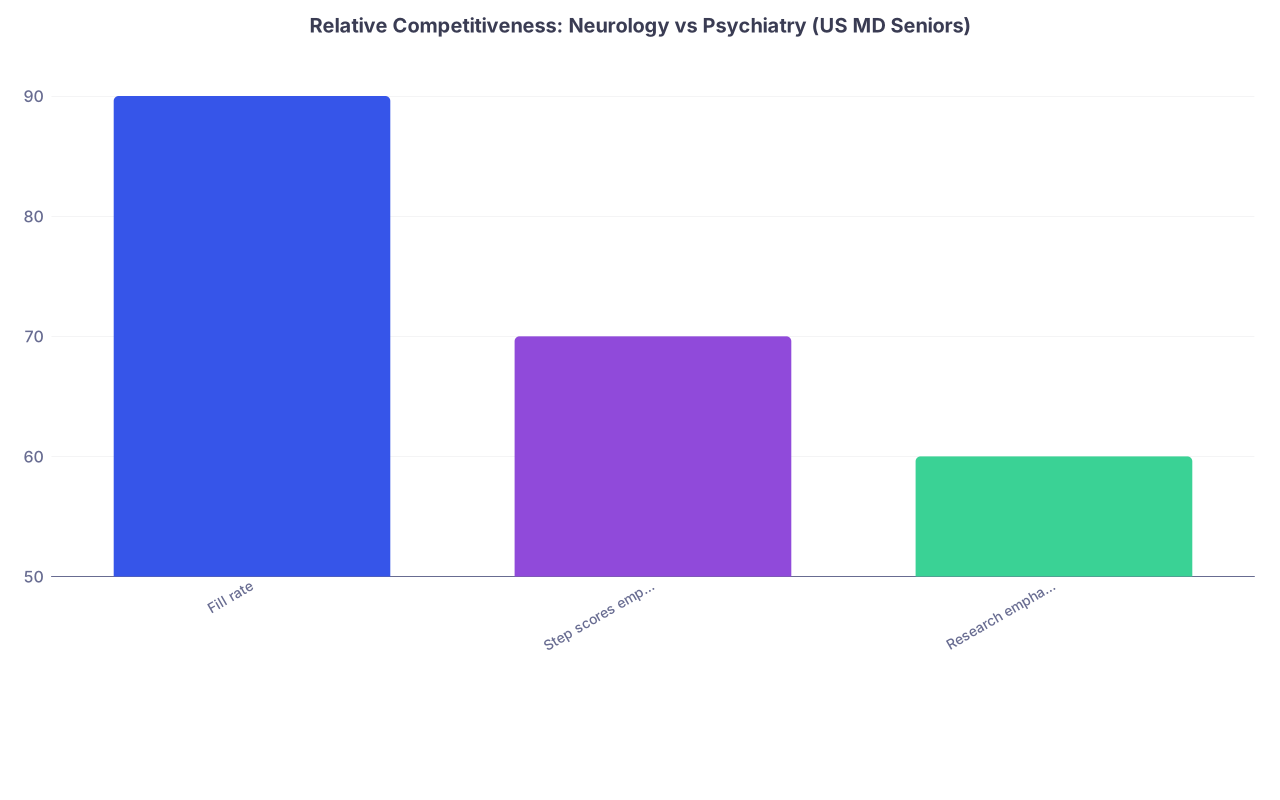
| Category | Value |
|---|---|
| Fill rate | 90 |
| Step scores emphasis | 70 |
| Research emphasis | 60 |
Quick reality check: neither neurology nor psychiatry is dermatology-level competitive. But the top academic programs in both are selective, and behavioral neurology–friendly environments cluster at those places.
What makes you stand out for neurology with behavioral interest:
- Solid Step 2 (for now) and strong medicine/clerkship performance.
- Documented interest in cognition/behavior: research in dementia, neuroimaging, neuropsychology, or neurodegeneration.
- Letters from neurologists who can say you think clearly about localization and present like a junior attending.
What makes you stand out for psychiatry with neuro interest:
- Strong clinical narrative skills in your personal statement and interviews.
- Evidence that you can handle medical complexity (good IM rotation comments, maybe a case report on delirium/encephalitis).
- A letter from a CL psychiatrist or neuropsychiatrist who saw you handle medically and neurologically complex patients.
Red flags I have seen sink otherwise strong applicants:
- “I hate medicine; I just want to talk to patients” → psychiatry PDs hear this as “I will struggle on CL and with medically complex patients.”
- “I hate psych; I just want the ‘real’ brain stuff” → neurology PDs know behavioral neurology requires comfort with psychiatric overlap, not contempt for it.
If you are positioning yourself for eventual behavioral neurology/BNNP, signal interest early but do not come off as if you have contempt for the rest of the field. Programs want residents who can do stroke codes or manage high-acuity psych before they narrow.
How To Decide: Which Residency Fits Your Brain
Strip away prestige, gossip, and what your classmates are doing. Ask yourself these specific questions:
In third-year clerkships, which felt more natural:
- Localizing neuro deficits and reading imaging?
- Or structuring long interviews about mood, thought content, and life history?
On a busy service, which clinic could you tolerate all day:
- Stroke and ICU rounds with a few dementia patients sprinkled in?
- Inpatient psych with mania, psychosis, and suicidal ideation?
How do you feel about procedures and urgent decisions:
- Comfortable being the person running tPA/thrombectomy discussions at 2 a.m.?
- Or would you rather manage suicidal risk and medication cross-tapers than central lines and ICU notes?
What bores you faster:
- Repeated conversations about trauma, relationships, coping, and psychotherapy?
- Or repeated mapping of lesions, imaging patterns, and reflex exams?
You are not choosing how “smart” you want to be. You are choosing your default puzzle: neuroanatomy vs psychopathology. Both are deeply technical if you do them seriously.
Final Takeaways
Behavioral neurology is not a third option; it is a subspecialty that sits on top of neurology or psychiatry. Your real fork in the road is neurology vs psychiatry residency.
Neurology + BNNP makes you the expert in structural, degenerative, and autoimmune causes of cognitive and behavioral change. Psychiatry + BNNP makes you the expert in mental illness and behavioral syndromes with enough neuro to manage complex brain-based presentations safely.
Decide based on which puzzles you want to solve every day: lesion localization and imaging, or syndromic diagnosis and longitudinal mental health care. Then build a deliberate roadmap—rotations, mentors, and fellowships—that pushes you toward the behavioral overlap you actually care about.