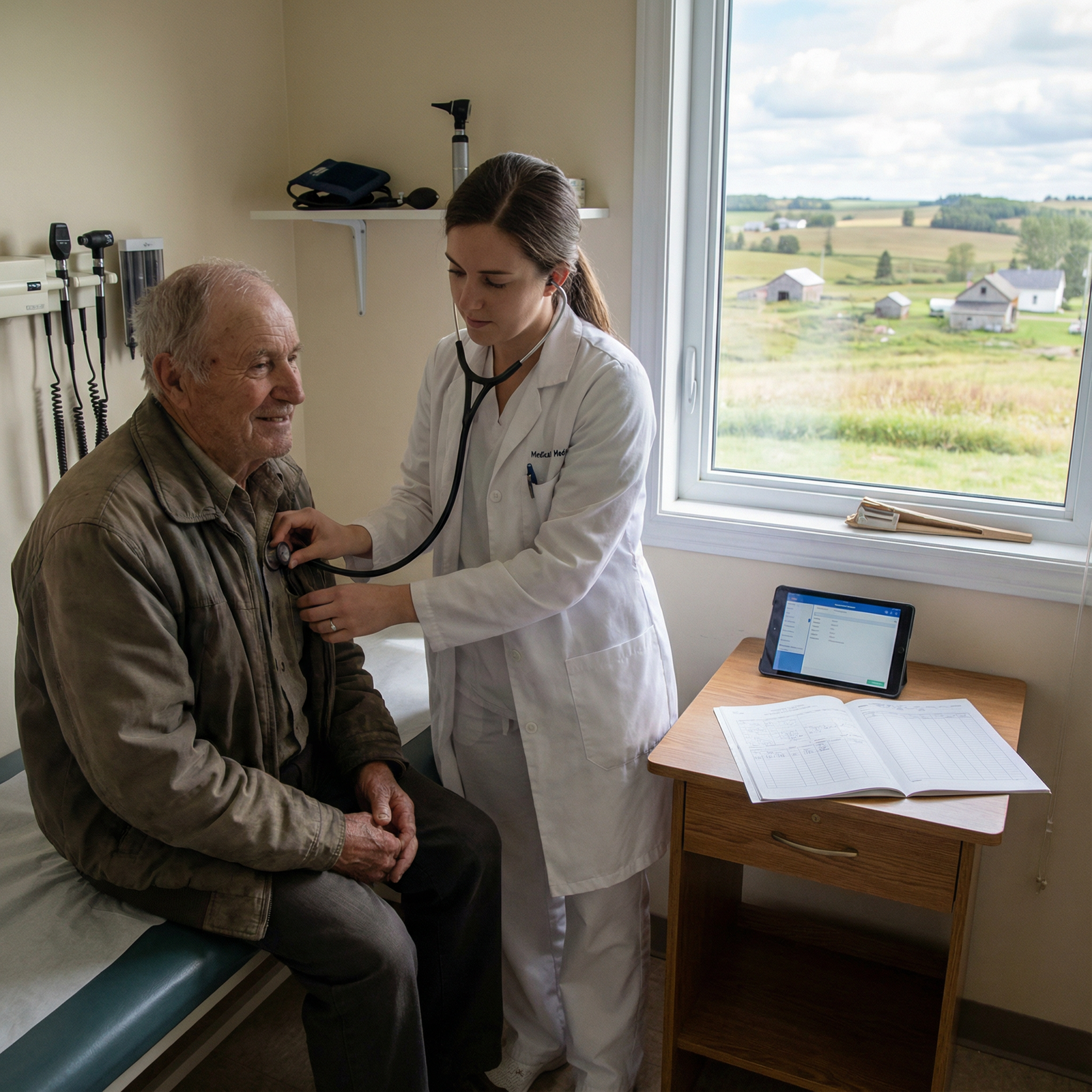
Rural practice is not “big city lite.” It is a different sport. If you want to end up in a small town as a family physician or pediatrician, you cannot just do any old residency and hope it translates. You need to engineer your training.
This is the guide for people who are seriously thinking: “I want to practice FM or Peds in a town where the hospital has 25 beds, OB is on call from home, and I might be the only pediatrician within 60 miles.” If that’s you, we’re going to get specific.
Step 1: Get Honest About What “Rural” Actually Means
Most applicants underestimate how different rural practice feels on the ground.
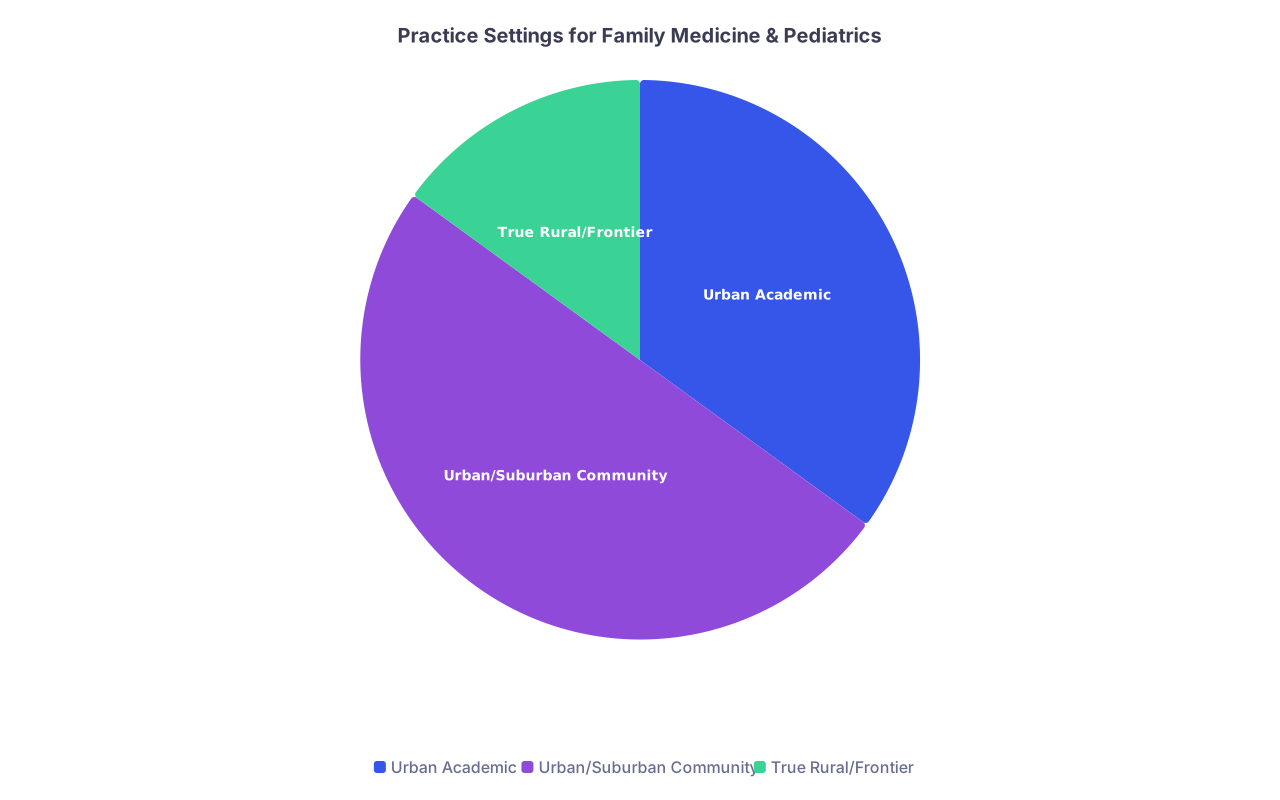
| Category | Value |
|---|---|
| Urban Academic | 35 |
| Urban/Suburban Community | 50 |
| True Rural/Frontier | 15 |
“Rural” on a brochure can mean:
- A small town 45 minutes from a major metro
- A critical access hospital 2+ hours from the nearest tertiary center
- Or a “rural track” that is actually in a suburb with cornfields nearby and nothing else rural about it
Here’s what tends to be true rural practice:
- Limited on-site specialists (maybe one general surgeon, a visiting cardiologist once a month)
- Limited imaging (CT usually, MRI maybe once or twice a week or shared)
- Your “consults” are often phone calls, telehealth, or transfers
- You are it for a lot of problems during nights and weekends
- OB: either you deliver babies yourself (FM) or you’re the default pediatrician for all newborns (Peds)
If reading that excites you more than it terrifies you, you’re in the right place. If it terrifies you and you still want to do it, good—you’re realistic. What you cannot do is pretend it will be just like residency with less traffic. It won’t.
Step 2: Decide: Family Medicine vs Pediatrics for Rural Work
Let’s cut through the fluff. Both FM and Peds can work beautifully in rural settings, but the job description is different.

Rural Family Medicine – You’re the Generalist of the Generalists
In real rural FM, you might:
- Cover clinic + inpatient + ED + nursing home, depending on the site
- Do prenatal care and deliver babies (in OB-capable hospitals)
- Manage adults, kids, prenatal, geriatrics, chronic disease, and acute care
- Run codes when there is no in-house intensivist
- Be the first call when a kid shows up in respiratory failure and Peds is 90 miles away
FM is usually the better fit if:
- You want to care for adults and kids
- You’re open to OB or at least comfortable with pregnant patients
- You like procedures (laceration repair, basic dermatology, joint injections, maybe C-sections with extra training)
- You’re okay with a broader scope and being “the doctor” for the whole family
Rural Pediatrics – The Kids’ Specialist in an Adult World
Rural Peds looks different:
- You might be the only pediatrician in town or one of two
- You usually cover clinic-heavy practice, newborn nursery, possible low-acuity inpatient pediatrics if the hospital keeps kids
- You’ll be the consultant for the FM docs on all the complicated kids and NICU grads
- You might still take call, attend high-risk deliveries, and stabilize sick kids for transfer
Peds is usually the better fit if:
- You have zero interest in adult medicine or OB
- You want deeper training in complex pediatrics, autism, ADHD, neonates, etc.
- You’re okay being “consulted” by FM docs for anything more complex than routine kid stuff
- You’d like the lifestyle tilt that Peds can sometimes offer compared to full-spectrum FM with OB
If you’re on the fence, I’ll be blunt: for rural practice, FM generally gives more flexibility, especially in very small communities. But doing Peds in a small city that serves a big rural catchment area can be an excellent compromise.
Step 3: What to Look For in a Residency if You Want Rural Practice
Here’s where people mess up. They fall in love with a big-name academic program and assume they can “figure out rural later.” That’s how you end up feeling wildly underprepared when you’re the only doctor in-house at 2 AM.
You want a residency program that matches the type of rural practice you’re chasing.
| Feature | Strong Rural FM | Strong Rural Peds |
|---|---|---|
| Clinic type | FQHC/RHC, broad scope | Community clinic, broad age range |
| Inpatient | Real responsibility, nights | Newborn nursery, some inpatient |
| OB exposure | Heavy, continuity deliveries | Deliveries attendance, NICU exposure |
| Procedures | Common primary care + ED | Basic procedures, stabilization |
| Rural rotations | Required, multiple blocks | Required or strong option |
For Family Medicine
You want:
Unopposed or minimally opposed programs
Translation: You are not constantly losing procedures and admissions to IM, EM, OB, Peds residents. In rural FM, you’ll be doing a lot. You need practice.Strong inpatient medicine and ED exposure
Not the fake “night float where you push paper” experience. You want:- Real admissions responsibility
- Independent cross-coverage (with backup)
- Running codes, not just watching from the door
- ED shifts where you see chest pain, sepsis, trauma, pediatric emergencies
OB if you want full-spectrum FM
Non-negotiable if you plan to deliver babies:- Minimum 40–80 continuity deliveries; 100+ is better
- Opportunity to first-assist C-sections
- Clinic continuity with your own prenatal patients
True rural rotations, not “we drive past corn” rotations
Ask:- Do you spend blocks in outlying critical access hospitals?
- Are you actually the doc seeing patients in those settings, or just shadowing?
- Do they have graduates working in rural communities now?
For Pediatrics
For Peds, the priority shifts.
You want:
Broad community exposure
You don’t need a hyper-sub-specialized quaternary referral center for 3 years if your goal is a town of 15,000. Good to have tertiary exposure, yes, but you also want:- Community hospital rotations
- Community clinics with high Medicaid / rural catchment
High-volume general pediatrics
Lots of bread-and-butter:- Asthma, bronchiolitis, pneumonia
- Newborn nursery, jaundice, feeding problems
- Developmental and behavioral pediatrics in a real-world context
Programs where everyone is trying to match into 7-year subspecialty tracks may not emphasize this.
Newborn and PICU exposure with real responsibility
Rural peds = you are first line for sick kids and newborns. Look for:- Attendance at deliveries, including high risk
- Hands-on resuscitations, not just watching NRP videos
- Enough PICU time that you’re comfortable stabilizing and transferring
Rural tracks or rural-focused electives
Some Peds programs (often at state schools) have formal rural tracks. Others quietly support away rotations in small-town hospitals. Both can work as long as you use them aggressively.
Step 4: Use Rural Tracks Strategically (FM & Peds)
A “rural track” on a website is not enough. Half of them are marketing more than substance. You need to interrogate the structure.
Questions to ask on interview day or in emails:
- How many residents actually do the rural track per year?
- How many blocks are truly spent in rural communities?
- Do residents live there temporarily or just commute for a token clinic?
- What’s the call responsibility at those sites?
- Name 3 recent graduates and where they practice now.
If the answers are vague (“Some go rural,” “We have many opportunities,” “It depends”), that’s a red flag.
Step 5: Build the Right Skill Set During Residency
Now assume you’ve matched. You’re at least somewhat rural-friendly in your program. Your job is to own your training so that when you’re alone at 3 AM in a small hospital, you’re not paralyzed.
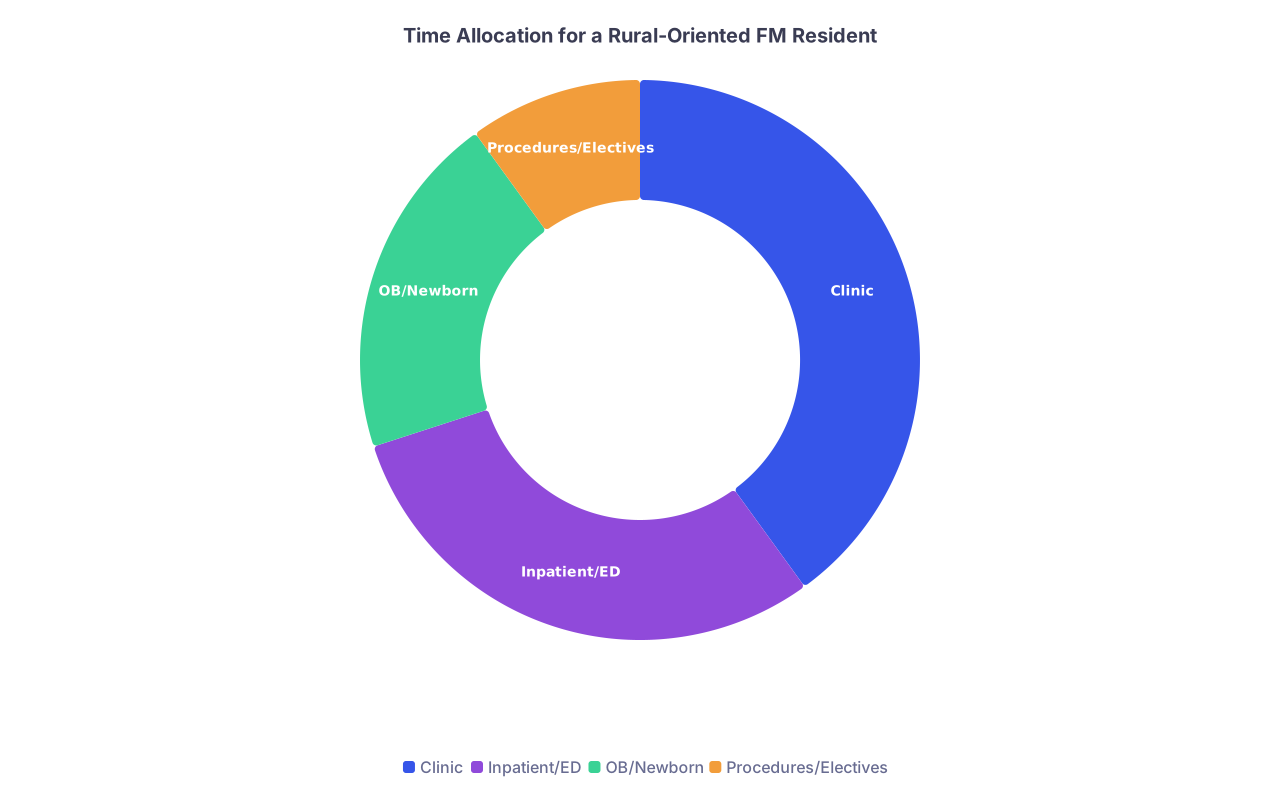
| Category | Value |
|---|---|
| Clinic | 40 |
| Inpatient/ED | 30 |
| OB/Newborn | 20 |
| Procedures/Electives | 10 |
If You’re in Family Medicine
Focus on:
- Inpatient medicine: Volunteer for more inpatient months. Take extra cross-cover shifts. Be the one who owns the sick patients, not the one who disappears at 4:30.
- ED shifts: If your program allows EM electives, take them. Ask EM attendings to walk you through their mental models: chest pain, altered mental status, abdominal pain, pediatric respiratory distress. Rural clinics send those patients to you first.
- OB (if you plan to do it):
- Track your deliveries obsessively
- Seek continuity deliveries
- Learn to manage uncomplicated labors confidently, but also to call for help early in the dangerous ones
- Procedures:
- Laceration repair, splinting, I&D, joint injections, Nexplanon, IUDs, basic derm procedures
- Any chance to first-assist or do C-sections, take it if OB practice is in your future
And pay attention to systems stuff: discharge planning when resources are scarce, outpatient follow-up when the nearest subspecialist is three hours away, dealing with patients who can’t afford meds.
If You’re in Pediatrics
Your priorities:
Newborn care: Get very comfortable with:
- Delivery attendance
- Neonatal resuscitation beyond the algorithm on the card
- Jaundice management without NICU on-site
- Feeding issues and weight loss decisions when transfer is a big deal
Respiratory emergencies: You will see:
- Asthma attacks in kids whose parents drove an hour
- Bronchiolitis in a hospital that barely sees infants
- Anaphylaxis with limited meds on hand
Learn the stepwise escalation. Practice writing and verbalizing your plan.
Behavioral and developmental: In rural areas, access to child psychiatry, developmental pediatrics, and therapy services is usually weak. The more you learn about:
- ADHD evaluation and management
- Autism screening and early interventions
- Anxiety, depression basics
the more useful you’ll be.
Work in community settings: Take any rotation that puts you into:
- School-based clinics
- Rural health clinics
- Outreach clinics serving farmworker families or small towns
Step 6: Electives and Side Moves That Actually Help Rural Practice
This is where you can be smart and tactical instead of just grabbing whatever easy elective is lying around.
High-Value Electives for Rural FM
- Emergency Medicine – Classic. But aim for community EDs, not just giant trauma centers.
- Anesthesia – Airway management and procedural sedation; especially valuable if you’ll staff an ED.
- OB/High-Risk OB – Extra months make a difference if you’ll keep doing deliveries.
- Sports Medicine / MSK – Rural patients don’t want to drive 2 hours for a meniscus strain.
- Dermatology – High demand, little access. Learn to biopsy, freeze, and manage common rashes.
- Point-of-Care Ultrasound (POCUS) – Game changer when imaging is limited.
High-Value Electives for Rural Peds
- PICU / NICU – Not because you’ll run one, but because you’ll stabilize and transfer sick kids and newborns.
- Pediatric Emergency Medicine – See a ton of acute issues, get faster and more confident.
- Developmental/Behavioral Peds – You’ll become the de facto DBP in many rural areas.
- Child Psychiatry (or integrated behavioral health) – Even a month or two helps massively.
- Rural Outreach / Community Peds – Anything that puts you in smaller communities for blocks of time.
For both FM and Peds: telemedicine exposure is underrated. Rural practice increasingly uses telehealth connections to tertiary centers. Learn how that works.
Step 7: Choosing Your First Job Wisely (So You Don’t Burn Out in 18 Months)
This is the part many residents rush and regret. You get a rural job offer with a big signing bonus and “loan repayment” slapped on the front page and think that’s all that matters.
Slow down.
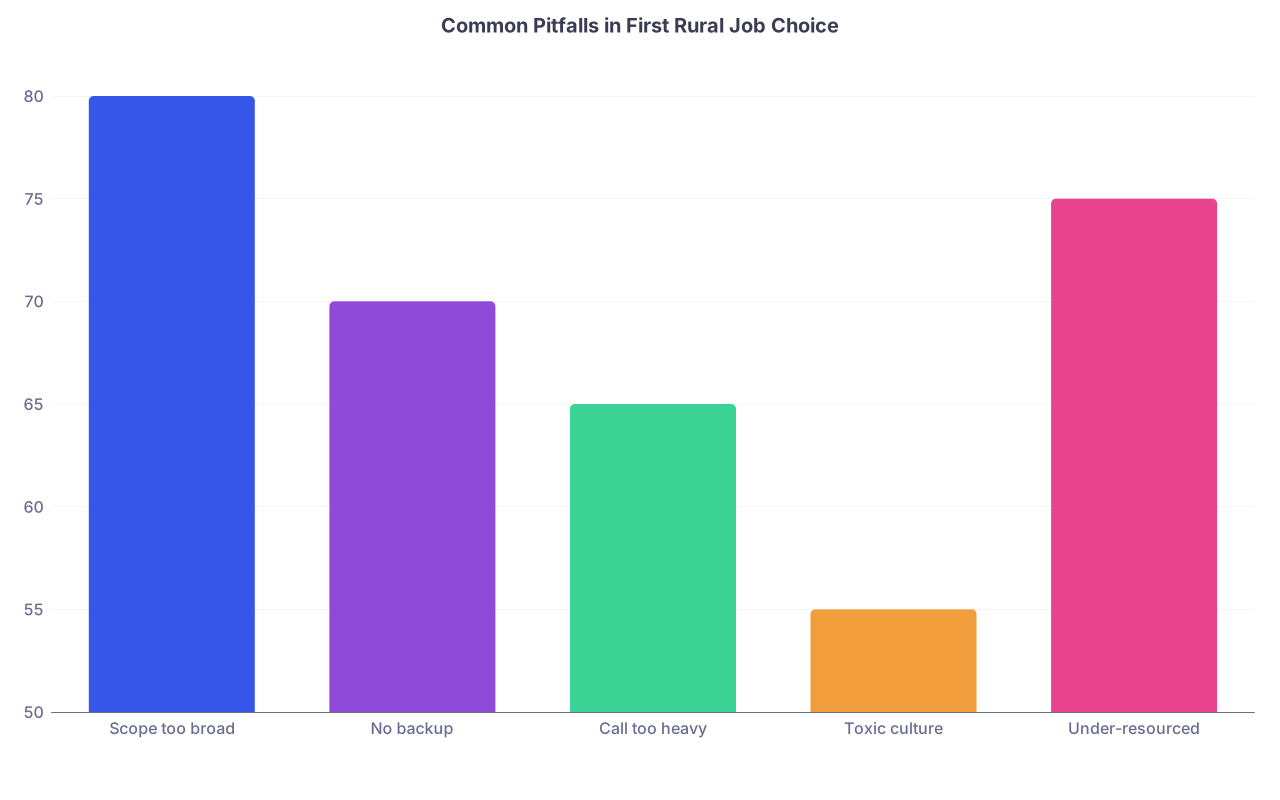
| Category | Value |
|---|---|
| Scope too broad | 80 |
| No backup | 70 |
| Call too heavy | 65 |
| Toxic culture | 55 |
| Under-resourced | 75 |
Things you must clarify before signing:
Actual scope of practice
- For FM: Are you doing inpatient? OB? ED coverage? Nursing home? How many nights?
- For Peds: Are you responsible for all newborns? Inpatient? High-risk deliveries?
Backup and transfer
- Who is your backup at 2 AM?
- Where do you transfer sick patients, and how fast can transport realistically arrive?
- Are there hospitalists, or are you it?
Team composition
- How many other physicians? NPs/PAs?
- How long have they been there, and how high is turnover? That last one matters a lot.
Infrastructure
- CT scanner? MRI access? Lab availability overnight?
- Respiratory therapists? Pharmacy support?
- Tele-ICU, tele-Peds, tele-psych?
If the recruiter can’t answer, insist on talking to current physicians—not just the most optimistic one. Ask them privately what’s hardest about the job.
Step 8: How to Signal Rural Interest During Application Season
Last piece: how you present yourself when you apply to residencies.
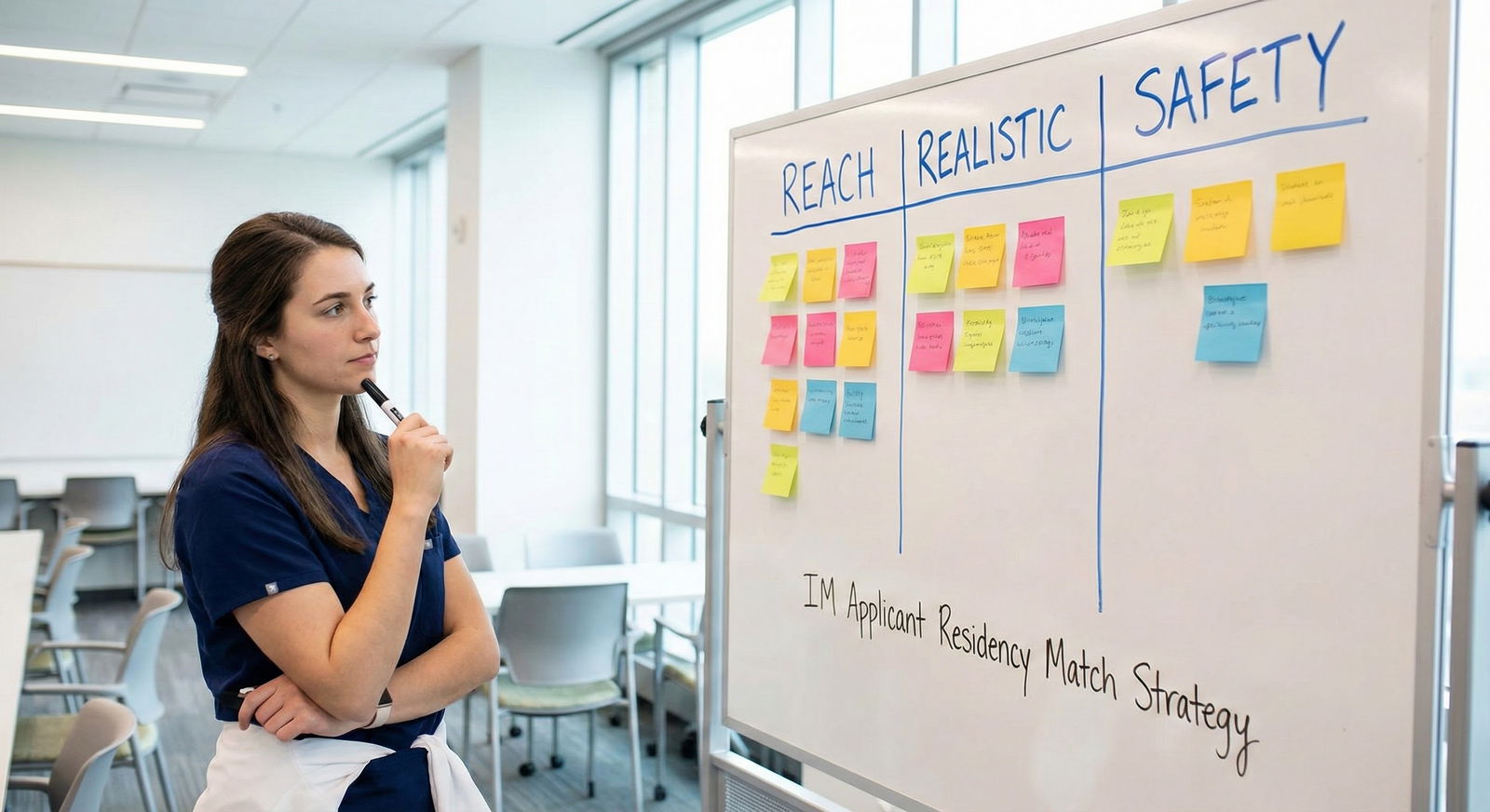
If you want programs with strong rural training to take you seriously, your application should not look generic.
Concrete moves:
Personal statement:
- Don’t write a vague “I like underserved care” essay.
- Mention rural experiences: FQHC in a small town, migrant farmworker clinic, growing up in a small community.
- State clearly: “I plan to practice full-spectrum family medicine (including OB) in a rural community” or “I plan to work as a general pediatrician serving predominantly rural populations.”
Experiences section:
- Highlight rural rotations, not just big academic hospitals.
- Mention any rural volunteer work (free clinics, mobile clinics, reservation clinics).
Interview:
- Ask pointed questions about rural training, graduates working rurally, call structure at rural sites.
- When they ask about your goals, don’t be coy. Say it: “My goal is a rural practice where I can do X, Y, and Z.”
Programs that actually care about rural training will perk up when they hear that. Programs that don’t will brush past it—that’s information for you.
Quick Example Pathways
Let me spell out two realistic roadmaps.
Example 1: FM → Very Small Town, Full-Spectrum
- Apply to unopposed FM programs with strong OB and rural tracks (e.g., small Midwest or Northwest community programs).
- During residency:
- Maximize inpatient, OB, ED, and rural blocks.
- Do electives in anesthesia, POCUS, sports med.
- First job:
- 8–12k population town, critical access hospital.
- Practice includes clinic, OB, inpatient, and ED shifts.
- Loan repayment through state or federal program.
Example 2: Peds → Regional Hub for Large Rural Catchment
- Apply to state-affiliated Peds programs with community hospital exposure and a formal rural or community track.
- During residency:
- Focus on newborns, PICU/NICU, Peds EM, DBP.
- Do 1–2 away rotations in smaller community hospitals.
- First job:
- Work in a small city (40–60k population) that draws from several rural counties.
- You have colleagues, subspecialists by telehealth or periodic outreach, and better backup—but your patients are largely rural families.
Both of these are realistic, achievable, and sustainable if you build the right residency pathway.
FAQs
1. Do I absolutely need a “rural track” to end up in rural practice?
No. A solid community FM or Peds program with broad training can get you there. Rural tracks help, but what matters more is:
- Unopposed or broad-scope training
- Real responsibility in inpatient/ED/newborn care
- Program culture that supports full-spectrum practice
I’ve seen plenty of physicians in genuine rural jobs who came from non-rural-track programs but maximized their experiences.
2. Is it risky to learn OB as an FM doc if I’m not 100% sure I’ll use it?
It’s not risky; it’s an asset. OB exposure makes you a stronger generalist, and you can always choose not to do deliveries later. The only real “risk” is time and effort. If you think there’s even a 30–40% chance you’ll want full-spectrum rural practice, get as much OB in residency as you reasonably can.
3. How much ICU or PICU experience do I need for rural work?
You don’t need to be an intensivist. You do need enough experience to:
- Recognize who’s crashing or about to crash
- Stabilize with airway, fluids, pressors, and basic ventilation
- Communicate clearly with receiving ICUs during transfers
For most people, that means a few solid ICU or PICU rotations where you actually manage patients, not just round and write notes.
4. I didn’t do any rural rotations in medical school. Am I already behind?
You’re not dead in the water. You just need to be explicit now. In your application:
- Emphasize interest in underserved care and continuity relationships
- Target residencies that serve rural catchment areas
- Plan to load up on rural or community rotations during residency
Programs care more about what you’ll do in the next 3–5 years than where you rotated as an M3.
5. What if my partner isn’t excited about living truly rural?
Then you probably need a compromise model: practice in a small or mid-sized city that serves rural populations, or a larger town with reasonable amenities. You can still see mostly rural patients without living in a town of 2,000. Be honest about this now; forcing a reluctant partner into extreme rural life is a fast way to misery, no matter how “perfect” the job looks on paper.
Key points:
- Rural FM or Peds requires deliberately chosen training, not generic big-city residency.
- Prioritize programs and rotations that give you real responsibility in broad-scope care with limited backup.
- Signal your rural goals clearly, build targeted skills in residency, and choose your first job with your eyes open, not just your wallet.