
It’s 2:30 a.m. Your joints are on fire, your vision is fuzzy from fatigue, and you’ve just finished another overnight admitting shift. Your disease flare has been simmering for days, and you can feel it tipping over the edge. On paper, you’re “fine” — vitals stable, labs normal — but you know you’re not. And you’re looking at the call calendar thinking: I cannot live like this for five more years.
You’re not just picking a specialty. You’re picking a lifestyle your body has to survive.
Let’s walk through how to evaluate call and workload by specialty when you have a chronic illness — not in abstract “fit” terms, but in the very concrete: Will this schedule break me?
Step 1: Get Honest About Your Actual Limits
Before we talk specialties, you need a clear idea of what your body can and cannot do. Not aspirationally. Realistically.
Ask yourself, and answer like you’re documenting in the chart:
- How many hours in a row can you function before your symptoms spike?
- What happens after:
- a single 24-hour call?
- two late evenings in a row?
- a week of 60–70 hours?
- Do you have:
- predictable fatigue patterns (e.g., afternoons always bad)?
- medication timing that affects when you’re sharp or useless?
- physical limitations (standing, fine motor, lifting)?
- How fast do you recover after a bad flare or a brutal week?
Write this down. Literally. A note on your phone is fine.
Then translate that into “schedule language”:
- “I deteriorate badly after 16 hours awake” → 24-hour in-house call is dangerous for me.
- “I can do 12-hour shifts but need predictable off days” → shift-based fields are more realistic.
- “I can’t reliably handle being woken up multiple times at night” → home call with frequent callbacks may be worse than one hard in-house night.
Most people never get to this level of clarity. You have to. Because your body will not care that “Cardiology is so interesting” when you’re on your fourth night of STEMI call.
Step 2: Understand the Two Big Variables – Call Type and Workload Style
If you strip away the branding and glam of each field, you’re mostly comparing two axes:
- How call works
- How the workload is structured day to day
The four main call patterns
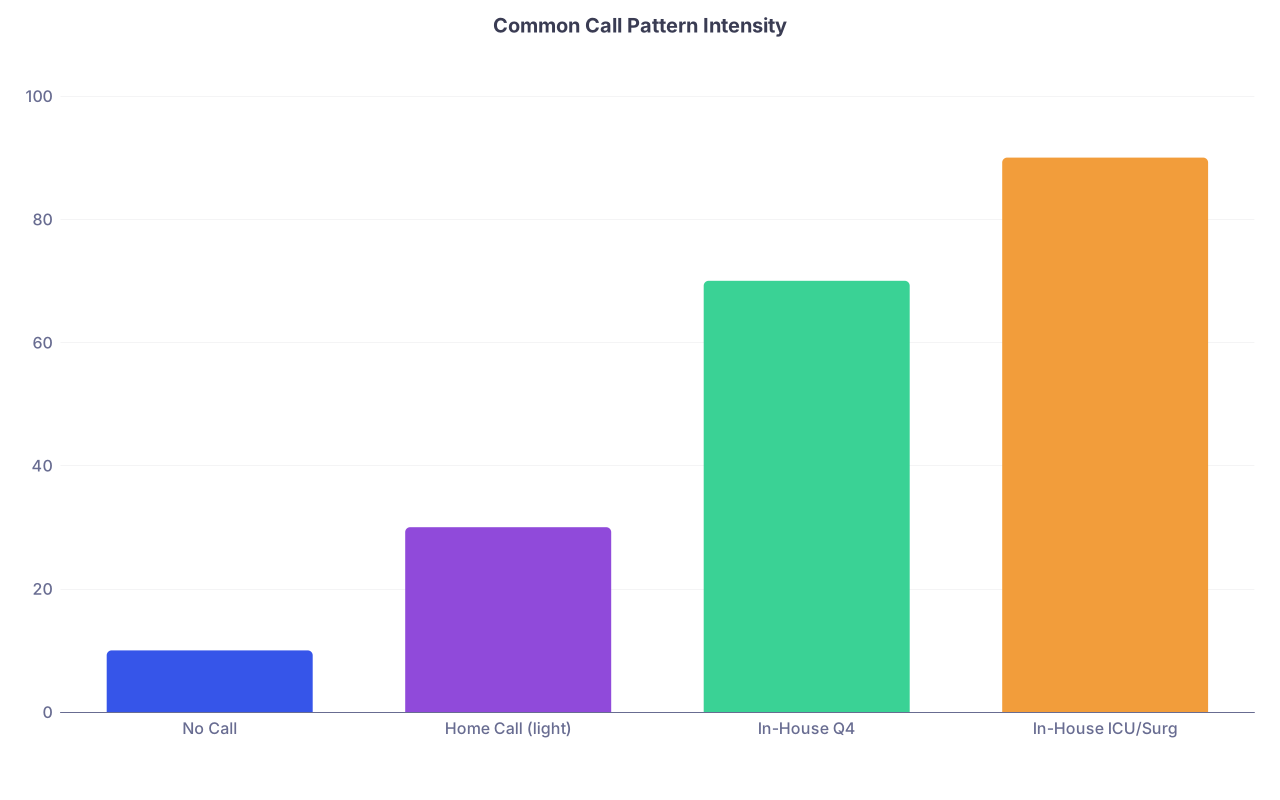
| Category | Value |
|---|---|
| No Call | 10 |
| Home Call (light) | 30 |
| In-House Q4 | 70 |
| In-House ICU/Surg | 90 |
Those numbers aren’t scientific. They’re “how brutal it usually feels” as your body experiences it.
Here’s what they look like in practice:
No call / very rare call
- Seen in: Derm, path, outpatient psych, some outpatient-focused IM or peds jobs.
- Feels like: Clinic hours, maybe a few Saturdays, occasional phone messages.
- Good for: Unpredictable flares, severe fatigue, conditions worsened by sleep disruption.
Home call (low intensity)
- Seen in: Some neurology, PM&R, psych, radiology, certain community IM.
- Feels like: You’re on the hook, but nights are usually quiet. Occasional phone calls, rare trips in.
- Watch out: If you don’t sleep well knowing you’re on call, even “quiet” call can wreck you.
Home call (high intensity / frequent callbacks)
- Seen in: OB/GYN, some surgical subspecialties, ENT, ortho, some community hospitals.
- Feels like: You might technically be home, but you get called for every consult or labor.
- Reality: Often worse than predictable in-house nights.
In-house call (q3–q7)
- Seen in: IM, peds, surgery, EM-like “night float,” ICU, some neurology.
- Feels like: Long stretches in the hospital, maybe 24 hours, maybe 16-hour nights.
- Good only if: Your body tolerates consolidated exhaustion better than repeated interruptions.
Two basic workload styles
Clinic / shift-based
- Predictable start and end times (EM, urgent care, outpatient psych, derm clinic, most office-based jobs).
- You might work evenings or nights, but you know your schedule in advance.
- Easier to pace meds, rest, meals, and PT/OT around.
Service-based
- You “own” a list of patients (inpatient IM, surgery, ICU, many subspecialty consult services).
- Hours creep. The work follows you until it’s done. Sick days are harder because someone has to cover your patients.
- Rounds do not care that your back is spasming.
When you look at a specialty, you’re really asking: what mix of these two am I signing up for — in residency, and long-term?
Step 3: How Major Specialties Actually Feel with a Chronic Illness
This is where people lie to you. “You can make any specialty work.” Technically true. But some roads are paved; others are uphill gravel.
I’ll go category by category.
1. The Typically More Sustainable Fields
Doesn’t mean “easy.” Means “more modifiable.”
Psychiatry
- Residency: Call exists but is usually less physically demanding. Nights might be 12-hour in-house or home call, depending on program.
- Post-residency: You can build 100% outpatient work with no nights or weekends. Telepsychiatry is real and growing.
Good if:
- Sleep disruption triggers your illness.
- You have mobility or stamina limits but can sit, think, and talk reliably.
Bad if:
- Your own mental health is highly unstable and you’re not ready to be immersed in others’ crises all day.
Dermatology
- Residency: Clinic-heavy, some inpatient consults, usually limited overnight call.
- Post-residency: Highly controllable schedule, procedural but not physically brutal.
Good if:
- You need daytime, predictable work.
- Fine motor is okay and you can tolerate standing part of the day.
Watch:
- Getting in is brutally competitive. Chronic illness does not disqualify you, but you have to be strategic about Step scores and research.
Pathology
- Residency: Mostly daytime, some call (frozen sections, transfusion issues) but often manageable.
- Work: Lab-based, often seated, predictable.
Good if:
- Standing and long OR days are a problem.
- Your illness flares with physical exertion rather than mental load.
Bad if:
- You need zero stress. When a transfusion reaction or intra-op frozen comes in, it is not chill.
Outpatient-heavy IM / Peds / Neurology / PM&R (AFTER training)
Here’s the catch: residency in these fields can still be rough. But post-residency, you can slice off the inpatient and night work.
I’ll come back to how to survive that transition.
2. The Middle Ground: Can Work, But You Need to Be Very Deliberate
These are fields where you can carve out a reasonable life, but the default pathway is punishing.
Internal Medicine & Pediatrics
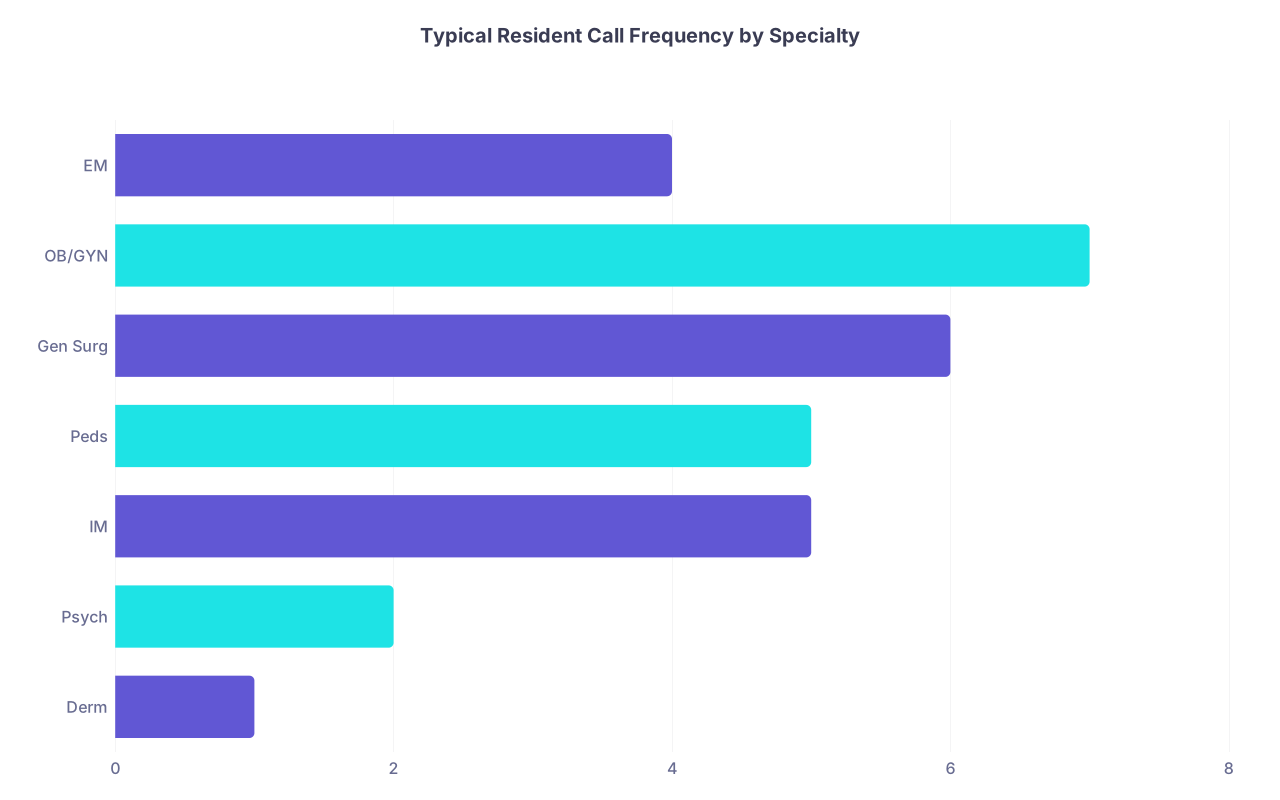
| Category | Value |
|---|---|
| Derm | 1 |
| Psych | 2 |
| IM | 5 |
| Peds | 5 |
| Gen Surg | 6 |
| OB/GYN | 7 |
| EM | 4 |
Numbers are “nights/month” ballpark for PGY-2+ at many programs. It varies wildly.
- Residency: Inpatient blocks with nights, ICU months, sometimes q4 call, sometimes night float. It’s not surgery-level, but it’s not light.
- Afterwards: You can do 100% clinic, hospitalist with shift work, or subspecialty with mostly outpatient.
Good if:
- You can tolerate a few years of intermittent brutality in exchange for long-term flexibility.
- Your disease is reasonably controlled and you recover between blocks.
Watch:
- Unpredictable flare disease (e.g., bad Crohn’s, lupus with severe fatigue) can make even “moderate” residency schedules dangerous.
How to reality-check:
- Ask: “On your busiest months, what are typical hours and how often are you post-call?” If they dodge, pay attention.
- Ask current residents privately: “If someone had a chronic illness that flares with sleep loss, would this program support them or quietly resent them?”
Neurology
- Residency: Mix of wards, consults, stroke call. Some programs have brutal stroke coverage, others are more humane.
- Later: Many outpatient-heavy jobs exist (MS clinics, epilepsy clinics, general neuro), but stroke and neuro-ICU are call-heavy.
Good if:
- You’re okay with short bursts of high-intensity call but want a thinking-heavy specialty.
Bad if:
- You can’t do rapid-response, middle-of-the-night activation type work.
PM&R
- Residency: Inpatient rehab, consults, some call but typically less intense than IM or surgery.
- Long-term: Tons of outpatient possibilities — sports, spine, pain, general rehab.
Good if:
- You want a mix of MSK/neurology and clinic.
- You can do inpatient months but need a path to more outpatient later.
3. High-Risk Fields if Your Illness Is Fragile
Can you do these with a chronic illness? Yes. I’ve seen it.
Would I recommend them to someone whose disease flares hard with sleep deprivation or physical strain? Usually not.
General Surgery and Surgical Subspecialties (ortho, ENT, vascular, etc.)

- Residency: Long days, frequent early starts, long cases standing, heavy call, trauma nights, ICU rotations.
- After: Yes, some elective subspecialties become more controlled, but the training path is the mountain.
Red flags if:
- Your disease affects circulation, wound healing, or dexterity.
- Your flares leave you barely ambulatory or cognitively foggy.
I’ve seen residents with autoimmune conditions nearly break in these fields. Some made it through with major life sacrifices. Some changed specialties. You do not get “extra points” for martyrdom.
OB/GYN
- Residency: Nights, labor and delivery is 24/7 chaos, frequent home call with returns to hospital at 2 a.m., major surgeries.
- After: You can skew toward GYN-only, minimally invasive surgery, or outpatient, but call is still often intense.
If your body hates:
- Being woken suddenly.
- Rapid transitions from deep sleep to urgent decision-making.
- Long hours on your feet.
Then OB is playing this game on hard mode.
Emergency Medicine
People think EM is good with chronic illness because it’s “shift work.” That’s only partially true.
- Residency: Nights, weekends, random shifts that flip your circadian rhythm.
- Attendings: No call. But irregular evenings, nights, and rotating schedules can wreck sleep-sensitive diseases.
EM can work if:
- Your illness tolerates weird hours as long as you’re not on call.
- You recover well on off days.
EM is brutal if:
- You flare with circadian disruption more than with pure “hours awake.”
- You need consistent medication timing and regular sleep cycles.
Step 4: How to “Test” a Specialty Against Your Illness
You’re not guessing. You’re running a stress test.
Use rotations and electives as experiments
On every rotation, track three things:
- Sleep: When are you actually sleeping, not just “off duty”?
- Symptoms: Rate them daily (0–10) in a note.
- Recovery: How long to feel baseline after a brutal shift?
Then notice patterns:
- On your surgery month: did your disease flare worse than usual?
- On your EM month with nights: did circadian flip kill you?
- On your clinic-heavy month: were you actually semi-stable?
Compare these against each specialty you’re considering. If a month in that environment nearly broke you, residency will be harder.
Ask the uncomfortable questions on interview day
You’re not asking, “Are you supportive of residents with disabilities?” They’ll all say yes.
You’re asking for data and precedent.
| Topic | Example Question |
|---|---|
| Hours | "On ICU or wards, what are realistic average hours per week?" |
| Nights | "How often are you on nights and what does a typical night look like?" |
| Sick Coverage | "How is coverage handled when a resident has to call out unexpectedly?" |
| Flexibility | "Have you had residents who needed schedule accommodations? How was that handled?" |
| Culture | "Do people actually take their post-call day, or is there pressure to stay?" |
Ask residents, not just leadership. Watch their faces. You’ll learn more from one eye-roll than a polished DEI slide.
Step 5: Using Accommodations Strategically (Without Waiting for Permission to Exist)
You do not need to announce your diagnosis during applications. But you should quietly know:
- What accommodations you’d likely need.
- Whether those are physically possible in that specialty.
Some real-world examples I’ve seen work:
- Swapping a 24-hour call for a night float system when possible.
- Limiting back-to-back 24s or ensuring at least X hours between shifts.
- Allowing a stool in clinic or OR for someone who cannot stand long.
- Protected time for infusions or specialist appointments, scheduled like any other “educational half-day.”
What is much harder to accommodate:
- “I cannot safely work past 10 p.m. ever” in a field that lives at night.
- “I may unpredictably need several days off during acute flares” in a small inpatient-heavy service with no backup.
You can fight those battles, but you’re choosing a war zone. Be honest about how many daily accommodations your body requires right now.
Step 6: Think Beyond Residency – What Does Attending Life Look Like?
Residency is not forever. You should not pick a miserable five years for a tolerable thirty, but you also should not pick a cushy three for a lifetime of being stuck.
Draw two timelines for each candidate specialty:
- Residency years: How bad will this be for my body?
- Attending years: How modifiable is this specialty into a chronic-illness-friendly job?
Some examples:
IM / Peds
Residency: moderate to heavy.
Attending: highly flexible. Clinic only, telehealth, part-time, hospitalist shift work.Psych
Residency: generally manageable.
Attending: one of the most modifiable — outpatient, tele, group practice, academics.Derm / Path
Residency: relatively humane compared to others.
Attending: extremely controllable. Harder part is getting in.Gen Surg / OB / Ortho
Residency: very hard on your body.
Attending: some control with elective practice, but nights/EMERGENT work usually remain.EM
Residency: erratic shifts; intensity moderate-to-high.
Attending: no call, but circadian chaos is baked in.
If your disease is stable and well-controlled, you may rationally accept 3–5 tough years for a long career you love. If you are barely making it through MS3, that tradeoff may be fantasy.
Step 7: If You’re Already in the Wrong Place
Maybe you’re a PGY-1 in surgery realizing your lupus cannot handle this, or an EM resident whose Crohn’s is flaring every block of nights.
You are not stuck.

| Step | Description |
|---|---|
| Step 1 | Current Residency Unsustainable |
| Step 2 | Request Accommodations |
| Step 3 | Explore Transfer |
| Step 4 | Adjust Schedule |
| Step 5 | Reassess Disease Control |
| Step 6 | Identify New Specialty |
| Step 7 | Apply for Open PGY Spots |
| Step 8 | Changeable Within Program |
What people actually do when things are breaking:
- Quietly talk to a trusted program director or associate PD.
- Get documentation from their physician explaining limitations.
- Request specific changes (fewer 24s, no trauma nights, protected clinic instead of ICU, temporary LOA).
- If that fails or is clearly not enough, look for:
- Categorical IM positions to transfer into.
- Prelim-to-categorical transitions.
- Specialty changes to something more compatible.
I’ve seen:
- A surgical resident move to anesthesia.
- An OB resident move to FM and then do women’s health.
- An EM resident move to psych.
Is it messy? Yes. Doable? Yes. Doing nothing and hoping your body magically adapts is a bad plan.
Step 8: Put It All Together – A Simple Reality Filter
You’re staring at 3–4 specialties. Use this filter. Be ruthless.
For each specialty, answer:
Call reality
- How many nights/month in residency at the kinds of programs you are competitive for, not just the best ones?
- Is call in-house, home, or “fake home” (always going in)?
Physical demands
- How many hours standing?
- Can you sit during key tasks?
- Are there long procedures?
Sleep disruption
- Nights?
- Frequent pages?
- Erratic schedule?
Long-term flexibility
- Can you build an outpatient-only practice?
- Are part-time, job-share, or telehealth roles actually common?
Score them 1–5 on each. Anything that gets 4–5 in call brutality + 4–5 in physical demand with low flexibility is, frankly, hostile terrain for a fragile chronic illness.
You’re not weak for respecting that. You’re sane.
Key Takeaways
- Do not pick a specialty based on “interest” alone if the call and workload will reliably push your disease into flare territory. Fascinating is useless if you’re too sick to practice.
- Use real data — your own symptom patterns on rotations, honest answers from residents, and concrete knowledge of call structures — to stress-test each specialty against your actual limits.
- Favor fields where residency is survivable and attending life is modifiable: psychiatry, outpatient-focused IM/peds/neurology, PM&R, derm, path, outpatient-heavy subspecialties. You can love your work without sacrificing your health on the altar of prestige or drama.