
The myth that you must pick “one true calling” in medicine and stick with it forever is outdated—and it will trap you in the wrong career.
If you’re drawn to Internal Medicine, Psychiatry, or Pediatrics but you also want teaching, consulting, startups, policy, writing, or leadership on the side, you’re not confused. You’re building a portfolio career. You just need to be deliberate about it.
This is for you if you’re thinking: “I like clinical work, but I also want to…”
…start a nonprofit, build a course, do tele-psych, work with startups, do global health, write books, run a niche clinic.
Here’s how to choose between IM, Psych, and Peds—and how to bolt on smart side paths that actually work in real life, not just in daydreams.
Step 1: Be Honest About What “Portfolio Career” Means For You
Most people say “portfolio career” and mean totally different things. You need to get specific.
Common versions I see in physicians:
Clinical anchor + 1–2 stable side roles
Example: 0.6 FTE outpatient Psych + 0.2 FTE tele-psych + 0.2 FTE teachingClinical anchor + entrepreneurial project
Example: 0.7 FTE hospitalist + consulting for a digital health startup + building a paid online course for IM residentsSeveral small roles and very little traditional clinic
Example: Locums Peds + med-legal work + podcast + guideline committee work
You need to answer three things, now, before picking a specialty:
How much clinical time do you think you want long-term?
2 days/week? 4 days? Or only 1–2 weeks/month of blocks?How much tolerance do you have for income variability?
Psych telehealth and consults can balloon or vanish. Academic salaries are more steady.How much emotional bandwidth do you have for context switching?
Going from inpatient IM to investor pitch calls the same week is not for everyone.
If you cannot articulate your rough target, you’ll pick a specialty that fights your portfolio instead of feeding it.
Step 2: What IM, Psych, and Peds Are Actually Like As Anchors
Forget the brochure fluff. You’re choosing the “base layer” of your portfolio. It needs to be:
- Flexible in schedule
- Marketable enough to give you leverage
- Tolerable in burnout terms, especially if you’re adding more roles
Here’s a blunt comparison.
| Factor | Internal Medicine | Psychiatry | Pediatrics |
|---|---|---|---|
| Schedule Flex | Medium–High | High | Medium |
| Telehealth Ready | Medium | Very High | Medium |
| Burnout Risk | High (inpatient) | Medium | Medium–High |
| Side Gig Fit | Research, admin, startups | Coaching, startups, expert content | Global health, advocacy, education |
Internal Medicine as an Anchor
Internal Medicine is the Swiss Army knife. It slots into hospitalist work, primary care, subspecialties, informatics, policy, quality improvement, startups—you name it.
Pros for portfolio:
- Easy to do part-time hospitalist work (block schedules are side-gig friendly).
- Heavy representation in leadership roles (CMO, quality, informatics).
- Versatile expertise—almost every health-tech startup wants an IM or EM perspective.
Cons:
- Inpatient IM can obliterate your energy. A 7-on/7-off hospitalist job sounds portfolio-friendly, but those 7 days may leave you too fried to build anything serious on your “off” week.
- Outpatient IM often has bad admin burden (prior auths, inbox chaos) unless you negotiate hard or pick concierge/Direct Primary Care (DPC).
Who should pick IM as the anchor?
You, if you like complexity, systems, and adults—and you’re interested in policy, QI, administration, or health-tech as side paths.
Psychiatry as an Anchor
Psych is the current king of portfolio-friendly specialties. Talk-based, telehealth-compatible, and highly needed.
Pros:
- Telehealth means geography barely matters.
- Easy to scale up/down your FTE by adjusting panel size or sessions.
- High-value niche areas (perinatal psych, pain + psych, ADHD, C-L psych) pair well with media, content, and consulting.
Cons:
- Emotional load is real, especially in public or inpatient settings.
- Documentation and liability can be heavy, particularly around risk and controlled substances.
- Some side paths (coaching, content, “psychedelics expert”) are legally and ethically tricky if you’re not disciplined.
Psych is incredible if you want high leverage with fewer physical hours in a clinic.
Pediatrics as an Anchor
Peds is beloved and punishing at the same time.
Pros:
- Immense need in advocacy, policy, global health, and public health.
- Natural fit for parent-facing content, school systems, community programs.
- Subspecialties like developmental-behavioral peds or adolescent medicine can pair nicely with writing, speaking, or digital content.
Cons:
- Lower pay relative to work and complexity.
- Parents can be demanding; emotional fatigue is a thing.
- Harder to go low-clinical FTE and still hit financial targets, unless you pair it with well-compensated side roles (hospital administration, med-legal, or solid online businesses).
Peds works best if you truly love working with kids/families and you see yourself heavily in advocacy, community work, or large-scale systems change.
Step 3: Specific Side Paths That Pair Well With Each Specialty
Now let’s get out of theory and into “what does your week look like in 10 years?”
Internal Medicine + Side Paths
Classic combinations I’ve seen work:
IM + Hospitalist + Admin
Example final setup:- 0.5 FTE hospitalist (10–12 shifts/month)
- 0.3 FTE Medical Director/Quality role
- 0.2 FTE teaching / residency leadership
IM + Outpatient + Startup/Consulting
- 3 days/week clinic (or concierge practice)
- 1 day/week for consulting with digital health companies, payer advisory panels, or pharma
- Occasional speaking/writing
IM + Informatics / Data
- 0.6 FTE clinical (hospitalist or clinic)
- 0.4 FTE clinical informatics, EHR optimization, or data science
Usually requires a fellowship or at least a strong project history.
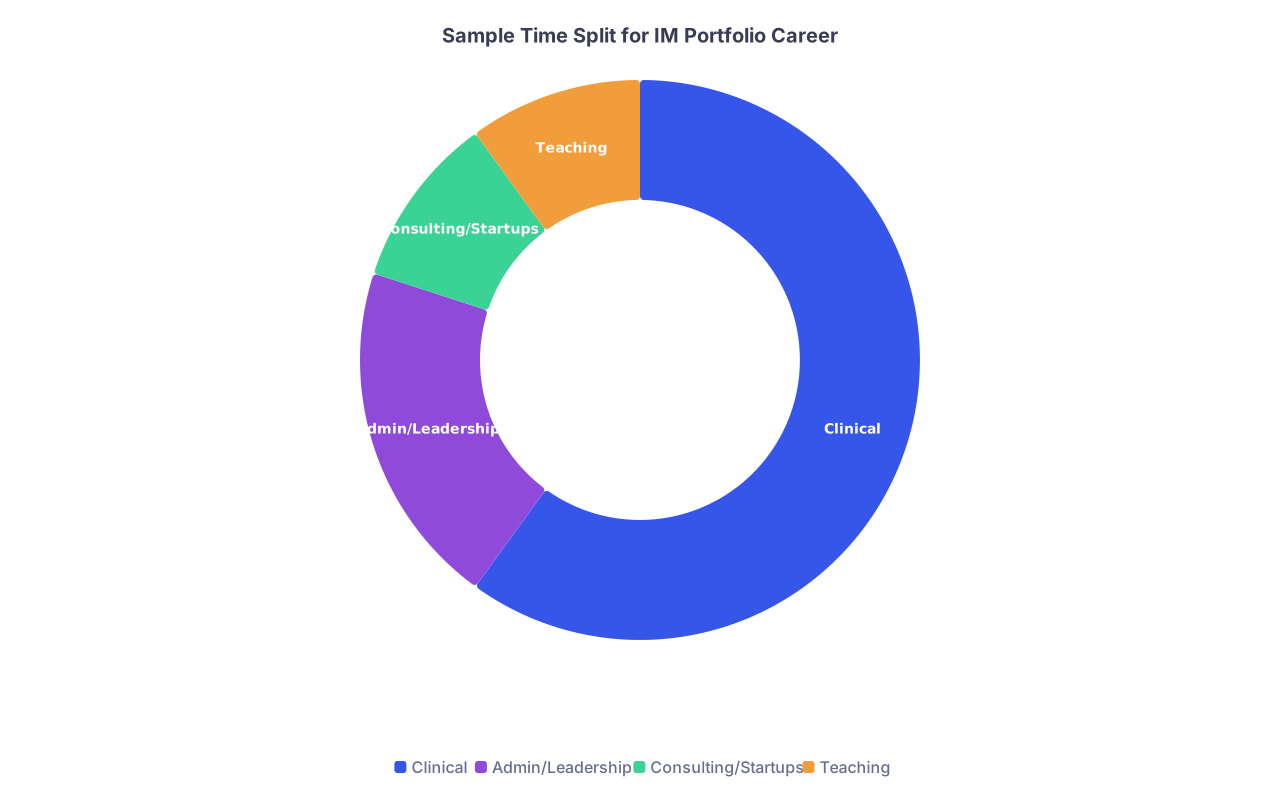
| Category | Value |
|---|---|
| Clinical | 60 |
| Admin/Leadership | 20 |
| Consulting/Startups | 10 |
| Teaching | 10 |
If you’re in med school or early residency and thinking this way:
- Choose an IM program with strong QI, informatics, or leadership tracks (e.g., big academic centers, VA-associated programs).
- Get on at least one big, visible project: readmissions committee, sepsis pathway, EHR rollout. That’s your future admin/consulting leverage.
- Avoid programs where residents are just service workhorses and not in rooms where decisions are made.
Psychiatry + Side Paths
Psych gives you some of the cleanest portfolio structures.
Common setups:
Psych + Telehealth + Niche Clinic
- 2 days/week local in-person clinic
- 1–2 days/week tele-psych (could be from home)
- A niche service: women’s mental health, ADHD in professionals, trauma-focused work
Psych + Coaching / Content
Be careful with the clinical vs coaching boundary, but this can work:- 0.5 FTE clinical (often telehealth)
- 0.2 FTE group programs or coaching in a non-clinical context (e.g., performance, burnout prevention)
- 0.3 FTE writing, podcasting, courses, or speaking
Psych + Academic + Consulting
- University appointment with 2–3 half-days clinic
- Time protected for research or education
- Paid consults for tech companies, legal cases, pharma advisory boards

To set this up early:
- Choose a residency with strong outpatient and subspecialty exposure: C-L, addiction, child/adolescent, perinatal.
- Build writing/communications skills now: short articles, blog posts, or Grand Rounds that people remember.
- Learn the non-clinical worlds: coaching regulations, social media boundaries, contracting with telehealth companies.
Psych can give you a 2–3 day clinical week and leave real oxygen for your other projects if you’re ruthless about boundaries.
Pediatrics + Side Paths
Peds portfolios lean toward community, advocacy, and education.
Viable combinations:
Peds + Academic + Advocacy
- 0.6–0.7 FTE clinical in an academic center
- 0.3–0.4 FTE split between teaching, curriculum work, and advocacy projects (AAP committees, school health collaborations)
Peds + Public Health / Policy
- 0.5 FTE clinic (community or FQHC)
- 0.5 FTE public health department, NGO, or global health institution work
Often easier with an MPH, but not mandatory if you build the right experience.
Peds + Parent-Facing Media and Products
- 3 days/week outpatient peds
- 1–2 days/week building scalable parent education: online courses, books, membership communities
- Occasional brand partnerships if you want, but keep ethics front and center.
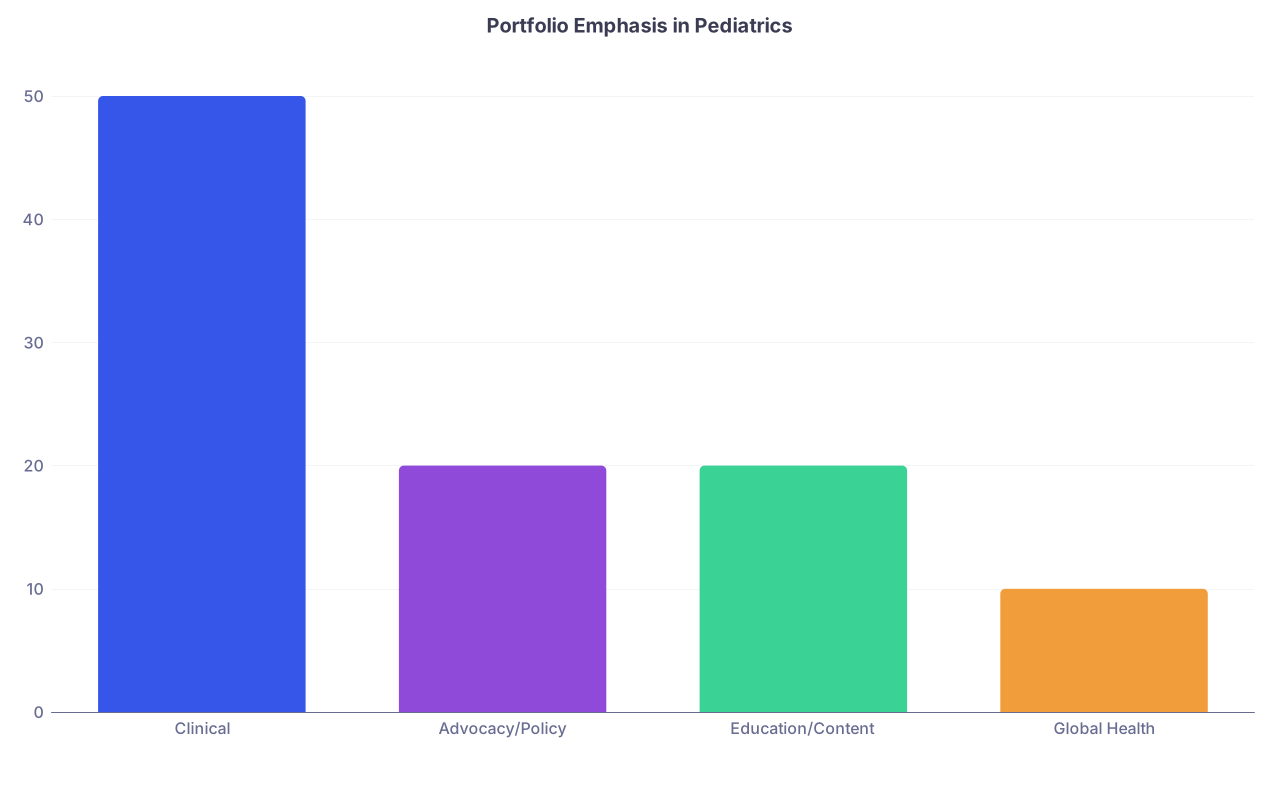
| Category | Value |
|---|---|
| Clinical | 50 |
| Advocacy/Policy | 20 |
| Education/Content | 20 |
| Global Health | 10 |
Early moves that pay off:
- Pick a residency with strong community or global health tracks, school-based clinics, or policy exposure.
- Say yes to one or two real advocacy projects (e.g., improving vaccination rates, childhood obesity program), not ten tiny committees.
- Learn to speak to laypeople—parents, teachers, community leaders—not just other physicians.
Step 4: How Much Training Do You Actually Need?
You’re tempted to stack fellowships. “I’ll do IM, then cards, maybe critical care, plus an MPH.” Careful. That can kill your portfolio flexibility.
The honest truth:
- More letters after your name help mainly in traditional systems (academia, hospital leadership).
- For content, startups, coaching, or entrepreneurship, people care more about clarity, credibility, and results than about whether you did a 3rd fellowship.
A quick framework:
If you want: Chief Medical Officer, hospital VP, or big-name academic chair
IM is your best anchor; consider a fellowship in something aligned (cards, pulm/crit, ID) plus maybe extra training in leadership or informatics.If you want: Online business, broad telehealth practice, content empire
Psych is the best anchor. Extra fellowship only if you love the niche (child, addiction). Not mandatory for portfolio success.If you want: Policy, global child health, UNICEF/WHO type work
Peds + possibly an MPH or global health fellowship can open doors. But again—solid, visible projects matter more than degrees.
Do not train endlessly as a way to avoid starting your portfolio.
Step 5: Protecting Your Future Flexibility During Residency
Here’s what actually matters during residency if you’re “portfolio-minded”:
Build a story, not a random CV.
If you want IM + health-tech later, do:- QI projects, EHR optimization, digital tools
- A poster or publication in that space
Not just “random case reports.”
Cultivate mentors who don’t live a 100% clinical life.
Find the attending who does admin, runs a side business, leads a nonprofit, or chairs a committee. Watch how they structure their time and contracts.Learn basic business skills.
Billing, coding, RVUs, negotiating FTE, non-competes, independent contractor vs employed. This is not optional if you want a portfolio career.Leave residency with at least one “non-clinical asset”:
- A small but real email list or audience
- A couple of speaking experiences
- A track record of leading a project that actually shipped something

| Step | Description |
|---|---|
| Step 1 | Choose Anchor Specialty |
| Step 2 | Pick Residency With Flexibility |
| Step 3 | Join Strategic Projects |
| Step 4 | Find Portfolio Mentors |
| Step 5 | Build One Nonclinical Asset |
| Step 6 | Negotiate First Job For Time Flexibility |
Step 6: Choosing Between IM, Psych, and Peds—Scenario-Based
You’re probably somewhere like one of these:
Scenario 1: “I Like Adults, Complexity, and Systems. I Also Want Leadership or Startup Work.”
Pick: Internal Medicine.
Side paths to prioritize:
- Hospital QI committees
- Clinical informatics electives
- Rotations where you see leadership in action (CMO, chiefs, etc.)
Your eventual portfolio might be:
- 0.5–0.6 FTE hospitalist or PCP
- 0.2–0.3 FTE admin/leadership
- 0.1–0.2 FTE speaking/consulting or startup advising
Scenario 2: “I Want Maximum Geographic and Schedule Flexibility, With a Strong Online/Tele Option.”
Pick: Psychiatry.
Side paths:
- Outpatient-heavy residency programs with strong tele-psych experience
- Writing, communications, or content creation
- Training in specific modalities (CBT, DBT, trauma) that are portable
Future portfolio:
- 2–3 days/week tele-psych
- Group programs or coaching
- Podcast, writing, course, or consulting in mental health-adjacent areas
Scenario 3: “I Love Kids, Advocacy, and Big-Scale Change More Than High Income.”
Pick: Pediatrics.
Side paths:
- Community peds, global health, or advocacy tracks
- Projects with schools, public health departments, NGOs
- Possibly an MPH, but only if it aligns with real projects
Future portfolio:
- 3 days/week clinic or hospitalist peds
- 1–2 days/week advocacy, policy, education, or NGO work
- Speaking/writing aimed at parents, teachers, or policymakers

Scenario 4: “I Have No Idea Which Population I Love, But I Know I Want Multiple Roles.”
Then your decision should be driven by:
- Which patient population drains you the least: adults with complex disease, kids/families, or primarily mental health/behavior?
- Which set of side paths excites you more when you picture doing it every week, not just as a fantasy?
If you’re equally drawn to several, default to Psych or IM. They give you the widest set of portfolio options with decent income for fewer clinical hours.
Step 7: Tactical First-Job Choices That Set Up a Portfolio Career
Your first attending job is where many people accidentally kill their portfolio dreams.
Avoid these mistakes:
Signing a full 1.0 FTE with no protected time “just for the first few years.”
Those “few years” become a decade.Taking a job with a strict non-compete that blocks telehealth, consulting, or any side practice in your region.
Choosing a setting with constant crisis mode (overstretched inpatient IM or Peds in a chronically understaffed hospital) when you already know you want multiple lanes.
Instead, aim for:
- 0.6–0.8 FTE with written permission for certain side activities.
- A job where at least one senior doc is doing something portfolio-ish already.
- A clear path to adjust FTE down once side roles grow.

Quick Reality Check: Money, Burnout, and Boundaries
A portfolio career is not free magic.
- IM: Highest risk of burnout from workload, best for leadership and systems roles, good income even part-time if you choose wisely.
- Psych: Strongest flexibility/income/effort ratio right now, but emotional boundaries are critical.
- Peds: Most heart, often least money per unit effort, but tremendous meaning and public impact if you play it right.
Whatever you choose, you need:
- Clear rules about when you’re “off” from each role.
- A financial plan: emergency fund, malpractice considerations, retirement when you’re W-2 in one role and 1099 in another.
- The willingness to kill side projects that don’t earn their keep in money, meaning, or long-term positioning.
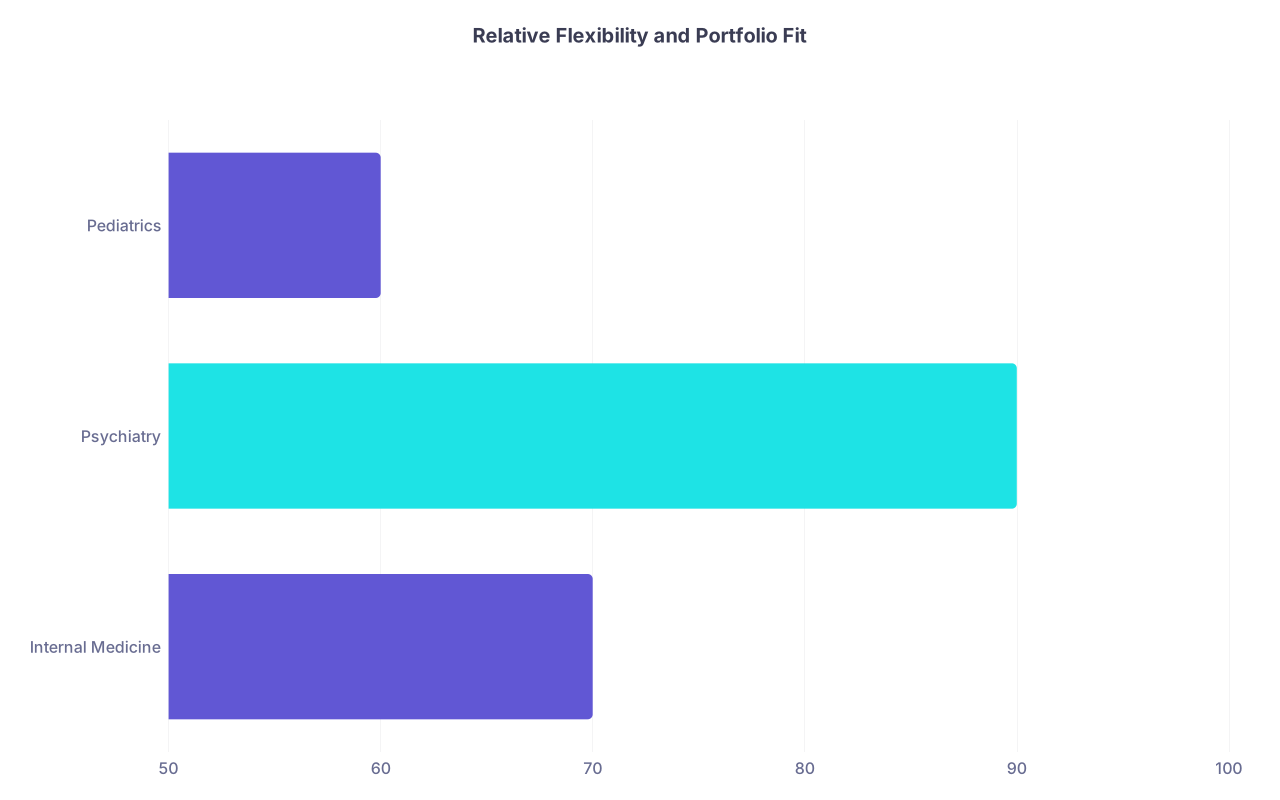
| Category | Value |
|---|---|
| Internal Medicine | 70 |
| Psychiatry | 90 |
| Pediatrics | 60 |
FAQ (Exactly 4 Questions)
1. Should I do a combined residency (like Med-Peds or Psych-IM) for a portfolio career?
Usually no, unless you have a very specific reason. Combined residencies are longer and can dilute your identity in the market. Most portfolio careers are built on being really good and clearly identifiable in one area, then adding roles. Med-Peds can work if you truly want adult and pediatric populations (e.g., complex care, transitional care), but don’t choose it just because you “like variety.” Variety is what the portfolio gives you later, not what your core training has to provide.
2. Is it realistic to have a portfolio career straight out of residency?
A small one, yes. A full, balanced one, usually not. Early on, you need reps, confidence, and credibility in your anchor specialty. The pattern that actually works: 0.8–1.0 FTE clinical in the first 1–2 years with one small side lane (e.g., teaching, small online project, or modest consulting). As your skills and reputation grow, you intentionally dial down clinical and increase the other lanes. Jumping immediately into five different roles as a brand-new attending is how people end up exhausted and mediocre at all of them.
3. How much debt is “too much” for choosing Peds or Psych as a lower-paying anchor?
There’s no magic number, but if your total educational debt is well into the high six figures and you want to live in an expensive city, you’ll need to be very intentional. In that situation, Psych gives you better earning potential and flexibility than Peds. Peds is still possible, but you’ll want: loan repayment programs (NHSC, PSLF), possibly academic or government roles, and maybe a monetizable side path (courses, speaking, consulting). Don’t pick a specialty you hate for money, but don’t ignore the math either.
4. What if I end up loving my specialty so much I don’t want side paths anymore?
Then you win. A portfolio career is about optionality, not obligation. The point of thinking this way early is to avoid getting trapped. If you fall in love with being a full-time inpatient IM doc or a 4-day/week outpatient child psychiatrist and drop the rest, that’s fine. The same skills you built—project selection, boundary-setting, basic business literacy—will still help you have a more sustainable, interesting clinical career.
Key points:
Pick your anchor specialty based on the kind of life and side paths you want, not just the patient population. Build credibility and one non-clinical “asset” during residency so you have options. Then design your first job to leave just enough space for other roles to grow, instead of stuffing them into the margins of an already maxed-out schedule.