
Educational disclaimer: This article is for general educational purposes only and is not legal, financial, tax, or professional application advice. Match decisions, contract terms, and the financial implications of away rotations or paid clinical experiences vary; consult qualified advisors, mentors, or professionals before making high-stakes decisions.
Opening Scenario: The “I’ll Fix It With Rotations” Trap
I’ve seen this exact mess more times than I can count.
An IMG gets a Step 2 CK score that lands with a thud. Not a catastrophic failure, maybe, but weak enough to make the application feel fragile. Then the panic starts. Suddenly every conversation sounds the same: “It’s okay. I’ll do a few US rotations, get strong letters, and that’ll make up for it.”
That belief is comforting. It’s also dangerous.
Here’s the applicant I’m talking about: decent school record, maybe a gap or two, maybe average research, maybe no glaring disaster except the score. Interview season starts creeping closer, and instead of asking, “How do I build a credible recovery plan?” the applicant asks, “Which rotation can erase this?”
That’s the trap.
US rotations are not score bleach. They do not scrub a weak academic metric out of your file. They don’t make program directors forget numbers they already don’t like. And they definitely don’t transform a borderline application into a strong one just because you collected a hospital badge in the US.
The core mistake is simple: treating rotations like a replacement for a score instead of what they actually are—a limited but useful credibility signal.
Useful? Yes.
Powerful enough to rewrite your whole application story? No.
If your Step 2 CK is weak, rotations can help prove you’re functional, coachable, professional, and safe in a US clinical setting. That matters. But don’t make the amateur mistake of expecting them to act like a substitute for academic competitiveness. Program directors may not say that out loud, but they absolutely act on it.
What PDs Actually Use US Rotations For
Let’s strip away the fantasy.
Program directors use US rotations to answer a narrow set of questions:
- Can you communicate clearly with patients and teams?
- Do you understand workflow in a US hospital or clinic?
- Are you punctual, professional, teachable, and stable under pressure?
- Can residents and attendings work with you without friction?
- Do you look like someone who could function on day one without creating chaos?
That’s what a rotation can show. And that’s not nothing. For IMGs, it’s often one of the few ways to produce recent US-based evidence that you can actually operate in the environment you’re applying to join.
But here’s what rotations do not show:
- They do not erase a weak Step 2 CK.
- They do not undo a pattern of poor exam performance.
- They do not fully replace academic metrics.
- They do not rescue a file that is weak in multiple areas.
This is where applicants get fooled by politeness. A program director may praise your letter, compliment your rotation, or say your US experience is “valuable.” True. All true. But valuable and decisive are not the same thing.
And don’t overrate one glowing letter. This is a common self-inflicted wound.
A single attending saying, “This student performed at the level of an intern” sounds great. Everyone loves that line. But if the rest of the file shows weak scores, inconsistent training, vague personal statements, or a scattered specialty story, that one letter usually becomes a nice accessory—not a rescue device.
Patterns beat isolated highlights.
That’s how PDs think. Quietly, efficiently, sometimes ruthlessly. They’re not asking whether one rotation was impressive. They’re asking whether the whole file hangs together and whether the risk feels acceptable.
The Mistakes IMGs Make When Using Rotations to Compensate for Weak Scores
Most applicants don’t fail here because they did rotations. They fail because they used rotations badly.
1. Expecting the rotation to “cancel out” the score
This is the biggest mistake. And it poisons every decision after it.
If you believe the rotation’s job is to neutralize the score, you start shopping for magic instead of evidence. You stop thinking strategically and start thinking emotionally. Prestige, famous hospitals, flashy names. Bad plan.
A rotation should strengthen your file, not perform CPR on it.
2. Choosing rotations for prestige instead of utility
I’ve watched applicants chase a famous institution where they had little chance of meaningful teaching, limited attending contact, and zero chance of a detailed letter. Why? Because they thought the brand name would do the talking.
It won’t.
A less glamorous rotation in your actual target specialty, with regular attending interaction and a real chance to earn a personalized letter, is often far more valuable than a famous place where nobody remembers your name by week two.
Pick for:
- specialty relevance
- letter quality
- mentorship access
- chances to be observed closely
- realistic fit with your application goals
Not ego. Not Instagram. Not dinner-table bragging rights.
3. Showing up underprepared
This one is brutal because it creates a new red flag.
Some IMGs act as if getting the rotation is the win. It isn’t. Performing well is the win. If you arrive weak on presentations, awkward with note structure, unfamiliar with common abbreviations, passive on rounds, or unable to adapt to feedback, you haven’t helped yourself. You’ve given people fresh evidence that your file’s weakness may be real.
Presence alone is not performance.
4. Filling the narrative with excuses
A weak Step 2 CK already raises questions. Don’t make it worse by writing an application that sounds defensive, chaotic, or self-pitying.
Bad narrative:
- long explanations
- blame shifting
- “I’m actually a great test taker”
- vague promises
Better narrative:
- brief ownership
- clear improvement
- strong recent clinical performance
- consistency across CV, letters, and personal statement
Program directors don’t need your courtroom defense. They need reasons to trust your trajectory.
What Strong US Rotations Can Do If You Use Them Correctly
Now the part people miss: rotations are still worth doing. Just don’t misuse them.
A strong US rotation can add three things that matter:
Recent US clinical evidence
It shows that your skills aren’t theoretical or outdated. You’ve been observed in a real environment.Detailed specialty-specific letters of recommendation
Not generic “pleasant to work with” fluff. Real letters describing how you presented patients, handled feedback, communicated with staff, and functioned in clinic or on service.Proof of professionalism under pressure
This matters more than applicants realize. A weak score makes programs cautious. Strong rotation performance can lower the perceived risk by showing maturity, discipline, and consistency.
But here’s the key: you must convert the rotation into usable assets.
That means:
- asking for letters while your performance is fresh
- giving attendings your CV and personal statement
- documenting what you actually did
- making sure the specialty fits your larger story
- following up professionally, not desperately
A good rotation that produces no strong letter, no clear narrative value, and no remembered performance is wasted effort. Harsh, but true.
Rotations help most when they sit inside a broader recovery strategy. That strategy may include:
- improved later exam performance
- a realistic specialty choice
- stronger interview preparation
- honest assessment of competitiveness
- targeted applications rather than blind mass applying
How to Avoid Getting Burned: A Safer Strategy for IMGs
Here’s the safer way to think. And yes, safer matters. Too many applicants burn time, money, and one full match cycle because nobody gave them blunt advice early enough.
Step 1: Shore up the actual weakness first
If your Step 2 CK is weak, acknowledge the damage honestly. Don’t bury it under “USCE will save me” thinking.
Ask:
- Is this a one-off low score or part of a pattern?
- Do I have other strong academic signals?
- Is my specialty target still realistic?
- Do I need a broader recovery plan before applying?
If exam weakness is recurrent, rotations are not your first fix. They’re your second or third move.
Step 2: Use rotations to reinforce, not rescue
This is the mindset shift that protects you.
Go into the rotation with a specific purpose:
- gain specialty-relevant USCE
- earn a credible letter
- show consistency and professionalism
- strengthen your application story
Not “erase my score.” That goal sets you up for disappointment and sloppy choices.
Step 3: Choose rotations strategically
Don’t just ask, “Where can I rotate?”
Ask:
- Will I be directly observed?
- Is this in the specialty I’m applying to?
- Can I realistically earn a detailed letter here?
- Is there mentorship potential?
- Will this experience make my application more coherent?
A strategic rotation beats a famous but useless one every time.
Step 4: Treat the rotation like an audition, because it is
This should be obvious, but apparently it isn’t.
Before day one:
- know common patient presentations
- practice concise oral presentations
- understand basic note structure
- review specialty-specific terminology
- prepare to ask smart questions without performing fake confidence
A mediocre score plus mediocre rotation performance is a bad combination. Don’t hand programs a second reason to doubt you.
Step 5: Tighten the application story
If your file says one thing, your letters another, and your personal statement something else entirely, you look unstable.
Your story should be simple:
- here’s the specialty I’m pursuing
- here’s the evidence I can function in it
- here’s how I’ve improved
- here’s why my recent performance is more representative than one weak metric
Simple stories are credible stories.
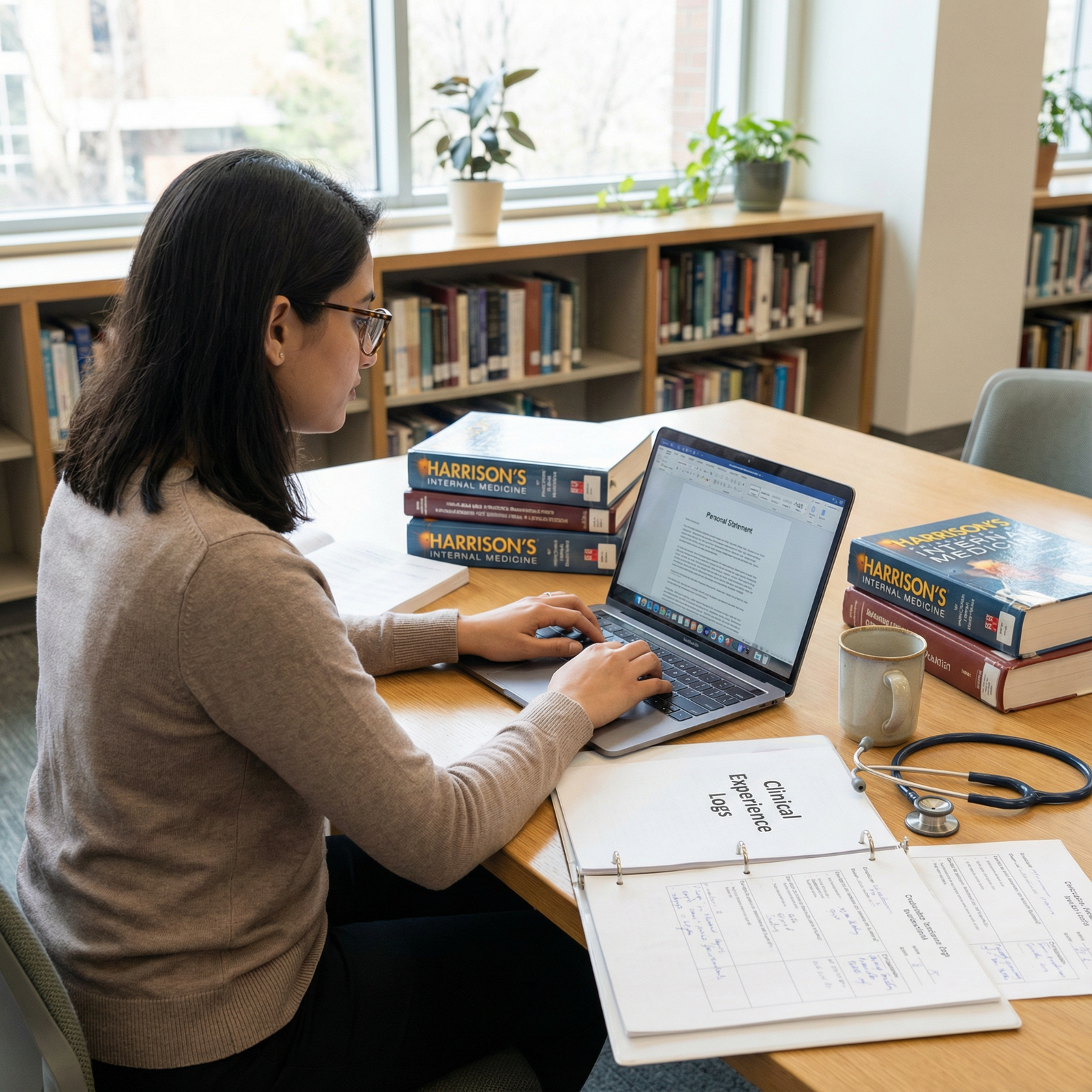
Red flags that mean your plan is too risky
Don’t ignore these.
- You have repeated weak exam performance and no convincing improvement.
- You’re relying on one letter to carry the whole application.
- Your rotations are unrelated to your target specialty.
- You can’t explain your path without a long defensive speech.
- You’re applying wildly across specialties with no clear proof of readiness.
- You’re spending heavily on rotations while neglecting more urgent fixes.
- You still haven’t gotten honest feedback from people who know the match.
That last one matters. A lot. I’ve seen applicants sink thousands into extra rotations because friends told them, “You’ll be fine.” Friends are often kind. Kindness is not strategy.
Get blunt feedback. From mentors who will actually tell you when the plan is weak.
Bottom Line: Use Rotations to Strengthen the File, Not Rewrite the Story
US rotations can help you. Absolutely.
But don’t make the classic mistake: treating them like a magic eraser for a weak Step 2 CK. They are supportive evidence. Nothing more. Nothing less.
The safest mindset is this: every part of your application should tell the same story. Competence. Growth. Specialty fit. Professionalism. Recent proof. When those pieces line up, rotations become useful. When they’re asked to carry the whole file, they usually fail.
So do this before you book another rotation or chase another letter: audit your application honestly.
Ask yourself:
- What are my actual weaknesses?
- What can a rotation truly improve?
- What still needs to be fixed somewhere else?
- Does my file look consistent, or does it look like I’m hoping one experience will save me?
Don’t guess. Don’t romanticize. Don’t spend your way into denial.
Use rotations to strengthen the file. Not rewrite the story.