
Are you relying on a two-week shadowing stint in an outpatient clinic to carry your application into a Dermatology, Orthopedic Surgery, or Plastic Surgery interview?
If so, you're setting yourself up for a brutal reality check on Match Day.
I see this mistake every single cycle. International Medical Graduates (IMGs) burn thousands of dollars buying "observership packages" through third-party agencies, assuming that any US hospital stamp on their ERAS application levels the playing field. It doesn't. Program directors in competitive specialties see straight through it.
If you want to match into fields where American graduates with 260+ Step scores routinely get rejected, you need to understand how selection committees actually evaluate US Clinical Experience (USCE). Let's look at what the raw data tells us, and how you should structure your clinical strategy based on your target field.
This article is for educational purposes only. It is not financial advice, not legal advice, and not tax advice. Figures vary by individual circumstances, so consult a qualified professional before acting.
The Hard Truth: What the Numbers Actually Say
Let's clear up the definitions first, because program directors distinguish between these two categories instantly:
- Observership (Passive Experience): You stand in the back of the room. You watch. You do not touch patients, you do not write notes in the EMR, you do not present cases on rounds, and you hold zero clinical responsibility. Legally, you are a visitor with a badge.
- Hands-On USCE (Active Experience): You perform histories and physicals, write progress notes, formulate assessment and plan options, present directly to attendings, and scrub into surgeries or assist in bedside procedures under supervision.
When you look at National Resident Matching Program (NRMP) data alongside program director survey results, the difference in return on investment between these two formats isn't a minor gap, it's a canyon.
In ultra-competitive fields like Dermatology or Plastic Surgery, an observership barely moves your match probability above the baseline for IMGs with zero US experience. Why? Because program directors in surgical and procedural fields are risk-averse. They don't care if you know how to watch an operation. They need to know if you can handle a scalpel, manage a floor crisis at 2:00 AM, and write an accurate discharge summary without supervision.
The Misconception of the "US Letter"
An LOR from a two-week observership usually reads like this: "Dr. Candidate shadowed me in my clinic. They were punctual, well-dressed, and demonstrated great enthusiasm for our specialty."
That is a kiss of death. It tells the selection committee absolutely nothing about your clinical capability. Compare that to a hands-on Sub-Internship LOR: "Dr. Candidate carried a workload of 5 complex inpatients daily, wrote flawless notes, correctly identified a rare post-operative complication before the senior resident, and demonstrated surgical technique on par with our current PGY-1s."
That second letter gets you an interview. The first one gets archived in the rejection pile.
Understanding Relative Value
Think of clinical experience as currency to offset your inherent profile risks:
- Low Step 2 CK (< 235): Requires at least 12-16 weeks of hands-on USCE with glowing sub-I style LORs to prove clinical competence outweighs exam performance.
- Older Year of Graduation (YOG > 5): Observerships are completely useless here. You must show recent, active hands-on clinical work to prove your skills haven't atrophied.
- Non-Tier-1 International School: Hands-on experience in a recognized US academic health center neutralizes doubts about the rigor of your undergraduate medical education.
Scenario A: You're Applying to the Ultra-Competitive (Derm, Plastics, ENT, Ortho)
If you're targeting these specialties as an IMG, you're competing for a slice of a pie where less than 3% to 5% of matched applicants are non-US graduates.
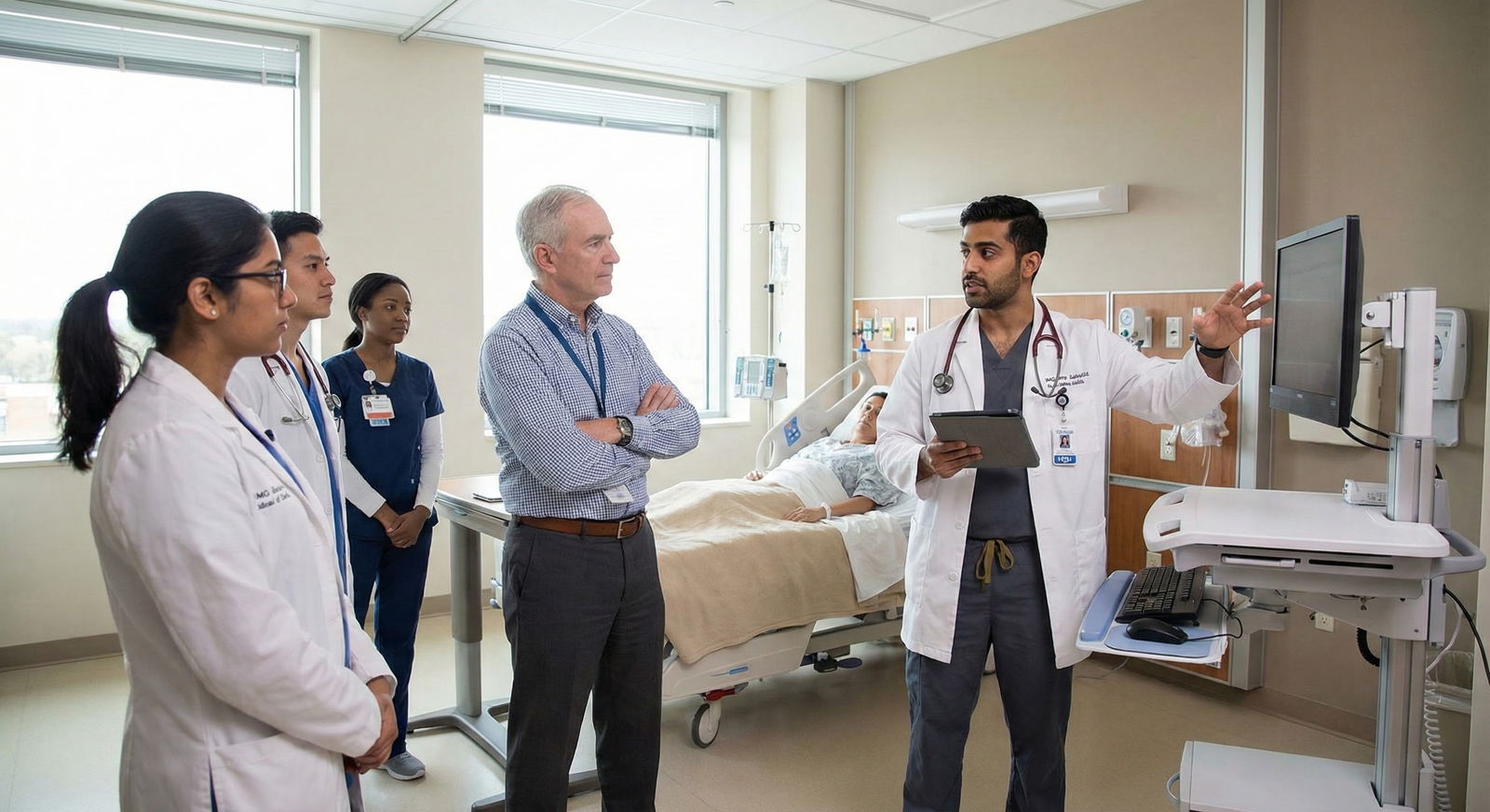
Here is the reality for Scenario A: Do not waste a single day or dollar on an observership.
Why Hands-On is Non-Negotiable Here
In surgical and procedural subspecialties, trust is the primary currency. A program director is taking a massive institutional risk by ranking an IMG. If you land in a surgical residency and can't perform basic knot-tying, instrument handling, or patient workups, the whole team suffers.
An observership letter cannot vouch for your technical skills or clinical judgment. Only hands-on experience, specifically sub-internships, externships, or clinical research fellowships with active clinical touchpoints, provides attendings with the standing to write: "I have personally evaluated this candidate's clinical work and would welcome them into my own residency program."
The Recency Factor
Timing matters just as much as setting. Hands-on experience completed three years ago loses its punch. For ultra-competitive fields:
- Your hands-on rotations must occur within the 12 months leading up to application submission.
- If you're applying in September 2025, your prime USCE window is September 2024 through August 2025.
- Older clinical rotations signal to committees that you haven't maintained active clinical practice.
The Hierarchy of Experience for Scenario A
When securing spots, target these tiers in order:
- Formal Electives / Sub-Internships at Academic Medical Centers (If still a medical student).
- Hands-On Externships at Residency-Affiliated Teaching Hospitals (If already graduated).
- Dedicated Clinical Research Fellowships that include observational or clinical assistant privileges under a high-profile Department Chair.
- Private Practice Externships with high surgical volume.
- Avoid: Pure outpatient observerships without clinical access.
Scenario B: The 'Middle Ground' (Internal Medicine, Pediatrics, Family Med)
Let's shift gears. What if you're applying to fields with higher IMG capacity, like Internal Medicine (IM), Pediatrics, or Family Medicine (FM)?
Here, the dynamic changes. Thousands of IMGs match into Internal Medicine every year with a mix of observerships and hands-on clinical experience. But don't let that fool you into thinking observerships are ideal.
When Do Observerships Work in the Middle Ground?
Observerships can work in IM, Pediatrics, or FM only if they are backed by an otherwise stellar application:
- Step 2 CK score > 255.
- Recent Year of Graduation (YOG < 2 years).
- First-author publications or strong home-country clinical training.
If your Step 2 CK score is mediocre (e.g., 230-240), relying solely on observerships in Internal Medicine is a high-risk gamble. The program director reading your file will see a average score and no direct proof that you can handle the pace of an American hospital ward. You will get passed over for candidates who proved they can write US-style SOAP notes and navigate EMR systems.
Longitudinal Depth vs. Disjointed Breadth
Here is a common trap: Applicants list six different 1-week observerships across six cities, thinking it looks impressive.
It doesn't. It looks like you paid for a tour of US outpatient clinics.
Selection committees prefer depth over duration fragmentation. One month of continuous, rigorous hands-on clinical experience in a single hospital ward generates far more trust than four separate 1-week observerships in private clinics. Long rotations give an attending enough exposure to your work ethic to write a detailed, paragraph-rich letter of recommendation rather than a boilerplate template.
Your Playbook: Structuring Your Clinical Experience Strategy
Stop guessing where to spend your energy. Use this decision pathway to figure out your exact requirements before spending a dime on application fees or rotation services.
Practical Tactics to Secure Hands-On Spots
The hardest part for graduates (non-students) is finding legal hands-on positions, because liability insurance and hospital rules lock non-enrolled graduates out of academic sub-internships.
Here's how to navigate that barrier:
- Target ACGME-Affiliated Community Hospitals: Academic medical centers often have strict "no-graduate patient contact" policies due to university legal frameworks. Community hospitals running ACGME-accredited residency programs are far more flexible. Contact department coordinators directly.
- Leverage Alumni Networks: Find graduates from your medical school currently doing residency in the US. Ask if their attending physicians take clinical externs in their affiliated private offices or hospital services.
- Verify Malpractice Coverage: If an agency promises "hands-on" experience for a graduate, demand proof of clinical malpractice coverage in writing before paying. Real hands-on work requires malpractice coverage that explicitely permits patient interaction.
Timeline Management
Arranging high-quality hands-on rotations takes 6 to 9 months.
If you plan to apply in ERAS in September:
- Jan, Mar: Finalize rotation sites, clear health requirements, secure malpractice insurance, and process visas.
- Apr, Jul: Complete clinical rotations.
- Aug: Follow up with attending physicians to ensure LORs are written, signed, and uploaded to ERAS before the September deadline.
Avoiding the Common Traps That Kill Applications
Even strong candidates blow their chances by falling into predictable execution traps.
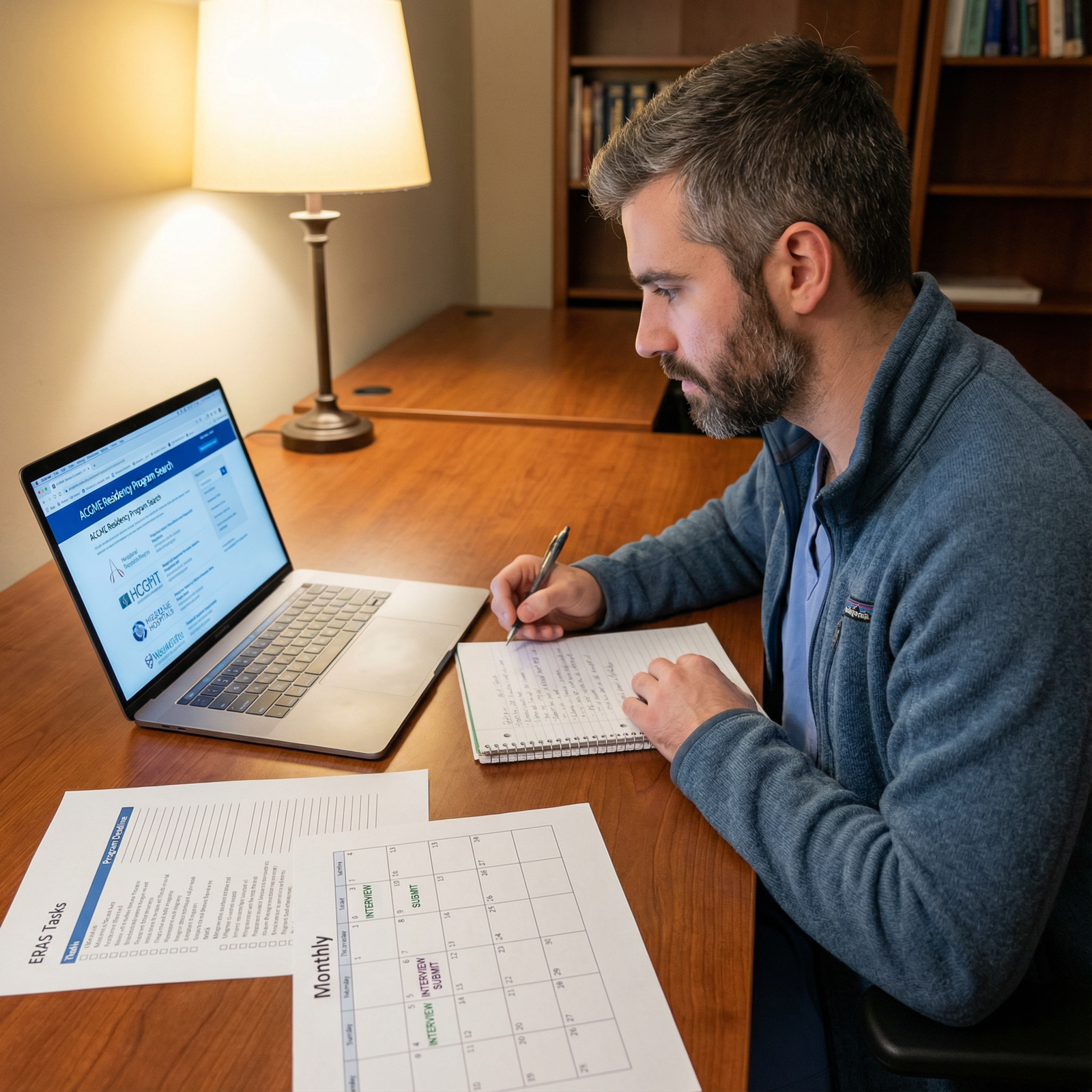
Trap 1: Passive "Free" Shadowing
Sitting in the back of a relative's clinic for three months isn't clinical training; it's a family visit. Program directors instantly recognize LORs written by family acquaintances or non-academic private practices with zero residency ties.
Trap 2: The September Rush
Finishing a rotation in late August or early September means your letter writer might not upload your LOR until October. Applications missing LORs when ERAS opens for program review sit in incomplete status. Most competitive programs filter out incomplete applications immediately.
Trap 3: Geographic Isolation
Restricting your USCE search to a single city (like New York or Chicago) because you have free housing limits your options to overcrowded, commercialized rotation sites. Be willing to travel to smaller, high-yield teaching hospitals in Iowa, Ohio, or Pennsylvania where you'll get real patient responsibility and dedicated attending interaction.
Key Takeaways
- For competitive specialties (Derm, Plastics, Ortho, ENT): Observerships are essentially low-yield. You must secure hands-on USCE or clinical sub-internships to generate the credible, action-oriented LORs required to compete.
- For core specialties (IM, Peds, FM): Observerships can supplement high Step scores and research, but hands-on experience remains the gold standard for proving clinical competence.
- Quality beats quantity: One continuous 4-week hands-on rotation with a strong, detailed advocate yields far better results than four disconnected 1-week observerships.
Next Steps: Build Your Personalized Strategy
Stop collecting generic observerships and start building a clinical profile that actually moves the needle on application filters.
If you need a systematic way to track your USCE applications, secure malpractice insurance, and organize your letter-writer follow-ups, download our USCE Application Tracker & Strategy Template.
Want an honest assessment of whether your current clinical timeline matches your target specialty? Book a strategy evaluation session with our team today, and let's optimize your ERAS application before the deadlines catch up with you.