
Most IMGs waste half their US clinical time doing the wrong things.
Observing. Shadowing. “Helping out.” None of that impresses a program director on ERAS day. What matters is what you can prove you did and who is willing to stand behind you in writing.
If you want a serious shot at the Match, your US clinical experience (USCE) before ERAS opens must be ruthlessly targeted. By the time ERAS unlocks, you need specific boxes checked, not vague memories of interesting cases.
Let us walk it through like a project timeline—because that is what it is.
Big Picture: What Must Be Done Before ERAS Opens
At this point, forget the marketing language from observership companies. Program directors are looking for four concrete outputs from your USCE by ERAS opening:
- Strong, specialty-aligned US letters of recommendation (LoRs)
- Documented, hands-on or at least structured, supervised clinical work
- Clear evidence of communication, professionalism, and system familiarity
- A personal narrative tied to real US patient care that shows up in your ERAS experiences and personal statement
Everything you do from about 6–9 months before ERAS until opening day in June should be built around those four deliverables.
Here is the timeline.
9–6 Months Before ERAS: Position Yourself To Get Real Value From USCE
At this point, you should not be “doing any USCE you can find.” That is how you end up with one generic letter and three months of glorified hallway loitering.
Month -9 to -8: Decide What You Are Aiming For
You must be clear on:
- Target specialty (for most IMGs: IM, FM, psych, peds, prelims, sometimes neurology)
- Application year (which September you will submit)
- Score situation (Step 2 completed or pending, gaps in CV, red flags)
From that, set minimum clinical objectives:
- Specialty alignment: Aim for at least 2 months of USCE in your target specialty.
- Letters: Aim for 3 US letters, with at least 2 in your target specialty and preferably at least 2 from academic or teaching-affiliated physicians.
Anything less, and you are playing uphill as an IMG.
Month -8 to -7: Lock In Rotations Strategically
By this point, you should be booking—not browsing.
Priority order for pre‑ERAS USCE:
- Hands-on electives/sub‑internships (if still a student)
- Hands-on externships (for graduates)
- Structured observerships with clear evaluation and letter process
- Random shadowing with no documentation (this is almost useless for ERAS unless it leads directly to a strong letter)
Where possible:
- Front-load higher-yield rotations (academic centers, teaching hospitals, program-affiliated clinics) in the 3–6 months before ERAS for fresher letters.
- Avoid stacking all USCE after ERAS opens. Those letters arrive late, and “ongoing” experience is less persuasive than completed work with feedback.
| Type | ERAS Impact | Letter Quality Potential |
|---|---|---|
| Sub‑internship | Very High | Very High |
| Externship | High | High |
| Academic observership | Medium | Medium–High |
| Private practice shadowing | Low | Low–Medium |
If you are not sure whether a rotation helps ERAS, ask one blunt question:
“Will I be formally evaluated and considered for a detailed letter if I perform well?”
If the answer is fuzzy, treat it as low-yield.
6–3 Months Before ERAS: Use Each Week of USCE Intentionally
Now we are in the critical window. At this point in the year, you should be:
- On a US rotation right now, or
- About to start one within a month
Your focus shifts from “getting rotations” to extracting tangible ERAS value from each week.
Weekly Targets During Any Rotation (Weeks 1–4 of a Month)
Week 1: Learn the System and Show Up as a Professional
Your goal this week is credibility. Faculty decide quickly who they will endorse.
By the end of Week 1 you should:
- Learn:
- EMR basics (or know who to ask without whining about it)
- How progress notes, H&Ps, and sign‑outs look in that institution
- Local expectations for students/observers: rounding times, dress, documentation rules
- Establish:
- Reliability: Early, prepared, present
- Communication tone: clear, concise, not overtalking during rounds
- Your “story”: a 1–2 sentence summary of who you are and what you are aiming for
You want your attending to be thinking: “This IMG is serious and low‑maintenance.”
Week 2: Earn Responsibility and Make Your Work Visible
At this point, you should not still be hiding in the back of the team.
This week, focus on:
- Clinical tasks appropriate to your status
- As a student or extern:
- Presenting new patients
- Writing drafts of notes or orders (as allowed)
- Following up labs and imaging, prepping for rounds
- As an observer:
- Preparing condensed case summaries
- Asking targeted, clinical questions, not exam trivia
- As a student or extern:
- Feedback moments
- Ask your resident: “Is there one thing I could do differently to be more helpful to the team?”
- Note the feedback and visibly adjust within 24–48 hours.
Your attending needs stories for your letter: “She took ownership of…” “He presented complex patients clearly…” You must give them that material now.
Week 3: Signal That You Want a Letter (Indirectly)
This is where IMGs often fail. They work hard but never connect it to ERAS.
By the middle of Week 3 you should:
- Have one or two attendings and maybe one senior resident who know you by name and can describe specific things you did.
- Say something like:
“Dr Smith, I am applying to internal medicine this September. I have really appreciated this rotation and your feedback. Is there anything else I could focus on over the next week to strengthen my application from your perspective?”
This does two things:
- Signals that you are serious about applying soon.
- Gives them permission to actually evaluate you with letters in mind.
Week 4: Secure the Evaluation and Letter Agreement
By the end of the final week (or final days if 2‑week rotation), you want explicit confirmation about letters.
Your script:
- “Dr Smith, I am finalizing my ERAS application. Would you feel comfortable writing me a strong letter of recommendation based on my work here?”
If they hesitate or downgrade the word “strong,” you have your answer. Be polite, thank them anyway, and focus letter hopes on someone else.
Once they agree:
- Confirm:
- Full name and title as you should list them in ERAS
- Email they prefer for the ERAS letter request
- Timeline: “I will add you in ERAS as soon as it opens in June; the deadline for programs is early September.”
- Offer:
- CV
- Brief summary of patients or tasks you handled on the rotation
- Your personal statement draft later (optional but often helpful)
Your rotation is not “ERAS‑ready” until these pieces are in place.
3–1 Months Before ERAS: Consolidate, Document, and Align
At this point in the cycle (late spring / early summer for a September application), you should be shifting from “doing” to documenting and aligning.
Month -3: Close Gaps in Specialty and Continuity
Look at your portfolio honestly:
- Do you have at least 2 specialty‑aligned USCE experiences?
- Do you have 3 likely US letter writers, with 2 in target specialty?
- Is your most recent USCE within 6–9 months of ERAS opening?
If not, this is when you:
- Add a short but meaningful clinic or inpatient block in your target specialty.
- Seek at least one academic or teaching hospital rotation if all you have is private office work.
- Avoid low-yield “one‑week observerships” unless they are directly with a program you aim to apply to.
Month -2: Translate USCE Into ERAS Language
This is the month people sleepwalk through and then wonder why their application looks flat.
You should be:
- Drafting your ERAS Experiences entries from your USCE:
- Clear role description: “Extern under supervision of…” / “Visiting student on inpatient team…”
- Specific tasks: “Presented 2–3 patients daily on rounds, wrote draft notes, followed up results…”
- Avoid vague: “Observed many cases” or “learned a lot”
- Extracting concrete bullet points:
- Number or range of patients per day
- Involvement with procedures (observed vs assisted)
- Any quality improvement, presentations, teaching sessions you did
This is how you turn “I did USCE” into “I can work in your system on Day 1.”
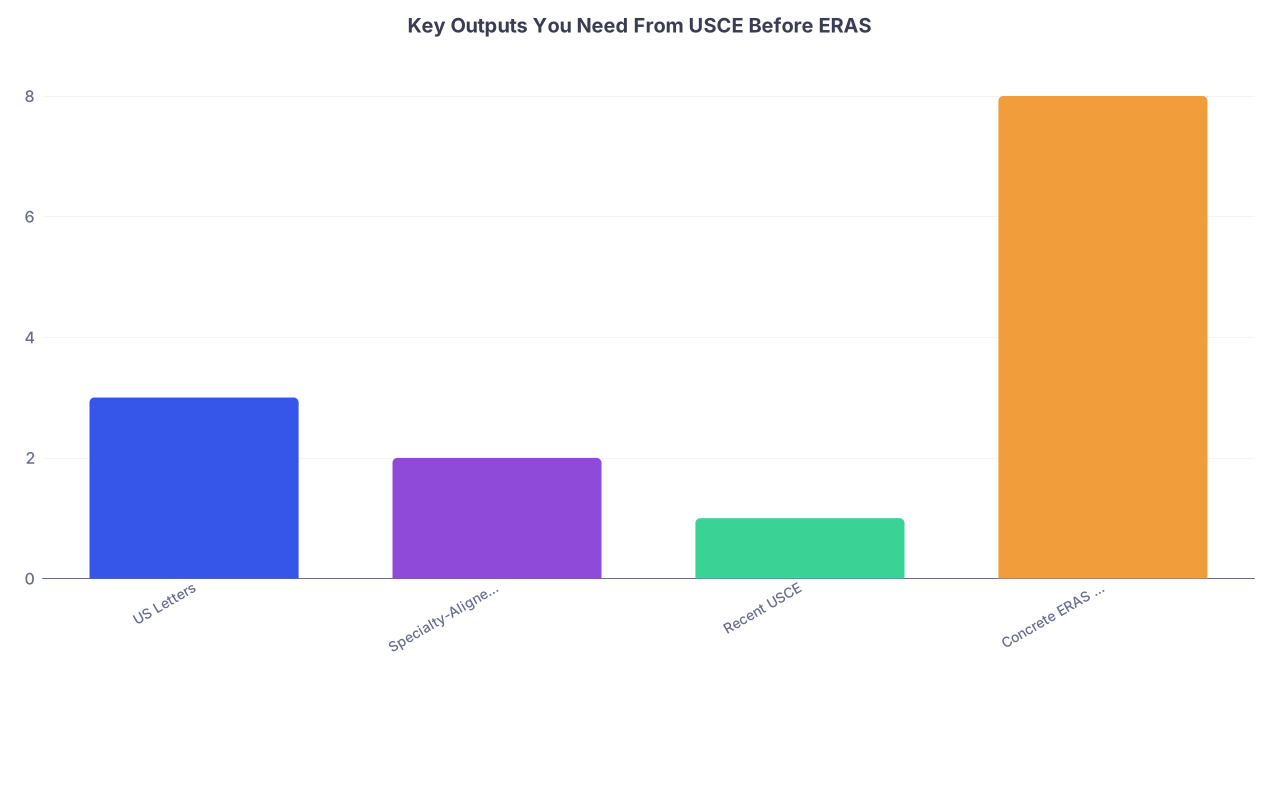
| Category | Value |
|---|---|
| US Letters | 3 |
| Specialty-Aligned Months | 2 |
| Recent USCE | 1 |
| Concrete ERAS Bullets | 8 |
(Here “8” represents a target of ~8 strong bullet points across your USCE experiences.)
Month -1: Lock in Logistics Before ERAS Opens
Right before ERAS unlocks in June, you should be tying up every loose end.
Checklist at this point:
- Confirm each letter writer:
- Still remembers you
- Has your CV and summary of your work
- Verify contact details and titles for ERAS
- Gather:
- Certificates from rotations
- Any written feedback or evaluations (do not upload them, but they help you craft your own description)
- Make sure your personal statement includes:
- One or two specific stories from USCE that show how you function in US hospitals
- A clear connection between what you saw/did and why you want that specialty
Your goal: when ERAS opens, you do not start thinking about USCE; you start entering data you already organized.
ERAS Opening Month (June): Convert USCE Into a Competitive Application
At this point, ERAS has opened. Your clinical work prior to this date either helps you or does nothing. There is no neutral.
Week 1 After ERAS Opens: Add Letters and Experiences Immediately
In the first 7–10 days:
- Add all your letter writers in ERAS
- Send polite, concise emails: remind them who you are, attach CV + rotation summary, state your timeline (aim to apply early September).
- Complete all USCE‑related Experiences entries:
- One entry per major rotation or program, not one per day or per attending.
- Use action verbs and specifics: “Presented, coordinated, drafted, followed up” rather than “helped, assisted.”
Do not wait until August to trigger letters. Faculty are far more likely to write thorough letters if you ask early and give them time.
Week 2–4 After ERAS Opens: Fix Weak Spots
Now you review your own application like a program director.
Ask yourself:
- Does my USCE clearly show I have:
- Recent, relevant US exposure?
- Evidence I can function in the US system?
- People here who trust me enough to write detailed letters?
If something is weak:
- You can still:
- Add short targeted observerships with a clear letter plan for programs that read updates later in the season.
- Update your personal statement or experiences to better highlight what you already did but poorly described at first.
But be honest: the core work should have been done before ERAS opened. Last‑minute scrambling rarely changes the outcome.
What “Accomplished” Looks Like On ERAS Day
By the time you are ready to certify and submit ERAS, your USCE should have produced visible, concrete outcomes.
Here is what a solid IMG profile usually looks like:
| Element | Target by ERAS Opening |
|---|---|
| Total USCE Duration | 3–4 months (minimum 2 months) |
| Specialty‑aligned Experience | ≥ 2 months in target specialty |
| US Letters of Recommendation | 3 total, 2+ in target specialty |
| Most Recent USCE | Within past 6–9 months |
| ERAS Experience Entries | 3–5 high‑quality, specific entries |
When a program director opens your ERAS, they should see:
- Multiple US‑based physicians ready to vouch for you
- Evidence that you understand:
- US documentation
- Team structure
- Communication norms
- A consistent narrative: “This person has already begun functioning in our system.”
Anything less, and you will be competing against IMGs who did all of this—because they exist, and they match.
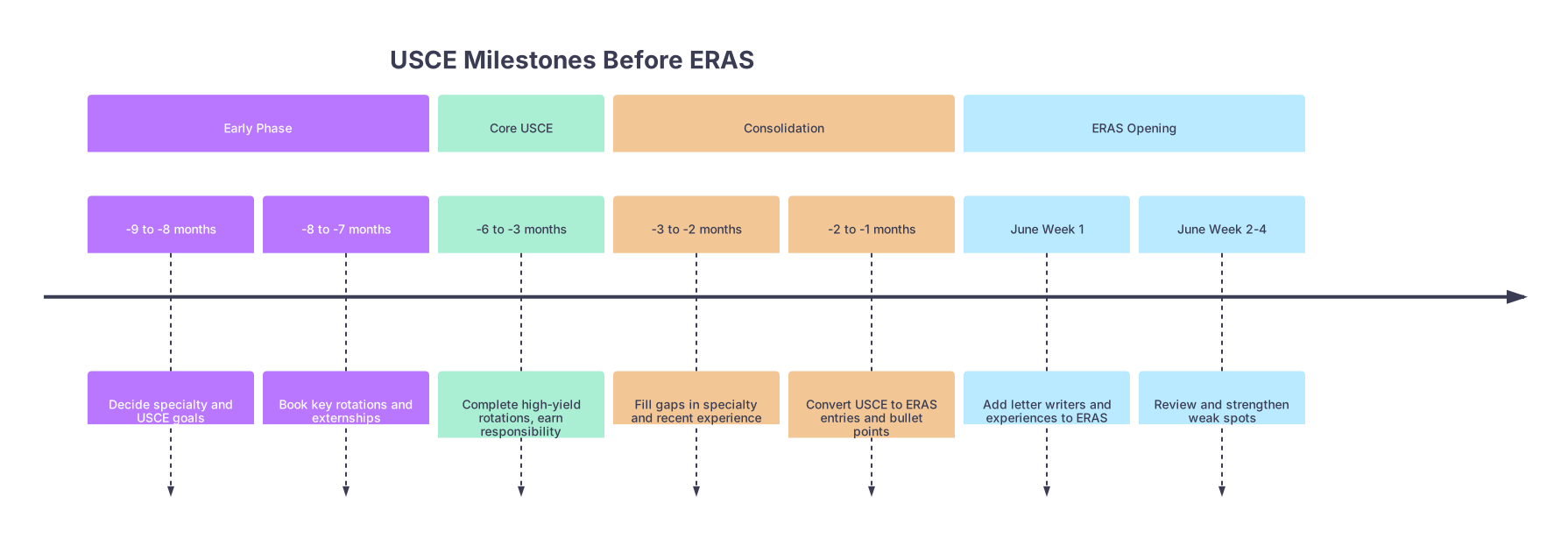
| Period | Event |
|---|---|
| Early Phase - -9 to -8 months | Decide specialty and USCE goals |
| Early Phase - -8 to -7 months | Book key rotations and externships |
| Core USCE - -6 to -3 months | Complete high-yield rotations, earn responsibility |
| Consolidation - -3 to -2 months | Fill gaps in specialty and recent experience |
| Consolidation - -2 to -1 months | Convert USCE to ERAS entries and bullet points |
| ERAS Opening - June Week 1 | Add letter writers and experiences to ERAS |
| ERAS Opening - June Week 2-4 | Review and strengthen weak spots |
Quick Phase-by-Phase Checklist
Use this as a blunt tool. If you are inside a phase and cannot check most items, you are behind.
6–3 Months Before ERAS (Active Rotations)
You should:
- Be on or about to start a US clinical rotation
- Have at least one attending per month who knows you by name and capacity
- Perform visible, consistent tasks (presentations, follow‑ups, drafts of notes)
- Have asked for feedback at least once per rotation
- Know exactly which attendings you will ask for letters
3–1 Months Before ERAS (Consolidation)
You should:
- Have at least 2 rotations in your target specialty
- Have 3 likely letter writers who agreed in principle
- Have written bullet‑point summaries of what you did on each rotation
- See USCE clearly reflected in your personal statement draft
ERAS Opening Month
You should:
- Add all letter writers within the first week
- Complete all USCE entries with specific duties, not vague phrases
- Confirm your USCE shows recency and specialty alignment
- Be ready to certify near the opening of the application window, not at the last second
FAQ (Exactly 3 Questions)
1. Is observership-only experience enough for an IMG to match?
Sometimes, but it is an uphill battle. Observerships without responsibility often produce weak, generic letters: “He attended rounds and observed patient care.” Programs prefer evidence you can contribute. If you are already stuck with observerships, then at minimum choose settings where you can present cases, attend teaching conferences, and interact closely with a supervising physician who is willing to write a detailed, supportive letter.
2. How recent should my US clinical experience be by ERAS submission?
For most IMGs, at least one substantial USCE experience should be within 6–9 months of ERAS opening. Anything older than 2–3 years is essentially “background flavor” and will not reassure programs that you are current with workflows, EMR, and team dynamics. If your latest USCE is older than this, prioritize a short, focused block before ERAS to refresh your profile and generate a recent letter.
3. How many months of USCE do successful IMGs usually have?
The sweet spot for many matched IMGs is 3–6 months total, with at least 2 months in the target specialty. Less than 2 months is possible but risky, especially in competitive specialties. More than 6 months can help, but only if it adds new value (different settings, stronger letters, academic exposure), not just repetition. Quality, recency, and the strength of letters matter more than just the raw number of weeks.
Open your calendar right now and mark the month ERAS opens for you. Then work backward 6 months and write one sentence for that date: “By this point, I will have secured X letters from Y rotations in Z specialty.” If you cannot fill in X, Y, and Z clearly, that is where you start today.