

The idea that “one month of US clinical experience checks the box” is fantasy. Program Directors are not handing out interviews because you spent four weeks shadowing in New Jersey two years ago.
If you are an IMG betting your Match on a single observership, you’re playing the game on hard mode with a broken controller.
Let’s break this down like adults instead of comforting each other with WhatsApp group myths.
What PDs Actually Care About (Spoiler: Not Your Single Month)
Program Directors do not sit in a room and say, “Oh, they have one month of USCE – checkbox ticked, next.” That’s not how this works.
Here’s what they’re actually trying to answer when they stare at your file:
- Can this person function safely in a US hospital on day one?
- Has any US physician I trust seen them work and is willing to vouch for them?
- Do they understand US culture: documentation, communication, teamwork, responsibility?
- Do they look like they’re serious about my specialty, not just desperate for any spot?
A single four-week “experience” often fails to answer all four.
Most PDs I’ve heard over the years say some version of:
“If they’ve only got one short observership, I assume they haven’t really been tested here.”
Notice: they’re not asking “Do they have USCE yes/no?”
They’re asking “Have they been stress-tested in my system?”
USCE is not a checkbox. It’s evidence. And one weak piece of evidence rarely wins a case.
What the Data and Surveys Actually Show
No, there isn’t a randomized trial of “1-month USCE vs 3-month USCE” (and we all know why).
But there is real data about how PDs think.
Take the NRMP Program Director Survey (you should have read this already, but I know many of you haven’t).
Across specialties, PDs rank things like:
- US clinical experience in the specialty
- Perceived commitment to specialty
- Letters of recommendation (especially from US faculty)
- Interpersonal skills and professionalism
Not “Has a single generic USCE line on the CV”. They care about:
- Is it recent?
- Is it relevant (same specialty)?
- Did it produce strong US letters?
- Did the applicant stand out there?
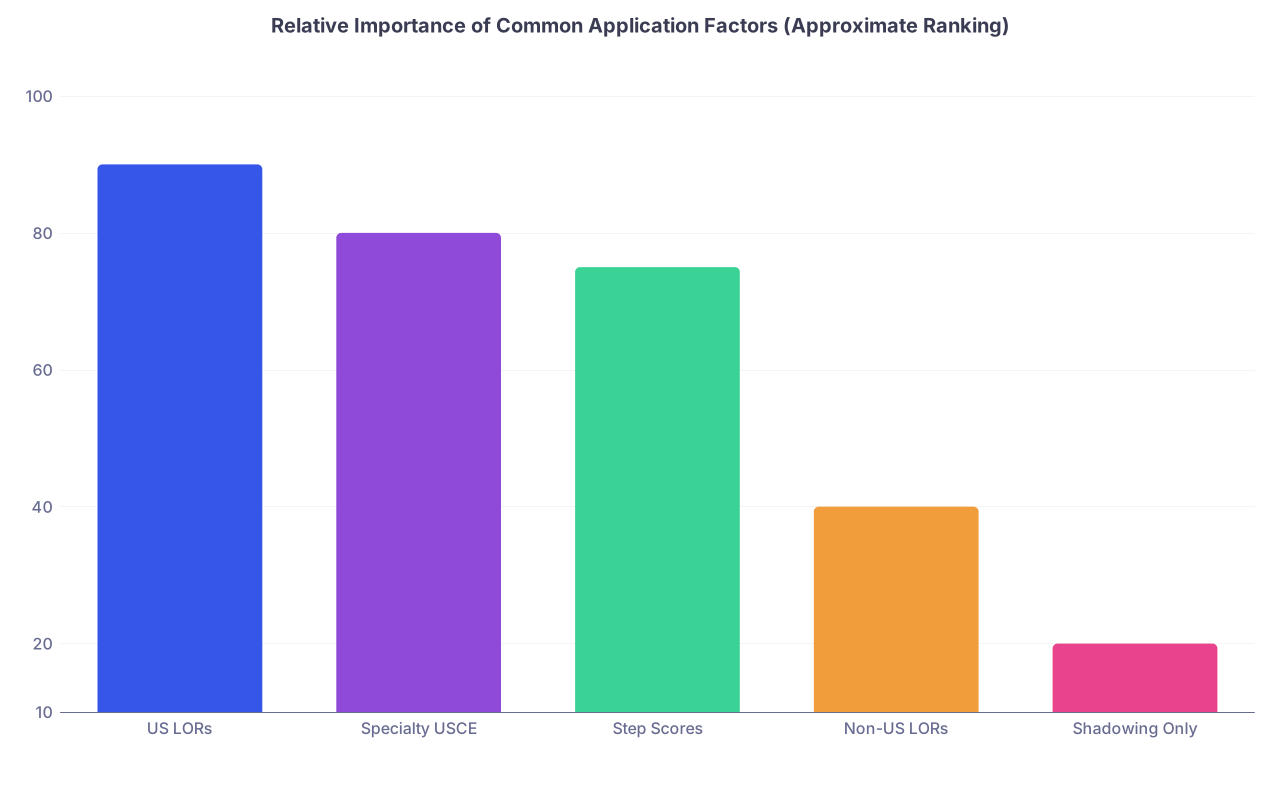
| Category | Value |
|---|---|
| US LORs | 90 |
| Specialty USCE | 80 |
| Step Scores | 75 |
| Non-US LORs | 40 |
| Shadowing Only | 20 |
That last bar? Shadowing-only “experience”? That’s your classic one-month “I followed Dr. X” observership with no real responsibilities. PDs barely count it.
When you talk to faculty on selection committees, you hear the same themes over and over:
- “I want at least a couple months of real exposure here.”
- “I trust my colleagues’ letters more than a line item on a CV.”
- “Three separate rotations at three hospitals tell me a lot more than one month anywhere.”
That’s the opposite of “one month checks the box.”
The Myth vs. Reality: What One Month Actually Buys You
Let’s put the myth next to reality instead of repeating vague slogans.
| Aspect | What Applicants Assume | What PDs Often Infer |
|---|---|---|
| Clinical readiness | “I’ve proven I can work in US hospitals” | “They’ve had minimal exposure, mostly observing” |
| Commitment to specialty | “I did a month – shows interest” | “One month could be tourism, not true commitment” |
| Letters of recommendation | “I’ll get a strong US letter” | “Hard to write a strong letter from 4 weeks” |
| System familiarity | “I understand EMR and US workflow” | “They probably saw some, but did not own cases” |
| Competitive advantage | “I’ve checked the box vs no USCE” | “This is baseline at best, not a differentiator” |
Does one month help relative to zero USCE?
Yes, usually.
Does it “check the box” for most serious programs?
No. It barely opens the door, and often not even that.
I’ve seen plenty of applications where the PD literally says, “They only did one month in the US and that was two years ago. I’m not convinced.”
The Bigger Issue: LORs, Not Just “Experience”
The most powerful output of USCE is not the bullet point. It’s the letter.
Strong US letters of recommendation, written by faculty who:
- Saw you interact with patients
- Watched you present cases
- Worked with you on notes/orders (if it was hands-on)
- Can comment on reliability, teamwork, and communication
That’s the currency.
One month of USCE usually yields:
- One letter (sometimes very generic)
- From one context
- With limited depth: “I worked with Dr. X briefly…”
Three or four months spread across different sites and attendings can yield:
- Two to three independent US letters
- From different settings (community, academic, inpatient, outpatient)
- With repeated themes: “hard-working, reliable, fits well with US team culture”
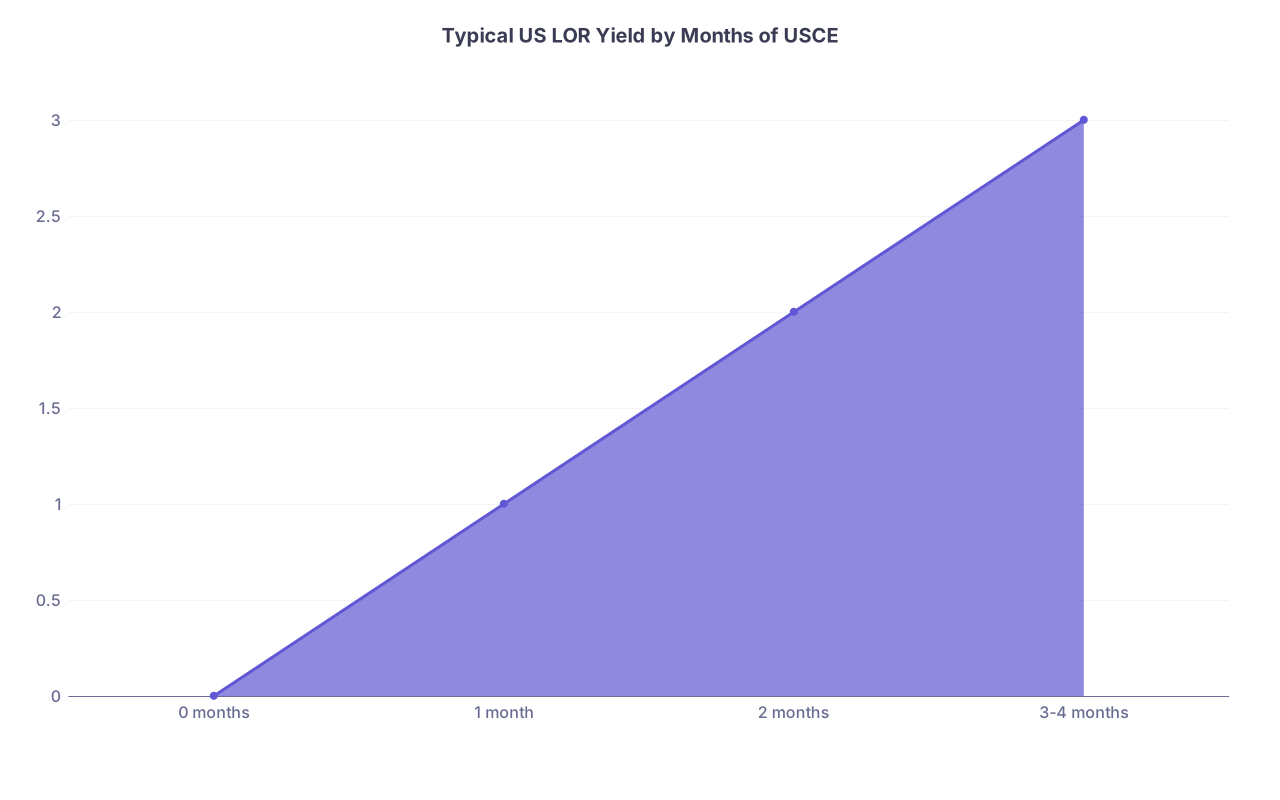
| Category | Value |
|---|---|
| 0 months | 0 |
| 1 month | 1 |
| 2 months | 2 |
| 3-4 months | 3 |
PDs take patterns seriously.
One person calling you good is nice.
Three unrelated people saying the same thing? That’s signal.
So even if you personally feel you learned a lot in that one month, the application reality is brutal: you don’t look deeply vetted.
Quantity vs. Quality: Another Thing People Misunderstand
Now, the other stupid extreme: people who think “if 1 month is good, 8 months must be amazing.”
Not exactly.
There are diminishing returns. After a certain point, you’re just collecting similar bullets instead of adding new signal.
Here’s how it tends to play out in real life:
- 0 months: Red flag for many programs. “Can they function here?”
- 1 month: Better than nothing, but weak. “We still do not know enough.”
- 2–3 months: Reasonable baseline. “Okay, they’ve actually been tested a few times.”
- 4–6 months: Strong foundation, especially if diverse + targeted to specialty.
6–8+ months: Only useful if it’s high-quality, increasingly responsible, and leading to very strong letters or research/mentorship. Otherwise it starts to look like drifting.
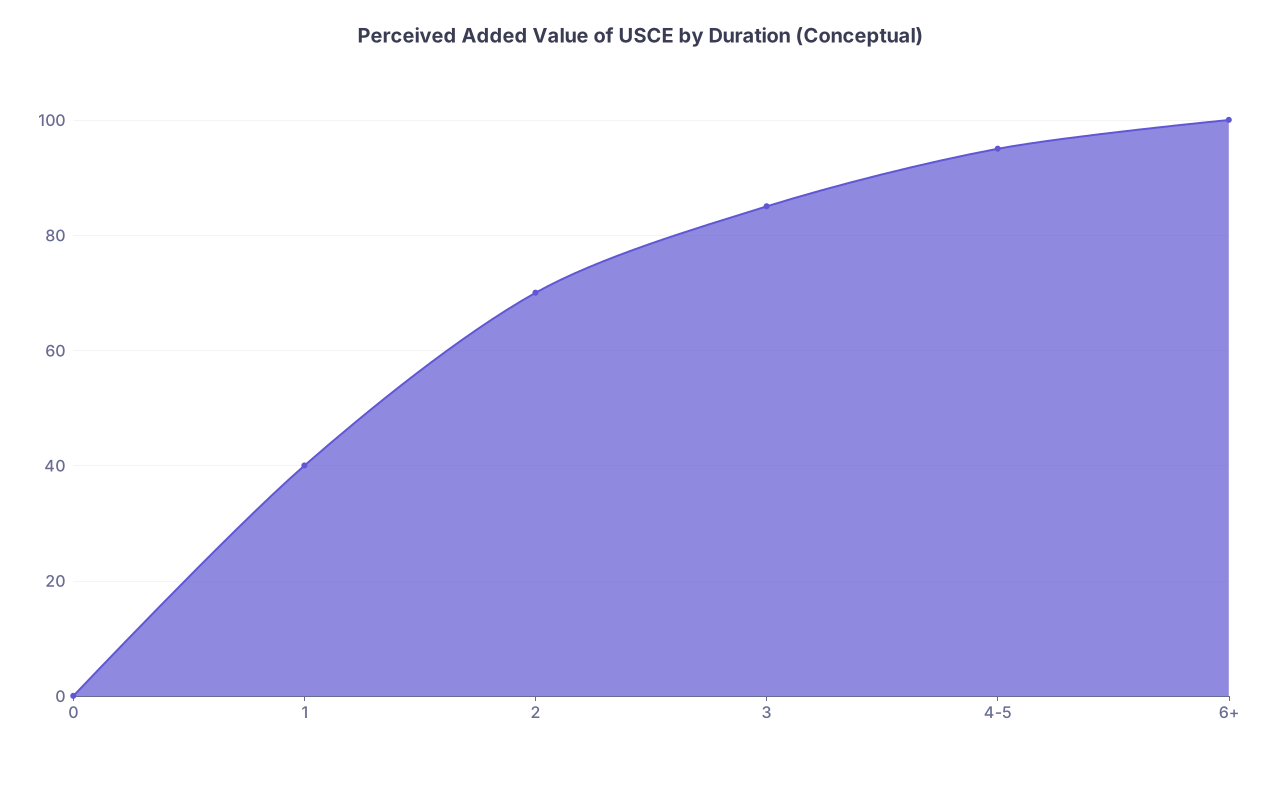
| Category | Value |
|---|---|
| 0 | 0 |
| 1 | 40 |
| 2 | 70 |
| 3 | 85 |
| 4-5 | 95 |
| 6+ | 100 |
Notice: the steepest gain isn’t from 0 to 1 month; it’s from 1 to 3–4 months, where you go from “touched the US system” to “functioned across multiple settings with multiple evaluators.”
So no, I’m not telling you to live in observership purgatory forever.
I am telling you that betting it all on one generic month is foolish.
Hands-On vs Observership: Another Piece People Gloss Over
Most IMGs saying “I have one month of USCE” are talking about:
- Observership
- Shadowing
- “Clinical experience” where they watched but couldn’t touch the EMR or orders
That’s the lowest-value format.
From a PD’s perspective, the hierarchy usually looks something like this:
| Type of US Experience | PD Perceived Value (Approximate) |
|---|---|
| Hands-on externship (inpatient, real tasks) | Very High |
| Sub-internship / acting internship | Very High |
| Structured outpatient externship | High |
| Research + limited clinical exposure | Moderate |
| Pure observership / shadowing | Low |
One month of pure observership is not equal in weight to one month of a real externship with notes, presentations, and night calls.
Most IMGs cling to the word “USCE” like a legal loophole. PDs mentally translate “one month USCE (observership)” to “saw some cases, did not actually work in the system.”
Again: not a checked box. A soft maybe.
Specialty Matters More Than You Think
Another way the “one month checks the box” myth falls apart: specialty alignment.
I’ve seen this move too many times:
- Applying to internal medicine
- Has one month of US experience – in family medicine/back office clinic
- Zero US inpatient IM exposure
- Expects IM programs to see that as fully equivalent
They don’t.
Is any clinical US exposure better than none? Usually yes.
Does a single outpatient primary care month convince an internal medicine PD that you can manage a complex inpatient list, work with cross-cover, sign out properly, manage admissions? No.
Same thing happens with people applying to neurology with some random observer month in cardiology.
They want USCE in the specialty, ideally including inpatient time and clear supervision by relevant faculty.
Timing and Recency: Your 2019 Observership Is Not Saving You
This is another ugly truth no one wants to say out loud: old USCE decays fast in value.
If you did one month in 2019 as a third-year med student, then nothing in the US for the next five years, the narrative PDs read is:
- “They had a brief exposure long ago. No recent vetting.”
- “We do not know if their current skills match our expectations.”
- “No recent US letter? That is concerning.”
If you’re more than 2–3 years out from that experience, and it’s still the only one you have, you don’t look like someone integrated into the US system. You look like someone passing through once and then disappearing.
Rotations need recency and continuity to tell a convincing story.
How to Think About USCE Like a PD (Instead of a Forum)
Forget “check the box.” Start thinking like this:
“Does my US experience convincingly answer a PD’s unspoken questions?”
Use these four tests:
Breadth
Have you seen at least a few different teams/hospitals/attendings so more than one person has assessed you?Depth
Did you actually do anything – present, write notes (even drafts), interact with patients, be responsible for follow-up?Relevance
Is it in your chosen specialty (or very closely related), in a setting where residents actually work?Outcome
Did you walk away with strong, detailed US letters that comment on specific behaviors, not just generic adjectives?
One month can do this if:
- It’s an excellent, hands-on, in-specialty experience
- You’re outstanding from day one
- The attending is generous with detailed letters
But that’s the exception, not the rule. Most of the time, four weeks is barely enough for the supervising physician to remember your name, let alone vouch for your readiness for residency.
So What Should an IMG Actually Aim For?
You’re not going to like this, but you probably already know it in your gut.
A realistic, competitive USCE profile for an IMG usually looks something like:
- 2–4 months of US clinical experience
- At least 2 months clearly in the intended specialty
- At least some hands-on or quasi-hands-on exposure (externship, sub-I, structured role)
- 2–3 solid US letters from people who supervised you clinically
- Within the last 1–2 years
Not everybody can hit this perfectly – visas, money, geography, timing, all real problems. But that’s the target.
If you truly can only afford one month, then you cannot afford to treat it like a checkbox. You have to treat it like your life depends on it:
- Show up early, leave late, volunteer for every single task
- Ask for feedback weekly, adjust fast
- Make it in your chosen specialty if humanly possible
- Build rapport so that when you ask for a letter, the attending actually has specifics to talk about
And then? You still have a weaker profile than someone with multiple solid rotations – but at least you’ve extracted maximum value from your constraint instead of pretending four weeks equals “done”.
The Bottom Line
One month of US clinical experience does not “check the box” for Program Directors. It does three much smaller things:
- It prevents your file from being immediately categorized as “no US exposure at all.”
- It may provide one moderate US letter if you performed well.
- It gives you a tiny taste of US practice – which is good, but not nearly enough evidence for a PD to trust you fully.
If you remember nothing else, remember this:
- PDs are not looking for “any USCE.” They’re looking for convincing proof you can function safely and effectively in their system, in their specialty, starting Day 1.
- That level of conviction almost never comes from a single four-week observership.
- Treat USCE as cumulative, not binary. You’re building a case, not ticking a form.
Stop chasing the myth of the magic one-month rotation. Start building a portfolio of experiences that actually makes a Program Director say, “Yes, I can see this person on my wards in July.”


