
The belief that “shadowing is enough” for an IMG is one of the most damaging myths in the US residency game. It is not just wrong. It is a trap that quietly kills applications every single cycle.
Let me be blunt: for an international medical graduate trying to match in the US, passive shadowing is the weakest form of US clinical experience you can put on your CV. And the programs know it.
You might have mentors back home, agents, or even local “USMLE experts” telling you: “You just need some US experience to show familiarity with the system. Shadowing is fine.”
No. For IMGs, shadowing is the floor. Programs want to see that you have actually functioned as a doctor in the US system, not just followed one around like a Netflix documentary crew.
Let’s break what the data, program behavior, and match outcomes actually show.
The Hierarchy of US Clinical Experience (And Where Shadowing Actually Sits)
Before arguing about “enough,” you need to understand the pecking order programs use in their heads. They absolutely distinguish between types of US clinical experience.
From strongest to weakest, for most IMGs, the hierarchy looks like this:
- US residency or fellowship training (self‑explanatory)
- US hands‑on clinical experience as a physician level trainee
– Observerships with clearly documented participation
– Externships or sub‑internships with orders and notes (even if supervised)
– Preliminary/transitional year - US hands‑on clinical experience in non‑physician roles
– Research fellow with clinical component
– Clinical assistant / associate roles where you interact with patients - US research only (no clinical contact, but in a US institution)
- Shadowing only (pure observer, no responsibility, no chart access)
- No US experience at all
Programs will not spell it out this brutally on their website. But I’ve watched what happens in selection meetings. When a file says “US clinical experience: shadowing 2 months” and nothing more, that application goes in the “weak” pile unless everything else is stellar.
Here’s how program behavior tends to map to this hierarchy:
| Experience Type | Typical Program Reaction |
|---|---|
| Sub‑I/externship with duties | Strongly positive |
| Structured observership (active) | Mild‑to‑moderately positive |
| US research + some clinical | Mixed but can be helpful |
| Shadowing only | Weak, often “checkbox only” |
| No US experience | Very weak, major red flag |
Shadowing gets you out of the “no US exposure” category. That is it. It doesn’t actively convince anyone that you can work here.
What the Data and Filters Actually Show
Programs do not build filters around shadowing. They build filters around US clinical experience in meaningful roles, Step scores, YOG (year of graduation), and visa status.
We do not have a big NRMP chart explicitly saying “shadowing vs observership outcomes.” Nobody is surveying that at scale. But we do have behavior, published preferences, and enough pattern recognition over thousands of applications.
Here’s what’s consistent:
- Many internal medicine, family medicine, and even some pediatrics programs openly say:
- “We require or strongly prefer US clinical experience in a hands‑on capacity.”
- “Shadowing does not count as US clinical experience.”
- Some will accept observerships. But they usually mean structured observerships with:
- Evaluations
- Regular attendance
- Clear supervision
- Preferably some form of structured role (presenting patients, case discussions)
Here’s the reality check in visual form:
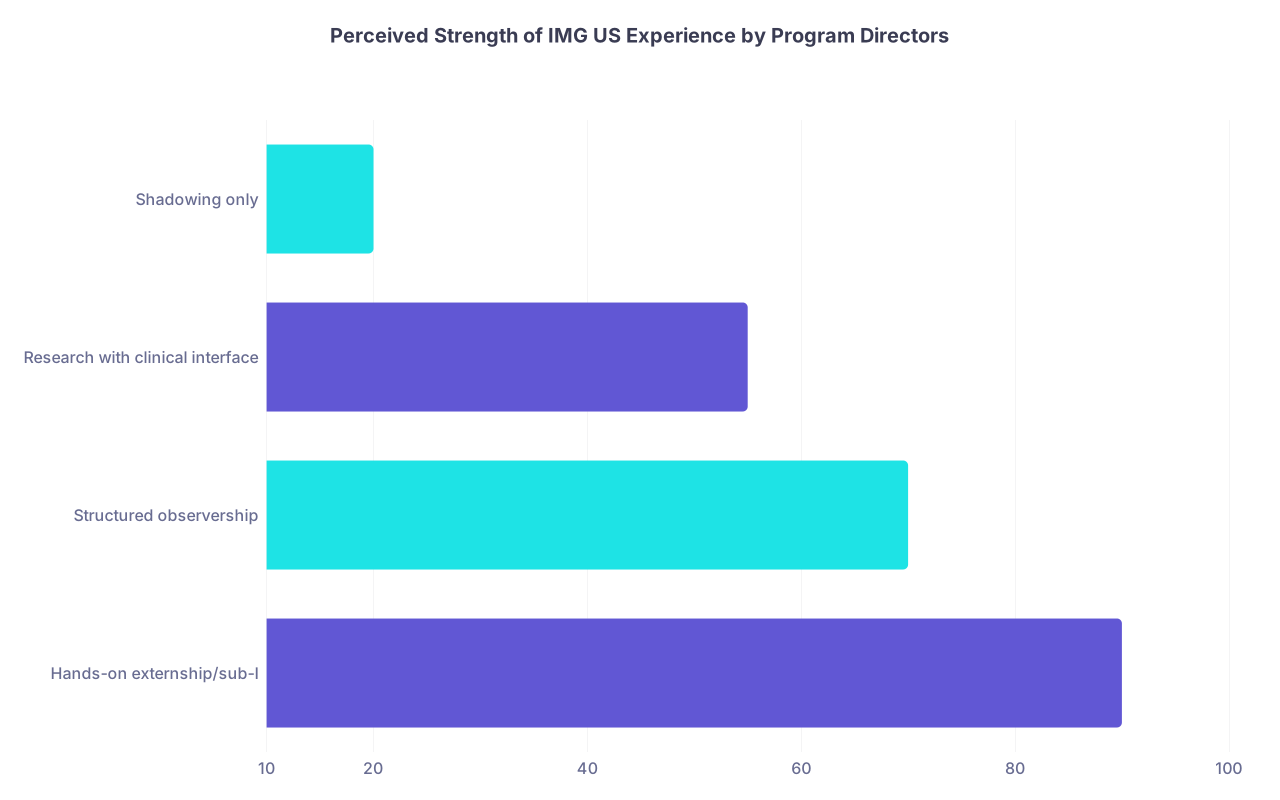
| Category | Value |
|---|---|
| Hands-on externship/sub-I | 90 |
| Structured observership | 70 |
| Research with clinical interface | 55 |
| Shadowing only | 20 |
Those numbers aren’t from a single paper; they’re a synthesized representation of what directors repeatedly say in surveys, at conferences, and in PD panels. The pattern stays the same: shadowing is at the bottom.
And the common outcome I see?
- IMG A: 245+ on Step 2, graduation ≤3 years, 3–4 months of proper hands‑on/structured USCE → Interviews across mid‑tier IM/FM programs, occasional community neuro/psych.
- IMG B: identical stats, but only 2–3 months shadowing → Maybe a handful of interviews if lucky, often in very IMG‑heavy, lower‑tier programs. Many end up unmatched.
Everything else being equal, shadowing is a tiebreaker — against you.
Why Programs Don’t Take Shadowing Seriously
This is the part nobody explains to you properly. Let me spell out why shadowing doesn’t impress program directors.
1. Zero Demonstrated Responsibility
When you shadow, you:
- Don’t write notes.
- Don’t put in orders.
- Don’t call consults.
- Don’t staff cases.
- Don’t manage cross‑coverage.
- Don’t get evaluated on your clinical reasoning in the chart.
In other words, you never actually behave like an intern.
Directors know this. They’ve had thousands of shadower‑tourists come through. They also know a lot of shadowing is essentially “sit in the corner and be quiet.”
So when they see “Shadowing at Big Name US Hospital,” they translate it as: “Was physically in the building, watched some medicine happen.”
That doesn’t answer their key anxiety:
“Can this IMG survive and function safely on my wards on July 1?”
2. Letters from Shadowing Are Weak by Design
A “strong LOR” in US residency means:
- The writer directly supervised your clinical work.
- They saw you manage patients, present, write notes, and make decisions.
- They are willing to vouch for you as equivalent or near‑equivalent to their own students.
Now compare that to the typical shadowing letter you’ve probably seen or even drafted yourself:
“Dr. X observed patient care in my clinic. They were punctual, polite, and showed interest in medicine. They asked good questions and are highly motivated.”
This is fluff. It doesn’t answer the director’s real questions:
- Can you handle a 20‑patient list when you’re post‑call, sleep‑deprived, and being paged constantly?
- Can you write a coherent H&P on a complex patient?
- Can you recognize sick vs not sick?
That’s why many programs privately rank LORs from shadowing barely above generic research letters.
3. Shadowing Is Easy to Buy
Let’s not pretend. There’s a mini‑industry in some countries selling “US shadowing” for thousands of dollars.
Program directors know that:
- Shadowing spots can be transactional.
- It’s easy to add 3–4 generic lines to a CV.
- There is no standardized evaluation form, no grading scale, no meaningful accountability.
That demolishes the credibility of shadowing as a high‑quality signal. Directors have been burned enough times to downgrade it as “CV padding unless proven otherwise.”
The Real Function of Shadowing: Orientation, Not Validation
So is shadowing useless? No. It has a role. Just not the role IMGs fantasize about.
Shadowing is good for:
- Getting your first exposure to US rounding culture, documentation norms, and communication style.
- Learning simple but critical unwritten rules:
- How attendings expect presentations structured.
- How nurses interact with residents.
- What “sign‑out” actually looks like here.
- Helping you not look totally lost when you start a more meaningful role (like an externship or observership with responsibilities).
So as prep for real USCE, shadowing can be useful.
As your main US clinical experience? Not enough.
It’s like studying only First Aid and never doing UWorld, then acting surprised you missed the score you wanted. You learned the overview, but you never proved performance.
What “Enough” Actually Looks Like for IMGs
Programs do not publish a universal formula, but there are patterns for what gives IMGs a fighting chance, especially for medicine, family, peds, neuro, and psych.
You start seeing consistent interview traction when you have something like:
- 2–4 months of structured USCE where you actually function as a trainee, not a tourist, and
- At least 2 letters from US clinicians who supervised your clinical reasoning, not just your ability to stand quietly in clinic.
That might look like:
- 1–2 months externship/sub‑I style work at a community teaching hospital
- 1–2 months structured observership with:
- Regular patient presentations
- Participation in rounds
- Case discussions
- End‑of‑rotation evaluation
Stack that with solid Steps and an acceptable YOG, and now programs start to say, “OK, this person has actually operated in our system.”
Here’s a simplified comparison of common IMG profiles and how they usually fare:
| Profile | Typical Perception |
|---|---|
| 3 months shadowing only | Weak USCE, checkbox at best |
| 1 month structured observership + LOR | Modest, can help for some programs |
| 3 months structured USCE + 2 strong LORs | Competitive for many IM/FM programs |
| USCE + US research year | Strong for academic-minded IMGs |
This is why I say the myth is lethal. IMGs are pouring money and time into shadowing alone and then acting surprised when 3–4 months of that doesn’t translate into interviews.
Concrete Examples: How This Plays Out in the Match
Let me walk you through a few anonymized, but very real, patterns I’ve seen.
Case 1: The “Big Name Hospital, Zero Responsibility” Trap
- IMG, YOG 2021, Step 2 = 248
- 3 months shadowing at a prestigious US academic center
- 2 letters: both basically “observed in clinic, good attitude”
- Applied to 120 IM/FM programs
Outcome:
4 interviews, 0 match.
The comments from one program (they actually gave feedback, which is rare):
“Strong exams, but we could not assess US clinical readiness based on your experience. Many applicants had more robust USCE.”
Case 2: The Community Hospital Over Prestige Strategy
- Another IMG, similar scores, YOG 2020
- Couldn’t get into big‑name centers, so did:
- 2 months structured observership at a mid‑tier community hospital
- 2 months externship‑style rotation at a smaller community program where they:
- Wrote mock notes
- Presented every patient
- Attended morning report and M&M
- 3 letters: two explicitly compared them favorably to US grads.
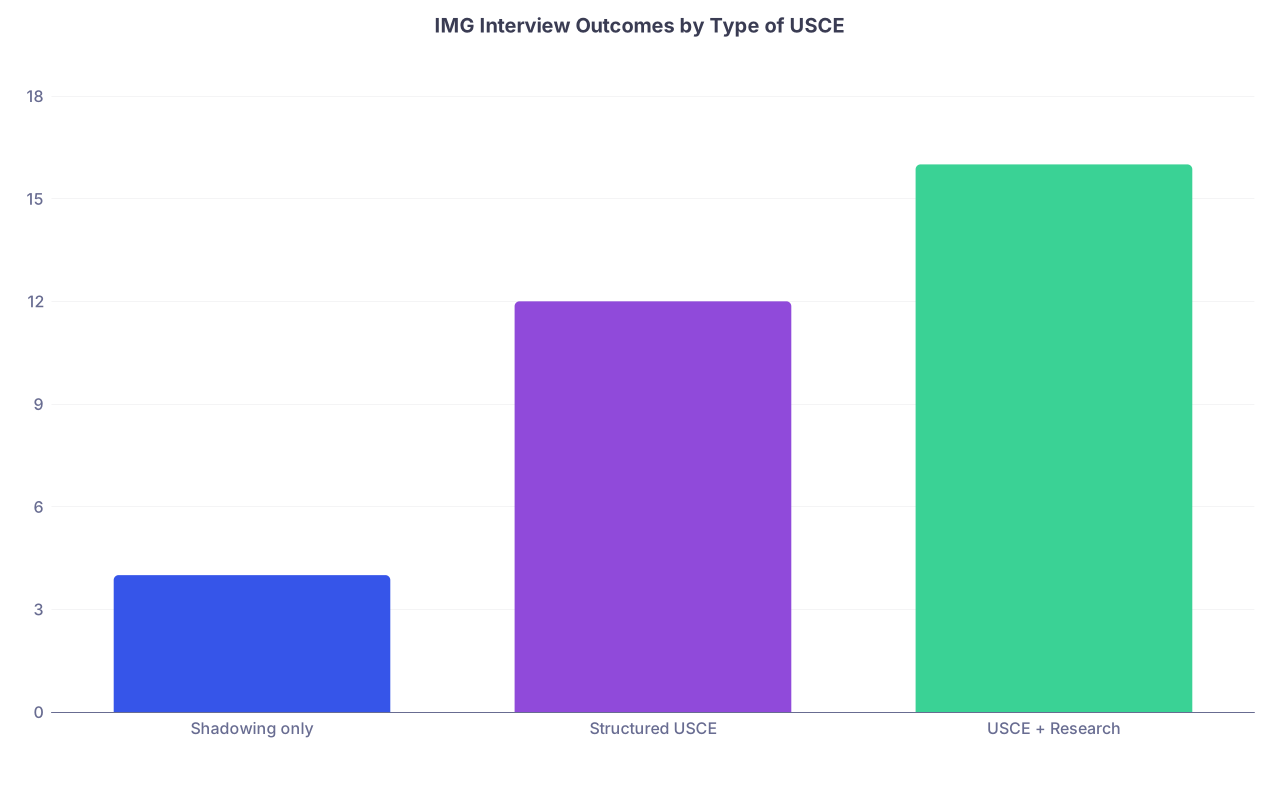
| Category | Value |
|---|---|
| Shadowing only | 4 |
| Structured USCE | 12 |
| USCE + Research | 16 |
Outcome:
12 interviews. Matched into a community internal medicine program, not glamorous, but solid.
The difference wasn’t brilliance. It was the type of USCE and the strength of letters that experience enabled.
How to Use Shadowing Without Getting Stuck There
So, if shadowing isn’t enough, how do you use it intelligently instead of wasting a year?
Think of shadowing as:
A short starter, not the main course.
2–4 weeks to learn the system, not 6 months to inflate your CV.A bridge to something better.
While shadowing, your real target is to:- Prove you’re reliable.
- Show up early, ask good questions, and show you’re not a liability.
- Ask about:
- Observerships with more formal evaluation
- Opportunities to sit in on case conferences
- Contacts at community hospitals who accept IMGs in more active roles
A networking tool, not the centerpiece.
Your aim during shadowing:- Identify at least one attending or chief resident who might say:
- “I know a place that can take you for a more robust role.”
- Or who can at least write a letter better than “They were present.”
- Identify at least one attending or chief resident who might say:
Use shadowing to orient, build trust, and unlock something that actually counts.
The Visa and YOG Reality That Makes Shadowing Even Weaker
If you need a visa and/or you’re an older YOG, the bar is higher. Harsh, but true.
Programs thinking about sponsoring a visa are asking themselves:
- “Is this person clearly worth the extra bureaucracy?”
- “Do they bring enough proven value to justify a spot over a US grad or a more experienced IMG?”
If your profile already has potential weaknesses —
graduated 5+ years ago, average scores, gaps in training — then showing them mostly shadowing is like turning in a blank page with your name written nicely on top.
Some PDs will take a chance on:
- Older YOG with excellent USCE + outstanding letters
over - Recent grad with shadowing only
Because at least the first one has proven they can function.
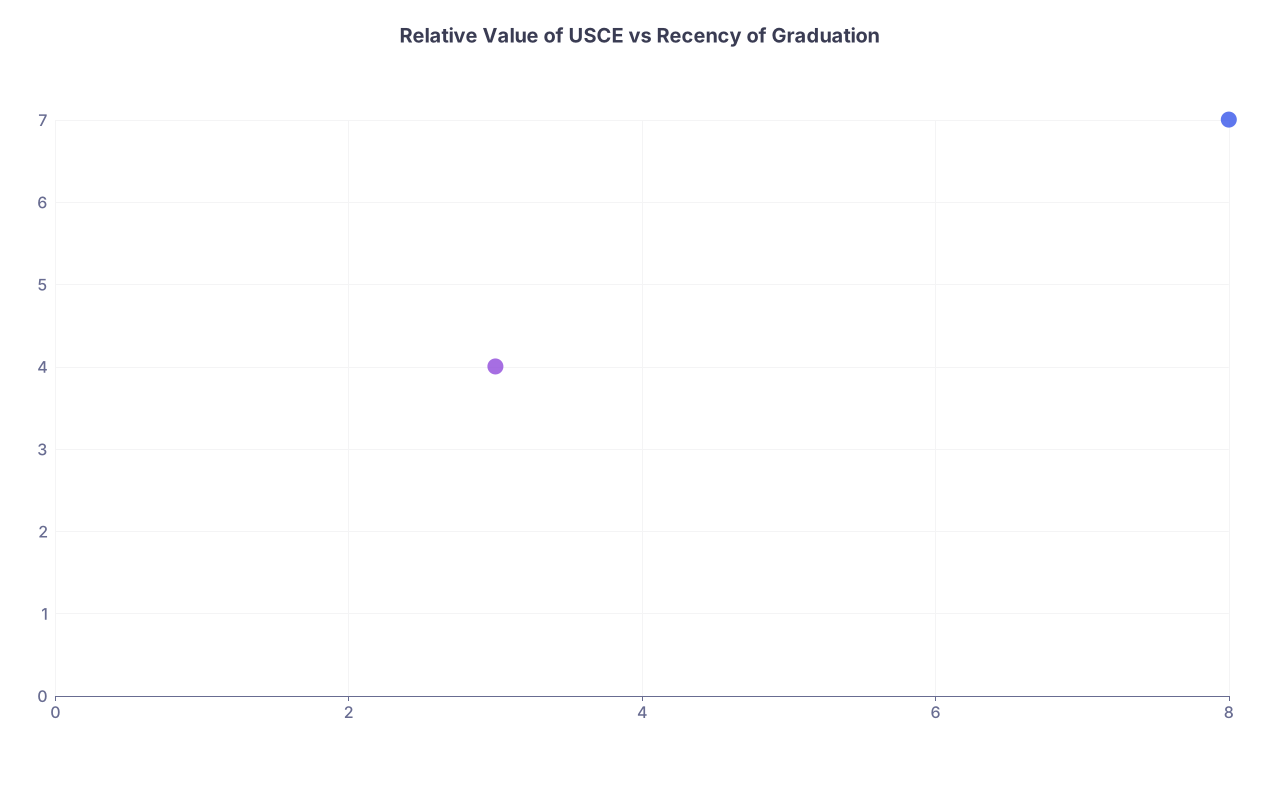
| Category | Value |
|---|---|
| Older YOG + strong USCE | 8,7 |
| Recent YOG + shadowing | 3,4 |
(Think of X as “years since graduation” and Y as “program interest level” — strong USCE keeps you in the game longer.)
If You Already Did Only Shadowing – Now What?
If you’re reading this with three months of shadowing already on your CV, don’t panic. But stop doubling down on a losing strategy.
Here’s how you recover:
Keep the shadowing listed, but downplay it in your narrative.
Use it as the “intro” to how you learned the US system.Immediately target:
- Community hospitals with IMG‑friendly structured observerships
- Any legitimate externship/sub‑I program that lets you:
- Present patients
- Attend rounds
- Get a formal evaluation
When requesting new letters, push for language that speaks to:
- Your clinical reasoning
- Your reliability and work ethic in a realistic workflow
- Direct comparison to other trainees
Do not waste another 3–6 months repeating the same low‑yield activity just because it’s easy to arrange or sounds good to your family. Programs are not fooled.
The Bottom Line: Shadowing Is a Start, Not a Strategy
If you remember nothing else, remember this:
For IMGs, shadowing alone is not a clinical experience in the eyes of most residency programs. It’s an introduction. An orientation. A warmup.
Programs are drowning in applications. They don’t have the time or generosity to imagine what you might be capable of. They look at what you’ve actually done — in their system, under their rules, with their expectations.
Years from now, you won’t be thinking about the comfortable weeks you spent watching from the corner of a US clinic. You’ll remember whether you were brave enough to push for roles where you could actually prove yourself — and how that choice changed everything.