
The biggest mistake IMGs make isn’t low scores. It’s wrecking their timeline by cramming US clinical rotations and Step exams on top of each other.
You are not “saving time” by overlapping everything. You’re blowing up your chances of matching.
Let me lay it out straight: if you are an IMG targeting a US residency, your calendar is your most powerful weapon. At each point in the year, you should know exactly what you’re doing: which exam you’re aiming for, which rotations you’re lining up, what letters you’re chasing, and what you’re deliberately not doing so you do not burn out or tank your scores.
This guide is the timeline you wish someone handed you in MS3.
Big Picture: What Has To Fit On Your Calendar
Before we go month‑by‑month, you need to know the non‑negotiable pieces you’re trying to fit:
- Step exams (usually Step 1 and Step 2 CK for IMGs)
- US clinical experience (USCE) – mostly 4-week blocks:
- Core US rotations (if your school allows)
- Electives/sub‑internships
- Observerships (for grads or if hands-on not allowed)
- ERAS application & NRMP Match deadlines
- LOR deadlines (strong US letters do not magically appear in August)
- Visa paperwork, travel, funding
Here’s how they relate in time for a typical first Match attempt:
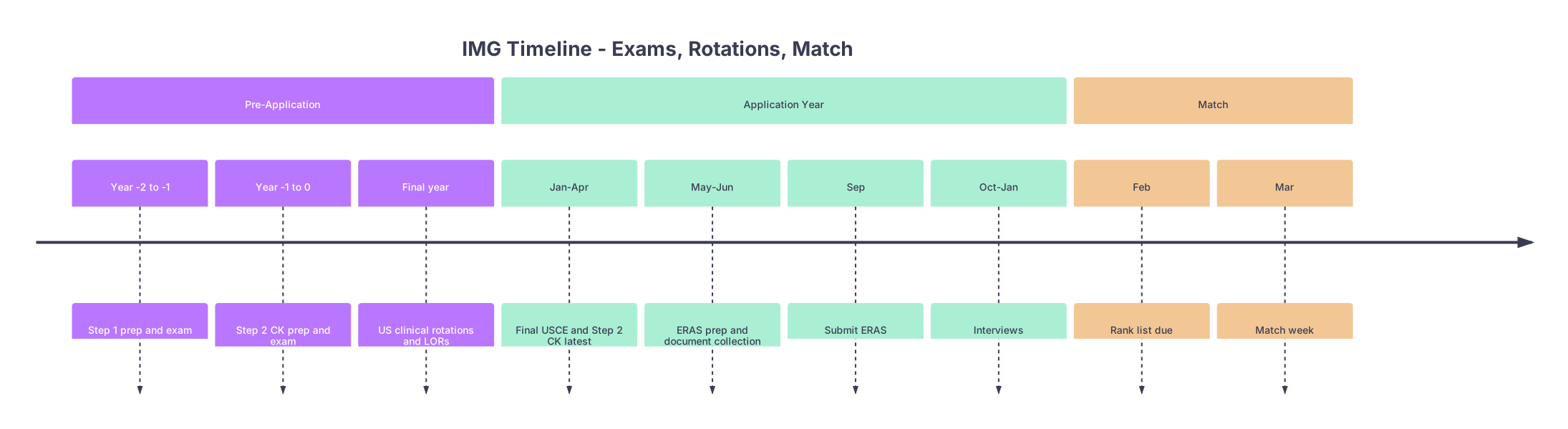
| Period | Event |
|---|---|
| Pre-Application - Year -2 to -1 | Step 1 prep and exam |
| Pre-Application - Year -1 to 0 | Step 2 CK prep and exam |
| Pre-Application - Final year | US clinical rotations and LORs |
| Application Year - Jan-Apr | Final USCE and Step 2 CK latest |
| Application Year - May-Jun | ERAS prep and document collection |
| Application Year - Sep | Submit ERAS |
| Application Year - Oct-Jan | Interviews |
| Match - Feb | Rank list due |
| Match - Mar | Match week |
Now let’s walk this like a calendar. I’ll assume:
- You’re a final year medical student or recent graduate IMG
- You want to apply for Match in September of Year 0
- Your med school calendar may not match the US, but we’ll anchor to the Match year
I’ll give you two main arcs:
- “Ideal but realistic” plan (Steps early, rotations targeted, low chaos)
- “Late start / already behind” rescue plan
I’ll flag clearly where you can and cannot safely move things.
18–12 Months Before ERAS Submission: Build Your Foundation
At this point you should be focused on exams first, not scrambling for USCE.
Months −18 to −15: Step 1 Dominant Phase
Goal: Clear Step 1 out of the way so it does not poison everything else.
You should:
- Dedicate 4–6 months to Step 1 if you’re still in medical school coursework
- Avoid scheduling US clinical rotations during:
- Final 8 weeks before your Step 1 date
- First 4 weeks after the exam (you’ll be mentally fried)
USCE here?
- If you can do short observerships (1–2 weeks) without disrupting serious study, fine.
- But no 4‑week intensive hands-on rotation while pushing toward Step 1. That’s how people fail or barely pass.
At this point, clinical experience “for the CV” is less important than a solid Step 1 pass and strong foundations. Programs will forgive limited early USCE. They will not forgive weak exam performance.
Months −14 to −12: Transition to Step 2 CK Prep Mindset
As Step 1 wraps up, you should:
- Take 2–4 weeks to recover, then design your Step 2 CK study plan
- Start light clinical exposure at home institution to reactivate your clinical brain
- Begin researching:
- US hospitals with IMG‑friendly electives/sub‑internships
- Visa requirements (B1/B2 vs J1 processes for visiting students)
- Deadlines for visiting student programs (VSLO/VSAS and independent hospital applications)
At this point you should not be booking random US rotations just because you saw an Instagram ad. You pick rotations strategically:
- In the specialty you’re targeting
- In IMG‑friendly programs
- In months that do not sit right before a major exam date
12–8 Months Before ERAS: Anchor Your Rotations Around Step 2 CK
This is the most fragile window. Most IMGs screw this up.
Core Principles For This Phase
- Step 2 CK > USCE if you’re weak academically
- If your Step 1 is marginal or you’re not a strong test taker, you protect Step 2 CK with your life.
- USCE > squeezing in one more month of studying if your scores are decent
- A 248 vs 252 will not change your life.
- A glowing US LOR from a sub‑I might.
Ideal Layout (Application Year = Year 0, ERAS in September)
Let’s map a suggested structure if you plan to apply in September Year 0:
January Year −1 to March Year −1
- Intensive Step 2 CK prep
- Minimal clinical duties (home country only, not US)
- At this point you should not be in a US rotation yet.
April Year −1
- Target Step 2 CK exam date
- No USCE, no travel. Protect these 4 weeks for last‑push studying.
May Year −1
- Recovery + score release
- Start planning US rotations:
- 2–3 months of USCE between July Year −1 and February Year 0
- Spread across 2–3 institutions if possible
- Start sending preliminary inquiries:
- Program coordinators
- Hospitals that list “Visiting international students” sections on their websites
At this point you should:
- Have Step 1 and Step 2 CK done or nearly done before serious USCE.
- Be lining up rotations for the 12 months before ERAS, with the critical ones between October Year −1 and June Year 0.
8–4 Months Before ERAS: Rotations That Actually Get You Interviews
Now we’re in the crucial clinical window.
What Programs Actually Care About
Programs don’t care that you “have 6 months of US experience.” They care about:
- Recent USCE (within 12 months of ERAS)
- In your target specialty
- With strong letters that mention:
- Clinical reasoning
- Communication
- Reliability
- “I would rank this student highly”
So you time your rotations to maximize those letters.
Month‑by‑Month Model
Let’s say you’re applying to Internal Medicine. Adjust specialty as needed, the logic stays the same.
October Year −1
At this point you should:
- Start your first US rotation (4 weeks):
- Lower‑pressure hospital/clinic, IMG‑friendly site
- Goal: learn US system, notes, EHR, rounding style
- You’re not trying to impress a big-name academic center yet. You’re learning culture.
November–December Year −1
Second US rotation:
- Ideally at a stronger academic site or a community program that takes IMGs and has a residency
- Start identifying potential letter writers:
- Attendings who see you multiple weeks
- Someone who actually reads your notes and sees your work
You should:
- Ask for feedback in week 3: “How can I improve? I’m hoping to ask for a residency letter if things go well.”
- Note specific cases you handled; these will show up later in your personal statement and interviews.
January Year 0
Third rotation (optional but powerful):
- Consider a sub‑internship (sub‑I) / acting internship if allowed, in your target specialty
- This is where your strongest LORs typically come from
At this point you should:
- Have at least 2 strong US letter writers lined up
- Have no upcoming Step exam within 6–8 weeks, so you can perform strongly in the hospital
4–0 Months Before ERAS: Application Build and Tight Scheduling
Now we tighten the screws: your letters, ERAS, and remaining USCE.
February–March Year 0: Final USCE and LOR Lock‑In
Ideal:
- One more high‑yield rotation in a program that:
- Has a residency
- Accepts IMGs
- Might interview you if you perform well
At this point you should:
- Explicitly ask for letters near the end of each rotation:
- “Dr. Smith, I’m applying to internal medicine this September. Would you feel comfortable writing a strong letter for my application?”
- Get their preferred email and ensure they know ERAS timeline:
- You’ll send them ERAS request forms around June–July Year 0
April Year 0:
- No major US rotations if possible
- You’re:
- Drafting your personal statement
- Updating CV
- Collecting documents (MSPE, transcripts, ECFMG pathways)
- If you need Step 2 CK late (because you didn’t take it earlier), April–May is pretty much your last safe window and it will squeeze your timeline.
May–June Year 0: ERAS Prep + Light Clinical Work
You should now:
- Have most of your USCE completed and recent
- Not be starting brand‑new US rotations that run into July–August unless:
- You already have 2+ letters and you’re doing these mainly to strengthen your interview story
Use these months to:
- Finalize specialty list
- Build your program spreadsheet:
- IMG‑friendly?
- Requires US clinical experience?
- Requires Step 2 CK at time of application?
- Contact letter writers, send CV and personal statement drafts
Dangerous Overlaps You Must Avoid
Let’s talk about what not to do. This is where people sabotage a decent profile.
| Situation | Risk Level | Why |
|---|---|---|
| Full-time US rotation + final 6 weeks Step prep | Very High | Exhaustion, low exam score |
| Flying to US mid-prep for 4-week observership | High | Disrupts study rhythm, jet lag |
| Step 2 CK within 2 weeks after rotation ends | Medium-High | No recovery, no focused study |
| Observership during early content review phase | Medium | Manageable if part-time |
| Dedicated Step study, no USCE in last 2 years | Medium-High | Programs doubt recency of skills |
Specific Bad Combinations
4‑Week US Rotation + Step 2 CK in the Last Week or Week After
- You’ll either:
- Underperform on the rotation, souring your letter
- Or underperform on the exam, which is worse
- You’ll either:
Back‑to‑Back US Rotations for 4–6 Months Straight
- This sounds impressive but:
- You’re exhausted
- You don’t have time to revise ERAS
- You can’t follow up properly with letter writers
- 2–3 strong, targeted rotations beat 6 mediocre “I was just present” months.
- This sounds impressive but:
Doing Your First US Rotation After ERAS Submission
- Yes, you can send updated letters later, but:
- Many programs screen early
- Your app may never get rescued by that late letter
- Yes, you can send updated letters later, but:
If You’re Already Behind: Rescue Timeline
Maybe you’re reading this 6–8 months before your target ERAS. Scores pending, little USCE. You’re not doomed, but you need discipline.
Say it’s January Year 0 and you want to apply in September Year 0:
Step 1: Triage The Calendar (Week 1)
At this point you should:
- Write down:
- Which Steps are done
- Your actual scores
- Months you’re free to travel
- Decide:
- Apply this September?
- Or delay 1 year and build a clean, powerful profile?
Be honest. If both Steps are missing and you have zero USCE in January of your application year, applying this cycle is usually a waste of money.
Rescue If You Will Still Apply This Year
Assuming:
- Step 1 = done
- Step 2 CK = not done
- USCE = none or minimal
Then:
February–April Year 0
- Step 2 CK heavy prep
- No US rotations until at least 6 weeks before exam
- Schedule exam around late April/early May
May–August Year 0
- Cram USCE, but intelligently:
- 2–3 months of hands‑on experience
- At least one rotation in May–June (so LORs may be ready by September)
- Another in July–August (letter might arrive later but still helpful)
During rotations:
- Tell attendings your timeline honestly
- Push at least 2 attendings to upload letters by early September
Reality check: this is a shaky path. You’ll be late, your LORs may dribble in, and many programs will hesitate. But it’s better than overlapping exam prep and clinical in a way that gives you both bad scores and weak letters.
Specialty-Specific Timing Nuances
Different specialties punish bad timing differently.
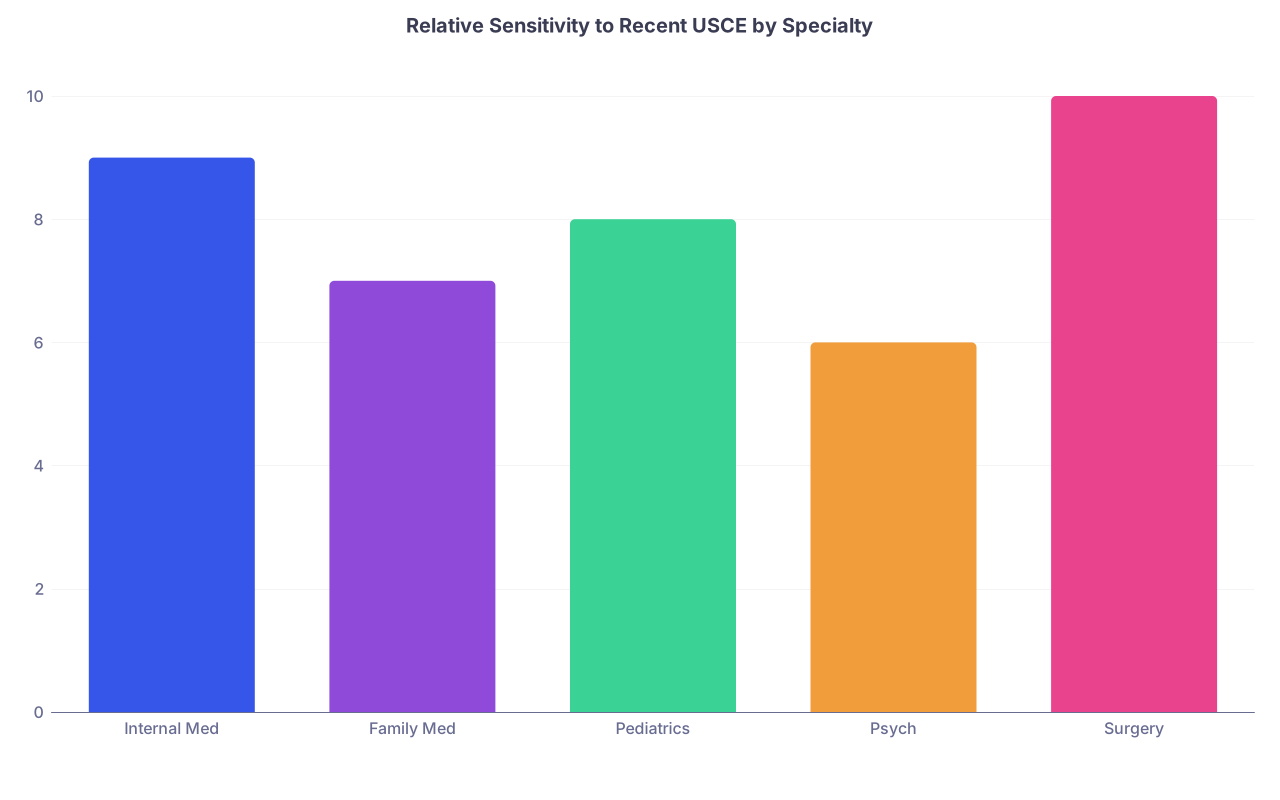
| Category | Value |
|---|---|
| Internal Med | 9 |
| Family Med | 7 |
| Pediatrics | 8 |
| Psych | 6 |
| Surgery | 10 |
(Scale 1–10: higher means more sensitive to timing/recency of USCE.)
Surgery:
- Sub‑internships and performance in the OR close to application season are huge.
- Don’t do your key surgery USCE 2+ years before applying.
Internal Medicine / Pediatrics:
- Want recent USCE but will accept 6–12 months range.
- A strong sub‑I in the spring or early summer before ERAS is ideal.
Psych / Family Med:
- Some programs more flexible on timeline.
- But recency still matters—try to keep main psych/FM rotations within 12–18 months of ERAS.
Practical Weekly & Daily Scheduling During Rotations
Let’s zoom into what your life looks like during a 4‑week US rotation when you’re also living in Step world.
Weekly Pattern (If Exam Is >8 Weeks Away)
Weekdays
- 7 am – 5 pm: Hospital/clinic
- 6 pm – 8 pm: Light review (UWorld 20–30 questions, Anki, brief reading)
- 8 pm – 10 pm: Admin (ERAS notes, email attendings, etc.), sleep preparation
Weekends
- 1 full day: 4–6 hours of dedicated Step work
- 1 day: Rest + rotation prep (reading about your patients, guidelines)
Closer than 6–8 weeks to exam? You should not be in a full‑time US rotation. It’s studying or high-performance clinical. Not both.
Visual: How Rotations, Step 2, and ERAS Fit in One Year
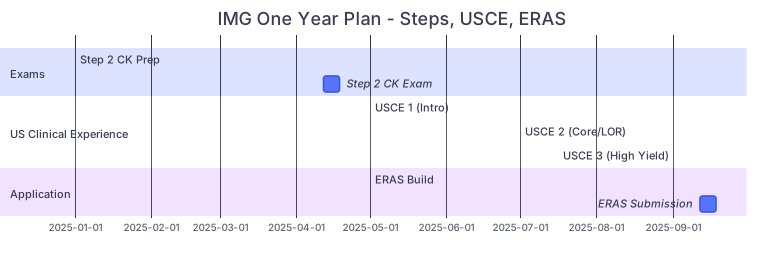
| Task | Details |
|---|---|
| Exams: Step 2 CK Prep | ex1, 2025-01, 3m |
| Exams: Step 2 CK Exam | milestone, 2025-04-15, 1d |
| US Clinical Experience: USCE 1 (Intro) | r1, 2025-05, 1m |
| US Clinical Experience: USCE 2 (Core/LOR) | r2, 2025-07, 1m |
| US Clinical Experience: USCE 3 (High Yield) | r3, 2025-09, 1m |
| Application: ERAS Build | a1, 2025-05, 3m |
| Application: ERAS Submission | milestone, 2025-09-15, 1d |
Adjust months as needed, but the core rules hold:
- No full USCE overlapping final Step push
- Strong USCE blocks after exams, but before or early in application year
Common IMG Myths That Kill Timelines
Let me quickly call out some bad advice you’ve probably heard:
“More months of USCE is always better.”
Wrong. Programs care about:- Quality of rotation
- Strength and specificity of letters
- Recency
Four targeted months beat 8 random shadowing months every time.
“Doing USCE during Step study shows you can handle stress.”
Programs do not award bonus points for self‑sabotage. They see your Step scores. They see your LORs. That’s it.“Any US letter is better than none.”
A vague, lukewarm letter is sometimes worse than no letter. Timing your rotations so attendings actually know you matters more than “checking a box.”
Final Calibration: How To Decide Your Next 3 Months
You do not need a 3‑year master plan today. You need the next 90 days under control.
Start with these three questions:
Do I have any Step exam left?
- Yes → Schedule study first, then plug in USCE after the exam in 4‑week blocks.
- No → Prioritize USCE close to application cycle and LOR generation.
Do I have at least 2 strong US letter prospects?
- No → Your next rotation must be at a place where faculty can see you closely and on time for ERAS letters.
- Yes → Additional rotations can be more strategic (prestige, subspecialty exposure).
Is my most recent meaningful clinical experience >18 months old?
- Yes → You need recent USCE before applying, or programs will doubt your current readiness.
Today’s action step:
Open a blank monthly calendar for the next 18 months. Mark your target ERAS submission month (September). Then block out:
- 8 weeks before each remaining Step exam as “No USCE – exam only.”
- 2–3 separate 4‑week windows in the 12 months before that September as “High-yield US rotation.”
- One week this month to contact at least 5 potential USCE sites that fit those exact windows.
If your calendar doesn’t work on paper, it will collapse in real life. Fix it now, not in the middle of a night shift, two weeks before your exam.