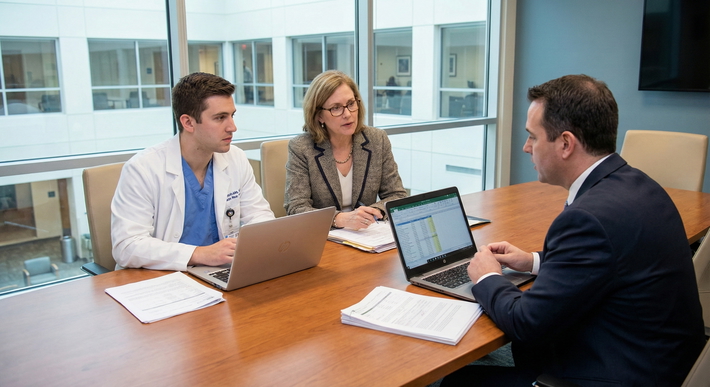
Away rotations are high-stakes auditions. You're stepping into a new system, trying to impress people who don't know you, while managing a heavier clinical load. If you need disability accommodations for exams, throwing that request into the mix at the last minute is a guaranteed disaster. You either don't get the support you need, or you look like a disorganized liability. Let's fix the process.
The Reality Check: Why Early Action is Non-Negotiable
The timeline is everything. I've seen students try to request accommodations on day one of a rotation. That's too late. The host institution doesn't have the infrastructure or time to magically grant your request, and legally, they can deny it citing "undue hardship" because you didn't give them enough notice to implement it. Conversely, emailing six months in advance is too early. Coordinators change, paperwork gets buried, and nobody knows what rotation you're even talking about.
The Goldilocks Zone is 4 to 6 weeks prior to your start date. This gives the host site enough time to process the paperwork, consult their ADA office, and set up the logistics without being caught off guard.
Here's the trap: you cannot simply forward your home university's accommodation letter to the host site. Away rotations are hosted by external institutions. They have their own legal counsel, their own ADA coordinators, and their own bureaucratic machinery. Your home school's approval means nothing to them beyond a helpful reference point. You must engage in a new, formal interaction with the host site.
Do not hide your needs. Downplaying your requirements until the rotation starts guarantees discomfort, underperformance, or a mid-rotation crisis. Owning your needs and handling them proactively demonstrates professional maturity. It tells the program director, "I know how to manage my responsibilities and communicate effectively." That's exactly the kind of resident they want to hire.
Step 1: Audit Your Documentation Before You Contact Anyone
Before you type a single email, audit your documentation. A weak letter fails. An effective accommodation letter has three critical components: the diagnosis (if local policy demands it), the functional limitations in a clinical setting, and the specific accommodations requested.
Vague requests like "I need help with testing" are useless. You must specify the exact intervention. Instead of "extra time," write "extended time by 1.5x for written shelf exams." Instead of "a quiet space," write "noise-canceling headphones for independent study periods." Specificity gives the ADA office a clear directive rather than an open-ended problem to solve.
Check your paperwork right now:
- Is it recent? Most institutions require documentation from the last 3-5 years.
- Is it signed by a qualified specialist? A note from your family doctor for ADHD won't cut it.
- Is it on official letterhead? If not, it's getting rejected.
The biggest gap I see is the difference between academic and clinical accommodation letters. Your undergraduate academic letter probably focuses on quiet testing rooms and extended time. That doesn't fly on a hospital floor. Your clinical letter must address patient safety, workflow integration, and physical access. If you have a mobility issue, the letter needs to specify how you'll handle rounding, stairs, and exam rooms. If it's a learning disability, it needs to address how it affects your EMR documentation speed and how the requested accommodation mitigates that.
Step 2: The Strategic Email Protocol to Program Directors
Now you're ready to reach out. The initial email is critical. Keep the subject line clear: "Away Rotation Accommodation Inquiry - [Your Name] - [Rotation Dates]". The tone must be strictly professional and administrative. Do not over-share your medical history. The program director doesn't need to know your trauma or your diagnostic journey. They need to know you are compliant and organized.
Identify the right stakeholders. Usually, you start with the Away Rotation Coordinator. Sometimes you have to loop in both your home school's Disability Services and the host site's Disability Services. Don't assume the coordinator will automatically forward your request to the right office.
Here is the exact template structure to use:
- Introduction: Who you are, your rotation dates, and your assigned specialty.
- Purpose: State clearly that you are requesting to initiate the interactive process for disability accommodations.
- Reference: Mention that you have an established accommodation plan at your home institution (attach it).
- Attachment Reference: Note that the clinical documentation is attached.
- The Ask: Ask if they have host-specific forms you need to complete.
- Deadline Confirmation: Give a soft deadline for their response to keep the process moving.
You will face objections. Coordinators get confused. A common response is, "We don't handle accommodations here, just show up and do your best." That's wrong, and you need a script to handle it.
If they push back, reply with: "Thank you for the response. Could you please direct me to your institution's ADA Coordinator or Disability Services Office so I can ensure I am in compliance with your site's specific policies?"
Step 3: Navigating the Host Institution's ADA Process
Every host hospital and university has its own ADA or Section 504 office. They have legal autonomy. They can, and often do, interpret reasonable accommodations differently than your home school. Prepare for this reality.
You'll hear the phrase "undue hardship." In medicine, this usually translates to perceived patient safety risks. If you request an accommodation that the host institution feels compromises patient care or workflow significantly, they can deny it. Your job is to proactively mitigate these perceived hardships in your request. If you need a step stool to examine patients, explicitly state in your documentation that it will be stored safely and does not impede room clearance.
The Interactive Process is not a yes/no decision; it's a negotiation. Be prepared to discuss alternatives. If they deny your request for extended break time due to scheduling constraints, ask if scribe assistance or a modified rounding schedule is possible instead. Go in with a primary request and two backups.
Confidentiality is your right, but you must enforce the boundary. Reassure the hosts that you expect strict privacy regarding your diagnosis. Keep the conversation focused entirely on the functional barrier and the solution. Don't get bogged down in the medical weeds. If they ask for detailed medical history, politely redirect: "I prefer to focus on how we can implement the requested accommodations to ensure I meet the standard performance metrics."

Step 4: Execution Plan: Day-One Protocols for Success
You've got the approvals. Now you have to execute. Create a "Rotation Survival Kit." This should include physical and digital copies of your final accommodation letters, direct contacts for both your home and host disability services, and a self-advocacy script for the first day.
You will need to meet your preceptors and faculty. You have to disclose your accommodations effectively without stigma. Don't apologize for your needs. Use this exact script: "I have arranged for [X accommodation] through the disability office, which ensures I can meet the same performance standards as my peers." Period. No further explanation needed unless they ask for logistical details.
Do a logistics check before the first day. Verify physical access to exam rooms, call rooms, and the cafeteria. If you use assistive technology, verify it works with the hospital's EMR system. Screen readers and voice-to-text software often clash with Epic or Cerner. Figure that out on a weekend, not at 6 AM on Monday when you're supposed to be rounding.
Self-monitor throughout the rotation. Track the effectiveness of your accommodations. If the extended time isn't working because exams are given at erratic times, communicate that immediately to the coordinator. Adjust on the fly.
Key Takeaways
- Start the process 4-6 weeks before your rotation. Never wait until you arrive.
- Your home university's documentation is a starting point. You must adapt it to the host institution's specific ADA requirements.
- Focus on functional limitations and solutions, not just medical diagnoses, when communicating with host sites.
- Treat the accommodation request as a professional negotiation involving multiple stakeholders (PDs, Disability Office, Preceptors).
Stop treating accommodations as a weakness to hide. They are a logistical challenge to manage. Take control of the process, audit your paperwork, and execute the protocol. You have the tools. Now go secure your rotation and focus on becoming a great doctor.