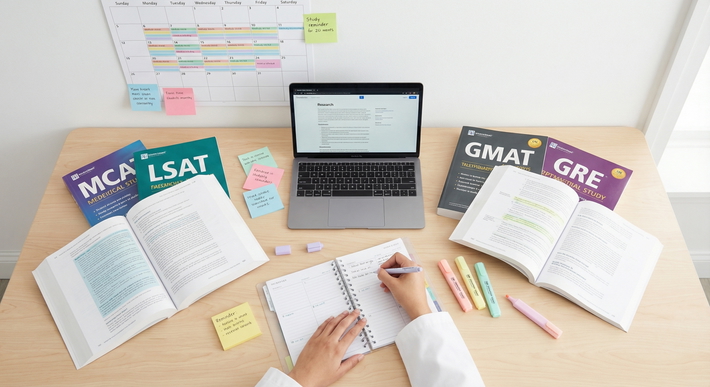
Most board prep advice is garbage. Not "slightly suboptimal" garbage. Actual, measurable, time-wasting garbage that costs students months of their lives and thousands of dollars. I've watched hundreds of medical students grind through the wrong methodology and burn out before they ever see the exam. The syllabus I'm going to walk you through isn't popular. It's not what your favorite YouTube creator recommends. But it's what the cognitive science actually supports, and frankly, that's the only thing that matters when your career is on the line.
Stop Reading First Aid Cover to Cover: The Evidence-Based Syllabus
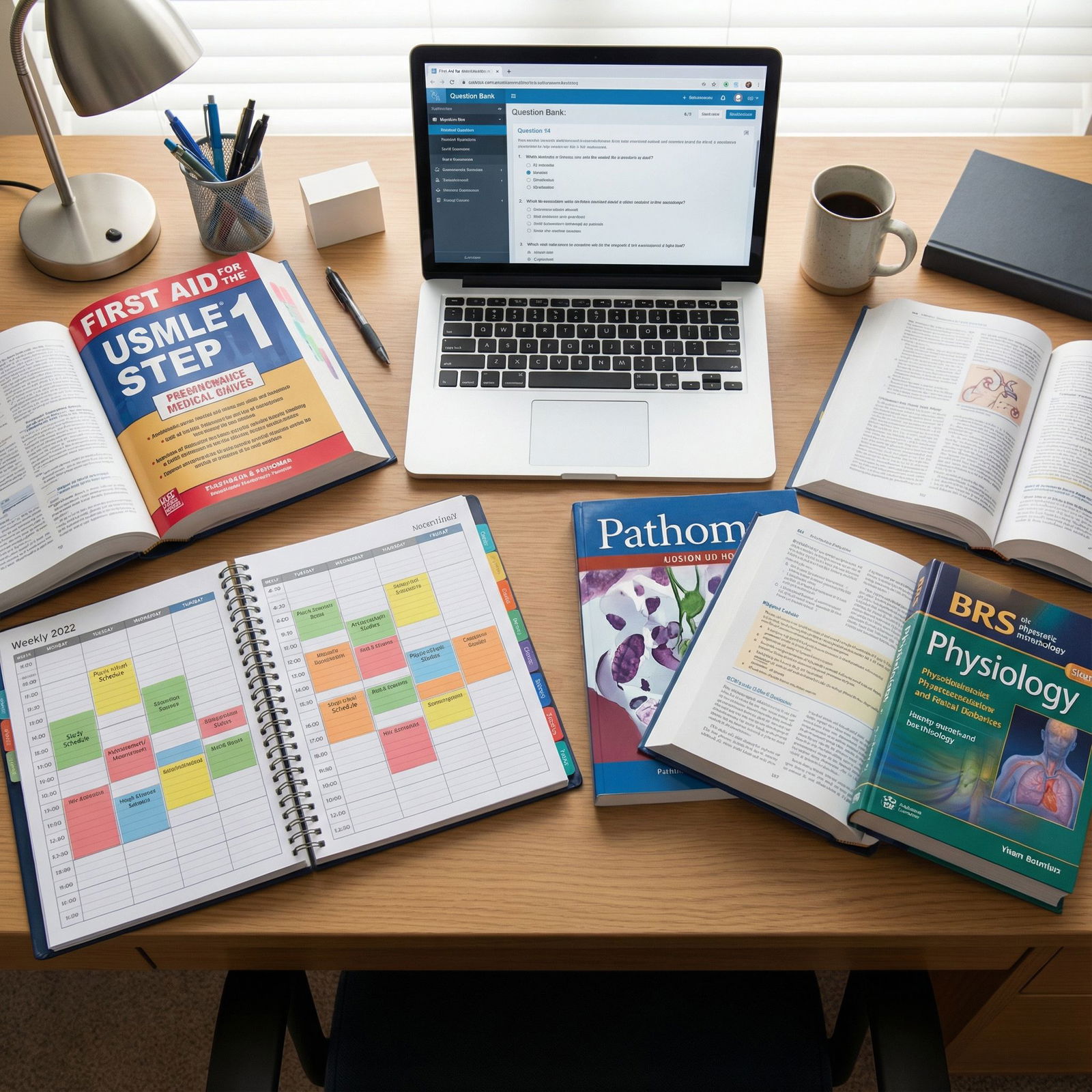
The biggest lie in medical education is that First Aid for the USMLE is a textbook. It isn't. It's a reference guide, a high-density compilation of facts designed for retrieval, not linear consumption. Reading it cover to cover is one of the most counterproductive things you can do, and yet thousands of students do exactly this every year.
Here's the ugly truth: passive reading creates the Illusion of Competence. You turn the page, the words register, you think "yeah, I know that," and you move on. Your brain registers the familiarity of the material, not the understanding of it. Cognitive psychology research (Karpicke & Roediger, 2008) demonstrates this clearly. Students who re-read material consistently overestimate their retention and dramatically underperform on actual testing compared to peers using active recall.
Then there's the Volume Fallacy, the cult of the 12-hour study day. Nobody talks about this enough. Studying for 12 hours straight isn't dedication; it's neurological self-harm. Your prefrontal cortex, the region handling deep learning and integration, fatigues after roughly 4 hours of intense focus. After that, you're not studying. You're staring at words and convincing yourself you're being productive. The syllabus must be built around deep work, not raw hours logged.
The fix is simple but uncomfortable: a syllabus based on active recall, spaced repetition, and ruthless prioritization. Not a page-by-page march through someone else's outline. A map of your gaps, sequenced for maximum retention.
The 'UWorld First' Fallacy: Why You Can't Guess Your Way to a High Score
The second lie is that you should "start with UWorld questions" to "test yourself early." This is the worst advice in board prep, and it's everywhere.
Look, I get the logic. "See how you do early!" "Identify weak areas!" Sounds reasonable. The problem is the execution. Attempting clinical vignettes without a foundational knowledge base creates what I call the Guessing Loop. You don't know the answer, so you guess. Sometimes you get it right by elimination or pattern-matching, not because you understood the underlying pathophysiology. Your brain files away the question recognition, not the conceptual understanding. Weeks later, that same concept appears on a real exam, slightly disguised, and you blank.
The data is unambiguous on this. Students who completed foundational reading before launching into question banks score significantly higher on practice tests and ultimately on Step 1 than question-first students (Fonteyn & Kuipers, cited in multiple NBME self-assessment analyses). The mechanism is straightforward: you need substrate before you can test it. Without the basic science foundation, clinical vignettes are just educated guessing decorated with buzzwords.
A real syllabus prioritizes your knowledge gaps in this order: Pathophysiology → Pharmacology → Clinical Application. You build the foundation first. Only then do you start stressing it with vignettes.
That chart should terrify anyone who spends their day highlighting textbooks. Ninety percent of what you passively "learned" is gone within 24 hours. Active recall holds. Spaced repetition dominates.
The 'Volume' Myth: Quality Over Quantity in Your Syllabus
Here's a fun fact nobody tells you in medical school: sleep is a study tool. Not a break from studying. Not a luxury for the weak. An active, irreplaceable component of memory consolidation. Your hippocampus literally replays the day's learning during REM cycles, transferring information to long-term storage. Cut your sleep to "study more" and you're actively erasing what you tried to memorize.
This brings us to Cognitive Load Theory, which is the most underutilized framework in medical education. Your working memory has a finite capacity, roughly four chunks of information at any moment. When you try to learn renal physiology, acid-base chemistry, and ECG interpretation in the same sitting, you don't learn all three. You learn none of them. The brain doesn't store what it can't process.
A high-yield syllabus respects this. It schedules 2-4 hour deep work blocks followed by mandatory recovery. It refuses to stack unrelated high-density topics. It treats review sessions as equal in importance to first-pass learning. It schedules sleep with the same seriousness as study time.
The syllabus is a map of gaps, not a checklist of hours. If you've mastered cardiac embryology, it shouldn't be in your daily rotation. It's an asset now, not a project. Rotate it out. Move on. The time you save goes toward your actual weak zones, your pulmonary hypertension, your lysosomal storage diseases, your obscure drug interactions that NBME loves to torture students with.
This loop is the engine. Everything flows through identification of gaps, active engagement, immediate testing, and spaced consolidation. Notice what's missing: passive review. Note-taking for the sake of note-taking. Highlighting. These aren't part of the loop because they don't produce retention.
Building the Syllabus: From Chaos to Data-Driven Optimization
Alright. Let's actually build this thing.
Step One: Audit your baseline. Take a full-length diagnostic test (NBME Free 120 or UWorld Self-Assessment) under real conditions. But don't just look at the score, dissect it. Tag every missed question by topic and by reason for missing it. Did you miss because you didn't know the fact? Because you misread the stem? Because you didn't recognize the classic presentation? Each reason demands a different intervention in your syllabus. A "didn't know the fact" miss needs foundational reading. A "misread the stem" miss needs question-stem analysis practice. These are not the same problem and they should not get the same solution.
Step Two: Prioritize by frequency and impact. You don't have time to master everything. Accept that now. Focus on the high-yield zones, Cardiology, Internal Medicine, Infectious Disease, Pharmacology, that account for the majority of exam weight. A topic appearing on 80%+ of board exams gets daily attention. A topic appearing once every three years gets one spaced review. Build your syllabus around the curve, not the outliers.
Step Three: Schedule for spacing. Spaced repetition isn't a buzzword; it's the most efficient learning algorithm we have. Use Anki or build a custom spreadsheet that schedules reviews at increasing intervals (1 day, 3 days, 7 days, 14 days, 30 days). Every review should be active, you write the answer, you explain the mechanism, you don't flip the card over until you've committed to a response. Passive flipping is just re-reading with extra steps.
Step Four: Iterate ruthlessly. Your syllabus is a living document. Weekly, audit your progress. Topics you've mastered? Rotate them out. New gaps revealed by practice questions? Slot them in. The syllabus isn't a static plan you made in week one; it's a dynamic optimization problem that responds to your actual performance data. I've seen students cling to a "plan" they made in January through an entire prep period, even as their diagnostic data screamed that the plan wasn't working. Don't be that person.
The Reminder You Actually Need
The default board prep approach, read everything, question everything, study until you collapse, is designed by people who profit from your anxiety, not your success. Question banks sell access. Review books sell covers. YouTube channels sell watch time. None of them are optimizing for your score.
Your syllabus should be optimized for your score. Built on data. Driven by active recall. Scheduled around your actual cognitive limits. Updated weekly based on what the diagnostics tell you. That's it. That's the whole game.
Stop reading First Aid like it's a novel. Stop treating sleep as the enemy. Stop building your plan around hours logged instead of concepts mastered. The students who score 250+ aren't working harder than you. They're working differently. They're following the cognitive science while everyone else is following tradition.
Build the syllabus the evidence demands. Your future self, the one holding the passing score report, will thank you.