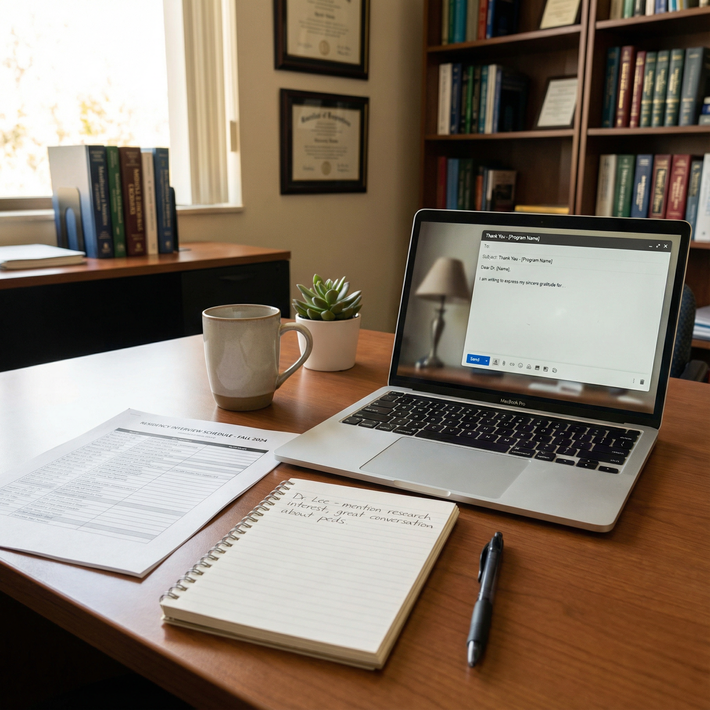
You've heard it a hundred times: "Send a thank-you note after your interview." Most candidates treat this as a checkbox. They find the program director's email on the program website, fire off a generic message about "how much I enjoyed our conversation," and call it a day.
Here's the problem. That note is invisible. It says nothing. And it ignores the people who actually decide whether you get ranked.
The "silent interviewers" are not silent at all. They are the program coordinator who managed your schedule. The chief resident who watched you navigate a difficult question. The nurse manager who saw how you treated the admin assistant carrying your coffee. These people talk. And their feedback carries weight that can quietly sink an otherwise stellar application.
Let me show you how to write thank-you notes that actually work, and how to include the people most candidates forget.
The Hierarchy of Influence: Who Actually Has a Vote?
Stop thinking about the interview as a one-on-one event with the program director. It is not. It is a multi-input data collection exercise, and the inputs come from everywhere.
The Program Coordinator. This is the person running the entire machine. They know who canceled, who was rude, who sent a follow-up, and who ghosted. Many programs have a formal checkbox for coordinator feedback. Underestimate them at your peril.
The Chief Residents and Resident Panel. They sit in the room. They ask the "fit" questions. And unlike the faculty, they see you when the program director leaves. Many selection committees give resident feedback disproportionate weight precisely because they are the ones who will work eighty hours a week alongside you.
The Nursing Staff and Support Team. This is the group most candidates ignore, and it is a strategic error. Nurses, medical assistants, and front-desk staff see your unguarded behavior. Did you make eye contact? Did you say "please" and "thank you"? Did you check your phone? The feedback they give is often informal, sometimes a casual word to the program director, sometimes a comment in a debrief. It is rarely logged formally, but it is remembered.
Here is how the decision actually flows:
A negative comment from a coordinator can neutralize a great formal interview. I have seen it happen. A candidate who nailed every clinical question but snapped at the front desk about a delayed tour. The coordinator noted it. The candidate did not match.
Treat every human interaction on interview day as part of the assessment. Because it is.
Anatomy of an Inclusive Thank-You Note
A thank-you note is not a courtesy. It is a final sales document. You are reinforcing your brand, demonstrating attention to detail, and proving you can communicate like a professional.
Most candidates write notes that could be cut-and-pasted into any program. "Thank you for the opportunity. I really enjoyed learning about your program. I am very interested." Delete this. It is filler. It proves nothing.
Here is the protocol I use, and what I tell every candidate I coach.
The Specificity Protocol.
A thank-you note must reference something specific. For the program director, that might be a clinical research opportunity you discussed. For a chief resident, it might be a piece of advice they gave you about surviving intern year. For a coordinator, it might be the way they handled a scheduling conflict or a logistical question you asked.
The specific detail does two things. It proves you were listening. It makes the note impossible to forward to another candidate. The best notes feel handwritten because they essentially are. They reference a moment that only existed in that room, on that day, with that person.
Bridging to Your Professional Goals.
After the specific reference, bridge to your future. Not in a desperate "I will be the best resident you have ever seen" way. In a grounded, "this is what I am working toward, and this is why your program fits" way.
For example, if the chief resident mentioned the new simulation curriculum, write back about how hands-on simulation fits your learning style, or how it connects to a research question you are pursuing. This shows you are forward-thinking. It shows you are already imagining yourself there.
The Closing That Doesn't Beg.
Do not write "I really hope to join your program." The program already knows. They interviewed you. Instead, close with a clean, professional sign-off that reaffirms the connection. "Thank you again for your time. I look forward to hearing from the committee." Done. Confident. Not needy.
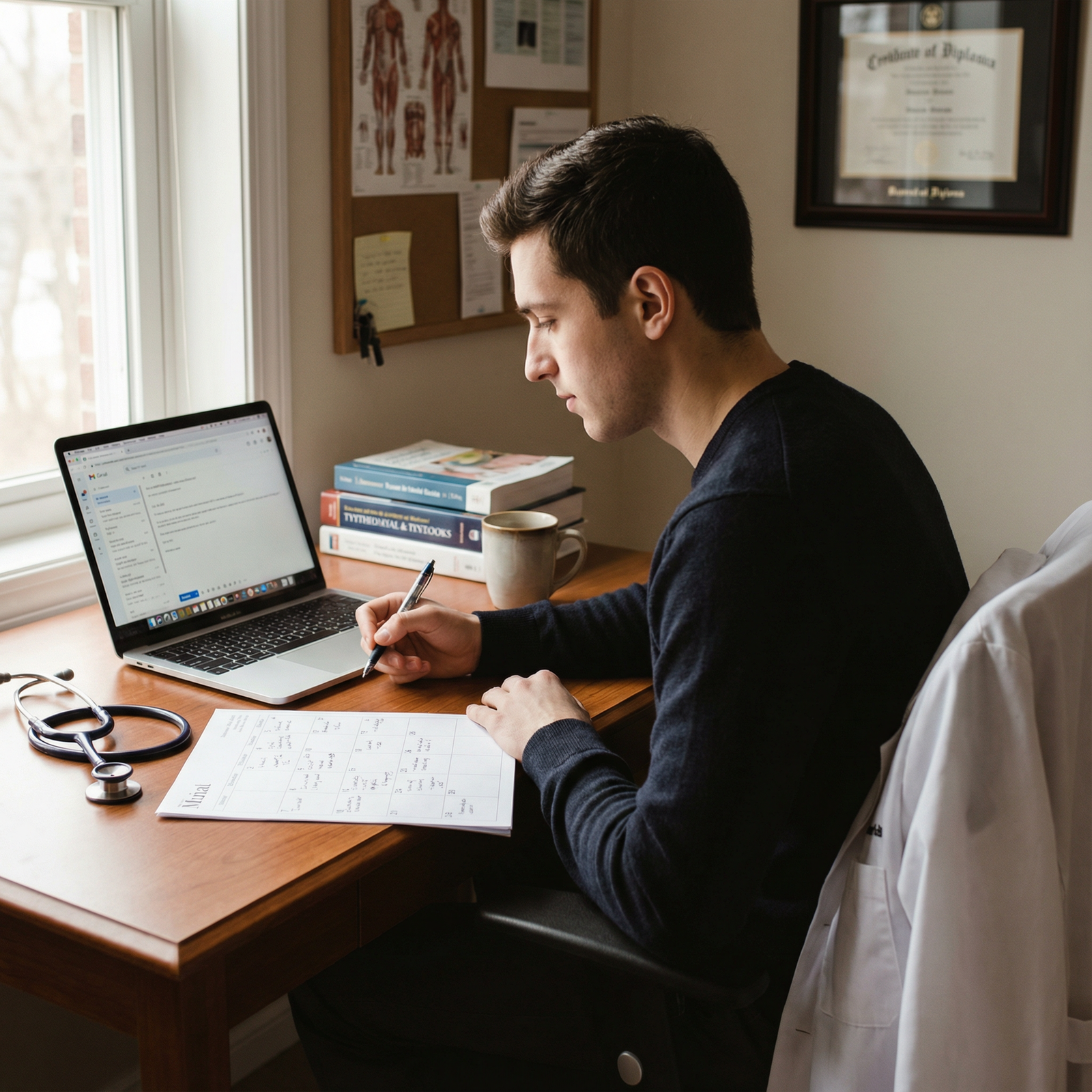
A generic template is not just a missed opportunity. It is a death sentence. Every selection committee member has read three hundred of them. Yours should feel like it took thirty seconds longer to write. Because it did.
Tactical Timing and Multi-Channel Engagement
Timing matters. But not the way you think.
The common advice is "send within 24 hours." That is fine as a baseline. The real principle is this: send while the conversation is still mentally fresh. For most people, that means the same evening or the next morning. Beyond 48 hours, recall drops. Beyond a week, you are essentially sending a stranger a note.
Here is the engagement curve you should keep in mind:
Notice the cliff between 24 and 48 hours. That is where most candidates are still drafting. You should be sending.
Email Versus Handwritten.
In the digital cycle of residency applications, email wins. Programs process dozens, sometimes hundreds, of applications. A handwritten note arrives three to five days after the interview, by which time the discussion may have already happened. Email is instant, trackable, and easy to forward to committee members.
That said, a handwritten card to the program coordinator, who is often the most overlooked person on the team, can be a strategic move. Coordinators are desk-bound. They notice physical mail. A short, sincere card with a specific reference to their help on interview day can be a quiet differentiator.
Multi-Channel Engagement Without Looking Desperate.
You can absolutely include the silent interviewers. Here is the script I recommend.
Send the formal thank-you to the program director or your primary interviewer the same evening. Send a separate, brief, sincere note to the program coordinator the next morning, referencing something specific they helped with. If you had meaningful interaction with a chief resident, send them a short email within 24 hours as well. Nursing staff or tour guides? Same treatment. Short, specific, sincere.
Three to five notes, all sent within 24 to 48 hours, is appropriate. More than that, and you are spamming. Less than that, and you are missing the point.
Do not connect on LinkedIn with the committee the same day. Do not DM them. Do not follow up asking if they got your note. The note is the closing argument. After that, trust the process.
Closing: The Final Push for Your Rank List
You have one shot to make the thank-you note count. Here is the playbook.
Audit your interview day. Who did you speak with, and for how long? What did they say that stuck with you? Which logistical questions did the coordinator help you navigate? Which piece of advice did the chief resident drop that you are still thinking about?
Write a customized note for each person who had meaningful interaction with you. Reference something specific. Bridge to your professional goals. Close with confidence, not need.
Then send them all within 48 hours. Move on. Trust the process. The rank list meeting will happen with or without your follow-up. Your job is to make sure your name comes up with a positive, specific memory attached to it.

Do not become a stalker. Do not send a second follow-up. Do not ask for confirmation. The note is a gift, not a transaction. Let it land.
Now go write them. Today. Before the day ends.