
Most residency thank-you emails are too long by at least 50%.
If you’re writing more than 150 words, you’re almost certainly overshooting.
Let me give you the clear answer first, then we’ll get into the details.
- Ideal residency thank-you email length: 75–125 words
- Hard maximum: 150 words
- Minimum (without sounding rude): 40–50 words
If you stay in that range, you look thoughtful, efficient, and respectful of the program’s time. Go beyond it and you start to look anxious, rambling, or unaware of how busy attendings and PDs are.
Core Rule: Shorter Than You Think
Here’s the reality from the program side: many faculty open your email on their phone between cases, in clinic, or while half-paying attention in a meeting.
They do not want your personal statement 2.0 in their inbox.
Your thank-you email should do 4 things, nothing more:
- Thank them for their time.
- Mention 1 specific detail from your interaction.
- Reaffirm your interest in the program.
- Close politely with your name/contact.
You can do all of that in under 100 words comfortably.
A reliable word-count rule:
- Super concise: 50–70 words → Fine for busy PDs or generic follow-up.
- Ideal “sweet spot”: 75–125 words → Best for most interviewers.
- Upper limit: 130–150 words → Only if you have a genuinely meaningful, specific point to reference.
If you’re past 150, you’re not “thorough.” You’re adding fluff.
Why Word Count Matters More Than You Think
You’re not writing a piece of literature. You’re signaling judgment.
Long emails quietly say:
- “I don’t understand how busy you are.”
- “I’m trying too hard to impress you with words.”
- “I’m using this thank-you as a second sales pitch.”
Good programs don’t love any of that.
Short, clean emails say:
- “I respect your time.”
- “I can communicate clearly and briefly—like I will in the chart.”
- “I’m mature enough not to grovel.”
And yes—length is visible at a glance. Before they read a word, they see a wall of text or a quick, digestible note. That first impression matters.
Exact Word Count Targets (With Examples)
Let’s break it down by situation.
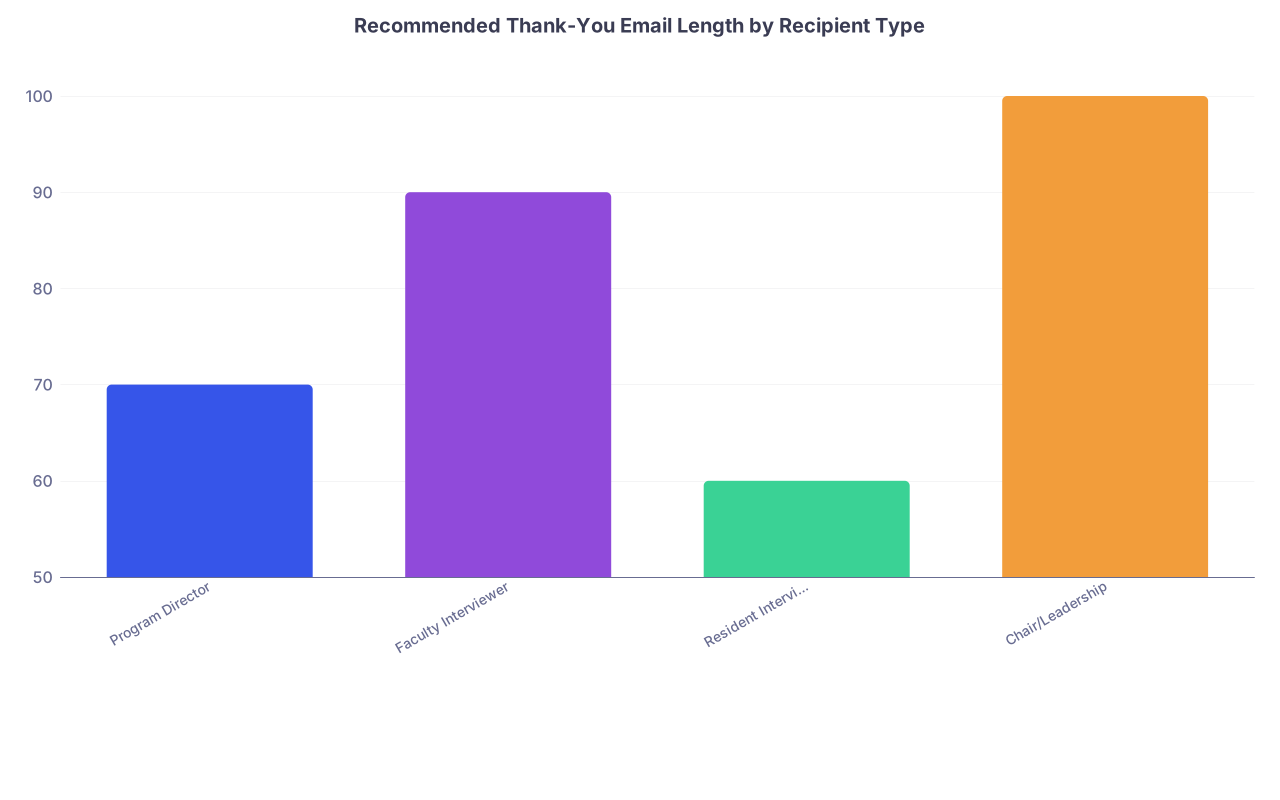
| Category | Value |
|---|---|
| Program Director | 70 |
| Faculty Interviewer | 90 |
| Resident Interviewer | 60 |
| Chair/Leadership | 100 |
1. Program Director (PD)
Target: 70–120 words
They’re getting the most emails. You need to be concise and specific.
Example (~95 words):
Subject: Thank you for the interview yesterday
Dear Dr. Smith,
Thank you for the opportunity to interview at the ABC Internal Medicine Residency yesterday. I appreciated your candid overview of the program’s emphasis on resident autonomy and your discussion of how ABC prepares residents for both hospitalist and fellowship paths.
Our conversation reinforced my strong interest in your program, particularly the opportunity to work closely with underserved populations at County Hospital.
Thank you again for your time and consideration.
Sincerely,
Jane Doe
Clean. Specific. Under 100 words. Perfect.
2. Faculty Interviewer
Target: 75–125 words
You usually have one clear hook from the conversation—use it.
Example (~105 words):
Subject: Thank you for speaking with me
Dear Dr. Patel,
Thank you for taking the time to speak with me during my interview day at XYZ Anesthesiology. I especially enjoyed hearing about your work in regional anesthesia and your approach to teaching residents nerve blocks in a stepwise, hands-on way.
Our discussion confirmed that XYZ’s strong procedural training and supportive teaching culture would be an excellent fit for my learning style and long-term goals.
I appreciate your time and the insight you shared about the program.
Best regards,
Alex Johnson
Notice what’s missing: no long paragraph about your entire CV. No emotional essay about your journey. Just focused appreciation and a clear connection to what you discussed.
3. Resident Interviewer
Target: 50–90 words
Residents are slammed. Your thank-you can be shorter and more casual.
Example (~70 words):
Subject: Thanks for chatting on interview day
Hi Dr. Lee,
Thank you for taking the time to talk with me during my interview at City Med. Hearing your perspective on call schedules and how supportive the senior residents are gave me a much clearer sense of the program’s culture.
I really appreciated your honesty and time.
Best,
Mark
This is where people massively over-write. You don’t need five sentences about how “relatable” they were. Keep it quick.
Structure: How to Stay Within 75–125 Words
If you tend to ramble, use this strict template:
- Greeting line
- Thank-you sentence
- One specific connection sentence
- Interest/fit sentence
- Closing line + signature
That’s it. That’s your whole email.
Functional skeleton:
Dear Dr. [Name],
Thank you for [time / opportunity] at [Program].
I especially appreciated [specific detail from conversation/interview day].
Our conversation reinforced my interest in [Program], particularly [brief fit/interest].
Thank you again for your time and consideration.Sincerely,
[Name]
[AAMC ID (optional)]
If you stick to that, you will almost never cross 120–130 words.

| Step | Description |
|---|---|
| Step 1 | Start Draft |
| Step 2 | Write 1st Thank Sentence |
| Step 3 | Add 1 Specific Detail |
| Step 4 | State Interest/Program Fit |
| Step 5 | Add Brief Closing |
| Step 6 | Send |
| Step 7 | Cut Extra Sentences |
| Step 8 | Word Count <= 150? |
What To Cut When You’re Over 150 Words
If you paste your draft into a word counter and it’s 180–250 words (I see this constantly), start deleting. Here’s what usually needs to go:
Your life story
Anything that sounds like, “Ever since medical school began…” → Delete.Reciting your CV
“As we discussed, I have done research in…” → Unnecessary. They already saw your ERAS.Emotional overkill
Multiple sentences like, “I would be absolutely honored…” or “I cannot express enough how grateful…” → Cut it down to one normal-sounding line.Multiple specific points
One specific callback is powerful. Three is overdone. Choose the strongest one.
Take this bloated version (way too common):
Thank you so much for taking the time to speak with me at length yesterday about the XYZ Residency Program. Talking to you reminded me of why I chose medicine and cemented my passion for internal medicine. Ever since the beginning of third year, I have loved taking care of complex patients…
Versus the stripped-down version:
Thank you for taking the time to speak with me yesterday about the XYZ Internal Medicine Residency. I appreciated your insight into how the program supports residents managing complex patients on the wards.
Same meaning. Half the words. And much easier to read.
Timing + Length: How They Work Together
Length is only half of this. Timing matters too.
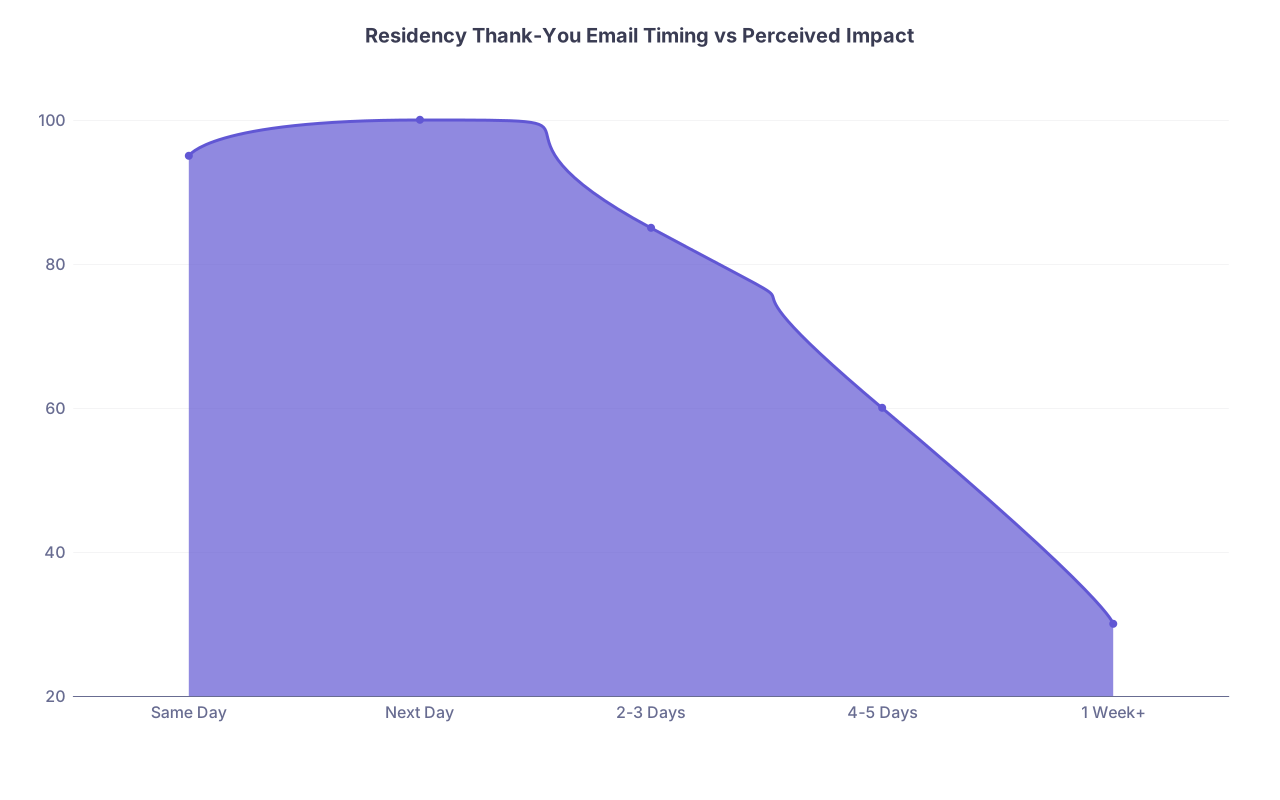
| Category | Value |
|---|---|
| Same Day | 95 |
| Next Day | 100 |
| 2-3 Days | 85 |
| 4-5 Days | 60 |
| 1 Week+ | 30 |
General rule:
- Send within 24 hours of your interview if possible.
- Up to 48 hours is still fine.
- Beyond that, the impact drops off quickly.
Shorter emails make this easier. If your thank-you takes you 30 minutes to write and edit, you’re doing too much. These should be 5–10 minute tasks, tops.
How Many Thank-You Emails Should You Send?
Short answer: if the program allows them, email each person who directly interviewed you.
You can keep them very similar in structure, customized with:
- Their name and role
- One specific detail from your conversation
- A slightly tweaked interest sentence if relevant
Because you’re aiming for 75–125 words, this doesn’t become a massive time sink even if you had 3–5 interviews that day.
| Interviewer Type | Email? | Target Length (Words) | Tone |
|---|---|---|---|
| Program Director | Yes | 70–120 | Formal |
| Chair/Dept Leadership | Yes | 80–130 | Formal |
| Faculty Interviewer | Yes | 75–125 | Semi-formal |
| Resident Interviewer | Yes | 50–90 | Slightly casual |
| Group Session Only | Optional | 50–80 | General/generic |
Common Length Mistakes To Avoid
I’ve watched dozens of applicants fall into the same traps. Here’s where word count explodes.
Mistake 1: Turning It Into a “Love Letter”
Line like: “Your program is my absolute top choice and I cannot imagine training anywhere else” followed by three sentences of gushing praise. That’s how you hit 200+ words.
Fix: One clear, calm line is enough:
“After my interview day, your program ranks very highly on my list.”
If you’re going to signal strong interest or intent later in the season, that’s a separate communication. Not this.
Mistake 2: Re-explaining your weaknesses or context
People try to “clarify” a low Step score or explain a leave of absence in their thank-you. That almost always runs long and sounds defensive.
Thank-you emails are not for damage control.
They’re for gratitude and a light touch of fit.
Mistake 3: Weird formatting to cram more in
Double-spacing each line, adding long subject lines, or giant paragraphs all work against you. When someone sees a big gray block of text on their phone, they skim or skip.
You want:
- A clear subject (8–10 words)
- 1 short paragraph (2–4 sentences)
- Optional second mini-paragraph (1–2 sentences)
- Signature
That’s it.
Quick Checklist Before You Hit Send
Read your draft once with these questions:
- Is it under 150 words?
- Is there exactly one specific detail from our interaction?
- Do I clearly say “thank you” and clearly signal interest?
- Are there any sentences that sound like my personal statement? Delete them.
- Would this take 20 seconds or less to read on a phone?
If yes to all five, you’re done. Send it and move on with your life.
Final Thoughts
Thank-you emails rarely make your application—but they can quietly hurt you if you mishandle them. Long, over-earnest messages are a common way to signal poor judgment.
Stick to this:
- Aim for 75–125 words, absolute cap at 150 words.
- One specific detail, one clear interest statement, and you’re done.
- Respect their time, write like a professional, and keep it moving.
That’s how you use thank-you emails the way they’re actually meant to be used: as a small, efficient professional courtesy. Not a second interview.