The blunt answer: Sending one group thank-you email to multiple interviewers is lazy, obvious, and usually a bad idea.
You’re asking a fair question though, because interview season is brutal. Thirty interviews. Hundreds of emails. You don’t want to live in your inbox. So let’s cut through the noise and get specific about when you can combine messages, when you absolutely shouldn’t, and what actually matters to program directors.
The Short Answer: No For Faculty, Maybe For Residents
Here’s the clean rule set you can follow without overthinking:
Faculty interviewers (PD, APD, chair, core faculty):
Send separate, personalized thank-you emails. Always.Multiple resident interviewers on a panel or social:
You can send one group email to residents, but it still needs to sound specific and not like spam.Large groups (pre-interview dinner, social with 10+ people):
Email 1–2 key people (chief residents, coordinator, or social organizer). Don’t email a 15-person CC list.
You can stop reading there and be 90% correct. But if you want to know the “why,” and how to make this sustainable across a busy interview season, keep going.
Why One Big Group Email Usually Backfires
Programs can spot a mass email from a mile away. It reads like this:
“Dear Interviewers,
Thank you all for taking the time to speak with me today. I really enjoyed learning more about your program…”
That’s generic. It doesn’t reference anything real. It doesn’t help them remember you. It doesn’t show effort. It just proves you know how to copy/paste.
The problems with group faculty emails:
They feel impersonal
You had individual conversations. You probably discussed different cases, research interests, or life topics. A group message wipes all that away.They’re not useful to the program
Part of the point of a thank-you is to reinforce your fit and give them a specific memory: “Oh, that’s the IMG who’s really into QI and rural medicine.” Group emails don’t do this.They can look unprofessional
Especially if you lump the PD, chair, and random faculty into one CC. It reads like you didn’t value their time enough to send three separate emails.
Do people get rejected because they sent one group email? No. But when you’re compared to equally strong applicants who wrote thoughtful, specific messages, you lose a little ground.
How Many Thank-You Emails Do I Actually Need to Send?
You don’t have to email every human you saw on Zoom.
Use this priority list:
- Program Director
- Assistant PD (if you interviewed with them)
- Any faculty you had a one-on-one or small group interview with
- Chief resident if they played a big role (ran your day, led the social, did your main tour)
- Optional: Resident panel / social organizers (one group email is fine here)
You do not need to email:
- Every resident from the pre-interview social
- Every presenter from the morning conference
- The person who popped in for 3 minutes to say hi
Most applicants end up sending 3–6 emails per program, not 15.
When a Group Thank-You Email Is Okay
Here are the scenarios where a group message makes sense and doesn’t make you look careless.
1. Resident Social or Panel
If you spent an hour with 5 residents on Zoom or in person, you can send something like this:
- One email
- To: 2–4 key residents who were most involved
- CC: optional, if they gave you a group email address or told you to reach out
Example:
Subject: Thank you for the resident social
Dear [Resident 1], [Resident 2], and team,
Thank you all for taking the time to talk with me at the resident social on [date]. Hearing about your experiences with [night float schedule / mentorship / fellowship matches] really helped me understand the culture of the program.
I especially appreciated [specific detail: how you described autonomy as a PGY-2, your honest take on work-life balance, hearing about the ECMO cases, etc.].
I left the evening even more excited about the possibility of training at [Program Name].
Best,
[Your Name], [Your Medical School]
That’s fine. They know it’s a group thank-you. No one expects a novel here.
2. Address Provided Specifically for Follow-up
If the program says:
“For any questions after your interview, please email all your questions to [email protected], and we’ll distribute them as needed.”
Then yes, use that. In that case, a “group” message is literally what they want.
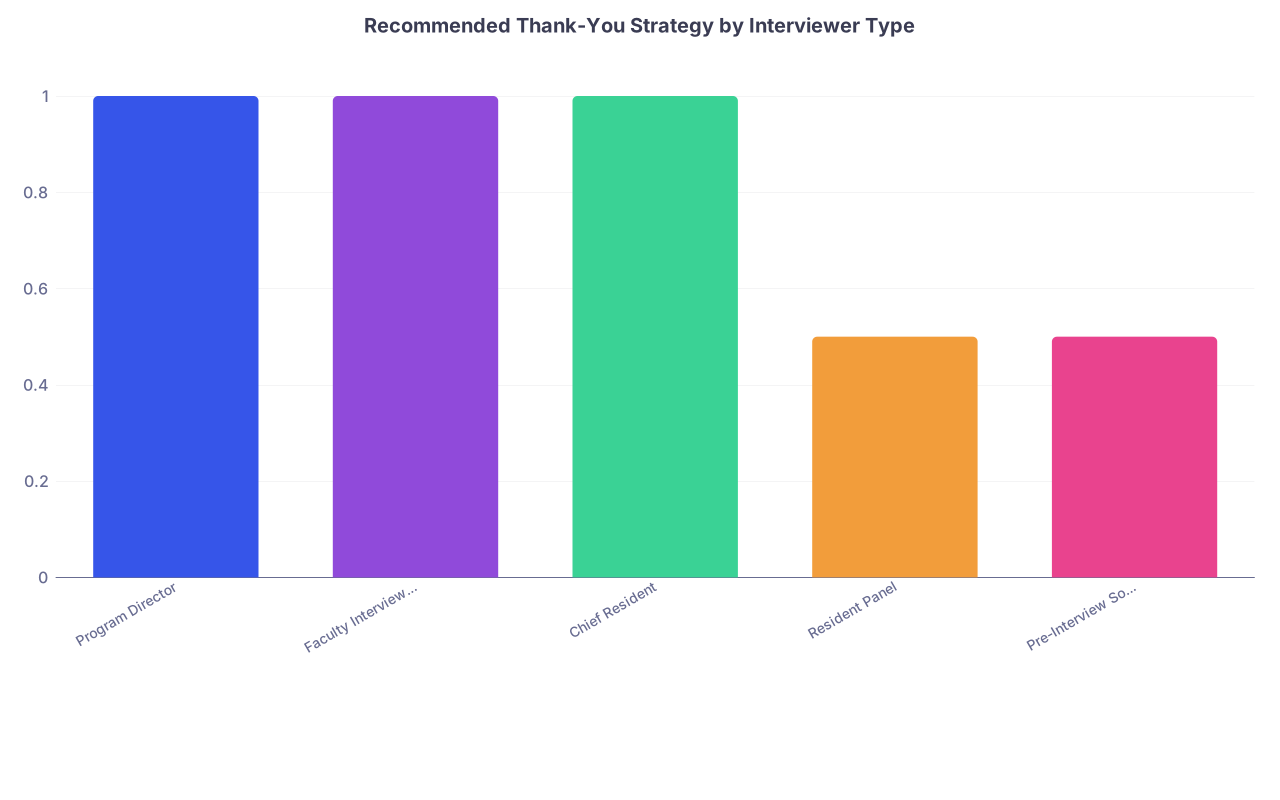
| Category | Value |
|---|---|
| Program Director | 1 |
| Faculty Interviewers | 1 |
| Chief Resident | 1 |
| Resident Panel | 0.5 |
| Pre-Interview Social Group | 0.5 |
(Values here represent whether you should send individual emails (1.0) vs an optional or group email (0.5).)
Timing, Content, and How Much Effort Is Enough
You don’t need to turn thank-you emails into another full-time job. Here’s the efficient system that actually works.
Timing: When Should You Send Thank-You Emails?
Best window: Same day or within 24–48 hours of the interview.
- If your interview was Monday → send by Tuesday night or Wednesday
- Later than 72 hours isn’t the end of the world, but don’t push it past a week
If you realize you forgot one a week later, still send it. Late is better than missing entirely.
Length: How Long Should Each Email Be?
Aim for 3–6 sentences. This is the sweet spot between “spammy” and “trying too hard.”
Template structure:
- Thank them for their time
- Reference something specific from your conversation
- Briefly reinforce your interest / fit
- Close politely
Faculty example:
Subject: Thank you for our conversation yesterday
Dear Dr. [Last Name],
Thank you for taking the time to speak with me during my interview yesterday. I really enjoyed our discussion about [specific topic: resident autonomy in the ICU, your global health work in Kenya, the ultrasound curriculum, etc.].
Our conversation reinforced my interest in [Program Name], particularly because of [specific point you learned: strong critical care exposure, supportive resident culture, early procedural training]. I’d be excited about the opportunity to train in such a rigorous but supportive environment.
Best regards,
[Your Name], [Your Medical School]
You can reuse the structure of this across programs. Just don’t recycle the same vague sentences. That’s how you slide into “template robot” territory.

| Step | Description |
|---|---|
| Step 1 | Finish Interview Day |
| Step 2 | Within 1 hour: jot notes |
| Step 3 | Same day or next: draft PD email |
| Step 4 | Draft faculty thank-you emails |
| Step 5 | Optional: draft resident group email |
| Step 6 | Send all within 24-48 hours |
Does Any of This Affect Your Rank or Match Chances?
You’re probably wondering the real question: Will thank-you emails help me match, or is this just performative etiquette?
Here’s the honest breakdown:
- No one gets ranked #1 because of a beautiful thank-you email.
- But people do get remembered more clearly:
“That was the applicant who asked great questions about X and followed up about Y.” - That clearer memory can help in borderline situations when committees are splitting hairs between similar applicants.
Programs vary:
- Some officially ignore post-interview communication
- Some “officially” ignore it but still remember who was respectful and interested
- Some truly value thoughtful follow-up
So the right mindset is this:
Use thank-you emails to:
- Show professionalism
- Reinforce fit
- Keep yourself memorable
Don’t treat them like a secret weapon that magically makes up for weak scores, bad interviews, or red flags. They don’t.
Mistakes to Avoid (That People Make Every Year)
I’ve seen these exact things hurt applicants more than a missing thank-you ever did.
Obvious copy-paste emails
Same phrasing. Same “I appreciated learning more about your program” sentence. Faculty compare notes sometimes. Don’t be that person.Wrong program names or specialty
“I’m very excited about the opportunity at [Wrong Program].”
Yes, people do this. Yes, it gets remembered. Triple-check.Replying-all to a huge program email chain
If the coordinator sends a “Thank you for interviewing!” group email, you don’t need to reply-all with your own thanks. That goes in a fresh email to the specific person you’re addressing.Being pushy or ranking-focused
Your thank-you email isn’t the place to say “I will be ranking your program #1.”
That belongs (if anywhere) in a separate, later communication.Attaching your CV or extra documents
They already have your file in ERAS. Don’t clutter inboxes unless someone specifically asked you to send something.
| Situation | Group Email OK? | Best Approach |
|---|---|---|
| PD + multiple faculty interviewers | No | Separate, personalized emails |
| 3–5 residents at a social | Yes | One group email to key residents |
| 10+ people at pre-interview dinner | Yes, but limited | Email 1–2 leaders, not whole group |
| Program gives a shared contact | Yes | Use the given address as instructed |
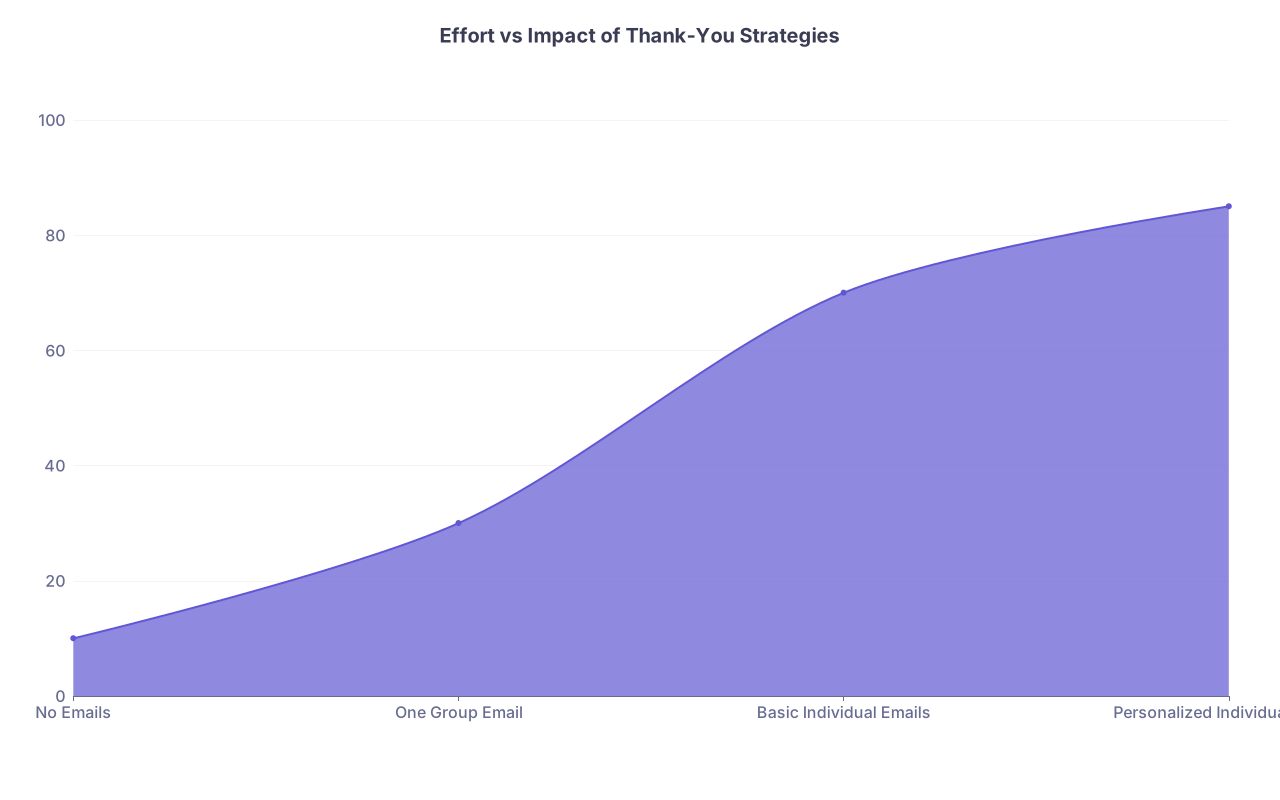
| Category | Value |
|---|---|
| No Emails | 10 |
| One Group Email | 30 |
| Basic Individual Emails | 70 |
| Personalized Individual Emails | 85 |
(Values represent approximate relative benefit; not exact science, but you get the idea.)
How to Make This Sustainable Across 20–30 Interviews
You don’t need to reinvent the wheel for every program. System > willpower.
Use this quick workflow:
Immediately after each interview:
Spend 3–5 minutes typing bullet notes for each faculty and resident:- One interesting thing they said
- One thing you discussed about yourself
- Something unique about the program
Keep 2–3 email templates handy:
- PD template
- Faculty interviewer template
- Resident group template
Each night (or next morning):
Plug in your notes → send. Don’t stockpile 5 programs and try to do them all Sunday night. That’s when mistakes happen.
FAQ: Thank-You Emails After Residency Interviews
Do programs expect thank-you emails at all?
Some do, some don’t. But almost no program penalizes you for sending a short, professional note. So the upside (small but real) outweighs the very low effort required.If I send one group thank-you to resident interviewers, should I CC or BCC?
Use “To” for 1–3 main residents (like the ones who led the social) and CC any others if you have their emails. BCC isn’t necessary here; this isn’t a confidential message.What if I didn’t get everyone’s email addresses?
Common scenario. Email the program coordinator:
“Thank you again for organizing the interview day. If appropriate, could you please forward my thanks to Dr. X and Dr. Y?”
They’ll either forward it or tell you they can’t, both of which are fine.Is it worse to send a late email or none at all?
A thank-you 3–5 days late is still better than nothing, if it’s specific and doesn’t sound generic. Beyond 1–2 weeks, only send if you have a real update or follow-up question.Can I reuse parts of the same email across programs?
You should reuse the structure and some phrases. That’s efficient. Just make sure the specifics—program name, details from the conversation, your interest points—are customized and real.Should I say “I’m ranking you highly” in thank-you emails?
No. Thank-you emails are for gratitude and fit, not rank list signaling. If you’re going to send a “you’re my #1” message (and you don’t have to), that belongs much later, closer to rank list submission, and to very few programs.If I had a bad interview, can a really good thank-you email fix it?
No. But it can soften the edges. If you were nervous or felt you didn’t express something well, you can very briefly clarify one point in your thank-you. Just don’t turn it into a multi-paragraph apology or sales pitch.
Key takeaways:
Don’t send one group thank-you email to multiple faculty interviewers. Send short, personalized emails to the PD and each faculty you met. For residents, one well-written group email to a few key people is fine—and more than enough.