The confusion about residency interview thank-you notes is completely overblown—and most people are doing it wrong.
You do not need to send a heartfelt essay to every human you met on interview day. You do not need to spend 4 hours “perfecting” these. And no, a thank-you email is not going to magically rescue a weak application.
But targeted, smart follow-up? That can help you. A lot.
Here’s the clear, no-drama breakdown of who exactly should get a thank-you: PD, interviewers, residents, or everyone.
The Short Answer: Who Actually Gets a Thank-You?
Let me give you the hierarchy first, then I’ll explain the logic.
If you had a standard residency interview day, here’s who I recommend you email:
- Program Director (PD) – Yes, unless they explicitly say not to.
- Associate PD / Key Leadership You Interviewed With – Yes.
- Faculty who interviewed you one-on-one or small group – Usually yes.
- Chief residents who formally interviewed you – Yes, if they were official interviewers.
- Residents you met on tours / socials but did not interview with 1:1 – Optional, targeted.
- Coordinators / admin staff – Optional; nice but not required.
Who does not need an email?
- Every resident you saw for 10 minutes in a breakout room.
- Random faculty from a noon conference.
- Anyone you barely interacted with and have nothing to say to.
If you remember nothing else:
Thank the people who made decisions about you or invested real time in you.
Program Director vs Interviewers vs Residents: What Actually Matters
Here’s the unvarnished truth from what I’ve seen and heard in ranking meetings:
Program Director (PD)
You should almost always send a short, professional thank-you to the PD.
Why?
Because the PD is:
- The person most likely to remember you.
- The one who signs off on the rank list.
- The one who often asks, “Did anyone hear from this applicant?” during ranking discussions.
No, your PD thank-you does not need to be poetic. It needs to be:
- Personal enough to show you paid attention.
- Specific enough to remind them who you are.
- Short enough that they actually read it.
If the PD explicitly said “Don’t send thank-you notes” (some do now)—respect that. That’s a test of whether you can follow directions.
Faculty Interviewers
If a faculty member interviewed you, one-on-one or in a small group, they’re fair game for a thank-you email.
They often:
- Fill out formal written evaluations.
- May advocate for you in later meetings (“I really liked this applicant”).
- Remember a small number of applicants well—especially those who follow up thoughtfully.
Will they tank you for not sending a thank-you? No. But if they’re on the fence and they get a thoughtful note that reminds them why they liked you, that can nudge things in your favor.
So: PD + any formal faculty interviewers = your core list.
Residents
Now the messy part.
Most applicants overthink resident thank-yous. They try to email every resident they met on Zoom for 3 minutes in a breakout room. That’s overkill and usually generic.
Here’s the simple rule:
- If a resident formally interviewed you (structured interview, scored form, scheduled session) → Yes, send a thank-you.
- If you had a long, meaningful one-on-one or small-group conversation with a resident where:
- They gave you specific advice, or
- You deeply connected (same background, interests, career plans)
→ Then a brief email is reasonable.
Otherwise? You can skip the mass-resident thank-yous. No one is tracking who emailed all the PGY-2s.
Coordinators and Staff
Program coordinators run the entire operation. They often save applicants from tech meltdowns, schedule chaos, and general confusion.
Sending a quick, single email to the coordinator at the end of the interview season (not after every single interview day) is a class move:
- “Thank you for coordinating everything this season; it’s been smooth and well-organized.”
This doesn’t impact your rank position directly. But it’s professional, and coordinators talk to PDs. You want their impression of you to be: “This one was easy to work with.”
How Many Thank-You Emails Is Enough?
Let’s talk numbers.
For a typical program where you had:
- 1 PD interview
- 1–2 faculty interviews
- 1 resident or chief interview
A perfectly reasonable follow-up set is:
- 1 email to the PD
- 1–3 emails to your other interviewers (faculty + resident/chief)
So usually 2–4 total emails per program.
What you do not need:
- Separate emails to 7 residents from the social the night before.
- A thank-you to someone you don’t remember, for a conversation you barely recall.
If you applied to 15–20 programs, this is manageable.
Want a rough guideline?
| Role | Send Thank-You? |
|---|---|
| Program Director | Almost always Yes |
| Associate PD | Yes if you met |
| Faculty Interviewers | Yes |
| Chief Resident (Interviewer) | Yes |
| Residents (Social Only) | Optional/Selective |
Timing and Content: What Should You Actually Say?
When to Send
Ideal window: 24–72 hours after the interview day.
Too late (3+ weeks) and it starts looking like an afterthought or a disguised “love letter” before rank lists are due.
If you’re doing multiple interviews in a row and falling behind, batch them at the end of each week. Still fine.
What to Write (Simple Template)
Your thank-you email should be:
- 3–6 sentences
- No attachments
- No weird fonts, colors, or signatures with inspirational quotes
Basic structure:
- Subject line: “Thank you – [Your Name], [Specialty] Interview [Date]”
- Greeting with name and title (Dr. X, or [First name] for residents if that’s how they introduced themself).
- Direct thanks for their time.
- One specific callback to something you discussed or learned.
- One brief line reinforcing your interest in the program (without sounding desperate).
- Clean sign-off.
Example to a PD:
Subject: Thank you – Jane Smith, Internal Medicine Interview 11/7
Dear Dr. Lopez,
Thank you for taking the time to speak with me during my interview day on November 7. I appreciated hearing your perspective on how the program supports residents interested in clinician-educator careers, especially through the Resident as Teacher curriculum. The sense of community I saw among residents and faculty made a strong impression, and I would be excited to train in such a supportive environment.
Sincerely,
Jane Smith
That’s it. No novel. No begging. No ranking promises.
What If the Program Says “We Don’t Read Thank-You Notes”?
Believe them. And still act like a professional adult.
Many programs now add some version of:
- “Thank-you notes are not expected and do not influence ranking.”
This means:
- You should not harass them with multiple follow-ups.
- You won’t be penalized for skipping them.
- But a single, respectful note after your interview? Still completely fine, as long as you don’t expect it to change your rank.
If they explicitly say, “Please do not send thank-you notes,” then don’t. They’re testing:
- Can you follow instructions?
- Can you respect boundaries?
If you’re dying to acknowledge someone (for example, a coordinator who rescued your tech issues), you can send one short note to that person alone.
Special Situations: Love Letters, Updates, and Second Looks
Let’s separate three different things people often confuse:
- Thank-you notes – Within days of interview, short, polite, mostly etiquette.
- “Love letters” / signaling rank intentions – Later in the season, explicitly stating strong interest.
- Update letters – New publications, scores, awards you want them to know about.
Do not cram all three into a single thank-you email 24 hours after your interview. That’s overkill and reads as anxious.
Smart sequence:
- Thank-you within 1–3 days.
- If, later in the season, this becomes a top-choice program → separate email to PD or key faculty stating that clearly (if you choose to do that).
- If you get a big new update (accepted manuscript, new Step 2 score) → separate, short update email, not disguised as gratitude.
Here’s what programs hate:
- “Thank you again… also I will rank you #1 and here’s my entire updated CV and personal statement.” That’s not a thank-you. That’s a pitch.
How to Prioritize When You’re Overwhelmed
If you’ve already done 10+ interviews, your inbox and brain are probably fried. So prioritize.
If you do not have time for everyone:
- PD at each program you’re seriously considering.
- Faculty interviewers at your top-tier choices.
- Resident/chief interviewers where you had a really strong connection.
You don’t need to be perfect for every single program. Focus your energy where it matters most.
Here’s a simple mental flowchart:
Common Mistakes You Should Avoid
I’ve seen applicants sabotage a good impression with sloppy follow-up. Avoid these:
- Copy-paste errors: Wrong program name. Wrong PD name. Instant red flag for sloppiness.
- Way too long: No one wants to read 700 words about how much you loved the morning report.
- Borderline manipulative: “This program is my top choice” sent to five different places. People talk.
- Needy vibe: Multiple follow-up emails asking “Did you get my thank-you?” or “Any update on my rank?”
- Unprofessional tone: Overly casual (“Hey!”, emojis, text-speak).
Your goal: respectful, efficient, memorable—but not clingy.
Visual Summary: Who Gets What, When
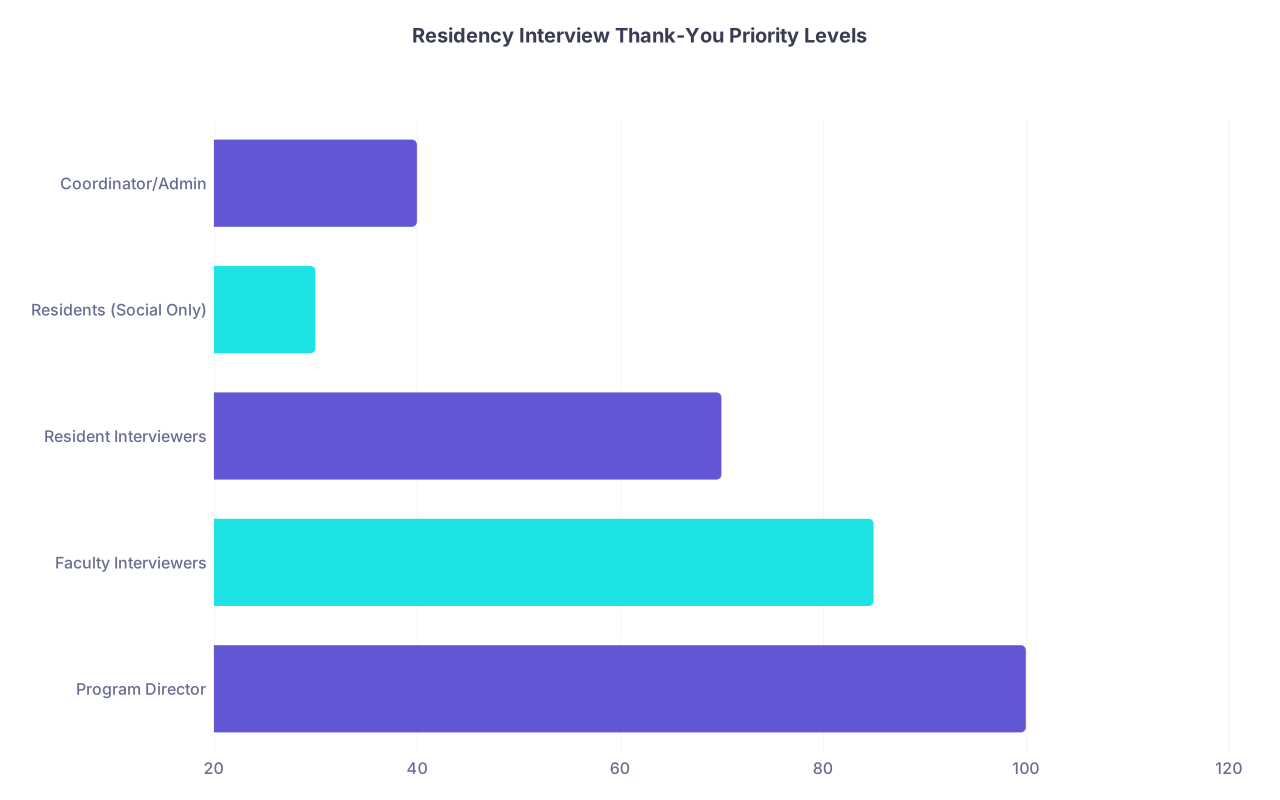
| Category | Value |
|---|---|
| Program Director | 100 |
| Faculty Interviewers | 85 |
| Resident Interviewers | 70 |
| Residents (Social Only) | 30 |
| Coordinator/Admin | 40 |
Think of “priority” here as: how strongly I’d recommend you send a thank-you, on a 0–100 scale.
Example Email Variations
A few quick reference versions you can basically adapt and use.
To a faculty interviewer:
Dear Dr. Patel,
Thank you for taking the time to speak with me during my interview for the Internal Medicine residency on December 5. I enjoyed our conversation about your work in quality improvement and appreciated your insights into how residents can get involved early. The combination of strong clinical training and mentorship in QI makes your program especially appealing to me.
Best regards,
Alex Nguyen
To a resident interviewer:
Hi Sarah,
Thank you again for interviewing me on Monday and for sharing your perspective as a PGY-2. Hearing how supported you felt when switching from preliminary to categorical training was really reassuring. I left the day feeling that residents here genuinely look out for each other.
Best,
Priya
To a coordinator (end of season):
Dear Ms. Rodriguez,
I wanted to thank you for all of your help throughout the interview process this season. The schedules, clear communication, and quick responses made everything run smoothly. I appreciate the work that went into organizing these days.
Sincerely,
Daniel Kim
FAQs
1. Will not sending thank-you notes hurt my chances of matching?
Probably not. Most programs do not penalize you for skipping thank-you notes, especially now that many explicitly say they don’t expect them. But good, targeted follow-up can create a small positive bump at places where you’re already competitive. Think of thank-you notes as a way to reinforce a good impression, not as a requirement to avoid disaster.
2. Is it better to send one group email or separate emails?
Separate emails, always. A group email to “Dear PD, faculty, and residents” feels lazy and generic. Write individual, short emails to key people: PD, faculty interviewers, and any resident who formally interviewed you or had a strong personal connection with you.
3. Should I send handwritten cards instead of emails?
No. For residency interviews: email wins. Programs are busy, offices are hybrid or remote, and regular mail is slower and inconsistent. Handwritten cards can get lost or delayed and are simply not the norm anymore. Use a clean, professional email. Save stationery for your grandmother.
4. Can I mention that I’ll rank a program highly or #1 in my thank-you note?
You can, but I would separate those messages. Use the thank-you itself to express appreciation and general enthusiasm. If later in the season you decide this truly is your top choice, send a separate, clear, single email to the PD stating that you plan to rank them #1. Do not promise this to multiple programs; they compare notes more than you think.
5. What if I forgot to send thank-you notes and it’s already close to rank list deadline?
Do not panic and spam everyone last-minute. At that point, thank-you notes matter even less. If there are one or two programs you’re very serious about, it is reasonable to send a short, sincere note to the PD saying you appreciated the interview day and remain very interested. Skip everyone else and focus your energy on building a thoughtful rank list instead.
Open your interview spreadsheet (or whatever system you’re using) right now. For each program, mark the PD and your formal interviewers. Draft one simple, reusable template and customize it for the top 3 programs on your list. Get those sent today and stop obsessing—then move on to preparing your rank list.