What do program directors actually want to see in a residency follow‑up email subject line?
They want three things: clarity, context, and zero drama. Your subject line should make it stupidly easy for a busy coordinator or PD to know who you are, why you’re emailing, and that you’re not causing extra work.
Here’s the short version before we go deeper:
Best default subject line:
“Thank you – [Your Name], [Specialty] Interview on [Date]”Best “update” subject line:
“Update from [Your Name] – [School] MS4, [Specialty] Interviewed [Date]”Best “continued interest/LOI” subject line (if appropriate for the program):
“Continued Interest – [Your Name], [Specialty] Applicant”
Now let’s walk through when to use which, why they work, and what to absolutely avoid.
Core rules for residency follow‑up subject lines
You’re writing for two audiences: the coordinator skimming 200+ emails and the PD glancing on a phone between cases. Your subject line has to survive that reality.
Here are the non‑negotiables:
Make it searchable
Include:- Your full name
- Specialty
- Interview date or AAMC ID (optional but useful)
Make the purpose obvious
Words like “Thank you,” “Update,” “Continued Interest,” “Clarification,” or “Question about…” are your friends. Vague emails get ignored.Keep it professional
If your subject line looks like spam or drama, it will be treated like spam or drama.Keep it short enough to read on a phone
Aim for 60–80 characters. Long enough to be clear, short enough not to truncate the important bits.
Best subject lines by situation
Let’s break it down by the real scenarios you’re probably in right now.
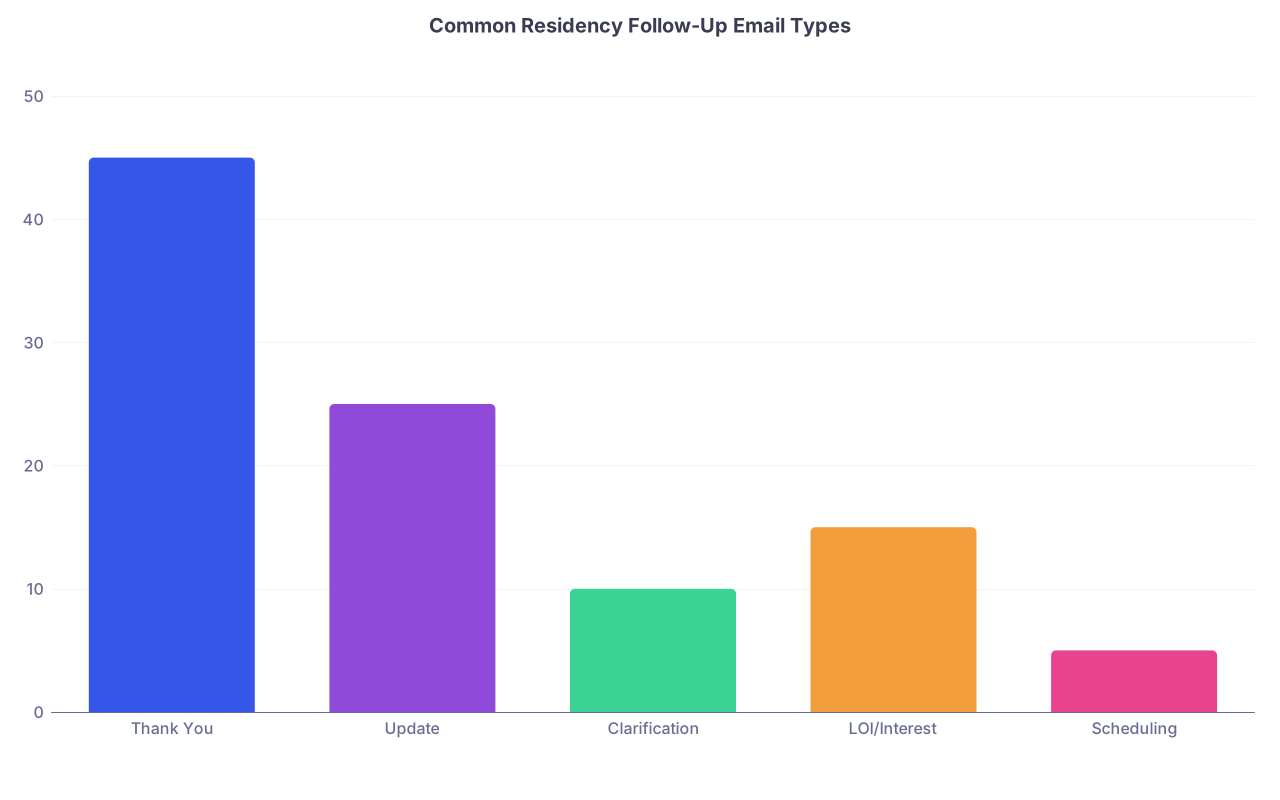
| Category | Value |
|---|---|
| Thank You | 45 |
| Update | 25 |
| Clarification | 10 |
| LOI/Interest | 15 |
| Scheduling | 5 |
1. Standard “Thank you for the interview” email
This is the one you should send to every program, usually the same day or the day after your interview.
Use something like:
- “Thank you – John Smith, Internal Medicine Interview on 11/15/2025”
- “Thank you for the interview – Priya Desai, EM Applicant (10/28 Interview)”
- “Appreciation for Interview – Daniel Lee, Surgery 11/4”
Why this works:
- “Thank you” flags the tone immediately as positive, low‑effort to process.
- Your name and specialty make it searchable later.
- The interview date distinguishes you from others with the same name.
Avoid:
- “Great talking today!!!”
- “Amazing interview!!!”
- “Thank you from your future resident”
Too cute, too presumptuous, or too informal. You’re not emailing a friend.
2. Follow‑up with additional information or an update
Maybe you got a new publication, an honor, or a step score back. Or you forgot to mention something relevant. This is where many people screw up with vague subject lines.
Use:
- “Update from John Smith – M4 at UAB, IM Interview on 11/15”
- “Application Update – Priya Desai, EM Applicant (New Publication)”
- “USMLE Step 2 CK Score Update – Daniel Lee, Surgery Applicant”
These are clean, direct, and instantly tell the reader why they should open the email.
Things that hurt you:
- “Exciting news!!!”
- “Big update from me”
- “FYI”
No one has time to guess what your “exciting news” is. Spell it out.
3. Clarifying logistics or asking a brief question
You realized you’re unsure about a second-look policy, a social event, or a technical issue. That’s fine; just don’t bury the lead.
Examples:
- “Question about second look – John Smith, IM Interview 11/15”
- “Clarification re: Interview Day Schedule – Priya Desai, EM Applicant”
- “Zoom Link Issue – Daniel Lee, Surgery Interview 11/4”
You’re labeling the email as low‑drama, logistics‑focused. That keeps people on your side.
Do not use:
- “Urgent problem!!!” (when it’s not actually urgent)
- “Help”
- “Following up” (with no context)
If everything is “urgent,” nothing is.
4. Expression of interest or “love letter” (where allowed)
Some programs explicitly say “Don’t send love letters or letters of intent.” Others welcome them. Read their website and what they state on interview day.
If appropriate, use:
- “Continued Interest – John Smith, Internal Medicine Applicant”
- “Strong Interest in [Program Name] – Priya Desai, EM Applicant”
- “Ranking Update – Daniel Lee, Surgery Applicant” (if they say they’re OK with this)
If you’re sending a true “you are my #1” letter of intent (and only if that’s honest and allowed):
- “Letter of Intent – John Smith, Internal Medicine Applicant”
Keep in mind: a subject line will not magically move your rank. But a clean, respectful one won’t hurt you.
Avoid:
- “You are my #1!!!”
- “Top choice program”
- “I will definitely rank you #1” (this can backfire if programs dislike that language)
Keep it professional and calm. Emotional manipulation in the subject line is a bad look.
5. Post‑interview thank you to multiple interviewers vs. coordinator
If you’re emailing multiple people at the same program (e.g., PD, APD, faculty, and the coordinator), slightly adjust:
- “Thank you – John Smith, [Program Name] Interview on 11/15/2025”
- “Thank you for the conversation – John Smith, IM Applicant (11/15)”
This small difference signals you aren’t just blasting the exact same thing to everyone—even if the body is 80% template.
What a “good” subject line actually looks like
Let’s put it side by side.
| Type | Good Subject Line Example | Bad Subject Line Example |
|---|---|---|
| Thank You | Thank you – Maria Lopez, Pediatrics Interview 11/10 | Great chatting!!! |
| Update | Application Update – New Publication (Alex Chen, IM Applicant) | Exciting news!!! |
| Clarification | Question about Pre‑Interview Social – Sam Patel, EM Interview 11/3 | Quick question |
| Interest/LOI | Continued Interest – Sara Johnson, OB/GYN Applicant | You’re my #1 program!!! |
| Technical Issue | Zoom Link Issue – David Kim, Psychiatry Interview Tomorrow | URGENT PLEASE HELP |
You’ll notice the pattern: specific, calm, searchable.
How subject lines land on the program side
Let me give you the view from the other side, because I’ve watched this in real time with PDs and coordinators.
Inbox on a random Thursday:
- “Thank you – [Name], [Specialty] Interview on [Date]” → Opened later, skimmed, appreciated, sometimes flagged.
- “Exciting Update!” → Eye roll, maybe opened, maybe not.
- “Question about tomorrow” from someone with a Gmail address and no identifying details → Frustration, because now they have to click to see who you are.
- “Letter of Intent – [Name]” at a program that explicitly said “we do not consider letters of intent” → Mild annoyance. You look like you do not follow directions.
Your subject line is part of your professional impression. Not the most important part, but absolutely part of it.
Timing and volume: How many follow‑ups is too many?
Follow‑ups are fine. Pestering is not.
Here’s a reasonable pattern most programs are used to seeing:
- 1 thank‑you email within 24–48 hours
- 1 update email later in the season if something genuinely significant changes
- 1 expression of interest email close to rank list time (if the program allows it)
If you’re sending 4–5 emails to the same program with subject lines like “Following up again” or “Just checking in,” you’re overdoing it.
Template bank: copy‑paste subject lines you can actually use
Use these and modify as needed.
Thank you emails:
- “Thank you – [First Last], [Specialty] Interview on [MM/DD]”
- “Thank you for the interview – [First Last], [Program Name] Applicant”
- “Appreciation for Interview – [First Last], [Specialty] [MM/DD]”
Update emails:
- “Application Update – [First Last], [School] MS4, [Specialty] Applicant”
- “USMLE Step 2 CK Score Update – [First Last], [Specialty] Applicant”
- “New Publication – [First Last], [Specialty] Interviewed [MM/DD]”
Interest / LOI emails:
- “Continued Interest – [First Last], [Specialty] Applicant”
- “Strong Interest in [Program Name] – [First Last], [Specialty]”
- “Letter of Intent – [First Last], [Specialty] Applicant” (when truly appropriate)
Clarification / Question emails:
- “Question about Interview Day – [First Last], [Specialty] Interview [MM/DD]”
- “Clarification re: [Topic] – [First Last], [Program Name] Interviewee”
- “[Issue] – [First Last], [Specialty] Interview Tomorrow”
Technical / logistics:
- “Zoom Link Issue – [First Last], [Specialty] Interview [MM/DD]”
- “Unable to Access Portal – [First Last], [Program Name] Applicant”
- “Scheduling Question – [First Last], [Specialty] Applicant”
Red flags: subject lines that make you look unprofessional
A quick list of what to avoid:
Overly emotional:
- “I’m begging you for a spot”
- “Heartbroken and hoping for a chance”
Pushy or presumptive:
- “Why haven’t I heard back?”
- “I deserve an interview”
- “Future [Program Name] chief resident here”
Vague and unhelpful:
- “Hello”
- “Following up”
- “Question”
Spammy:
- All caps
- Excess punctuation (!!!, ???)
- Emojis
You’re trying to look like someone they’d trust with patients at 3 a.m., not like someone who just discovered email.
Simple decision guide: which subject line should you use?
Use this quick mental flow chart.

| Step | Description |
|---|---|
| Step 1 | What is your email about? |
| Step 2 | Use: Thank you – Name, Specialty Interview on Date |
| Step 3 | Use: Application Update – Brief Topic (Name, Specialty) |
| Step 4 | Use: Continued Interest – Name, Specialty Applicant |
| Step 5 | Use: Question about X – Name, Interview Date |
| Step 6 | Reconsider sending this email |
| Step 7 | Thank you only? |
| Step 8 | New info or update? |
| Step 9 | Interest/LOI? |
| Step 10 | Logistics or question? |
If you cannot describe what your email is about in 4–6 words in the subject line, your email is probably not focused enough.
FAQ: Residency interview follow‑up subject lines
Should I always include “Thank you” in the subject line for post‑interview emails?
For pure thank‑you emails, yes. “Thank you” front‑loads the tone and makes it easy for coordinators to sort your email as a courteous follow‑up. If your email is primarily an update or clarification, lead with “Application Update” or “Question about…” instead, and you can still express gratitude in the body.Do I need to include my full name and specialty in every subject line?
You should include at least your full name and specialty in almost all follow‑ups. Many programs are sorting hundreds of applicants; coordinators constantly search by name or specialty. Adding interview date or school (e.g., “MS4 at [School]”) is a bonus for clarity but not mandatory every time.Is it okay to mention my rank intentions in the subject line?
Only if the program explicitly says they accept that information and you are being completely honest. Use something like “Letter of Intent – [Name], [Specialty] Applicant.” Do not write “You are my #1!” in the subject line. It looks unprofessional and can irritate programs that dislike match‑strategy emails.Can I reuse basically the same subject line for different programs?
Yes, and you should. A consistent structure like “Thank you – [Name], [Specialty] Interview on [Date]” is totally fine across programs. The body of the email can be lightly customized. No one is grading your creativity on subject lines; they care about clarity and professionalism.What if I forgot to send a thank‑you email until a week later?
Still send it, but do not call attention to the delay in the subject line. Use your standard: “Thank you – [Name], [Specialty] Interview on [Date].” In the body, you can briefly acknowledge the delay (“Apologies for the late note; I remained very appreciative of our conversation.”) and keep it short.Should I reply to the original interview email thread or start a new one with a fresh subject line?
Either is acceptable, but a new email with a clear subject line often makes it easier for coordinators to track, especially for updates or letters of interest. For pure thank‑you emails, replying directly to the original invite is fine if that’s how the contact was provided.Will a great subject line significantly improve my chances of matching?
No. A great subject line will not rescue a weak application or poor interview. What it does is avoid unnecessary friction: your email gets opened, understood, and filed correctly without irritating the people who run the program. Your subject line is part of being a low‑maintenance, professional applicant—and that absolutely helps your overall impression, even if it’s not the deciding factor.
Key takeaways:
Use subject lines that are clear, calm, and searchable: “Thank you – Name, Specialty Interview on Date” is your workhorse. Match the subject to the purpose—thank you, update, question, or interest—without being dramatic or vague. And remember: the goal is not to impress with creativity; it is to make life easier for the people deciding whether they want you on their team.