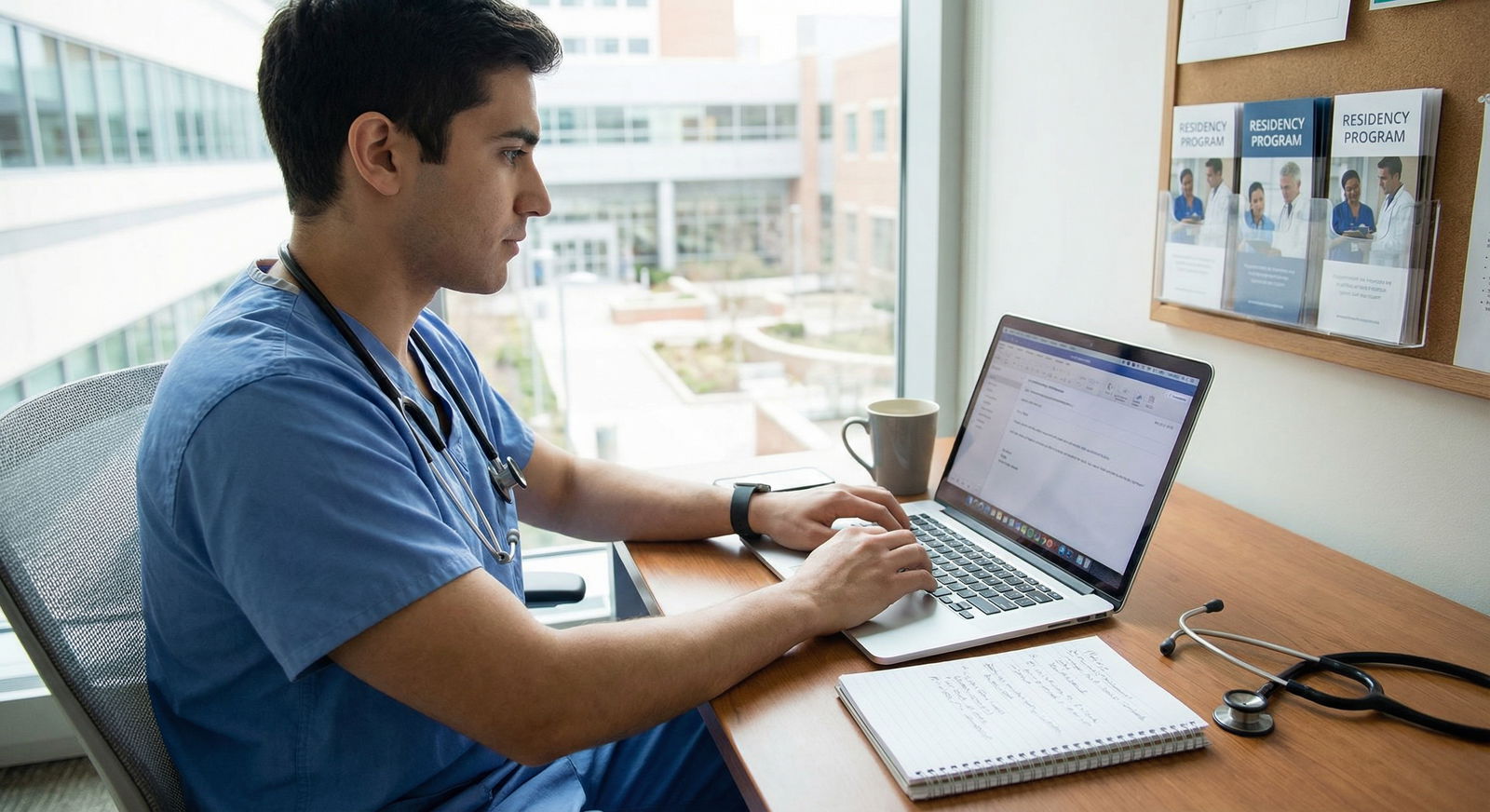
In the competitive world of medical residency programs, every interaction you have with a program matters—before, during, and after the interview. While your interview performance carries the most weight, a thoughtful, well-timed thank-you note can reinforce a strong impression and demonstrate polished professional communication skills.
This guide explains exactly when to send your thank-you notes after residency interviews, how to choose the right format, and what to include so your message supports (not sabotages) your candidacy.
Why Thank-You Notes Matter in Residency Interviews
Thank-you notes are not the deciding factor in most rank lists—but they can subtly influence how interviewers remember you and can strengthen your overall application narrative. In a setting where many applicants have similar board scores and CVs, small professionalism signals can tip the scales.
Demonstrates Professionalism and Courtesy
Residency is a professional workplace environment. Sending a brief, respectful thank-you note after your residency interview:
- Shows that you understand basic professional communication norms
- Signals that you value other people’s time and effort
- Demonstrates that you can close the loop on an important interaction
Programs are not just evaluating your medical knowledge; they’re asking: Would I want to work with this person for three to seven years? A well-written thank-you note supports a “yes.”
Reinforces Your Interest in the Program
Residency programs want residents who are:
- Genuinely interested
- Likely to be engaged and committed
- A good cultural and mission fit
Your thank-you note is a chance to:
- Reiterate your enthusiasm for the program
- Highlight specific aspects that resonated with you (curriculum, mentorship, patient population, research opportunities, wellness culture, etc.)
- Remind them why you and the program are a strong match
This is especially helpful if you are applying broadly but have certain programs you are particularly excited about.
Clarifies or Completes Your Interview Story
No interview is perfect. You may walk out thinking:
- “I wish I’d answered that question more clearly.”
- “I forgot to mention that leadership role.”
- “I want to emphasize my interest in that specific track.”
A thank-you note gives you a brief, professional way to:
- Clarify a point you made during the conversation
- Add one succinct detail that strengthens your candidacy
- Connect your experiences to something they emphasized during the interview
The key is to do this subtly and concisely, without turning your message into a second personal statement.
Keeps You on the Interviewer’s Radar
Interviewers may see dozens or even hundreds of applicants in a season. A timely, specific thank-you note:
- Nudges their memory of your conversation
- Provides an additional touchpoint before rank meetings
- Gives them something they can easily forward to other committee members
You’re not “buying” a higher rank with a thank-you note, but you are making it easier for busy faculty to recall who you are and what you bring.
Optimal Timing: When to Send Thank-You Notes After Residency Interviews
Timing is a critical part of effective professional communication. Sending the right message at the wrong time can blunt its impact—or even feel awkward.
The Ideal Window: 24–48 Hours After the Interview
For residency interviews, the sweet spot for sending thank-you notes is within 24 to 48 hours after your interview day.
Why this window works well:
Recency of Impression
Within 1–2 days, your conversation is still fresh in the interviewer’s mind. They are more likely to remember specific moments you reference and connect your note with their positive impressions of you.Displays Promptness and Reliability
Responding within this timeframe shows that you take follow-up seriously and can handle time-sensitive communication—both key skills for a resident.Gives You Time to Reflect (But Not Overthink)
Waiting a few hours or overnight allows you to:- Review your notes from the interview
- Identify key points you want to reference
- Avoid sending a rushed or sloppy message
Practical tip:
Block 30–60 minutes in your calendar the evening of your interview (or the next morning) specifically to draft and send your thank-you notes.
Avoiding Late-Night or Odd-Hour Emails
While email is asynchronous, timing still shapes how your message is perceived. Whenever possible:
- Aim to send thank-you emails during regular business hours (e.g., 8 am–6 pm local time for the program)
- Avoid sending messages in the middle of the night (e.g., 2 am), which may:
- Look impulsive
- Suggest poor time management or boundaries
If you like to write late at night, draft your thank-you notes then, but schedule them to send the next morning using delayed-send features in Gmail, Outlook, etc.
Adapting to the Program’s Decision Timeline
Programs vary in how quickly they discuss and rank applicants. Use any information they share to fine-tune your timing:
Fast Turnaround Programs
If a program mentions that they meet weekly or make ranking decisions soon after each interview day:- Aim to send your thank-you within 24 hours
- If your interview is on a Friday, try to send the note before the weekend (Friday afternoon or Saturday morning)
Longer Decision Timelines
If they explicitly state that rank meetings won’t occur until later in the season:- Sending within 24–48 hours is still appropriate
- There’s less pressure to send it immediately, but don’t delay beyond two days unless unavoidable
Virtual Interview Considerations
In virtual cycles, programs often interview many more candidates. This makes timely and specific thank-you notes even more valuable to help you stand out among similar profiles.
What If You Miss the 48-Hour Window?
Life happens. Travel delays, call shifts, and personal obligations can interfere. If you realize several days have passed:
Within 3–5 days:
Still send the thank-you note. Briefly acknowledge the delay only if there’s a clear reason (e.g., “I’ve just returned from travel and wanted to follow up to thank you…”), then refocus on gratitude and interest.More than a week later:
Consider reframing your message as a brief follow-up note that:- Thanks them again for the opportunity
- Reiterates your interest
- (Optional) Updates them on any new significant achievement (e.g., “Since we spoke, my manuscript on X has been accepted for publication in Y.”)
Better late than never—but keep it short, humble, and professional.

Choosing the Right Format: Types of Thank-You Notes for Residency Interviews
In the era of digital communication, you have several options for sending your residency thank-you notes. The right choice depends on timing, program culture, and your existing relationship with the interviewer.
1. Email Thank-You Notes (Preferred for Most Programs)
For nearly all Medical Residency programs, email is the standard and preferred method of sending thank-you notes.
Advantages of Email:
- Fast and reliable
- Easily forwarded to the program director or selection committee
- Simple to personalize for each interviewer
- Fits most institutional norms and expectations
Best Practices for Email Thank-You Notes:
- Use a clear, professional subject line, such as:
- “Thank You – [Your Name], [Specialty] Interview [Date]”
- “Gratitude for Our Conversation – [Your Name]”
- Address each interviewer by name and appropriate title (Dr., Program Director, etc.)
- Keep it concise—usually 150–250 words (about 3–5 short paragraphs)
- Proofread carefully for spelling, grammar, and names (especially the program and institution)
2. Handwritten Thank-You Notes: When (and If) to Use Them
Handwritten notes have become less common, but in some settings they can leave a memorable impression—if used thoughtfully and early enough.
Pros of Handwritten Notes:
- Can feel more personal and gracious
- Stand out in an inbox-dominated world
- Particularly appreciated in smaller, community-based, or very relationship-driven programs
Key Considerations:
- Timing is the biggest challenge. Postal mail can take several days. If you send a handwritten note, it may arrive:
- After rank decisions have already been made
- Too late to meaningfully influence impressions
- If you choose to send a handwritten note:
- Either mail it within 24 hours
- Or pair it with an email thank-you to ensure timely communication, using the handwritten note as a bonus courtesy, not the primary follow-up
Handwritten Note Tips:
- Use clean, professional stationery—not decorative or overly casual cards
- Write legibly and briefly (3–6 sentences)
- Maintain the same tone of professionalism as an email
3. Professional Social Media Messages (e.g., LinkedIn)
In some cases, especially for academic or research-focused programs, a short professional message on LinkedIn can be appropriate in addition to (not instead of) an email.
Only consider this if:
- You already have a pre-existing professional connection with the interviewer, or
- The interviewer explicitly encouraged you to connect on LinkedIn or similar platforms
Guidelines for Social Media Notes:
- Keep it very brief (2–3 sentences)
- Do not overshare or treat it like a casual chat
- Make sure your profile is polished and up to date—remember, a large majority of employers and programs look at LinkedIn or online professional profiles
Example:
“Dear Dr. Smith, thank you again for speaking with me during my interview for the Internal Medicine residency at XYZ Medical Center. I appreciated learning more about the clinician-educator track and would be glad to stay connected. Best regards, [Your Name].”
4. Follow-Up Notes Later in the Season
In limited situations, you may decide to send a follow-up note weeks after your interview:
- If you have significant new information (e.g., a major award, publication acceptance, leadership position, or exam score release)
- If you want to gently reaffirm your interest, especially in a program that is high on your rank list
Follow-up notes should:
- Be shorter and less formal than your initial thank-you, but still professional
- Not pressure or solicit special ranking commitment
- Avoid any language that violates NRMP rules (e.g., asking for their rank intentions)
Example:
“Dear Dr. Lee, I hope you are well. I wanted to briefly thank you again for the opportunity to interview at ABC Pediatrics and to share that my recent QI project on asthma readmissions was accepted for presentation at the state conference. My enthusiasm for your program’s community-focused training has only grown since our conversation. Warm regards, [Your Name].”
How to Craft an Effective Residency Thank-You Note
Knowing when to send your thank-you note is only half the equation. The content needs to be clear, specific, and authentic.
1. Personalize Each Message
Generic, copy-pasted messages are obvious and less impactful. Take a few notes immediately after each interview (while the conversation is fresh) about:
- Unique topics you discussed
- Specific feedback or advice you received
- Aspects of the program that particularly resonated with you
Then, in your thank-you note:
- Address the interviewer by name (and double-check spelling and titles)
- Reference one or two specific details from your conversation, such as:
- A shared interest (e.g., global health, medical education)
- A patient story or teaching moment they described
- A program feature they highlighted (e.g., night float system, mentorship structure)
This shows that you were engaged, attentive, and genuinely interested.
2. Clearly Express Genuine Gratitude
Thank-you notes should feel like…gratitude. Center your message around appreciation, not strategy.
Include phrases like:
- “Thank you for taking the time to speak with me about…”
- “I appreciated the opportunity to learn more about…”
- “I’m grateful for your candid insight on…”
Avoid sounding transactional (“I hope this note will improve my chances”) or insincere (“Your program is the best I’ve ever seen in every possible way!”).
3. Reinforce Your Interest and Fit
After expressing thanks, briefly connect your background to the program’s values or strengths:
Highlight 1–2 ways your experiences align with the program:
- “My experience working with underserved populations in [city/hospital] aligns strongly with your program’s mission to…”
- “Your emphasis on resident autonomy and early procedural exposure fits well with the hands-on learning environment I’m seeking.”
Reiterate your enthusiasm:
- “Our conversation further solidified my strong interest in your program.”
- “I would be thrilled to train in a program that values [X, Y, Z].”
Keep this professional and balanced; avoid making premature or absolute commitments (“I will rank your program #1”) in the thank-you note.
4. Keep It Concise and Well-Structured
Aim for a length that conveys substance without overwhelming the reader. A good target:
- 3–5 short paragraphs
- 150–250 words total
Suggested structure:
- Opening: Greeting and expression of thanks
- Body – Part 1: Specific reference to your conversation
- Body – Part 2: Reinforcement of interest and fit
- Closing: Polite, professional send-off
5. Close Professionally
End with a courteous, professional closing such as:
- “Sincerely,”
- “Best regards,”
- “Warm regards,”
Followed by:
- Your full name
- Your current role/institution (e.g., “MS4, [Medical School Name]”)
- Optional: Your email and phone number (if not obvious from email signature)
Sample Thank-You Email for Residency Interviews
Subject: Thank You – [Your Name], [Specialty] Interview on [Date]
Dear Dr. [Last Name],
Thank you very much for taking the time to speak with me during my interview for the [Specific Residency Program Name] on [date]. I truly appreciated learning more about your approach to [specific aspect discussed, e.g., resident autonomy in the ICU or your curriculum’s focus on medical education].
Our conversation about [briefly mention a memorable topic or story] resonated with me and reinforced my interest in training at a program that values [specific value or feature, such as patient-centered care, underserved communities, research, wellness, etc.]. I believe that my experiences in [relevant clinical, research, or leadership experience] would allow me to contribute meaningfully to your team and thrive within your training environment.
Thank you again for the opportunity to interview and for your time and insight. I would be honored to train at [Institution/Program Name] and to be part of your residency community.
Warm regards,
[Your Full Name]
MS4, [Your Medical School]
[Your Email Address] | [Your Phone Number]
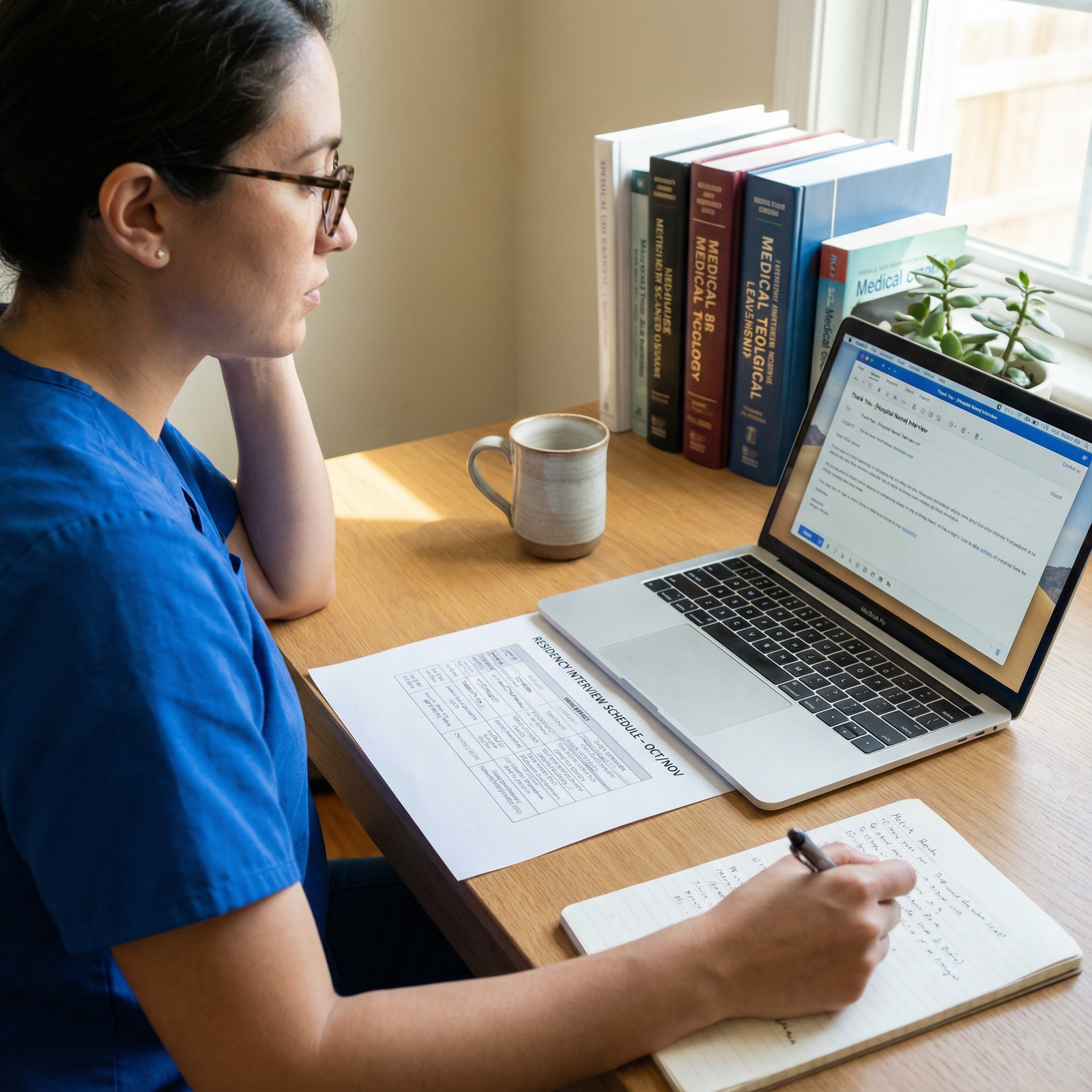
Practical Tips and Common Pitfalls to Avoid
Even a strong candidate can weaken their impression with poorly handled follow-up. Keep these do’s and don’ts in mind.
Do: Organize Your Post-Interview Process
- Create a simple spreadsheet or note with:
- Program name and date
- Interviewers’ names and roles
- Their email addresses
- Key points you discussed
- Date you sent each thank-you note
This helps you:
- Avoid mixing up details between programs
- Ensure you don’t forget anyone
- Stay on top of timely follow-up
Do: Use Professional Communication Standards
- Use a professional email address (e.g., [email protected])
- Double-check spelling of:
- Names and titles
- Program and institution
- Keep formatting clean:
- No bright colors or decorative fonts
- Avoid emojis or overly casual language
Don’t: Overdo Flattery or Length
Overly long or effusive notes can feel disingenuous or burdensome to a busy faculty member.
Avoid:
- Paragraphs of exaggerated praise
- Dramatic statements (“This is the only program I could ever imagine attending”)
- Long recitations of your CV
Your goal is polished appreciation, not persuasion through volume.
Don’t: Ask About Your Rank Position
Under NRMP guidelines and general professionalism norms:
- Do not ask programs how they will rank you
- Do not pressure them for assurances or promises
- Do not imply that you expect preferential treatment because you wrote to them
Your thank-you note should be about respect, not negotiation.
Don’t: Skip Thank-You Notes Completely (If You Have the Time)
Some programs explicitly state that thank-you notes are not necessary. In such cases:
- You are not obligated to send one
- However, a short, sincere message can still reflect well on you if it aligns with their culture and does not violate their instructions
If a program explicitly asks you not to send follow-up messages, follow their instruction. Disregarding clear directions is a larger professionalism red flag than not sending a note at all.
Residency Thank-You Notes: Frequently Asked Questions (FAQ)
1. How long should my residency interview thank-you note be?
Aim for 150–250 words or roughly 3–5 short paragraphs. This is enough space to:
- Express gratitude
- Reference 1–2 specific aspects of the conversation or program
- Reiterate your interest and fit
If your note is scrolling on a phone screen for multiple pages, it’s probably too long.
2. Should I send individual thank-you notes or one group email?
Whenever possible, send individual, personalized thank-you notes to each interviewer you spoke with, including:
- Program Director
- Associate/Assistant Program Directors
- Faculty interviewers
- Chief residents (if they conducted formal interviews)
If you had a large group panel and don’t have all emails, you may send:
- One note to the Program Director thanking the group and asking them to extend your appreciation to the rest of the team.
- A separate note to the Program Coordinator, who often helps distribute messages if appropriate.
3. What if I don’t have my interviewer’s email address?
Common solutions:
- Check the interview invitation, schedule, or program’s information packet—emails are often listed there.
- Look up faculty on the program’s website; many have institutional emails publicly available.
- If needed, send a single thank-you note to the Program Coordinator, explaining:
“I wanted to express my sincere thanks to Drs. X, Y, and Z for interviewing me. If appropriate, I’d be grateful if you could share my appreciation with them.”
Avoid asking for personal contact details; always use institutional or publicly listed emails.
4. Is it harmful if I don’t send a thank-you note?
Most programs will not formally penalize you for not sending a thank-you note. However:
- A well-written, timely note can reinforce a positive impression
- Omitting it may be a missed opportunity to demonstrate professionalism and interest
If your time or mental bandwidth is extremely limited, prioritize quality over quantity—better to send a few thoughtful notes to key interviewers than many rushed or generic ones.
5. Can I mention that I plan to rank a program highly or first?
You may choose to express strong interest in a program, but do so carefully and ethically:
It is acceptable to say:
- “Your program is among my top choices.”
- “I remain very enthusiastic about training at [Program Name].”
Avoid:
- Making promises you may not keep
- Asking them directly how they plan to rank you
- Using language that could be interpreted as an attempt to manipulate or pressure
Always remain consistent with NRMP rules and your own integrity.
Timely, well-crafted thank-you notes are not a magic key to your dream residency, but they are a powerful tool in your professional communication toolkit. By sending thoughtful messages within 24–48 hours, personalizing them to each conversation, and maintaining a concise, respectful tone, you underscore the very qualities that make an excellent resident: attention to detail, reliability, and genuine respect for colleagues and mentors.
Used wisely, your thank-you notes can quietly but meaningfully strengthen your overall medical residency application and help you stand out in a crowded interview season.