The Importance of Post-Interview Communication in Residency Applications: Mastering Your Thank-You Notes
In residency applications, your performance on interview day is crucial—but it’s not the final word. What you do in the 24–48 hours after your medical interviews can subtly, yet meaningfully, influence how programs remember you. Thoughtful, professional post-interview communication—especially well-crafted thank-you notes—can reinforce your strengths, clarify questions, and demonstrate maturity and professionalism.
This guide explains why thank-you notes matter in residency applications, how they fit into ERAS and NRMP rules, and how to write effective, program-specific messages that support your candidacy without crossing professional boundaries.
Why Thank-You Notes Matter in Residency Applications
Thank-you notes are not a magic key to matching, and many programs explicitly state that they do not factor them into rank lists. However, across competitive specialties and busy interview seasons, they can serve several important functions that still make them worth your time.
1. Demonstrate Gratitude and Professionalism
At their core, thank-you notes communicate respect for the time, energy, and attention your interviewers invested in you.
Program directors and faculty balance clinical duties, teaching, research, and administrative responsibilities. Taking an extra few minutes to acknowledge their effort reflects well on your professionalism—one of the core competencies programs are actively evaluating.
Example Scenario:
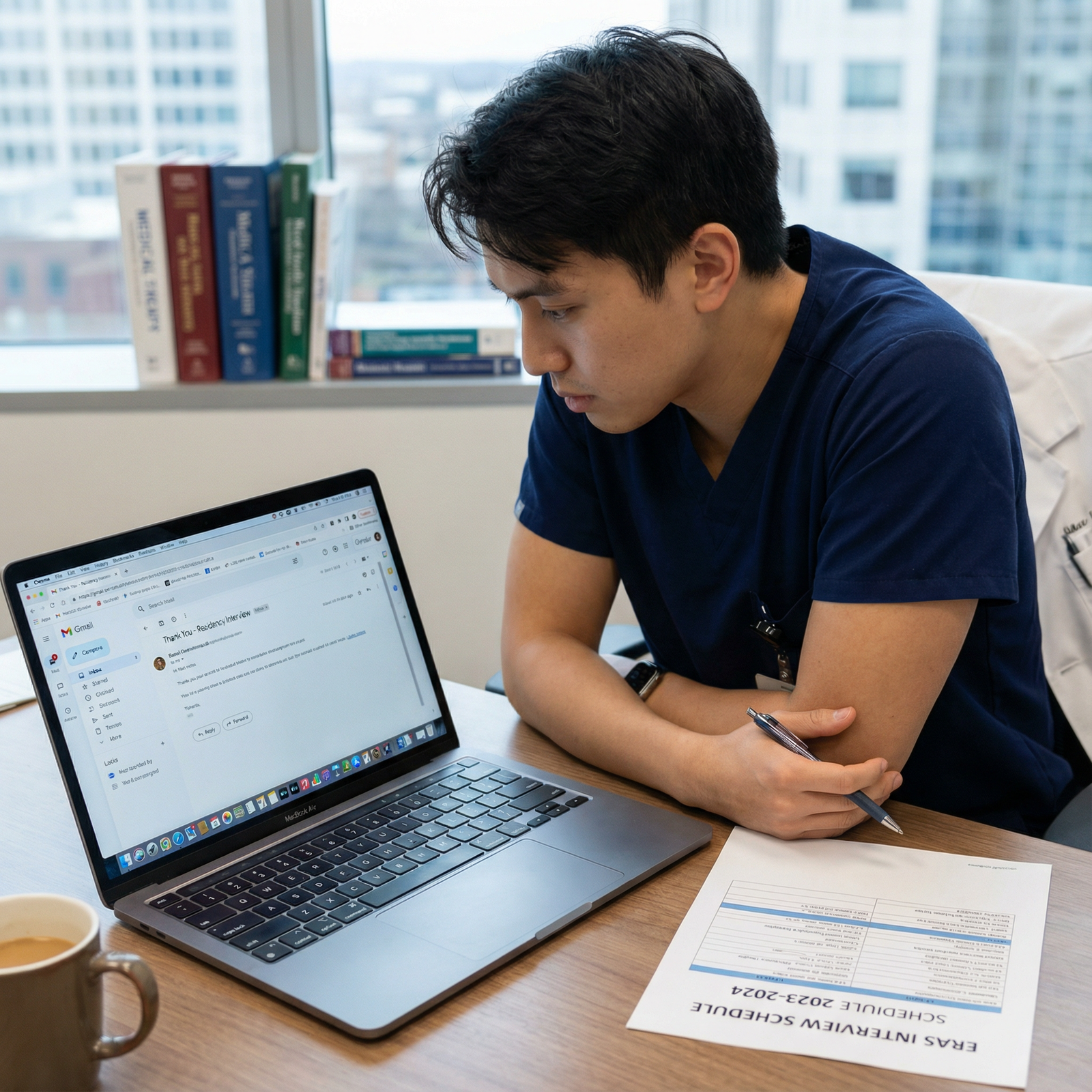
Tim, a recent medical school graduate applying in internal medicine, sent tailored thank-you emails to each interviewer within 24 hours. He referenced specific conversations: a clinical pearl one faculty shared about managing sepsis, another’s passion for resident wellness, and the chief resident’s candid discussion about call schedules. Later, the program director mentioned that while thank-you notes did not formally change their rank list, Tim’s messages reinforced the sense that he was thoughtful, engaged, and collegial—qualities they value in their residents.
In short, thank-you notes:
- Show you understand professional norms in medicine
- Signal that you value others’ time
- Reflect your communication skills—vital for any physician
2. Reinforce Your Interest in the Residency Program
Residency programs want residents who genuinely want to be there. While interview day is your primary opportunity to show interest, a concise, specific thank-you can:
- Reiterate that you remain enthusiastic after learning more
- Connect your goals and values with the program’s strengths
- Help interviewers remember what was distinctive about you
Actionable Tip:
In your thank-you note, reference 1–2 specific aspects of the program that resonated with you, such as:
- A unique curriculum structure (e.g., X+Y schedule, dedicated research time)
- Emphasis on underserved care or community outreach
- Robust mentorship in your subspecialty of interest
- Strong resident camaraderie and wellness initiatives
Specificity signals genuine interest more convincingly than generic praise.
3. Differentiate Yourself in a Competitive Applicant Pool
Residency programs interview dozens to hundreds of applicants. By the end of the season, details can blur. Well-crafted post-interview communication can help you stand out—not by being flashy, but by being clear, thoughtful, and memorable.
Case Study:
Sarah applied to a competitive family medicine residency. After her interview, she emailed each faculty member a personalized thank-you:
- To the program director, she referenced the program’s longitudinal behavioral health curriculum and how it aligned with her prior community mental health work.
- To the OB fellow, she mentioned their discussion on expanding maternity care in rural regions and shared a short reflection on her own rural rotation.
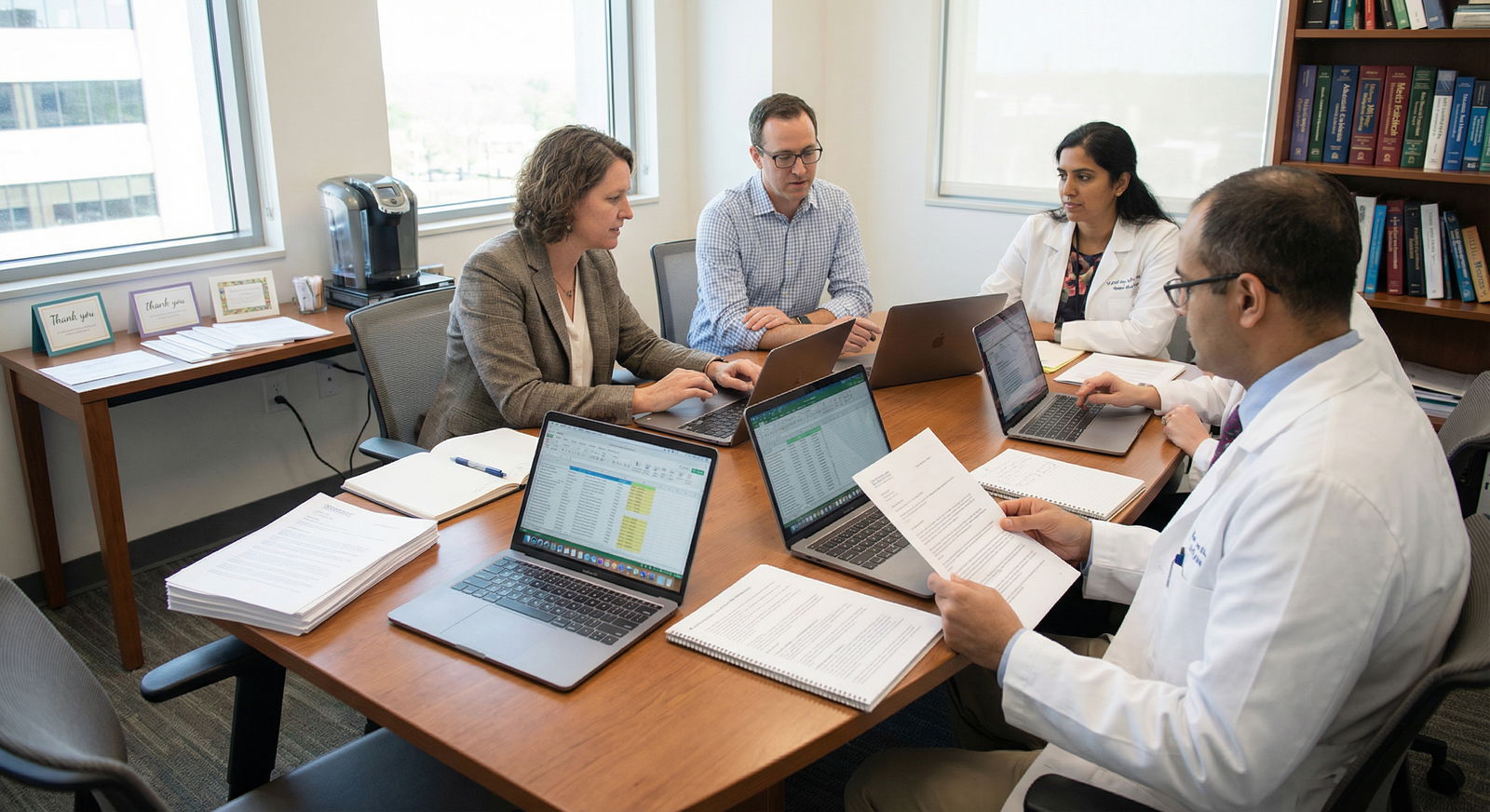
When the rank list meeting arrived, one faculty member remembered Sarah specifically as “the applicant who was really interested in rural women’s health” and pulled up her application. Her thank-you notes didn’t create her strengths, but they helped others recall them more vividly.
4. Clarify or Address Concerns From the Interview
Residency interviews can be fast-paced and stressful. You may walk away realizing:
- You under-explained a key part of your CV
- You didn’t fully address a red flag (e.g., a leave of absence, step score, gap year)
- You forgot to mention a new publication, leadership role, or project
Your thank-you email can provide a brief, professional opportunity to clarify—not to re-argue your candidacy, but to cleanly fill gaps.
Example Use Case:
If an interviewer asked about your research experience and you felt your answer was incomplete, you might write:
“In our discussion about my research background, I realized afterward that I didn’t fully describe my current project on [topic]. Since the interview, our manuscript was accepted for publication in [journal], and I’m excited about how this work has prepared me to contribute to [program’s] strong research culture.”
Use this carefully and concisely. The goal is to add clarity, not overwhelm them with information or appear defensive.
5. Strengthen Your Professional Network
Not every person you meet on the interview trail will become your future colleague at that institution—but they may still be future collaborators, mentors, or references.
Thoughtful post-interview communication can:
- Open the door for future contact (“I’d appreciate staying in touch regarding your work in…”)
- Lay the foundation for research or quality improvement collaboration
- Help you build a network within your chosen specialty
This is especially helpful if you share a niche interest (e.g., point-of-care ultrasound, health disparities, medical education, global health).
How to Craft Effective Residency Thank-You Notes
Thank-you notes that support your residency application share a few key qualities: timely, professional, specific, and concise. Below is a structured approach tailored to residency interviews.
1. Choose the Right Medium: Email vs. Handwritten Notes
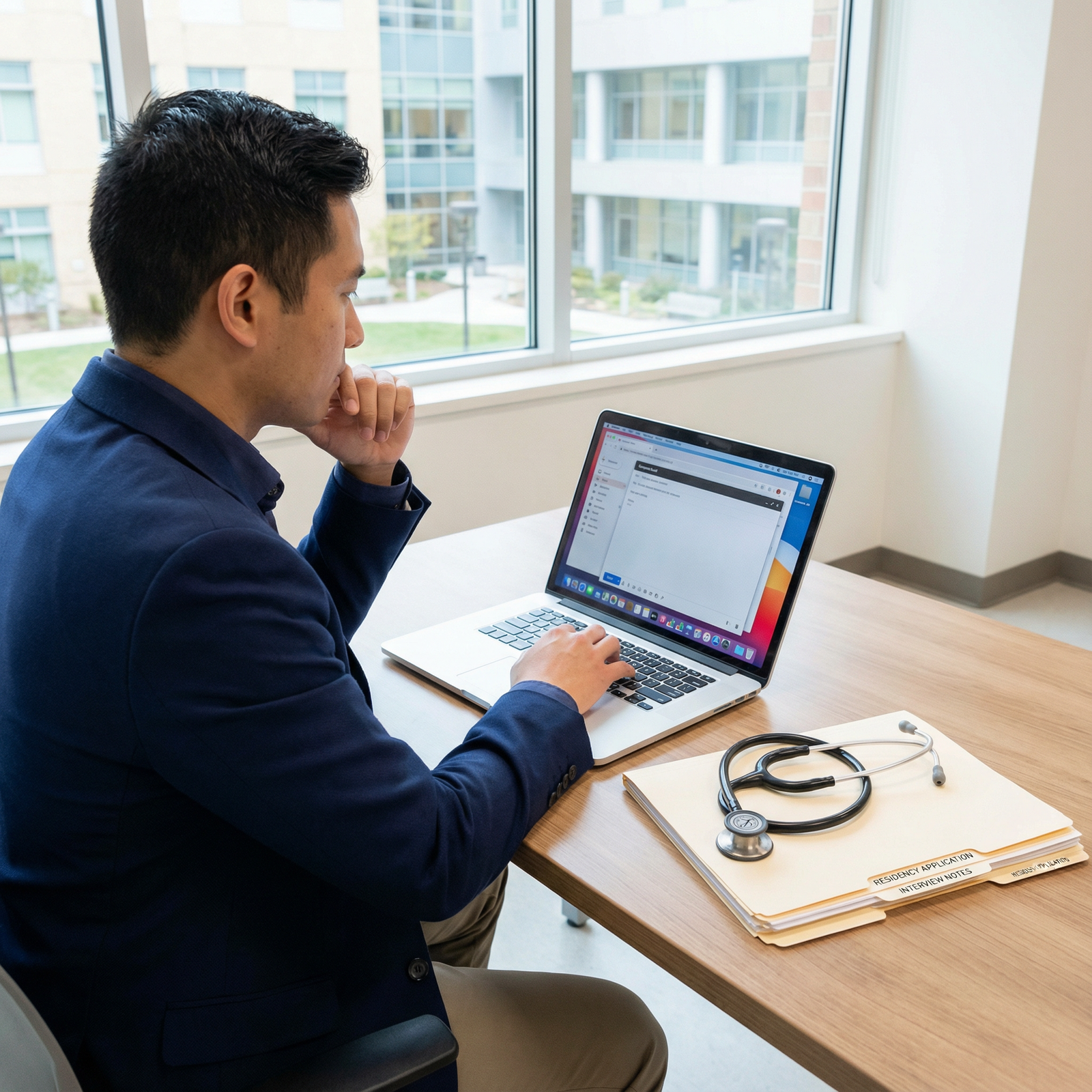
For modern residency applications, email is the standard and preferred format:
- It’s fast and can be sent within 24 hours of the interview
- It reflects how most professional communication occurs in academic medicine
- It doesn’t burden programs with physical mail during a busy season
Handwritten notes can be a nice supplement—but they are slower, may arrive after rank lists are nearly finalized, and run the risk of getting lost or delayed.
Practical Recommendation:
- Use email as your default for all interviewers
- If you feel a particularly strong connection with a mentor-type interviewer, a follow-up handwritten card later in the season is acceptable, but optional
Make sure to:
- Use your professional email address (ideally the one listed in ERAS)
- Double-check email addresses carefully—use business cards, interview-day emails, or the coordinator’s contact list if provided
If you do not have direct contact information for an interviewer, it’s acceptable to:
- Send one thank-you to the program coordinator asking them to share with the team, or
- Address a thank-you to the program director referencing the entire interview day or faculty panel
2. Be Timely: The 24–48 Hour Window
Aim to send your thank-you notes within 24 hours of your interview, and at most within 48 hours. This timing:
- Keeps your conversation fresh in their memory
- Demonstrates prompt, reliable follow-through
- Allows you to reference specific details while they’re vivid for you as well
Tip:
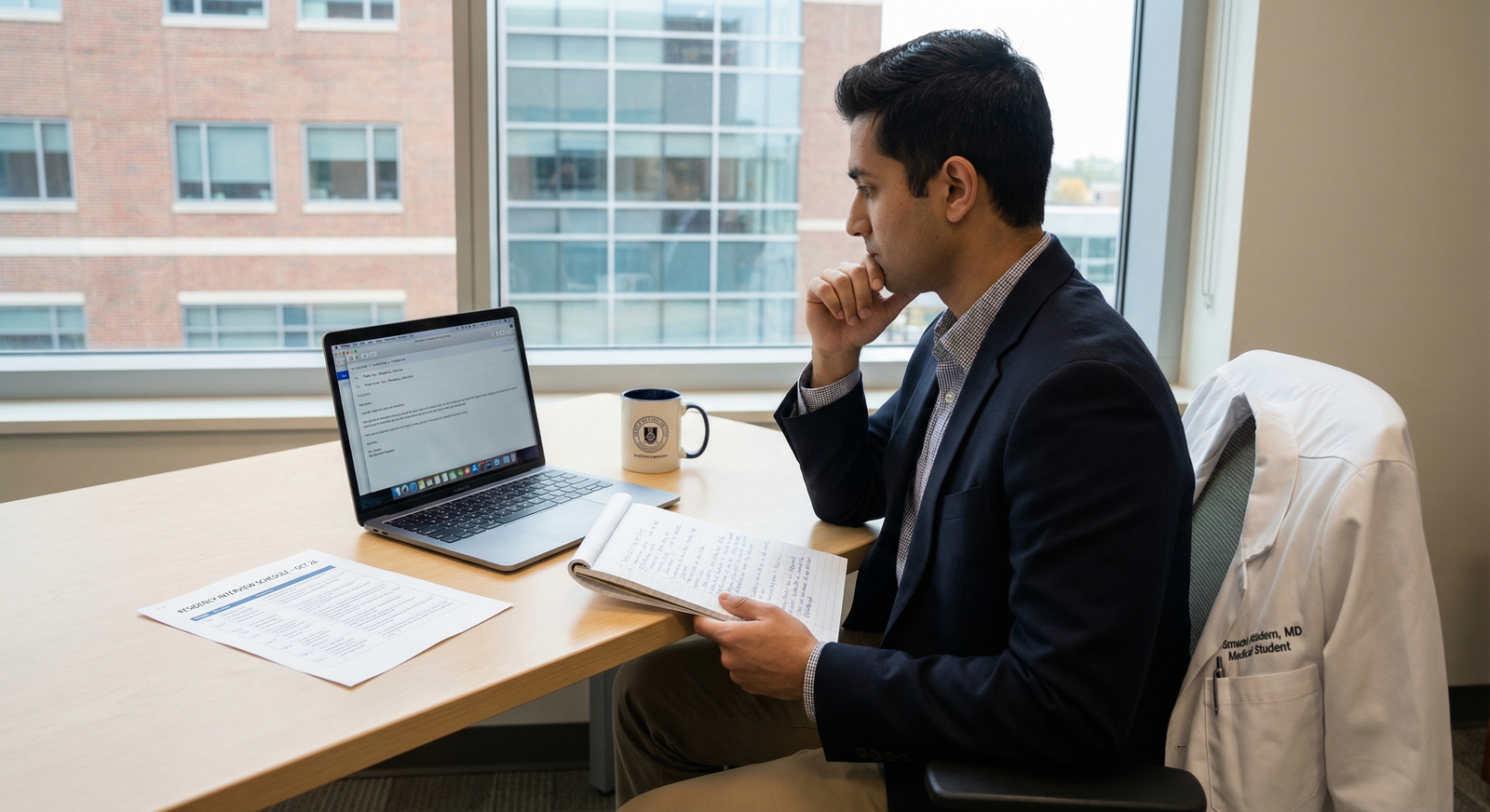
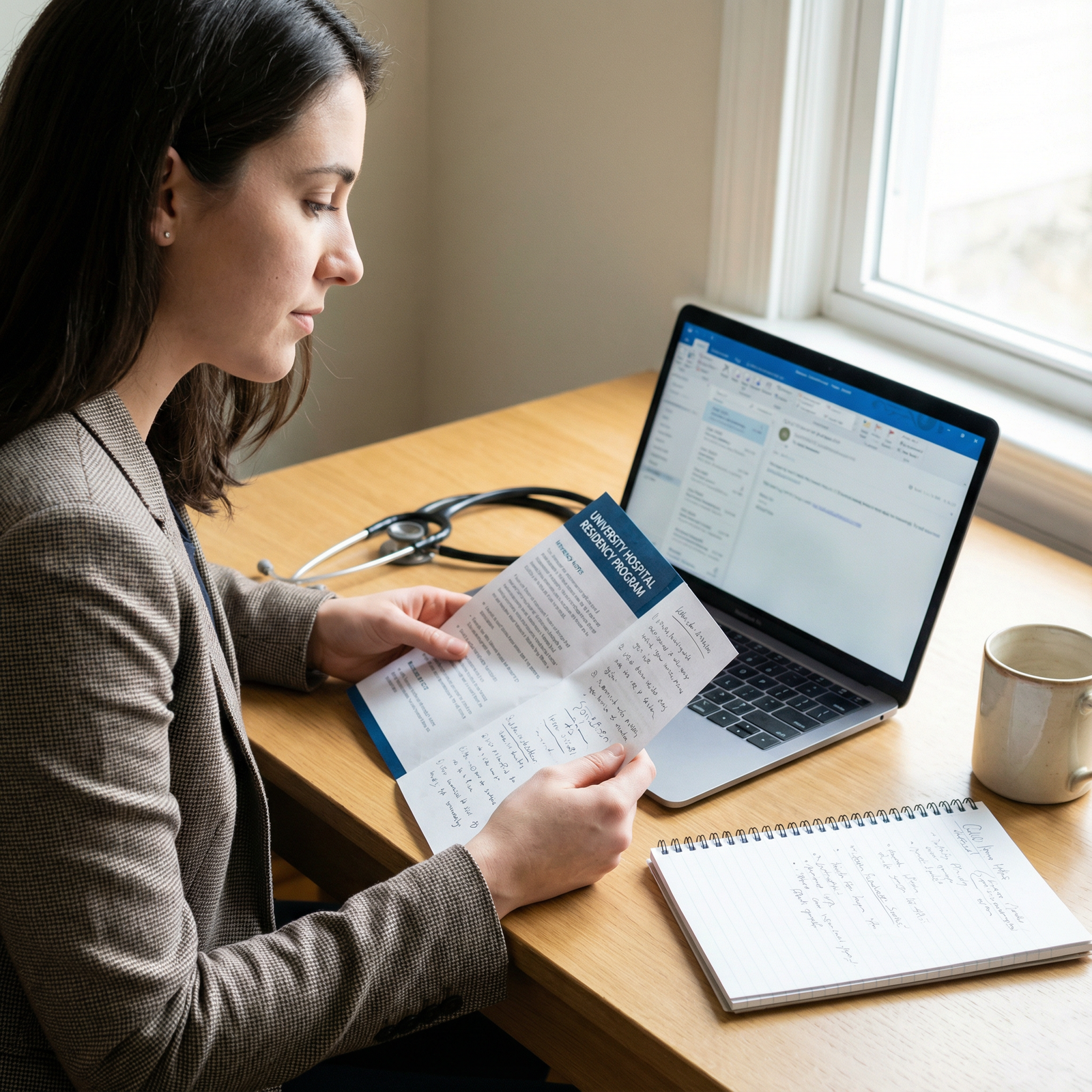
Take 5–10 minutes immediately after each interview block to jot down:
- Names and titles of interviewers
- 1–3 key topics discussed
- Any memorable moments, shared interests, or advice they gave
- Specific elements of the program that impressed you
These notes make writing personalized messages fast and easy the next day.
3. Personalize Each Note: Avoid Generic Templates
Programs can immediately tell the difference between a generic “copy-paste” email and a genuine, individualized message. Personalized thank-you notes should:
- Use the interviewer’s correct title and name (e.g., “Dr. Smith,” “Dr. Patel,” “Dr. Jones, Program Director”)
- Reference at least one detail from your conversation (topic, shared interest, piece of advice)
- Connect your background or goals to something they described about the program
Examples of Personalization:
- “I especially appreciated your candid explanation of how the program supports residents pursuing clinician-educator careers.”
- “Our conversation about caring for patients experiencing homelessness reinforced my interest in your program’s strong community outreach clinics.”
- “Hearing about your work in stroke systems of care aligned closely with my quality improvement project on door-to-needle times.”
You can absolutely use a core template for structure, but customize 2–3 sentences for each interviewer.
4. Keep It Concise and Focused
Your goal is a clear, readable email—not an essay. A typical thank-you email can be:
- 2–4 short paragraphs
- 150–250 words total
Suggested structure:
- Opening: Clear thank-you and reference to the interview day/date
- Middle: 1–2 specific points about your conversation and the program
- Optional Clarification: Briefly add or clarify one key point, if needed
- Closing: Reiterate appreciation and interest; maintain a professional sign-off
Avoid:
- Overly emotional language or flattery
- Long paragraphs describing your entire CV again
- Multiple follow-up emails unless there is a substantive update requested by the program
5. Edit for Professionalism, Tone, and Accuracy
This is still part of your residency application. Sloppy communication can undercut an otherwise strong impression.
Before sending each thank-you note:
- Check spelling, grammar, and punctuation
- Confirm names and titles—getting “Program Coordinator” vs. “Program Director” wrong is noticeable
- Use a professional tone: warm, respectful, and succinct
- Avoid slang, abbreviations, or overly casual closing lines
Professional subject line examples:
- “Thank you – [Your Name], [Specialty] Interview on [Date]”
- “Thank you for the [Program Name] interview”
- “Appreciation for our conversation – [Your Name]”
Sample Thank-You Note Template for Residency Interviews
Use this as a starting structure and customize it for each person and program.
Subject line: Thank you – [Your Name], [Specialty] Interview on [Date]
Dear Dr. [Interviewer's Last Name],
Thank you for taking the time to speak with me during my interview for the [Program Name] [Specialty] Residency on [date]. I appreciated the opportunity to learn more about your program and the culture you’ve built around [brief program value, e.g., resident autonomy, community engagement, research].
I especially enjoyed our discussion about [specific topic you discussed—e.g., your work in medical education, the program’s night float system, your QI project on sepsis management]. Our conversation reinforced my impression that [Program Name] would be an excellent fit for my interests in [briefly link your goals—e.g., primary care in underserved communities, critical care, clinician-educator pathway].
[Optional 1–2 sentences to clarify or add a key point, if necessary: e.g., “I realized after our conversation that I did not mention my ongoing project on [topic], which has further solidified my interest in pursuing [subspecialty/track].”]
Thank you again for your time and consideration. I remain very enthusiastic about the possibility of joining [Program Name] and contributing to your team.
Best regards,
[Your Full Name]
[Medical School Name]
[Preferred Email] | [Phone Number]
Professionalism and Post-Interview Communication Rules
Post-interview communication in residency applications exists within the framework of ERAS and NRMP guidelines. You can and should express gratitude and interest—but you must do so ethically and professionally.
Understanding the Rules and Expectations
- NRMP guidelines prohibit coercive communication and “rank order commitments” from programs or applicants.
- Programs may tell you they “do not expect or require thank-you notes” or that they “do not factor them into ranking decisions.” Respect those statements.
- You may express interest in a program, even strong interest, but avoid explicit promises about rank order in either direction.
Safe Phrases to Use:
- “I remain very interested in your program.”
- “My interview day at [Program Name] reinforced that it is one of my top choices.”
- “I believe [Program Name] would be an excellent fit for my goals in [specific area].”
Phrases to Avoid:
- “I will rank your program #1” (especially if you say this to more than one program—unethical).
- Pressuring language such as “Please let me know where I stand on your rank list.”
When in doubt, err on the side of being honest, clear, and non-coercive.
Common Pitfalls to Avoid
- Mass, identical emails to a large group of interviewers
- Overly personal comments or inappropriate familiarity
- Requests for special treatment, guarantees, or feedback on ranking
- Multiple follow-ups if the program does not respond (most will not)
- Emotional venting if you feel the interview went poorly
Your thank-you note is part of your professional record; treat it as such.
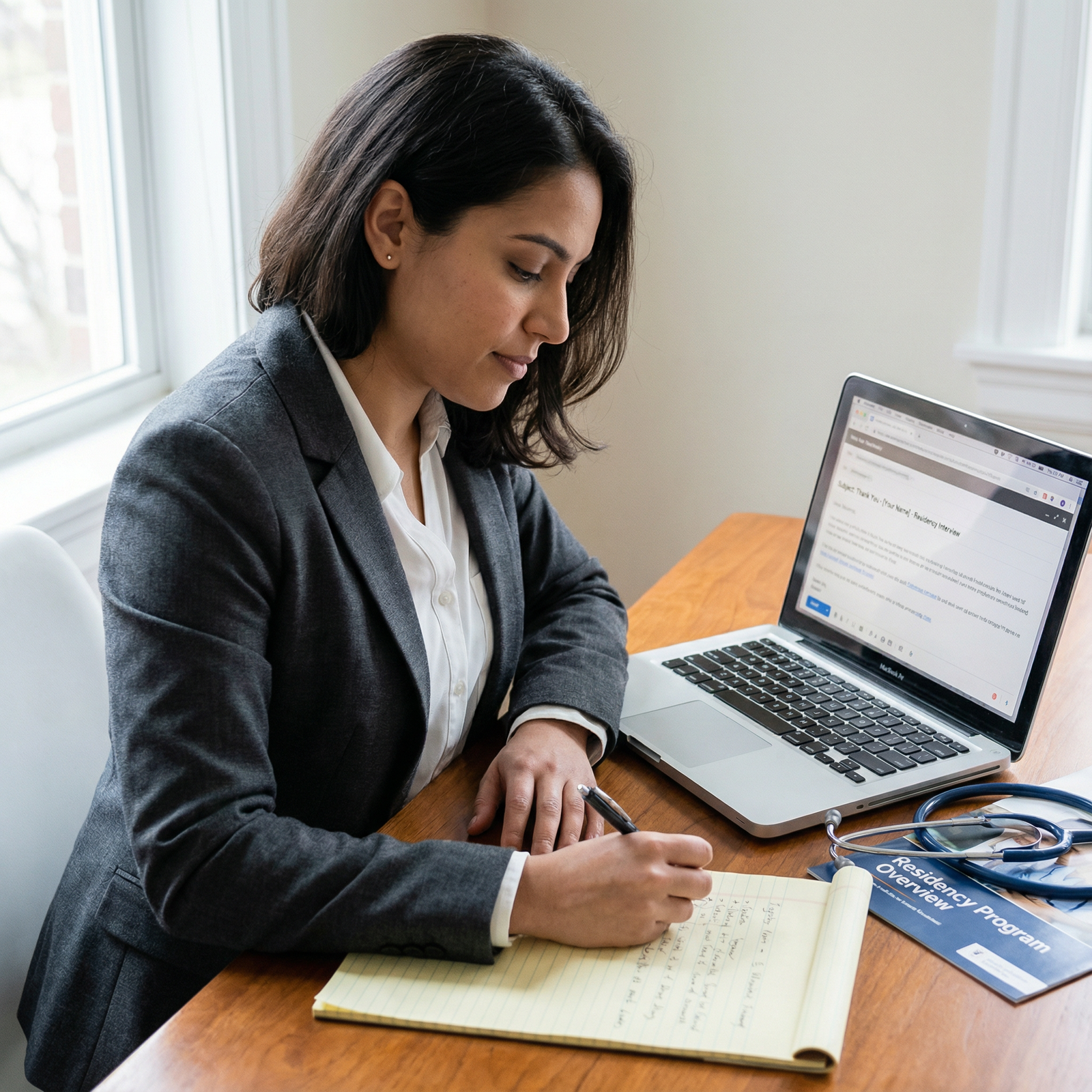
Practical Strategy: System for Managing Post-Interview Thank-You Notes
Given multiple interviews over months, organization helps keep your post-interview communication polished and consistent.
Step-by-Step Workflow
Immediately After Each Interview Day
- Record the names and titles of each interviewer
- Jot 2–3 bullet points per person (topics, advice, shared interests)
- Make a quick note of your overall impression of the program
Within 24 Hours
- Draft individualized emails to each interviewer (or at least to the program director and key faculty if you had a large panel)
- Use your notes to customize 2–3 sentences per email
Before Sending
- Double-check spelling of names and program titles
- Run spell-check or use a grammar tool
- Confirm that you’re not mixing up details between programs
Track Your Communication
- Keep a simple spreadsheet or note with:
- Program name
- Date of interview
- Names contacted
- Date thank-you emails were sent
- Keep a simple spreadsheet or note with:
This system makes it easier to stay consistent and reduces the chances of errors or missed emails.
Residency Thank-You Notes: Frequently Asked Questions
1. How important are thank-you notes in residency applications? Will they change my rank?
Thank-you notes are unlikely to dramatically change your position on a program’s rank list, especially at large programs with formalized ranking processes. Some programs explicitly state that thank-you notes do not impact ranking.
However, they can still:
- Reinforce positive impressions of your professionalism
- Help interviewers remember specific strengths or conversations
- Clarify or update small but meaningful aspects of your application
Think of them as a professional courtesy and a modest advantage, not a decisive factor. Skipping them is unlikely to ruin your application, but doing them well can only help.
2. Should I send a thank-you note even if I think the interview went poorly?
Yes. Even if you felt the interview was imperfect:
- Sending a polite, timely thank-you note demonstrates maturity and resilience
- You may be judging your performance more harshly than the faculty did
- The note gives you one last chance to highlight enthusiasm and clarify any point you felt you under-explained
Focus the note on gratitude and what you learned about the program, not on apologizing or rehashing perceived mistakes.
3. Is email always acceptable, or should I handwrite notes for residency interviews?
For residency applications, email is considered standard and professional:
- It arrives quickly during a busy season
- It aligns with how most clinical and academic communication occurs
- It is easy for faculty to respond to or archive if they choose
Handwritten notes are optional and may be appropriate:
- For a program director or faculty mentor with whom you had a particularly meaningful connection
- As a supplemental gesture later in the season, not a replacement for a prompt email
If you choose handwritten notes, keep them as professional, concise, and legible as your emails.
4. What if I forgot to mention something important during the interview?
You can briefly include it in your thank-you email, as long as you keep it short and relevant. For example:
“I realized after our conversation that I did not mention my recent poster presentation at [conference] on [topic], which further solidified my interest in [subspecialty].”
Avoid turning your thank-you into a long update email. One or two sentences is usually enough.
If you have a major update later in the season (e.g., new publication, match-relevant award, or change in exam status), it may be more appropriate to send a separate, succinct update email to the program coordinator or director rather than appending it to a thank-you sent much earlier.
5. What if I don’t have the email addresses of my interviewers?
Options include:
- Check any pre-interview or post-interview emails from the program; sometimes coordinators include a list of participants
- Send a single thank-you email to the program coordinator or program director, asking them to share your appreciation with the interviewers as appropriate
- Address the coordinator’s email to “Dear Dr. [Program Director’s Name] and the [Program Name] Interview Committee…”
Programs understand that applicants may not always have direct contact details for every interviewer, especially residents or last-minute substitutes.
Conclusion: Using Thank-You Notes Strategically and Professionally
Post-interview communication is a small but meaningful part of your overall residency application strategy. Thoughtfully composed thank-you notes:
- Demonstrate professionalism and respect
- Reinforce your interest and fit for the program
- Help distinguish you in a crowded, highly qualified applicant pool
- Offer a limited opportunity to clarify or update key details
- Contribute to your emerging professional reputation in medicine
By keeping your messages timely, specific, concise, and professional, you can ensure your post-interview communication supports—rather than detracts from—your candidacy.
Ultimately, thank-you notes will not replace a strong application or an excellent interview performance. But as a finishing touch on months of preparation, they can help ensure that when your name appears on a rank list discussion, interviewers remember not just your scores and CV, but also your professionalism, gratitude, and genuine interest in joining their team.