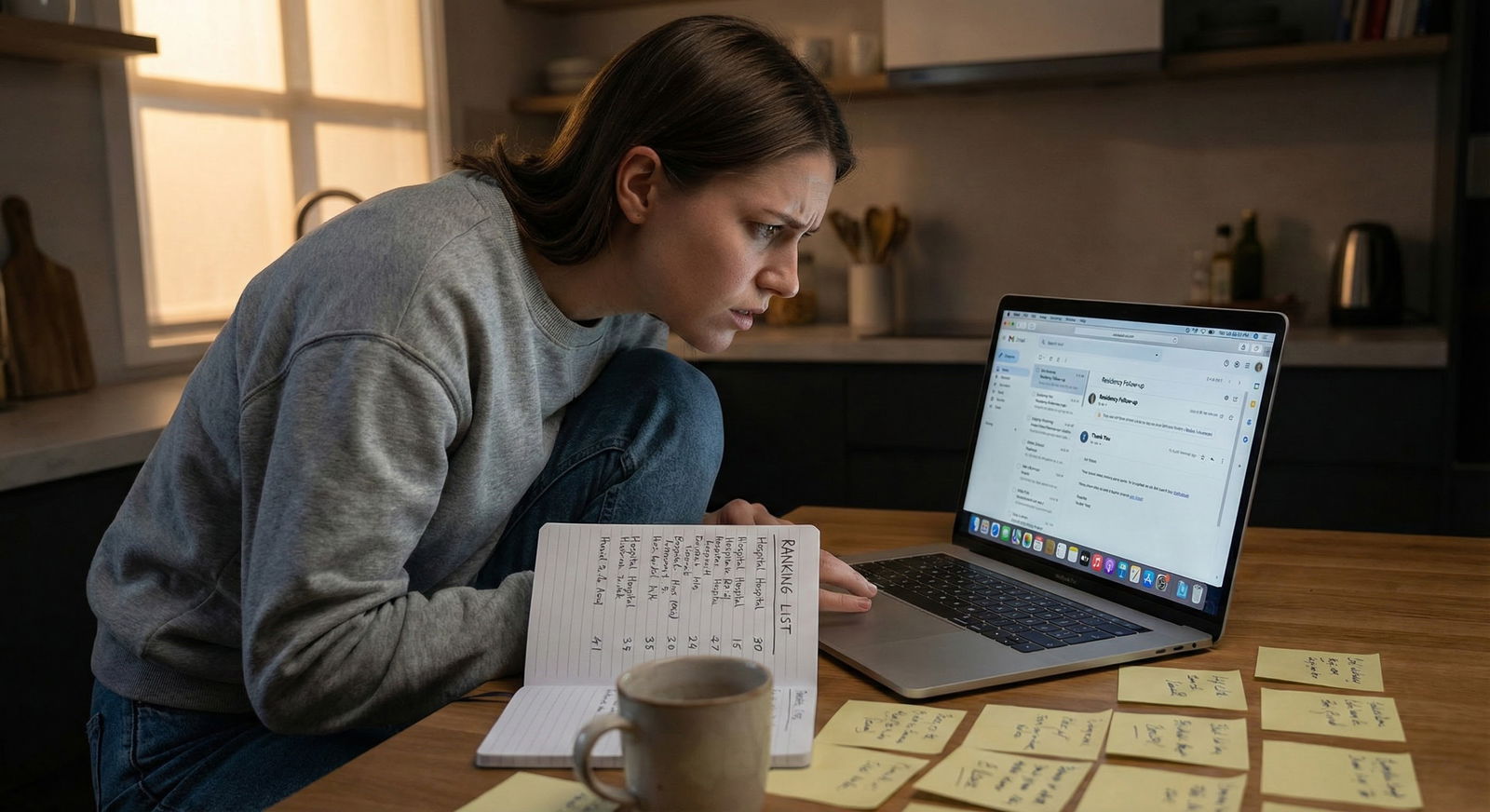
You don’t have to send thank-you emails after residency interviews. But skipping them is usually a mistake.
Let me be clear: thank-you emails almost never win you a spot you didn’t already earn. But they can quietly help you:
- Stay memorable in a sea of similar candidates
- Correct or clarify something you said
- Signal professionalism and genuine interest
And yes, sometimes they’re the tiebreaker between you and someone who looked basically identical on paper and in person.
Here’s how to think about them like a rational adult, not a panicked applicant spamming every faculty member with a copy-pasted template.
1. Do Thank-You Emails Actually Matter?
Short answer: They matter some, but not in the way people think.
Here’s what’s usually true:
- Some programs don’t care at all. They’ll tell you explicitly: “No thank-you notes needed.”
- Some programs care a little. A thoughtful note reinforces, “This person is mature and courteous.”
- A few programs care a lot. Especially smaller, community, or less hyper-academic programs where culture fit and personal impressions are huge.
Where thank-you emails don’t matter:
- They won’t make up for a bad interview.
- They won’t jump you 10 spots on a rank list.
- They won’t overcome weak scores or a poor application.
Where they can matter:
- When two applicants are roughly equal and someone says, “Hey, remember that one who followed up with that nice note about our research / patient population / curriculum tweak?”
- When you use the email to clarify something confusing you said, or add a brief, relevant detail.
- When a PD or faculty member uses your email as an excuse to bring your name back up in conversation.
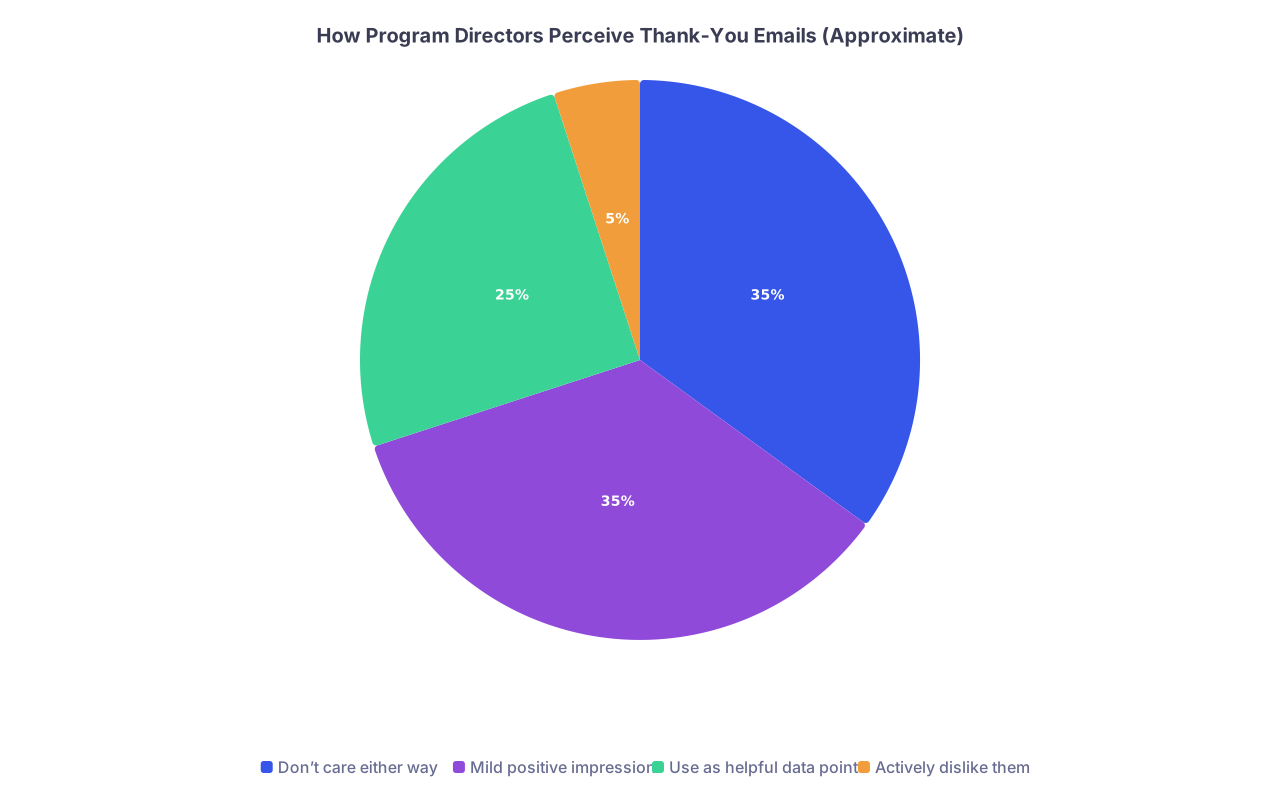
| Category | Value |
|---|---|
| Don’t care either way | 35 |
| Mild positive impression | 35 |
| Use as helpful data point | 25 |
| Actively dislike them | 5 |
No, those numbers aren’t from a specific single study—they’re a realistic approximation based on PD surveys, advisor experience, and how these discussions usually go behind closed doors.
Bottom line:
If it’s easy for you, do them. If you’re overwhelmed, be strategic, not perfectionistic.
2. When Should You Send Thank-You Emails — And When Should You Skip Them?
Here’s the simple framework I recommend and actually used with residents:
You definitely should send a thank-you when:
- You’re honestly interested in the program
- You had a meaningful interaction with a PD, APD, faculty, or chief
- Someone went out of their way for you (reviewed your research, helped with logistics, gave career advice)
- You might rank this program in the top half of your list
You can skip or minimize thank-yous when:
- The program explicitly says: “No thank-you emails” or “Do not contact faculty after interviews”
- It’s a program you know you won’t rank above the bottom third
- You had a generic, 5-minute speed-interview with a faculty member you barely talked to and have nothing non-generic to say
Still want a rule of thumb?
- Strong interest / top programs: Email PD + key faculty you connected with
- Moderate interest: PD or main coordinator only
- Low interest: Maybe just the coordinator or no one
| Scenario | Who You Email |
|---|---|
| Top-choice program | PD + APD(s) + meaningful faculty |
| Solid mid-list program | PD or APD, maybe one key faculty |
| Safety / low-interest program | Coordinator only or skip |
| Program says “No thank-you emails” | No one |
| Mass interview day with 7+ faculty | PD/APD + 1–2 you really connected with |
3. Timing and Logistics: How, When, and How Many
When to send
Ideal window: 24–72 hours after the interview.
Why?
- So they still remember you
- So you don’t look like you spent the whole evening obsessing and hit send 30 minutes after logging off
- So you still remember specific details you can mention
If you’re slammed with back-to-back interviews:
Batch them. Block 30–45 minutes every 2–3 days just for thank-yous. You don’t need to clear your entire life to write them.
Subject lines that don’t suck
Keep it clean and obvious:
- “Thank you – [Your Name], [Specialty] Interview [Date]”
- “Thank you for the interview – [Your Name]”
- “Appreciated our conversation – [Your Name], [Residency Program] interview”
Avoid trying to be “creative.” Nobody wants to open “A quick note of appreciation from a future intern ;)”.
How many is too many?
For most interviews:
- 1 to the PD or APD
- 1–2 more to faculty/ chiefs you connected with
Sending 7 nearly identical emails to every interviewer you met in a massive panel? Overkill. You become spam, not memorable.
4. Exactly What to Say (With Templates You Can Steal)
Let’s cut the fluff. A good thank-you email is:
- 4–8 sentences total
- Specific, not generic
- Not begging, not promising you’ll rank them #1
- Grammatically clean, no typos, no weird formatting
Here’s the basic structure:
- Clear thanks for their time
- One or two specific things you appreciated or learned
- One sentence that ties you to the program (fit)
- Polite closing that keeps the door open
Template for Program Director / APD
Subject: Thank you – [Your Name], [Specialty] Interview [Date]
Dear Dr. [Last Name],
Thank you for taking the time to speak with me during my interview at [Program Name] on [date]. I appreciated hearing more about [specific detail – e.g., your approach to resident autonomy in the ICU, your new X+Y schedule, the way you support residents pursuing fellowships].
Our conversation reinforced my sense that [Program Name] would be a strong fit for me, especially given my interests in [briefly mention: community medicine, academics, global health, medical education, etc.]. I was particularly impressed by [one concrete element – e.g., the senior resident mentoring structure, the simulation curriculum, the continuity clinic setup].
Thank you again for the opportunity to interview. I’d be excited to train at [Program Name] and appreciate your consideration.
Best regards,
[Your Name]
AAMC ID: [#######]
Template for Faculty / Chief / Interviewer
Subject: Thank you for the interview – [Your Name]
Dear Dr. [Last Name],
Thank you for taking the time to speak with me during my interview at [Program Name]. I really enjoyed our conversation about [specific topic – research area, a case you discussed, career paths, the local patient population].
Hearing about your experience with [specific thing they mentioned – e.g., resident mentorship, balancing research and clinical work, life in the city, fellowship placement] made the program’s strengths very clear. It made me even more interested in training at [Program Name].
I appreciate your time and insight.
Sincerely,
[Your Name]
Template when you need to clarify something
Dear Dr. [Last Name],
Thank you again for the opportunity to interview at [Program Name]. I appreciated our discussion about [topic].
I realized after our conversation that I didn’t fully explain my role in [project/experience]. To clarify, I [1–2 sentences with specifics – led data collection, co-wrote the IRB, presented at X conference]. I wanted to make sure you had the correct impression of my involvement.
I remain very interested in [Program Name] and appreciate your time and consideration.
Best regards,
[Your Name]
That’s it. No life story. No desperation. No ranking promises.

| Step | Description |
|---|---|
| Step 1 | Interview Day Ends |
| Step 2 | Do not email |
| Step 3 | Email PD + key faculty |
| Step 4 | Email PD or APD |
| Step 5 | Optional: Email coordinator only |
| Step 6 | Send within 24-72 hours |
| Step 7 | Program says No thank-you emails? |
| Step 8 | Program interest level |
5. Common Mistakes That Make You Look Less Professional
Here’s where people blow it.
1. Copy-paste emails to multiple people… and forget to change the name
Yes, this happens. Every year.
If you insist on using a template, fine. But always:
- Personalize at least one sentence for each person
- Double-check the greeting and any reference to their role or work
- Read it once out loud before sending
2. Writing an essay
Your email is not your personal statement 2.0. If someone has to scroll, it’s too long.
3. Making promises about rank lists
Stuff like: “I will be ranking your program #1” or “Your program is now my top choice” when:
- You’re not sure yet
- You’re sending the same line to multiple programs
- The program explicitly said “no post-interview communication about ranking”
Don’t lie. And don’t back yourself into a corner. If you truly decide on a #1 and want to tell them, that’s a separate “love letter” closer to rank list time, not a same-week thank-you note.
4. Turning it into a negotiation
Do not use a thank-you email to ask:
- “What are my chances of matching there?”
- “Where am I on your list?”
- “How many applicants are you ranking ahead of me?”
Programs can’t and won’t answer those, and you’ll just look naive.
5. Typos, weird fonts, or unprofessional email handles
You’re applying to be a physician, not a Twitch streamer:
- Email should be some version of [email protected]
- No fancy fonts, colors, or signatures with quotes about life and love
- Run spellcheck. Then read it once more yourself.
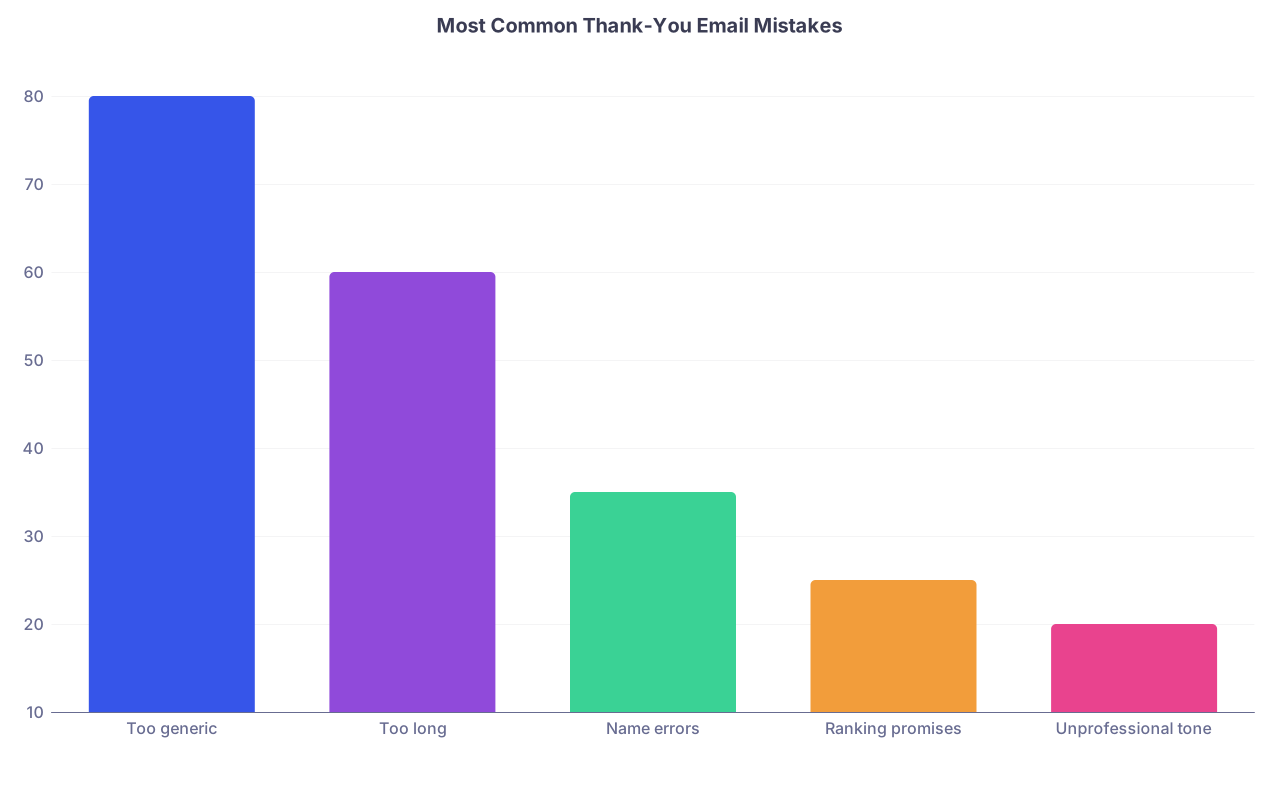
| Category | Value |
|---|---|
| Too generic | 80 |
| Too long | 60 |
| Name errors | 35 |
| Ranking promises | 25 |
| Unprofessional tone | 20 |
6. What If You Don’t Send Any Thank-You Emails?
Here’s the honest impact:
- At most programs: You’ll be fine. Many residents matched having never sent a single thank-you.
- At some smaller or culture-heavy programs: You might come off as a little less enthusiastic or polished than someone who did.
- No one is sitting there thinking, “We loved them, but they didn’t send a thank-you, so: reject.”
The bigger risk isn’t punishment. It’s lost opportunity.
A missed chance to:
- Briefly reinforce your fit
- Keep your name fresh in their mind
- Show that you handle professional courtesies well
If you’re burned out and can’t do them for every interview, prioritize:
- Programs you’d realistically rank in your top 5–7
- Programs where you had especially strong vibes
- Programs where someone went out of their way for you
7. Quick System to Make This Manageable
You don’t need a 2-hour ritual after each interview. Use a light system.
Right after each interview, jot down:
- 1–2 things you liked about the program
- 1 specific thing each interviewer mentioned
- Your rough interest rating: high / medium / low
Then, for high and medium interest programs:
- Use a template
- Plug in your notes (specifics)
- Send within 24–72 hours
That’s it. No spreadsheet with 14 columns. No analysis paralysis.
FAQ: Thank-You Emails After Residency Interviews
1. Will not sending a thank-you email hurt my chances of matching at a program I love?
Probably not in any major way, but it can be a small missed advantage. If they already liked you, a thoughtful thank-you helps keep you on their radar in a positive way. It won’t rescue a bad interview, but it can slightly strengthen an already good impression. If you truly love a program, sending a short, specific note is worth the 5 minutes.
2. Should I email residents I met on interview day too?
Usually, no. Residents don’t expect thank-you emails and often don’t want their inbox flooded. Exceptions: if a resident gave you their card/email and specifically told you to reach out with questions, or they went out of their way (spent an hour with you, helped with a major issue). In those cases, a short, casual thank-you is fine, but don’t overdo it.
3. What if I realize a week later I forgot to send a thank-you? Is it too late?
You can still send it. Just don’t pretend it’s within 48 hours. Say something like, “I’ve been reflecting on our conversation from last week and wanted to thank you again…” Late but thoughtful is better than never, especially for programs you’re very interested in. But don’t stress if the window feels like it’s closed—your interview carries far more weight than a late email.
4. Is it okay to reuse most of my template between programs?
Yes, as long as you customize at least 2–3 details: program name, something specific about that program, and something specific about that conversation. Programs can smell generic copy-paste a mile away. Reusing the skeleton is fine. Reusing the exact same content for 15 programs is lazy and obvious.
5. How is a thank-you email different from a “this is my #1” letter later in the season?
Thank-you emails: sent within a few days of the interview; focused on appreciation and general interest; not about ranking.
#1 or “love letters”: sent closer to rank list submission; usually reserved for your true #1; explicitly say they’re your top choice (if that’s allowed and true). Don’t combine these. Your initial thank-you should not lock you into a ranking promise you might regret.
Open your interview calendar right now and pick the last 3 programs you cared about most. For each one, draft a 5-sentence thank-you to the PD using the template above and send them today.