
It’s 10:47 p.m. You’re replaying your interview on a loop, and the scene keeps freezing at the same horrible moment:
You look the faculty member dead in the eye and say, “Thank you so much, Dr. Smith,” and they calmly reply, “It’s actually Professor Smith,” or “I’m actually a nurse practitioner,” or worse—they don’t correct you at all. You just realized it three hours later while doom-scrolling their bio on the program website.
Now your brain’s going:
Did I just tank the whole interview?
Are they telling the committee I’m disrespectful?
Should I email them? Will that make it worse?
What if I do nothing and they hold a grudge forever?
You’re in the residency application phase where every tiny thing feels like it could blow up your entire match. I get it. I’ve seen people obsess for days over this exact mistake.
Let me be blunt: calling someone by the wrong title feels catastrophic, but it’s almost never the thing that kills your chances. And yes, a follow-up can help—but only if you do it right and don’t turn it into a 700-word apology spiral.
Let’s walk through this like someone who wants to sleep at some point this week.
How Bad Is This, Really?
Your brain is probably rating this as a 9.8/10 disaster.
Realistically? It’s closer to a 2 or 3.
Here’s why: faculty, APPs, and admin staff who interview applicants have seen way worse than this. I’ve heard:
- Students calling the PD “Mr.” when he’s clearly “Dr.”
- Someone calling a PA “doctor” three times in a row.
- Applicants using first names with senior faculty without being invited to.
- “Mrs. [Last Name]” for a female attending who’s very clearly “Dr. [Last Name]”.
Does it feel cringey? Yes. Does it automatically mean “rejected”? No.
Most interviewers assume:
- You’re stressed.
- You’re meeting a ton of people.
- You’re trying to be respectful and occasionally misfire on the specific title.
They care more about your tone than whether you nailed the exact form of address. If you were polite, engaged, and interested, the title blip is usually just that—a blip.
Where it might matter more:
- If they corrected you and you blew past it without acknowledging.
- If the wrong title could be read as dismissive or disrespectful (e.g., repeatedly downgrading someone’s role after correction).
- If it was part of a pattern of not listening or seeming arrogant.
But a one-off? That’s not the thing that tanks otherwise solid applications.
You’re not losing a top-10 program over “Professor” vs “Doctor.” That’s not how this works.
Should You Send a Follow-Up? (And When It Helps vs Hurts)
You’ve got three real options:
- Do nothing.
- Send a quick thank-you that subtly fixes the title and moves on.
- Send a thank-you plus a short, direct acknowledgment of the mistake.
Here’s the part no one says out loud: over-apologizing looks more unsteady than the original mistake.
So the question isn’t: “Should I fix this?”
It’s: “Can I fix this without making it weirder?”
When a follow-up helps:
- They corrected you in real time, and you kind of froze and didn’t acknowledge it properly.
- The mistake was obvious and you used the wrong title multiple times.
- You’re writing them a thank-you email anyway and can clean it up in one smooth sentence.
When over-apologizing makes it worse:
- You send a whole email just to apologize for the title, with no other substance.
- You sound like you’re begging for forgiveness instead of being a normal human who made a small social error.
- You drag it out: “I’ve been sick about this all day,” “I can’t stop thinking about it,” etc. That signals anxiety more than professionalism.
If you already planned to send thank-you notes (you should, unless the program explicitly discourages it), this is the perfect place to quietly fix it.
If the interview was several days ago and you already sent a thank-you that used the wrong title again… we’ll talk about that too.
Exactly How to Write the Follow-Up (Without Sounding Unhinged)
Let’s keep this practical. You don’t need magic. You need clean, simple language.
Scenario 1: You Haven’t Emailed Them Yet
Great. You’re in the easiest situation.
Your goal:
- Send a normal thank-you.
- Use the correct title.
- If the mistake was obvious, add one short line acknowledging it.
Example 1 – Small, no-drama acknowledgment:
Subject: Thank you
Dear Professor Smith,
Thank you again for taking the time to speak with me during my interview at [Program Name] on [date]. I really appreciated hearing about [specific thing you discussed—e.g., the program’s approach to resident autonomy in the ICU].
Also, I realized afterward that I addressed you incorrectly during our conversation—my apologies for that. I appreciated your time and insights, and I enjoyed our conversation.
Best regards,
[Your Name]
That’s it. No beating yourself up. No paragraphs of explanation. You show that you noticed, you care, you respect them, and you move on.
Example 2 – If they didn’t correct you and you’re not sure they even noticed:
Honestly? You can skip the explicit apology and just use the correct title here. You’re fixing forward.
Dear Professor Smith,
Thank you very much for speaking with me during my interview at [Program]. I really enjoyed learning about [X].
Best regards,
[Your Name]
You’re probably overestimating how much they were focused on your exact wording. They were listening for your fit, your interest, your personality, not doing a title audit.
Scenario 2: You Already Sent a Thank-You With the Wrong Title (Double Ouch)
This is the one that makes people spiral. You messed it up in person and then again in writing. Or you were fine in person and wrong in the email.
Take a breath.
What’s done is done. You do not send a third message just to apologize for the wrong title in the thank-you. That’s where you move from “slightly awkward” to “this applicant is unraveling over tiny things.”
At that point, your best move is to:
- Let it go.
- Focus on doing well with the rest of your applications.
- Stop rereading the email like it’s your confession letter.
The committee is not sitting around dissecting the title line of your thank-you email. Honestly, some interviewers never even open thank-you emails.
Scenario 3: The Mistake Involved a Non-Physician You Called “Doctor”
This one makes people especially nervous.
You called a PA, NP, PhD, or administrator “Doctor.” Sometimes that’s perceived as flattering. Sometimes not. Depends on the person. You can’t control that now.
Use the same framework:
- In your thank-you, use their correct title or just “Ms./Mr./Mx. [Last Name]” if that’s how they were introduced.
- If you feel you really need to smooth it, one line is plenty:
I also realized afterward that I addressed you incorrectly during our conversation—my apologies for that.
Don’t launch into: “I completely respect advanced practice providers and didn’t mean to diminish your unique role…” It’s too much. Keep it light and move on.

How Programs Actually Evaluate You (Spoiler: Not on Titles)
Here’s the part your anxiety is blocking out: residency programs don’t rank you based on whether you said “Professor” or “Doctor.” They care about things like:
- Did you seem genuinely interested in the program?
- Did you ask thoughtful questions?
- Do you seem like someone people want to work 28 hours straight with?
- Do your application, letters, and interview story line up?
If you were warm, prepared, and not a jerk, the title mistake is background noise.
I’ve seen applicants:
- Mispronounce the PD’s name. Still ranked to match.
- Call a chief resident “attending.” Still ranked highly.
- Accidentally address the program coordinator by the wrong name. Still matched there.
What does raise red flags:
- Arrogance.
- Not listening when corrected.
- Being dismissive of staff or “unimportant” people.
- Throwing others under the bus.
If your only “crime” was trying to be respectful and getting the title slightly wrong, you’re not in the danger zone.
Quick Reality Check: Worst-Case vs Likely Case
Your brain’s worst-case scenario probably goes like this:
Dr. Smith goes to the committee and says, “We cannot rank this person. They called me by the wrong title. Zero respect.”
Here’s what actually happens 99.9% of the time:
Committee: “How was the applicant?”
Interviewer: “Seemed nice. Interested in critical care. Good fit. A little nervous but overall solid.”
No one: “Let me pull up the transcript of their exact form of address.”
If the interviewer even remembers, it’s filed in the “normal social awkwardness during a high-pressure day” category.
Your match outcome will rise and fall on your whole application, not this one blip.
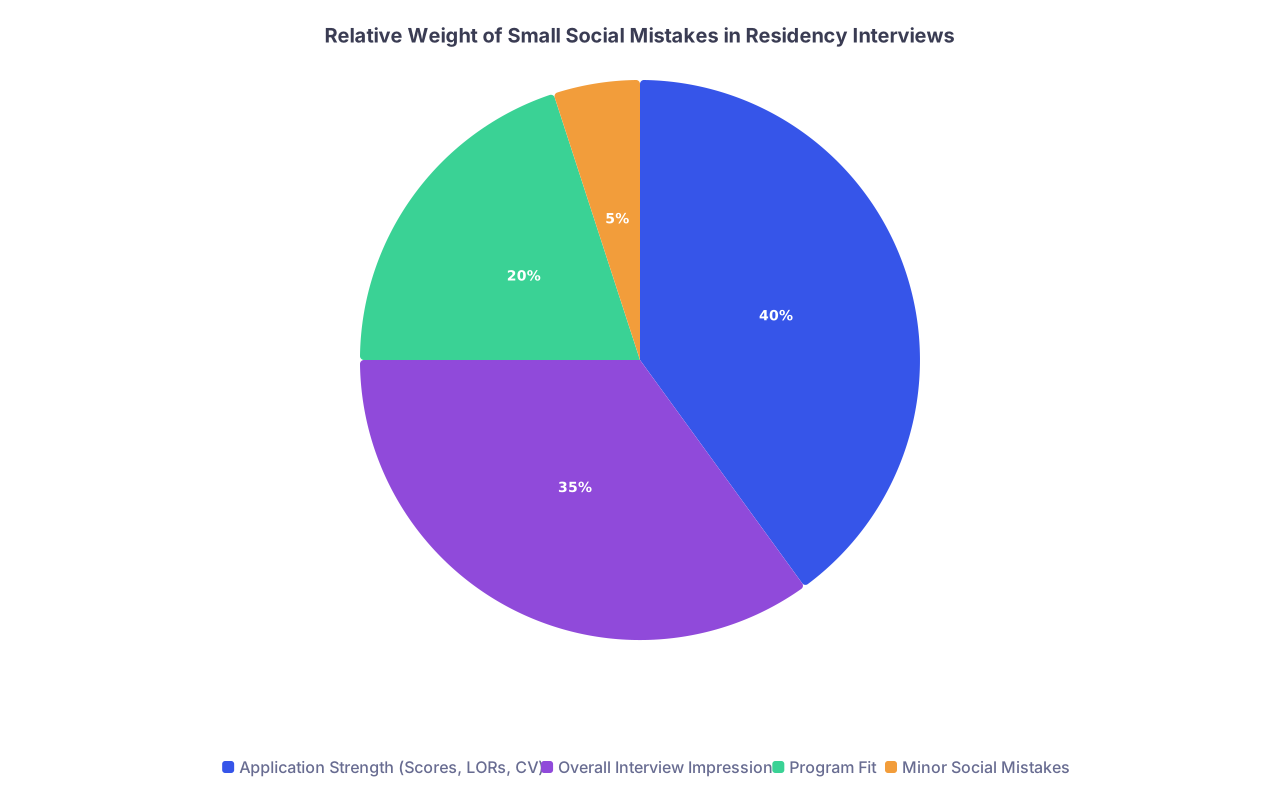
| Category | Value |
|---|---|
| Application Strength (Scores, LORs, CV) | 40 |
| Overall Interview Impression | 35 |
| Program Fit | 20 |
| Minor Social Mistakes | 5 |
How to Stop Obsessing Over This (So You Can Function)
You can’t fix the past, but you can keep this from hijacking the rest of your season.
Here’s what I’d do if you were my friend texting me about this at 11 p.m.:
- Draft the thank-you email using the correct title.
- If needed, add the one-line apology.
- Send it.
- Make a rule for yourself: once it’s sent, you’re not allowed to rehash this same mistake more than once a day. (Yes, I’m serious. Your brain needs limits.)
Then redirect that anxious energy into things that actually move the needle:
- Fine-tune answers for “Why this program?” for upcoming interviews.
- Review your top 3 cases/stories you like to talk about.
- Make sure your tech setup is solid for virtual interviews.
Every minute you spend catastrophizing this is a minute you’re not preparing for the next chance to impress someone who has never heard you say the wrong title.

| Step | Description |
|---|---|
| Step 1 | Realize title mistake |
| Step 2 | Write normal thank-you |
| Step 3 | Add 1-line apology |
| Step 4 | Just use correct title |
| Step 5 | Do nothing more |
| Step 6 | Sent thank-you yet? |
| Step 7 | Obvious mistake? |
| Step 8 | Already wrong in email? |
| Situation | Best Move |
|---|---|
| In-person mistake, no email yet | Thank-you + 1 short apology line |
| In-person mistake, already sent thank-you | Do nothing else |
| Email only mistake (wrong title in email) | Let it go, don’t send a correction |
| Unsure if they noticed | Use correct title going forward |

FAQ: I Called a Faculty Member by the Wrong Title—Now What?
1. Can this single mistake actually ruin my chances at matching at that program?
Almost certainly not. If your entire application is borderline and they needed a reason to push you down a bit, maybe this joins the list of vague “meh” impressions. But on its own? It doesn’t knock a solid candidate out of the running. Committees care about the overall picture—scores, letters, fit, how you interacted with everyone—not one awkward address.
2. What if I called the program director by the wrong title?
Annoying? Yes. Fatal? No. PDs have thick skin. They’ve been called “Mr.,” “Mrs.,” first name only, “sir/ma’am,” and everything in between. If you haven’t emailed yet, send a clean thank-you using the correct title and, if the mistake was obvious, add one brief line acknowledging it. Then stop. Do not send a separate apology email just for the title. That’s where it starts to look like you’re spiraling.
3. Is it better to be super formal (Dr. LastName for everyone) to avoid this?
Generally, yes—defaulting to “Dr. [Last Name]” in a medical setting is safe for anyone with an MD/DO/PhD unless they tell you otherwise. For coordinators, admin, and others, “Ms./Mr./Mx. [Last Name]” is fine if you need a title at all. When in doubt, you can also dodge the landmine: just say “Thank you so much, it was great talking with you,” without using a title. Being slightly formal is way safer than trying to be casual and getting it wrong.
4. I apologized briefly in my thank-you—will that draw more attention to the mistake?
Not if you keep it to one clean sentence. Something like, “I also realized afterward that I addressed you incorrectly during our conversation—my apologies for that,” is normal and proportional. It shows awareness and respect, then you move on. What draws attention—and concern—is a multi-paragraph emotional confession about how badly you feel. That doesn’t look thoughtful; it looks unstable. Keep it short and then talk about something substantive.
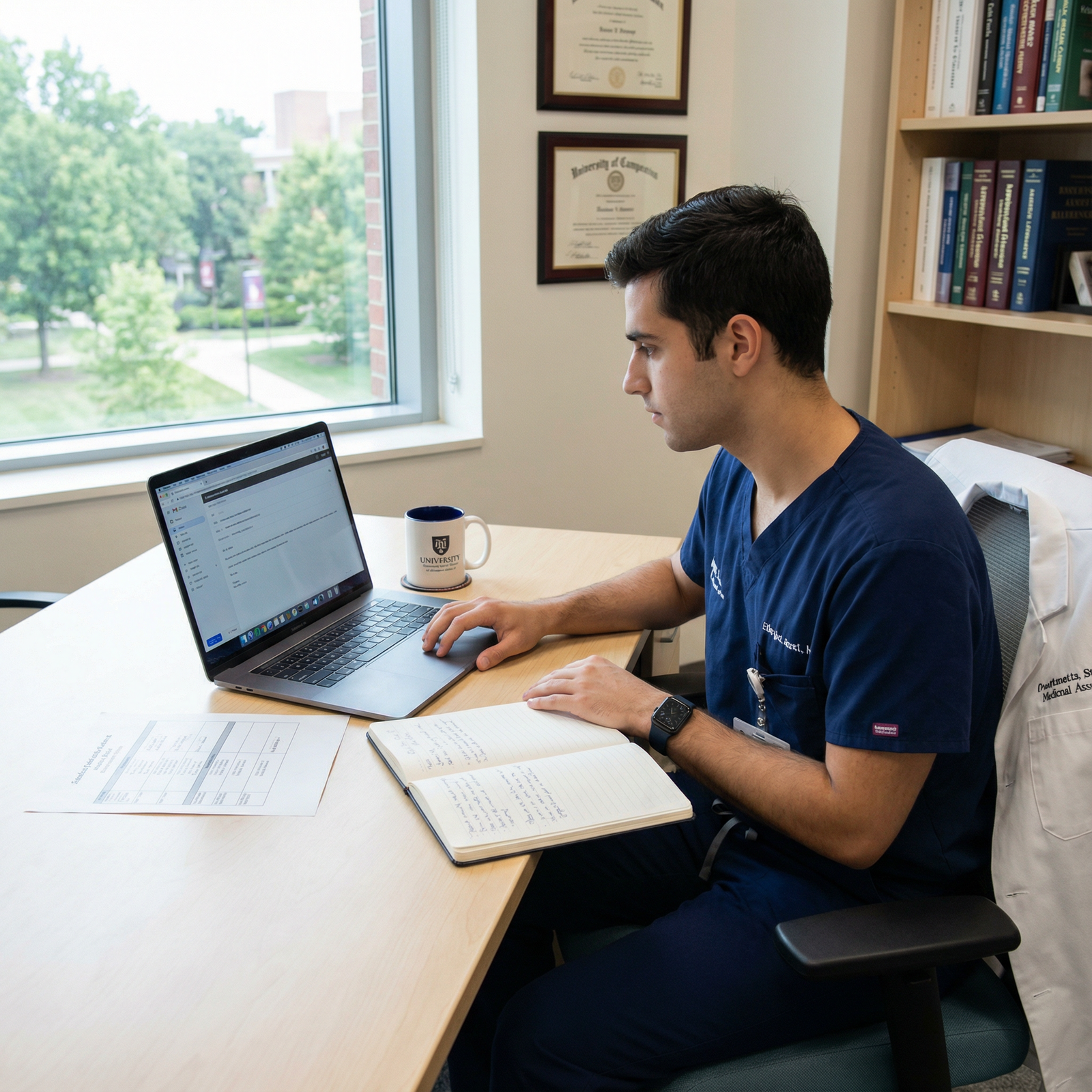
Open your draft email right now. Put in the correct title. Add one short apology line only if the mistake was obvious. Then send it—and don’t let this tiny thing eat one more hour of your life that you could be using to crush your next interview.