
The way residents are told to follow up after interviews is mostly theater. The way committees actually talk about your follow-up notes is something else entirely.
Let me take you into that room.
I’ve sat in those meetings where PDs scroll through emails while the chief resident is presenting a candidate. I’ve watched a perfectly sincere thank-you email get mocked for being “copy-paste from Reddit.” I’ve also seen a one-line follow-up pivot a candidate from “maybe later” to “we should probably move them up.”
You’ve been told “always send a thank-you note” like it’s a magic spell. It’s not. What matters is when it’s seen, who sees it, and what else is happening at the exact moment your name comes up.
This is the part no one explains to you.
How Follow-Up Actually Fits Into the Selection Process
Most applicants imagine programs sitting there, carefully tracking your emails and letters like some elaborate scoring system.
Reality: follow-up is background noise… until the second it isn’t.
Here’s the basic rhythm inside most mid-to-large programs:
- Applications flood in.
- Interviews happen in batches.
- Committee meets multiple times:
- initial post-interview debriefs
- mid-season recalibration
- final rank list meeting
The window where your follow-up matters is not “right after the interview.” It’s “right before or during when your name is actively on their screen.”
That might be:
- 30 minutes after interview day, when they’re doing a quick debrief.
- 2–3 weeks later, when they’re reshuffling mid-tier applicants.
- The week of final rank list, when borderline candidates get argued over.
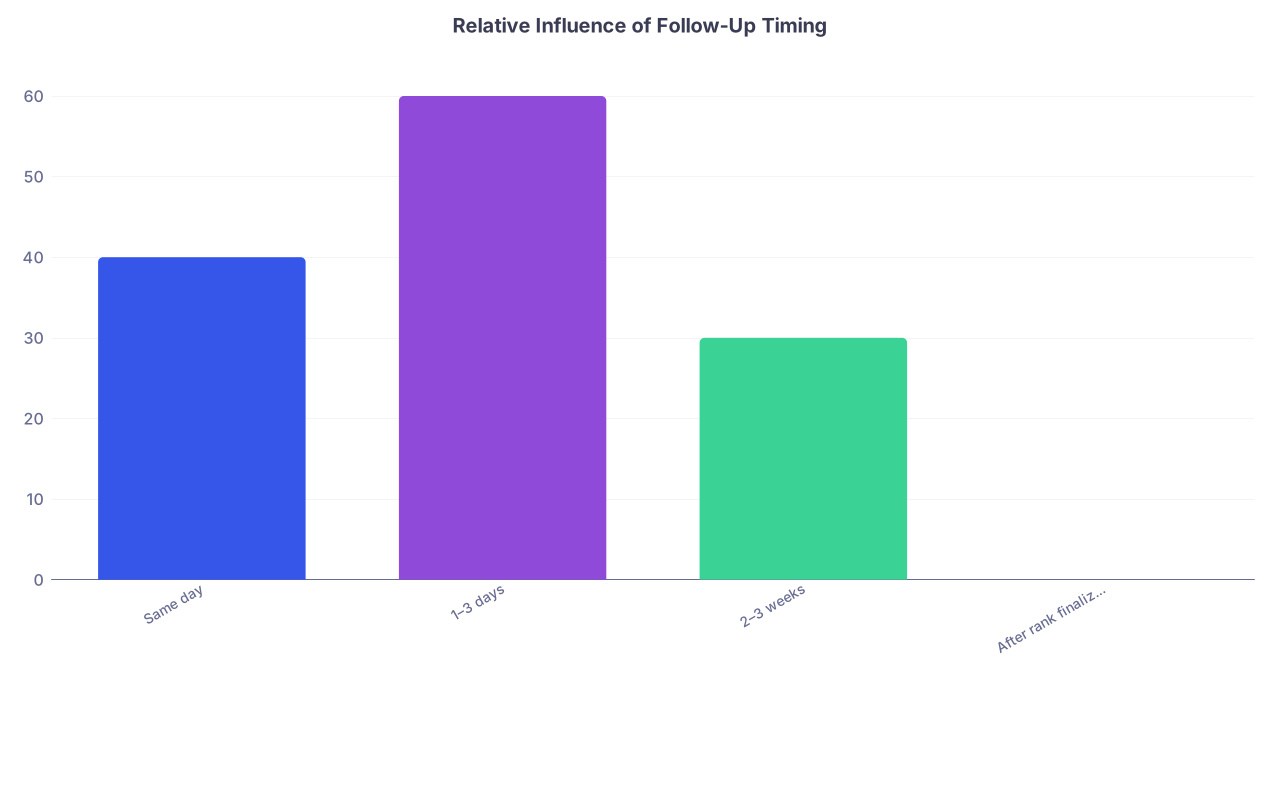
| Category | Value |
|---|---|
| Same day | 40 |
| 1–3 days | 60 |
| 2–3 weeks | 30 |
| After rank finalization | 0 |
Those numbers aren’t from a journal article. They’re roughly what you’d hear if you forced eight PDs at a conference bar to be honest.
Same day to 3 days? That’s when your thank-you note is most likely to be seen in context of how they remember you. Two to three weeks out? That’s when the “I’m very interested” email might intersect with a “hey, we need another strong prelim or categorical in our mid-tier.”
After rank list is sent to the NRMP? Everyone reads those with a mixture of guilt and indifference. The decisions are already locked.
What Committee Members Actually Say About Your Emails
Let me show you what really happens when your follow-up comes up in conversation.
Scene: Post-interview debrief, big internal medicine program. There’s a PD, APD, a couple of core faculty, chief resident, maybe a coordinator hovering in the background.
Chief: “Next is Patel, from Ohio State. Strong letters, okay research, residents liked him.”
PD scrolling inbox: “This the one who emailed about the ICU rotation?”
Chief: “Yeah, said we were his top choice, but faculty interview thought he was a bit stiff.”
APD: “I thought he warmed up at the end. Did say he was really drawn to our global health track.”
Chief: “He sent me a thank-you the next morning. Mentioned the specific patient case we discussed.”
PD: “Alright, put him in the ‘probable mid-upper’ group.”
Notice what happened. The email didn’t create his candidacy. It anchored a memory at the right moment. It gave one more person at the table a reason to speak up: “He followed up and referenced something real.”
When does it backfire?
Different scene, anesthesia program, late-season meeting.
Faculty: “She sent me this really long email about how this is her dream program.”
PD: “What did she say on Zoom?”
Faculty: “Said she was very interested in staying local, but she told the chief she was also very interested in going back to the East Coast. Feels like she’s telling everyone they’re number one.”
Chief: “She also emailed me with basically the same paragraph she sent you. Just swapped in ‘great to meet you, Dr. X.’”
Room shrugs. Someone: “Generic.”
Result: She stays in the middle of the pack. No one fights for her.
It’s not the length. It’s the mismatch between what she’s saying to different people and how transparent the copy-paste job is.
Who Actually Reads What — and Why That Matters
You think you’re emailing “the program.” You’re not. You’re emailing specific humans with specific roles and very different levels of power.
Let’s break that down.
| Recipient | Likelihood They Read It | Likelihood It Affects Rank | How It Usually Gets Mentioned |
|---|---|---|---|
| Program Director | High | Moderate–High | “They emailed me saying we’re their top choice…” |
| Associate PD | High | Moderate | “I got a nice specific note from them…” |
| Coordinator | Very High | Indirect | “This one has been very professional/responsive.” |
| Individual Faculty | Variable | Low–Moderate | “I liked their follow-up, seemed thoughtful.” |
| Residents | Variable | Low | Mentioned informally, rarely shapes rank |
Program Director: Their inbox is a war zone during interview season, but they do notice patterns. Meaningful: a concise, specific note that ties back to the conversation, shows maturity, or clearly states genuine interest. Not meaningful: a three-paragraph essay that could have been sent to any of 40 programs.
Associate PD / Core Faculty: They actually remember you. You’re in their slides when they present. If your email refreshes their positive impression, they might add a line to your eval: “Followed up with a thoughtful note, seems genuinely interested.”
Coordinator: You underestimate this person at your peril. I’ve seen PDs ask, “Any issues with this one?” and watch a coordinator say, “They were great with scheduling, super polite” or “They were kind of rude, emailed demanding a different date twice.” That’s real influence. Your tone in logistics emails counts as “follow-up” too.
Residents: Your thank-you messages to residents are appreciated but rarely move ranking. Where it matters is when it confirms what they already said: “Felt like they’d fit here, and they followed up asking smart questions about our night float schedule.”
The Quiet Truth About “Thank-You Notes”: What Helps, What Hurts, What’s Ignored
Thank-you notes aren’t scored. There is no line in the committee spreadsheet that says “Thank-you = +1.” But in marginal cases, human nature takes over.
Here’s how the internal script goes for each type.
The Generic Mass-Produced Note
“I really enjoyed meeting with you and learning more about your program. I am very excited about the possibility of training at [Program Name].”
Faculty reads that, recognizes the template, maybe absorbs a vague positive affect, and then forgets it 20 seconds later. Zero harm. Almost zero benefit.
No one at the table is saying, “Well they sent a generic thank-you, let’s move them down.” That would be absurd.
But if that’s all you send, and someone else at the same perceived level sends a sharper, more personal note that gets talked about, you lose the tiebreaker.
The Specific, Anchored Note
“Thank you for taking the time to speak with me yesterday about how your residents get early autonomy in the MICU. I’ve been thinking a lot about the patient with ARDS you mentioned; the way your senior handled that case is exactly the kind of training environment I’m looking for.”
That gets attention. Why?
It proves you were awake. Shows you didn’t interview on autopilot. It validates that the faculty member’s favorite teaching story actually landed. These are people with egos and pride in their work—when you connect with that, you stick in their head. And if you also quietly signal fit (“that’s the environment I want”), you give them language to advocate for you.
The Over-Eager, Slightly Desperate Note
“I wanted to reiterate that your program is my top choice and I would be honored to train there. I know I would thrive in your environment and be an asset to your residency.”
This is where PDs start to side-eye the screen.
If it’s February, they’re finalizing rank lists, and they already loved you? This kind of note can be fine, even helpful.
If it’s December, they barely remember you, and your file was solid but not glowing? It comes off as neediness without leverage. You haven’t built the foundation for that strong language yet.
I’ve watched PDs literally say: “Everyone says we’re their top choice. I don’t believe any of them unless I have some other reason to.”
Timing: What You Should Actually Do (Not What Reddit Says)
Forget the superstition. Here’s what timing behavior actually looks like from the other side of the table.
Same Day or Next Day: Thank-You to Interviewers
This is standard. If you don’t send anything at all, does anyone punish you? Almost never. But I’ve seen people get remembered more positively because their note arrived while the interviewer’s memory was still warm.
Do not overthink perfect timing. Evening of interview or next morning is ideal. Two days later is fine. A week later feels like an afterthought.
2–3 Weeks Later: Targeted Interest Email (Optional but Powerful)
This is the move almost no one teaches you properly.
This is not another thank-you. This is an interest update sent to the PD or APD, especially if:
- You’ve interviewed at multiple places and this one is rising on your list.
- You can now say something specific about fit (geography, training style, track).
- You’ve had a minor update (new poster accepted, new sub-I eval comment, etc.).
It sounds like this:
“Since our interview on [date], I’ve had the chance to reflect more on my experiences this season. Your program has consistently stood out to me because of [specific]. I also recently [brief update]. I’d be very excited to train at [Program].”
That is how you get to be the person a PD thinks of when they say, “We need another strong resident who actually wants to be here.”
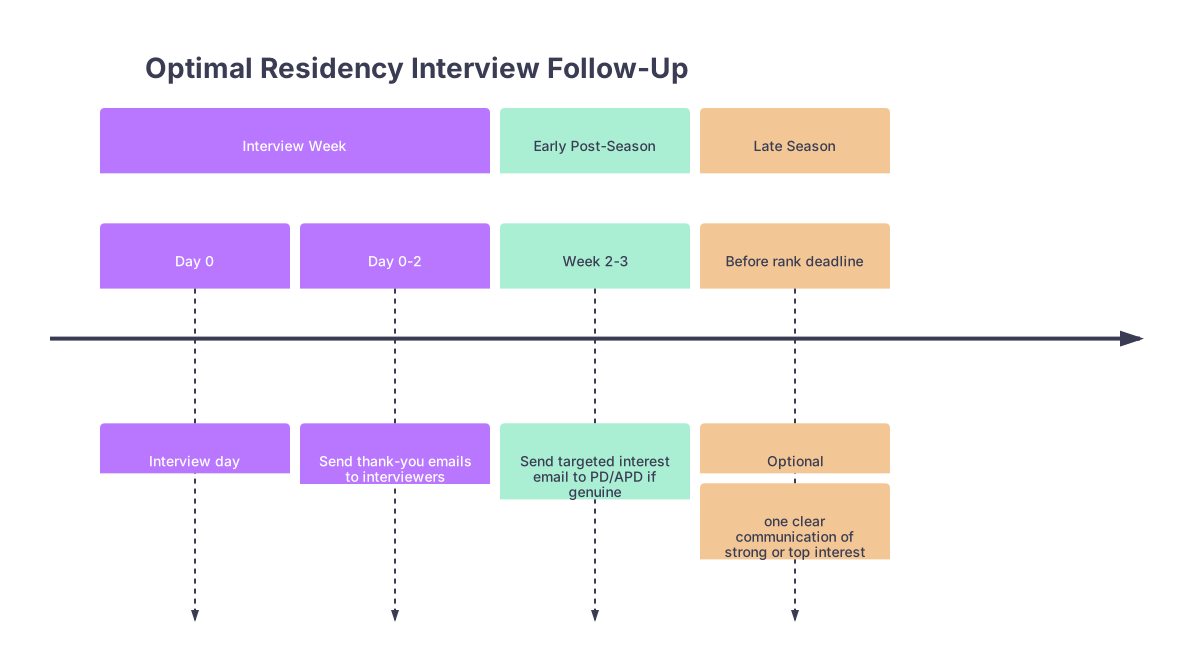
| Period | Event |
|---|---|
| Interview Week - Day 0 | Interview day |
| Interview Week - Day 0-2 | Send thank-you emails to interviewers |
| Early Post-Season - Week 2-3 | Send targeted interest email to PD/APD if genuine |
| Late Season - Before rank deadline | Optional |
The Nuclear Topic: “You’re My Number One” and Signaling Preference
This is where applicants really misunderstand what’s going on in that committee room.
Out front, programs say: “You don’t need to send us love letters, we follow NRMP rules, we will rank you based on your merits.”
Inside the room, what actually happens is more nuanced.
How PDs Interpret “You’re My Top Choice” Emails
Most PDs I know sort these into three buckets:
- They completely ignore them. (Yes, some really do.)
- They consider them as a weak tie-breaker between very similar candidates.
- They strongly factor them in only if they already love you and need an excuse to push you up.
If you’re in bucket 3—strong file, strong interviews, residents liked you, PD had a good gut feeling—then your “I will rank you to match” email can give them cover to rank you higher without worrying you’ll waste the spot.
If you’re in the middle or bottom? That same email is mostly noise. They’re not going to massively jump you over clearly stronger candidates just because you swear loyalty in writing.
The ethical trap is double commitments. I’ve watched this play out.
PD: “This is the third email I’ve gotten this week saying ‘you’re my number one.’ One of them literally told my colleague across town the same thing.”
APD: “Name?”
PD: Names them.
APD: “Yep. Got the same line from them last year for fellowship.”
PD: “Ok, down they go.”
You do not want to be the person a PD calls “disingenuous” in that tone.
How Notes Are Actually Used on Rank List Day
Final rank list meeting. This is where all the mythology about letters and emails gets tested.
Picture a big table, or a big Zoom grid, with a spreadsheet up: names, composite scores, interview impressions, resident feedback. Comments column. Some programs literally star candidates they know are impossible gets (superstars likely headed to top-5). Others cluster people into tiers.
Where do follow-ups show up?
- As a one-line comment:
- “Very interested in us (email to PD).”
- “Said we’re top choice, geo fit, family here.”
- “Strong follow-up, asked about QI work with Dr. X.”
- As verbal asides:
- “I got a very thoughtful email from them after we talked about our night float structure. Felt mature.”
- “Coordinator said they’ve been great to work with, very responsive.”
- “Never replied to any of our scheduling emails, had to chase them twice.” (This one hurts.)
The committee rarely spends more than a minute on any one applicant unless someone fights for or against them.
That’s your goal: give at least one person in that room a reason to say something positive and specific.
A clean, professional trail of communication and one or two well-placed, content-rich notes can be exactly that reason.
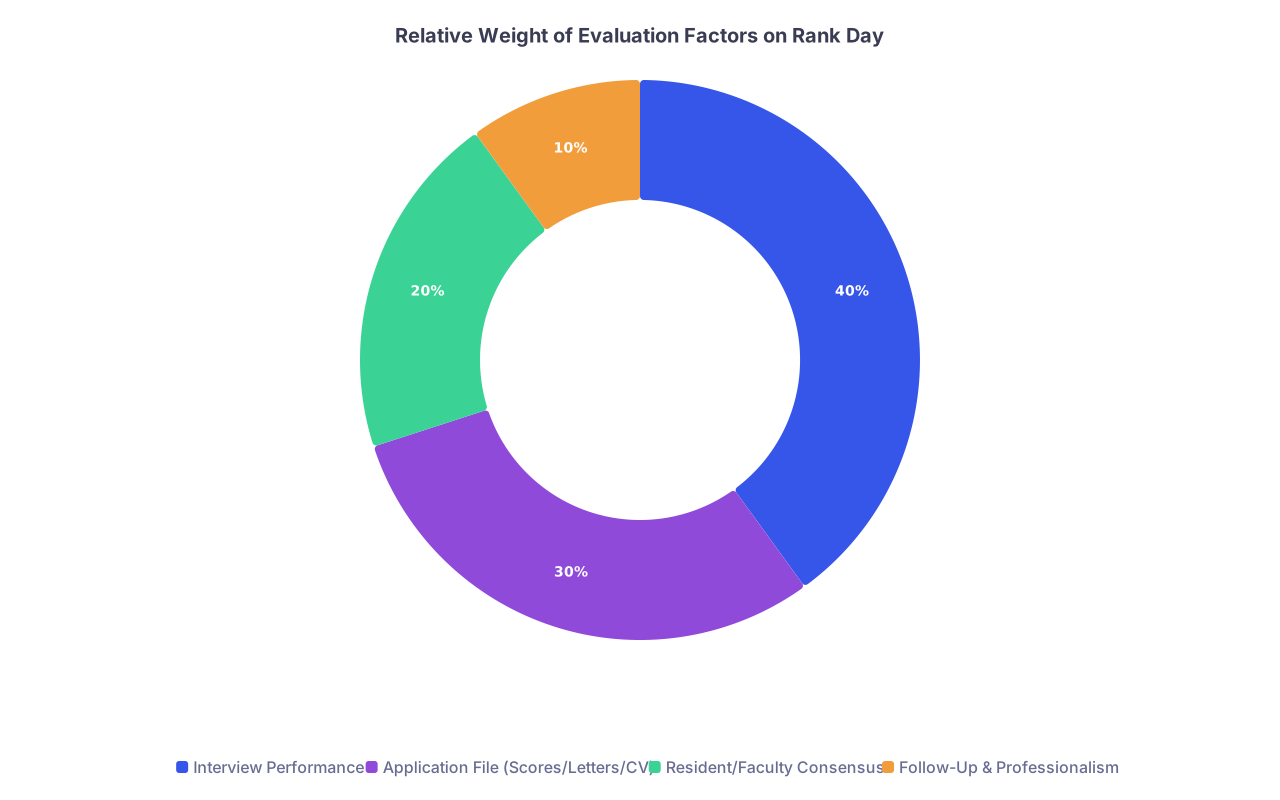
| Category | Value |
|---|---|
| Interview Performance | 40 |
| Application File (Scores/Letters/CV) | 30 |
| Resident/Faculty Consensus | 20 |
| Follow-Up & Professionalism | 10 |
That “10%” for follow-up and professionalism isn’t science. But it’s real. And for the 20–30 people clustered in the mid-tier where any small thing can move you up or down a bit? It matters.
What Smart, Low-Drama Follow-Up Actually Looks Like
Let me strip this down to something you can execute without turning into an anxious robot.
To Individual Interviewers (Same Day or Next Morning)
Short. Specific. Human.
“Dr. Smith,
Thank you for speaking with me today about your experience building the addiction psychiatry rotation. I appreciated your honesty about how challenging it was early on, and it made me even more excited about the opportunity to learn in a program that’s willing to evolve.
Best,
[Name]”
That’s it. No groveling. No generic slogans. One specific detail that proves you were there.
To Residents (Optional, If You Actually Connected)
“Hey [First Name],
Thanks again for answering my questions about the night float system and what it’s really like living in [city]. Hearing how you balanced ICU months with family life was reassuring.
Best,
[Name]”
Residents mostly file this under “nice human, would work with again.” Which is not a bad file to be in.
To PD/APD – Interest / Update (2–3 Weeks Out)
“Dr. [PD],
Since our interview on [date], I’ve had the chance to reflect more on my interviews and the kind of training environment I’m looking for. Your program continues to stand out to me because of [one or two specifics: curriculum structure, patient population, mentorship philosophy].
I also wanted to share a brief update: [poster accepted, new eval comment, new leadership role, etc.].
I remain very interested in the possibility of training at [Program].
Best regards,
[Name], AAMC ID [XXXX]”
This is the sort of email that a PD may:
- Read once.
- Mention briefly when your name pops up.
- Use as justification to push you slightly higher if others agree you’re strong.

The Landmines Committees Actually Talk About
Here’s what actually irritates people inside programs. These are the things they gossip about between meetings.
Aggressive or pushy tone.
“I’d like to know my exact ranking position” or “I hope you’ll consider moving me up your list.” That’s an instant “no” in many’s minds. They hear entitlement and lack of judgment.Obvious mass-mailing.
When three faculty members all receive nearly identical emails with only the names swapped—people talk. “She sent me the same email she sent you,” said with a smirk, is not the vibe you want.NRMP-rule-breaking asks.
Asking them to tell you where you rank. Asking for promises about matching. It puts them in an uncomfortable legal/ethical corner. No one appreciates being cornered.Multiple escalating emails.
One thoughtful follow-up: good. A second, later-season clarification of interest: okay. Weekly “just checking in!” messages? Everyone rolls their eyes and moves on.Tone-deaf content.
Mentioning “I have offers from places like X and Y, but your program is still my top choice.” That can read as arrogance, even if you meant it as a compliment.

The Part No One Tells You: Professionalism Is the Real Meta-Score
Underneath all of this is a meta-question every committee is asking:
“Will this person be a headache for three years?”
Your follow-up behavior—content, timing, tone, how you treat the coordinator—feeds that gut answer.
The applicant who:
- Replies promptly and politely to scheduling emails.
- Sends short, specific follow-ups.
- Doesn’t overstep with demands or pressure.
- Owns small mistakes (“Sorry I was a minute late to the Zoom, had a tech issue, appreciate your flexibility.”)
…is quietly marked as: “Low drama, solid judgment.”
I’ve heard PDs say things like, “Their app was fine, interview okay, but they’ve been very professional in all their communication. I’d be comfortable with them here.”
That is follow-up working at its highest level—not as a manipulative tactic, but as visible proof of how you’ll behave as a colleague.
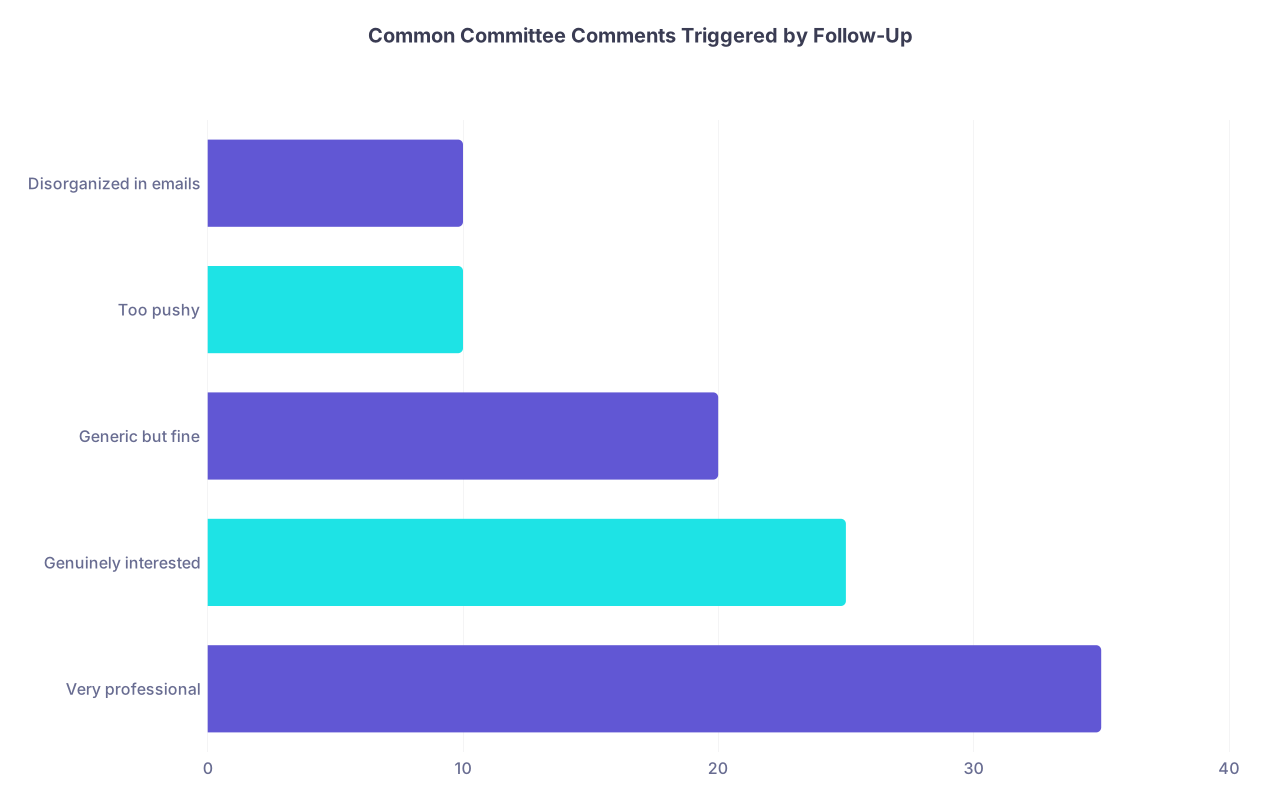
| Category | Value |
|---|---|
| Very professional | 35 |
| Genuinely interested | 25 |
| Generic but fine | 20 |
| Too pushy | 10 |
| Disorganized in emails | 10 |
The Real Takeaways from Inside the Room
You don’t need to turn follow-up into a full-time job. You do need to stop believing the fairy tale that “thank-you notes don’t matter at all” or that “love letters will vault you 50 spots.”
Here’s what’s actually true:
- Follow-up doesn’t rescue a weak application, but it can be the nudge that decides close calls.
- Specific, grounded, and respectful communication makes you memorable and signals maturity.
- Your overall pattern of emails—tone with staff, timing, content—quietly answers the only question that matters: “Do we trust this person enough to invest three years in them?”