Last February, I watched a program director scroll through a sea of names at 10:47 p.m., the rank list due to the NRMP in barely an hour. He hovered over two applicants for the last “priority” spot, opened one email folder, nodded once, and said, “She’s in. He’s not.” The only difference between them on paper? Her post-interview email actually meant something. His looked like it was written by ChatGPT.
Let me walk you through what really happens to those “thank you so much for the opportunity” messages you’re agonizing over—and how, in very specific situations, they actually move your position on the rank list.
What Actually Happens to Your Email After You Hit Send
You send a carefully worded thank-you or “you’re my top choice” email and picture a program director printing it out, circling your name, and bumping you up ten spots.
That’s not how it goes.
Here’s the usual reality behind the curtain:
Most PDs have three email buckets during interview season:
- Critical program operations (schedules, hospital chaos, GME fires).
- Things they must skim (GME, DIO, chair, NRMP).
- Applicant noise.
Your email starts in bucket 3. What happens next depends on a few variables: volume, specialty, culture of the program, and how close they are to rank list certification.
At a mid-sized internal medicine program that interviews 250–300 applicants, I’ve seen PD inboxes with 700+ applicant emails by February. Nobody is reading every word carefully. They skim:
- Name
- School
- One or two key phrases: “top choice,” “ranked to match,” “incredibly impressed by X”
If the PD is organized, they (or a coordinator) will flag or forward selected emails into a folder: “Strong Interest.” Some programs actually keep that folder open when they finalize their list.
Others don’t. Some PDs barely glance at anything that isn’t from their chair or their chief residents. I’ve seen PDs say bluntly: “I don’t care what they write. Their behavior on interview day and their application is all I need.”
But here’s the part most applicants do not understand:
On rank list night, when they’re stuck between two similar candidates—or deciding whether to stretch and rank one more applicant they’re not sure will come—emails suddenly matter a lot more than you think.
The Exact Moments Post-Interview Emails Actually Matter
PDs do not rebuild their rank lists around your email. They use them like a tiebreaker, a risk-mitigation tool, and a source of reassurance.
There are three main scenarios where your email really comes off the bench and affects your rank position.
1. The “We Love Them, But Will They Actually Come?” Problem
This is big at places that are good but not “automatic yes” destinations. Think solid university-affiliated programs in non-glamorous cities. Great training, average city. Or community/academic hybrids trying to build their reputation.
On rank list night, conversation sounds like this:
“We love Applicant A, but they’re from UCSF, couples matching with someone aiming for Boston, and all their geography is coastal. Are we just wasting a high spot?”
Then someone says, “They emailed and said we’re their top choice. They also mentioned they have family here in town.”
Risk calculation changes.
In that moment, the email doesn’t just make them feel good. It directly pushes you higher because they believe you’re more likely to match with them and not “waste” a top slot.
No email? Or some vague generic line like, “I will be ranking your program highly”? You’re treated as a flight risk. You might still be ranked highly if they loved you, but you’ve given them no leverage against their own uncertainty.
2. The Late Mover—When Your Interview Was Good, But Not Memorable
Here’s another truth no one tells you:
By the time PDs sit down to finalize the rank order, they’ve forgotten half the faces from early interview dates. The notes in their scoring sheets help, but memory is biased toward the extremes: amazing and terrible.
So picture this:
They’re at candidate #55 out of 180. Your interview scores say “solid,” comments say “good fit, easy to talk to.” Nothing bad. Also nothing glowing like “must-have.”
Your name looks like this in the software:
“Lopez, Daniel – U Miami – IM prelim? – Great story, good vibe”
Then the PD clicks your email: it references a very specific patient you discussed on interview day, the PD’s niche interest in QI projects, and a clear statement: “I could really see myself thriving at [Program Name] and would be very excited to train there.”
Something clicks. You go from “faceless good applicant” to “person who remembers me, gets our culture, and would be happy here.”
Sometimes that moves you five spots. Sometimes it moves you one tier up in their internal categories: “Would Love,” “Solid,” “Okay.”
That jump can absolutely be the difference between matching and not, depending on their size and your position.
3. The “We Need One More Name” Panic
This is the situation nobody prepares you for, but it happens every year.
It’s late. The rank list deadline is looming. They’re debating how deep to rank.
Someone says, “We need one more safety candidate in case the top half all go elsewhere.” Then they scroll down the long tail of people they interviewed and sort by one thing: apparent interest.
I’ve literally watched this:
- Filter by “Interviewed, not yet ranked”
- PD opens 6–7 emails in a row
- Picks the ones who clearly expressed genuine interest, local ties, or specific fit
- Adds 3 names at the bottom of the list
Did that last-minute bottom-of-the-list ranking matter? For most, no. But occasionally, when a program overestimates its attractiveness or has a weird match year, someone near the bottom catches a spot.
Who ends up in that safety zone? People who at least looked like they cared enough to follow up intelligently.
How Different Types of Programs Treat Your Emails
Not all programs use emails the same way. You need to know which type you're dealing with.
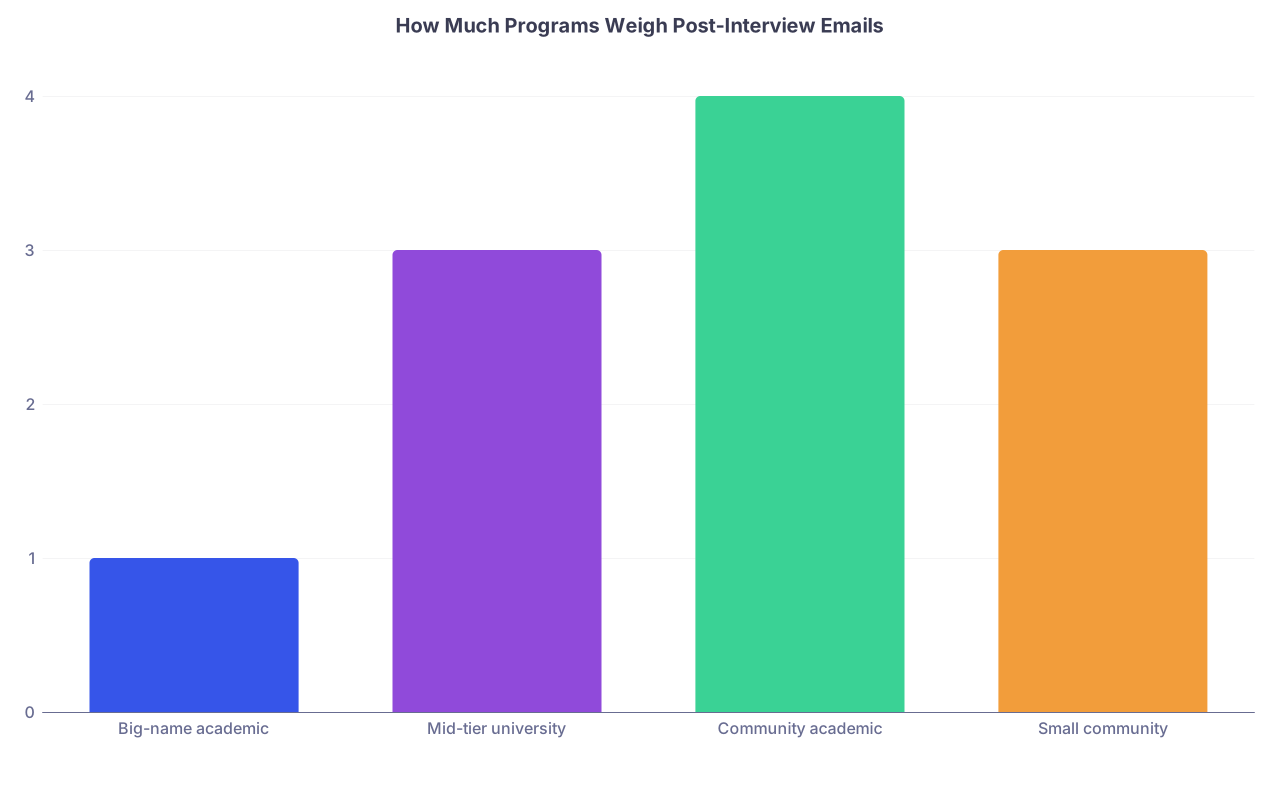
| Category | Value |
|---|---|
| Big-name academic | 1 |
| Mid-tier university | 3 |
| Community academic | 4 |
| Small community | 3 |
Scale: 1 = almost irrelevant, 5 = heavily influential in close calls.
Big-Name Academic Powerhouses
Think: MGH, UCSF, Hopkins, Penn, Mayo.
At the very top tier, post-interview emails are mostly background noise. They assume everyone wants to go there. PDs are more nervous about promising anything that could be interpreted as NRMP violation than about “losing” an applicant.
What your email does here:
- Confirms you’re not a red flag socially.
- Reinforces genuine interest if you’ve got geography or niche alignment (“I want physician-scientist training in X, which your PSTP supports.”)
But it’s rare for a single email to move you meaningfully at these places unless you’re in one of the scenarios above and there is already a strong internal champion for you.
Mid-Tier University Programs
These are the programs where emails have the most practical weight.
Solid brand. Good fellowship placement. Not in the absolute top 5–10, but very competitive.
They live with chronic anxiety: “Will we fill with people who truly want to be here, or get burned by everyone chasing up?”
Your clear, specific, non-generic interest lowers their anxiety. On rank list night, that matters.
At several of these, I’ve seen PDs or APDs keep a separate note column: “Emailed strong interest,” “Local ties,” “Mentioned partner job in city.” All of that shows up when deciding between similar candidates.
Community and Hybrid Programs
Here, the PD and core faculty usually feel the stakes very directly. Vacant spots hurt. A lot.
So they use your emails more aggressively.
I’ve seen community program rank meetings where faculty literally say, “She actually wrote to me personally and said this is her top choice. Put her higher; she’s likely to come and we liked her.”
If you’re applying to this tier, ignoring post-interview follow-up is just throwing away leverage.
What Makes an Email Useful vs. Instantly Forgettable
PDs and faculty develop radar for fake, generic, or “mass-produced” emails. They talk about it openly.
I’ve heard variations of:
“Got another one of those ‘your program’s commitment to excellence’ emails. Straight trash.”
Let me break down what actually helps you on rank list night.
The Useless Stuff (That Most Applicants Send)
- The classic: “Thank you very much for the opportunity to interview at your esteemed program. I was very impressed by the collegial atmosphere and your dedication to resident education.”
This is an exact quote from real emails. You could send it to literally any program in the country. PDs can smell when you copy-paste.
- Laundry lists of flattery without substance.
- Long paragraphs about “lifelong dream to be a physician” or “ever since I was a child.” No one cares anymore. That phase ended with your personal statement.
These get skimmed and mentally filed as: “Generic thank you – no red flags – no specific interest.”
The Emails That Actually Register
A useful email does three things quickly:
- Identifies who you are, concretely.
- Anchors to something specific from your interview or their program.
- Clarifies your level of interest without breaking NRMP rules.
Something like:
“Dr. Smith,
Thank you again for the opportunity to interview at [Program]. I especially appreciated our conversation about your QI work on reducing 30-day readmissions and the way residents lead those projects. It aligns very closely with the QI work I’ve been doing with Dr. Jones on CHF readmissions at [Home Institution].
After seeing the resident camaraderie and talking with Dr. Lee about the structured ICU experience, I’m confident your program would be an excellent fit for my goals, and I would be genuinely excited to train there.
Best,
[Name]”
Specific. Grounded. Shows you actually paid attention. States strong interest without saying “you’re my #1” to five different places.
This kind of email, when re-opened on rank night, gives the PD something to say in your favor: “He really cared about our QI structure; remember his CHF project? He’d fit in here.”
Love Letters, “You’re My #1,” and NRMP Reality
This is the piece students overcomplicate.
Programs are not supposed to solicit your rank order. You are allowed to volunteer it. They are not allowed to promise you a match position. The NRMP language is clear.
But in back-room reality, the language games get messy.
Here’s how PDs interpret different signals, whether they admit it or not:
| Applicant Phrase | How PD Usually Reads It |
|---|---|
| "I will be ranking your program highly." | Vague. Could be #2 or #10. Weak. |
| "Your program is among my top choices." | Still vague. Slightly better. |
| "I will rank your program very highly." | Stronger, but still hedged. |
| "I plan to rank your program #1." | Clear. Treated as top-choice. |
| No interest email at all | Ambiguous / possible low interest |
Now here’s the ugly truth:
Most PDs do not trust “I will rank you highly” unless you’re startlingly strong and everything else in your file screams fit. They’ve been burned too many times.
“I plan to rank your program #1” gets flagged. It doesn’t guarantee anything, but it absolutely bumps you in those borderline cases if they already liked you.
If you send that line to three programs and they find out, they’ll roll their eyes and mentally tag you as dishonest. Word does travel. Not always, but often enough to not play that game.
So the practical advice:
- Only tell one program they are your #1.
- Do it late in the season when your preferences are actually clear (late January / early February).
- Do not say it unless you mean it. Seriously.
And understand: even then, it’s not a contract. It’s one data point they might use when choosing between you and a similar applicant.
How PDs Actually Reference Your Emails on Rank Night
Let’s go right into the room.
Picture a typical mid-sized program final rank meeting. The PD, APDs, a few core faculty, maybe a chief or two. Spreadsheet or NRMP screen up.
Applicants are grouped roughly by score and fit tier. Discussion zones are:
- Top tier: “No-brainer keeps”
- Middle: “We like them, how high?”
- Lower: “Do we rank them at all / how deep?”
Your emails get invoked in two kinds of comments:
Reassurance comments
“She emailed and said we’re her first choice. She’s actually from this region and her family’s here. I think if we rank her this high, we’ll get her.”Fit reinforcement
“He followed up with that specific note about the refugee clinic and sent me the article he mentioned. I really think he’d commit to our underserved mission.”
PDs use these lines to justify emotional gut feelings in a room that pretends to be objective.
I have seen an applicant move 10 spots because an influential faculty member said: “She took the time to write a thoughtful message about our night float system and actually read the paper we published. That stuck with me.”
And I’ve seen applicants stay buried because no one remembered anything about them, and their post-interview communication was indistinguishable from dozens of others.
Common Mistakes That Quietly Hurt You
Let me be blunt about a few behaviors that turn your email from helpful to harmful.
1. Mass-Produced, Obviously Template Emails
Faculty compare notes more than you think.
I’ve sat at lunch with three interviewers, all laughing because they got the exact same email from one applicant, with the same sentence structure, just the name changed.
If you’re going to template, at least change the middle paragraph enough that it refers directly to that person’s interests, story, or questions.
2. Sending Way Too Many Messages
One well-crafted thank-you after the interview. Maybe one clear interest email in late January / early February. That’s usually enough.
The person who sends:
- Thank you after interview day
- Follow-up one week later
- “Update” email with minor non-achievements
- “Checking in as rank list time approaches”
starts to feel like a problem. PDs extrapolate: “If they’re this high maintenance before matching, what will they be like as a resident?”
3. Over-sharing Life Drama or Desperation
I’ve seen emails that read like this:
“I’m very anxious about matching and your program is my only hope because [personal crisis story]. Please rank me highly.”
No program wants to feel guilted into anything. It does not help. It makes them nervous about your stability.
Share genuine geographic or family ties, yes. Overshare chaos, no.
A Simple, Effective Follow-Up Strategy That PDs Don’t Roll Their Eyes At
Here’s what I’ve seen work consistently without annoying the people on the other side.
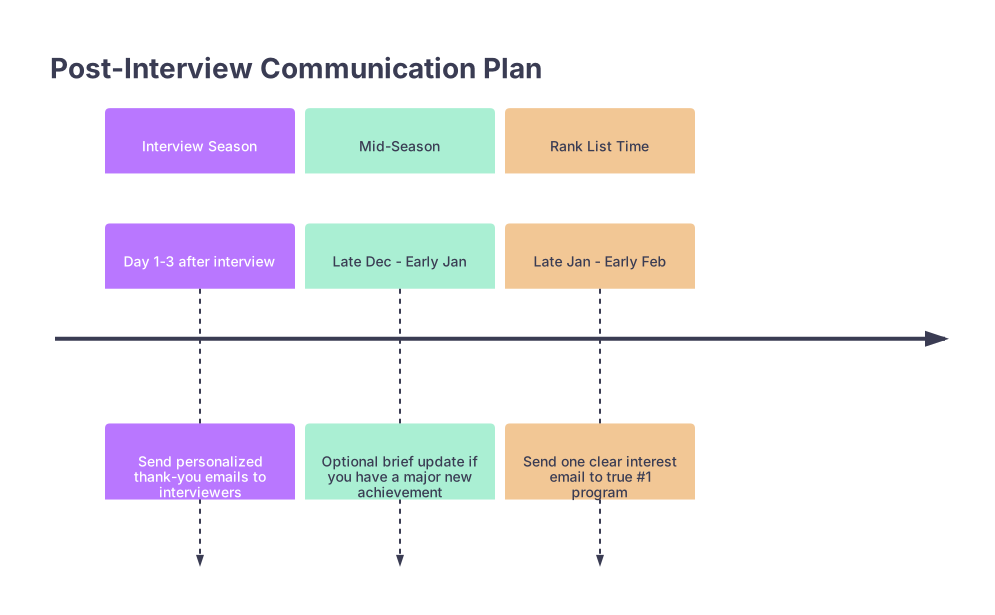
| Period | Event |
|---|---|
| Interview Season - Day 1-3 after interview | Send personalized thank-you emails to interviewers |
| Mid-Season - Late Dec - Early Jan | Optional brief update if you have a major new achievement |
| Rank List Time - Late Jan - Early Feb | Send one clear interest email to true #1 program |
Step 1: Within 48–72 hours of your interview
Personalized thank-you emails to each interviewer. Short, specific, references something real you discussed, one or two sentences expressing enthusiasm.
Step 2: Optional update (only if real)
If you get a significant honor, publication acceptance, or major new role that directly strengthens your candidacy, a brief email to the PD or coordinator is fine. Do not invent fluff.
Step 3: One honest “You’re my #1” email
To the one program that truly is. Include:
- Clear statement that you plan to rank them #1.
- 2–3 honest, specific reasons tied to their program.
- Concise, respectful tone. No begging. No expectation of reply.
The Quiet Truth: Emails Are Weak Levers—Unless You Use Them Precisely
You cannot rescue a disastrous interview with a brilliant email.
You cannot turn a mediocre application into a must-have candidate with the perfect “thank you.”
But when everything else is within a narrow band—and that’s where most serious applicants sit—your email is the thing that makes them remember you as a person instead of a file.
On rank list night, PDs are tired. The spreadsheet blurs. The emotional residue of each applicant shows up more than anyone admits out loud. That residue is built from the interview day, what their faculty said, how your file looks, and yes—how you handled communication afterward.
Years from now, you will not care which exact adjective you used in a post-interview email. What will stay with you is whether you respected yourself enough to be honest, specific, and professional in the way you showed interest—because that is the same skill you’ll use, over and over, when you’re fighting for your patients, your career, and your own sanity in this field.
Use these emails well. Not as magic. As the final nudge that proves you’re the kind of person they’ll be glad they ranked high at 11:58 p.m. when the list finally gets certified.