Meta description: Does AI-assisted USMLE prep hurt your scores or Match chances? Learn the real risks, ethical boundaries, and smart ways to use AI without sabotaging performance.
Educational disclaimer: This article is for educational purposes only. It does not constitute legal, regulatory, privacy, academic-integrity, or professional advice. Policies on exam security, protected content, application conduct, and institutional AI use vary, so review official rules and consult your school, testing body, or qualified advisor when needed.
Does using AI for USMLE prep tank your scores, poison your application, and quietly wreck your Match chances?
No. That's the myth. And it survives mostly because medical education loves moral panic almost as much as it loves Anki decks and suffering.
Here's what the data-shaped answer looks like: AI doesn't magically make you dumber, lazier, unethical, or unmatched. Bad study design does that. AI just makes your bad habits faster if you use it badly, and your feedback loops better if you use it well.
That distinction matters. A lot.
Question the Premise: Does AI Prep Actually "Ruin" Your Match?
Let's define the accusation before we torch it. If AI "ruins" your Match, what does that even mean? Lower Step performance? Worse shelf scores? Sloppier clerkship thinking? Red flags in your application? Awkward interviews because you outsourced your brain to a chatbot? Fine. Those are real possibilities to examine. But they're not proof. They're guesses wearing lab coats.
I've seen this play out in the wild. One student uses AI to generate extra renal questions, asks it to explain why BUN/Cr shifts in prerenal azotemia, builds an error log, and improves. Another copies and pastes stems, reads polished explanations passively, never struggles, never retrieves, and wonders why timed blocks feel like drowning. Same tool. Different outcome. That's not an AI story. That's a learning science story.
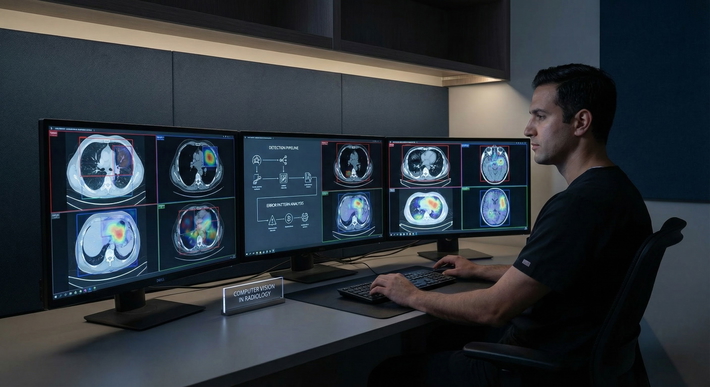
What can AI-assisted prep realistically do? It can generate practice questions of variable quality. It can explain mechanisms in simpler language. It can quiz you, help organize weak areas, suggest spaced repetition intervals, and critique your reasoning after you've committed to an answer. Used that way, it's basically a tireless tutor with uneven judgment and no shame about being wrong.
And that's the real issue. The danger isn't "AI." The danger is misuse: feeding it secure content, letting it answer instead of forcing retrieval, accepting hallucinated rationales, or turning your study plan into a dopamine loop of fake productivity. Students don't fail because the robot touched their notes. They fail because they stop doing the hard cognitive work that actually builds durable knowledge.
That's the contrarian thesis. AI doesn't ruin your Match. Misusing it can sabotage your prep, just like misusing question banks, flashcards, YouTube, group study, or twelve-color note-taking systems that look productive and teach almost nothing.
Myth #1: AI Help Means You'll Score Lower on USMLE
This one sounds plausible if you say it fast enough: "If AI helps you, you won't learn deeply, so your scores will fall." Cute theory. Weak evidence.
Learning outcomes don't hinge on whether the tool is old-school or shiny. They hinge on what you do with it. Cognitive science has been painfully consistent on this for years: retrieval practice works. Timely feedback works. Interleaving works. Effortful learning works. Passive review feels good and underdelivers. That was true before AI and it's still true now.
The key distinction is brutally simple. Are you using AI as an oracle, or as a coach?
If you ask AI for the answer before you attempt the question, you're kneecapping yourself. You skip retrieval, dodge uncertainty, and mistake recognition for mastery. That feels efficient. It's not. It's intellectual junk food.
If you attempt the item first, really attempt it, then ask AI to critique your reasoning, compare your logic, explain why the distractors are wrong, or generate a few adjacent questions on the same concept, that's different. Now AI is supporting the exact ingredients associated with better retention: recall, feedback, elaboration, and error correction.
That chart is illustrative, not a published trial result. But the direction is exactly what the literature on learning would predict. Try, fail, get feedback, retry. That's the engine. The label on the tool matters less than students want it to.
Where students get burned is measurable in practice, even if they don't notice it immediately. They stop doing timed blocks. They stop writing out their own diagnostic reasoning. They let AI summarize instead of synthesizing themselves. Then they're shocked when their tutor-mode performance doesn't transfer to exam-mode performance. Again: not an AI curse. An instruction-design failure.
I've watched students inflate their confidence this way. Their notes look cleaner. Their sessions feel smoother. Their "understanding" sounds articulate when AI has just explained it to them. Then you ask them cold, "Why does respiratory alkalosis shift calcium binding?" and the room gets very quiet.
USMLE exams don't reward having seen good explanations. They reward producing correct reasoning under pressure. If AI helps you practice that production, fine. If it replaces that production, expect your scores to expose you.
Myth #2: AI-Assisted Prep Is "Cheating" and Automatically Unethical
No. Stop flattening every use case into the same moral category. It's lazy thinking.
There are at least three different buckets here: legitimate educational assistance, prohibited exam misconduct, and dishonest representation in applications or clinical work. If you blur those together, you'll end up either fearmongering or accidentally excusing actual misconduct.
Using AI to explain nephrotic syndrome in plain English? Fine. Asking it to generate ten original questions about congenital adrenal hyperplasia? Fine. Having it quiz you on murmurs after you've studied? Also fine.
Pasting protected exam content into a third-party tool? Not fine. Using external assistance during a live exam? Absolutely not fine. Letting AI write parts of your application that fabricate experiences or distort your voice? Dumb and unethical.
That's where the line is. Not "AI bad." The line is around security, honesty, and authorship.
Here's the practical standard I'd use if I were advising any student: keep AI outputs as study aids, not as a shortcut around rules. Don't paste secure stems. Don't upload anything with patient identifiers. Don't trust fake citations. And for the love of all things sane, don't fabricate research, volunteering, or "leadership" because a chatbot made it sound polished.
I'm not moralizing here. I'm being realistic. Most "AI ethics" anxiety in med school is theater. The actual risks are ordinary and obvious. Don't leak protected material. Don't cheat during assessments. Don't lie in your application. If you can manage that, you're already ahead of a surprising number of people.
Myth #3: Better USMLE Prep With AI Will Hurt Your Match (Because Programs Will Notice)
This one is almost funny. Programs are not sitting around with some mystical detector asking, "Hmm, did this applicant use AI to review cardio?" That's not how selection works.
Residency programs mostly care about standard signals: Step performance where applicable, clerkship grades, narrative comments, letters, interview quality, and overall fit. They observe outputs under established conditions. They do not reliably infer your study tools from the shape of your mitochondria.
Can AI affect those outputs indirectly? Of course. If you overfit to low-quality AI-generated questions, your practice scores may look great while your real performance stalls. If you learn to parrot explanations but can't think aloud on rounds, that'll show up in clerkships and interviews. If you use AI intelligently to identify weak areas, rehearse illness scripts, and tighten retrieval under time pressure, that can absolutely improve outcomes.
But notice what's happening there. The causal pathway runs through learning behavior. Not through some magical anti-AI stigma that programs can detect on sight.
I've heard versions of this panic before. "Too much Anki will make you robotic." "Too many qbanks will make you memorize patterns." "Too much video content will make you passive." Sometimes those warnings are directionally right, but never because the tool itself is cursed. The problem is always misuse, overreliance, lack of calibration, or failure to transfer to real performance.
Same here. If AI changes how you learn, it can help or hurt you. That's true. But it's not uniquely AI-related, and pretending otherwise is just branding bias dressed up as wisdom.
Real Risks & Failure Modes: What Can Actually Go Wrong With AI Prep?
Now for the part people should worry about. Not the myth. The real failure modes.
First: hallucinated explanations. AI can sound smooth while being wrong in ways that are subtle enough to contaminate your understanding. That's dangerous because medicine punishes plausible nonsense. A confident but incorrect rationale about acid-base compensation or murmur radiation can fossilize if you don't verify it.
Second: overconfidence. This one is everywhere. AI makes learning feel frictionless. You ask a question, get a neat explanation, and your brain mistakes fluency for mastery. Then you hit a timed UWorld block and discover that recognition under no pressure is not the same thing as retrieval under stress. Brutal, but common.
Third: mismatched question difficulty. AI-generated items often miss the texture of high-quality exam writing. Too obvious. Too pattern-based. Not enough distractor discipline. If your prep drifts too far from validated question banks and real timed sets, your calibration gets sloppy.
Fourth: privacy and security. Students paste in way too much. Personal identifiers. Screenshots. Copyrighted materials. Sometimes even question content they absolutely shouldn't be uploading into third-party systems. This is not futuristic ethics drama. It's basic digital hygiene, and too many people are bad at it.

So what do you do instead? You build guardrails. Verify mechanisms and facts against trusted sources. Use AI after your attempt, not before. Keep doing timed blocks from reputable qbanks. Maintain an error log based on your own misses, not on whatever the model feels like emphasizing that day. Revisit weak topics with spaced repetition. And periodically test without any AI in the loop, because that's the environment your exam actually cares about.
The calibration piece matters more than students think. If your NBME-style performance isn't moving, I don't care how brilliant your AI conversations feel. The scoreboard is the scoreboard.
Myth Buster's Playbook: Using AI to Improve Match Prospects (Not Threaten Them)
Here's the rule. Simple. Non-negotiable.
Use AI as a coach for retrieval, not a replacement for retrieval.
That means your workflow should start with struggle. Attempt the question. Commit to an answer. Write or say your reasoning. Then bring in AI to do what humans tutors are good at when they're actually paying attention: critique your logic, expose gaps, force comparison between choices, and generate a few closely related prompts to see if the concept transfers.
A solid loop looks like this in practice: you do a block, miss a question on nephritic syndromes, ask AI to explain why your logic failed, rewrite a two- to three-sentence "why this answer" note in your own words, add the concept to spaced repetition, and then retest yourself later under time pressure. That's not glamorous. It works.
Quality control matters. Pick tools that are at least reasonably transparent and current. Verify key facts, especially mechanisms, guidelines, and anything that sounds suspiciously polished. Keep a personalized list of knowledge gaps, mine would always include the stuff students repeatedly dodge: murmurs, acid-base, biostats traps, rash differentials, and pharm adverse effects that all blur together at 1 a.m.
And don't obsess over AI output volume. That's vanity. Your success metric is boring and better: Are your timed scores improving? Are your old mistakes staying fixed? Can you explain a concept cold without a prompt? Can you reason out a new vignette instead of just recognizing one you've seen before?
That's what helps your Match prospects. Not whether you had a robot nearby. Whether your prep made you better under real conditions.
Summary: The Tool Doesn't Decide, Your Learning Design Does
AI-assisted prep does not inherently ruin your Match. That claim collapses the second you ask for actual mechanism and actual evidence. AI changes study behavior. It changes error patterns. It can amplify nonsense or sharpen learning. The tool itself is not the verdict.
What predicts better outcomes is still the unsexy stuff: retrieval practice, timely feedback, spaced repetition, realistic timed blocks, and honest calibration against high-quality assessments. If AI supports those, it's useful. If it replaces them, it's a liability.
So use it ethically. Verify what it tells you. Never let it do the thinking you're supposed to practice yourself. That's the reality. And reality, unlike myth, tends to score better.