The Verdict Up Front: Both Paths Can Win, If You Frame Them Correctly
Neither path wins by default. I have seen program directors love a field clinician story and I have seen them love an NGO admin story. The difference was never the title. It was the framing.
Let me break this down specifically. Residency selection runs on three real questions, not on how exotic your gap year sounds.
One: Can you handle the clinical workload? Two: Can you function on a team without being a liability? Three: Do you have a coherent story that explains why you are applying to this specialty?
Field clinical hours answer question one directly. NGO administration answers question two and three indirectly through leadership competencies. Both require deliberate translation to work.
If you are sitting on a borderline Step 2 CK or a thin set of specialty letters, field clinical work gives you immediate, legible currency. If your scores are solid and your clinical narrative is already crowded with strong US rotations, admin work can layer on systems thinking that academic programs actually hunt for.
Scoring framework for this article: I will evaluate every experience on Verifiability, Clinical Signal, Leadership Signal, and Scholarly Output. That grid decides which path patches your weakest link. Use it.
Defining the Two Paths: What Each Role Actually Looks Like Day-to-Day
Forget brochure language. Here is what you actually do.
The field clinician path in low-resource settings: You triage 60-80 patients in a morning, often with two community health workers and one overwhelmed nurse. You manage asthma exacerbations with no nebulizer, diarrhea with no labs, and you learn to make decisions with a focused history, vitals, and judgment. You run mobile clinics. You supervise CHWs on algorithms. You document in a paper register by lantern when the power cuts. You see advanced TB, untreated rheumatic heart disease, and parasites you have only seen in UWorld.

The NGO admin path: You are not seeing that volume of patients. You are managing. You run monitoring and evaluation dashboards. You count stockouts across 12 sites. You write the quarterly donor report that decides whether funding continues. You sit in the District Health Office negotiating outreach schedules. You track cold chain breaches. You write grants. You manage budgets, procurement, HR stomachaches, and WhatsApp groups that never sleep. The clinical content is low. The systems content is high.
The overlap zone where most medical student placements actually live: Clinical Program Officer. Medical Coordinator Assistant. Quality Improvement Fellow. At MSF, Partners In Health, Living Goods-type orgs, you will see patients three mornings a week and do program work two days. Those hybrid titles are common. And they are often the best setup for residency, if you structure them right.
Typical entry points for students:
- Gap-year clinical associate attached to an NGO clinic with a named physician preceptor
- Research coordinator for an implementation science project
- Program assistant / M&E officer for a global health NGO
- Structured global health fellowship like Global Health Corps, CFHI, or university-affiliated placements
They all work. None work automatically.
What Residency Program Directors Actually Weigh: The Evidence Breakdown
Program directors are not mysterious. The NRMP Program Director Survey tells you what they weight year after year, and global health never cracks the top ten.
Step 2 CK, clerkship grades, MSPE, and letters from faculty in your target specialty dominate ranking decisions. Leadership, volunteer work, life experiences including global health? Important, but they sit at 30-40% of the weight of the top factors.
Critical nuance that applicants miss: a letter from a physician who directly supervised you clinically outranks any job title. Always.
I have reviewed ERAS files where an applicant wrote "Regional Program Manager, Maternal Health NGO" and had zero physician letters from that year. The file read as administrative gap. I have seen another applicant write "Field Clinician, Rural Clinic, 420 supervised encounters" with a single, specific letter from the site physician describing clinical judgment. That file popped in interview selection. Same region. Same year. Different verifiability.
Global health functions as a differentiator only AFTER you clear academic thresholds. If you are below your target program's Step 2 signal, a six-month admin fellowship does not rescue you. A clinically validated field experience at least shows you can function.
Language matters in the MSPE and ERAS description. Compare: "meaningful clinical engagement in resource-limited setting, responsible for triage and management under physician supervision" versus "administrative project management for international health programming." The first maps cleanly to patient care, medical knowledge, practice-based learning. The second maps to systems-based practice only if you quantify it. PDs know ACGME competencies. Write to them.
Deep Dive: The Field Clinician Path, Strengths, Risks, and High-Yield Positioning
Strengths. Direct patient contact hours. Procedural exposure, IUDs, wound closures, abscess drainage, manual vacuum aspirations where legally permitted, neonatal resuscitation. Autonomy under constraint. Evidence of decision-making with imperfect data. For EM, IM, FM, peds, this is gold. A well-documented field stint answers the question PDs actually ask: can this person function when the CT scanner is down?
Risks. And I will be blunt here, this path carries reputational risk if you do it wrong.
Scope-of-practice violations sink applications. If you were doing independent C-sections on a "medical mission" with no supervisor willing to put their name on letterhead, programs will notice and they will be uncomfortable. Unverifiable experiences read as voluntourism. Safety and supervision red flags, "I saw 500 patients but cannot name my preceptor", will get your file set aside.
Breakdown of verification that actually works:
- A site letter on official letterhead with dates, your role, supervised vs independent tasks, and estimated patient encounters
- A named physician preceptor who will answer a phone call or email from a PD
- Procedure or encounter log, even if simple: date, age, presenting complaint, what you did, level of supervision
- Preceptor attestation statement: "I directly supervised" language, not "the student volunteered"
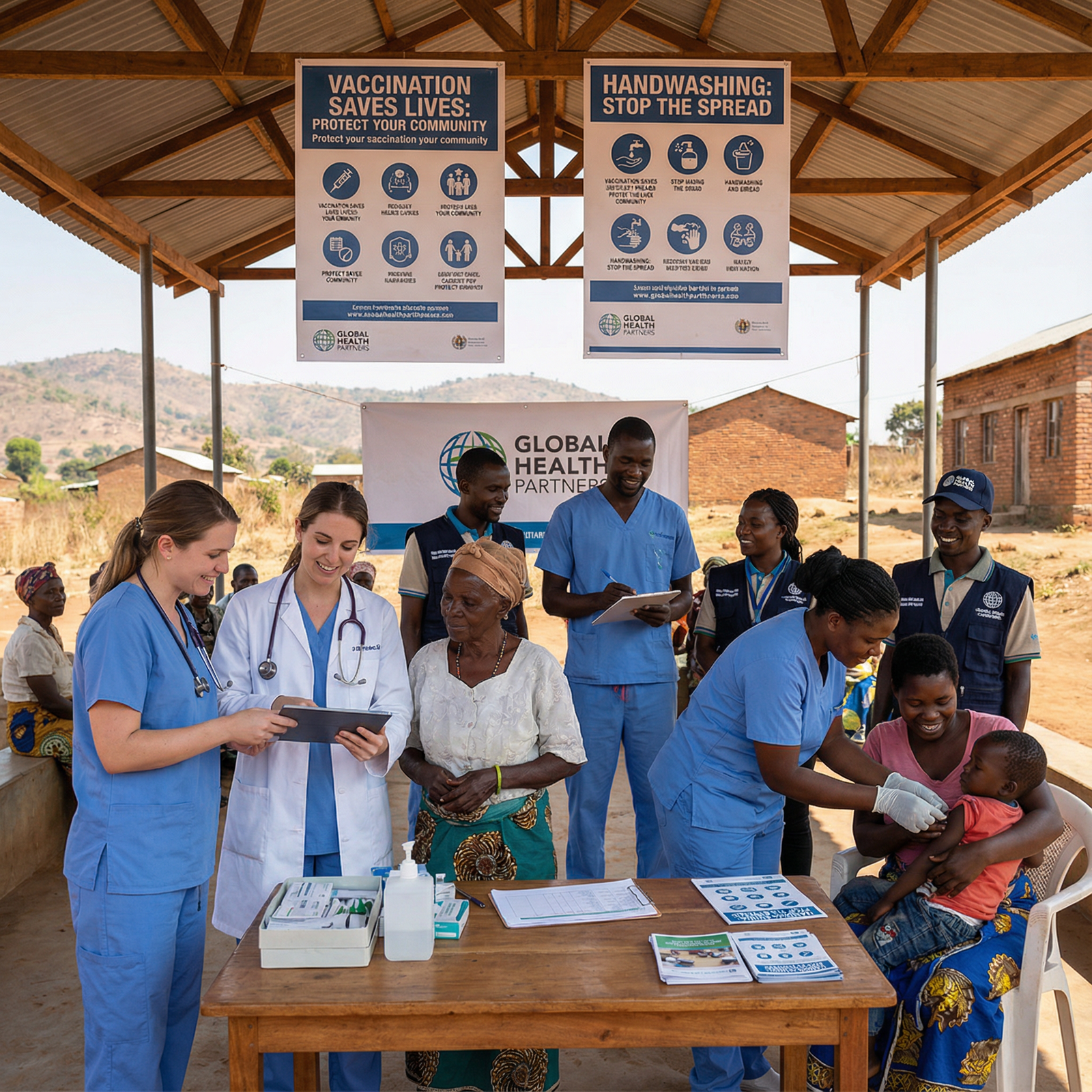
Positioning strategy. Pair every field block with a US clinical anchor. You want your narrative to be: globally engaged AND clinically validated in the US system. My strongest applicants do 3-4 months rural field clinic with a strong site letter, then return for a sub-I and get a specialty letter that says "since returning, her clinical judgment is even stronger." That pairing kills the exotic-gap-year critique.
Do not list procedures you cannot defend in an interview. If a PD asks how you repaired a third-degree laceration in a tent and you cannot walk through sterile technique and when to transfer, you lost more than you gained.
Deep Dive: The NGO Admin Path, Strengths, Risks, and How to Salvage Clinical Signal
Strengths. If framed correctly, admin is not fluff. Systems thinking, leadership, quality improvement. This is exactly what university programs say they want more of in the ACGME competency vacuums.
For specialties that live on QI, preventive medicine, PM&R, IM at academic centers, pediatrics, an admin experience translated into QI language is powerful. You learned to manage a supply chain? That is reduction of stockouts, a classic QI metric. You ran training? That is implementation science.
Risks. Zero patient contact means clinical decay. Programs worry about a 9-12 month gap with no patients. And frankly, admin titles can read as "avoiding clinical work" if you do not explain why you chose it. PDs are clinical animals. They trust clinical performance.
The salvage strategy is not optional. It is required.
Attach a clinical component, even modest: one weekly continuity clinic, emergency department shadowing with documentation under supervision, telehealth triage support with a US attending. Get those hours on your log.
Translate every admin output into QI language. Not "coordinated logistics." Say: managed 12-site program, catchment 8,000, reduced vaccine stockouts from 22% to 7% over 4 months, introduced simple re-order trigger. Metrics. Intervention. Outcome. Then produce one tangible artifact before ERAS opens. A poster. A QI abstract for IHI or a global health conference. A white paper co-authored with a named physician mentor. That artifact is how admin counts.
The Hybrid Strategy: Sequencing Both for Maximum Return
Best configuration I have seen, repeatedly: field clinical first, then admin. In that order.
6-9 months of supervised field clinical to build clinical currency, relationships, stories you can defend in interviews. Then 3-6 months programmatic to layer leadership, show you understand why the clinic runs out of gloves.
Why that sequence? Because clinical skill is perishable. Leadership narrative is durable. If you do admin first for six months and then try to step into a field clinic, you are cold clinically. If you do clinic then admin, you can speak credibly about systems from the ground up.
Timeline math matters. If you are an M4 taking a gap year for 2026-2027:
- June-August: field clinical block, request letter in August
- September-December: admin/QI block, draft abstract by October, submit by November
- December-February: US tether, sub-I, letter collection
- March-May: ERAS writing, convert dashboard to QI language
- September: ERAS opens with both letters and one output submitted
Two anonymized profiles from last cycle:
Profile A: pure admin, 8 months with large NGO, no physician letter, no scholarly output. Smart applicant, decent Step 2. Got 3 interviews at academic IM programs, asked in every interview "so did you see patients?" Struggled to answer.
Profile B: 4 months rural clinic in Malawi, 380 documented encounters, site physician letter, then 4 months as QI officer for same org, poster on reducing triage delays. Also decent Step 2. Same specialty. 14 interviews, 4 from global health tracks, matched university IM. Same Step 2 bracket. Difference was verifiability plus one output.
Program-type fit:
EM and IM global health tracks reward field adaptability. They are literally recruiting for their own austere rotations. Admin-heavy profiles shine at academic centers that eat QI for breakfast, they see you as future chief resident who can run a project.
Action Steps: Your 90-Day Plan Before You Commit
Stop romanticizing. Audit.
Step 1: Score yourself on the PD weighting chart. Where is your bottleneck? Scores? Letters? Narrative? Be honest. Your gap year should patch the weakest link, not the most Instagrammable.
Step 2: Email 2-3 global health track directors at programs you actually want. Ask them directly: "What kind of international experience translates best for your track, supervised clinical time or program-level work?" They answer. Often within days. That data beats any blog post.
Step 3: Choose the path that patches your gap. Thin clinical currency or shaky specialty letters? Field clinical. Strong clinical base but no leadership or QI? Admin can work, but only with a scholarly output.
Step 4: Lock verification before you board the plane. Written agreement with named physician supervisor, commitment to write a letter on letterhead, plan for procedure logs, and explicit supervision structure. If the site cannot provide this, walk away. No letter, no currency.
Step 5: Define one tangible output now. Not later. "By end of rotation, submit abstract on X metric to Y conference with Dr. Z as senior author." Put it in your agreement. Without that forcing function, your admin work evaporates on ERAS.
Step 6: Set a 90-day re-evaluation with a mentor back home. Review Step 2 study schedule, clinical sharpness, letter status. Decide whether to continue, pivot, or come home for US clinical time. Gap years drift. You need a checkpoint.
The applicants who win are not the ones who picked the sexier path. They are the ones who made their path verifiable, clinically legible, and narratively coherent.