
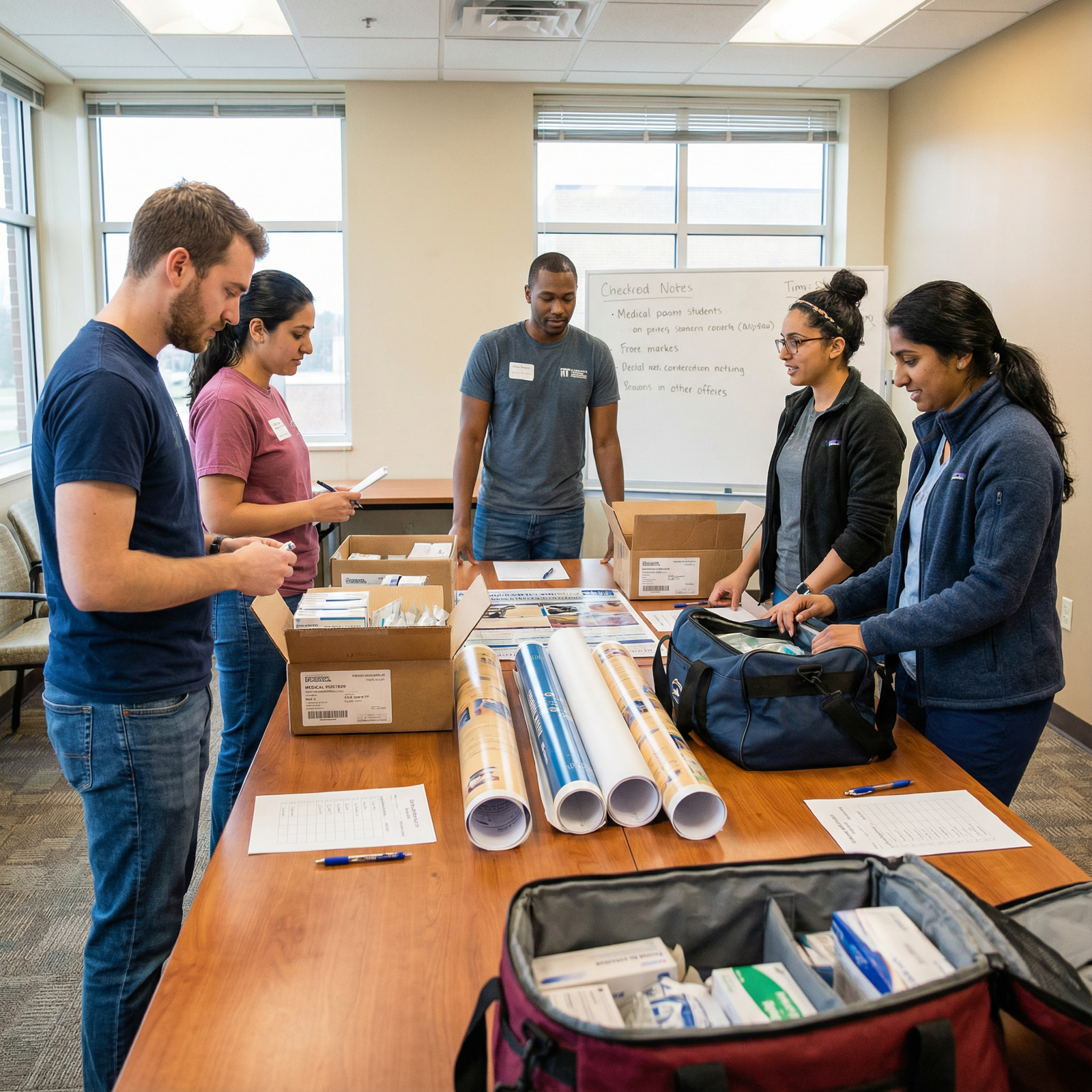
The biggest mistake people make on humanitarian trips is thinking they should “stock the clinic” from their suitcase.
Short answer: Yes, bring your personal medications and basic supplies. No, don’t show up with a suitcase pharmacy.
Here’s the simple rule that keeps you out of trouble:
- Bring what you personally need to stay healthy and safe.
- Don’t bring (or hand out) clinical medications or supplies for patients unless it’s coordinated, legal, and requested by the host team.
If you remember nothing else, remember that.
Now let’s break this down like an adult conversation, not a brochure.
1. What you absolutely SHOULD bring for yourself
You are your own first patient on these trips. If you’re sick, exhausted, or scrambling for meds, you’re now a liability, not a help.
Bring your own prescription meds – in full
Anything you take regularly at home? You bring it, for the entire duration plus extra.
That includes:
- Daily prescriptions (antihypertensives, SSRIs, ADHD meds, thyroid, etc.)
- Inhalers (rescue + controller)
- Insulin and supplies
- Oral contraceptives or other hormonal meds
- PRN meds you rely on (migraine, anxiety, sleep, etc.)
Golden rule: Pack at least 1–2 extra weeks beyond your trip. Flights get delayed. Borders close. Baggage disappears.
Travel tips:
- Keep meds in original labeled bottles/packaging.
- Pack in carry-on, never checked.
- Have a printed medication list and a short note/prescription from your clinician for controlled substances.
Bring a personal “field kit” – for YOU, not the community
This is where people start to get confused. It’s fine – smart, actually – to bring a personal health kit. It’s not fine to become the unregulated drug supplier.
Your personal kit can reasonably include:
- Pain/fever meds: acetaminophen, ibuprofen
- GI meds: loperamide, oral rehydration salts, maybe bismuth
- Allergy meds: non-sedating antihistamine, maybe diphenhydramine
- Skin: hydrocortisone cream, antifungal cream, basic barrier ointment
- Respiratory: saline spray, lozenges
- Simple antibiotics if recommended by travel medicine (e.g., for traveler’s diarrhea) – prescribed to YOU
- Basic first aid: bandages, tape, small gauze, antiseptic wipes, tweezers, small scissors
Use this kit:
- For yourself
- Possibly for close teammates, under sensible, informed use
- Not as your “clinic stash” for patients
If the community clinic needs these things, that should be handled through formal supply chains, not improvised handouts.
2. Should you bring medications for patients? Usually no – unless…
Here’s where ethics, law, and practicality collide.
The romantic image: you show up with a suitcase full of antibiotics, inhalers, antihypertensives, and save the day.
Reality:
- Customs officers may confiscate your bags.
- You may be violating import/export laws and local pharmacy regulations.
- You may introduce meds that can’t be refilled locally, creating dependency and harm.
- You may completely undermine local clinicians and pharmacies.
So the default answer:
Do not independently bring and distribute medications for patients.
Exceptions exist – but only when all of this is true:
- You’re working with a legitimate, established local partner (clinic, hospital, MOH, NGO).
- They specifically requested certain meds or supplies.
- There is a clear legal pathway for importation (permits, documentation, etc.).
- The meds are on the local essential medicines list and available locally for continuation.
- You’re following your own country’s export laws and the host country’s import laws.
If any of this is fuzzy, don’t do it. You’re not “thinking outside the box.” You’re possibly practicing illegal, unsafe medicine.
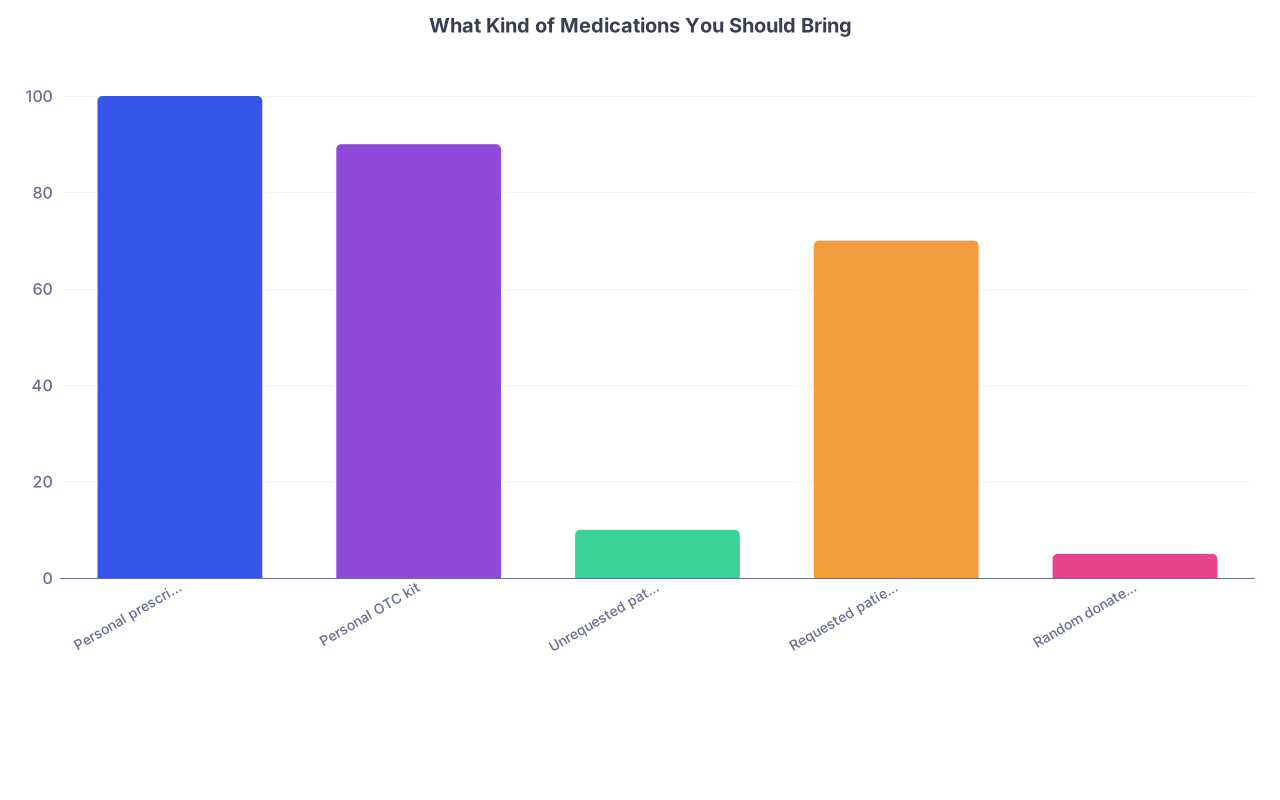
| Category | Value |
|---|---|
| Personal prescriptions | 100 |
| Personal OTC kit | 90 |
| Unrequested patient meds | 10 |
| Requested patient meds via host | 70 |
| Random donated samples | 5 |
3. Supplies: what’s helpful vs what’s performative clutter
Everyone loves the idea of “donating supplies.” Most of what I’ve seen people bring in duffel bags ends up in a closet, expired, or completely unusable locally.
Supplies that make sense to bring (for personal/professional use)
You can and should bring gear that lets you do your job safely without draining local resources:
- Stethoscope, penlight, reflex hammer
- Personal PPE: well-fitting N95s or equivalent, a few surgical masks, eye protection, a small stash of gloves in your size
- Hand sanitizer, alcohol gel pocket bottles
- A small headlamp (power outages happen)
- Portable pulse oximeter (if you’ll be in clinical settings and it’s welcomed)
- Travel-size disinfectant wipes for your own workspace/equipment
- Scrubs and closed-toe shoes you can clean easily
This is you being prepared, not you out-supplying the local system.
Supplies to avoid dragging in your bag
Skip or be very cautious with:
- Random donated items that don’t match local protocols (e.g., unlabelled sample packs, expired stuff, single odd sizes of equipment)
- Devices that require maintenance, calibration, or specific consumables unavailable locally
- Fancy equipment that nobody asked for and nobody will maintain
- Consumables the local system already has stable access to
If a local clinic says, “We are desperate for X and we cannot get it here or through our usual channels,” that’s a structured conversation, not a last-minute Amazon haul the night before your flight.
| Type | Good Choice Example | Bad Choice Example |
|---|---|---|
| Personal health | Your own prescriptions | Extra meds to “leave behind” |
| PPE | Your own N95s, eye shield | Boxes of mismatched gloves from your garage |
| Equipment | Stethoscope, headlamp | Unrequested ultrasound machine |
| First aid | Small personal kit | Suitcase of random donated supplies |
| Clinic donations | Items requested by host clinic | Unsolicited pharma samples |
4. Ethical framework: are you helping the system or feeding your savior complex?
Let me be blunt: a lot of “I’ll bring meds” energy is about you feeling like a hero, not about sustainable care.
Here’s the better way to think:
1. Autonomy and local leadership
Are decisions about medications and supplies being made by local clinicians/organizations? Or by visiting volunteers who’ll be gone in 10 days?
If locals:
- Choose the meds
- Define the protocols
- Plan the continuity of care
Then you’re probably in better territory.
2. Justice and fairness
Are you offering treatments that can’t be continued locally?
Bad scenario:
- You give a month of an expensive inhaler that the patient can’t buy locally. You’ve now shown them what they can’t have long-term. That’s cruel.
Better:
- You use meds and plans that are available in the system already, so whatever you start can be continued.
3. Non-maleficence (don’t cause harm)
Unregulated medication distribution can:
- Lead to resistance (antibiotics/haphazard dosing)
- Cause dangerous drug interactions when you don’t know full history
- Block patients from seeking sustainable local care because they wait for “the next brigade”
Your intent doesn’t erase those risks.
4. Respect for local health systems
Dropping in with free meds can:
- Undercut local pharmacies who rely on income to stay open
- Create expectations among patients that “real care” = visiting foreigners with free meds
- Undermine trust in local clinicians if you second-guess or override their standard treatments
If the trip is well-designed, you’re supporting the local system, not competing with it.

| Step | Description |
|---|---|
| Step 1 | Thinking of bringing meds for patients |
| Step 2 | Do not bring clinical meds |
| Step 3 | Reconsider with local leadership |
| Step 4 | Coordinate formal shipment or documented carry |
| Step 5 | Did local partner request specific items? |
| Step 6 | Is there legal import process? |
| Step 7 | Are meds on local essential list and available locally? |
5. Legal and regulatory realities you can’t ignore
You’re not practicing in a vacuum.
Common legal problems volunteers run into
- Carrying large quantities of medications without documentation
- Importing controlled meds without permits
- Providing prescription meds without local licensure or supervision
- Using meds that are not approved or registered in the host country
- Bypassing national essential medicines lists or formulary rules
You might get away with it once. That doesn’t make it ethical or smart.
At minimum, if you’re considering bringing patient meds:
- Talk to your sending organization’s leadership and pharmacist
- Get written guidance from the host institution
- Clarify what license you’ll be working under and what scope is allowed
- Understand how leftover meds will be stored, logged, and used
No clear plan? Don’t bring them.
6. What about donating leftover personal medications?
Short answer: don’t.
Your half-used blister packs, partially used inhalers, or leftover antibiotics are:
- Often illegal to re-dispense
- Usually poorly labeled
- A nightmare for tracking and safety
I’ve seen boxes of random leftovers shoved into clinic cabinets. Nobody wants to toss “free” meds, but nobody can confidently prescribe them either. So they expire, and you’ve just created pharmaceutical clutter.
If you want to help with medications:
- Support vetted organizations that do this professionally (e.g., ones that supply essential medicines within regulatory frameworks)
- Or donate money to the local clinic/pharmacy to buy what they actually use
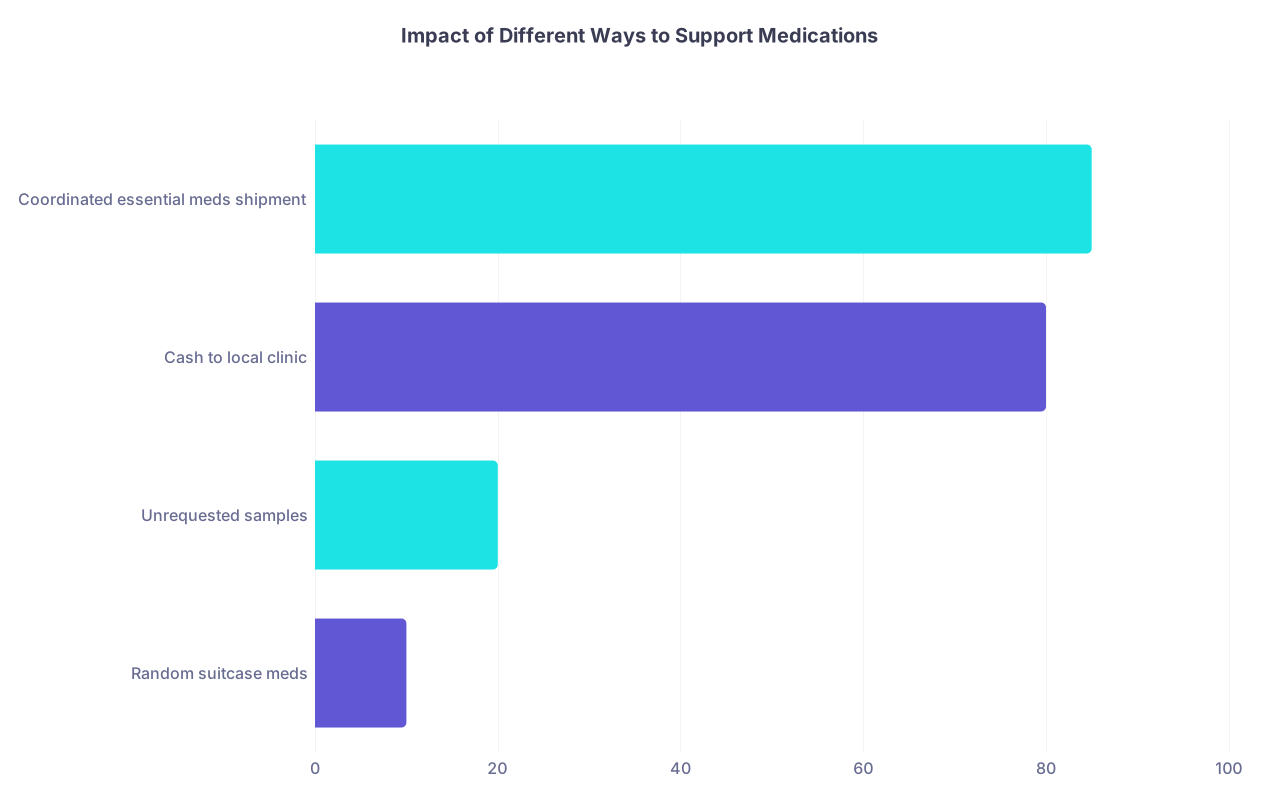
| Category | Value |
|---|---|
| Random suitcase meds | 10 |
| Unrequested samples | 20 |
| Cash to local clinic | 80 |
| Coordinated essential meds shipment | 85 |
7. How to prep responsibly before you go
Concrete steps you can take this month:
Schedule a travel medicine consult
Get vaccines, malaria prophylaxis if needed, and a tailored personal med plan.Make a written list of:
- All your prescriptions (names, doses, schedules)
- Allergies
- Key medical history
Keep a copy on your phone and a printed copy in your bag.
Ask the organizing group:
- “What medical supplies and medications are already on-site?”
- “What should I bring for myself?”
- “Are there any specific, approved items the host clinic has requested?”
Pack your own medications and personal kit early, not at midnight before your flight.
Decide upfront:
“I will not independently give out personal meds to patients unless it’s an extreme emergency and in collaboration with local clinicians.”
If you don’t draw that line before you go, it’s much harder to draw it when a parent is begging you for “anything” for their child.
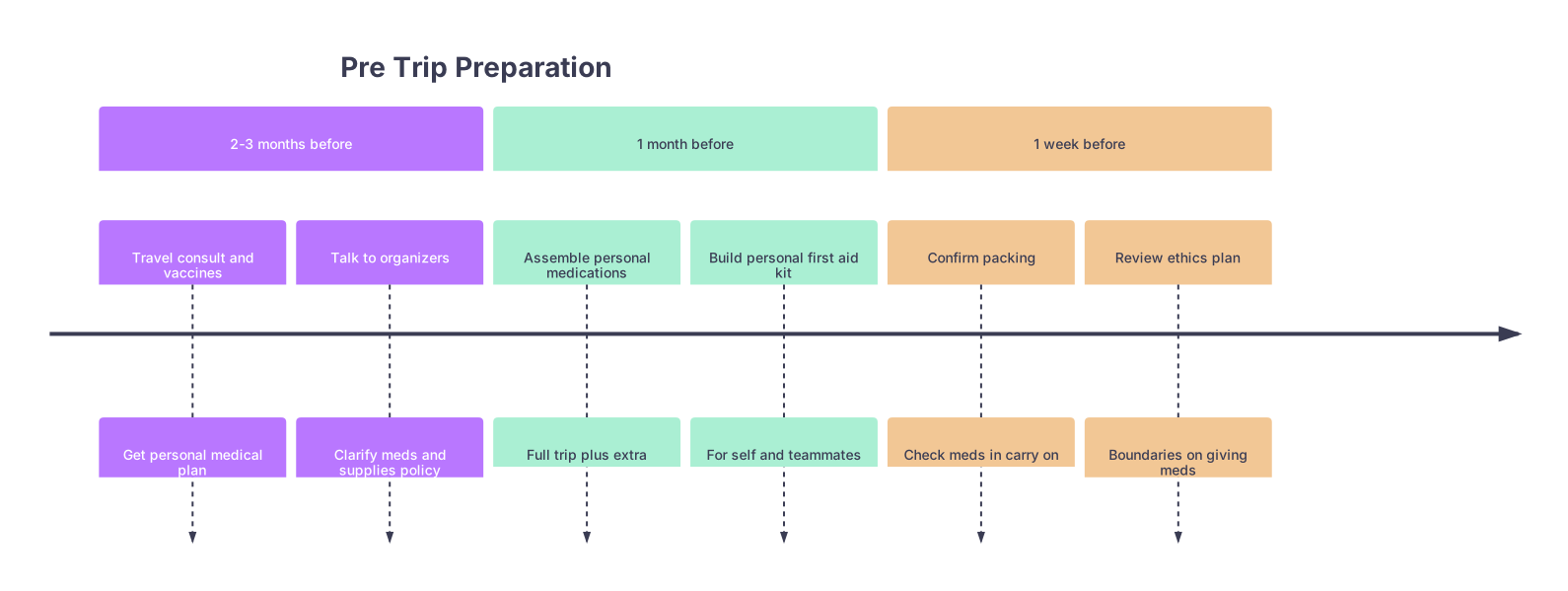
| Period | Event |
|---|---|
| 2-3 months before - Travel consult and vaccines | Get personal medical plan |
| 2-3 months before - Talk to organizers | Clarify meds and supplies policy |
| 1 month before - Assemble personal medications | Full trip plus extra |
| 1 month before - Build personal first aid kit | For self and teammates |
| 1 week before - Confirm packing | Check meds in carry on |
| 1 week before - Review ethics plan | Boundaries on giving meds |
FAQ (exactly 5 questions)
1. Can I give my own personal antibiotics to a patient if the clinic runs out?
In almost all routine situations, no. You don’t know the full supply plan, resistance patterns, or the patient’s full history. Giving your personal stash undermines local protocols and can be unsafe. If there’s a true life-threatening emergency and no alternatives, that’s a case-by-case ethical decision made with local clinicians, not a default plan.
2. Is it okay to bring over-the-counter meds like ibuprofen or vitamins to hand out to patients?
Not by default. “OTC” in your country doesn’t mean appropriate, safe, or aligned with local care practices. If the host clinic specifically requests certain OTCs and builds them into their system, fine. Otherwise, you risk confusing care, duplicating meds, and bypassing local supply chains.
3. What about bringing donated medications from my home hospital or clinic?
That’s risky territory. Many systems explicitly forbid this because of chain-of-custody, expiration, storage, and legal issues. If your organization and the host site have a formal, documented donation process with pharmacy oversight and legal clearance, okay. Ad hoc “we had extras” donations are usually a bad idea.
4. Should I bring my own needles, syringes, or IV supplies?
You can bring a very small amount of personal safety materials if you’re worried about sterility (e.g., a few safety needles if you’ll be doing procedures). But bulk quantities for patient care must be coordinated with the host facility. They have protocols for safe disposal, sizing, and infection control that your suitcase won’t solve.
5. What if local patients directly beg me for my personal medications?
This will happen. It’s emotionally brutal. Your job is to:
- Listen respectfully
- Direct them back into the local system (clinic, pharmacy, social worker, community health worker)
- Work with the host team on system-level solutions, not one-off handouts
You’re not heartless for saying no; you’re protecting them from fragmented, unsustainable care.
Open your packing list right now and split it into two columns: “For me only” and “For the clinic/community.” Keep the first, and run the second by your host partners. If they didn’t explicitly ask for it and can’t sustain it, pull it off the list.


