
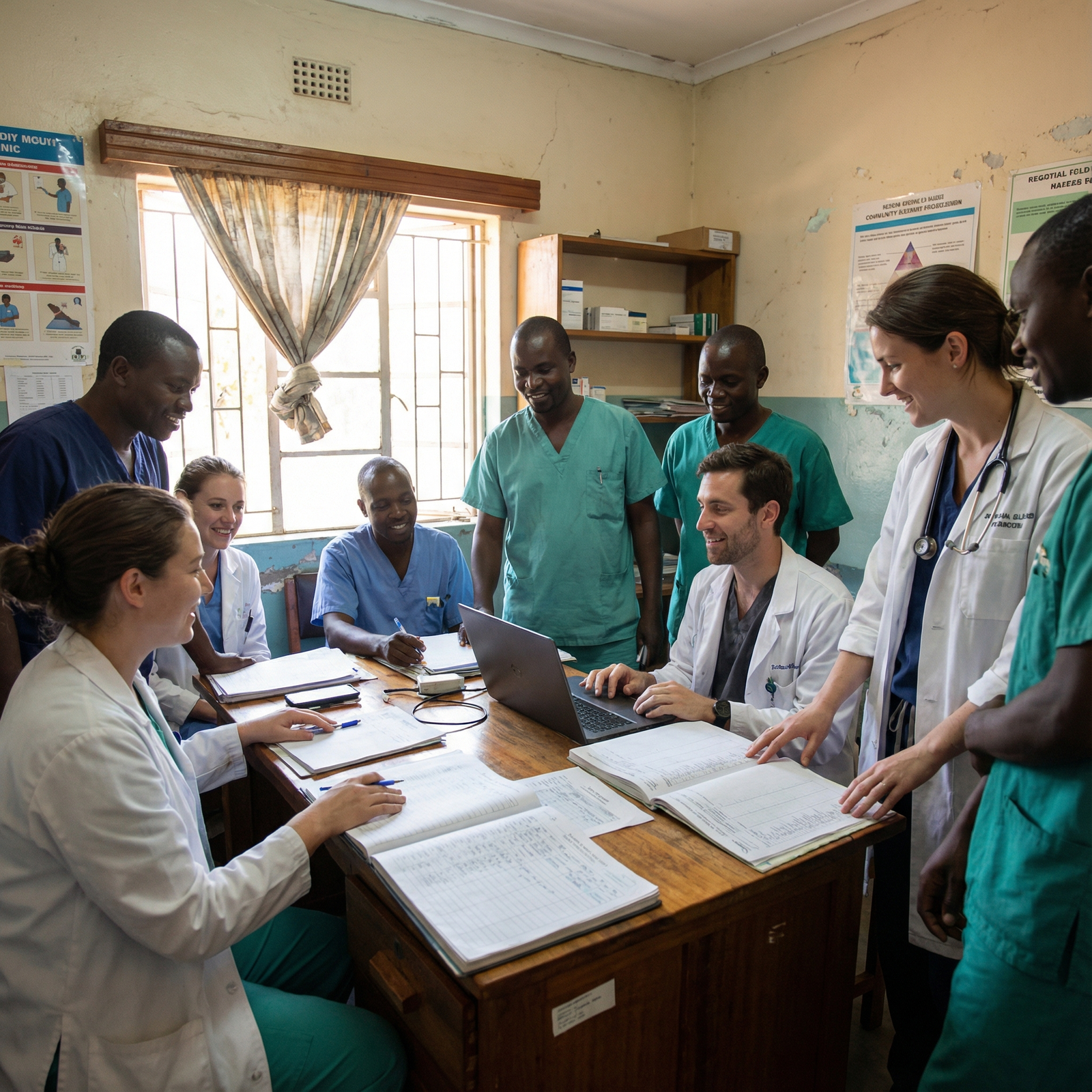
How do you know if your “global health” trip helps patients… or just your CV?
Let me be blunt: most overseas “global health” programs aimed at students are sold as partnership but run like medical tourism. Nice photos, big words, very little actual accountability.
You’re asking the right question. Here’s how to tell, in concrete, checkable ways, whether an overseas program truly partners with local systems or just parachutes in.
1. Start With One Core Test: Who’s Actually in Charge?
If I could ask only one question, it’d be this:
“Who ultimately decides what this program does on the ground?”
If the honest answer isn’t “local clinicians/organizations,” it’s not a real partnership.
Look for this chain of control:
- A local organization (hospital, clinic, NGO, ministry of health) sets priorities.
- They can say no. They’ve actually said no before.
- The foreign program adjusts — or leaves — when local needs change.
Red flags you’ll hear all the time:
- “We’ve been doing the same trip for 15 years; the community loves us.” (Translation: We run our own show.)
- “We bring much-needed services they can’t get otherwise.” (Maybe. Or maybe you’re crowding out local providers.)
- “We designed this experience for learners.” (Bad sign. Patients should come first; your learning is secondary.)
Ask in writing (email, not just a glossy brochure):
“What local institutions lead or co-own this program, and how do they participate in decision-making?”
If the answer is vague, defensive, or full of buzzwords (“capacity building,” “bidirectional exchange”) without specifics, be suspicious.
2. Check the Paper Trail: MOUs, Long-Term Presence, and Continuity
Real partnerships leave a paper trail and a timeline.
You want to see:
- Formal agreements (MOUs) with named local institutions.
- Multi‑year collaboration, not one-off brigades.
- Clear continuity of care: patients are still followed after you fly home.
Ask specifically:
- “Do you have a written MOU with the local partner? With whom? Since when?”
- “How often do your teams come, and who cares for patients between visits?”
- “What changed about the program based on local partner feedback over the last 3–5 years?”
If all they can point to is “our annual trip since 2014,” that’s not enough. Ten years of repeating the same short-term outreach without changing structure or ceding control isn’t partnership; it’s habit.
| Feature | Genuine Partnership | Parachute / Voluntourism |
|---|---|---|
| Local decision-making | Local leadership sets priorities | Foreign school sets agenda |
| Formal agreements | Clear MOUs, roles, timelines | Informal, “we just help out” |
| Program duration | Multi‑year, evolving | Short trips, same script |
| Continuity of care | Integrated into local system | Patients seen only when visitors |
| Accountability | Shared metrics, joint review | Blog posts, photos, anecdotes |
3. Follow the Money: Who Benefits Financially?
If you don’t understand the money, you don’t understand the ethics.
Ask these blunt questions:
- “How much do students pay for this trip, and where exactly does that money go?”
- “How are local partners compensated or supported?”
- “Who owns the clinic/hospital we work in?”
You want to hear things like:
- Line items for local staff salaries, infrastructure, and ongoing support.
- Transparent fee breakdowns (e.g., 40% local partner, 30% housing/transport, 30% admin).
- Local partners paid fairly, not just “given a stipend” or “honorarium.”
Red flags:
- Huge program fees with zero clarity.
- “We donate supplies” as the main benefit to locals.
- Local clinicians “volunteer their time” while foreign students pay thousands to the home institution.
Here’s the uncomfortable truth: if the main revenue flows to your school or a third-party provider, and local partners get peanuts, you are the product, not the partner.
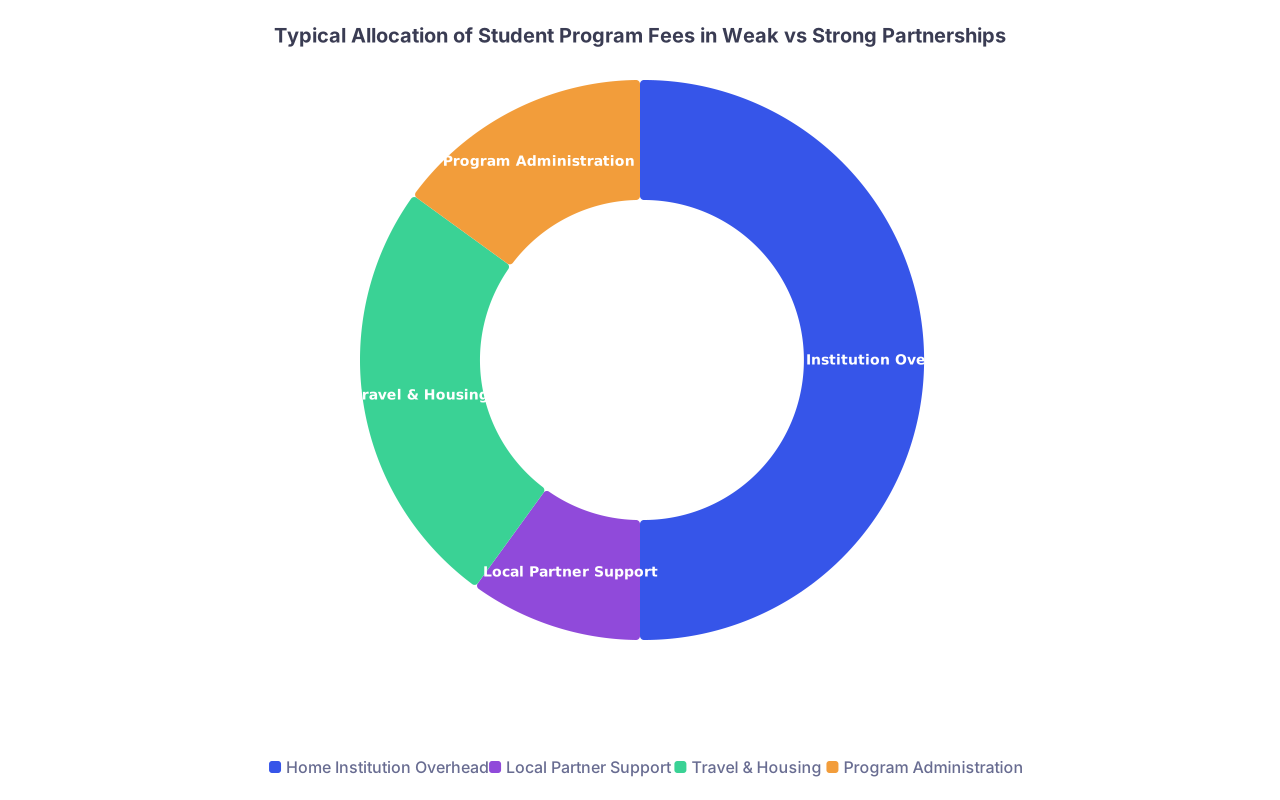
| Category | Value |
|---|---|
| Home Institution Overhead | 50 |
| Local Partner Support | 10 |
| Travel & Housing | 25 |
| Program Administration | 15 |
(If the local partner slice is tiny or unknown, that says a lot.)
4. Look at What You’re Allowed to Do Clinically
This is a hard filter. It’s where “ethical global health” dies most often.
Ask yourself:
“Would I be allowed to do this at my home institution with the same level of training?”
If the answer is no, and yet they want you doing it overseas, that’s exploitative. Full stop.
Things I’ve actually seen or heard:
- Preclinical students “running triage” because “there aren’t enough doctors.”
- Students suturing, delivering babies, or prescribing meds under “supervision” that would get you fired at home.
- “Shadowing” that slides into “can you just quickly see this one patient?”
A real partner program:
- Has clear, written scopes of practice for trainees.
- Explicitly ties your responsibilities to your actual level of training and licensure.
- Has local clinicians with staffing authority who can say, “No, the student can’t do that.”
Ask:
- “Can you send me your written scope-of-practice document for visiting trainees?”
- “Who is legally responsible for patient care when I’m there?”
- “Do students ever independently manage patients or perform procedures?”
If they say, “It depends,” or “We let you learn hands-on because that’s why you came,” that’s a massive red flag.
5. How Are Local Learners Involved?
Partnership isn’t just about the hospital; it’s about people at your level in that system.
You want to see:
- Local students, residents, or trainees learning alongside you.
- Shared teaching, not you being treated like the star foreign guest.
- Opportunities for local learners to visit or rotate at your institution (even if only a few can actually come).
Ask explicitly:
- “Will I be working with local medical students or residents? How often?”
- “Do they also travel to our institution, or is this only one-way?”
- “Who gets access to the teaching resources we bring or develop?”
If the program always has foreign students presenting, examining, or “teaching the locals,” that’s not partnership; that’s colonial cosplay.
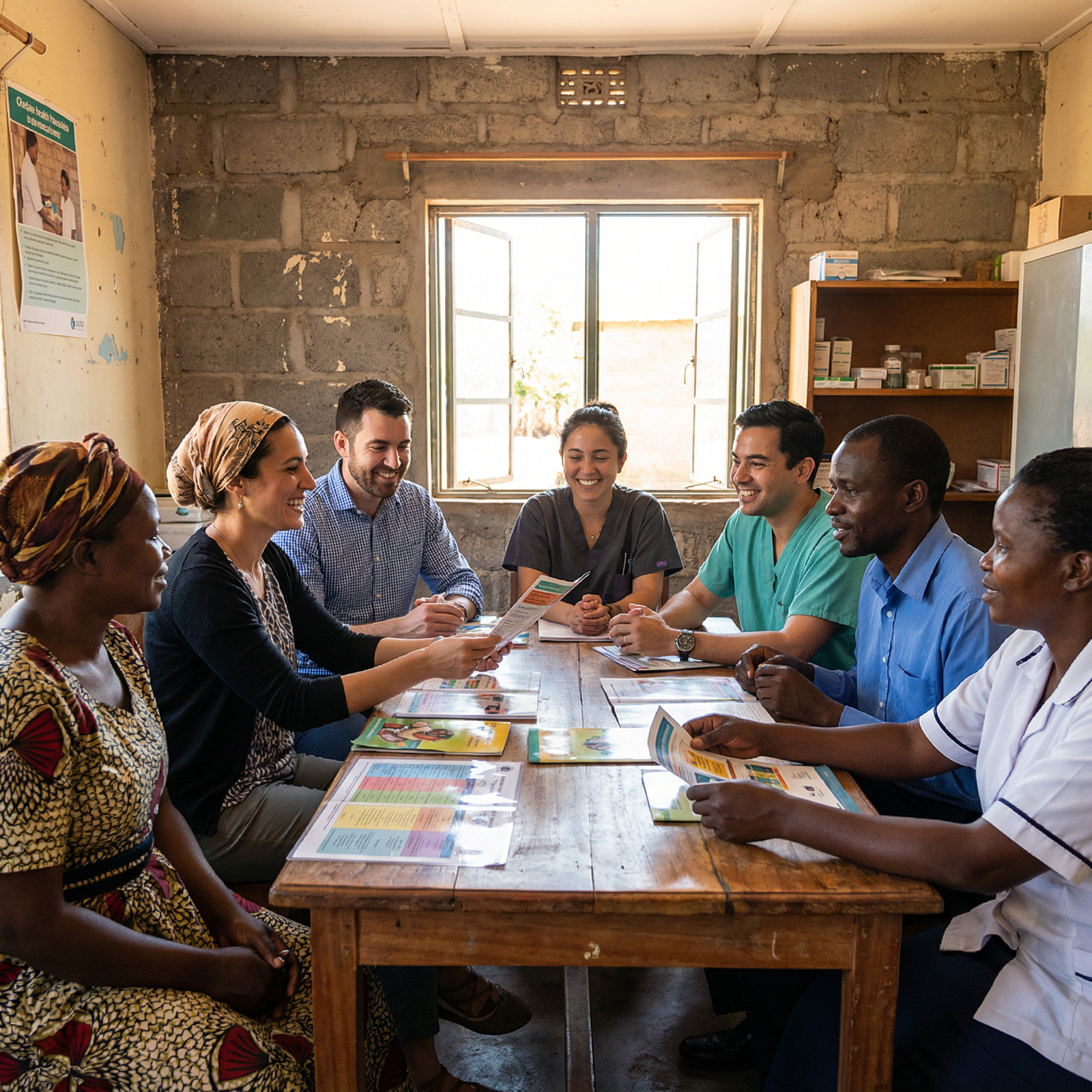
6. Ask About Data, Research, and Intellectual Ownership
Good programs measure impact. Unethical ones collect data and photos.
Core questions:
- “Who owns the data from any research or quality projects?”
- “Are local partners co-authors on publications and conference presentations?”
- “Where are patient photos and stories stored, and who consents to their use?”
You want:
- Joint IRB/ethics approval (home and local).
- Local PIs, not just “site coordinators.”
- Publications with local authors in meaningful positions, not just at the end of a 12‑name list.
Red flags:
- Students writing case reports or research papers without local co-authors.
- Casual use of patient photos on social media.
- “The local team doesn’t really do research; that’s more our thing.”
If your CV grows and theirs doesn’t, that’s extractive.
7. Scrutinize the Language: Buzzwords vs. Concrete Details
Programs that overuse feel-good language usually underperform on ethics.
Common buzzword smokescreens:
- “Empowerment”
- “Capacity building”
- “Sustainability”
- “Bidirectional exchange”
- “Community engagement”
Buzzwords aren’t bad by themselves. But they must be backed by specifics.
So, push:
- “You mentioned capacity building. Can you give two specific examples from the last 2–3 years?”
- “What exactly has become sustainable locally that used to depend on visiting teams?”
- “What decisions have community representatives actually changed or vetoed?”
If you get story after story about how grateful patients are, but nothing about:
- Shifted control
- Changed practices
- Local leadership …then the partnership is mostly cosmetic.
8. Look at Alignment With the Local Health System
A real partner program fits into existing plans. It doesn’t build a parallel, foreign-run mini-hospital.
Ask:
- “How does this work align with the local ministry of health priorities or national health plans?”
- “Have local or national officials ever raised concerns about visiting teams? How did you respond?”
- “What happens if the ministry of health changes policy in a way that conflicts with your usual model?”
Green flags:
- The program leaders can tell you which national strategies or policies they work within.
- Some activities are co-designed or approved by local authorities.
- They’ve stopped or changed parts of the program in response to local directives.
Red flags:
- “We stay under the radar so we can just help people.”
- “The system is so corrupt/inefficient, we have to operate independently.”
- No relationship at all with local health leadership.

| Step | Description |
|---|---|
| Step 1 | Find Overseas Program |
| Step 2 | High Risk of Voluntourism |
| Step 3 | Probe Further or Avoid |
| Step 4 | More Likely Genuine Partnership |
| Step 5 | Local Co-Leadership? |
| Step 6 | Written MOU and Long Term? |
| Step 7 | Ethical Scope of Practice? |
| Step 8 | Local Learners and Shared Benefits? |
9. How Do They Handle Criticism and Past Mistakes?
Every serious global health program has screwed up. That’s not the issue. The issue is whether they admit it and adapt.
Ask this directly:
- “What’s something that went badly or was ethically uncomfortable, and what changed because of it?”
- “Have local partners ever pushed back on something you were doing? Then what?”
You want to hear a specific story, not vague “we’re always learning” nonsense.
Something like:
- “We realized our short-term surgical trips were causing follow-up issues, so we shifted to supporting local surgeons and stopped certain procedures.”
- “Local nurses told us our teaching schedule was disrupting their work, so we moved to evenings and cut sessions.”
If they claim nothing serious has ever gone wrong, they’re either lying or not paying attention.
10. Practical Checklist: What You Should Do Before Saying Yes
Here’s the no-excuse version. Before you commit to any overseas program, you should be able to answer these ten questions clearly:
- Who are the named local partner organizations and leaders?
- Is there a written MOU or formal agreement, and how long has it been active?
- Who sets priorities and can say “no” on the ground?
- What is my exact clinical role and scope of practice, in writing?
- How are local learners involved and supported?
- Where does my program fee go, with approximate percentages?
- How is care continued when I’m not there?
- Who owns any data, photos, and stories I help collect?
- How does this align with the local health system, not compete with it?
- What specific changes have been made after local feedback or ethical concerns?
If a program can’t give straight, specific answers to most of these, don’t twist yourself into knots rationalizing it. Choose something else. Your ethics matter more than your global health line on ERAS.
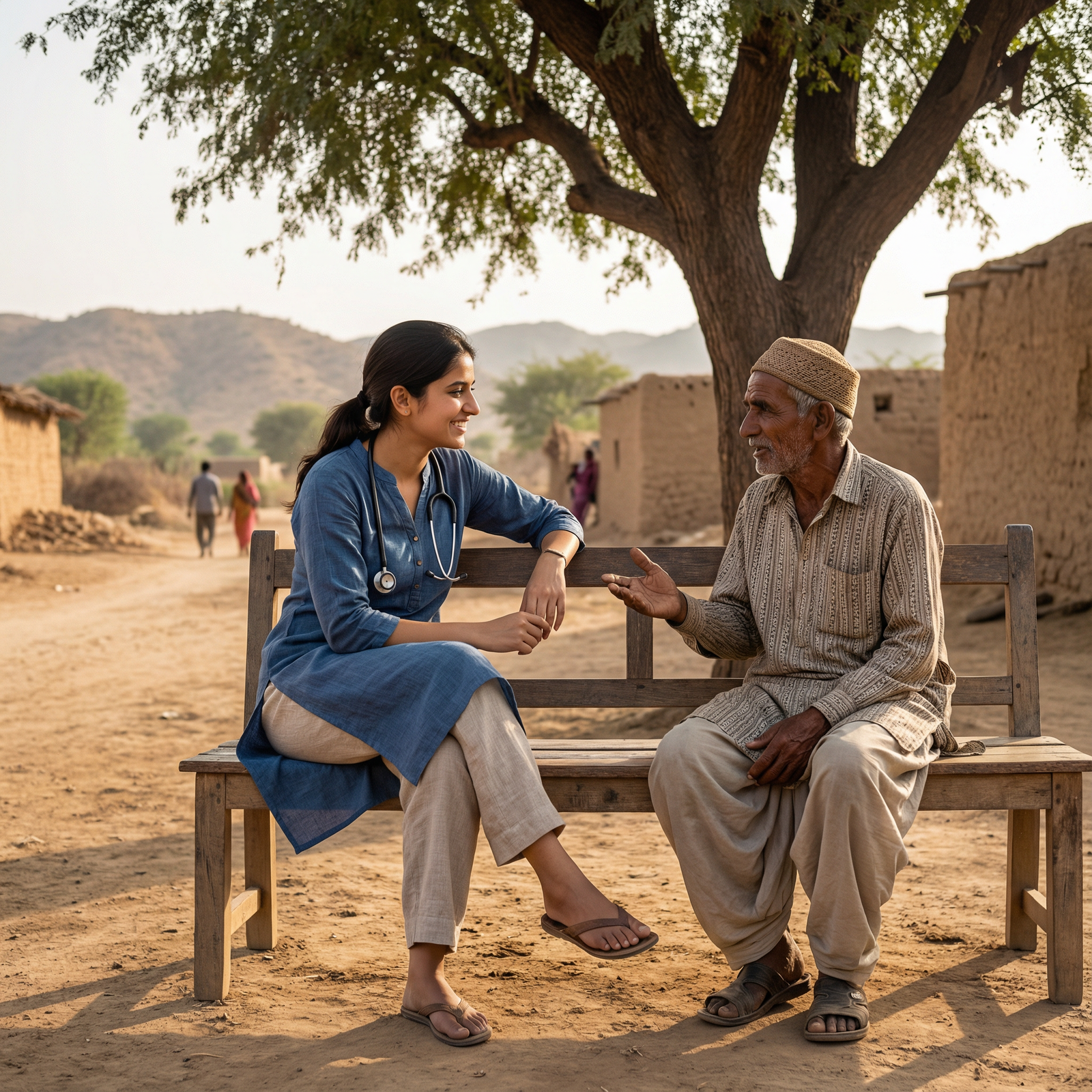
11. Choosing Better: What Strong Partner Programs Often Look Like
Let me give you a sense of the patterns I see in programs that actually get this right:
- They move slowly. Year 1 might mostly be observation, needs assessment, and relationship building.
- Students often feel “underused” because they aren’t allowed to do unsafe things. That’s good.
- The most impressive impact stories are usually about systems or training, not dramatic one-off saves.
- There’s at least some mechanism for local trainees or faculty to visit your institution or get funded training.
- They’re honest about trade-offs: what they can’t fix, what they stopped doing, where they still fall short.
You’ll walk away from those programs with less dramatic stories for Instagram, but a much deeper understanding of medicine, power, and responsibility. That’s the entire point.
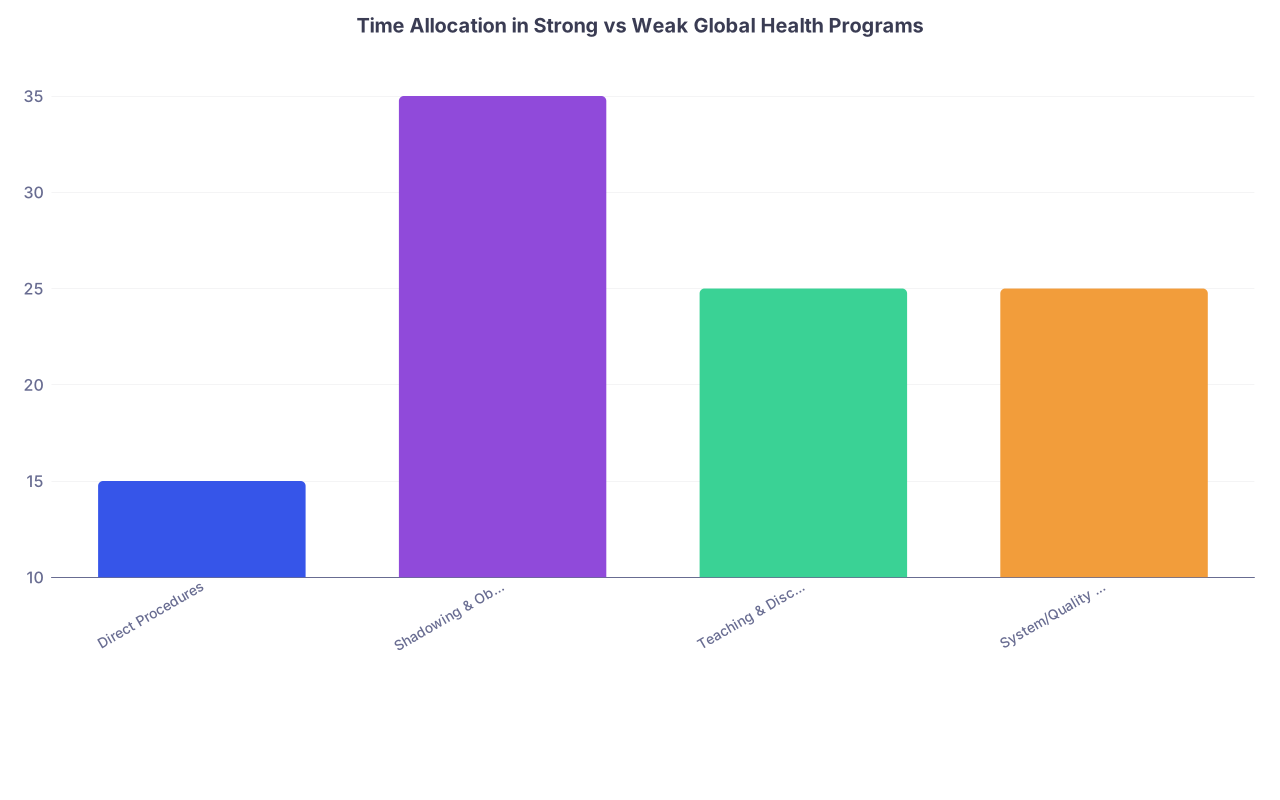
| Category | Value |
|---|---|
| Direct Procedures | 15 |
| Shadowing & Observation | 35 |
| Teaching & Discussion | 25 |
| System/Quality Work | 25 |
In stronger programs, more time shifts away from “doing stuff to patients” and toward learning with and strengthening local teams.
FAQ (Exactly 5 Questions)
1. Is it always unethical for students to do clinical work abroad?
No. It’s unethical for students to do work abroad that exceeds what’s appropriate for their training and licensure at home or that’s not clearly supervised. Taking histories, observing exams, assisting appropriately, helping with documentation, participating in teaching, and contributing to quality projects can all be ethical—if local teams want you there and define your role.
2. Are short-term trips automatically bad, even if they’re part of a long-term program?
Short-term teams can be ethical if they plug into a long-term, locally led structure. The key is that the program is long-term, consistent, and integrated with local care, even if individuals rotate through for a few weeks. If nothing exists before you arrive and nothing remains after you leave, that’s the problem.
3. What if my school only offers programs that look questionable by these standards?
Then you have choices, none of them perfect. You can:
- Opt out of going abroad right now and focus on ethical local work.
- Push your school with specific questions and suggest changes.
- Seek out independently vetted programs (through reputable NGOs or academic consortia) even if it means extra effort.
You don’t fix global inequities by jumping into a bad system “but trying to be good personally.”
4. How do I talk about this on my CV or in interviews without sounding self-righteous?
Focus on what you learned and how you changed your expectations. You can say, “I initially looked for any overseas experience but realized many aren’t aligned with local systems, so I used specific criteria to choose one where local partners led the work. That shaped how I think about power and ethics in medicine.” That’s humble and thoughtful, not performative.
5. Are there any certifications or labels that guarantee a program is ethical?
Not really. Some organizations and consortia provide guidelines or voluntary standards, but there’s no universally trusted “ethical global health” stamp. Treat any claim like that as a starting point, not a verdict. Your best tools are still the specific questions above and your willingness to walk away when the answers don’t add up.
Key takeaways:
- Real partnership means local control, clear roles, and long-term integration with existing systems.
- If you’re being offered more clinical responsibility abroad than at home, that’s not opportunity, it’s exploitation.
- Ask specific, concrete questions about leadership, money, scope of practice, and accountability—and be ready to say no if the program can’t answer them.


