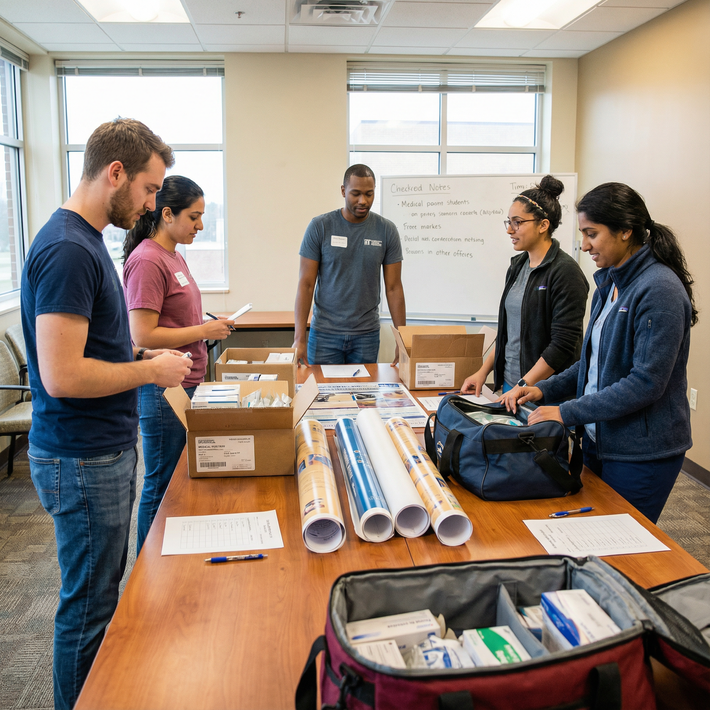
Here is the real problem. Too many global health programs are built around the visit, not the outcome.
A team flies in, runs clinic, does procedures, hands out medications, takes photos, and leaves. Everyone feels productive. Sometimes they were productive. But if the patient needs blood pressure titration, wound monitoring, reassurance in their own language, or an urgent review when a postoperative fever starts three days later, the mission is over and the patient is on their own. That is not continuity. It is a clinical cliff.
Mission-only care means exactly that: care ends when the visit ends. Telehealth follow-up changes the model. It adds scheduled check-ins, symptom monitoring, medication adjustment, reinforcement of instructions, and a pathway to escalate problems after the team leaves. It is not glamorous. It is workflow. And in global health, workflow saves more patients than speeches do.
Follow-up matters most where failure is predictable:
- Chronic disease: diabetes, hypertension, heart failure, asthma
- Postoperative care: wound review, pain control, infection detection
- Medication titration: insulin, antihypertensives, anticoagulation, psychiatric medications
- Language barriers: where understanding is fragile and one visit is not enough
- Distance from care: patients who live hours from a referral center do not need good intentions; they need a workable system
I have seen the same mistake repeat itself in different countries with different logos on the shirts. A patient gets a technically correct treatment plan that assumes a level of follow-up the system simply does not have. That is bad design. Not bad luck. Bad design.
So the question is straightforward: Does telehealth follow-up improve outcomes enough to justify the extra cost, staff time, connectivity headaches, and documentation burden?
Mostly, yes. But only when it is built properly. Slapping a video app onto a broken handoff process is not innovation. It is just a new way to lose patients.
Start with the real problem: what telehealth follow-up is trying to fix
Mission-only care works best for one-time needs. Screening events. Immunization campaigns. Cataract backlog surgery with strong local postoperative capacity. Acute humanitarian triage. In those lanes, speed matters and continuity may be limited by circumstance.
But the minute you step into conditions that evolve over time, mission-only care starts to fail. Quietly at first. Then expensively.
The core failures are predictable:
Patients do not return
- Travel is costly.
- Time away from work is punishing.
- Follow-up instructions are often misunderstood.
Complications declare themselves after the team leaves
- Wounds redden later.
- Medication side effects show up later.
- Blood pressure remains uncontrolled later.
No one owns the next step
- The visiting team assumes the local system will absorb the patient.
- The local system may not have records, staff, bandwidth, or authority.
Telehealth follow-up is trying to fix all three. Not perfectly. But materially.
A basic telehealth model can include:
- A scheduled follow-up date before discharge
- A local clinic or community health worker serving as the patient touchpoint
- Phone, messaging, or low-bandwidth video
- A standard triage script
- A clear escalation route for red flags
That continuity changes the clinical reality. A diabetic patient who would otherwise disappear can have glucose logs reviewed. A postoperative patient can show a wound before it becomes an abscess. A mother who did not understand dosing instructions the first time can hear them again with interpreter support.
That is the point. Not shiny technology. Fewer failures between visit and outcome.
What the data generally shows
The data trend is clear even when the literature is messy: when telehealth follow-up is reliable, patients are more likely to stay connected to care.
Across global health programs and low-resource settings, the most common benefits are:
- Higher follow-up completion
- Better adherence to medications and instructions
- Earlier detection of complications
- Higher patient satisfaction
- Stronger continuity for chronic disease management
None of that is surprising. If you make follow-up easier, more people complete it. If you check in again, you catch more problems. This is not magic. It is access engineering.
Where telehealth follow-up tends to outperform mission-only care:
- Post-discharge safety
- Chronic disease control
- Counseling-heavy conditions
- Medication adjustments
- Care plans that require repetition and clarification
Patient satisfaction also tends to improve, especially when the telehealth process reduces travel and keeps local staff involved. Patients generally do not care whether your intervention feels innovative to a conference audience. They care whether they can get answers without losing a day's wages.
Now the limits. Because there are limits.
The evidence is mixed when programs rely on unstable video platforms, weak cellular networks, or patient-owned devices that are shared, broken, or out of data. In some settings, simple phone calls outperform fancy video systems because they actually work. Good. Use the phone. Too many programs choose the cool tool over the dependable one.
There are also real evidence gaps:
- Limited long-term randomized data in some specialties
- Selection bias in pilot programs
- Different results depending on condition, age, literacy, and local staffing
- Variable documentation quality across mission settings
So no, telehealth is not automatically superior in every context. But mission-only care has a very predictable weakness: once the team leaves, continuity often collapses.
That matters less for a one-time screening campaign. It matters a lot for hypertension, diabetes, wound care, post-op review, heart failure, epilepsy, depression, and any condition where the first visit is merely the opening move.
Mission-only care still has strengths. It can deliver a strong immediate impact for acute needs, procedural backlogs, and hard-to-reach populations during a limited deployment. If your goal is to screen 600 people, vaccinate 400 children, or perform a tightly organized set of high-volume procedures with local aftercare already in place, mission-only work can be efficient and appropriate.
But if your model depends on continuity and you do not build continuity, then you did not build care. You built an event.
Where telehealth follow-up works best
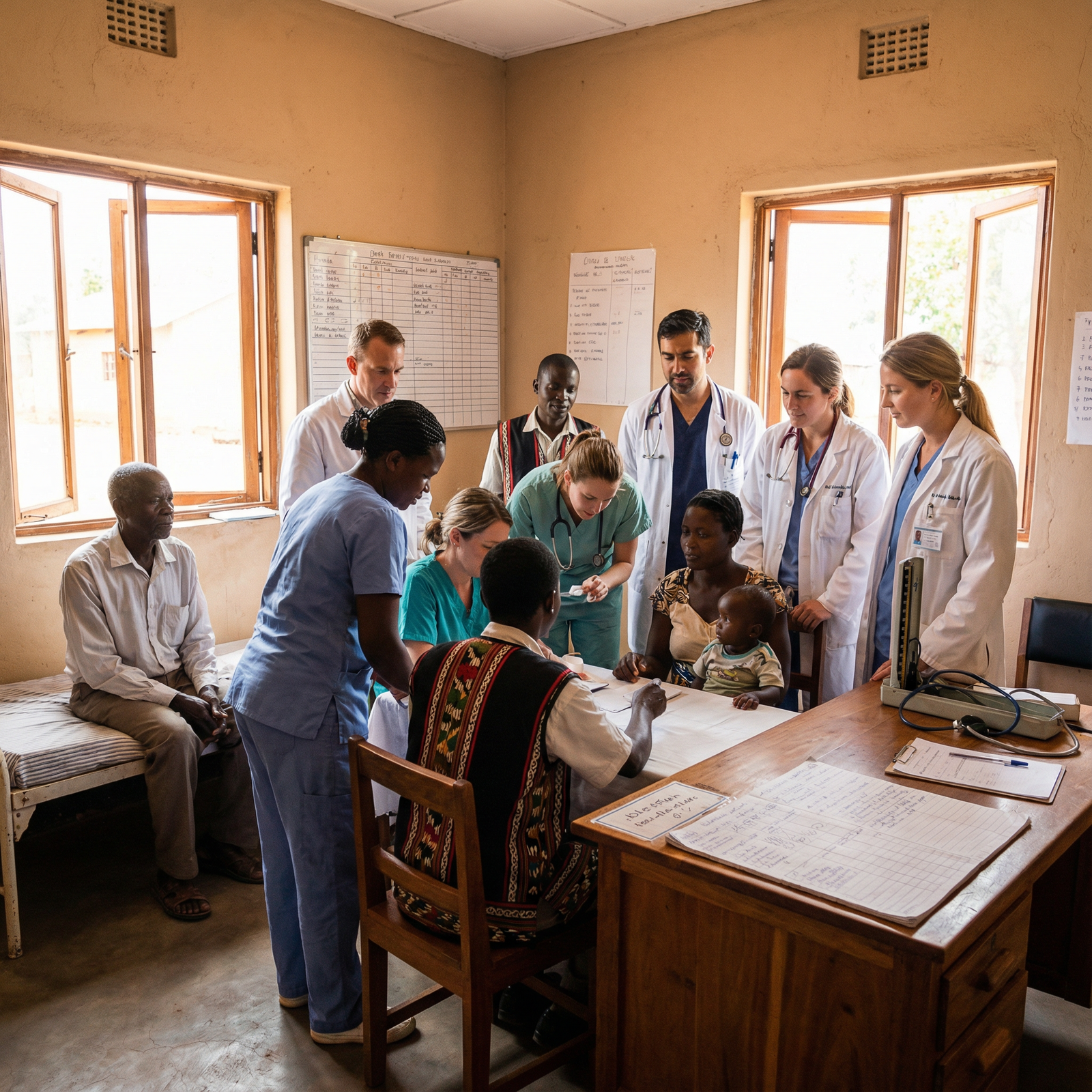
Telehealth follow-up is most effective when the clinical task is focused, repeatable, and tied to a clear decision.
High-yield use cases:
- Postoperative check-ins
- Wound appearance
- Pain trends
- Fever screening
- Drain output review
- Chronic disease management
- Blood pressure review
- Glucose log review
- Inhaler adherence
- Heart failure symptom check
- Medication adjustment
- Side effects
- Dose changes
- Refill planning
- Mental health support
- Brief follow-up counseling
- Symptom monitoring
- Safety checks with local backup
- Interpreter-assisted counseling
- Reinforcing discharge instructions
- Explaining next steps
- Correcting misunderstandings before they become harm
The best programs share a few design features:
A real local partner site
- Not a vague "community connection."
- An actual clinic, organization, or health worker with names and roles.
A clear escalation path
- Who sees the patient in person if a red flag appears?
- Where do they go after hours?
- Who authorizes transport?
Low-bandwidth tools
- Phone first.
- Messaging second.
- Video only if it reliably works.
Scheduled check-ins
- Not "call if there is a problem."
- That phrase is how problems get buried.
Staff who can triage
- Somebody must know the script, the red flags, and the escalation thresholds.
The patients who benefit most are usually the ones most punished by distance. Rural patients. Patients paying out of pocket for transport. Patients needing repeated counseling. Patients with limited access to specialists. In those groups, telehealth follow-up is not an add-on. It is the only realistic way to create continuity.
Where mission-only care still makes sense
Let us not overcorrect. Mission-only care still has an important place.
It is the right tool when the intervention is truly one-time or when the setting makes structured follow-up impossible. Common examples:
- Screening campaigns
- Vaccination drives
- High-volume procedural backlogs
- Acute humanitarian response
- Short-term deployments in areas with no functional connectivity or referral network
The mistake is not using mission-only care. The mistake is using it for problems that obviously require continuity.
If follow-up is impossible, reduce harm deliberately. Here is the protocol I recommend:
Simplify the treatment plan
- Fewer medications
- Fewer dose changes
- Fewer assumptions about monitoring
Give written and visual instructions
- Plain language
- Local language
- Pictorial guides if literacy is limited
Use teach-back
- Ask the patient to explain the plan back to you
- If they cannot, you are not done
Provide medication buffers
- Do not discharge with a regimen that runs out before local refill is possible
Arrange local handoff before departure
- Specific clinic
- Specific person
- Specific date if possible
Mission-only care should be designed as a complete episode of care. Not an abandoned endpoint. If you cannot follow the patient, then your discharge planning has to work twice as hard.
How to decide: a practical implementation framework
Do not start with the platform. Start with the patient and the risk.
Use this decision rule.
Step 1: Assess clinical risk
Ask:
- Is this condition likely to change after the initial visit?
- Could delay in recognition cause harm?
- Does treatment require adjustment?
If yes, the patient needs continuity. Lean toward telehealth follow-up or a strong local in-person follow-up model.
Step 2: Define the actual follow-up task
Be specific.
- Wound photo review on day 3 and day 10
- Blood pressure check weekly for 4 weeks
- Medication side-effect review in 72 hours
- Counseling reinforcement after test results
If you cannot describe the task, your follow-up plan is too vague to work.
Step 3: Check infrastructure
You need answers to five operational questions:
- Connectivity: phone, messaging, or video?
- Staffing: who contacts the patient?
- Language access: who interprets?
- Documentation: where is the encounter recorded?
- Escalation: who acts on danger signs?
If these are fuzzy, the program is not ready.
Step 4: Confirm local ownership
This is where many visiting teams fail. They build a remote process that nobody local actually owns.
You need:
- A named local partner
- Agreement on roles
- A referral pathway
- Shared expectations about response time
No owner, no program.
Step 5: Build the minimum viable model
At minimum, define:
- Who schedules follow-up before discharge
- Who sends reminders
- Who conducts the visit
- Who documents the note
- Who reviews red flags
- Who activates emergency care
- What platform is used
- What backup method is used if the platform fails
That is the skeleton. Without it, the program falls apart under ordinary stress.
Step 6: Track the right metrics
Measure what matters:
- Completed follow-up rate
- No-show rate
- Complications detected
- Time from red flag to escalation
- Patient-reported understanding
- Percentage needing in-person referral
If your completed follow-up rate is poor or red flags are not being acted on, do not scale. Fix the workflow first.
Bottom line: build the care model around continuity, not convenience
My position is simple. If continuity matters, telehealth follow-up usually beats mission-only care. Not because technology is impressive. Because continuity is clinically better than disappearance.
Mission-only care still matters. It expands access, helps with surge response, and can clear one-time backlogs fast. But it should never pretend to be something it is not. If there is no follow-up, then the episode of care must be tightly designed, simplified, and handed off well.
Here is how to fix your program without turning it into a bloated mess:
Pick one high-risk service line
- Post-op wound checks
- Hypertension follow-up
- Diabetes medication review
Pilot a basic telehealth follow-up workflow
- Start with phone or messaging if needed
- Keep it simple
Assign owners
- Scheduler
- Triage lead
- Escalation contact
- Local partner
Measure outcomes for 8 to 12 weeks
- Completion
- Complications caught
- Patient understanding
- In-person escalation
Fix workflow gaps before scaling
- Missed calls
- Bad documentation
- Weak referral pathways
- Language failures
Scale only after the handoff system is reliable
- Not after the pilot looks good in a slide deck
- After it works on ordinary days
That is the standard. Build around continuity, not convenience. Patients do not need more medical tourism with better branding. They need care that still functions after the plane leaves.
Key takeaways
- Telehealth follow-up adds value when the clinical problem needs continuity, monitoring, or early escalation.
- Mission-only care is still useful for one-time interventions, but it must include a deliberate handoff plan to reduce loss to follow-up.
- The best model depends on risk level, connectivity, staffing, and local ownership, not on technology alone.