Let me tell you what actually happens to your ERAS application in October.
A program coordinator at a mid-sized community hospital runs the same report she's run for six years. Step 2 above 230. Graduation within five years. No unexplained gaps. Eight hundred applications become a hundred and twenty in about ninety seconds. If you're an IMG with a 226, nobody rejected you. Nobody even saw you. You were a row deleted by a filter.
That's the part nobody puts on the webinar. But here's the part that should change your entire strategy: there's a side door, and it swings open four weeks at a time. It's called an away rotation at a community program, and for IMGs, it might be the single highest-yield move in the entire match.
This article is for educational purposes only. It is not financial advice, not legal advice, and not tax advice. Figures vary by individual circumstances, so consult a qualified professional before acting.
The Hidden Advantage You Haven't Considered
Academic centers get all the oxygen in IMG forums, and that's exactly backwards. University programs have home students to protect, a research mission to feed, and in many cases an unwritten ceiling on IMG interviews. Their sub-internship slots go to LCME-affiliated students through VSLO, a system that was frankly not built for you. Chasing an audition at a big-name academic center as an IMG is usually buying a rejection with your own money.
Community programs are a different animal. They're service-heavy. They need residents who show up, carry lists, and don't complain about cross-cover. Many of them have filled their classes with IMGs for decades, and their faculty, a surprising number of whom are IMGs themselves, don't flinch at a foreign medical school name on a badge.
Here's what really happens behind the scenes. A community program director has a problem nobody talks about: she ranks from paper. She gets maybe fifteen interview days, meets a hundred strangers for twenty minutes each, and then has to build a rank list that will determine who shows up on July 1st and handles her ICU at 3 a.m. That terrifies her. A rotator solves that problem. Four weeks of observed performance is more data than the rest of her rank list combined.
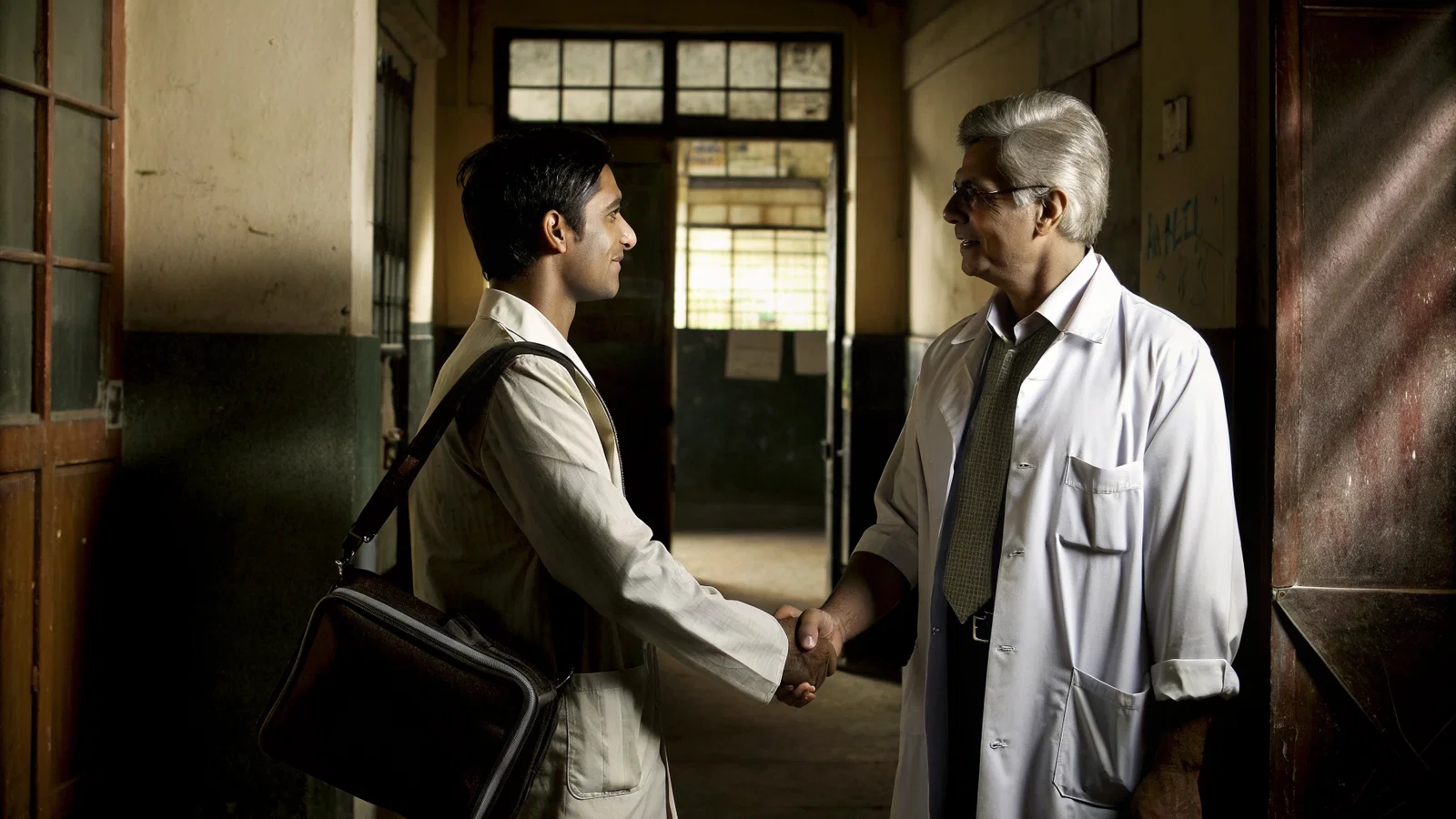
And this is how the ERAS filter gets bypassed, not with a hack, but with a name. Once you've rotated, the filter never runs on you. The PD walks into the coordinator's office and says, "Flag this file when it comes in." You go from row #712 in a deleted report to "Arun, the guy who crushed nights in July." I've sat in rank meetings where the PD held up a rotator's file, said "I know this kid, he works," and watched every concern about scores evaporate from the room. I've seen it happen more times than I can count.
What Program Directors Won't Tell You About Away Rotations
PDs won't put any of this in an email, so I will.
First, an away rotation is a four-week interview that academic programs almost never offer IMGs. That's the whole game. Interviews at community programs are short, formulaic, and easy to fake your way through. Twenty-six shifts on the wards are not. When you rotate, the PD learns things no interview answer can reveal, and so do the residents, who, by the way, get asked their opinion of you in the ranking meeting. Their two sentences can move you forty spots.
Second, community programs run softer cutoffs, and rotation performance gives the PD cover to override even those. A PD can't justify interviewing a 218 from a stack of strangers, the coordinator will ask questions. But a 218 who spent a month on her service, presented beautifully, and got along with the nurses? That's not a risky exception anymore. That's a known quantity. You've handed her the justification on a plate.
Third, and applicants get this wrong constantly, letters from community attendings carry real weight, but only if they're structured correctly. The name at the bottom matters far less than what's in the body. A letter that says "top five percent of students I've supervised in twelve years, and I would rank her to match in my own program" from a community core faculty member beats a lukewarm two-liner from a famous academic who met you twice. Specificity, comparison to peers, and a waived right to view the letter. Non-negotiable.
Across the applicants my colleagues and I have tracked over recent cycles, the pattern is stark:
<chart-data-api config='{"type":"bar","title":"Match Rate Increase for IMGs Who Complete Away Rotation vs. Those Who Don't","labels":["No Away Rotation","Community Away Rotation","Academic Away Rotation"],"values":[45,68,62],"yAxisLabel":"Match Rate (%)"}'>
Read that middle bar again. Community rotations outperform academic ones for IMGs, precisely because you get real responsibility instead of standing behind four fellows.
The Truth About 'Real-World' Training and Clinical Exposure
At a big academic center, there's a pecking order between you and the patient: fellow, senior resident, junior resident, then you, holding the retractor of life. At a community program, there often isn't a fellow at all. The attending needs the work done, and if you've shown you can be trusted, you'll be the one doing it.
That means you carry your own patient list. You write notes that actually matter. You call the consult, present on rounds, follow up the labs, and yes, you get procedures. Central lines, paracenteses, LPs, thoracenteses under supervision. I've watched IMG rotators at community sites log more procedures in a month than some US students get in a year.
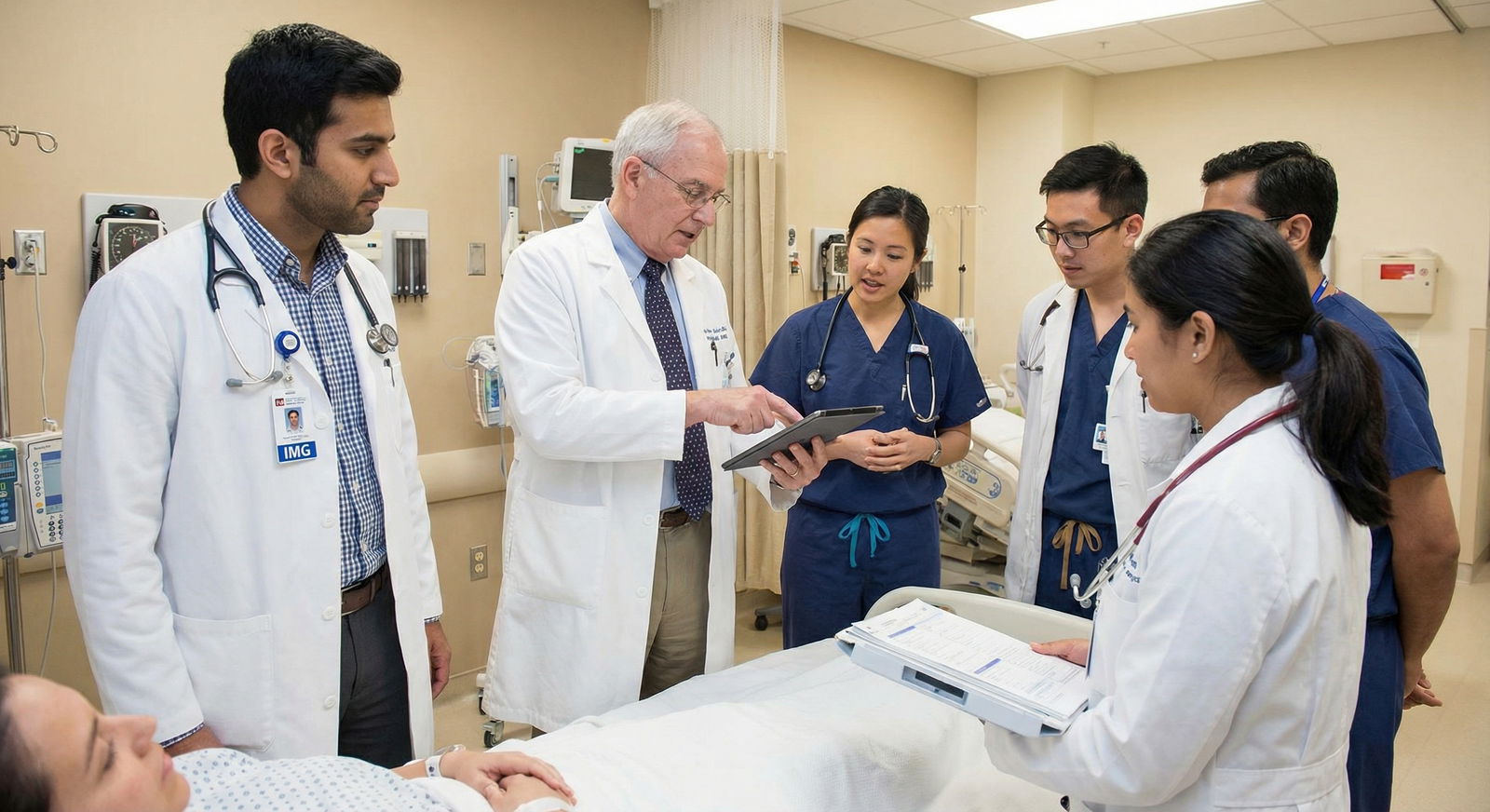
This does two things for you. The obvious one: you become genuinely better, and confidence shows in interviews. The less obvious one: you walk into every interview with ammunition. When they ask "tell me about a difficult patient encounter," you're not reciting a rehearsed story from an observership where you watched someone else work. You're describing the night you managed a GI bleed with one attending on the phone. Interviewers hear canned answers all day. Yours will have texture.
And here's what the PD is actually scoring while you rotate, because it's not your medical knowledge, and it was never your Step score. Did you arrive at 5:45 or 6:10? Do the nurses like you? (The PD will ask them. Always.) Do patients light up when you walk in? Can you take feedback without getting defensive? Do you help the intern with scut or vanish at 4:55? It's a character audition. The scores got you in the building. Everything after that is who you are at 6 a.m.
Risks You Must Navigate, The Insider's Warning
Now the part that can hurt you, because this strategy has a dark side and I'd be doing you a disservice if I skipped it.
Not all community rotations are real. There's a whole industry of pay-to-rotate operations, paper mills, we call them, that take your three thousand dollars, park you in a clinic corner, and hand you a template letter with your name swapped in. Program directors know these operations by name. They recognize the letterhead, the phrasing, the suspicious paragraph about your "excellent clinical acumen" from a physician who never saw you touch a patient. A letter from a known mill is worse than no letter. It tells the PD you tried to buy your way in.
Second warning: a bad performance at a community program doesn't stay at that program. Community PDs in the same region talk constantly, they share hospitals, they sit on the same GME committees, they golf together. If you no-show, cut corners, or get flagged for a professionalism issue, assume every program within a hundred miles knows by Thanksgiving. I've watched a PD pick up the phone mid-meeting and warn a colleague about a rotator. That call took forty seconds.
Third: shadow-only rotations are dead weight for match purposes. If the structure doesn't allow you direct patient contact and regular face time with faculty who can write about you, it will not produce the letter or the audition you need. Run every opportunity through this filter before you pay a dollar:
If you can't verify the "hands-on" box in writing before you arrive, walk away. Hope is not a due-diligence strategy.
How to Strategically Approach Community Programs for Rotations
Targeting is everything. A 232 IMG burning their one rotation slot at a university program averaging 250 on Step 2 isn't being ambitious, they're being wasteful. Community programs cluster noticeably lower, and that's your opening:
Pick programs where your scores sit within their realistic range. FREIDA, residency explorer tools, and old match lists from your own school will get you most of the way there.
Finding the hidden slots takes hustle. These rotations rarely appear on polished websites. The goldmine is alumni from your medical school who matched at community programs, message them, and ask specifically who to email and what to say. Reddit, Discord servers, and IMG WhatsApp groups are where people share the unfiltered truth about which sites actually let you touch patients and which ones park you in a corner.
Then comes the email, and this is where most IMGs blow it. Don't write a plea. Nobody responds to "I need USCE, please help me." Write a value proposition: two short paragraphs stating what you bring, prior clinical experience from your home country, language skills for their patient population, research you can contribute to, full schedule flexibility including nights and holidays, and a genuine reason you want to train in their region. PDs can smell desperation and utility in the same paragraph. Give them the second one.
The ROI: What You Gain Beyond the Match
The interview invitation is the short game. The long game is bigger.
A community attending who supervised you for a month becomes a career asset. These physicians become medical directors, hospitalist group leaders, and fellowship faculty. They answer emails. They make calls. I've seen a community preceptor's phone call land an IMG a hospitalist job three years after the rotation ended. That mentor will also give you the rank-list advice your friends can't, because they've sat on the other side of the table.
You'll also leave with a network of letter writers who can speak about you with the specificity that moves rank lists, and with something applicants undervalue enormously: a realistic preview of community practice. The patient population, the pace, the resource constraints. When an interviewer asks why their program, your answer, "during my rotation, I watched this exact team manage sepsis with one intensivist covering two units, and it's the training I want", will sound like nothing else they hear that day.

Key Takeaways
- Community away rotations bypass Step score filters and give you a four-week audition that academic programs almost never offer IMGs.
- Only pursue rotations tied to real residency programs with IMG-friendly track records, shadow-only and pay-to-rotate mills will actively damage your application.
- A strong community performance produces the two things that move rank lists: a PD who vouches for you by name and letters written with genuine specificity.
- Target programs where your scores fit, source opportunities through alumni and IMG networks, and pitch your value, never your need.