
Introduction: The Midnight Panic About Procedure Logs
It's 11:47 PM. You're staring at your procedure log next to a Reddit thread where a US grad just casually mentioned their 300+ central lines and 50 intubations. Your log has... less. A lot less. And your brain does what every IMG brain does at midnight, it spirals.
"What if they laugh at my numbers? What if I get screened out automatically? What if I spent six years training and I don't even get an interview because my hospital didn't log paracentesis the same way?"
If that's you, breathe. I've been exactly there, refreshing FREIDA and Forums until my eyes burned, convinced I needed a carbon-copy log to even have a chance. Social media is brutal for this. One person posts their perfect, color-coded log and suddenly you think that's the minimum. It's not.
This article exists because that panic is lying to you. We're going to rip this myth apart, piece by piece, and look at what actually happens when a program director reviews an IMG application. Ready? Let's separate the fear from the facts.
The Myth: "Programs Expect Carbon-Copy Procedure Logs from Every IMG"
Here's the nightmare we all share: there's a secret threshold. Like, Surgery needs 500 cases. Internal Medicine needs 100 procedures. And if you, as an IMG, don't hit the exact same numbers as a US senior from Johns Hopkins, automatic rejection. Game over.
That idea is everywhere. And it's completely wrong.
What you're actually doing is comparing apples to... I don't even know, spaceships. Your training in India, Pakistan, Nigeria, Brazil, Egypt, wherever you trained, was not designed to mirror a US medical school's clerkship checklist. Your hospital might have had you running an entire ward for months, making real decisions at 3 AM with no resident to call. A US student might have logged more supervised procedures because their system is built to log everything. Different systems. Different paperwork.
I fell into this trap hard. I thought "I need 500 surgeries to match surgery." I know applicants who switched out of the specialty they love because they thought their international numbers weren't sexy enough. Please don't do that. Program directors are not sitting there with an Excel sheet that says "if IMG < US avg, delete."
The anxiety loop is real, and it's vicious:
See how it ends? You disqualify yourself before any program even gets a chance to look at you. That's the real danger. Not your log.
The Reality: What Residency Programs Actually Prioritize
Okay. Deep breath. Let's talk about what programs actually care about. Because I promise you, it's not a perfect log match.
Programs run on competency, not counting. The entire US graduate medical education system is built around ACGME Milestones, can you take a good history, can you make safe decisions, can you work on a team, can you learn from your mistakes? They want to know: if I put you on call tonight, will my patients be safe? Will you ask for help?
A raw number doesn't answer that. A story does. A letter that says "Dr. Sharma led our emergency during a dengue outbreak and safely performed 30+ lumbar punctures under supervision while teaching juniors", that answers it.
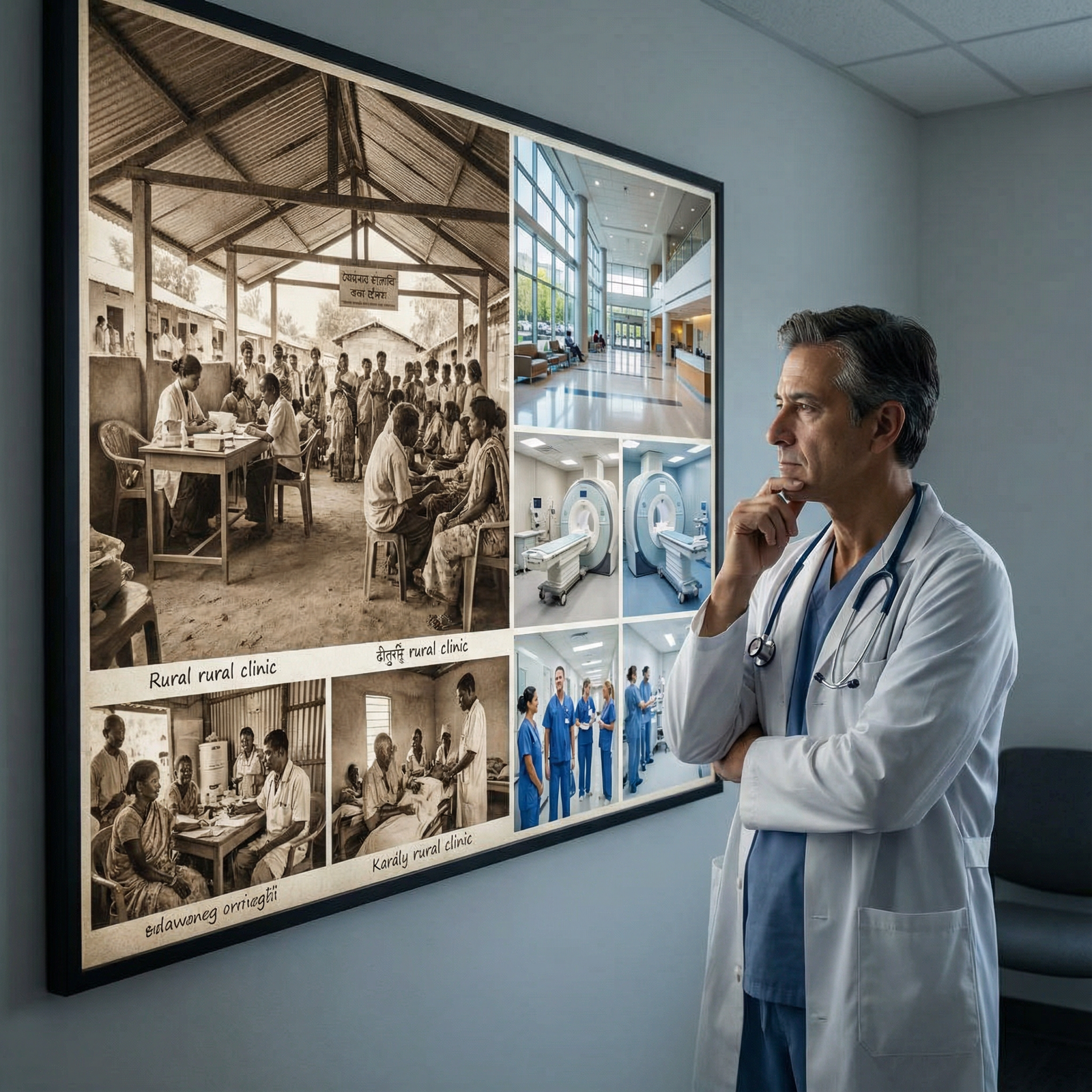
Program directors know international training is different. Seriously, they do. The good ones, the ones who actually match IMGs year after year, they read your application in context. They know that in many countries, interns do more hands-on management and fewer formally logged "procedures" because the medical student isn't the primary proceduralist. They know some hospitals don't even have a formal logging system. They look for evidence of growth, not perfection.
An "incomplete" log doesn't disqualify you. A log with no reflection, no growth, no backup? That worries them. But a log that says "I had limited exposure to X, so I sought out a 2-month US observership where I assisted with 15 paracentesis and got a letter from Dr. Smith attesting to my technique"? That shows adaptability. That's what they want.
Look at how directors actually weigh your file:
Procedure documentation is like 10% of that picture. Ten percent! You're losing sleep over the 10% while ignoring the 90% where you can absolutely shine. Your interview performance alone is worth three times your procedure log. Let that sink in.
Your Action Plan: Turning Incomplete Into Irresistible
So what do we do about the gap? Because yes, there might be a gap. We don't pretend it away. We present what you HAVE like a boss.
First: audit your logs with brutal honesty and precision. Don't inflate. Don't guess. Write down exactly what you did, your role, observer, assisted, performed under supervision, performed independently, and where. "Assisted 25 C-sections as first assistant, including skin closure and subcutaneous suturing, at 500-bed District Hospital, Ghana, 2022-2023." That's ten times stronger than "C-sections: 25."
Second: contextualize in your personal statement. One sentence. Just one. You don't need a sob story. Something like: "In my home institution in Manila, procedure documentation was paper-based and attending-dependent, but my six months managing a 40-bed medicine ward taught me triage and clinical judgment that I carried into my California rotation where I focused on formalizing my procedural competency." You acknowledged it. You pivoted to strength. Done.
Third, and this is the secret weapon, get a procedural competence letter. Not just a generic LOR. Ask your US preceptor or your home supervisor to write specifically: "I directly observed [Your Name] perform X, Y, Z. Her sterile technique is excellent. She recognizes her limits." One paragraph like that erases a hundred missing checkboxes.
Finally: practice explaining gaps out loud. Out loud. In front of a mirror. Because in the interview, when they ask, "I see you have fewer intubations logged than most," you cannot freeze and apologize. You say: "Yes, that's reflective of how airway management was structured at my institution. In my US rotation I sought out the anesthesia service and have since logged 12 successful intubations under supervision, and Dr. Lee can speak to my competence." Confidence. Not excuses.
Here's the flow I tell every IMG I mentor:
You don't need more procedures. You need a better story about the procedures you have.
Reassurance: You've Got This, Here's Your Reminder
Listen to me. Thousands, thousands, of IMGs match every single March with imperfect logs. With gaps. With training that looked nothing like a US school. I know them. You probably know some too.
I matched with a friend who had literally ZERO logged central lines because her medical school didn't let interns do them. Zero. She matched Internal Medicine at a solid university program in Ohio. Why? Because she was brilliant on rounds, her US LOR said "best IMG I've had in five years," and she owned her learning curve in the interview instead of hiding it.
Your unique global health perspective isn't a liability. It's your edge. You have seen late presentations. You have worked with limited resources. You have managed conditions US grads only read about. That adaptability? That's gold in a residency. Programs facing staffing crises and complex patients want someone who's already resourceful.
Stop applying only to the 20 "IMG-friendly" programs on some random spreadsheet that value low procedure numbers. Research. Look at where IMGs in your school actually matched last year. Email residents. Some programs truly value IMG grit more than a perfect checklist.
Don't let procedure anxiety sabotage your dream before you even hit submit. Your log does not define you. Your competency does. Your growth does. You do.
You've done the hardest part, becoming a doctor somewhere else and having the guts to start over here. A procedure log is not going to be the thing that stops you.