
Most medical students treat Letters of Recommendation like a final exam they can cram for. They can't. I've watched top-tier applicants tank their residency match because they secured three mediocre letters instead of three stellar ones. The difference isn't your USMLE score. It's your timeline.
If you wait until the last week of your core rotation to ask for a letter, you are begging for a generic, copy-pasted paragraph. Attendings are busy. If you don't manage the process, they will write what they remember, which usually isn't much. You need a strategic, chronological approach. Here is your exact timeline to lock in phenomenal LOR writers.
(For more on scheduling these initial contacts, see: MS3 Core Rotations: Monthly Checklist to Set Up Future LORs (https://residencyadvisor.com/resources/lor-residency/ms3-core-rotations-monthly-checklist-to-set-up-future-lors).)
(For more on scheduling these initial contacts, see: MS3 Core Rotations: Monthly Checklist to Set Up Future LORs (https://residencyadvisor.com/resources/lor-residency/how-to-build-strong-residency-lors-month-by-month-in-ms4).)
This article is for educational purposes only. It is not financial advice, not legal advice, and not tax advice. Figures vary by individual circumstances, so consult a qualified professional before acting.
Pre-Rotation Preparation: The Strategic Alignment Phase
Before you even step onto the wards, you need a target list. Identify your top five potential mentors. Do not just pick the department chair who has never seen you examine a patient. Pick the attendings who actually watch you work, have clout in your chosen specialty, and are known for writing detailed letters.
(Learn how to stand out during short exposures in this guide: 7 Ways to Strengthen a Short-Exposure Residency LOR (https://residencyadvisor.com/resources/lor-residency/7-ways-to-strengthen-a-short-exposure-residency-lor).)
(Learn more about the specific strategies for cultivating these relationships in: How to Build Strong Residency LORs Month by Month in MS4 (https://residencyadvisor.com/resources/lor-residency/away-rotation-calendar-when-to-ask-for-lors-before-you-leave).)
At this point you should schedule a "goals meeting" with each prospective writer during Week 1. Keep it to ten minutes. Tell them you are highly interested in their specialty and want to maximize your learning on their service. Establish expectations. Ask them how they prefer to receive feedback and what they expect from a standout student.
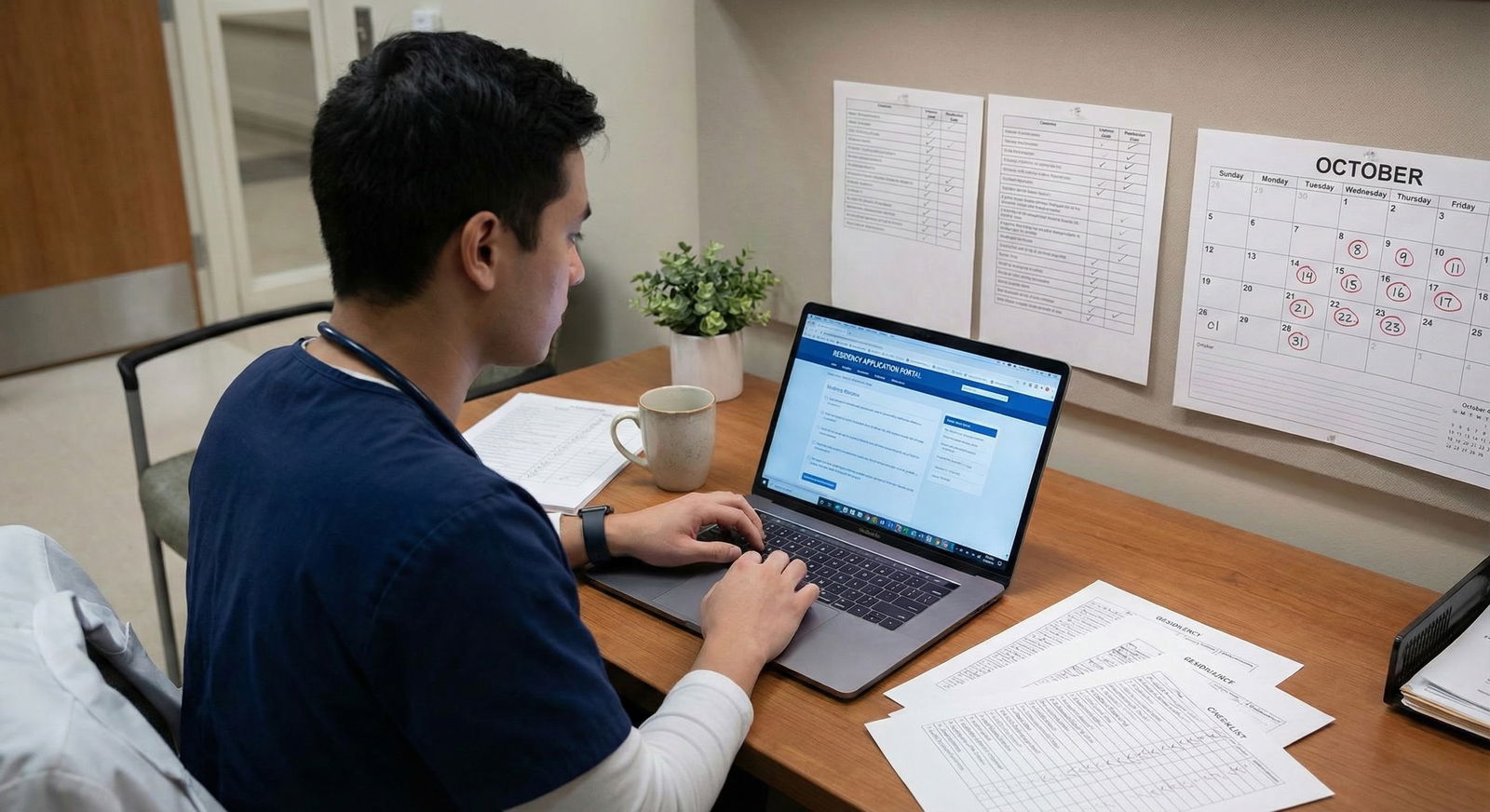
During this first week, distribute a polished CV and a draft of your personal statement. This creates a baseline. Even if your personal statement is rough, it shows you are thinking about your narrative. It gives the attending context. When they see you interact with a difficult patient in Week 3, they will already know your career goals and can weave that into your letter. Handing over these documents on Day 2 separates you from 90% of your peers who show up empty-handed.
Weeks 2-4: Active Engagement and Visibility Strategy
Now you are in the trenches. This is where you build the raw material for your letter. Implement the "end-of-shift summary." This is my absolute favorite strategy. At the end of every shift, send a brief, polite email to your attending. Three sentences max. "Saw Mrs. Jones, adjusted her lasix, she's diuresing well. Read up on cardiorenal syndrome tonight. See you tomorrow."
It takes two minutes to write. It keeps your contributions visible and proves you are thinking about patient care even when you clock out.
Demonstrate clinical reliability. Arrive fifteen minutes early to pre-round. Stay late only when necessary for complex patient care. Do not stay late just to look busy. Attendings see right through performative exhaustion. It's annoying, not impressive.
When you are on rounds, ask specific questions that show intellectual curiosity. Do not ask basic questions you could have looked up on UpToDate in five seconds. Ask about the nuance of a treatment guideline or a conflicting study you read. Show them how your brain works.
Weeks 5-6: Direct Conversation and Commitment
This is the make-or-break window. Do not wait until the rotation ends. Initiate a private conversation with your target writers to formally request the letter.
Use the exact phrasing I give all my students: "Do you feel you know my work well enough to write a strong letter of recommendation for my residency application?"
Listen closely to their answer. If they say, "Sure, I can write you a letter," but they drop the word "strong," walk away. A lukewarm letter will sink your application. You need them to explicitly agree to write a strong letter.
Once they agree, provide a detailed "brag sheet." This is a one-page document highlighting specific projects, papers, or difficult patient cases you shared during weeks 2-4. Remind them of the time you caught that subtle EKG change or the excellent presentation you gave on morning report. Jog their memory. Make it incredibly easy for them to write specific, glowing anecdotes about you.
Weeks 7-9: Documentation Gathering and Final Reminders
You have secured the commitment. Now you manage the logistics. Submit all ERAS or WRS data entries promptly. Do not make your attending chase you for your AAMC ID or the letter submission link.
At this point you should set up digital reminders for your writers exactly one week before the actual submission deadline. Send a polite, low-pressure email. "Hi Dr. Smith, just sending a quick reminder that the ERAS portal closes next Wednesday. Let me know if you need me to resend the submission link or my brag sheet."
If your USMLE scores or transcript highlights were pending when you first asked for the letter, offer to provide the updates now. Keep their inbox clean and make the administrative burden zero.

Week 10: Post-Rotation Follow-Up and Appreciation
The rotation is over, but your job isn't. Send a handwritten thank-you note immediately. Mail it to their office. Do this regardless of the letter's upload status. It shows basic professional decency, which is surprisingly rare.
Check in two weeks later to ensure the letter is on track. Keep it brief and polite, referencing the upcoming deadline. If they haven't uploaded it, this is your final gentle nudge.
Once the letters are officially uploaded to the portal, send a final thank-you email confirming receipt. Express genuine gratitude for their time and support. Tell them where you matched when the time comes. They invested in you; let them see the return on their investment.
Key Takeaways
- Identify and meet with prospective writers within the first week of your core rotations.
- Send weekly brief updates to keep your contributions visible and memorable to attending physicians.
- Formally request strong letters by week five, providing ample documentation to aid their writing.
- Always follow up politely and express gratitude throughout the entire process until the letter is submitted.
Your Immediate Action Steps
- Today: Draft your top 5 list of potential LOR writers for your upcoming rotation.
- Tomorrow: Update your CV and print three physical copies.
- Day 1 of Rotation: Hand out your CV and schedule your 10-minute goals meetings.
- Daily: Draft and send your 3-sentence end-of-shift summary email.
- Week 5: Ask for the strong letter and hand over your brag sheet.