

The biggest mistake MS3s make is thinking letters of recommendation “happen” during MS4. They do not. They are built quietly, month by month, on your core rotations.
You are not just doing clerkships. You are running a 12‑month campaign to earn excellent, specific, on‑time LORs for residency. If you wait until ERAS season to think about this, you will be the person emailing a resident at 11:37 p.m. begging, “Hey, do you think Dr. X remembers me?”
Here is how you avoid that.
Big‑Picture Timeline: MS3 Year and LOR Strategy
At this point you should understand the full arc of MS3 before we go month by month.
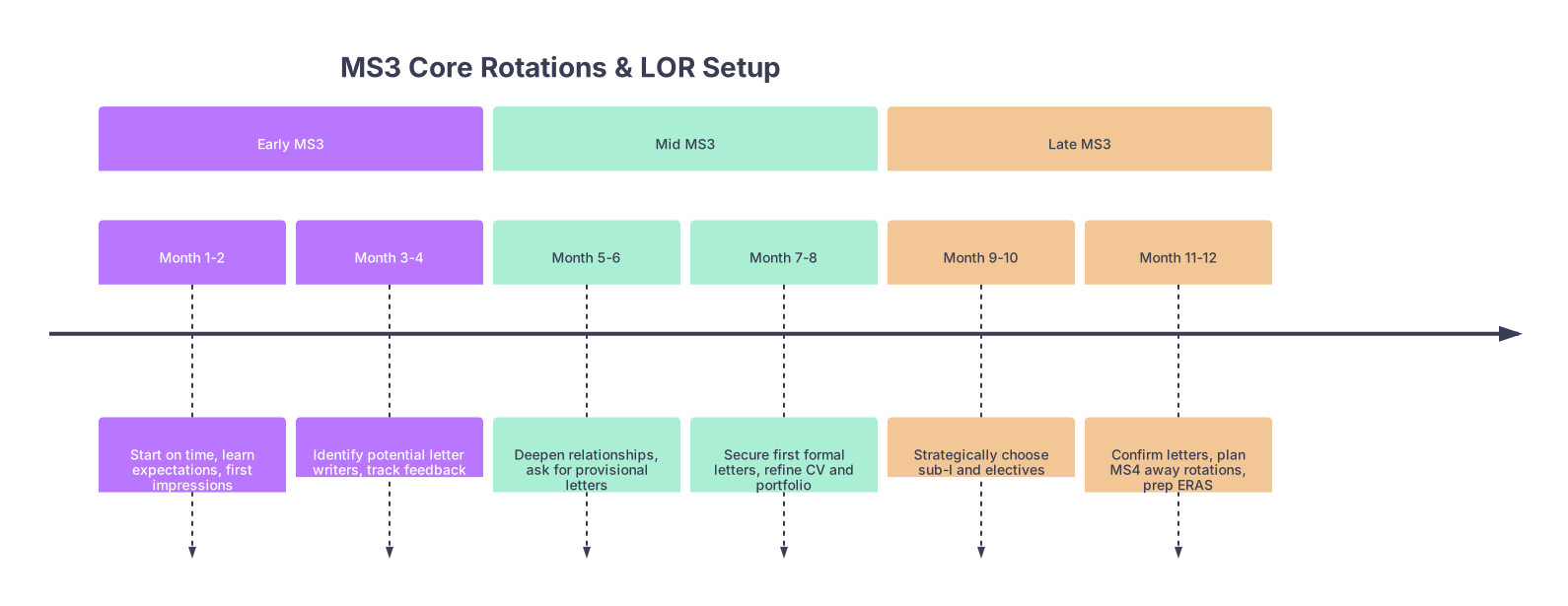
| Period | Event |
|---|---|
| Early MS3 - Month 1-2 | Start on time, learn expectations, first impressions |
| Early MS3 - Month 3-4 | Identify potential letter writers, track feedback |
| Mid MS3 - Month 5-6 | Deepen relationships, ask for provisional letters |
| Mid MS3 - Month 7-8 | Secure first formal letters, refine CV and portfolio |
| Late MS3 - Month 9-10 | Strategically choose sub-I and electives |
| Late MS3 - Month 11-12 | Confirm letters, plan MS4 away rotations, prep ERAS |
You will likely have 5–7 core rotations in MS3:
- Internal Medicine
- Surgery
- Pediatrics
- OB/GYN
- Psychiatry
- Family Medicine
- Neurology or another required specialty
You do not need a letter from every single one. You do need:
- 1–2 strong letters in your target specialty
- 1–2 from core rotations that show work ethic, clinical reasoning, and professionalism
- Optionally: 1 research or longitudinal mentor letter
For most competitive specialties, programs want 3–4 letters total. You want 5–6 solid options in your ERAS portal so you can mix and match.
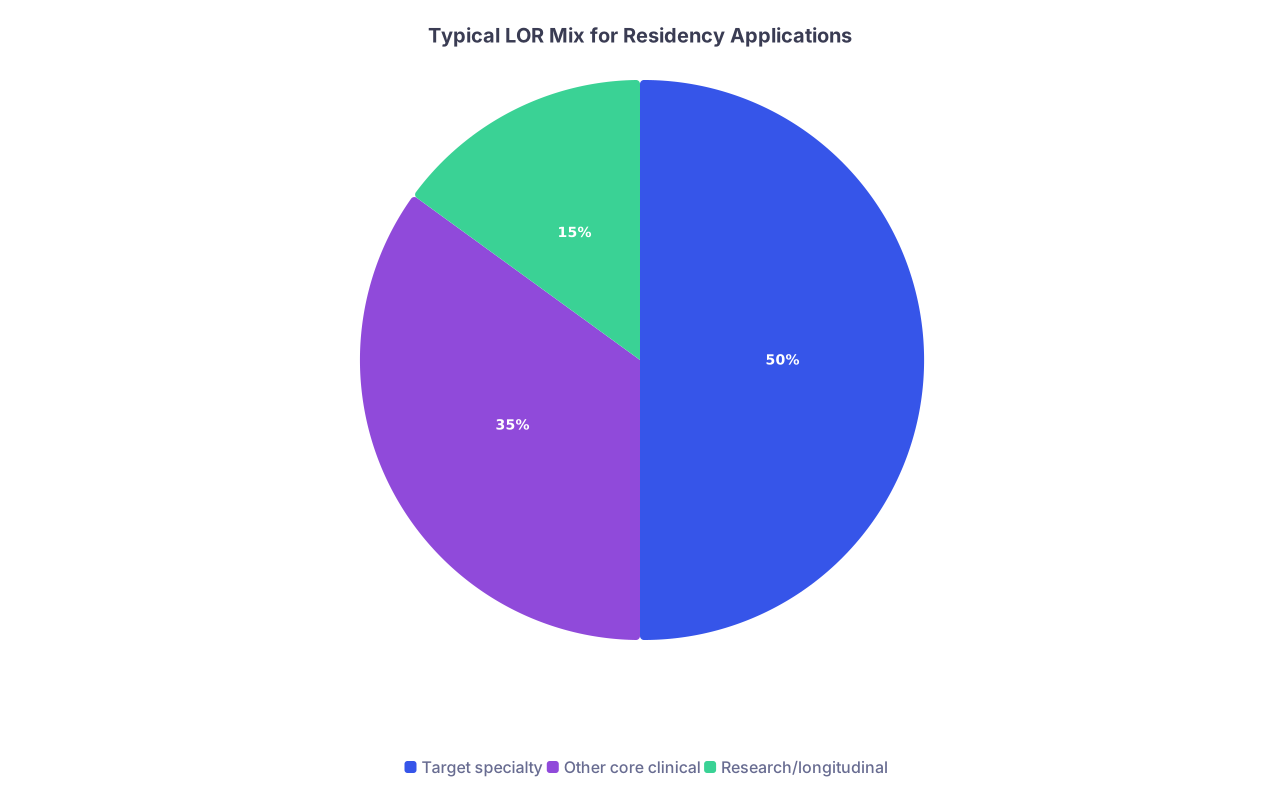
| Category | Value |
|---|---|
| Target specialty | 50 |
| Other core clinical | 35 |
| Research/longitudinal | 15 |
Now let us walk month by month and, when needed, week by week.
Month 1–2: First Rotation – Laying the Foundation
At this point you should stop thinking “grades” only and start thinking “narrative.” What will someone be able to honestly write about you?
Week 1: Show up like someone they can write about
Your goals this week:
- Learn the expectations: ask chief resident or clerkship coordinator, “What does an Honors student look like on this service?”
- Identify who evaluates students: attendings, fellows, residents, or a mix.
- Choose 1–2 faculty on the service you might want to impress deliberately. Not creepily. Intentionally.
Daily checklist in Week 1:
- Arrive 10–15 minutes before the team.
- Know your patients better than anyone else: vitals trends, labs, overnight events.
- Ask one focused clinical reasoning question per day (example: “Can I run my assessment on Mr. J by you and get feedback on my plan?”).
- Write down feedback in a small notebook. Every day. If you do not record it, you will not remember it.
Week 2–3: Make yourself memorable for the right reasons
At this point you should be building a profile: reliable, curious, not needy.
Weekly checklist:
- Offer to give one short, 5–7 minute chalk or PowerPoint talk on a topic that came up (e.g., “initial workup of upper GI bleed”).
- Ask a resident, “What is one thing your best MS3 did that I could try to emulate?” Then do it.
- Ask for specific feedback midway through:
- “What is one thing I should keep doing?”
- “What is one thing I should change immediately?”
You are not asking for a letter yet. You are collecting data on how you are perceived.
Week 4: Close the loop
End of first rotation checklist:
- Identify at least one attending who:
- Has seen you multiple times
- Has given you verbal positive feedback
- Knows your name without checking the list
Before the rotation ends:
- Send a short thank‑you email to each attending you worked with more than a few days:
- 3–4 sentences: thank them, mention one thing you learned, note that you hope to work with them again.
- Save their email and how you worked with them in a simple tracking sheet.
| Faculty Name | Specialty | Rotation | Month | Strength of Relationship (1–5) |
|---|---|---|---|---|
| Dr. Patel | IM | Wards | 1 | 3 |
| Dr. Lee | Surgery | Blue | 2 | 2 |
| Dr. Gomez | Peds | Inpatient | 3 | 4 |
You are not asking for a letter yet. You are laying brick.
Month 3–4: Multiple Rotations – Start Identifying Real Letter Writers
By now, you should have completed 2–3 core rotations. Patterns are emerging.
At this point you should be:
- Tracking who likes working with you
- Noting where you naturally perform best
- Getting a sense of what specialties might be on your rank list for residency
Rotation Start (each new clerkship)
Week 1 checklist for every new rotation:
- Introduce yourself clearly to each attending: “Hi, I am [Name], MS3. I am really hoping to grow in [two specific skills] on this rotation. Anything you want me to especially focus on?”
- Ask the senior resident: “Who on this rotation is particularly student‑friendly and writes strong feedback?” These are often your future letter writers.
- Find out who completes your evaluations and how.
Mid‑Rotation (week 2 on 4‑week blocks, week 3 on 6‑week blocks)
At this point you should explicitly calibrate.
Do this with at least one attending:
- Ask for mid‑rotation feedback: “I am aiming for Honors and also hoping to be someone you could eventually write a strong letter for when I apply to residency. What would I need to improve between now and the end of the rotation to be in that category for you?”
This language matters. You are not actually asking yet, but you are planting the idea that a strong letter is your goal.
End of Rotation (Month 3–4 decisions)
You now need to start sorting attendings into three categories:
- Category A: “Definite letter potential” – they saw you a lot, they liked you, they gave very positive comments.
- Category B: “Possible letter later” – decent interaction, but fewer days or mixed feedback.
- Category C: “No letter” – minimal contact or lukewarm feedback.
Your job by end of Month 4:
- Have at least 2 Category A potential writers identified.
- Preferably from different core fields (e.g., IM + Surgery, or Peds + OB).

Month 5–6: Mid‑Year – First Actual Letter Requests
By mid‑MS3, you should have enough data to know your likely specialty or at least your top 2–3 options. Even if you are not 100% sure, you can start banking general clinical letters.
Month 5: Converting “Potential” into “Provisional Letters”
Target: 1–2 strong general clinical letters (e.g., IM, Surgery, or Peds) by the end of Month 6.
At the end of your best‑performing rotation so far:
Ask in person if possible. After rounds or clinic, when the attending is not rushing off.
Script you can adapt:
“Dr. Smith, I have really appreciated working with you this month and the feedback you have given me. I am starting to think about residency applications down the line, and I was wondering if you would feel comfortable writing a strong letter of recommendation for me when the time comes?”
Pay attention to the response:
- If they say “Of course, happy to,” with enthusiasm → good.
- If they hedge (“I do not know you that well…” or “Maybe later”) → do not use them as a primary letter writer.
When they agree:
- Say you will send a follow‑up email with your CV, a short summary of patients you worked on with them, and your future interests.
Your supporting email (same week)
Within 24–48 hours:
- Attach:
- Updated CV (1–2 pages is fine for MS3)
- Brief paragraph about your current specialty interests (even if uncertain)
- Bullet list of 3–5 patients/cases you worked on with them that show your role
This makes their life easier. And the easier you make it, the more detailed (and on time) the letter will be.
Month 6–7: Align Rotations With Emerging Specialty Choice
By this point you should have:
- 1–2 general core letters either obtained or promised
- A clearer sense of what you might apply in (even if it is “IM vs. EM vs. Peds”)
Now you shift strategy: you are not just collecting any letters. You are prioritizing letters from your likely specialty.
Rotation Planning Decisions (Month 6–7)
You want:
- At least one core rotation in your target specialty or closely related field by late MS3 or very early MS4.
- One sub‑internship (sub‑I) in that specialty during late MS3 / early MS4.
- Optional: an away rotation in MS4 if you are going into a competitive field.
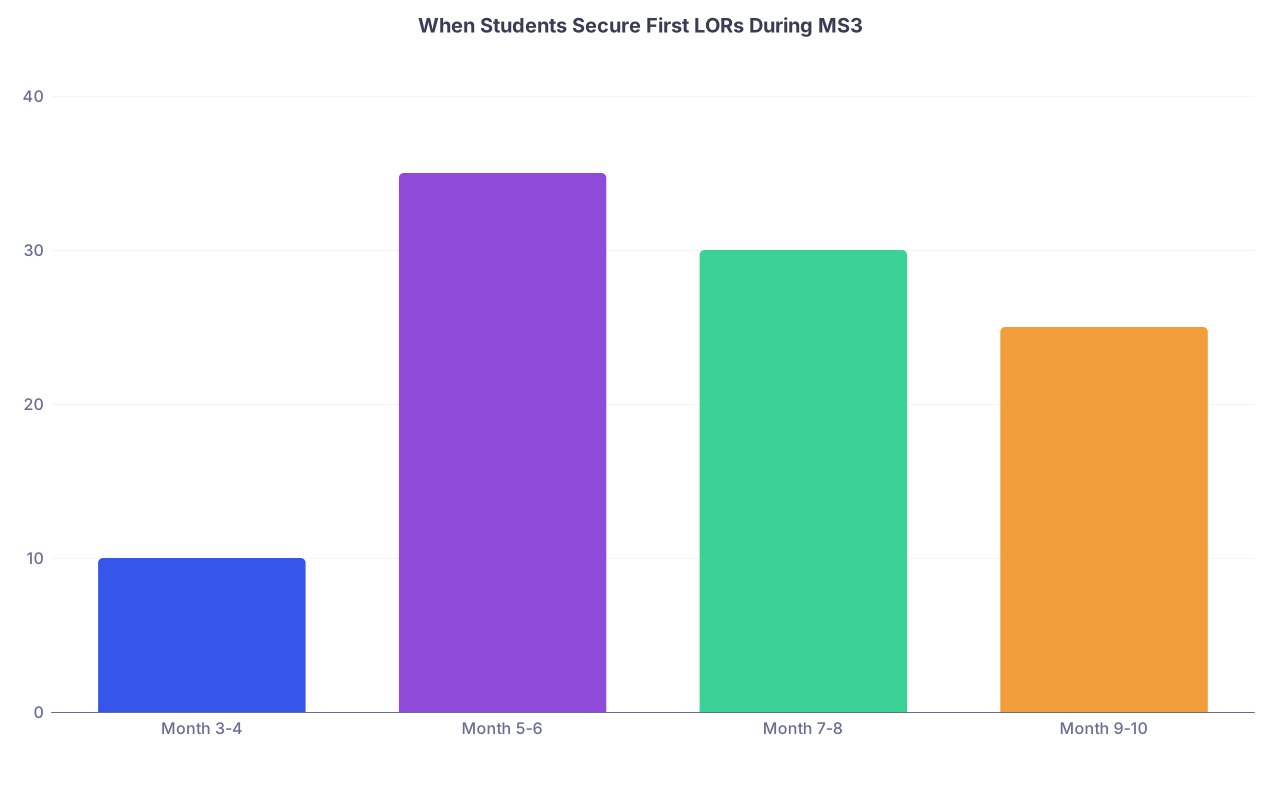
| Category | Value |
|---|---|
| Month 3-4 | 10 |
| Month 5-6 | 35 |
| Month 7-8 | 30 |
| Month 9-10 | 25 |
At this point you should talk to your dean’s office or advising:
- Ask which rotations are most important for letters in your specialty.
- Lock in at least one block with high letter potential (strong faculty involvement, not just resident‑run).
Month 7–8: High‑Yield Rotations for Target Specialty Letters
This is the phase where you deliberately audition for letter writers.
Before the Rotation Starts
One week before:
- Email the clerkship coordinator or chief resident:
- Politely mention you are very interested in [Specialty] and hoping to obtain a strong letter of recommendation if you perform well.
- Ask if there are attendings known for working closely with students.
You are not demanding a letter. You are signaling that you take performance seriously.
Week 1: Set the tone explicitly
Day 1–2 script with a key attending:
“Dr. Lopez, I am an MS3 very interested in [Specialty]. My goal is to learn as much as I can and, if I perform at a high level, hopefully be someone you could consider for a strong letter of recommendation in the future. Would you be open to giving me feedback along the way so I can improve?”
This does two things:
- Puts your goal on their radar early.
- Invites constructive feedback that you can actually use.
Week‑by‑Week Micro‑Goals
- Week 1: Show you are prepared. Read before cases. Know common conditions cold.
- Week 2: Take ownership of 2–3 patients; present clearly; propose reasonable plans.
- Week 3: Volunteer for a short teaching presentation to the team.
- End of rotation: Ask for the letter (if performance and vibes have been strong).
Always ask before the last day if possible, while you are still fresh in their mind.
Month 9–10: Sub‑I and “Anchor” Letters
By now, you should have:
- 2–3 attending physicians who have agreed to write letters
- At least one in or adjacent to your target specialty
Now you aim for 1–2 anchor letters: the heavy‑hitters that will sit at the top of your ERAS application.
These usually come from:
- Sub‑I in your target specialty
- Department chair / clerkship director (if they actually know you)
- A well‑known faculty with whom you worked closely
On Your Sub‑Internship
This is where you behave like an intern. Letter writers pay attention:
Week 1–2 focus:
- Show reliability above all:
- Notes done early.
- Calls returned promptly.
- Early pre‑rounds with real data, not guesses.
- Ask specifically for feedback on “intern‑level readiness.”
Week 3–4:
Once you have clear positive feedback, ask explicitly:
“Dr. Nguyen, I am applying into [Specialty] this coming cycle. Given the work we have done together on this sub‑I, would you be comfortable writing a strong letter of recommendation for my residency applications?”
Again, you want the word “strong” in there. It gives them an out if they cannot do that.

Month 11–12: Consolidate, Confirm, and Prepare for ERAS
Late MS3 is about not dropping any balls.
By this point you should:
- Have 3–5 committed letter writers across core and specialty rotations
- Know which 3–4 you will prioritize for ERAS in your target field
Month 11: Confirmation and Clean‑Up
Tasks:
- Email each letter writer individually:
- Thank them again for agreeing.
- Mention your target specialty and approximate timeline (ERAS opens in June, submission in September, etc.).
- Ask if they prefer you to send:
- Personal statement draft
- Updated CV
- Any specific achievements or themes they might highlight
You are not nagging. You are making it easy.
Month 12: Prepare for MS4 and ERAS Logistics
At this point you should:
- Decide which letters will go to which specialty if you are still split (e.g., a general IM letter can support both Cards and GI dreams later).
- Create a simple table for yourself:
| Letter Writer | Specialty | Type | Priority for ERAS |
|---|---|---|---|
| Dr. Patel | Internal Med | Core clinical | High |
| Dr. Gomez | Pediatrics | Core clinical | Medium |
| Dr. Nguyen | Target Specialty Sub-I | Anchor specialty | Highest |
| Dr. Chair | Department | Chair/summary | High |
Start drafting a brief “highlights summary” you can send each writer two months before ERAS opens:
- 3–5 bullet points:
- Where you are applying (specialty, type of programs)
- Any changes since you last worked with them (new research, awards, leadership)
- How you hope they will frame you (e.g., “as a strong team‑oriented clinician with solid clinical reasoning and dependability”)
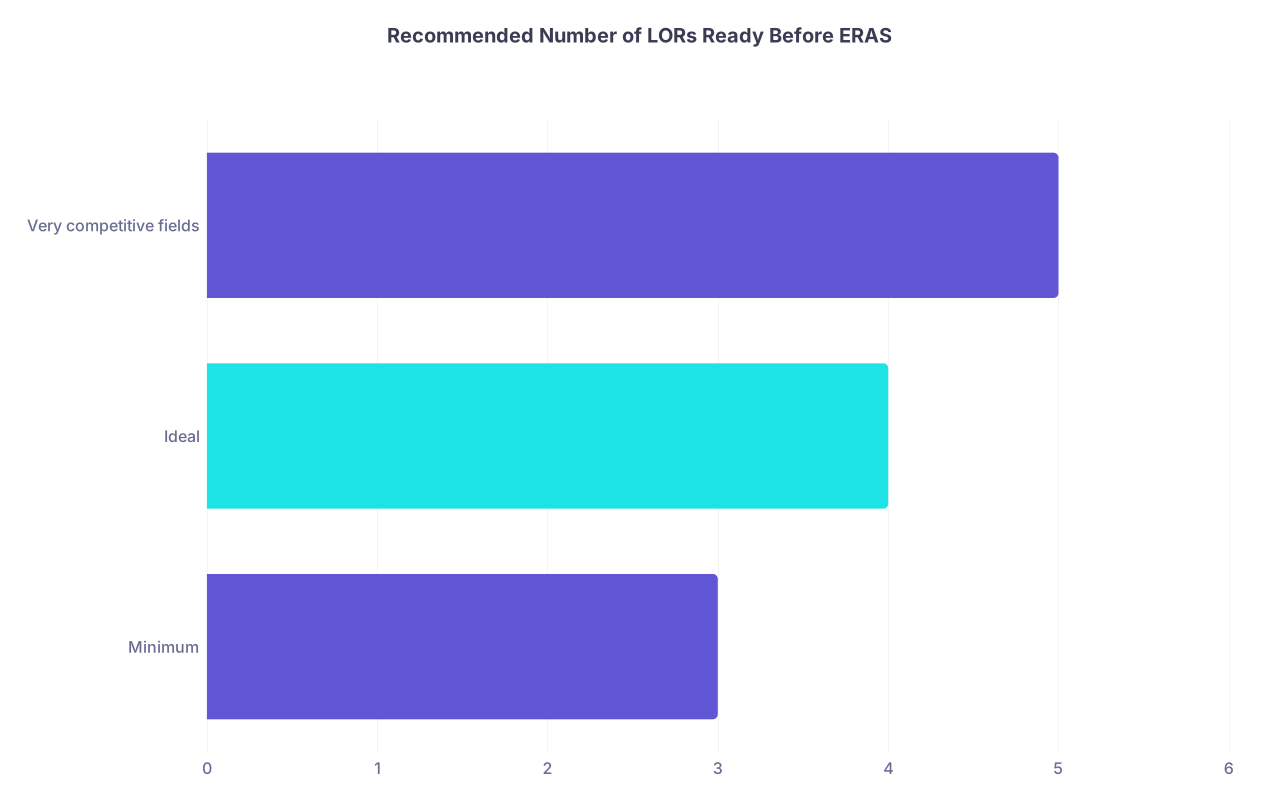
| Category | Value |
|---|---|
| Minimum | 3 |
| Ideal | 4 |
| Very competitive fields | 5 |
Day‑to‑Day Habits That Quietly Build Strong Letters
The monthly plan only works if your daily behavior gives people something to write about.
Daily checklist on any rotation:
- Know your patients’ overnight events before the team does.
- Have one question prepared each day that shows you are thinking, not just memorizing.
- Write down at least one thing you learned and one piece of feedback.
- Do one small extra thing for the team or a patient that is clearly beyond minimal effort.
Faculty write about patterns. Not one heroic act. Show the same traits every day:
- Reliability
- Initiative
- Teachability
That is what becomes: “I would trust this student as my resident.”

Quick Month‑By‑Month Summary Checklist
Here is your stripped‑down checklist by month.
Month 1–2:
- Learn expectations on each core
- Start tracking attendings and feedback
- Send thank‑you emails at end of rotations
Month 3–4:
- Identify 2–3 “Category A” potential letter writers
- Ask directly what you need to do to be letter‑worthy
- Refine your LOR tracking sheet
Month 5–6:
- Convert at least 1–2 attendings to confirmed letter writers
- Email them CV + case summaries
- Start aligning future rotations with likely specialty
Month 7–8:
- Intentionally seek letters on high‑yield rotations in your target field
- State your interest early; ask for structured feedback
- Secure at least one specialty‑adjacent letter
Month 9–10:
- Use sub‑I to earn an anchor letter
- Confirm 3–4 total letters by now
- Document everything (who agreed, when, what they have seen you do)
Month 11–12:
- Re‑confirm all letters, send updated CV and plans
- Map which letters go to which specialty
- Prepare to open ERAS with letters either in or clearly in progress

| Step | Description |
|---|---|
| Step 1 | Start MS3 |
| Step 2 | Identify strong rotations |
| Step 3 | Stand out clinically |
| Step 4 | Ask for feedback mid-rotation |
| Step 5 | Request strong letter from best attendings |
| Step 6 | Send CV & case summary |
| Step 7 | Confirm letters near end of MS3 |
| Step 8 | Upload to ERAS in MS4 |
The Three Things You Must Not Forget
- Letters are not an MS4 task. They are a year‑long MS3 project, and the best ones are built from Month 1.
- The strongest letters come from people who saw you consistently, gave you feedback, and watched you improve. That only happens if you ask for feedback early and often.
- Your job is to make writing the letter easy and honest: track who knows you, remind them what you did, and give them time. That is how you end up with letters that actually move the needle on Match Day.


