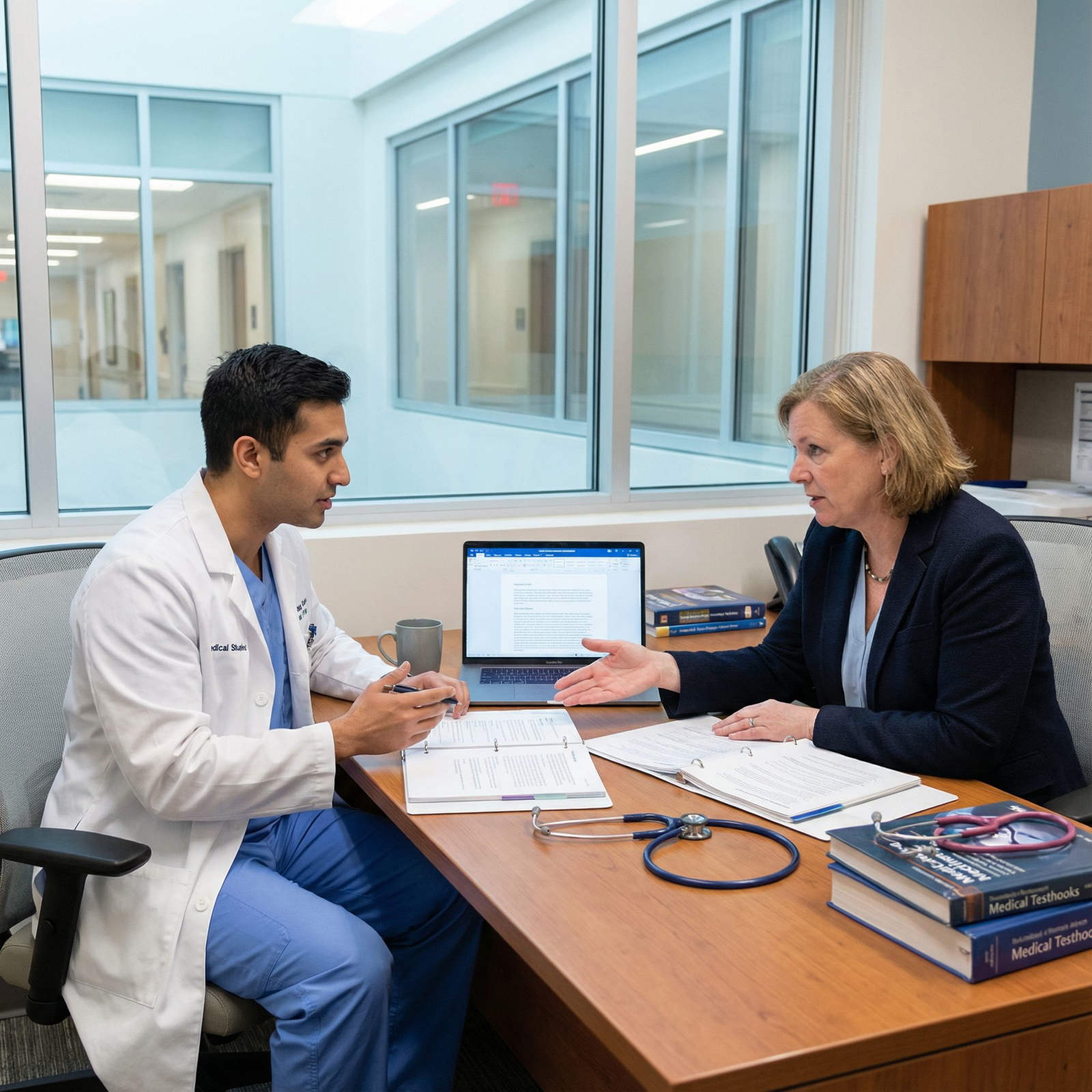
Understanding the Role of Letters of Recommendation in Pediatrics for US Citizen IMGs
For a US citizen IMG or American studying abroad, letters of recommendation (LORs) can make the critical difference between a successful pediatrics residency match and an application that struggles to get interviews. Programs know your school, grading systems, and clinical environment less well than they know US allopathic schools, so they lean heavily on residency letters of recommendation to understand your clinical performance, professionalism, and “fit” for pediatrics.
In pediatrics, where collaboration, communication, and compassion are core values, strong LORs can showcase qualities that test scores and transcripts cannot. This article will walk you step-by-step through how to get strong LORs as a US citizen IMG targeting a pediatrics residency, including who to ask for letters, how to prepare your letter writers, and how to maximize the impact of each letter.
What Pediatrics Programs Look for in Letters of Recommendation
Before you think about who to ask for letters, it helps to understand what pediatric program directors are looking for when they read them—especially for a US citizen IMG.
Key Competencies Highlighted in Strong Peds Letters
Most pediatrics programs value LORs that clearly speak to:
Clinical competence
- Ability to assess and manage common pediatric conditions
- Clear, concise presentations and documentation
- Clinical reasoning that’s appropriate for a junior trainee
Communication skills with children and families
- Comfort interacting with infants, toddlers, school-aged children, and adolescents
- Ability to explain complex medical concepts to parents at various health literacy levels
- Sensitivity in difficult conversations (e.g., bad news, chronic illness)
Teamwork and professionalism
- Reliability, punctuality, and follow-through
- Respectful interactions with nurses, allied health staff, and peers
- Openness to feedback and evidence of growth
Personal qualities suited to pediatrics
- Patience and empathy
- Warm bedside manner
- Enthusiasm for pediatrics and advocacy for children
Comparative strength
- Concrete statements such as “top 10% of students I have worked with in the last 5 years”
- Specific examples that show outstanding performance, not just generic praise
For a US citizen IMG, there is one more layer: program directors are often assessing your readiness to function in the US clinical environment—documentation style, familiarity with EMR, systems-based practice, and US team dynamics. Letters from US-based clinical experiences can be especially helpful here.
Who to Ask for Letters: Priorities for US Citizen IMGs in Pediatrics
Choosing who to ask for letters of recommendation may be the single most important decision you make in this process. As an American studying abroad, you must be strategic to counterbalance any uncertainty programs may have about your training environment.
1. Prioritize US Clinical Experience (Ideally Pediatrics)
For the peds match, most programs prefer at least two letters from US-based pediatricians who have directly supervised you. Ideal options:
- Pediatric inpatient attending (ward rotation, hospital pediatrics)
- Pediatric sub-internship (acting internship) attending
- Pediatric outpatient / continuity clinic preceptor
- Pediatric subspecialty attendings (e.g., NICU, PICU, pediatric cardiology, pediatric hematology-oncology)
If you completed an away rotation in the US or a visiting student learning opportunity (VSLO/VSAS), those letters are especially valuable. They:
- Directly compare you to US medical students
- Show you can function in a US hospital setting
- Often follow familiar formatting and language US PDs expect
Action step: As you plan your clinical schedule, aim for at least one, preferably two US pediatric rotations before applications open, with enough time for attendings to write letters.
2. Understand the Typical “Letter Mix” for Pediatrics
A strong, balanced set of letters for a pediatrics residency application as a US citizen IMG might look like:
- 1–2 letters from US pediatric attendings (core)
- 1 letter from another US clinical faculty member (internal medicine, family medicine, or a subspecialist with robust exposure to your work)
- Optional 1 letter from home-country pediatrician or research mentor, if they know you extremely well and can speak in detail about your performance
If you can only get one US pediatric letter, it’s still worth applying—but you should maximize its strength and ensure other letters demonstrate your adaptability to US-style training.
3. Academic Title vs. Relationship: What Matters More?
Programs care more about:
- How well the writer knows you
- How specifically they can comment on your performance
- Whether they can make comparative statements
than about an impressive title alone.
That said, for US citizen IMG applicants, it is helpful if at least one letter comes from:
- A program director or associate program director
- A clerkship director or site director
- A division chief in pediatrics
But do not sacrifice depth of knowledge for title. A detailed letter from a ward attending who directly supervised you and can tell stories about your work is usually more valuable than a generic letter from a department chair who barely remembers you.
4. When Non-Peds Letters Still Help Your Peds Application
Not all your clinical time will be pediatrics, especially if you’re an American studying abroad with limited US peds slots. Strong non-pediatric letters can still help if they:
- Are from US attendings
- Comment in detail on your clinical skills, professionalism, work ethic
- Explicitly mention that your performance would translate well to pediatrics
For example, a US internal medicine attending might write:
“Although this was an internal medicine rotation, I have no doubt that [Applicant] will excel in pediatrics residency given their compassionate communication style, meticulous follow-up, and strong team collaboration.”
These letters show you will be a solid resident, regardless of specialty.

How to Get Strong LORs: Building Relationships and Standing Out
Knowing how to get strong LORs is partly about timing, partly about performance, and heavily about intentional relationship-building—especially as a US citizen IMG who may only have a few opportunities to impress US faculty.
1. Start Early and Think Longitudinally
Don’t wait until the end of a rotation to think about letters. From Day 1:
- Introduce yourself clearly to attendings: where you study, your interest in pediatrics, and that you’re a US citizen IMG aiming for the peds match.
- Ask for feedback midway through the rotation and act on it.
- Take responsibility for following specific patients longitudinally.
Program directors and attendings are more likely to write strong letters if they see you grow and engage consistently.
2. Behaviors That Lead to Strong, Memorable Letters
On pediatric rotations (and all US-based rotations), try to:
Own your patients (within your role)
- Know your patients’ diagnoses, active problems, meds, and social situation
- Anticipate overnight events and follow up on labs, consults, and imaging
- Be the “go-to” person for updates on your patients
Communicate clearly with families
- Practice age-appropriate explanations to children
- Provide simple, respectful, and reassuring explanations to parents
- Demonstrate patience in answering questions—even repetitive ones
Be an excellent team member
- Arrive early, stay engaged through the day
- Help with notes, calls, discharges, and tasks without being asked twice
- Treat nurses, respiratory therapists, social workers, and others as partners
Show curiosity and initiative
- Read about your patients’ conditions and share relevant insights (briefly)
- Volunteer for presentations or teaching segments
- Ask thoughtful, not performative, questions on rounds
Demonstrate professionalism and reliability
- Respond promptly to emails and messages
- Handle mistakes honestly and with accountability
- Respect patient confidentiality meticulously
These behaviors give your attendings specific examples they can include in your residency letters of recommendation—examples that make your letter stand out from generic “hard-working and pleasant” comments.
3. Make Your Interest in Pediatrics Explicit
Part of how to get strong LOR is making sure your evaluator knows what specialty you’re pursuing and why. For pediatrics:
- Mention early on: “I’m planning to apply to pediatrics residency and would love feedback on how I’m doing and what to improve.”
- Show sustained interest in child health, growth/development, vaccines, and preventive care.
- If appropriate, share any prior pediatrics-related experience (camp counselor, tutoring kids, child advocacy projects).
When your attending knows your career goal, they can frame your performance specifically in terms of your potential as a future pediatric resident.
The Right Way to Ask for Letters (and What to Provide)
Knowing who to ask for letters is only half the battle. The way you ask often determines how strong and specific your letter will be.
1. Ask in Person Whenever Possible
Toward the end of the rotation—ideally in the last week—ask your potential writer in person:
“Dr. Smith, I’ve really valued this pediatric rotation and your teaching. I’m planning to apply to pediatrics residency this cycle. Would you feel comfortable writing me a strong letter of recommendation for my applications?”
Emphasizing the word “strong” gives them an opportunity to decline if they can’t support you enthusiastically. If someone hesitates:
- Thank them
- Do not push
- Ask someone else; a lukewarm letter can harm your application
If in-person is impossible (e.g., telehealth elective, schedule constraints), a direct, professional email is acceptable.
2. What to Send Your Letter Writer
Once they agree, follow up within 24 hours with a concise email that includes:
- Your CV (updated and polished)
- A brief personal statement or paragraph about your interest in pediatrics
- Your ERAS AAMC ID
- A summary of your work with them:
- Dates of rotation
- Type of rotation (peds inpatient, outpatient, NICU, etc.)
- Specific patients or projects you worked on that they might remember
- A bullet list of accomplishments from the rotation (e.g., presentations, QI project, notable feedback)
- Clear note about letter upload instructions (ERAS link, deadline)
Example email structure:
- Paragraph 1: Thank them again and express appreciation.
- Paragraph 2: Remind them of the rotation and your goals in pediatrics.
- Paragraph 3: Attach materials and state the deadline; offer to provide anything else they need.
3. Timing and Deadlines
For a typical September application submission:
- Ask for letters no later than July or early August
- Politely remind your writer 2–3 weeks before your deadline, if the letter is still pending
- Use respectful language in reminders:
“I know this is a very busy time of year; I wanted to gently check whether you might be able to submit my pediatrics residency letter by [date]. I truly appreciate your time and support.”
Never send aggressive or guilt-inducing emails; your professionalism here also reflects on you.

Special Considerations for US Citizen IMGs & American Students Studying Abroad
As a US citizen IMG, you face some unique dynamics in the peds match that affect your LOR strategy.
1. Addressing the “Unknown School” Factor
Many pediatric program directors are not deeply familiar with international schools, even those that commonly enroll Americans studying abroad. LORs help bridge that gap when they:
Come from US faculty who regularly work with US MD/DO students
Explicitly compare you to US students:
“I work with students from [US medical schools] every year; [Applicant] performed on par with, and in some domains better than, many of them.”
Comment on:
- Your adaptability to US hospital culture and workflows
- Your communication skills with multidisciplinary teams
- Your mastery of clinical English and documentation standards
When you ask for letters, it’s appropriate to politely mention this context:
“As a US citizen IMG, letters that comment on how I compare with US students and my readiness for US residency are particularly helpful.”
2. Using Home-Country or Non-US Letters Wisely
You may have strong relationships with pediatric attendings at your international school or clinical sites abroad. Those letters can still add value if:
- The writer knows you very well and can provide vivid, detailed examples
- They can speak to your long-term growth, advocacy, or leadership
- They explain the rigor of your training environment, if applicable
However, do not rely only on non-US letters. For most pediatrics programs, seeing at least one US-based pediatrics letter is critical to feel comfortable ranking you.
3. Overcoming Limited US Pediatrics Exposure
If securing US pediatric rotations has been difficult:
Use any US clinical rotations (internal medicine, family medicine, emergency medicine) to get robust, detailed letters that:
- Emphasize your patient-centered communication
- Highlight your suitability for a primary care–oriented, team-based specialty
- Explicitly support your pursuit of pediatrics
In your personal statement and interviews, explain:
- Why pediatrics is your clear first choice
- The constraints that limited US peds rotations (e.g., visa/logistics, pandemic-era restrictions)
- How other rotations still prepared you for pediatric training
4. Aligning Letters with Your Application Story
Your letters should reinforce a cohesive narrative about you as a future pediatrician. Across all letters, you ideally want consistent themes:
- Commitment to child and family-centered care
- Strong work ethic and reliability
- Kindness and professionalism
- Ability to thrive in team-based environments
Share your peds-focused personal statement or at least a summary of your interest in pediatrics with all your letter writers so they can echo and support your main story.
Practical Examples: Strong vs. Weak LOR Content
To understand how letters can help or hurt a US citizen IMG pediatrics application, consider these contrasting examples.
Example 1: Generic vs. Specific Praise
Weak content:
“[Applicant] was a pleasure to work with. They were hard-working, punctual, and got along well with everyone. I believe they will be a good resident in any specialty they choose.”
Stronger content:
“[Applicant] consistently arrived early to pre-round on our pediatric inpatients, often knowing details about overnight changes before the rest of the team. One morning, they recognized early respiratory distress in a toddler with bronchiolitis and promptly alerted the intern, leading to rapid intervention and escalation of care. Their vigilance and clinical insight are what I expect from our strongest sub-interns.”
Example 2: Addressing IMG Status Positively
Weak content:
“[Applicant] is an international medical graduate and did well in our system.”
Stronger content:
“As an American citizen who completed medical school abroad, [Applicant] quickly adapted to our US pediatric ward environment. I regularly work with students from multiple US medical schools; [Applicant]’s clinical reasoning, documentation, and patient communication were fully on par with strong US MD students. I have no hesitation recommending them for pediatrics residency training in the United States.”
Example 3: Highlighting Fit for Pediatrics
Weak content:
“[Applicant] is interested in pediatrics and I think they will do fine.”
Stronger content:
“Pediatrics is an excellent fit for [Applicant]. I watched them explain asthma inhaler use to a 7-year-old and his parents using age-appropriate language and visual aids they created themselves. Their patience and genuine warmth with children and families will make them a valued member of any pediatrics residency.”
These examples show why it’s so important that your letter writers know your specific strengths and can speak in detail, not just repeat generic compliments.
Frequently Asked Questions (FAQ)
1. How many pediatrics-specific letters do I need as a US citizen IMG?
Aim for at least two pediatrics-specific letters, with at least one from a US pediatrician who supervised you in a clinical setting. If you cannot get two US peds letters, combine:
- 1 US pediatric letter
- 1 US non-peds letter (IM/FM/EM) that strongly endorses your suitability for pediatrics
- 1 additional letter (US or international) from someone who knows you very well
More than 3–4 letters usually does not add value; focus on quality, not quantity.
2. Does it matter if the letter is from a community vs. academic pediatrician?
Both can be excellent. What matters more is:
- How well they know you
- How directly they supervised your clinical work
- How specifically they can comment on your performance
However, if you can, try to include at least one letter from an academic setting (teaching hospital, residency-affiliated site), since those writers are familiar with residency expectations and can make strong comparative statements.
3. Should I waive my right to see my letters?
Yes. In ERAS, you should waive your right to view your letters. Program directors expect this; it signals that:
- The letter is more likely to be candid and honest
- You trust your writer Non-waived letters can raise questions about transparency and may be given less weight.
4. I’m an American studying abroad with only one US rotation. Is it still worth applying to pediatrics?
Yes, it can still be worth applying—especially if:
- You obtain a strong US letter from that rotation
- You have excellent evaluations from your international pediatric faculty
- Your personal statement and CV clearly support a pediatrics-focused path
In this situation:
- Be strategic in your program list (include a good mix of programs, including those historically friendly to IMGs)
- Emphasize adaptability, strong communication skills, and team-based strengths
- Ensure each residency letter of recommendation is as detailed and supportive as possible
Strong, thoughtfully chosen and well-supported letters of recommendation can significantly elevate your pediatrics residency application as a US citizen IMG. By understanding who to ask for letters, how to get strong LOR, and how to prepare your writers effectively, you can transform your clinical hard work into compelling endorsements that resonate with pediatric program directors and help you succeed in the peds match.