Using Relationships to Your Advantage: Building LORs for Residency Success
Introduction: Why Relationships Matter in the Residency Application
Securing a residency position is one of the most pivotal milestones in your medical training. Your residency application is evaluated on many objective metrics—USMLE/COMLEX scores, clerkship grades, research, and extracurriculars—but Programs Directors consistently report that Letters of Recommendation (LORs) are among the most influential components of the application.
Unlike test scores, Letters of Recommendation offer a narrative: they tell programs who you are as a clinician, colleague, and future resident. They demonstrate how you function on the wards, how you respond under pressure, how you interact with patients, and how you contribute to a team.
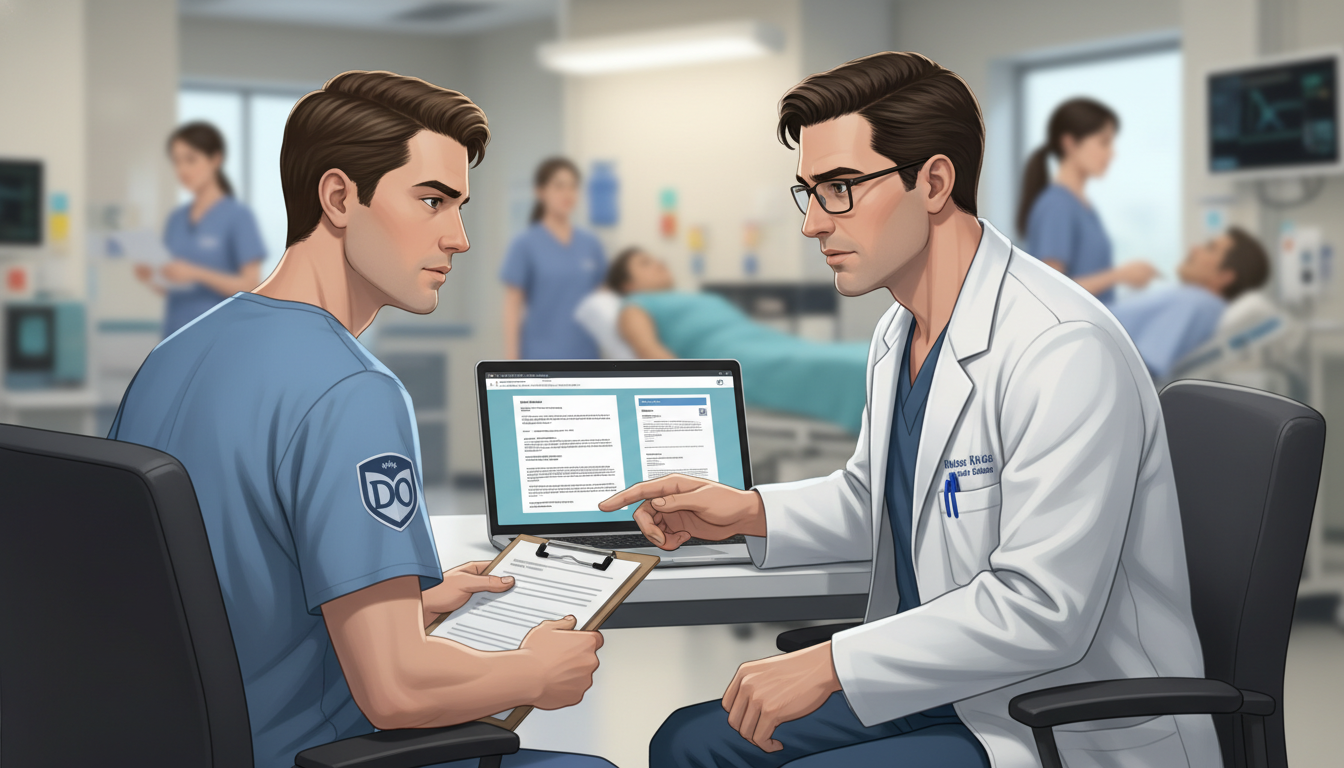
The key to strong LORs is not last-minute scrambling at the end of your clinical years. It is intentional relationship-building throughout medical school—with attending physicians, mentors, research supervisors, and educational leaders who can authentically and enthusiastically advocate for you.
This guide will walk you through:
- What makes a strong residency Letter of Recommendation
- How to build meaningful mentoring and professional relationships
- When and how to ask for LORs strategically
- What materials to provide recommenders to help them write powerful letters
- Practical tips to strengthen your overall professional development and mentorship network
All with one goal: helping you build the kind of LORs that open doors and elevate your residency application.
Understanding Residency Letters of Recommendation
What Are Residency LORs?
Letters of Recommendation for residency are formal, confidential evaluations written by individuals who have directly observed your clinical performance, professional behavior, academic ability, or research productivity. In ERAS and similar application systems, these letters are submitted directly by the writer and are not intended to be edited by you.
Common LOR writers include:
- Attending physicians who supervised you in clinical rotations
- Clerkship directors or course directors
- Research mentors or principal investigators (PIs)
- Longitudinal mentors or advisors who know you well over time
- Program directors from sub-internships or away rotations
Why Are LORs So Important in Residency Selection?
Program directors rely on LORs to answer questions that transcripts and score reports cannot:
- How do you function on a team?
- Are you teachable, reliable, and safe?
- Do you show initiative and ownership of patient care?
- How do you handle feedback, stress, and uncertainty?
- Are you someone current residents will want to work with at 3 a.m.?
Surveys from the National Resident Matching Program (NRMP) consistently rank Letters of Recommendation in the specialty among the top factors in deciding whom to interview and how to rank applicants.
A strong letter will:
- Provide specific examples of your performance (not just generic praise)
- Compare you to your peers (e.g., “top 10% of students I’ve worked with in 10 years”)
- Address your clinical skills, professionalism, communication, and work ethic
- Show the writer knows you well enough to speak to your growth and potential
- Align with your stated specialty choice and personal statement
A weak or generic letter—“pleasant to work with,” “completed tasks as expected,” with no specifics—can hurt you by comparison, even if it’s not overtly negative.
Building Relationships for Strong LORs: Foundations for Success
Strong Letters of Recommendation are the visible outcome of months to years of consistent, professional relationship-building. You cannot fabricate this process in a few weeks before ERAS opens.
Step 1: Identify Key Individuals Early in Your Medical Training
Start by mapping out who might become strong advocates for you. Think strategically across your medical training:
Attending Physicians in Your Chosen Specialty
These are often your most impactful residency LORs, especially for competitive fields.
- Attendings you worked with closely on core rotations
- Supervisors on sub-internships (sub-Is) or acting internships
- Faculty from away rotations (visiting student rotations)
They can credibly comment on:
- Your clinical reasoning and patient care
- Your ability to function at an intern level
- Your fit for the specialty and residency culture
Longitudinal Mentors and Academic Advisors
These mentors may not all be in your chosen specialty but can still be important for:
- Character, professionalism, resilience, and leadership
- Longitudinal growth during your medical training
- Broad evaluation of your readiness for residency
Examples:
- College mentor or advisory dean
- Longitudinal small-group facilitator
- Faculty sponsor of a longitudinal project or program
Research Supervisors
Research mentors can be especially valuable if you are applying to an academic or research-oriented program or a competitive specialty.
They can speak to:
- Analytical and critical thinking skills
- Persistence, initiative, and independence
- Productivity: abstracts, posters, publications
- Collaboration and ability to work in a team or lab
Educational Leaders (Clerkship Directors, Course Directors)
These individuals may have observed you in multiple settings or have access to comparative data:
- They can benchmark you against your class
- Their titles often carry weight with program directors
- They may be familiar with residency selection expectations
Action Step:
Create a running list or spreadsheet starting in your clinical years:
- Name, role, specialty
- Where you worked with them (rotation, project, etc.)
- Specific moments where you made a positive impression
Use this to guide where you invest in relationship-building.
Step 2: Nurture Relationships Early and Consistently
Relationships that lead to strong LORs are built in everyday interactions. The goal is not to “network” superficially, but to demonstrate reliability, curiosity, and professional growth over time.
During Pre-Clinical Years
Even before clinical rotations, you can:
Be engaged in small groups and labs
- Ask thoughtful questions
- Come prepared and participate actively
Seek early mentors
- Approach lecturers whose teaching style you appreciated
- Join interest groups and connect with faculty advisors
Get involved in research or longitudinal projects
- Show up consistently
- Take ownership of tasks beyond minimal requirements
During Clinical Rotations
This is your primary opportunity to build relationships that turn into residency-focused LORs.
To stand out positively:
Be reliable and prepared
- Know your patients thoroughly
- Pre-read common conditions and guidelines
Show initiative, but be respectful
- Volunteer to present a short topic
- Offer to follow up on pending labs, consults, or discharge planning
Demonstrate teachability
- Ask for feedback early (“Is there one thing I could do to be more helpful on rounds?”)
- Implement the feedback and circle back to show improvement
Communicate professionally
- Be on time, responsive, and organized
- Be kind and respectful to nurses, staff, and peers
Over days to weeks, these behaviors build a picture of you as someone they would trust as a resident—and that becomes the core of your Letter of Recommendation.

Step 3: Communicate Effectively and Professionally
Strong mentorship and strong letters both depend on clear, respectful communication.
Maintain Contact with Potential Recommenders
Instead of disappearing after a rotation:
Send a brief thank-you email after the rotation ends:
- Mention specific teaching points you appreciated
- Express interest in staying connected
Follow up periodically:
- Share updates: “I’ve decided to apply to internal medicine and am working on a cardiology project.”
- Ask for advice: “Do you think a sub-I at your institution would be beneficial?”
This keeps you on their radar and builds a longitudinal relationship that feels natural when you later ask for a Letter of Recommendation.
Be Respectful of Their Time
Faculty are often balancing clinical duties, teaching, research, and administrative work.
- When requesting meetings, be flexible about times
- Come prepared with specific questions or topics
- Keep emails concise, with clear subject lines (e.g., “Request for residency LOR – [Your Name]”)
Professional, organized communication signals that you will be the same as a resident.
Step 4: Intentionally Showcase Your Skills and Professional Growth
Your goal is not to “perform” but to ensure your potential recommenders see the breadth of what you bring.
Take Ownership Where Appropriate
Within the scope of your role as a student:
- Know every detail of your patients
- Anticipate next steps in patient care
- Volunteer to draft notes, orders (for review), or discharge instructions
- Offer to prepare a brief teaching presentation for the team
Ownership and initiative are key traits program directors seek; when your recommenders see these behaviors, they can credibly highlight them in your LOR.
Ask for Real Feedback and Use It
Specific, frequent feedback does two things:
- It accelerates your growth.
- It gives your mentors concrete examples of how you improve over time.
You might say:
“Dr. Lee, I’m working on improving my presentations. Could you let me know one specific thing I did well today and one thing I could improve for tomorrow?”
Then, actually incorporate that feedback and ask:
“I tried to be more concise as you suggested—was that better today?”
This helps your future recommender write lines like, “She consistently sought feedback and demonstrated noticeable improvement in her clinical presentations over just a few weeks.”
Engage in Meaningful Activities Outside the Wards
These can generate powerful anecdotes for LORs:
- Long-term community service projects
- Student leadership roles (curriculum committees, interest groups)
- Quality improvement (QI) initiatives
- Teaching or peer-tutoring roles
Keep your mentors updated on these activities so they can mention them in letters, showcasing your broader professional development.
Strategically Requesting Letters of Recommendation
You’ve identified mentors, built relationships, and demonstrated your strengths. The next step is asking for Letters in a way that sets both you and your recommenders up for success.
When to Ask for a Letter
Timing is critical for strong, specific letters.
Ideal Timing
Right at the end of a strong rotation
When your performance is fresh and positive in the faculty member’s mind.At least 4–6 weeks before the ERAS submission deadline
Many institutions have internal deadlines even earlier; check with your school.After you’ve clarified your specialty choice
So your recommender can tailor the letter to your Residency Application goals.
If you are unsure about a faculty member’s impression of you, you can ask:
“Dr. Patel, I really enjoyed working with you this month. Do you feel you know me well enough to write a strong letter of recommendation for my internal medicine residency applications?”
Including the word “strong” gives them an opening to decline if they are not the best choice.
How to Ask for a Letter of Recommendation
Whenever possible, ask in person or via video, then follow up by email. This allows for a more genuine conversation about your goals.
A sample in-person or email script:
“Dr. [Name], I’m applying for [specialty] residency this cycle, and I truly appreciated working with you on [specific rotation or project]. I felt I learned a great deal from your teaching on [specific example].
I was wondering if you would feel comfortable writing a strong letter of recommendation supporting my application. I believe your perspective on my clinical performance and growth would be very valuable to programs.”
If they agree, respond with gratitude and immediately ask what they need from you.
What Materials to Provide Your Recommender
Make it as easy as possible for your letter writer to craft a detailed, personalized letter.
Provide:
- Current CV or resume
- Highlight leadership, research, teaching, and service
- Draft of your personal statement
- So they can align their letter with your narrative and specialty choice
- Brief “brag sheet” or summary document (1–2 pages)
- Key experiences with that faculty member
- Specific patients or cases you worked on together (de-identified)
- Skills or strengths you hope they can comment on (e.g., teamwork, communication, resilience)
- List of programs/specialty focus
- If you have a particular interest (academic, community, global health, etc.), note this
- Clear instructions and deadlines
- ERAS letter upload instructions or links
- Hard deadlines plus a “soft” earlier date to give them breathing room
This shows professionalism and helps your recommender produce a richer, more compelling letter.
Following Up and Maintaining Professionalism
If the deadline is approaching and the letter is not yet submitted:
Send a polite reminder about 1–2 weeks before:
“Dear Dr. [Name], I hope you’re doing well. I wanted to gently remind you that the ERAS deadline for letters of recommendation is [date]. Please let me know if there’s any additional information I can provide to help. Thank you again for your support.”
Always thank them after submission:
- Send a sincere email
- Consider a handwritten thank-you note
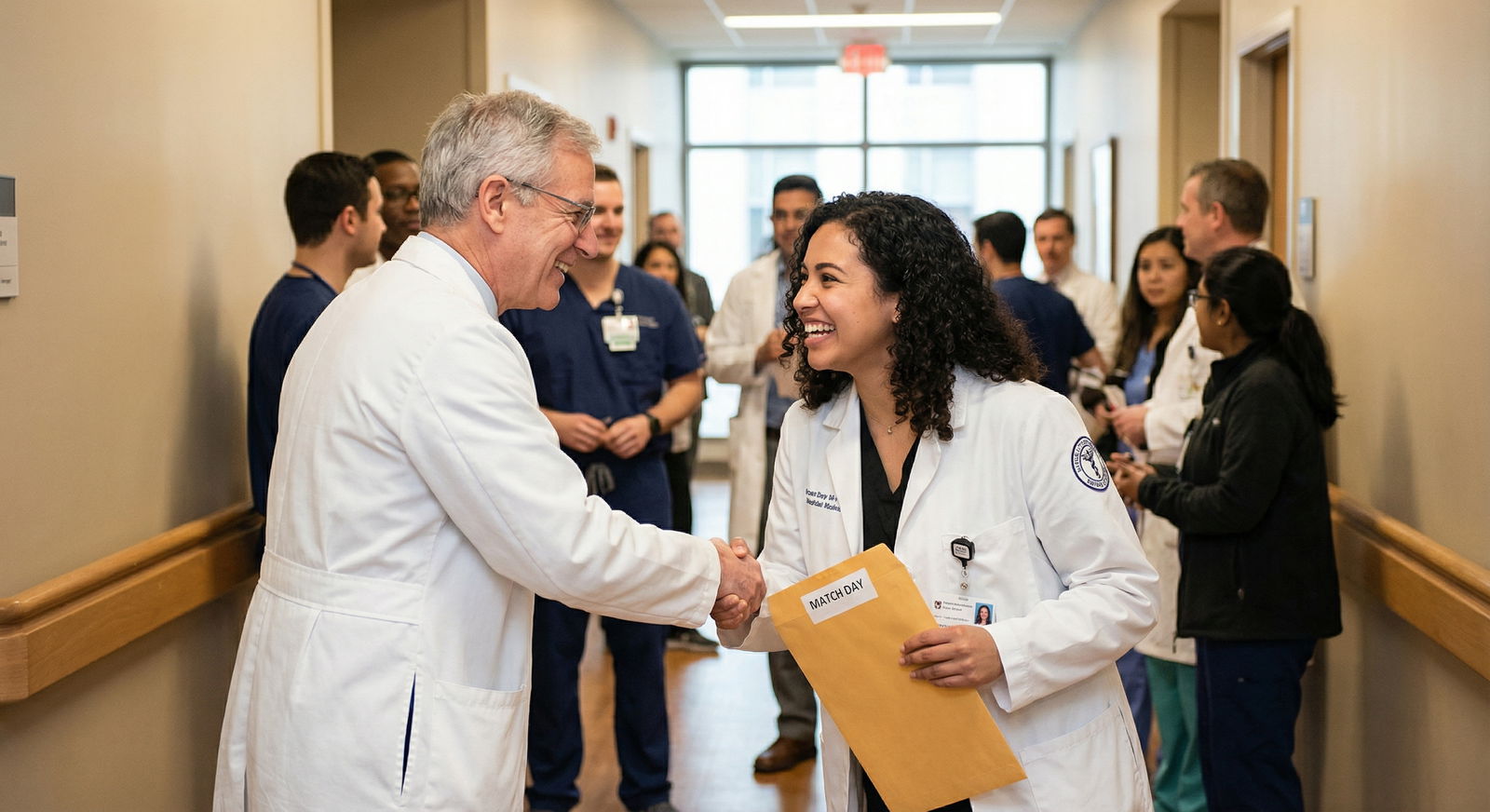
- Update them on your match outcome later—mentors appreciate hearing your success
These small gestures reinforce your professional relationship beyond the single Letter of Recommendation.
Integrating LOR Strategy with Long-Term Mentorship and Professional Development
Building strong Letters of Recommendation should not be an isolated task; it should integrate seamlessly with your overall professional development and mentorship strategy.
Developing a Mentorship Network, Not Just Single Mentors
Relying on one mentor is risky. Instead, aim for a mentorship team:
- A clinical mentor in your chosen specialty
- A research mentor (especially for academic careers)
- A longitudinal professional mentor (e.g., advisory dean)
- Possibly a peer mentor (senior resident or fellow who matched recently)
Each offers different perspectives and opportunities. Together, they can:
- Guide your specialty decision-making
- Help you select rotations and research aligned with your goals
- Provide honest feedback and advocacy
- Eventually contribute to a well-rounded set of LORs
Aligning Experiences with Your Long-Term Career Goals
Think beyond just matching—consider what kind of physician you want to become:
- Academic educator? Seek teaching roles and academic mentors.
- Clinician-researcher? Prioritize research involvement early.
- Community-focused clinician? Engage in community outreach and population health projects.
Then, choose mentors and experiences accordingly. When those mentors write your LORs, they can speak to a coherent story of your professional trajectory, which is highly compelling to residency selection committees.
FAQs: Letters of Recommendation and Residency Applications
1. How many Letters of Recommendation do I need for my residency application?
Most residency programs require 3–4 Letters of Recommendation. A common strategy is:
- 2–3 letters from faculty in your chosen specialty, ideally attendings who supervised you clinically
- 1 additional letter from a research mentor, non-specialty clinical supervisor, or longitudinal mentor who knows you well
Always check individual program requirements, as some limit the number of letters they will review.
2. How early should I start building relationships for LORs?
Begin as early as possible, ideally from your first year of medical school:
- Pre-clinical years: identify potential mentors, get involved in research or longitudinal programs.
- Clinical years: be intentional on every rotation—each attending could be a potential recommender.
- By the end of third year: aim to have at least 2–3 strong potential letter writers identified, especially in or related to your intended specialty.
3. Can I use a letter from someone outside my chosen specialty?
Yes—if they know you well and can provide a strong, detailed letter. For example:
- A research PI in another specialty who supervised you for several years
- A medicine attending for a student applying to neurology, if they can speak to your clinical excellence
- A longitudinal mentor who can discuss your professionalism and leadership
However, most programs still want at least 1–2 letters from within the specialty to which you are applying.
4. What if I don’t feel comfortable asking someone for a letter?
If you feel hesitant:
- Reflect on why. If you’re unsure they will write a strong letter, it may be better to choose someone else.
- Practice your “ask” with a friend, advisor, or mentor.
- Frame it as seeking honest input:
“Do you feel you know me well enough to write a strong letter of recommendation for my [specialty] residency application?”
Remember: faculty are accustomed to these requests. A polite, professional approach is entirely appropriate and expected.
5. How should I follow up after my LORs are submitted and after Match Day?
After the letter is submitted:
- Send a heartfelt thank-you email or handwritten note.
- Later in the season, consider a brief update: “I received several interview invitations at programs I’m excited about—thank you again for your support.”
After Match Day:
- Inform your letter writers where you matched.
- Express appreciation for the role they played in your success.
Maintaining these relationships benefits you far beyond residency applications—these mentors may later support you with fellowship letters, job references, or career advice.
By intentionally cultivating mentorship, demonstrating your skills and professionalism, and strategically requesting Letters of Recommendation, you are not only strengthening your residency application—you are also building the foundation of a lifelong professional network. These relationships will support your growth, open doors, and help shape the physician you become long after Match Day.