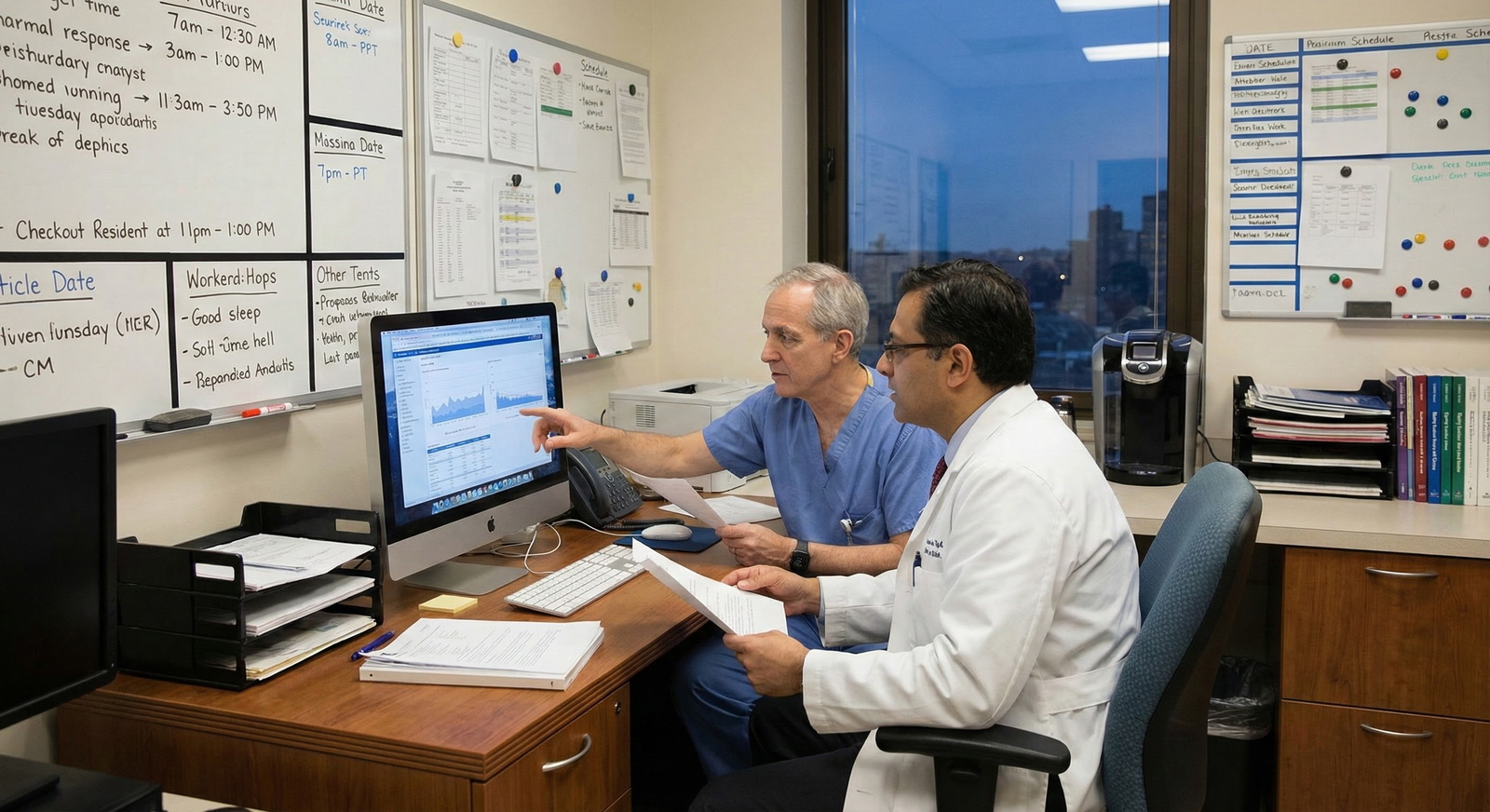
Letters of recommendation in clinical informatics carry unusual weight. Because the specialty is still relatively small and highly interdisciplinary, programs rely heavily on your recommenders to validate both your technical aptitude and your ability to function as a clinician-leader at the interface of medicine and technology.
This guide walks you step-by-step through how to get strong LORs for a clinical informatics fellowship, who to ask for letters, how to support your letter writers, and how these letters fit into your broader health IT training story.
Understanding the Role of Letters of Recommendation in Clinical Informatics
Letters of recommendation for a clinical informatics fellowship are different from traditional residency letters in several ways. To use them strategically, you need to understand what programs look for and why.
Why LORs Matter More in Clinical Informatics
Clinical informatics is:
- Small and interconnected – faculty often know each other
- Highly heterogeneous – fellows come from many primary specialties
- Less standardized – applicants have varied backgrounds (clinical, research, IT, industry)
Because of this, strong residency letters of recommendation alone are not enough. Programs want targeted commentary on:
- Your ability to bridge clinical and technical domains
- Your potential to lead and influence change
- Your maturity, communication skills, and resilience
- Your genuine commitment to informatics, not just “interest in computers”
A strong clinical informatics letter often answers the implicit question:
“If I invest two years training this person in health IT, will they make meaningful contributions to patient care, systems improvement, and the informatics community?”
What Programs Want LORs to Address
Well-written letters tend to cover several core dimensions:
Clinical competence and professionalism
- Safe, reliable, and trustworthy clinician
- Handles complexity and uncertainty thoughtfully
- Respected by nurses, peers, and attending physicians
Informatics mindset
- Thinks in systems and workflows, not just individual patients
- Notices EHR-related pain points and proposes solutions
- Shows curiosity about data, interoperability, decision support, and usability
Collaboration and communication
- Works effectively with IT, analysts, and operations leaders
- Communicates clearly with both technical and non-technical stakeholders
- Handles conflict and change management constructively
Initiative and project execution
- Has led or contributed significantly to at least one informatics-related project
- Sees projects through from problem definition to evaluation
- Documents, presents, and disseminates work when possible
Trajectory and fit for health IT training
- Clear growth trajectory in informatics
- Strong reason to pursue formal training now
- Alignment with core values of safety, quality, and equity
When you think about how to get strong LOR for informatics, frame your experiences and relationships around these domains.
Who to Ask for Letters: Building a Balanced Informatics Portfolio
Choosing who to ask for letters is one of the most strategic decisions you’ll make. Most clinical informatics fellowship programs require 3 letters (sometimes 4):
- 1 from your residency program director (PD) or department chair
- 1–2 from clinical faculty who know you well
- 1 from someone who can specifically speak to your informatics or health IT work
The strongest packets balance clinical credibility and informatics credibility.
Essential Letter #1: Program Director or Chair
Most ACGME-accredited fellowships require a letter from:
- Your residency program director, or
- Your department chair, if you’ve been in practice for some time
This letter anchors your application by answering:
- Are you a safe, competent physician?
- Did you complete training in good standing?
- Are there professionalism or remediation concerns?
- Would they hire you again in their system?
Even if your PD doesn’t know your informatics work in depth, their endorsement validates your overall clinical foundation.
Action steps:
- Ask your PD early (3–6 months before deadlines)
- Provide a brief summary of your informatics activities to help them connect the dots
- Offer to meet for 15–20 minutes so they can update their perspective on your current work and goals
Essential Letter #2: Clinical Faculty with Deep Exposure
You need at least one letter from someone who:
- Has seen your day-to-day clinical work closely
- Can comment on your bedside manner, team functioning, and reliability
- Has observed how you think through complex clinical decisions
Examples:
- Residency rotation director who supervised you multiple months
- ICU, ED, or hospitalist attending who saw you manage complex cases
- Outpatient continuity clinic preceptor over several years
For clinical informatics, this letter is strongest if it also highlights:
- How you use the EHR thoughtfully (documentation, order sets, decision support)
- Your role in identifying workflow problems and suggesting improvements
- Examples where you used data to understand or improve care
If you’ve worked on informatics projects with this attending (e.g., revamping a notes template, evaluating an order set), that can be ideal.
Essential Letter #3: Informatics or Health IT Mentor
This is often the most important differentiating letter for an informatics fellowship.
Ideal letter writers include:
- Chief Medical Information Officer (CMIO)
- Associate CMIO / Medical Director of Informatics
- Clinical informatics fellowship program director or faculty
- Physician lead for EHR implementation, optimization, or decision support
- Research mentor in informatics, data science, or quality improvement with strong informatics content
If your institution doesn’t have a formal informatics department, consider:
- Physician champion for EPIC/Cerner/other EHR projects
- Leader in quality & safety with significant data/informatics involvement
- Collaborator from a health system innovation, analytics, or digital health office
This letter should:
- Confirm your sustained interest and contributions in informatics
- Describe specific projects you worked on and your exact role
- Compare you to others who’ve gone into informatics training
- Speak directly to your potential for leadership in the field
If you lack a clear informatics mentor:
Intentionally join a project under informatics leadership 6–12 months before applications: order set review workgroup, documentation burden task force, CDS optimization committee, analytics or registry project, etc.

When and How to Ask for Strong Letters
Knowing who to ask for letters is only half the challenge. The way you request them can significantly influence the final quality.
Ask for a “Strong, Detailed” Letter
Your wording matters. Instead of:
“Could you write me a letter of recommendation?”
Use something like:
“I’m applying to clinical informatics fellowships this cycle and was hoping you might be able to write a strong, detailed letter of recommendation on my behalf. Do you feel you know my work well enough to do that?”
This phrasing:
- Signals that program directors are looking for substantive letters
- Gives the faculty member a chance to decline if they cannot be strongly supportive
- Encourages them to include specific examples rather than generic praise
If someone hesitates, says they are too busy, or seems unsure, thank them and ask someone else. A lukewarm letter is worse than no letter.
Timeline: Start Early, Plan Backwards
Most clinical informatics fellowship deadlines fall between July and October, depending on the institution and whether they participate in ERAS.
Recommended timeline:
- 9–12 months before:
- Identify potential letter writers
- Deepen participation in informatics projects with them
- 4–6 months before:
- Confirm your letter writers
- Share your CV, draft personal statement, and project summary
- 2–3 months before:
- Send a polite reminder with deadlines and submission instructions
- 2 weeks before deadline:
- Final reminder, offering to answer any last questions
- After submission:
- Send a sincere thank-you note and update them on your progress
Faculty in informatics and leadership roles are often overloaded with clinical, IT, and administrative work. Starting early is one of the easiest ways to improve letter quality.
Providing a Helpful “Letter Packet”
Think of yourself as a “project manager” for your own letters. Create a concise packet for each writer that includes:
Updated CV
- Highlight informatics-related roles, QI projects, analytics work, teaching about the EHR, etc.
Draft personal statement
- Emphasizes why clinical informatics, your career goals, and key experiences
- Helps align your letters with your narrative
1–2 page “Informatics Portfolio” summary
- Project title and brief description
- Your role (define clearly: lead, colead, analyst, subject matter expert, etc.)
- Tools used (EHR, SQL, dashboards, registries, CDS tools, etc.)
- Outcomes or impact (process changes, metrics, publications, presentations)
List of programs you’re applying to (optional)
- If you have a top few, you can mention them “for context”
Specific aspects they might emphasize
- “You’ve seen my work on CDS and order set redesign; programs would benefit from understanding my role in multidisciplinary teams and my approach to change management.”
Many faculty appreciate when you include 3–5 bullet points of things you’d be grateful if they commented on, especially if those reflect unique interactions they’ve had with you.
Crafting Content Your Recommenders Can Use
While you will not and should not write your own letters, you can heavily influence the substance by providing rich, well-organized background.
Defining Your “Informatics Brand” for Letter Writers
A coherent application tells the same story from multiple angles. Decide what 2–3 themes you want your recommenders to reinforce. Examples:
- “Clinician who sees patterns in workflows and designs pragmatic solutions”
- “Data-driven quality improver who uses analytics to drive safer care”
- “Bridge between clinical teams and IT, with strong communication skills”
- “Early-career leader in EHR optimization and physician well-being”
Share these themes with your letter writers, e.g.:
“I’m hoping my application highlights my ability to serve as a bridge between frontline clinicians and IT analysts, especially in CDS and clinical workflow projects. You’ve seen me in that role during the sepsis alert redesign initiative. If you’re comfortable, mentioning specific examples of this would really help programs understand how I work.”
Turning Projects into Letter-Friendly Narratives
For each major project, outline the story in a way that’s easy for your writer to adapt:
- Context: What was the problem? (e.g., alert fatigue, duplicate orders, documentation burden)
- Stakeholders: Which teams were involved?
- Your role: What exactly did you do? (analytics, workflow mapping, build testing, training, implementation)
- Challenges: What obstacles did you help navigate?
- Impact: What changed? (hard metrics, softer outcomes, or lessons learned)
Example (what you share with the writer):
Sepsis Alert Optimization Project: During my PGY-3 year, I joined the sepsis CDS workgroup led by Dr. Lee (Associate CMIO). I conducted chart reviews on 100 false-positive alerts and presented workflow maps of ED triage. I proposed adjusting SIRS-based criteria and adding lactate ordering patterns, and helped design the provider-facing alert text. Following implementation, the alert firing rate decreased by 35% while sensitivity for ICU transfer within 24 hours remained stable. This was presented at the hospital quality council and at the state informatics meeting.
A faculty member can transform that into a powerful paragraph with real credibility.

Common Pitfalls and How to Avoid Them
Many otherwise strong applicants weaken their applications through preventable LOR mistakes. Being aware of these issues will help you avoid them.
Pitfall 1: Letters from “Big Names” Who Don’t Know You
In informatics, prestige of the letter writer matters far less than the depth of what they say.
A well-known CMIO who barely knows you may produce:
- Generic praise (“hardworking,” “smart,” “a pleasure to work with”)
- No specific examples
- No comparison to peers
Programs quickly recognize these as “courtesy letters.”
It is better to have:
- A detailed, example-rich letter from a local informatics attending
- A clear endorsement from a mid-level hospital leader who worked closely with you
Ask yourself: Can this person describe things I actually did, in concrete detail?
Pitfall 2: Overweighting Pure Research Letters
Clinical informatics programs appreciate scholarship, but they are not exclusively research fellowships. A letter that exclusively describes:
- Manuscript writing
- Data analysis skills outside health care delivery
- Lab-based work with minimal clinical integration
…may not strongly support your fit unless clearly anchored in health IT training goals and clinical relevance.
If you have a pure data science or bench research mentor writing for you, ensure they can speak to:
- How your work translates to real-world clinical systems
- Your teamwork, communication, and project leadership
- Your curiosity about informatics beyond statistical methods
Pitfall 3: Ignoring Weak or Problematic Evaluations
If there were documented issues in residency (professionalism, remediation, failing a rotation) that your PD’s letter must reference, do not ignore them.
Instead:
- Address them honestly in your personal statement
- Demonstrate insight and growth
- Ask a trusted mentor to explicitly describe your improvement
Programs value trajectory and self-awareness. Multiple letters that show progression and current reliability can soften earlier concerns.
Pitfall 4: Last-Minute or Disorganized Requests
Rushed letters often:
- Arrive late or after deadlines
- Are shorter and more generic
- Omit critical informatics achievements
Prevent this by:
- Asking early
- Providing complete supporting materials in one organized packet
- Sending polite reminders at reasonable intervals
Integrating LORs into a Cohesive Informatics Application
Letters don’t stand alone. They reinforce or contradict the message of your CV, personal statement, and interviews.
Aligning Letters with Your Overall Narrative
Think of your application as telling one story from multiple vantage points:
- Your personal statement: Why clinical informatics, why now, and where you’re headed
- CV: Evidence of sustained interest and contributions
- Letters: External validation of your potential and character
Coordinate with your letter writers:
- Share the aspects you emphasize in your statement
- Make sure at least one letter robustly covers each of:
- Clinical competence and teamwork
- Concrete informatics work and project execution
- Leadership and potential for impact
Highlighting Letters During Interviews
You can reference your letters strategically when answering interview questions:
- “Dr. Patel, my ICU attending, saw how I identified EHR-related barriers to timely antibiotics; she wrote about one case that really sparked my interest in informatics.”
- “As my CMIO mentor described in his letter, our order set redesign work showed me the importance of understanding both clinical nuance and build constraints.”
This signals authenticity and coherence: your verbal story matches what programs read.
After the Match: Maintaining Relationships
Even after you match into a clinical informatics fellowship, your letter writers remain part of your long-term network:
- They may collaborate with you on multisite projects
- They can help you navigate your early career as an informatics physician
- They may serve as references for faculty or leadership roles later
Maintain connections by:
- Sending an update email when you match
- Sharing milestones (presentations, publications, leadership roles)
- Offering to involve them in future work
Frequently Asked Questions (FAQ)
1. How many letters of recommendation do clinical informatics fellowships usually require?
Most programs request three letters, though a few may allow or encourage a fourth. Typically they want:
- One from your residency program director or department chair
- One or two from clinicians who can speak to your clinical performance
- At least one that clearly addresses your informatics or health IT experience
Always check each program’s specific requirements, especially if they use ERAS versus institutional portals.
2. What if my institution doesn’t have a formal informatics department or CMIO?
You can still obtain strong informatics letters by:
- Working with physicians who are EHR champions or leaders in quality, safety, or analytics
- Joining hospital committees focused on documentation, order sets, CDS, reporting, or workflows
- Collaborating with quality improvement teams that use data registries or dashboards
Explain clearly in your materials how these roles represent informatics-related work, and help your letter writers articulate that connection.
3. Is it okay to use the same letters for multiple types of fellowships (e.g., clinical informatics and another subspecialty)?
It’s possible but usually not ideal. Informatics programs look for targeted evidence that you’re genuinely committed to health IT training and systems-level work. If a letter is primarily tailored to a different clinical fellowship, it may:
- Underemphasize your informatics experiences
- Create confusion about your true career direction
If you are dual-applying, be transparent with your letter writers and ask if they are comfortable tailoring different versions for each path.
4. Should I waive my right to see my letters?
Yes. You should nearly always waive your right to view letters of recommendation. Confidential letters carry more weight with selection committees because they are presumed to be more candid. If you feel the need to read a letter because you’re unsure it will be positive, that’s usually a sign you should choose a different writer.
Thoughtfully chosen and well-supported letters can transform your clinical informatics fellowship application from “interested in tech” to “future leader in health IT.” Invest the time to cultivate the right mentors, provide them with the context they need, and align your letters with the story you want programs to remember.