

The worst time to think about residency letters of recommendation is the month you need them.
You build strong letter writers starting MS2, not after ERAS opens. The students who end up with bland, useless letters all made the same mistake: they treated LORs as a form, not a relationship.
Here is the long-range, MS2-to-Match timeline for doing it correctly.
Big-Picture Timeline: MS2 → Match
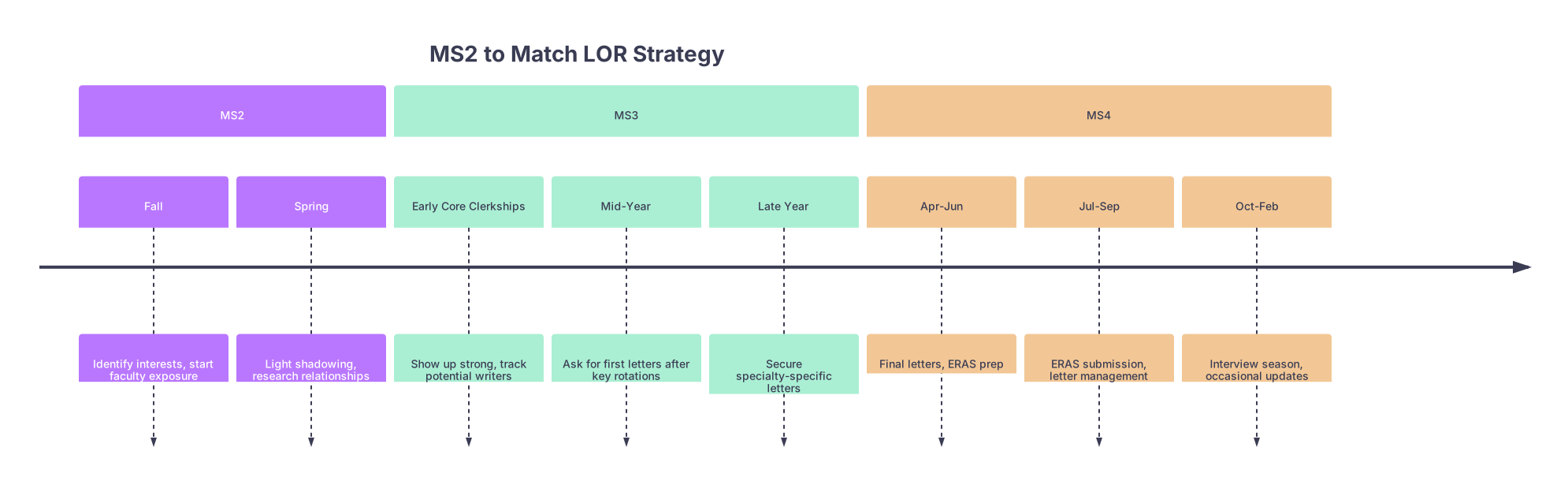
| Period | Event |
|---|---|
| MS2 - Fall | Identify interests, start faculty exposure |
| MS2 - Spring | Light shadowing, research relationships |
| MS3 - Early Core Clerkships | Show up strong, track potential writers |
| MS3 - Mid-Year | Ask for first letters after key rotations |
| MS3 - Late Year | Secure specialty-specific letters |
| MS4 - Apr-Jun | Final letters, ERAS prep |
| MS4 - Jul-Sep | ERAS submission, letter management |
| MS4 - Oct-Feb | Interview season, occasional updates |
At each phase, you have different goals:
- MS2: Build exposure and early relationships. No one is writing you a letter yet, but they are noticing you.
- MS3: Perform, differentiate yourself, and ask for letters while you are fresh in their mind.
- MS4: Close gaps, collect specialty-specific letters, and manage ERAS strategically.
Now we go step by step.
MS2: Foundation Year (12–18 Months Before ERAS Opens)
At this point you are not “asking for letters.” You are earning them.
MS2 Fall (Approx. 18–22 Months Before ERAS)
Your goals now:
- Narrow interest zones, not exact specialty.
- Start consistent exposure to 3–5 potential future letter writers.
- Build a reputation: prepared, professional, easy to work with.
At this point you should:
- Identify 2–3 broad fields you might like (e.g., internal medicine vs surgery vs peds).
- Find faculty in those areas:
- Course directors
- System/organ block leads
- Faculty who give frequent small-group sessions
- Make yourself visible in low-friction ways:
- Sit in the front third of the room.
- Ask 1–2 thoughtful questions per week, not per session. (The student who talks every 10 minutes is remembered for the wrong reason.)
- Stay after once in a while to clarify a concept.
Checklist, MS2 Fall (monthly):
- Attend all required small-groups; no unnecessary absences.
- Introduce yourself by name to at least one faculty member per month.
- Email one lecturer you liked: a 3–4 line “thank you” with a specific detail.
- Start a running list: “People who know my work” with names, roles, brief interactions.
You are not asking for anything. You are building familiarity.
MS2 Spring (Approx. 15–18 Months Before ERAS)
Now we start moving from “face in the crowd” to “this student might be interesting.”
At this point you should:
- Pursue one longitudinal activity with faculty oversight:
- Research project
- QI/education project
- Longitudinal clinic
- Prefer activities with:
- Regular meetings (at least monthly)
- Direct interaction with a single faculty member
- Some deliverable (poster, presentation, curriculum piece)
How to approach:
- Email a potential mentor:
- Make it short: who you are, what interests you, 1–2 sentences about why them.
- Ask for a brief meeting to learn about projects, not “do you have research for me?”
- In the first 2–3 months:
- Show up to every meeting on time.
- Turn around tasks early, not just “on time.”
- Send short, professional updates (“I reviewed 20 charts, found X. Plan Y for next week.”).
Weekly checklist, MS2 Spring:
- Touch base with mentor or project team at least once (meeting or update email).
- Capture concrete accomplishments in a document (e.g., “Built REDCap form for QI project”).
- Note specific comments you receive (“You’re very thorough with these charts”)—these become letter “hooks” later.
By the end of MS2, you want:
- 1–2 research/longitudinal mentors who have seen your work.
- 3–5 faculty who recognize your name and face.
- A reputation as dependable among at least a small circle.
Summer Before MS3: Pre-Clinical to Clinical Transition
This is the quiet pivot where weak planners drift and strong planners sharpen their edge.
At this point you should:
- Review your “People who know my work” list.
- Identify 3–4 attendings or mentors you want to prioritize on rotations.
- Do some targeted prep:
- Read 1–2 review chapters relevant to your first rotation.
- Learn the basic workflow: common notes, common orders, typical presentations.
This prep does not directly create letters. It creates performance, and that is what letters describe.
MS3: The Core LOR-Building Year
This is where you earn 70–80% of your residency letters.
MS3 Months 1–3: Early Core Clerkships
Your goal: Show up as the student people remember positively after a busy month.
At this point you should:
- Treat every rotation as if someone on it might write you a letter. Because they might.
- Identify letter-writer candidates early in each block:
- Attendings who work with you for multiple weeks.
- Teaching residents (senior residents count more for daily evals, less for final LOR).
- Signal seriousness without being annoying:
- Day 1 or 2: “I am really excited to learn on this service. Please let me know if there are particular areas I should focus on improving.”
Weekly structure on rotation:
- Early week:
- Show up 10–15 minutes early.
- Know every patient on your list cold.
- Midweek:
- Ask for targeted feedback: “Could you give me one thing to improve on my presentations?”
- End of week:
- Act on the feedback. Let them see the change quickly.
Common mistake I see: students waiting until the last day to reveal they care. At that point the mental file is already written.
MS3 Months 4–6: First Letter Requests
Now you actually start asking.
Ideal timing: ask within 1–2 weeks of finishing a strong rotation, while the attending still remembers specifics.
At this point you should:
Decide whom to ask:
- Prioritize attendings who:
- Saw you repeatedly (at least 2 weeks).
- Gave you specific praise or high marks.
- Supervised you in clinically meaningful situations (not just simulation).
- Prioritize attendings who:
Ask in person if possible, then formalize by email.
The key question is not “Will you write me a letter?”
The key question is:
“Would you feel comfortable writing me a strong letter of recommendation for residency?”
That word — strong — gives them an exit if they cannot do it. You want that honesty.
When you ask, you should be ready to provide:
- Updated CV.
- Brief “brag sheet” (1 page):
- 3–5 bullet points of things you did on their service.
- Your intended specialty (even if tentative).
- Any particular strengths you hope they can highlight (“my work ethic and ownership of patients on your service”).
Do not overcomplicate this. Your job is to make it easy for them to remember you at your best.
MS3 Months 7–9: Specialty-Specific Rotations and Letters
By now you usually know your likely specialty, or at least your top two.
At this point you should:
- Strategically choose rotations in your target field:
- Home subservice rotations
- Consult services relevant to your specialty
- On these rotations:
- Identify at least two potential specialty letter writers.
- Repeat the same pattern: visible effort, early feedback, consistent improvement.
End-of-rotation checklist (each block):
- Identify 1–2 attendings who know your work well.
- Ask one for a letter if you performed strongly.
- Send follow-up email with your CV, brag sheet, and timeline (e.g., “Letters will be uploaded to ERAS in June–July”).
Do not wait to ask until MS4. Attending memory decay is real.
Late MS3 / Early MS4: Locking in Your Letter Portfolio
Residency programs expect a small, focused set of letters, not a pile.
| Program Type | Total LORs | Specialty Letters | Chair Letter Common? |
|---|---|---|---|
| Internal Medicine | 3–4 | 2–3 IM | Often |
| General Surgery | 3–4 | 2–3 Surgery | Often |
| Pediatrics | 3 | 2 Peds | Sometimes |
| Emergency Medicine | 3–4 | 2–3 EM (SLOEs) | Yes (SLOE-style) |
| Competitive specialties (DERM, ORTHO, ENT) | 3–4 | 2–3 specialty | Usually |
MS3 End / MS4 Early Spring (Mar–May Before ERAS)
By this point you should be very clear on your letter plan.
At this point you should:
Map out your target letters:
- 1–2 letters from your chosen specialty (ideally from your home program).
- 1 strong “clinical generalist” letter (medicine, surgery, pediatrics) that proves you can work hard and care for patients.
- Optional: 1 research or longitudinal mentor letter if substantial and relevant.
Confirm with each letter writer:
- That they are still willing.
- That they know your specialty choice.
- That they understand the approximate due date (ERAS opens in June; submission ideally by early September).
Send a short update email:
- Where you are applying.
- Any new accomplishments since you last worked with them:
- Step scores.
- New publications or posters.
- Awards, leadership roles.
This helps them write a letter that sounds current, not stale.
MS4: Sub-I’s, ERAS, and Final Letter Management
This is where students commonly panic about letters. If you did the earlier phases right, MS4 is about polishing and plugging gaps, not scrambling.
MS4 Early (Apr–Jun): Sub-Internships and Final Opportunities
At this point you should:
- Do at least one sub-internship (Sub-I) in your chosen specialty at your home institution.
- Treat the Sub-I like a month-long audition:
- Show up like an intern, not a student.
- Own your patients from sign-out to discharge.
- Volunteer for the unglamorous work (discharge summaries, difficult families, late tasks).
Identify 1 attending on your Sub-I as a potential high-impact letter writer, especially if:
- They are the program director, associate PD, or a respected senior faculty.
- They tell you explicitly you are performing at an intern level.
Before the last week of the Sub-I:
- Ask: “I am applying to [specialty] this cycle. Would you feel comfortable writing me a strong letter of recommendation based on my performance on this sub-I?”
- If yes:
- Provide ERAS instructions.
- Send your updated CV and personal statement draft if you have it.
ERAS Opening (June): Upload Logistics
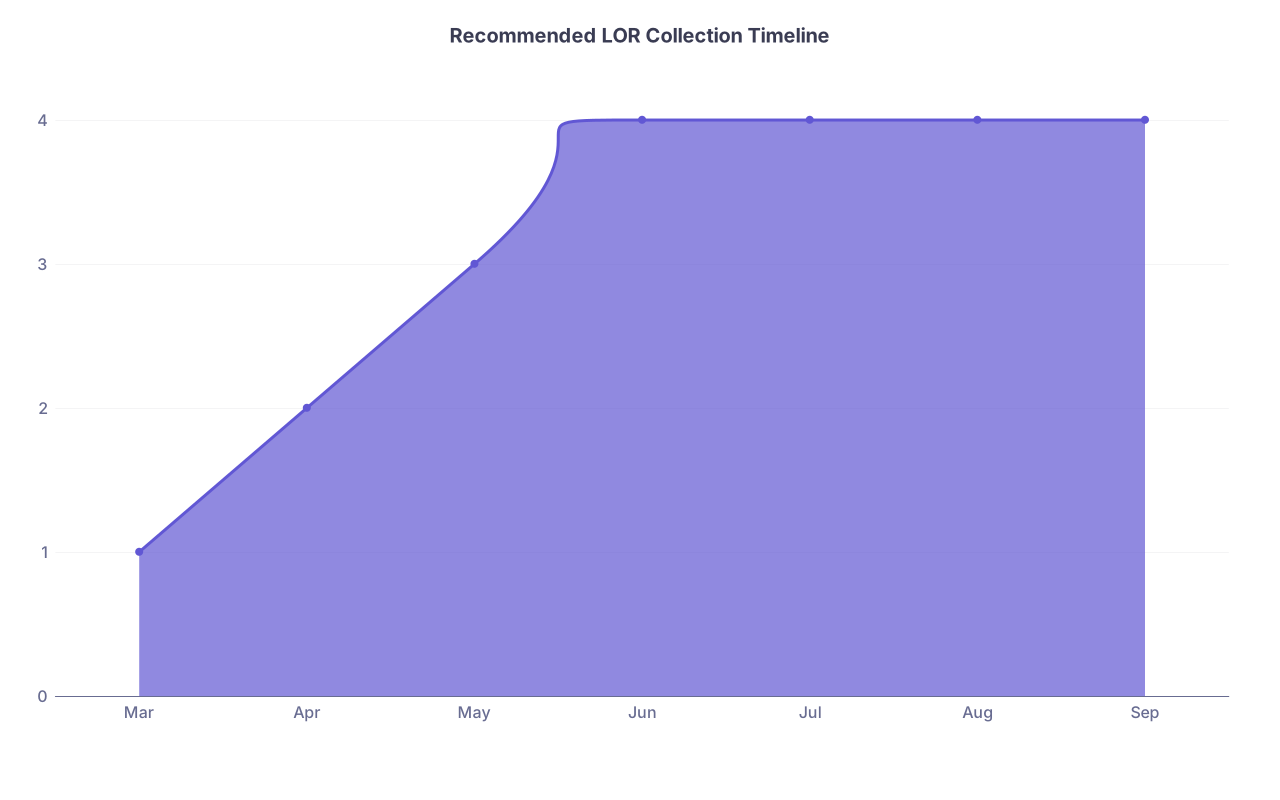
| Category | Value |
|---|---|
| Mar | 1 |
| Apr | 2 |
| May | 3 |
| Jun | 4 |
| Jul | 4 |
| Aug | 4 |
| Sep | 4 |
By June you should have most of your letters promised, even if not yet uploaded.
At this point you should:
- Register with ERAS and send each writer:
- ERAS letter request form.
- Clear deadline: “It would be ideal to have letters uploaded by August 15.”
- Track everything in a simple spreadsheet:
- Column for writer name, type (specialty, general clinical, research).
- Date asked.
- Date ERAS form sent.
- Date letter uploaded.
Do not be shy about polite follow-up:
- 3–4 weeks after the initial send: one brief reminder.
- 2 weeks before your internal deadline: one more if still missing.
July–September: Application Submission and Final Gaps
ERAS submissions often start in early September.
At this point you should:
- Aim to have all required letters uploaded by early September.
- Have at least:
- 2 specialty letters.
- 1 strong general clinical letter.
- Optional research/mentor letter if strong.
If a letter is delayed:
- Do not panic, but be proactive:
- Email: “Just a quick check-in regarding the residency letter. ERAS is now open and programs begin downloading applications soon. I wanted to see if you needed anything else from me.”
- If a writer clearly cannot deliver:
- Pivot quickly to another attending who liked your work.
- Ask for a letter even if a bit later; better late and strong than early and generic.
Specialty-Specific Nuances You Need to Respect
Not all letters are created equal. In some fields, structure and source matter more.
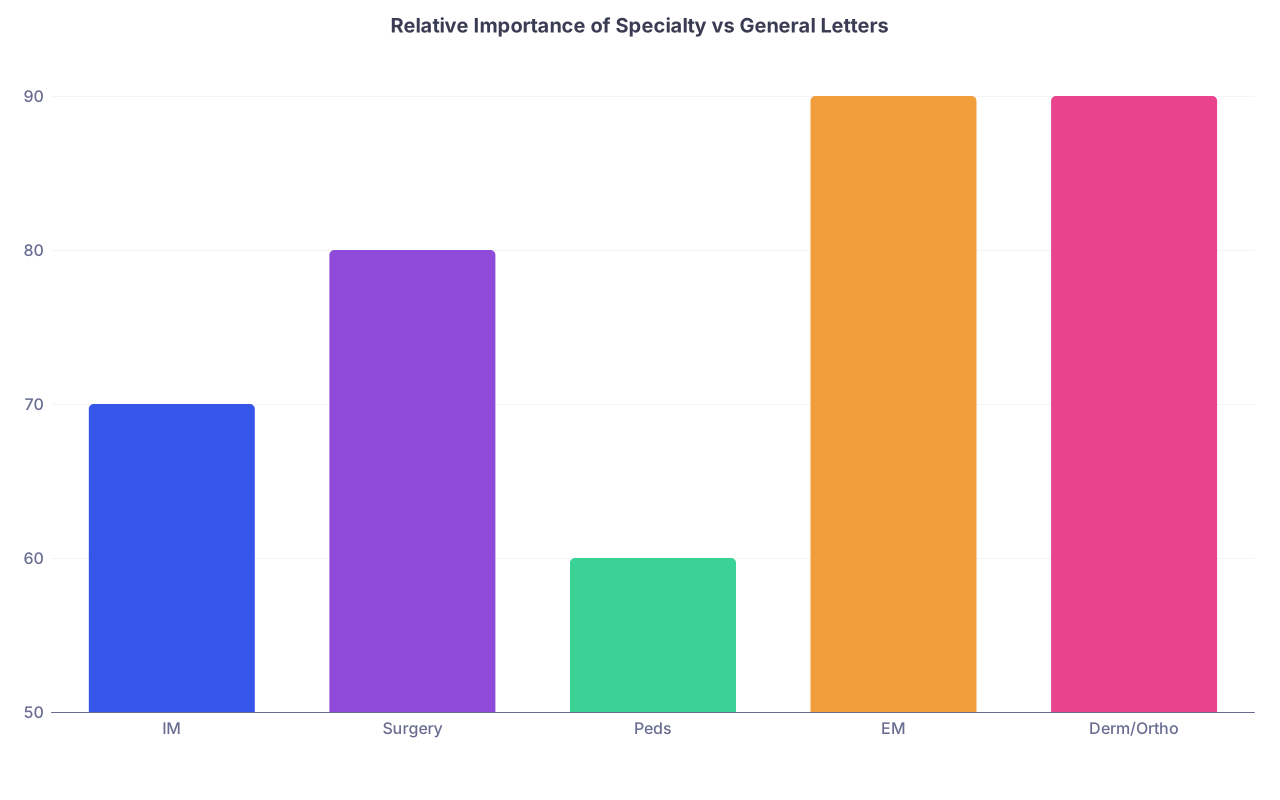
| Category | Value |
|---|---|
| IM | 70 |
| Surgery | 80 |
| Peds | 60 |
| EM | 90 |
| Derm/Ortho | 90 |
(Values: rough “percent emphasis” on specialty-specific letters vs general letters.)
At this point you should know:
- Emergency Medicine: SLOEs (Standardized Letters of Evaluation) from EM rotations are non‑negotiable. These are structured and usually from the rotation director. Your strategy is less “find individual writers” and more “perform extremely well on EM rotations that generate SLOEs.”
- Surgery, Ortho, ENT: A chair or program director letter carries disproportionate weight. Prioritize:
- Strong performance on home specialty rotations.
- Visibility to leadership (M&M conferences, grand rounds presentations, etc.).
- Internal Medicine and Pediatrics: Balance between:
- At least 2 letters from IM/Peds attendings who directly worked with you.
- Optional research/mentor letter if it shows depth in the field.
If you are double-applying (e.g., IM + another specialty):
- You need different letter bundles:
- Core clinical letter that works for both.
- Specialty letters for each field.
- Plan this in MS3. Not in August of MS4.
How to Behave So People Actually Want to Write for You
This is the unglamorous truth: faculty write better letters for students they liked working with.
Day-to-day behaviors that matter far more than you think:
- Showing up on time. Every day.
Once you are “the late student,” that label sticks. - Doing the task you said you would do, without chase.
- Accepting feedback without defensiveness.
- Treating nurses and staff with obvious respect.
You would be surprised how often faculty mention this in letters.
Patterns I have seen that destroy letters:
- Visible disinterest in “non-core” rotations. (You want derm, but blow off medicine. Faculty notice.)
- Vanishing after shelf exams and never following up.
- Only contacting someone when you need a letter, after months of silence.
You prevent this by sending brief updates:
- After a rotation: “Thank you again for the opportunity to work with you. I learned a great deal about X, and I especially appreciated Y.”
- Before ERAS: “I wanted to share that I will be applying in [specialty] this year. Working with you on [rotation/project] was a major factor in that decision.”
These 5–6 sentence emails take ten minutes and generate disproportionately strong goodwill.
Red Flags and How to Course-Correct (Timeline-Specific)
If You Are Late: MS3 Ending and No Real Letter Writers
You are at the end of MS3 and realize you have no one who knows you well. This happens.
At this point you should:
- Use upcoming MS4 Sub-I’s and electives as intensive relationship-building months.
- Be explicit early: “I want to use this rotation to grow and also to build relationships for letters. I would really appreciate honest feedback along the way.”
- Over-communicate effort and progress. Attendings notice when you respond to feedback within days.
If You Had a Problem Rotation
Bad eval, conflict, or personality clash.
Timeline correction:
- MS3 next rotation: overperform deliberately to generate a clearly strong letter that counterbalances the weak evaluation.
- Ask for letters on rotations where feedback was unequivocally positive, not “fine.”
- You do not need to explain the bad rotation to every writer. You do need to give programs at least 2–3 letters that strongly contradict the idea you are “difficult” or “disengaged.”
Quick Reference: Year-by-Year LOR Checklist

MS2
- Fall:
- Identify 2–3 broad interest areas.
- Make yourself known to at least 3 faculty.
- Start a “People who know my work” list.
- Spring:
- Join one longitudinal project or clinic with faculty oversight.
- Demonstrate reliability with small, consistent deliverables.
- Build early mentor/mentee relationships.
MS3
- Early Year:
- Treat every core rotation as potential letter source.
- Ask for feedback mid-rotation and actually change.
- Mid Year:
- Ask at least 1–2 attendings for letters after strong rotations.
- Give each writer a CV + brag sheet + specialty interest.
- Late Year:
- Secure 1–2 letters from your chosen specialty.
- Identify 1 strong general clinical letter.
MS4
- Spring:
- Do a Sub-I in your specialty; target 1 high-impact writer.
- Confirm all prior letter writers are still on board.
- Summer:
- Send ERAS forms and supporting documents.
- Track uploads and send polite reminders.
- Early Fall:
- Ensure you have the correct mix of letters for each program type.
- Adjust or add letters if one falls through.

The Core Truths, Without Sugarcoating
Strong letters are built over years, not weeks.
If you are not thinking about LORs by early MS3, you are already behind the best-prepared students.Performance is necessary. Relationships make it visible.
Doing good work silently is not enough. You must let people see you, remember you, and then help them recall the specifics when it is time to write.Your timeline is your responsibility.
No one will remind you to ask early, follow up, or diversify your letter types. If you want letters that actually move the needle on Match Day, you start cultivating your writers now, not “sometime next year.”


