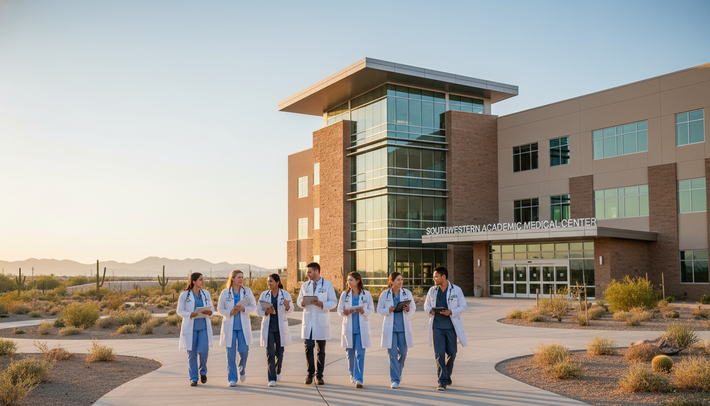
You've been sold a postcard version of rural medicine. White coat idealism, grateful patients, broad scope, real impact. The brochure is gorgeous. The reality will test you in ways your urban rotations never did, and your Program Director won't prepare you for any of it.
Here's what nobody tells you before you commit to that rural track or scramble through SOAP into a rural program.

The advice below is for educational purposes only and does not constitute legal, financial, or tax advice. Outcomes and experiences vary significantly by program, region, and individual circumstances. Consult a qualified professional before making binding career decisions.
The Unvarnished Truth: Why "Rural" Is Code for "Survival Mode"
Let's kill the mythology right now. Rural Family Medicine is not a "practice light" version of urban medicine. It's autonomous practice with limited backup. Period. End of sentence.
When a Program Director shows you the gleaming rural campus with the smiling staff and the clinic-with-a-mountain-view, they're showing you the venue. They are not showing you the job. The job is this: you will be the doctor, sometimes literally the only doctor, for miles. A pregnant patient with preeclampsia walks in at 2 a.m. The nearest OB is 90 minutes away. The nearest ICU is three hours. You stabilize. You call. You decide. And sometimes, you make the call that determines whether someone lives.
That's not a horror story. That's Tuesday in rural practice.
The hidden curriculum is brutal. PDs love to highlight community service, mentorship, and breadth of training. What they omit: you will be managing complex comorbidities, multiple chronic conditions, polypharmacy, late-stage presentations, without immediate subspecialty consults. There is no cardiologist down the hall. There is no endocrine fellow to page. There is you, a phone, and a transfer window that's closing fast.
Warning sign worth memorizing: If your rotation schedule includes "on-call" duties that extend past midnight, understand what this actually tests. It's not clinical skill, it's endurance. It's your ability to function on hour 28 of a shift with a crashing patient. Urban programs have teams for that. Rural programs have you.
The mistake I see repeatedly: Underestimating the administrative burden. You think medicine is about medicine. In a rural clinic, medicine is also about billing, prior authorizations, navigating Medicaid in three different states, coordinating with social workers who themselves are 60 miles away, and writing letters to insurance companies that deny everything twice. Staff shortages mean the physician absorbs all of this. You will spend hours on the phone fighting for a CT scan that should have been approved in 30 seconds.
If you walk into rural medicine thinking the paperwork is someone else's problem, you'll drown.
Red Flag #1: The "Generalist" Trap in a Specialist-Desperate System
Rural clinics live in a specialist-desperate world. The orthopedic surgeon visits twice a month. The dermatologist is a 4-hour drive. The psychiatrist is, functionally, you. This creates a trap that's invisible until you fall into it.
The pitfall: Rural programs often rely heavily on Locum Tenens physicians or simply don't have board-certified specialists at all. That gap? You are expected to fill it. You will be asked to manage rheumatologic conditions you've read about twice. You will be handed a dermatology case you cannot diagnosis. You will be expected to titrate psychiatric meds on a patient who is acutely suicidal with no backup psychiatrist within 200 miles.
This is not learning. This is liability with a stethoscope.
Do not confuse volume with competence. Seeing 40 patients a day is impressive for throughput. It looks great on a resume. But if supervision is thin, and in rural rotations, supervision is often thin, high volume produces checklist medicine. You check boxes. You miss the subtle signs. You graduate faster but worse.
The patient volume is a feature, not a bug, of rural programs. Program Directors love to brag about it. You should ask what they don't brag about.
Critical lesson most residents learn the hard way: You must learn to triage geography, not just acuity. When do you call the urgent care neighbor for a same-day consult? When do you send a patient directly to the distant Level I trauma center? This is a skill urban rotations never teach you because the answer in urban land is always "page the specialist."
Here's the decision tree they should have taught you:
Strategic advice for interviews: When you sit across from the PD, ask about their "consult network." Listen carefully to the answer. If they say something like "we manage everything here," run. That is not a selling point. That is a confession that you will bear liability for conditions well outside your comfort zone. Good rural programs have robust telehealth partnerships, formal transfer protocols, and named consultants who pick up the phone. Bad ones have you and a prayer.
Red Flag #2: Social Determinants Are Your Daily Diagnosis
Here's where rural medicine breaks most trainees. In urban academic centers, you diagnose and discharge. Social work handles the rest. In rural medicine, you handle the rest.
The mistake that ruins careers: Treating only the pathology. You see the diabetic with an A1C of 11. You prescribe metformin. You move on. Three months later, the patient is back, worse. You wonder what you did wrong.
What you missed: the patient can't afford the metformin. The patient doesn't have a car to get to the pharmacy. The patient doesn't have a fridge to store insulin. The patient is choosing between medication and groceries. None of this is in the chart.
Non-adherence in rural settings is rarely because patients are "difficult." It's because of food insecurity, transportation gaps, lack of insurance navigation, language barriers, and a healthcare system that wasn't built for them.
The hidden challenge: You will spend 30% of your time solving social problems rather than learning clinical pearls. You'll call pharmacies for free samples. You'll arrange rides through church networks. You'll spend 45 minutes on the phone with Medicaid. You'll write letters to landlords. This is medicine now.
Protective tip that could save your license: Document social barriers meticulously. If a patient cannot afford medication, write it down. If transportation is the barrier, write it down. If the patient refused treatment due to cultural reasons, write it down with quotes. This is not just good medicine. This is your legal armor. When, not if, when, a treatment fails and a negligence claim surfaces, that documentation is the difference between a defensible case and a destroyed career.
The emotional toll nobody prepares you for: Burnout rates are higher in rural tracks. The reasons are predictable: isolation from peers, distance from family, lack of subspecialty camaraderie, and the weight of being "the doctor" for an entire community. Plan your support system before you start. Identify a mentor outside the program. Schedule therapy. Maintain friendships. The rural clinic will not give you these things. You must bring them.
How to Pivot Rural Experience into Match Success
Maybe you survived rural rotation. Maybe you hated it. Maybe you're scrambling through SOAP and a rural program is your only offer. Either way, the narrative matters more than the reality.
Reframe the narrative or lose the match. Do not complain about resources in your personal statement or interview. Ever. Programs read between the lines. If you write "the clinic lacked adequate staffing and supplies," they hear "I will complain about our program publicly." Instead, articulate how you maximized limited tools. Example phrasing: "I leveraged telehealth partnerships to consult cardiology for a complex arrhythmia case, achieving diagnostic clarity within 24 hours despite geographic isolation." Same experience. Different story. One is a flag. The other is a flex.
Demonstrate adaptability. Loudly. Program Directors are hunting for candidates who think independently. Rural experience, framed correctly, is the ultimate proof. Highlight cases where you created a protocol under constraint. Show how you triaged without backup. Show how you solved a social determinant barrier that nobody else noticed.
Avoid the "I hated it" trap completely. Even if rural life made you miserable, the isolation, the weather, the honky-tonk 30 miles down the road, frame the experience as building resilience and broad differential diagnosis skills. Programs are skeptical of candidates who badmouth rotations. It signals poor fit, poor judgment, and poor professionalism.
Action step with the highest ROI: Secure your letters of recommendation from the attending who saw you handle the most difficult, resource-poor scenario. Not the friendly one. Not the one who liked you. The one who watched you manage a complex case with no backup and saw your clinical judgment hold. Their endorsement carries weight regarding autonomy, and autonomy is what rural programs actually want to evaluate.
Key Takeaways Before You Sign That Contract
Rural rotations test autonomy and crisis management, not just clinical knowledge. If you're going in expecting the same supervision and consult access you had in your urban academic center, you're going to fail and blame the program. Prepare for decision-making without immediate backup. That's the whole game.
Document social barriers meticulously. This protects you legally and demonstrates holistic care skills to programs. It's the single highest-leverage habit you can build in a rural setting.
Never, under any circumstances, complain about lack of resources in your match essays or interviews. Reframe every constraint as a problem you solved creatively. Your PD is not hiring a complainer. They're hiring a survivor.
The rural clinic will demand more of you than any urban rotation. More endurance. More improvisation. More emotional labor. More paperwork. More clinical breadth. If you go in with your eyes open, you won't just survive, you'll become the kind of physician that other physicians call when things go sideways.
If you go in with your eyes closed, SOAP will be the least of your problems.