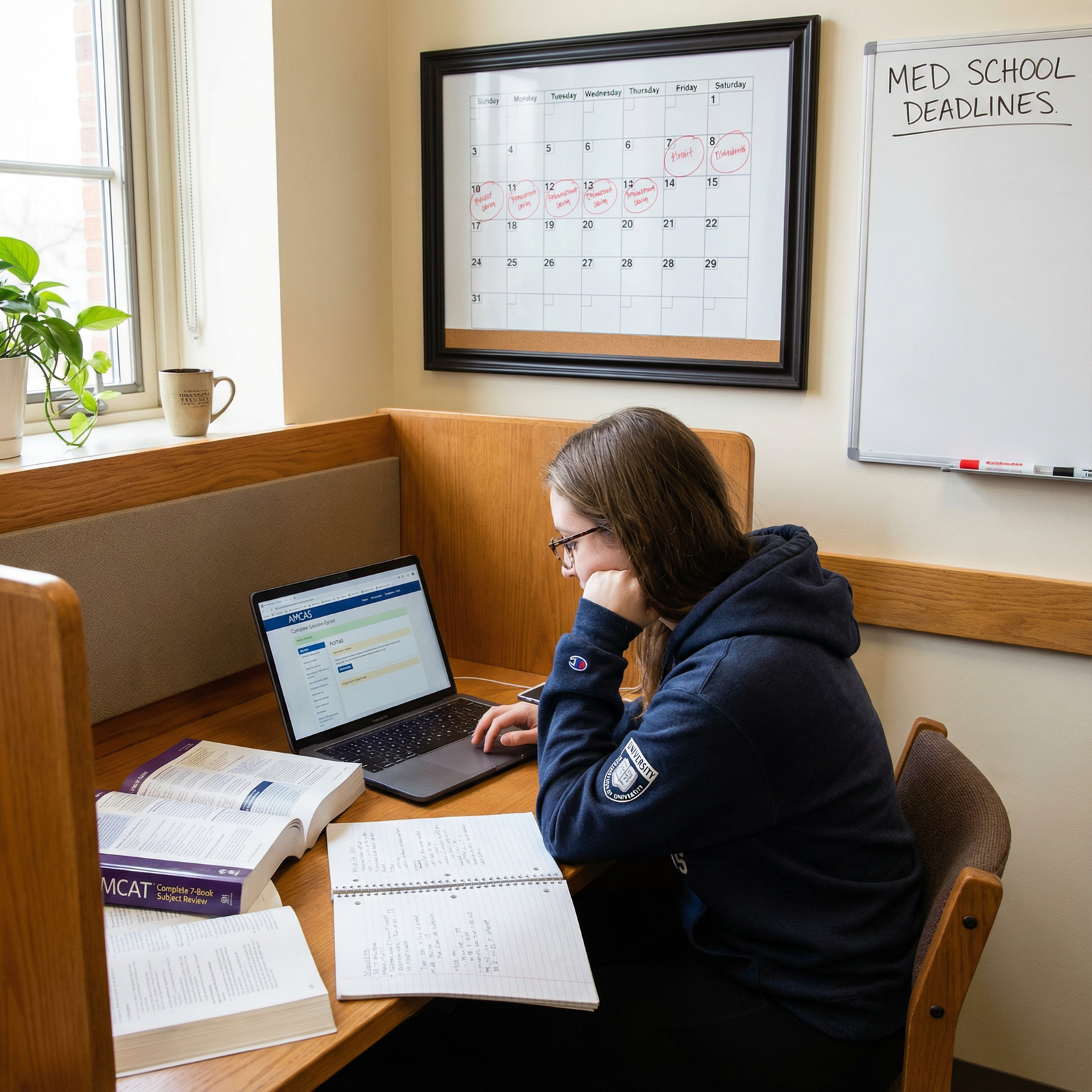
Top Resources for Medical School Applicants: An Expanded, Step‑by‑Step Guide
Entering Medical School is an exciting milestone—but the path to get there can feel complex and competitive. Between MCAT Preparation, understanding admissions timelines, choosing schools, and writing a compelling Personal Statement, the Application Process requires organization and the right support.
This guide expands on the original article with deeper explanations, specific examples, and updated, actionable advice. You’ll find curated Study Resources, planning tools, and strategy tips designed to help you not just “get through” the process, but apply confidently and efficiently.
Understanding the Medical School Application Landscape
Before diving into specific resources, it helps to understand how they fit into the bigger picture of your journey.
The Major Components of a Strong Application
Most medical schools—especially in the U.S.—will evaluate you across several key domains:
- Academic metrics: GPA (science and overall) and MCAT score
- Clinical experience: Exposure to patient care and healthcare settings
- Research and scholarly work: Particularly important at research-heavy institutions
- Service and leadership: Volunteering, community work, leadership positions
- Personal Statement and essays: Your story, motivation, and reflection
- Letters of recommendation: Insight from faculty, physicians, or supervisors
- Interviews: Communication skills, professionalism, and fit with the school’s mission
The resources below are organized to support each of these areas, from early preparation through submitting your application and beyond.
1. Books and Study Guides for Premed Success
High-quality books can clarify expectations and give you a strategic view of the entire Application Process. Rather than relying purely on scattered online advice, consider building a small, targeted library.
1.1 Admissions Strategy and Planning Books
These resources help you understand how admissions committees think and how to present your application coherently:
“The Medical School Admissions Guide” – Dr. Suzanne M. Miller
(Updating the original author reference for a widely used version)- Breaks down how admissions committees evaluate GPAs, MCAT, clinical experiences, research, and service
- Offers guidance on building your profile from freshman year to application season
- Includes sample timelines, school lists, and case studies of successful applicants
“The Complete Guide to Med School Admissions” – Dr. Tara K. Bunyan & Dr. Jonathan Z. Au
- Explains the admissions cycle in detail (AMCAS, AACOMAS, TMDSAS)
- Helps you map out prerequisites, gap year planning, and deciding between MD, DO, and combined degrees (MD/PhD, MD/MPH, etc.)
- Shares common pitfalls, such as weak school selection or underdeveloped activities descriptions
“How to Get into Medical School: Your Step-by-Step Guide” – Tony Ganzer
- Practical and accessible overview for early college students or career changers
- Emphasizes time management, study strategies, and how to balance coursework with extracurriculars
1.2 Academic and Skills-Oriented Books
These books aren’t strictly about “getting in” but are invaluable for building the skills admissions committees want to see:
- Study skills/learning science books (e.g., “Make It Stick”) help you adopt evidence-based study approaches for both premed coursework and MCAT Preparation.
- Writing and storytelling guides (e.g., “On Writing Well” or personal essay guides) can dramatically improve your Personal Statement and secondary essays.
How to use these resources effectively:
- Don’t try to read every book cover-to-cover during a busy semester.
- Skim for relevant chapters: timelines, application strategy, interview prep.
- Use them to create a personal roadmap—what you will do each semester leading up to your application.
2. Essential Websites and Online Platforms for Medical School Applicants
High-quality online platforms give you up-to-date policies, requirements, and insider perspectives that no book can fully capture.
AAMC (Association of American Medical Colleges) – Central Hub
- Home of AMCAS, the primary MD application service in the U.S.
- Official information on the MCAT, fee assistance, and core competencies for entering medical students
- Resources like the Aspiring Docs series and financial planning tools
AACOM (American Association of Colleges of Osteopathic Medicine)
- For DO schools and the AACOMAS application service
- Information on osteopathic philosophy, school lists, and application tips
TMDSAS (Texas Medical & Dental Schools Application Service)
- Centralized application service for most Texas public medical schools
- Often earlier timelines and unique essay prompts
MSAR (Medical School Admission Requirements) – Data for School Selection
- Subscription-based tool by the AAMC
- Provides detailed school profiles: median GPAs and MCAT scores, in-state vs out-of-state acceptance data, mission statements, and curriculum structure
- Use it to make a balanced school list (reach, target, and safety) based on your academic metrics and mission fit
Student Doctor Network (SDN) – Community and Anecdotal Insight
- Discussion forums with school-specific threads, application timelines, and interview impressions
- Use cautiously: helpful for pattern recognition, but remember that posters may not be representative of all applicants
Reddit Premed Community (e.g., r/premed, r/MCAT)
- Peer advice, study schedules, and shared experiences
- Useful for motivation, but always cross-check facts with official sources
MedEdits, Prospective Doctor, and other advising blogs
- Articles on crafting a Personal Statement, choosing activities, gap year planning, and interview prep
- Often written by physicians or former admissions committee members

How to Integrate These Online Resources
- Use official sites (AAMC, AACOM, TMDSAS) for hard data and policies.
- Use MSAR to narrow down 15–25 schools that align with your stats and interests.
- Use forums and blogs for qualitative insight: school culture, interview styles, student experiences.
- Keep a central spreadsheet for notes: school requirements, deadlines, missions, and how you might fit each.
3. MCAT Preparation Resources and Study Strategies
The MCAT is one of the most heavily weighted components of your application. Effective MCAT Preparation combines official practice, high-yield content review, and disciplined scheduling.
3.1 Official AAMC MCAT Resources
Always anchor your prep with the test makers’ own materials:
AAMC Full-Length Practice Exams
- Best predictors of your actual score
- Take these under test-like conditions; thoroughly review every question afterward
AAMC Section Banks and Question Packs
- Especially useful for CARS and the science sections
- Help you get used to question style and reasoning patterns
Free Sample Test and Practice Questions
- Good early diagnostic or warm-up tools
3.2 Commercial MCAT Prep Companies
Choose based on your learning style, budget, and time availability:
Kaplan Test Prep
- Comprehensive content review books, live and self-paced courses, practice tests
- Good for students who want structure and external accountability
The Princeton Review
- Offers intensive courses and tailored packages, including “guarantee” programs
- Strong on strategy and test-taking approaches
Blueprint MCAT and Altius
- Known for logic-heavy questions and strong analytics dashboards
- Often favored by students who prioritize practice test quality
UWorld MCAT QBank
- Highly regarded for in-depth explanations and exam-like style
- Excellent for honing critical reasoning and reinforcing content through questions
3.3 Free and Low-Cost MCAT Study Resources
- Khan Academy MCAT Videos (legacy content, still widely used)
- Anki flashcards (e.g., pre-made decks like AnKing MCAT or Milesdown)
- YouTube channels such as “Med School Insiders,” “MCAT Bros,” and others that break down high-yield topics and strategies
3.4 Building an Effective MCAT Study Plan
A strong MCAT strategy is not just about the resources you use, but how you use them:
- Diagnostic test: Take a full-length early (even if you’re underprepared) to understand your baseline.
- Content review phase (1–2 months):
- Use books/videos to solidify core concepts.
- Create or review Anki cards daily to reinforce knowledge.
- Practice-heavy phase (1–2 months):
- Shift toward full-length exams and question banks.
- Schedule 1 practice exam every 1–2 weeks initially, then weekly as test day approaches.
- Review process:
- For every missed or guessed question, identify why: content gap, misreading, timing, or overthinking.
- Adjust your review and future practice accordingly.
4. Application Support, Essays, and Personal Statement Resources
Your Personal Statement and secondary essays are where your file transforms from numbers into a story. Strong writing can elevate an otherwise average profile—and weak writing can undermine excellent stats.
4.1 Books and Guides on the Personal Statement
- “The Personal Statement Handbook” – Dr. Roberta J. McCarty
- Step-by-step guidance on brainstorming, outlining, writing, and revising
- Includes annotated examples from successful applicants
- Helps you avoid clichés and overused narratives
Key principles from top resources:
- Show reflection, not just a list of experiences.
- Emphasize why medicine, not just why you like science.
- Demonstrate growth and resilience with specific, concrete examples.
4.2 Professional Editing and Advising Services
- Prospective Doctor, MedEdits, Papyrus Academic Writing, and similar services can:
- Help refine structure, clarity, and flow
- Ensure your Personal Statement is cohesive and compelling
- Provide feedback on whether your story actually communicates what you intend
Use these services as editors and coaches, not ghostwriters. Authenticity matters: admissions committees can often spot overly polished or generic essays.
4.3 Free and Peer-Based Writing Resources
Campus writing centers
- Often provide free editing support—use them for structure, argument clarity, and grammar.
YouTube channels like “Med School Insiders,” “Rachel Raye Premed,” and “PreMedRevolution”
- Breakdowns of strong vs. weak personal statements
- Example essays with commentary
4.4 Activity Descriptions and Secondary Essays
Besides the primary Personal Statement, don’t overlook:
AMCAS Work & Activities section
- Use action verbs and specific outcomes.
- For “Most Meaningful” experiences, add reflection and impact.
Secondary essays
- Common themes: “Why this school?”, diversity, adversity, future goals, ethical dilemmas.
- Create a bank of core stories you can adapt without recycling generic content.
5. Extracurricular Activities, Volunteering, and Clinical Exposure
Admissions committees want to see that you understand the realities of medicine and are committed to service.
5.1 Clinical and Shadowing Experiences
Local Hospitals and Clinics
- Many offer structured volunteer programs (e.g., patient transport, unit ambassadors, ED volunteers).
- Commit to consistent involvement—1–2 years looks better than a few scattered weeks.
Physician Shadowing
- Ask your prehealth advising office, family physician, or local medical society for leads.
- Aim for variety (primary care, subspecialty, inpatient vs. outpatient) if possible.
5.2 Community Service and Service-Oriented Programs
Community organizations (free clinics, public health campaigns, health education)
- Show your commitment to working with underserved populations or public health concerns.
The National Health Service Corps (NHSC)
- While many NHSC programs are post-baccalaureate/professional, learning about their focus on underserved areas can guide your volunteering and long-term goals.
5.3 Global Health and International Experiences
- Reputable organizations like Partners In Health or collaborations through your university
- Seek programs that emphasize sustainability, ethics, and education, not medical tourism.
- Reflect deeply on what you learned about culture, health systems, and your own biases.
5.4 Choosing Activities Strategically
Ask of each activity:
- Does it show service, leadership, teamwork, or resilience?
- Can you envision writing or speaking about it in depth?
- Are you genuinely engaged, or just checking a box?
Depth and reflection matter more than an overstuffed resume.
6. Networking, Mentorship, and Professional Development
You do not have to navigate the Medical School Application Process alone. Intentional mentorship and networking can transform your path.
6.1 Formal Organizations and Student Groups
AMSA (American Medical Student Association)
- Offers conferences, webinars, advocacy opportunities, and mentorship from medical students and physicians.
Pre-med clubs and honor societies (e.g., Phi Delta Epsilon, AED)
- Peer support for MCAT studying, application workshops, and guest physician panels.
6.2 Online Professional Networks
LinkedIn
- Create a polished profile with your education, key experiences, and interests.
- Connect with alumni from your college who attended Medical School.
- Reach out with short, respectful messages asking for brief informational interviews.
Virtual info sessions and school webinars
- Many Medical Schools host Q&A sessions with admissions officers and current students.
- Prepare questions about curriculum, advising, research, and community engagement.
6.3 Finding and Working with Mentors
Potential mentors include:
- Faculty members in your department
- Physicians you shadow
- Research supervisors
- Older premeds or medical students
To get the most from mentorship:
- Be reliable and respectful of their time.
- Come to meetings prepared with questions or updates.
- Keep them informed of your progress—they may later write strong letters of recommendation.
7. Workshops, Webinars, and Advising Services
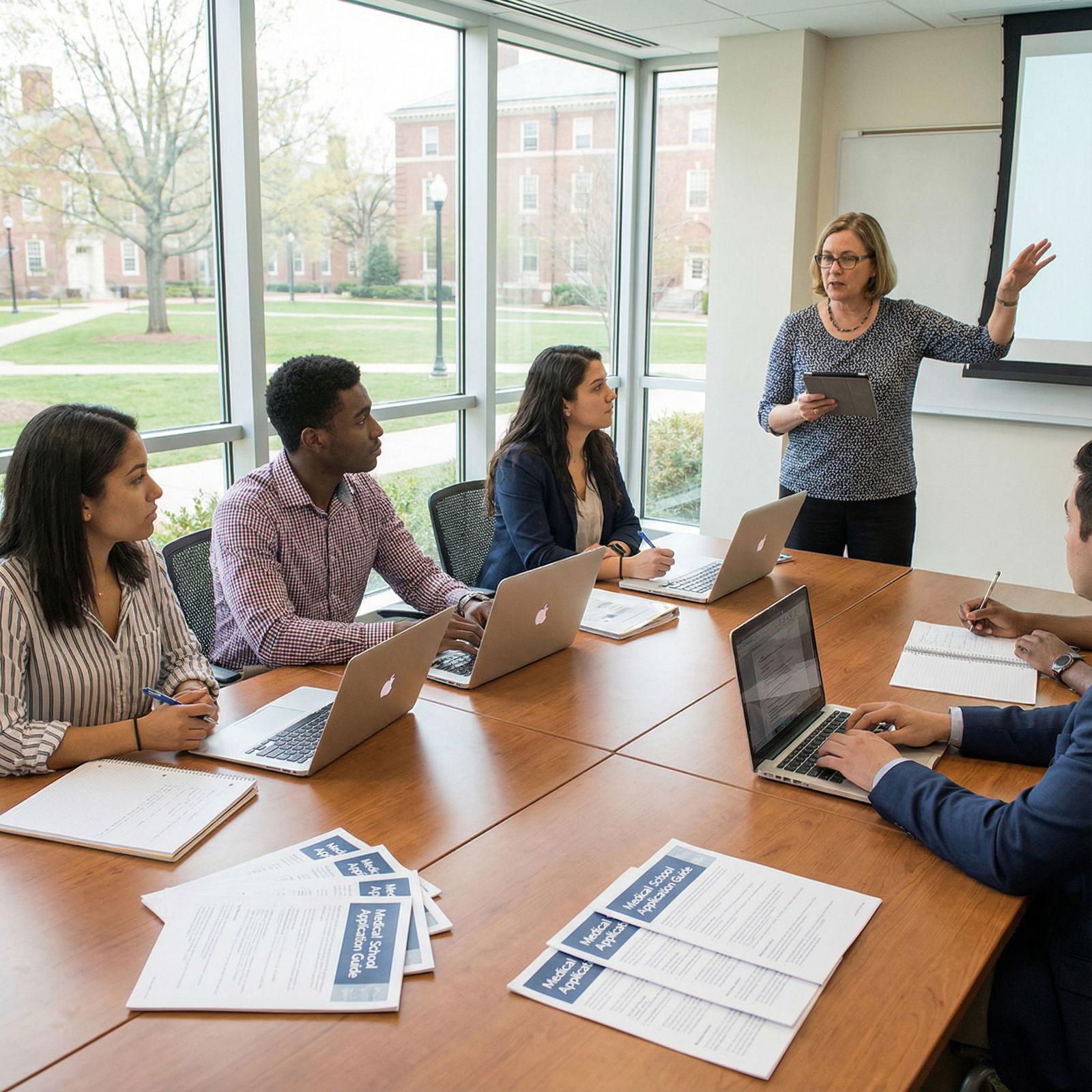
Structured programming can keep you updated on evolving admissions practices and help you refine key skills.
7.1 Campus Pre‑Health Advising Offices
Most colleges have a prehealth or pre-professional advising office that provides:
- Group workshops on MCAT preparation, timelines, and application strategy
- Personal Statement brainstorming sessions
- Mock interviews (traditional and MMI style)
- Committee letters or composite letters for applicants
Engage with your advising office early—even in your first or second year—so they know you and can better support you later.
7.2 Conferences and National Events
National Conference on Medical Student Education and similar national meetings
- Offer sessions on admissions trends, curriculum evolution, and physician training
- Great for networking and understanding where medical education is headed
Regional premed conferences (hosted by Medical Schools or associations)
- Panels with admissions deans, current students, and residents
- Breakout sessions on gap years, research, and MCAT strategies
7.3 Local and Online Workshops
Local medical societies and hospital education departments
- Sometimes host free or low-cost sessions for prospective Medical School applicants.
Online webinars (AAMC, AMSA, individual Medical Schools)
- Provide up-to-date advice straight from admissions professionals
- Often archived so you can watch on your own schedule
Frequently Asked Questions (FAQ)
1. What is the most important part of the Medical School application?
No single component stands alone, but several carry particular weight:
- GPA and MCAT score determine whether you clear initial screening thresholds.
- The Personal Statement, Work & Activities, and letters of recommendation shape how committees understand your character, motivations, and readiness for training.
Think of your application as a portfolio: stats may get you noticed, but your narrative and experiences convince schools you belong in their next class.
2. How can I realistically improve my chances of getting into Medical School?
Actionable steps include:
Academics:
- Strengthen your study habits early; seek tutoring or office hours at the first sign of struggle.
- Consider post-bacc or SMP (special master’s programs) if you need academic repair.
MCAT Preparation:
- Plan 3–6 months of consistent study.
- Use AAMC materials and at least one major third-party resource (e.g., UWorld or a course).
Experience and service:
- Gain meaningful clinical and community service exposure and stay involved consistently.
Application storytelling:
- Invest time in drafts and revisions of your Personal Statement and secondary essays.
- Seek feedback from advisors, writing centers, and, if feasible, professional editing services.
Apply strategically:
- Build a balanced school list using MSAR and other data.
- Apply broadly, especially if your stats are at or below a school’s median.
3. Are there Medical Schools that consider lower MCAT scores or GPAs?
Yes—many schools use holistic review, which considers:
- Upward grade trends or improvements after academic difficulties
- Exceptional experiences (e.g., significant leadership, service, research)
- Overcoming adversity, nontraditional backgrounds, or unique skill sets
- Strong letters and compelling Personal Statements
Use tools like MSAR to identify schools whose admitted students show a wider range of MCAT/GPA profiles and whose missions align with your story (e.g., primary care, underserved populations, rural health).
4. When should I start preparing for my Medical School applications?
A practical rough timeline:
First–Second Year of College:
- Focus on GPA, prerequisites, and exploring interests.
- Start gaining clinical exposure and community service.
Second–Third Year:
- Increase depth in key activities (research, leadership, clinical work).
- Begin MCAT Preparation and plan your test date.
Junior Year (or year before applying):
- Take the MCAT by early spring or summer if possible.
- Ask for letters of recommendation.
- Draft your Personal Statement and begin AMCAS/AACOMAS/TMDSAS entries.
Application Year (typically late spring to fall):
- Submit primary applications as early as feasible.
- Turn around secondary essays in 1–2 weeks.
- Prepare for and attend interviews.
Starting early gives you flexibility and reduces stress.
5. What should my resume/CV include when applying to Medical School?
Your application “resume” is reflected mainly in the AMCAS or equivalent application. It should highlight:
- Education and academic honors (Dean’s list, scholarships)
- Clinical experiences (roles, time commitment, responsibilities)
- Research (projects, presentations, publications if any)
- Community service and volunteering
- Leadership and extracurriculars (clubs, teaching/tutoring, advocacy work)
- Employment (especially if you worked to support yourself through school)
Emphasize impact and reflection: what you did, what you learned, and how it relates to your development as a future physician.
By intentionally using these books, websites, MCAT Preparation tools, Personal Statement resources, and mentorship opportunities, you can transform an overwhelming Application Process into a structured, achievable plan. Combine strong Study Resources with consistent effort and honest self-reflection, and you’ll be well-positioned to submit a compelling, competitive application to Medical School.