
Navigating the medical school admissions process can feel overwhelming. Between GPA cutoffs, MCAT scores, personal statements, and interviews, it’s easy to wonder: what do medical school admissions committees really want to see?
The answer is more nuanced than “perfect stats.” Most U.S. and Canadian schools now use a holistic review process, which means they evaluate you as a whole person—your academic metrics, life experiences, personal attributes, and potential to contribute to the profession and to their class.
This guide breaks down what committees actually look for, how they evaluate your application, and specific candidate strategies you can use to strengthen every component of your file.
Understanding the Medical School Admissions Process and Holistic Review
Before you can tailor your application, you need to understand how the medical school admissions process works behind the scenes.
How Holistic Review Shapes the Application Process
Most medical schools follow some version of a holistic review model, endorsed by the AAMC. Instead of relying only on numbers, committees consider three broad dimensions:
- Academic Metrics
- GPA (overall and science)
- MCAT score (total and section scores)
- Experiences
- Clinical exposure
- Community service and volunteering
- Research and scholarly work
- Leadership, work, and extracurriculars
- Personal Attributes
- Interpersonal skills and communication
- Resilience and adaptability
- Ethical grounding and professionalism
- Cultural competence and empathy
- Motivation and fit for medicine
These elements are pieced together from your primary application (AMCAS, AACOMAS, or TMDSAS), secondary essays, letters of recommendation, and interviews.
The Typical Application Workflow
While each school has its nuances, the application process usually follows this pattern:
Primary Application Screening
- Automated or initial screen based on GPA/MCAT and sometimes state residency.
- Some applicants are screened out early if their academic metrics are far below the school’s typical range.
Holistic File Review
- Trained reviewers (faculty, admissions staff, sometimes medical students) read your entire file.
- They rate you across several competencies: service orientation, teamwork, ethical responsibility, resilience, etc.
- This is where your interpersonal skills, experiences, and personal story matter.
Secondary Applications
- School-specific essays that probe your fit with their mission (e.g., primary care, research, underserved populations).
- Responses are used to further refine who gets interview invitations.
Interviews
- Traditional, panel, or MMI (Multiple Mini Interviews).
- Assess real-time communication, professionalism, judgment, maturity, and authenticity.
- Often weighted heavily in final decisions.
Committee Deliberation and Final Decisions
- Applications are discussed in admissions committee meetings.
- Members advocate for or against applicants using evidence from your file.
- Decisions are made with an eye toward building a balanced and diverse class, not just selecting individuals with the highest scores.
Understanding this structure helps you position every part of your application to speak to what admissions committees actually value.
Core Components of a Strong Medical School Application
Medical school admissions committees expect certain baseline competencies from all applicants. These are the “must-have” components you need to build first.
Academic Performance: More Than Just Numbers
Academic metrics are rarely the only factor, but they are often the first filter.
GPA: Evidence of Academic Readiness
- Competitive applicants typically have:
- Overall GPA: ~3.6–3.9 at many MD schools
- Science GPA (BCPM): similar or slightly lower/higher, depending on strengths
- Trends matter:
- An upward trajectory (e.g., 3.1 → 3.7) can be favorable if you explain what changed.
- Post-bacc or SMP coursework can demonstrate readiness if earlier grades were weaker.
Candidate strategy:
If you have a weaker GPA:
- Take upper-level science courses and earn strong A’s.
- Use your personal statement or secondary essays to briefly and professionally contextualize any challenges (illness, work obligations, family responsibilities) while emphasizing growth and improved performance.
MCAT: Standardized Measure of Readiness
- Many schools publish:
- Median MCAT scores of matriculants (often 510–518 for MD programs, somewhat lower for DO programs).
- Balanced section scores (e.g., 127+ across sections) can be more reassuring than a high total with one very low section.
Candidate strategy:
- Use AAMC practice exams to gauge readiness and set a realistic test date.
- If you retake, show a clear improvement and explain study changes if relevant in secondaries or interviews.
Experiential Background: Showing You Understand the Profession
Committees want reassurance that you know what you are getting into and that your interest in medicine is grounded in real-world exposure.
Clinical Experience
This is non-negotiable. You need meaningful, longitudinal exposure to patient care or clinical environments.
Examples include:
- Hospital volunteering (ED, inpatient floors, hospice)
- Clinic volunteering (free clinics, community health centers)
- Medical scribing
- EMT work
- Certified nursing assistant (CNA) roles
- Shadowing physicians (useful, but usually not sufficient alone)
Candidate strategy:
- Aim for consistent involvement over years rather than last-minute, short bursts.
- Reflect on what you learned about patient care, teamwork, and the realities of medicine—not just what you did.
Research Experience
Not every school requires research, but it’s particularly valued at research-intensive institutions.
Research can include:
- Bench or lab research
- Clinical research
- Public health projects
- Quality improvement initiatives
- Social science/education research related to health
Candidate strategy:
- Understand your project deeply enough to discuss:
- The research question
- Your specific role
- Methods and limitations
- Key findings or outcomes
- What the experience taught you about scientific thinking and medicine
Publications and presentations help, but thoughtful reflection is just as important.
Personal Statement: Your Narrative Backbone
The personal statement is where committees see how your experiences fit together into a coherent story.
Effective statements:
- Clearly articulate your motivation to pursue medicine
- Show, rather than tell, your qualities through specific, vivid anecdotes
- Connect experiences to your values, insights, and growth
- Demonstrate maturity, self-awareness, and understanding of the profession
Candidate strategy:
- Avoid generic clichés (“I want to help people”) without concrete examples.
- Highlight 2–3 key experiences that shaped your path and demonstrate readiness.
- Have multiple readers (including someone with admissions insight) review for clarity, tone, and impact.
Letters of Recommendation: External Validation of Your Potential
Strong letters give admissions committees trustworthy, third-party evidence about your abilities and character.
Commonly requested letters:
- 2 science faculty (who taught you in a substantial course)
- 1 non-science faculty
- 1–2 additional letters (PI, physician you worked closely with, supervisor)
The best letters:
- Contain specific anecdotes about your work, character, and interpersonal skills
- Compare you to peers (e.g., “top 5% of students I’ve taught in 20 years”)
- Comment on traits relevant to medicine: reliability, curiosity, communication, professionalism, teamwork
Candidate strategy:
- Ask early and in person (or via video if needed).
- Provide a CV, personal statement draft, and bullet points of experiences with that recommender.
- Choose writers who know you well, even if they are “less famous,” rather than distant big names.
Interviews: Live Assessment of Interpersonal Skills and Professionalism
Interviews are often decisive. Committees already think you’re capable on paper; now they want to know:
- Are you personable, ethical, and emotionally intelligent?
- Do you communicate clearly and respectfully?
- Can you handle stress, ambiguity, and ethical dilemmas?
Interview formats may include:
- Traditional one-on-one faculty or student interviews
- Panel interviews
- Multiple Mini Interviews (MMI) with scenario-based stations
Candidate strategy:
- Practice aloud with mock interviews—friends, advisors, or formal services.
- Prepare structured stories that demonstrate key competencies:
- Teamwork conflict and resolution
- Time you failed and how you recovered
- Ethical dilemma and your reasoning
- Focus on authenticity, active listening, and calm, thoughtful responses.
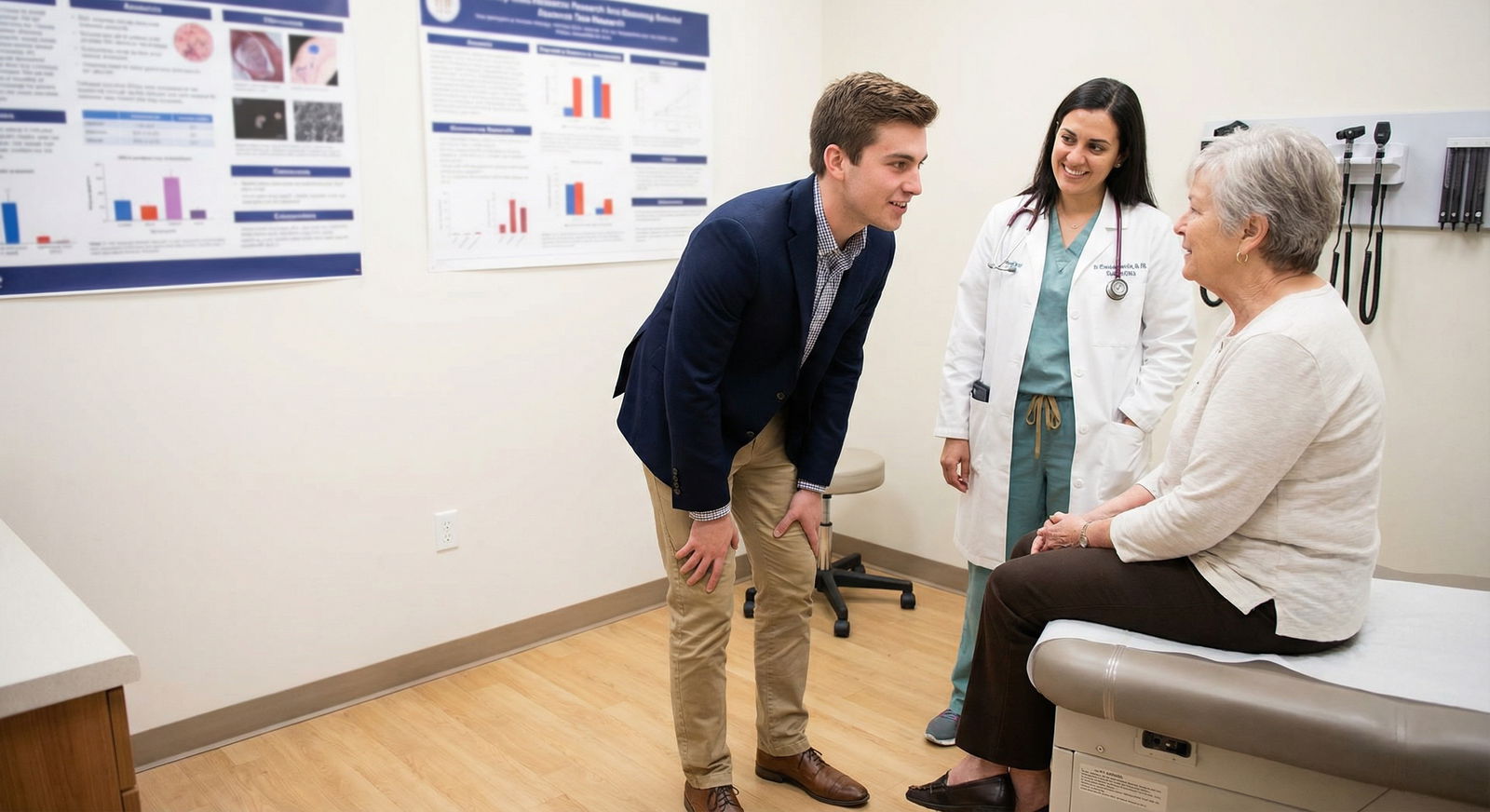
What Medical School Admissions Committees Really Want to See
Once you have the core components, the question becomes: what differentiates successful applicants in a competitive pool?
Admissions committees consistently look for the following traits, demonstrated across your experiences, essays, and interviews.
1. Authentic Commitment to Medicine
Committees need to be convinced that you:
- Understand the realities of a medical career
- Are driven by values that align with patient care and service
- Have made informed, sustained choices pointing toward medicine
Ways this shows up:
- Long-term clinical and community service activities
- Shadowing across different specialties and practice environments
- Reflective essays and interview answers that show depth of understanding, not romanticized ideas
Concrete example:
- Instead of saying, “I want to help people,” you might describe:
- How volunteering at a free clinic shaped your understanding of health disparities
- A specific patient interaction that made you realize the complexity of chronic disease management
- How that experience solidified your desire to advocate for underserved communities as a physician
2. Resilience, Adaptability, and Growth
Medicine demands the ability to adapt, persist, and grow through difficulty. Committees look for evidence of this throughout your application.
Signals of resilience:
- Overcoming academic setbacks with demonstrable improvement
- Managing personal or family responsibilities while maintaining strong performance
- Responding constructively to failure or criticism
- Taking initiative to develop new skills after a challenge
Candidate strategy:
- In essays and interviews, describe:
- The challenge (briefly and factually)
- Your response and the actions you took
- Specific lessons learned
- How your approach has changed since then
Avoid narratives that focus only on hardship without clearly demonstrated growth.
3. Leadership and Initiative
Leadership is less about titles and more about impact and initiative.
Examples:
- Organizing a health fair or vaccination drive
- Creating a new volunteer program at a shelter or clinic
- Leading a student organization through a period of growth or crisis
- Developing a peer mentorship system for incoming students
Candidate strategy:
- Emphasize measurable or clearly visible outcomes:
- “Our initiative increased clinic attendance by 30% among uninsured patients.”
- “We grew the organization from 10 to 60 active members and expanded to three local schools.”
- Discuss how you navigated obstacles, collaborated with others, and developed your leadership style.
4. Strong Interpersonal Skills and Emotional Intelligence
Admissions committees are highly attuned to interpersonal skills, because medicine is fundamentally relational.
They look for evidence that you can:
- Communicate clearly and empathetically
- Listen actively
- Work effectively in diverse teams
- Handle conflict professionally
- Build trust with patients and colleagues
Where they see this:
- Clinical supervisor and physician letters of recommendation
- Descriptions of team projects, leadership roles, and collaborative work
- Interview behavior (tone, body language, responses to ethical or interpersonal scenarios)
Candidate strategy:
- Highlight experiences where you:
- Helped bridge communication gaps (e.g., between staff and patients, or team members)
- Supported a team through a stressful period
- Used empathy to de-escalate a difficult interaction
- Show you understand perspective-taking and cultural humility.
5. Diversity of Experiences and Perspective
“Diversity” is not limited to demographic background. Committees value diversity of:
- Life experiences (e.g., first-generation college, caretaker responsibilities, military service, extensive work experience)
- Academic interests (e.g., humanities, social sciences, engineering)
- Extracurricular passions (e.g., arts, athletics, advocacy)
Holistic review allows schools to consider how your background contributes to:
- Classroom discussions
- Peer learning and support
- Understanding and serving diverse patient populations
Candidate strategy:
- Don’t hide or minimize nontraditional experiences (e.g., working full-time, supporting family, significant career changes).
- Show how your unique path gives you insight into patient experiences, healthcare systems, or community needs.
Case example: A student from University of XYZ Medical School’s admissions cycle who stood out:
- Volunteered regularly at a mobile clinic serving migrant workers
- Led a bilingual health education initiative
- Shadowed physicians in both community and academic settings
- Explored public health policy through internships
Even without perfect numbers, the depth and alignment of their experiences with the school’s mission made them highly compelling.
6. Meaningful Research Involvement (When Aligned with Goals)
For research-intensive schools, committees look for:
- Curiosity and comfort with scientific literature
- Perseverance through trial and error
- Ability to think critically about evidence
Evidence can include:
- Longitudinal involvement in a project
- Presentations at campus or regional conferences
- Contributions to a manuscript, even if not first author
- Quality improvement work in clinical settings
Detailed example: You might describe a summer internship where you:
- Helped collect data for a study on diabetes management in a rural clinic
- Noticed patient barriers (transportation, time off work)
- Participated in meetings to refine survey tools or patient education materials
- Reflected on how this work underscored the importance of addressing social determinants of health in clinical practice
Even if you don’t want to be a physician-scientist, this shows you can engage with evidence-based medicine.
7. Additional Skills and Attributes That Enhance Your Application
Finally, committees appreciate applicants with distinctive skills that can benefit their class and future patients.
Examples include:
- Language skills: fluency in languages commonly spoken by local patient populations
- Technical skills: data analysis, coding, or informatics useful in research or quality improvement
- Teaching and mentoring: tutoring, TA roles, peer teaching programs
- Advocacy and policy: legislative internships, community organizing, health policy work
- Creative or artistic talents: music, writing, visual arts that show discipline and balance
Candidate strategy:
- Tie these skills directly to medicine:
- Language skills → improved communication with patients
- Coding/data skills → quality improvement and population health analysis
- Teaching experience → patient education and future resident teaching

Putting It Together: Strategic Tips to Align Your Application With Committee Priorities
To stand out in the medical school admissions process, you need alignment across your entire application.
Build a Coherent Narrative
Your application process should tell a consistent story about who you are and why you’re ready for medical school.
- Activities → demonstrate long-term interests and commitments
- Essays → interpret and connect those experiences
- Letters → validate your qualities and accomplishments
- Interviews → bring your story to life and confirm your interpersonal strengths
Ask yourself:
- What 3–4 themes define my path to medicine? (e.g., service to underserved communities, curiosity about science, resilience, leadership in education)
- Does every major component of my application reinforce at least one of these themes?
Be Intentional About School Fit
Different schools emphasize different missions:
- Primary care vs. subspecialty/research
- Rural vs. urban focus
- Underserved populations and health equity
- Global health, innovation, or policy
Candidate strategy:
- Research each school’s mission statement, curriculum focus, affiliated hospitals, and community partnerships.
- Use secondary essays to show genuine alignment, not generic interest.
- Provide specific examples of how your experiences and goals fit their training environment.
Continue Developing During the Application Year
Admissions committees expect you to keep growing even after you submit.
- Maintain or expand your clinical and service commitments.
- Update schools (when appropriate) about:
- New publications or presentations
- New leadership roles or initiatives
- Significant awards or honors
- Be prepared to discuss new experiences in interviews.
FAQ: What Medical School Admissions Committees Want From Applicants
Q1: What GPA and MCAT do I really need for medical school?
There is no single cutoff that applies to every school, but many MD programs have entering class averages around a 3.6–3.8 GPA and a 510–518 MCAT. DO schools often admit a broader range of GPAs and MCATs. However, holistic review means:
- Upward trends, strong post-bacc/SMP performance, and exceptional experiences can offset lower metrics.
- Very low numbers may trigger automatic screens, so apply strategically to schools where your stats are reasonably competitive.
Q2: How can I gain clinical experience if I have a demanding schedule?
Flexibility is key. Consider:
- Hospital volunteering on evenings or weekends
- Crisis hotlines (with proper training) to build communication skills and exposure to mental health issues
- Short but regular shadowing blocks (e.g., one afternoon per week for several months)
- Scribing or CNA work during gap years or summers
Admissions committees value sustained involvement more than an impressive-sounding but very brief experience.
Q3: Will strong experiences and interpersonal skills make up for a low GPA or MCAT?
Sometimes, but not always. Holistic review can:
- Mitigate moderate academic weaknesses, especially with clear evidence of improvement and strong experiential background.
- Highlight candidates with compelling personal journeys and clear commitment to medicine.
However:
- If your GPA/MCAT are far below a school’s usual range, your chances are lower regardless of experiences.
- In that case, consider academic enhancement (post-bacc, SMP), retaking the MCAT, or widening your school list (including DO programs).
Q4: How important is the personal statement compared with other parts of the application?
The personal statement is critical because it:
- Sets the tone for how reviewers interpret your experiences
- Demonstrates your communication skills, maturity, and self-awareness
- Often influences who gets a holistic review and interview invitations
It won’t “erase” very weak academics, but a strong statement can:
- Distinguish you from others with similar stats
- Help committees remember you and advocate for you during deliberations
Q5: How many medical schools should I apply to, and should I tailor each application?
Most applicants apply to 15–30 schools, though the optimal number depends on:
- Academic metrics
- State residency
- The competitiveness of your profile
You should:
- Tailor secondary essays carefully to each school’s mission and strengths.
- Avoid copying generic responses; committees can tell when an answer is not truly school-specific.
- Use school research (curriculum, community programs, values) to show clear, authentic fit.
By understanding how holistic review works and what admissions committees truly value—commitment to medicine, resilience, leadership, strong interpersonal skills, meaningful experiences, and a coherent narrative—you can design candidate strategies that make every part of your application purposeful.
Your goal is not to appear perfect, but to present a thoughtful, growth-oriented, and well-prepared future physician who will contribute meaningfully to your class, your patients, and the profession.